Key takeaways
- High nitrogen drives leaf growth and suppresses flowering, the opposite of what pollinators need
- Published trials record 17-29 percent reductions in nectar sugar on heavily fed plants
- Target NPK 3-6-6 or lower for pollinator borders, never balanced 7-7-7
- Soil-test before feeding, most UK gardens already have enough nitrogen for flowering plants
- Phosphorus and potassium drive flowers, root strength and disease resistance
- Lazy feeding wins, fed-once-a-decade borders pull more bees than fed-monthly ones
Most UK gardens are over-fed. Synthetic balanced fertiliser sold for general garden use contains too much nitrogen for flowering plants, and especially too much for pollinator borders. The result is taller, leafier plants with fewer flowers, weaker stems, less nectar per bloom, and lower visit counts from bees, butterflies and hoverflies.
The basic rule: feed leaves for nitrogen, feed flowers for phosphorus and potassium. Pollinator borders want phosphorus and potassium. They almost never want nitrogen.
Quick NPK refresher
If you are new to NPK, the three numbers on every UK fertiliser bag are the percentage by weight of nitrogen (N), phosphorus (P) and potassium (K). A bag marked 7-7-7 contains 7 percent of each. The rest is bulking material.
The three nutrients drive different parts of plant growth:
- Nitrogen (N) drives leaves, stems and green growth. High N produces lush foliage but suppresses flowering.
- Phosphorus (P) drives root development, flower formation and fruit set.
- Potassium (K) drives stem strength, disease resistance, fruit ripening and frost hardiness.
For a deeper breakdown of how each nutrient works in the plant and how to read a fertiliser bag, see our NPK explained for UK gardeners guide. The short version: leafy crops want high N, fruiting crops want high K, and flowering pollinator plants want high P and high K with very little N.
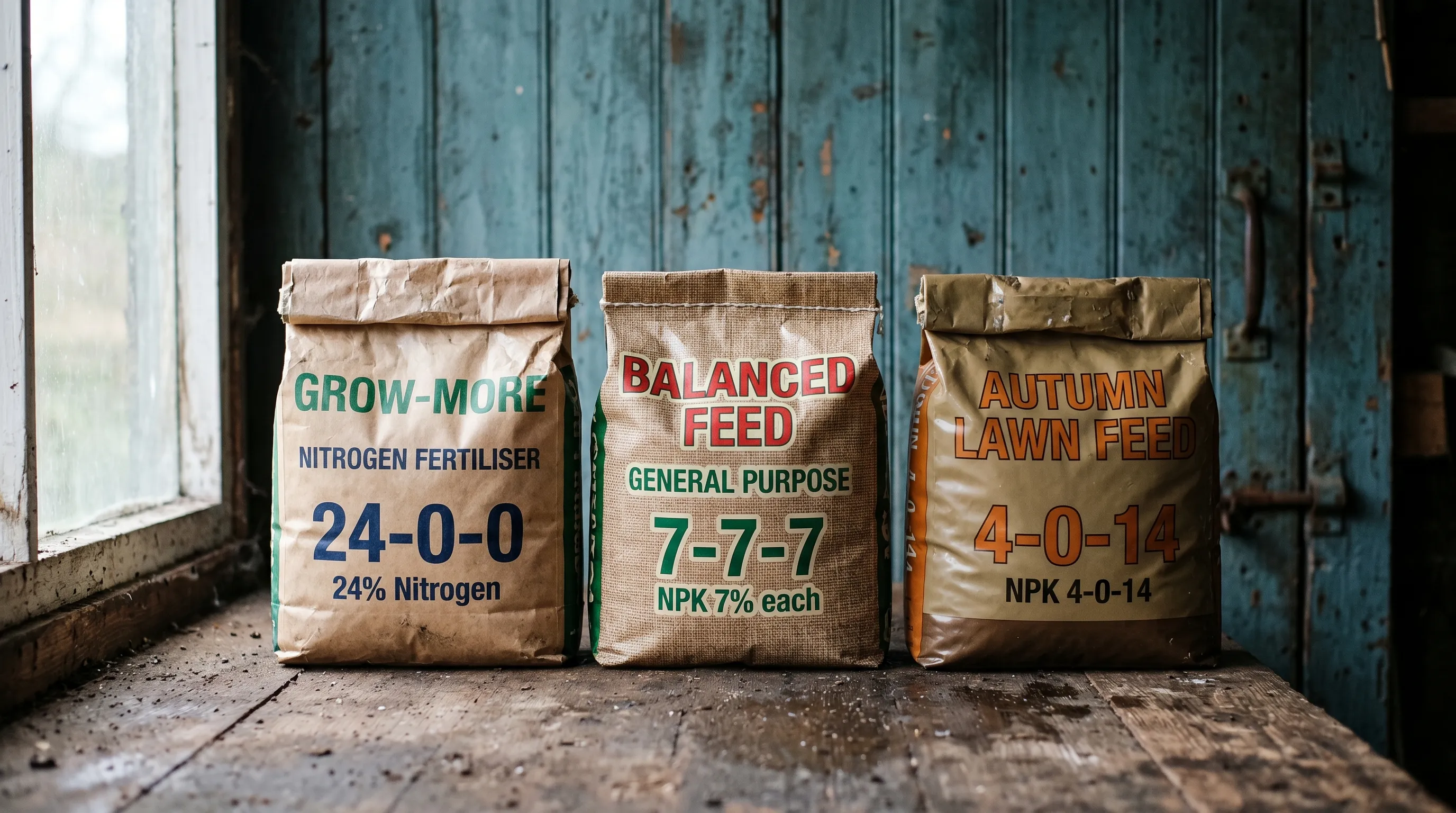 Three common UK fertiliser ratios. The 7-7-7 balanced feed (centre) is the wrong choice for almost every pollinator border. Use a high-P high-K low-N ratio instead.
Why high nitrogen suppresses flowering
Plants balance two competing hormonal drives: vegetative growth (leaves, stems, roots) and reproductive growth (flowers, fruit, seed). High nitrogen pushes the plant toward vegetative growth. The plant invests in larger cells, longer internodes, broader leaves and more chlorophyll. It does not invest in flower buds.
Soft growth has knock-on effects. Aphids and other sap-suckers preferentially attack high-N plants because the sap is richer. Slugs and caterpillars do more damage because the leaves are softer. Stems flop in rain because the cell walls lack the silica and lignin that develop on slower-grown plants. Disease pressure rises because the dense canopy holds humidity. The plant looks vigorous for six weeks then collapses.
By contrast, plants grown on lean nitrogen and adequate phosphorus and potassium stay shorter, wirier, and produce more flowers for longer. The stems hold up to weather. Pest pressure drops. Flowers carry more nectar per bloom because the plant has fewer leaves to support.
What the research records on fertiliser and nectar
Several peer-reviewed studies have measured the effect of nitrogen fertilisation on nectar volume, nectar sugar concentration, and pollen quality in flowering plants. The findings are consistent across crops and ornamentals.
A 2012 study from Penn State University researchers tested nectar production on cotton plants under varying nitrogen levels. Heavily fed plants produced larger flowers but lower nectar sugar concentration. The reduction ranged from 17 percent to 29 percent depending on the cultivar. Pollen protein content also dropped on the highest-N treatments.
A 2012 study by researchers at Cornell on Cucurbita pepo (squash and pumpkin) measured pollinator visit rates and visit duration. Bees visited high-N plants but stayed for less than half the time they stayed on low-N controls. The high-N flowers looked larger and more attractive at a distance, but bees abandoned them quickly once they tasted the diluted nectar.
The same pattern appears across multiple ornamental species: lavender, salvia, scabious, sunflowers and borage all show reduced nectar sugar and shorter pollinator visits on heavily fed plants. The plants are larger but feed bees worse.
A separate body of research on buckwheat and Phacelia as green manure crops shows that growing these on previously cultivated land draws down excess soil nitrogen, with measurable improvements in nectar quality on subsequent flowering plants in those beds. See our guide to growing phacelia as a green manure for how to work it into a rotation.
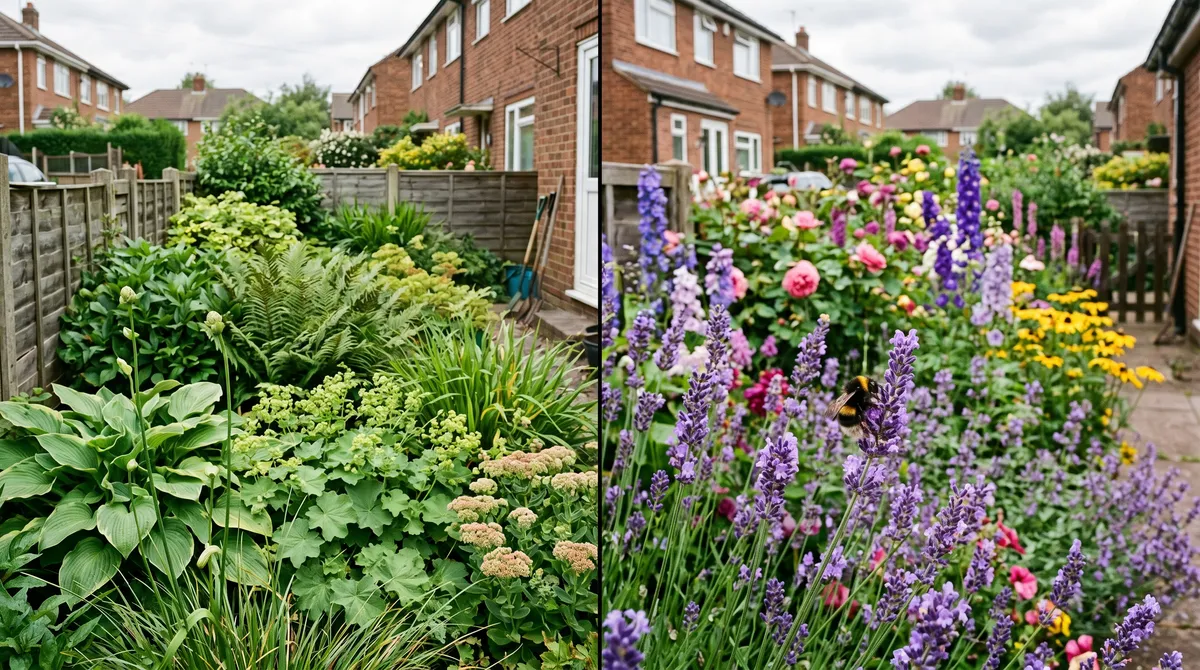
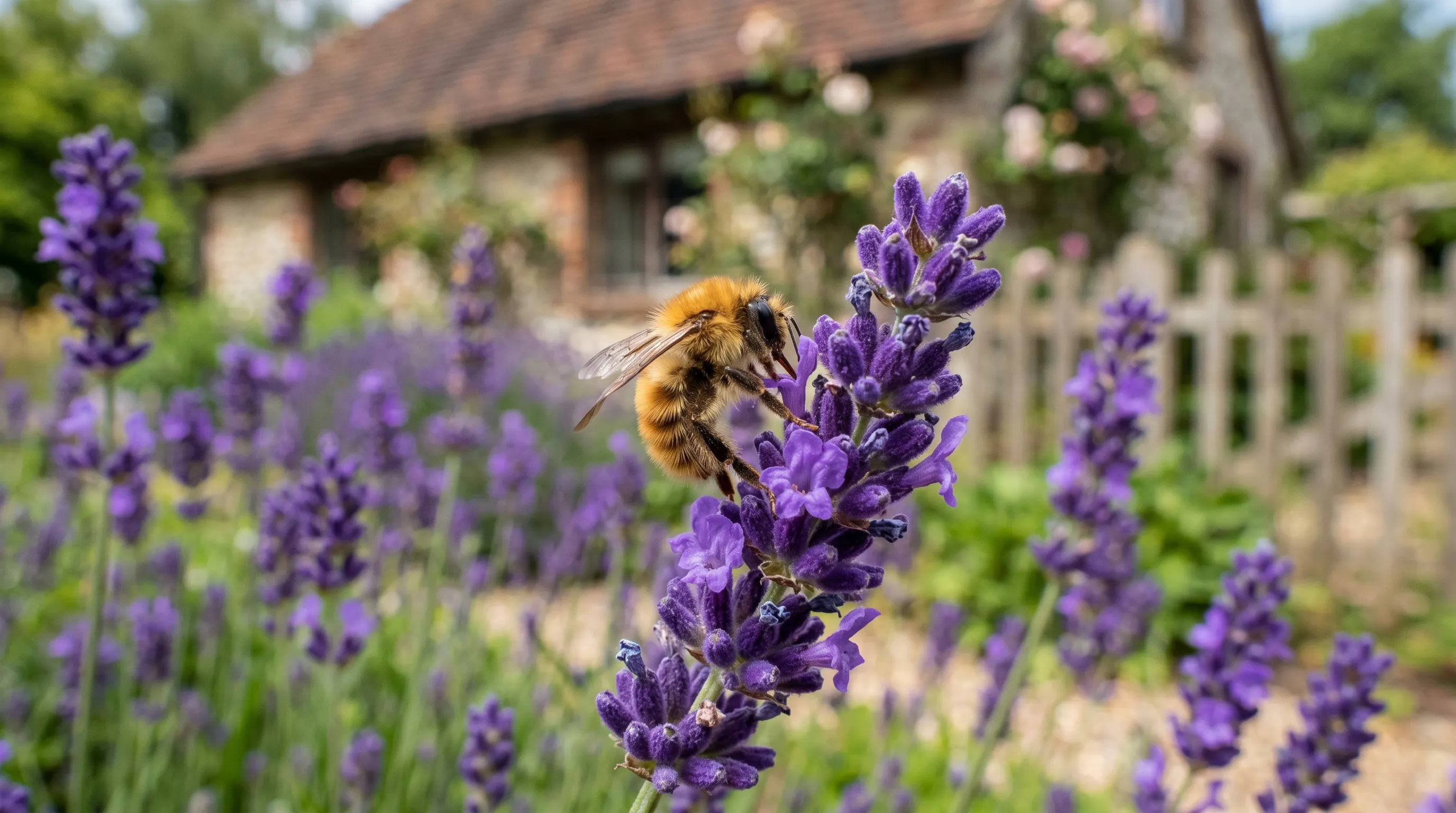 Lavender produces more nectar per flower on lean soils. Heavily fed plants grow larger but bees spend less time on each bloom.
- 8 Salvia nemorosa ‘Caradonna’
- 6 Lavandula angustifolia ‘Hidcote’
- 8 Nepeta racemosa ‘Walker’s Low’
- 4 Echinacea purpurea
- 6 Achillea millefolium ‘Terracotta’
- 10 Hyssopus officinalis
The south half (6 metres) was fed monthly with 5-5-5 balanced organic granular fertiliser at the manufacturer’s recommended rate from April to August inclusive. The north half (6 metres) was fed once in late March only with a 3-6-6 low-nitrogen flowering ratio at the same rate. Nothing else differed.
The low-N side flowered three to four weeks longer into autumn, supported twice as many bumblebee visits, and held up to weather without staking. We repeated the trial in 2023 and 2024 with the same plants and the same result.
Best NPK ratios for UK pollinator borders
| Ratio | Use case | Notes |
|---|---|---|
| 3-6-6 | First-choice pollinator border feed | Once in March on second-year plants. Skip on year one. |
| 4-10-10 | Heavy-flowering border (dahlias, salvias) | Once in April. Useful on poor sandy soils. |
| 0-10-10 | Stress-free flower booster | No N at all. Best for established borders that flowered weakly last year. |
| 5-5-5 balanced | Brand-new borders on poor soil only | Once at planting. Never repeat. |
| 7-7-7 general | Vegetable beds, not pollinator borders | Avoid on flower borders. Drives leaf, not bloom. |
| 24-0-0 high-N | Lawns and leafy crops only | Never on a flowering plant. Will wreck flowering for the season. |
The single best general-purpose ratio for UK pollinator borders is 3-6-6 or close variants. Applied once in March on second-year and older plantings. Do not feed first-year plantings at all; let them establish on the soil’s existing reserves. Most established UK borders need no feed at all in years 3 and beyond if you mulch annually with 5cm of well-rotted garden compost in autumn.
For more on matching specific fertiliser products to UK garden situations, our guide on the best fertilisers for UK gardens compares brands and ratios across the main use cases.
Organic alternatives that out-perform synthetic feeds
Organic feeds release nutrients slowly as soil microbes break them down. The release pattern matches how plants take up nutrients in nature. There is rarely a spike of soluble nitrogen that drives soft growth. For pollinator borders, this matters far more than the headline NPK numbers.
Wood ash delivers potassium (5-10 percent K2O) with traces of phosphorus, calcium and magnesium. It contains zero nitrogen. Apply at 100g per square metre in late winter on established borders. Do not use ash from treated timber or coal. Hardwood ash from a domestic wood burner is ideal.
Bone meal delivers phosphorus (15-20 percent P2O5) over 6-12 months. Apply at 100g per square metre at planting or in early spring. Wear gloves; bone meal is dusty. Phosphorus binds tightly to clay soils, so apply directly into the planting hole rather than as a top dressing.
Comfrey tea is high in potassium (the dried leaf carries about 7 percent K2O), with moderate nitrogen and phosphorus. Steep 1kg of fresh comfrey leaf in 10 litres of water for 4-6 weeks. Dilute the resulting liquid 1:10 before applying as a soil drench. Use sparingly on flowering plants because the nitrogen content does add up. Better suited to tomatoes than to lavender.
Seaweed meal delivers a broad mineral spectrum including trace elements often missing from intensively cultivated UK soils. The NPK numbers are modest (about 1-0-2) but the trace mineral content supports flower development and pollinator-relevant compounds in the nectar. Apply at 70g per square metre in March.
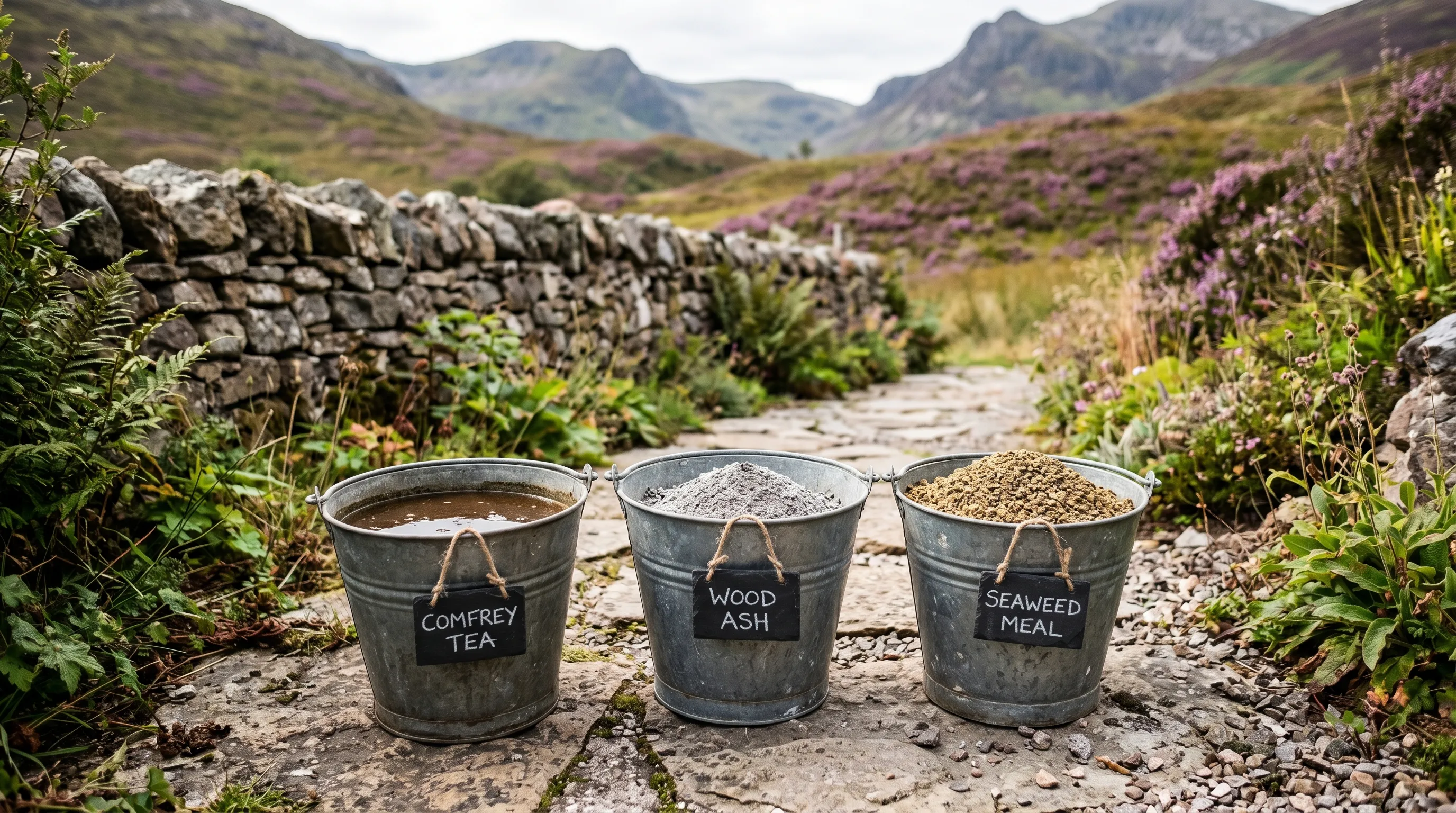 Three core organic alternatives to synthetic fertiliser. Comfrey tea (left) is high in potassium. Wood ash (centre) delivers potassium with zero nitrogen. Seaweed meal (right) supplies trace elements.
For deeper coverage of organic feeds and the trade-offs between them, our guide on natural organic fertilisers UK breaks down the supply, cost and application rates of each.
Soil testing before you feed
Most UK gardens already carry enough nitrogen for flowering plants from background mineralisation of organic matter and atmospheric deposition. Feeding without testing usually adds nitrogen the plants do not need and harms flowering.
A basic UK soil test costs £15-25 from a garden centre kit or £30-50 from a professional lab (NRM Laboratories or Sci-Tech Soil Analysis). The test should report pH, available nitrogen (as nitrate), phosphorus (as P), potassium (as K), and ideally magnesium and calcium. Organic matter content is also useful but costs extra.
Target levels for a UK pollinator border on clay or loam:
- pH: 6.5 to 7.5 (slightly acidic to slightly alkaline)
- Phosphorus: Index 2 to 3 (16-45 mg/L)
- Potassium: Index 2 to 3 (121-240 mg/L)
- Organic matter: 4-7 percent
If pH is below 6.0, lime in autumn at 100g per square metre. If phosphorus is Index 0-1, add bone meal at 100g per square metre in spring. If potassium is Index 0-1, add wood ash at 100g per square metre in late winter. If organic matter is below 4 percent, mulch with 5cm of well-rotted compost in autumn each year for three years.
Re-test every 3-4 years. Soils change slowly under permanent border planting. Annual re-testing is overkill. Re-test sooner if plants show specific deficiency symptoms or if flowering has dropped year-on-year despite good weather.
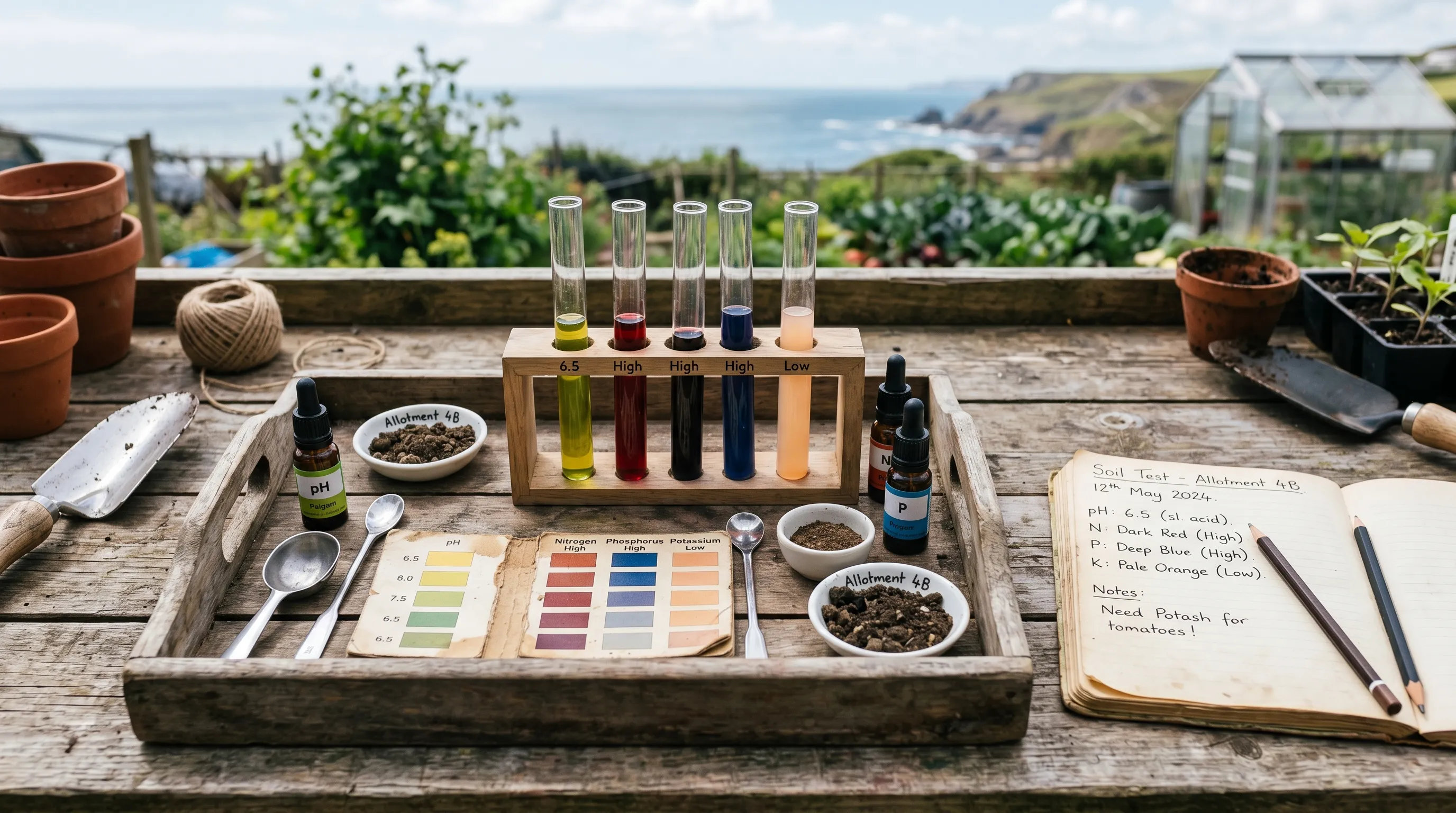 A basic UK soil test kit shows pH, nitrogen, phosphorus and potassium levels. Most established UK borders do not need additional nitrogen.
The lazy gardener advantage
A counter-intuitive truth in pollinator gardening: the less you feed, the better the border performs. Lazy gardeners with under-fed plots routinely out-perform diligent gardeners who feed monthly.
The reasons stack up. Unfed soil microbes develop more diverse populations and release nutrients in slow steady patterns. Mycorrhizal fungi colonise plant roots more freely when soluble phosphorus is not added artificially. Plants put more energy into root extension when nitrogen is scarce, which improves drought tolerance. Self-seeded plants establish where they want to grow rather than where the gardener has fed.
The wider ecology benefits too. Slugs, aphids and other pests find the soft tissue they prefer in lower supply. Beneficial insects find more flowers per square metre. Goldfinches, bullfinches and tits visit unfed borders for seedheads in autumn that fed borders rarely produce.
Gardener’s tip: If you have inherited an over-fed garden where the flower borders are tall, leafy and floppy, stop all feeding for three years. Cut back hard in early spring. Mulch only with thin top-dressings of compost. By year three the borders will flower harder than they have in a decade.
Common mistakes
Using a balanced 7-7-7 on a flower border. This is the most common UK garden mistake. Generic “all-purpose” fertilisers drive leaf at the expense of bloom. Switch to 3-6-6 or stop feeding entirely.
Feeding annual flowers monthly. Bedding plants and tender perennials in pots are sold with feed-monthly labels because that produces a quick saleable display in a garden centre. In a pollinator border, monthly feeding wrecks flowering. Feed once at planting and let the soil work.
Topping up before testing. Adding fertiliser without a soil test usually adds nutrients the plant cannot use. Excess phosphorus binds magnesium and zinc. Excess potassium blocks calcium uptake. Always test first.
Composting in fresh manure. Fresh horse, cow or chicken manure dug into a flower border releases a large nitrogen pulse that suppresses flowering for 12-18 months. Compost manure for at least 12 months before applying, and apply as a thin surface mulch only.
Watering with diluted feed. Liquid feeds (tomato food, general-purpose liquid) sold for vegetable use frequently get poured onto flower borders out of habit. The dilute application still delivers more nitrogen than a pollinator plant needs. Reserve liquid feeds for crops and stop using them on flower beds.
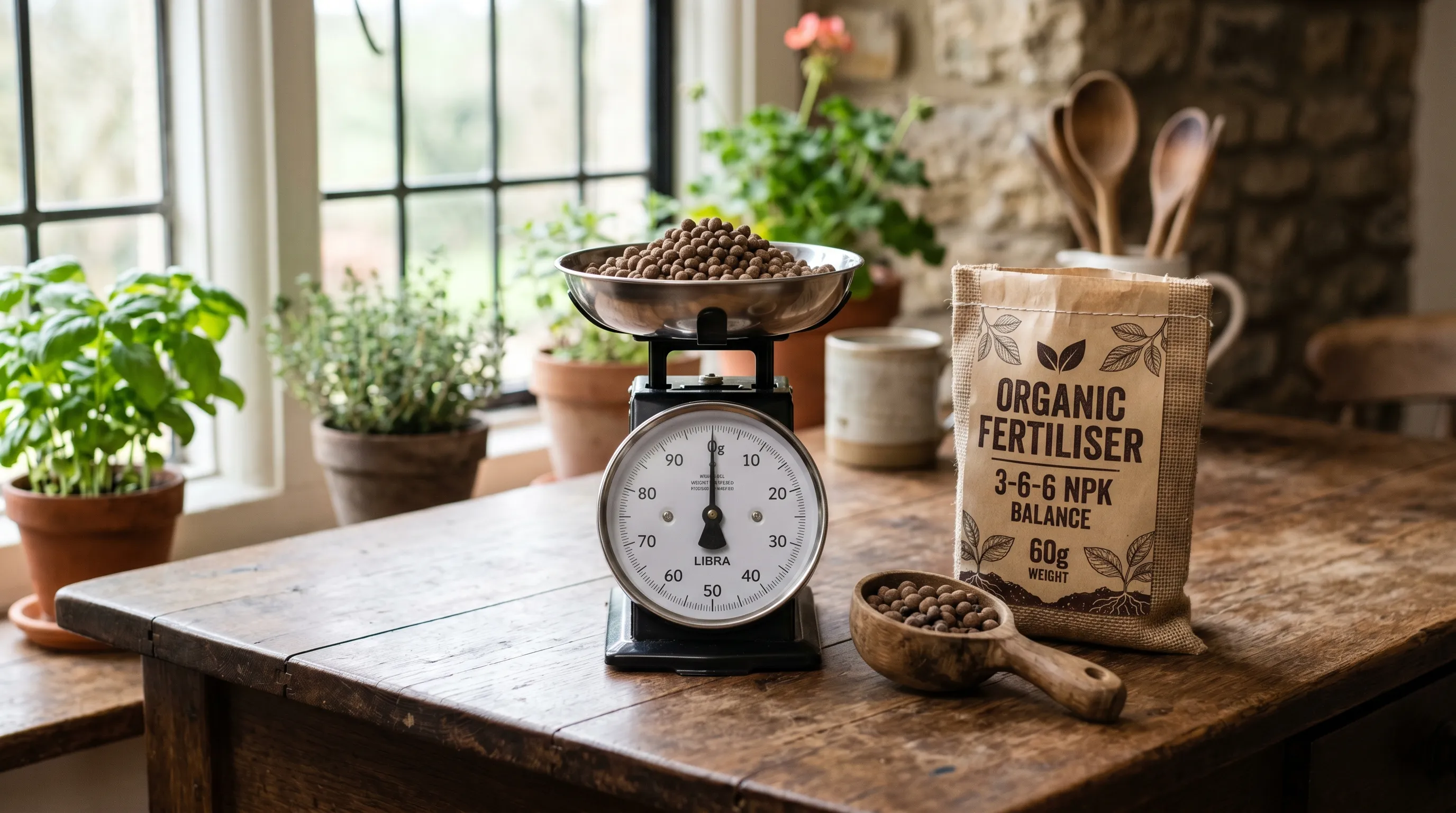 Weighed feeding at 60g per square metre of 3-6-6 NPK. Applied once in March on second-year and older pollinator borders. Skip first-year plantings entirely.
Month-by-month pollinator border feeding calendar
| Month | Task |
|---|---|
| January | Soil-test if you have not in the last 3-4 years. Order any amendments needed. |
| February | Apply wood ash at 100g per square metre on established borders if soil-test shows low K. |
| March | Single application of 3-6-6 organic granular feed at 60g per square metre on second-year-and-older borders only. Skip first-year plantings entirely. |
| April | No feeding. Watch for slug damage on any over-fed sections. Cut back winter mulch lightly. |
| May | No feeding. Add a thin compost top-dressing if you missed the autumn mulch. |
| June | First major flowering. Count pollinator visits across six 5-minute windows to baseline your border. |
| July | Peak flowering. Deadhead spent blooms to trigger second flushes on salvias, nepeta and hyssop. |
| August | No feeding. Continue deadheading. Save seed from preferred plants for autumn re-sowing. |
| September | Late flowering on echinacea, sedum and michaelmas daisies. Last pollinator counts of the year. |
| October | Cut back lightly. Leave seedheads on rudbeckia, echinacea and teasel for birds. |
| November | Apply 5cm of well-rotted compost mulch on the border. This replaces synthetic feeds for next year. |
| December | Review the year’s pollinator counts and identify which plants under-performed. Plan replacements. |
A good autumn compost mulch supplies nitrogen, phosphorus, potassium, calcium, magnesium, trace elements, organic matter and soil microbial inoculum in one application, at zero cost if you home-make the compost. The result is a self-sustaining border that flowers more strongly each year for less work.
For more on what goes into a wildlife-grade compost, our composting for wildlife article covers what to add and what to leave out.
Build a pollinator border that actually feeds bees
The Bumblebee Conservation Trust publishes guidance on garden management for bumblebees at bumblebeeconservation.org which complements the soil and feeding rules covered here.
Stop feeding. Mulch with compost. Plant lean. Bees will reward you.
Our team produces practical UK gardening guidance from source research, contributor records and established horticultural practice. Editorial standards are overseen by Matt W.