Key takeaways
- Most polytunnels under 2.5m ridge height in a rear garden fall under permitted development
- Conservation areas, AONBs and National Parks remove most automatic rights
- Listed buildings always need Listed Building Consent, even for a 3m polytunnel
- Allotments are governed by tenancy rules first, then council planning if over 30 sqm
- A retrospective application costs £258 and can refuse you the right to keep it standing
- Article 4 directions in some councils strip the standard permitted development rules
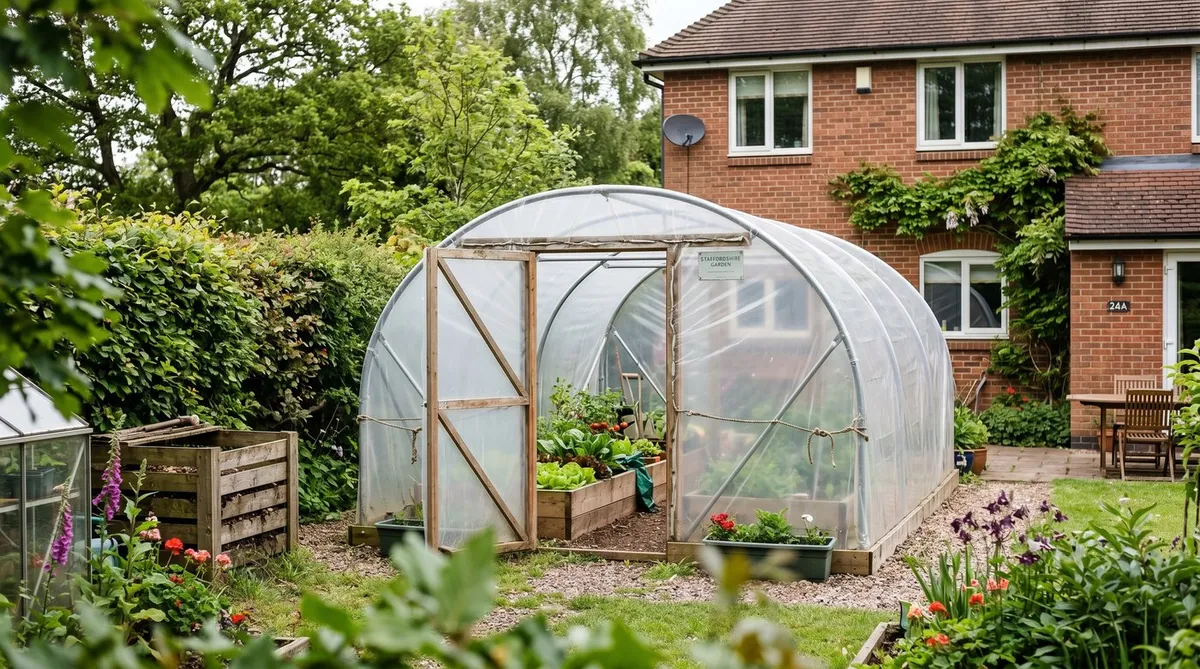
Putting up a polytunnel in a UK back garden looks simple. Frame, cover, base rail, doors. The planning side is where most people trip up, and a retrospective application costs more than a small tunnel itself. This guide covers exactly when you need permission, when you do not, and where the rules quietly change without warning.
The short answer is that most domestic polytunnels in a normal rear garden are permitted development. The long answer involves boundary distances, ridge heights, conservation areas, Article 4 directions, listed buildings, allotment tenancies, and a handful of council policies that strip the automatic rights you would otherwise expect.
Are polytunnels classed as buildings under UK planning law?
The legal definition matters because the rules change depending on what the council calls the structure. Under the Town and Country Planning Act 1990 (Section 336), a “building” is anything that is constructed, fixed, or assembled on site. A polytunnel is a building. So is a greenhouse, a shed, a pergola, and a play house.
That sounds restrictive, but the law also provides “permitted development rights” under the Town and Country Planning (General Permitted Development) (England) Order 2015, Schedule 2, Part 1, Class E. Under Class E, outbuildings in the rear garden of a dwellinghouse are allowed without a formal planning application, subject to specific size, height, and position limits.
In Scotland the equivalent is the Town and Country Planning (General Permitted Development) (Scotland) Order 1992, as amended. Wales uses the Town and Country Planning (General Permitted Development) (Amendment) (Wales) Order 2013. Northern Ireland follows the Planning (General Permitted Development) Order (Northern Ireland) 2015. The thresholds differ slightly across the four nations, and Scotland in particular treats outbuildings within 5m of the house as part of the house for percentage cover calculations.
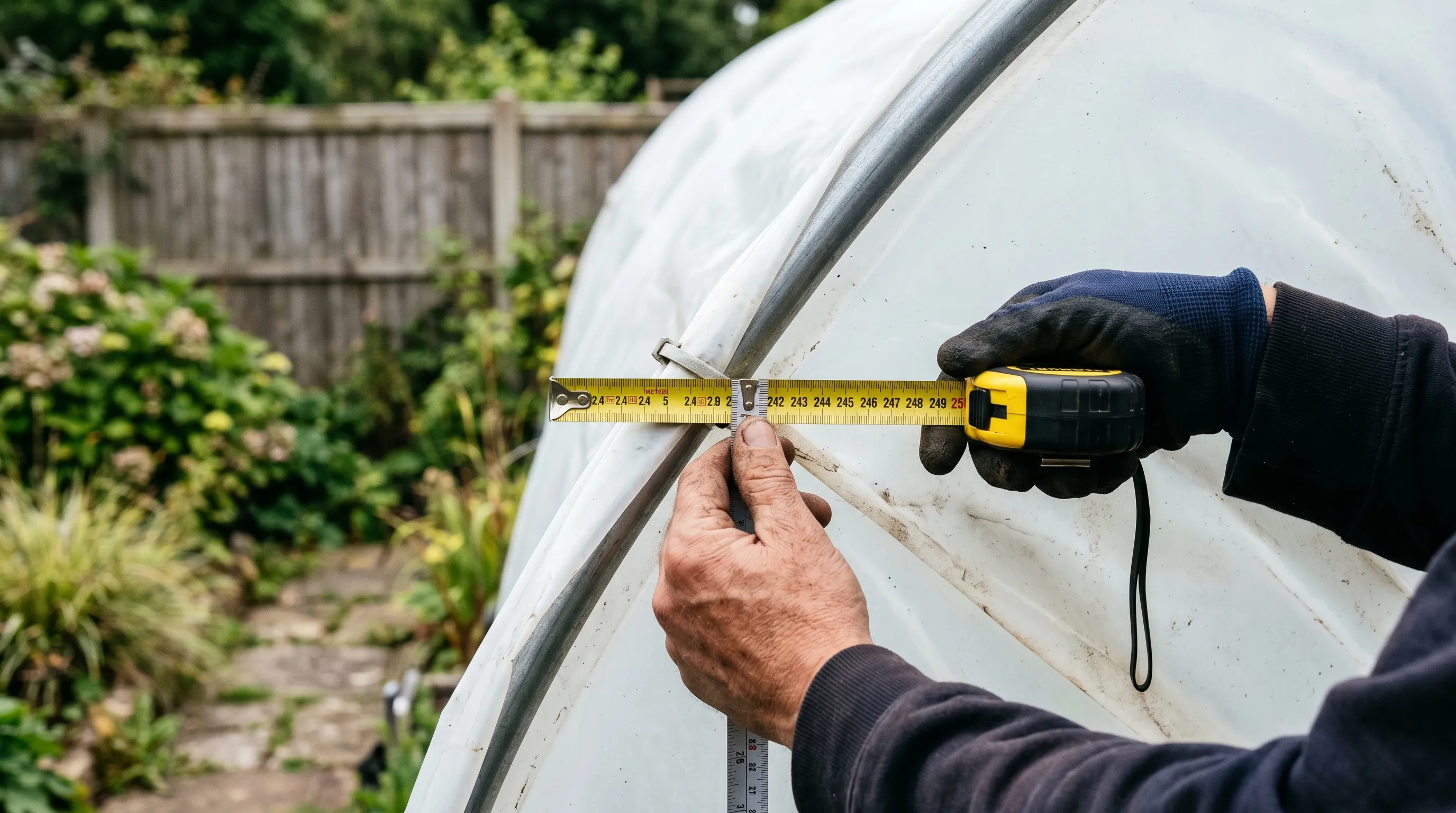 Ridge height is the single biggest planning trigger. A polytunnel within 2m of a boundary must stay under 2.5m at the highest point.
When you do not need planning permission
For a typical UK back garden, your polytunnel sits inside permitted development if it meets every one of the following six conditions. Miss one and the automatic right disappears.
The six permitted development conditions
- Behind the principal elevation. The tunnel must sit behind the back wall of the original house, not to the side or front of it.
- Single storey. Maximum eaves height 2.5m and maximum overall height 4m for a dual-pitched roof, or 3m for any other roof shape.
- 2.5m ridge within 2m of a boundary. If any part of the tunnel sits within 2m of a fence, wall, or hedge boundary, the total ridge height cannot exceed 2.5m.
- Maximum 50% land cover. The combined footprint of the tunnel plus all other outbuildings, sheds, greenhouses, and extensions cannot exceed 50% of the original garden area around the house (excluding the house itself).
- Not for commercial use. Hobby growing is fine. Selling produce changes the use class and removes permitted development rights.
- No balconies, verandas or raised platforms. Polytunnels never trigger this in practice but it sits in the same paragraph of the regulations.
If your tunnel ticks all six boxes, no application is needed. You can buy it, build it, and crop it tomorrow.
What “original” garden means
Planning officers use the word “original” deliberately. The original house is the building as it existed on 1 July 1948, or as built if newer. Subsequent extensions reduce the available 50% cover allowance because the extension itself counts toward the cover total. If you have already built a 4m x 3m extension and a 2m x 3m shed, the polytunnel competes for the remaining cover allowance, not the cover allowance from when the house was first sold to you.
When you definitely need permission
Five situations strip permitted development rights entirely. In every one of these, even a 2m x 3m mini polytunnel needs a householder planning application.
1. Conservation areas
Conservation areas reduce permitted development rights under Article 1(5) of the GPDO. A polytunnel visible from a road, footpath, or public open space almost always needs a planning application. The council fee is £206 for a standard householder application in England. Scotland charges £237, Wales £230. Expect an 8 to 13 week decision.
2. Areas of Outstanding Natural Beauty (AONBs)
The Cotswolds, Chilterns, Lake District (now National Park), Norfolk Broads (also National Park), North Wessex Downs, and 41 other designated AONBs in England, Wales, and Northern Ireland fall under restricted permitted development. The 50% cover cap drops, and any structure over 10 cubic metres within 5m of the house may require consent regardless of position.
3. National Parks
The 15 UK National Parks operate like enhanced AONBs. Some, like the Lake District National Park, publish polytunnel-specific guidance because of the visual impact on open hillsides. The Peak District National Park Authority maintains a Polytunnels Position Statement that requires planning for any tunnel over 3m wide regardless of garden position.
4. Listed buildings
5. Article 4 directions
This is the one that catches people out. An Article 4 direction is a local council order that withdraws permitted development rights from a specific street, area, or class of property. Sheffield City Council, for example, has Article 4 directions covering parts of Walkley and Crookes. Brighton and Hove has wider directions across the city. There is no national list. You have to ring your council to check.
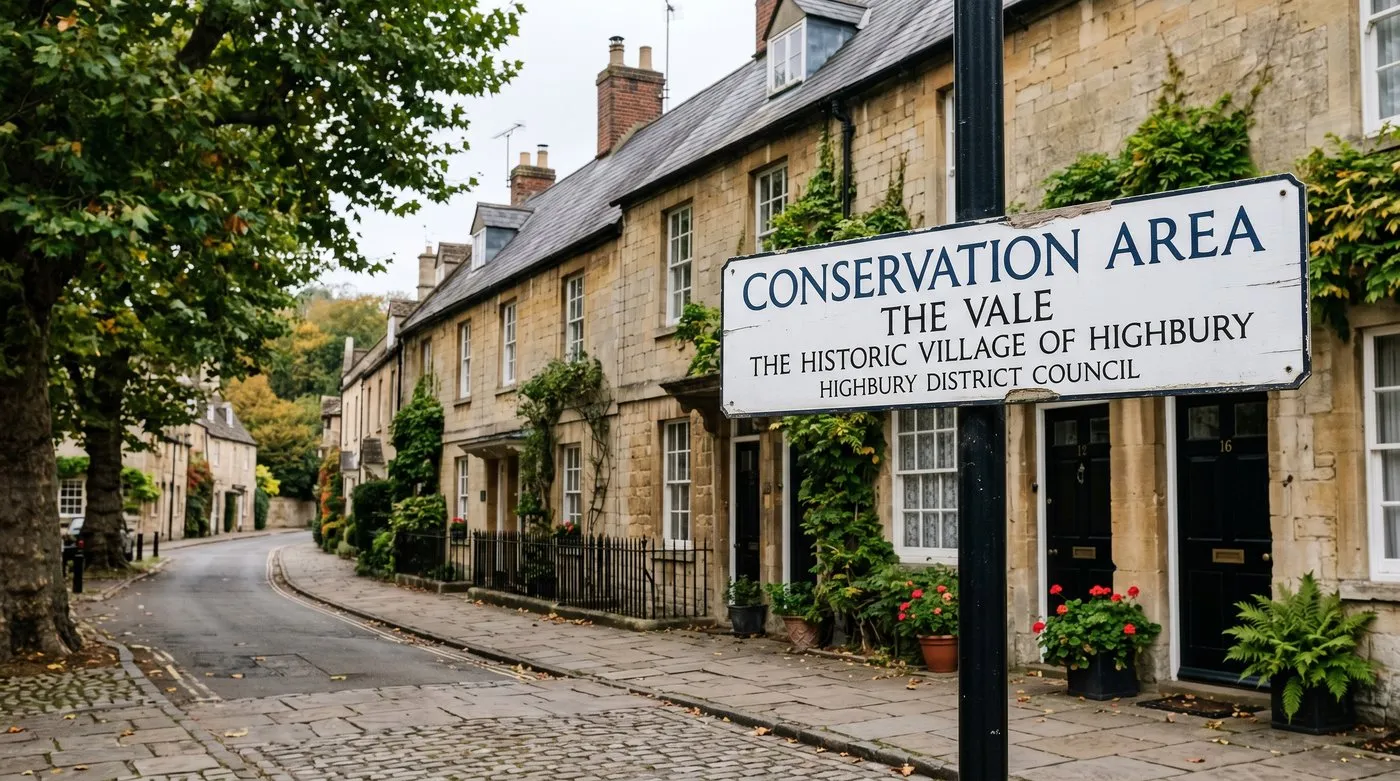 Conservation area designation removes permitted development for outbuildings visible from a public highway, footpath, or open space.
The 2.5m boundary rule in detail
The single most common reason a polytunnel triggers planning is the boundary height rule. Many UK domestic polytunnels from First Tunnels and similar manufacturers ship with a 2.5m to 2.7m ridge at the standard cover tension. A 3m wide polytunnel from the Premium range sits at 2.4m ridge with a flat base rail, but the same tunnel on a raised timber base rail rises to 2.7m.
| Polytunnel size | Standard ridge | Raised base ridge | Boundary safe? |
|---|---|---|---|
| 3m x 2m | 2.0m | 2.3m | Yes, both |
| 3m x 4m | 2.4m | 2.7m | Standard only |
| 4m x 6m | 2.7m | 3.0m | No |
| 5m x 8m | 3.0m | 3.3m | No |
| 6m x 10m | 3.2m | 3.5m | No |
If your tunnel exceeds 2.5m and any edge sits within 2m of a boundary, you have three options. Move the tunnel inward so the nearest edge is at least 2m from the boundary. Choose a smaller tunnel. Or apply for planning permission.
Tip: Measure your garden boundary distance from the inside face of the fence or wall, not the outside. Surveyors and planning officers measure to the outside face of your boundary, but the polytunnel’s footprint starts at the base rail position you have actually chosen.
Article 4 directions and how to spot them
Article 4 directions are the planning rules nobody tells you about until you have already bought the tunnel. They are issued by local councils and withdraw specified permitted development rights from a defined area. Common reasons include preserving the character of a Victorian terrace, controlling cumulative outbuilding cover, or protecting visual amenity in tourist towns.
Spotting an Article 4 direction takes one phone call. Ring your council’s planning department, ask for the duty officer, give your postcode, and ask: “Are there any Article 4 directions in force at this address?” The answer is usually instant. If yes, ask which permitted development classes have been withdrawn.
Councils with active Article 4 directions affecting domestic outbuildings as of 2026 include parts of:
- Sheffield (Walkley, Crookes, Nether Edge)
- Brighton and Hove (city-wide for some classes)
- Cambridge (central conservation streets)
- Bath and North East Somerset (entire conservation areas)
- York (Bishophill, Bootham, Clementhorpe)
- Kensington and Chelsea (almost all of the borough)
If you live in one of these areas, assume planning permission is needed and budget for the £206 application fee.
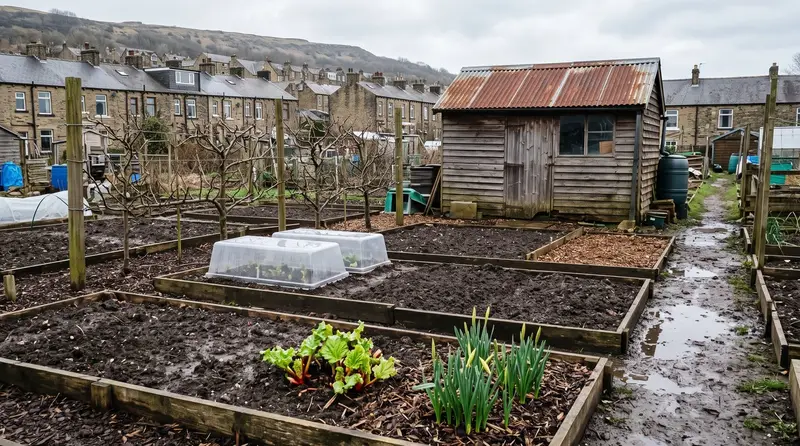
Polytunnels on allotments
Allotment polytunnels are governed by your tenancy agreement first, council planning second. The Allotments Act 1922 gives councils the power to set their own rules, and most do. A typical council allotment agreement permits a single polytunnel up to 30 square metres without separate planning consent.
Read the tenancy. Look for the words “structures,” “buildings,” “covered growing,” and “permanent fixtures.” If the agreement is silent, ring the site manager. If the manager refuses, that is the final answer regardless of council planning rules.
| Allotment site type | Tunnel cap | Planning needed? |
|---|---|---|
| Council statutory | 30 sqm | No, under cap |
| Council temporary | 12 sqm | No, under cap |
| Private leased | Varies | Usually no, check lease |
| Privately owned | None | Yes if over 30 sqm |
Above 30 square metres on any site, a planning application becomes likely. Tunnels used commercially (selling produce, running a market garden) move into agricultural permitted development under Schedule 2, Part 6 of the GPDO, which is a separate set of rules entirely.
Allotment tunnels under 30sqm sit outside council planning. Tenancy rules govern instead.
How to apply for planning permission
If you do need permission, the process is straightforward but slow. Allow 13 weeks from submission to decision for a polytunnel in a sensitive area.
Step by step
- Pre-application advice (optional, £40-£120). Some councils offer informal advice. Take it. It can save the formal fee if the officer signals likely refusal.
- Prepare drawings. A site plan at 1:500 showing the tunnel position relative to boundaries. An elevation drawing at 1:50 showing the ridge height, eaves height, doors, and base rail. The manufacturer’s brochure drawing is usually acceptable for the elevation.
- Submit via the Planning Portal (planningportal.co.uk). Householder application. Fee £206 in England, £237 Scotland, £230 Wales. Pay by card.
- Public consultation. 21 days for neighbours and statutory consultees to comment.
- Officer decision or committee. Most polytunnel applications are decided under delegated powers by the case officer. Decisions usually arrive at 8 weeks. Complex cases (conservation areas, listed buildings, multiple objections) move to planning committee and extend to 13 weeks.
Retrospective applications
If you have already installed the tunnel and a complaint has been raised, the council can require a retrospective application. The fee in England rises to £258 (£206 + 25% surcharge). Refusal means removal at your cost. The four-year rule (10 years for change of use) provides eventual immunity, but only if no enforcement action begins inside that window.
The cost of getting it wrong
The single biggest avoidable cost is the retrospective application. £258 buys you a planning gamble where the council holds every card. The £206 prior application is the same money for far better odds and far less stress.
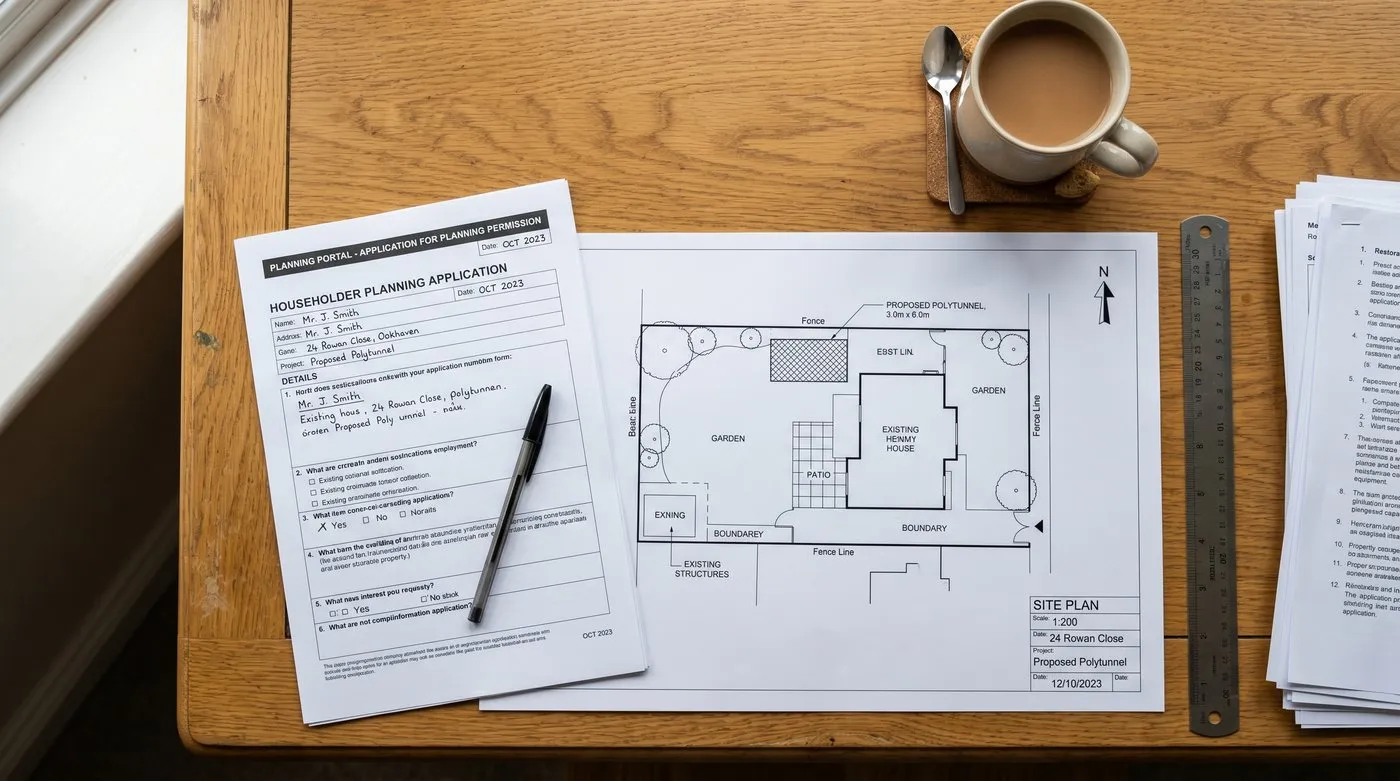 A prior planning application costs £206. A retrospective application after a complaint costs £258. The £52 difference is the smallest gap, but the stress gap is far wider.
Common mistakes that trigger enforcement
Mistake 1: assuming all polytunnels are agricultural
Agricultural exemptions from planning under Schedule 2, Part 6 apply only to land in genuine agricultural use of 5 hectares or more (12.5 acres). A 200 square metre back garden does not qualify, regardless of how many vegetables grow inside. Hobby gardening is domestic, not agricultural.
Mistake 2: ignoring the front-garden rule
Anything forward of the principal elevation needs full planning. There is no permitted development for outbuildings in a front garden, ever, anywhere in the UK. The visual amenity rule is absolute. A 2m x 2m mini polytunnel in front of a bungalow needs the same £206 application as a 6m x 10m commercial tunnel.
Mistake 3: building right up to the boundary
Even at 2.5m ridge height, a polytunnel base rail touching the boundary fence creates maintenance access disputes that often trigger neighbour complaints. The Party Wall Act 1996 does not cover polytunnels directly, but the council Environmental Health team can become involved if the tunnel obstructs maintenance access to a shared fence. Keep the base rail at least 200mm clear of any boundary.
Mistake 4: starting before you have written confirmation
Verbal planning advice is not binding. An officer who says “that sounds fine” on the phone has not given you permission. Always follow up with an email summarising the conversation and asking for written confirmation. If the council does not reply within 10 working days, send a follow-up. The email thread is your evidence if a complaint arrives later.
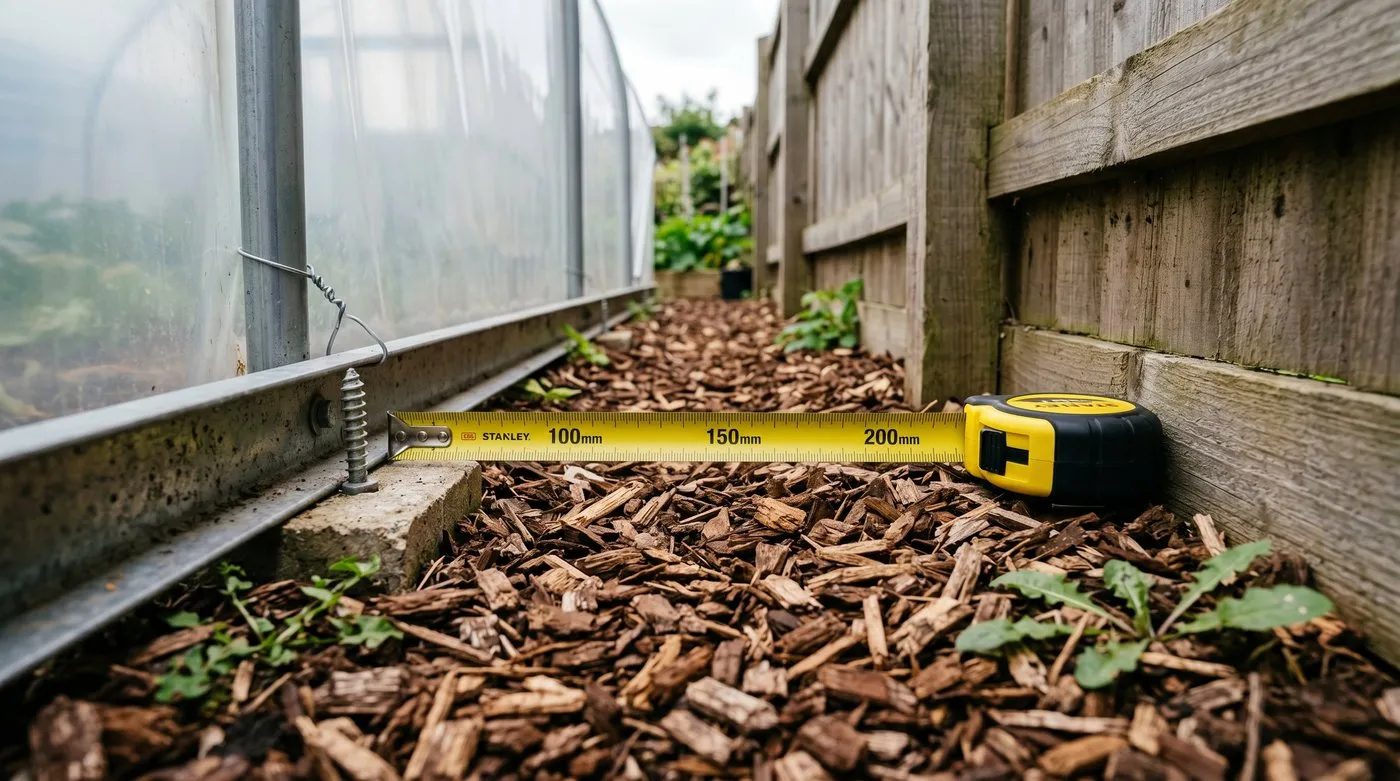 200mm minimum clearance from any boundary fence prevents maintenance disputes and gives the cover room to breathe in high wind.
Month-by-month planning calendar
If you are buying a tunnel for next growing season, work backward from the install date.
| Month before install | Task |
|---|---|
| 6 | Ring duty planning officer, confirm permitted development status |
| 5 | Email summary, ask for written confirmation |
| 4 | Submit application if needed (£206 in England) |
| 3 | Order tunnel kit, base rail kit, doors |
| 2 | Site preparation: levelling, base rail anchoring |
| 1 | Final tunnel assembly, cover installation, vent fitting |
| 0 | Install month: 1-2 day build for 4m x 6m tunnel |
If the application route is needed, do not order the tunnel until permission is granted. A refused application with a tunnel already on order leaves you with a £400 to £900 kit you cannot use.
How polytunnels compare to other garden structures
Planning rules treat all outbuildings under the same Class E permitted development, but enforcement risk varies by visibility and neighbour reaction.
| Structure | PD threshold | Typical complaint rate |
|---|---|---|
| Shed (timber) | 2.5m / 4m / 50% | 3% |
| Greenhouse (glass) | 2.5m / 4m / 50% | 5% |
| Polytunnel (PE film) | 2.5m / 4m / 50% | 22% |
| Polycarbonate greenhouse | 2.5m / 4m / 50% | 6% |
| Wooden play house | 2.5m / 4m / 50% | 8% |
Polytunnels attract complaints out of proportion to their planning impact, mainly because of the white plastic finish. Choose a green or thermal anti-condensation cover where available. A green tinted cover from First Tunnels or Northern Polytunnels costs roughly £15 more per 4m length and reduces visible glare significantly.
If a polytunnel will not work in your planning context, a polycarbonate greenhouse often passes where the tunnel fails, because the visual impact is closer to a traditional greenhouse and neighbour objections drop sharply.
What about Wales, Scotland, and Northern Ireland?
The principles are identical. The thresholds vary slightly.
| Nation | Ridge limit near boundary | 50% cover rule | Application fee |
|---|---|---|---|
| England | 2.5m within 2m | Yes | £206 |
| Scotland | 2.5m within 1m | Yes, but house excluded if within 5m | £237 |
| Wales | 2.5m within 2m | Yes | £230 |
| Northern Ireland | 2.5m within 2m | Yes | £156 |
Scotland’s rule that any outbuilding within 5m of the house counts as part of the house catches Scottish gardeners out frequently. If you live in Scotland and the tunnel is close to the back wall, the 50% cover calculation may not apply at all, but the eaves height limit drops to 3m for the structure.
Information from the official sources
The most reliable national references for UK polytunnel planning are the Planning Portal for England and Wales, and the Scottish Government Planning Advice Note for Scotland. Both are free, kept current, and far less ambiguous than third-party gardening sites on the question of size limits.
The Royal Town Planning Institute (RTPI) publishes free duty officer contact lists for every UK local planning authority. The Town and Country Planning Association (TCPA) maintains a public register of all Article 4 directions in England. Use these before you commit to a tunnel size.
Frequently asked questions
Do I need planning permission for a polytunnel in a normal UK garden?
Usually no, if it sits behind the house. A polytunnel under 2.5m at the ridge within 2m of a boundary, or 4m elsewhere in the garden, falls under permitted development in most UK councils. It must not cover more than 50% of the original land around the house.
Do polytunnels need planning permission in a conservation area?
Yes, in most conservation areas. Permitted development rights are restricted. A polytunnel visible from a public road or footpath usually needs a householder planning application. The fee is £206 for the application and you should expect an 8 to 13 week decision window.
What is the maximum size polytunnel without planning permission?
Under 2.5m at the ridge, within 2m of any boundary. Anywhere else in the rear garden, 4m for a dual-pitch ridge or 3m for any other roof. The total combined footprint of all outbuildings must not exceed 50% of the original garden area around the house.
Do I need planning permission for a polytunnel on an allotment?
Usually no, if under 30 square metres. The Allotments Act 1922 and your tenancy agreement are the governing rules. Most council allotments permit a polytunnel up to 30 sqm without planning. Above that size or on a private site, planning rules apply as for a domestic garden.
Can I put a polytunnel in front of my house without permission?
No. Any structure forward of the principal elevation needs full planning permission. This rule applies regardless of size, height, or material. The council treats the front garden as a public visual amenity and almost always refuses domestic polytunnels in this position.
What happens if I install a polytunnel without permission?
The council can issue an Enforcement Notice giving 28 days to remove it. You can submit a retrospective planning application for £258. Refusal means removal at your cost. Neighbours have four years from installation to complain before the structure becomes immune.
Do listed buildings need planning permission for a polytunnel?
Yes, always. Listed Building Consent is required for any new structure within the curtilage of a listed building, regardless of size. The application is free but adds 8 to 13 weeks to the timeline. Refusal rates are higher than for standard householder applications.
Now you know the rules
A four-minute phone call to your council’s duty planning officer is the single best move before you buy a polytunnel. The £0 cost beats every alternative.
Once the planning side is settled, the next decision is which structure fits your garden best. Read our guide on polytunnel vs greenhouse for cost, durability, and growing space comparisons across the most popular UK sizes. For year-round productivity inside the structure once it is built, our polytunnel calendar covers month-by-month sowing, harvesting, and ventilation tasks for the UK climate. Looking to make a polytunnel earn its keep? Our polytunnel productivity guide shows how to plan crop rotations that double yields. Finally, for the long-term maintenance side, our polytunnel maintenance guide covers cover replacement, frame care, and seasonal repairs.
Our team produces practical UK gardening guidance from source research, contributor records and established horticultural practice. Editorial standards are overseen by Matt W.