Key takeaways
- Common garden privet (Ligustrum ovalifolium) grows 30-60cm a year and reaches 4m if unchecked
- Plant bare-root roots November to March at 3 plants per metre, 30-40cm apart, for roughly £4-9 per metre
- Trim two to three times a year between May and August to keep a crisp formal face
- It is illegal to cut into an active bird nest under the Wildlife and Countryside Act 1981
- Privet regrows from old bare wood, so hard renovation to 30cm in late winter almost always works
- Cut the hedge with a batter, 10-15cm wider at the base than the top, to stop bare bottoms
- Honey fungus and privet thrips are the two problems that actually kill or disfigure privet
How do you plant a privet hedge?
Plant bare-root privet between November and March, spaced at three plants per metre. This is the single cheapest and most reliable way to start a hedge. Dormant bare-root whips of 40-60cm cost around £1.50 to £3 each, so a metre of hedge works out at roughly £4 to £9. Pot-grown plants cost £8 to £15 each and offer no head start in speed.
Space single-row plants 30-40cm apart. For a dense, fast screen, plant a double staggered row with 45cm between the rows and the plants offset. Dig a trench rather than individual holes, fork the base, and work in a bucket of garden compost per metre.
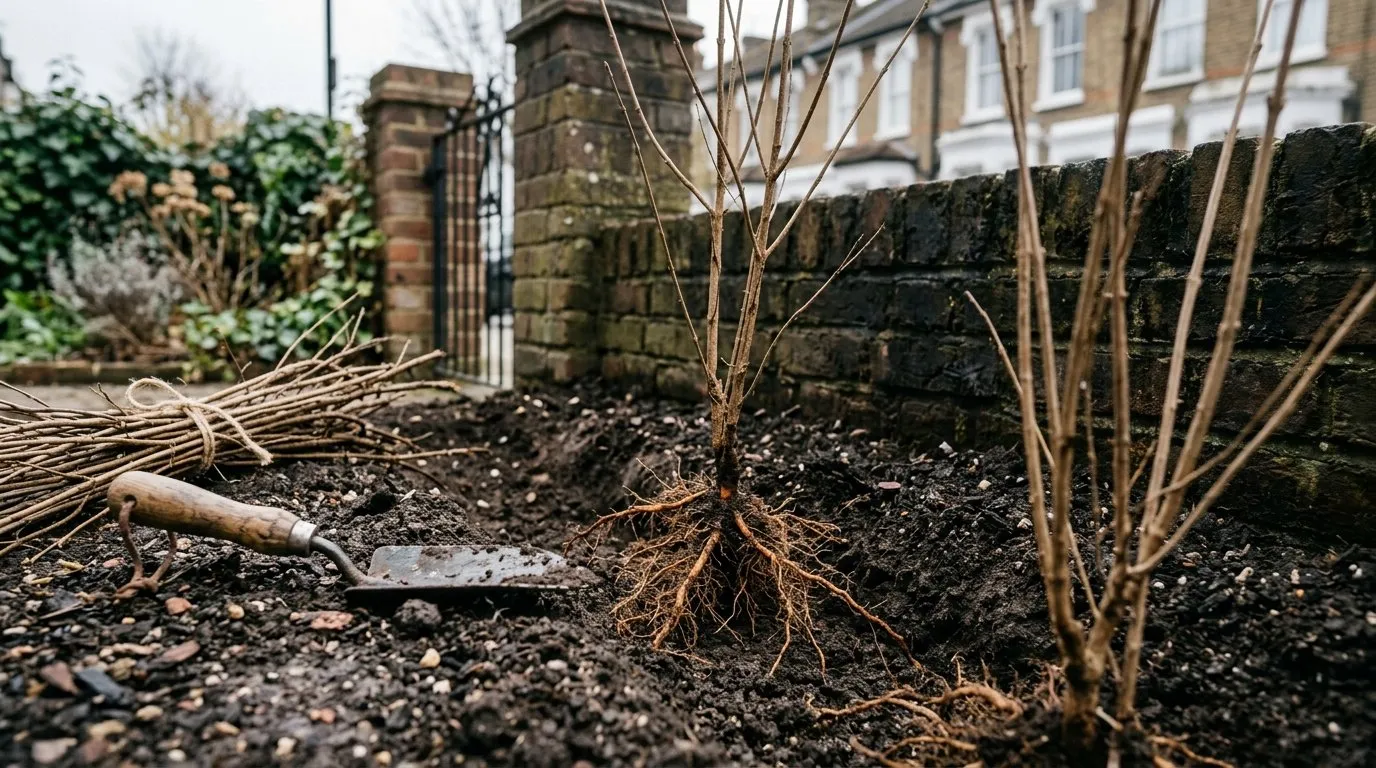 Bare-root whips planted in a trench at three per metre. November to March planting is the cheapest, fastest start.
Firm each plant in with your heel and water well, even in winter. Then cut the whips back by a third after planting. Gardeners hate doing this, but it forces the low, bushy growth that prevents bare bases later. Our full hedge planting guide walks through trench preparation step by step, and the same bare-root timing applies to beech and hornbeam hedges.
Privet tolerates almost any soil, from heavy clay to chalk, in full sun or partial shade. It struggles only in permanently waterlogged ground. Keep new plants watered through their first two summers, because bare-root roots take a full season to establish.
How fast does a privet hedge grow?
Privet grows 30-60cm a year once established, which places it among the faster garden hedges. It is slower than Leyland cypress but far denser, more forgiving and easy to keep to size. A hedge planted at 40cm reaches a useful 1.2 to 1.5m screen in three to four years with feeding and regular cutting.
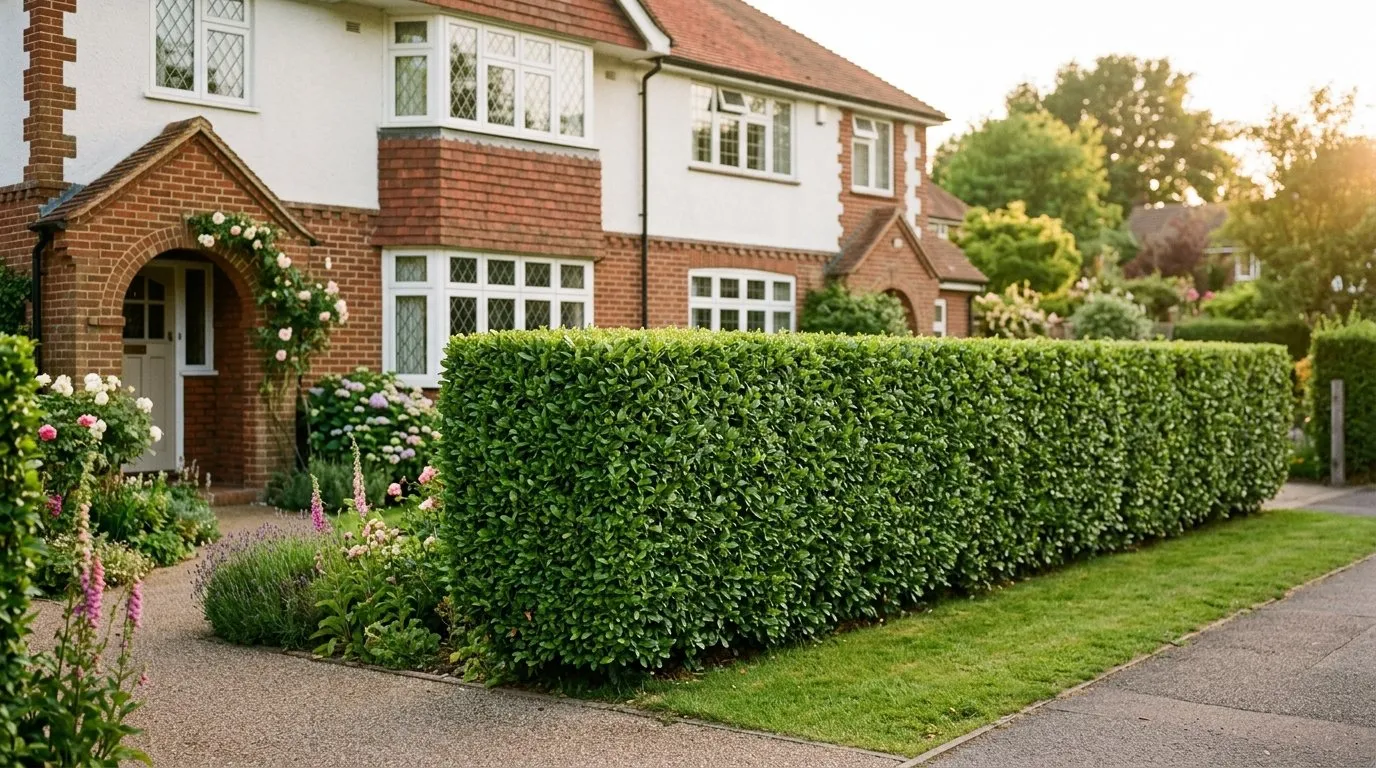 A well-fed privet hedge puts on 30-60cm a year. Regular cutting turns that vigour into a dense, formal face.
If you want faster still, look at our comparison of fast-growing hedging plants. Privet itself sits in the sensible middle: quick to establish, but happy to be held at any height from 1m to 4m.
Gardener’s tip: Decide your final height before you plant, then trim the top flat 15cm below it for two seasons. Privet thickens most where it is cut, so early topping builds a solid crown that carries the whole hedge for decades.
How much does a privet hedge cost?
A bare-root privet hedge is one of the cheapest boundaries you can plant. At three plants per metre and £1.50 to £3 a whip, the plants alone cost £4 to £9 per metre. A typical 10m front-garden hedge works out at £45 to £90 in plants, plus a couple of bags of compost.
Pot-grown privet costs far more. Nine-centimetre pots run £8 to £15 each, so the same 10m line jumps to £240 to £450. The only reason to buy pots is instant height or planting outside the bare-root season.
| Option | Cost per plant | Plants per metre | Cost per metre |
|---|---|---|---|
| Bare-root whip, 40-60cm | £1.50-£3 | 3 | £4-£9 |
| Bare-root, 60-90cm | £3-£5 | 3 | £9-£15 |
| Pot-grown, 9cm | £8-£15 | 3 | £24-£45 |
| Instant hedge unit, 1m+ | £40-£80 per metre | n/a | £40-£80 |
Add a spade, shears and a decent pair of loppers if you do not own them, roughly £60 to £90 for the set. Even so, privet undercuts almost every other formal hedge on cost per metre, which is a large part of why it became the standard British front-garden plant.
When should you cut a privet hedge?
Trim an established privet hedge two to three times between May and August. A single cut in midsummer keeps an informal hedge tidy. For a crisp, formal face, cut in late May, again in mid-July, and a final tidy in early September. The more often you cut privet, the denser and neater it grows.
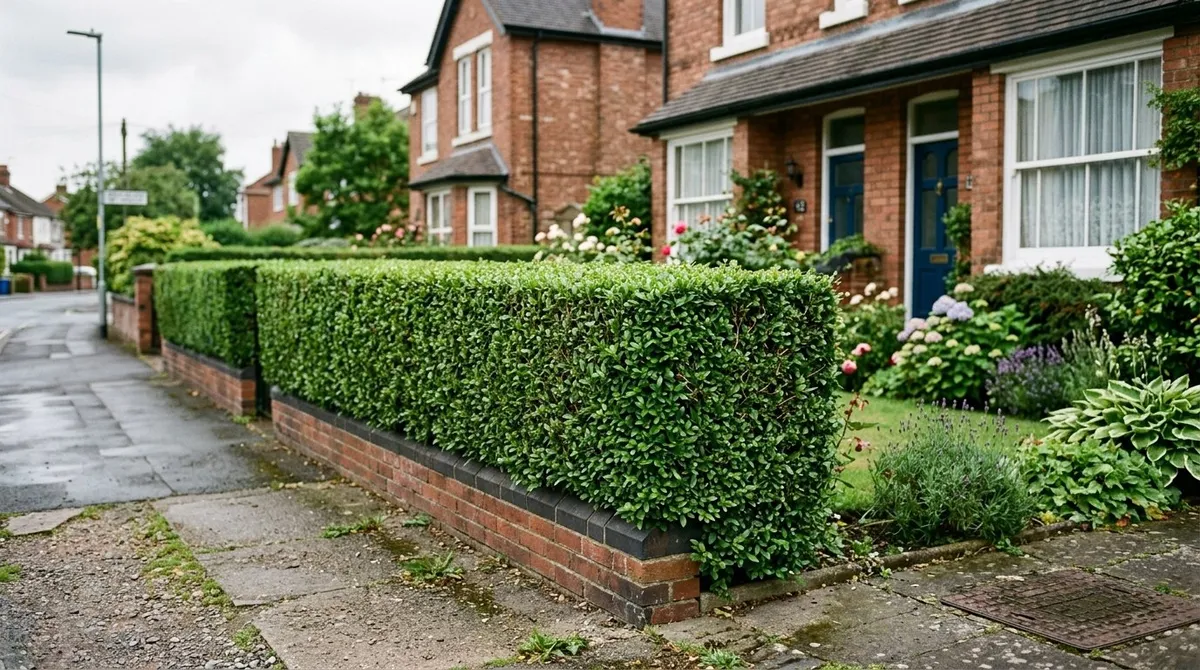
Use sharp shears or a powered hedge trimmer, and always cut with a batter: the base should be 10-15cm wider than the top. This lets light reach the bottom and is the single best defence against bare bases. A hedge cut like a wall, or worse, wider at the top, will always thin out low down.
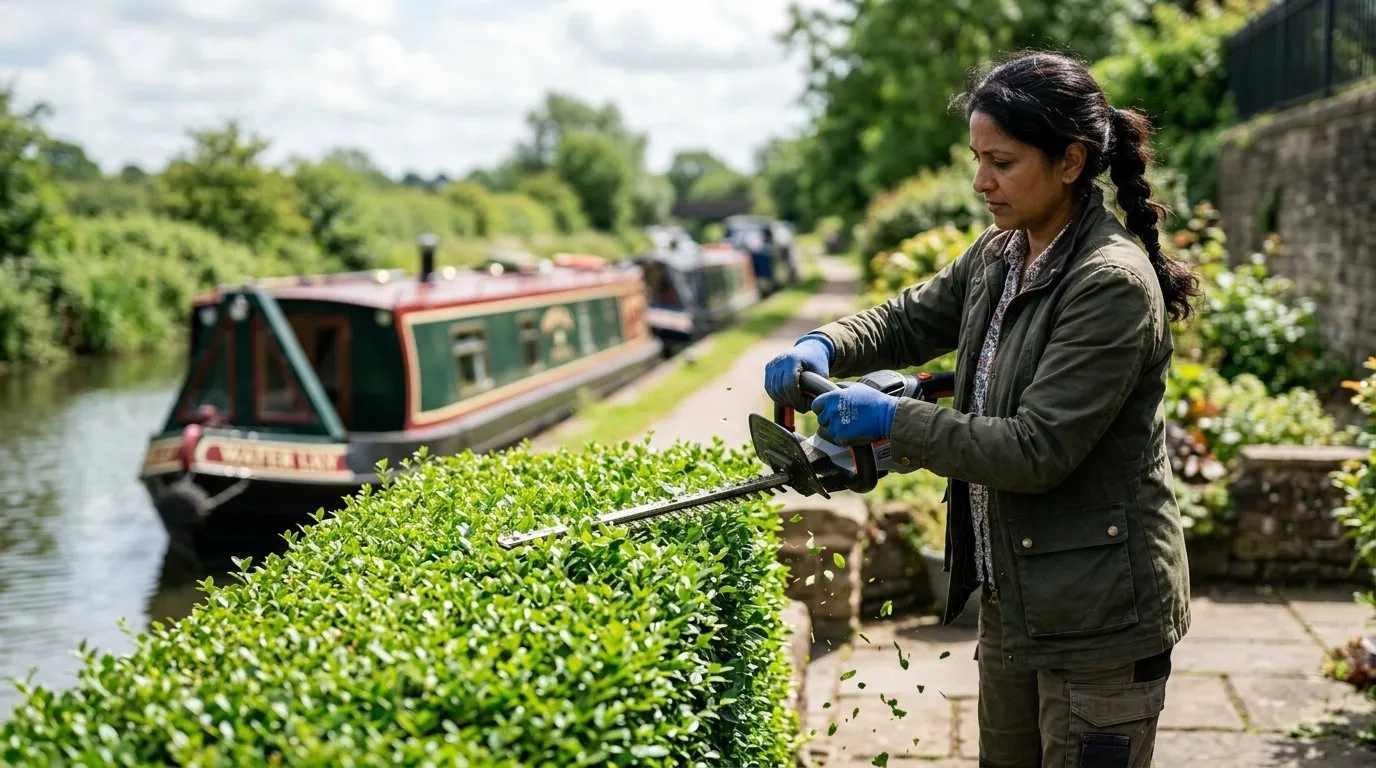 Cut with a batter, base wider than top, so light reaches the bottom. Two or three cuts a year keep privet dense.
Before any spring or summer cut, check the hedge for active birds’ nests. Under the Wildlife and Countryside Act 1981 it is a criminal offence to damage or destroy the nest of any wild bird while it is in use. The main nesting season runs March to August, exactly when privet needs cutting. Look before you cut, and if a nest is active, work around it and come back later. Our guide to the legal dates for cutting hedges explains the rules in full.
How do you feed and water a privet hedge?
Feed privet once each spring with a balanced granular fertiliser. Privet is a hungry, greedy-rooted plant that strips nutrients from the surrounding soil, which is why grass and borders next to it often struggle. A single handful of Growmore, about 70g per metre, forked lightly into the soil in April keeps growth strong and the colour a deep green.
Follow the feed with a 5cm mulch of garden compost or well-rotted manure along the base, kept clear of the stems. Mulch feeds slowly, holds moisture and suppresses the weeds that compete with shallow privet roots.
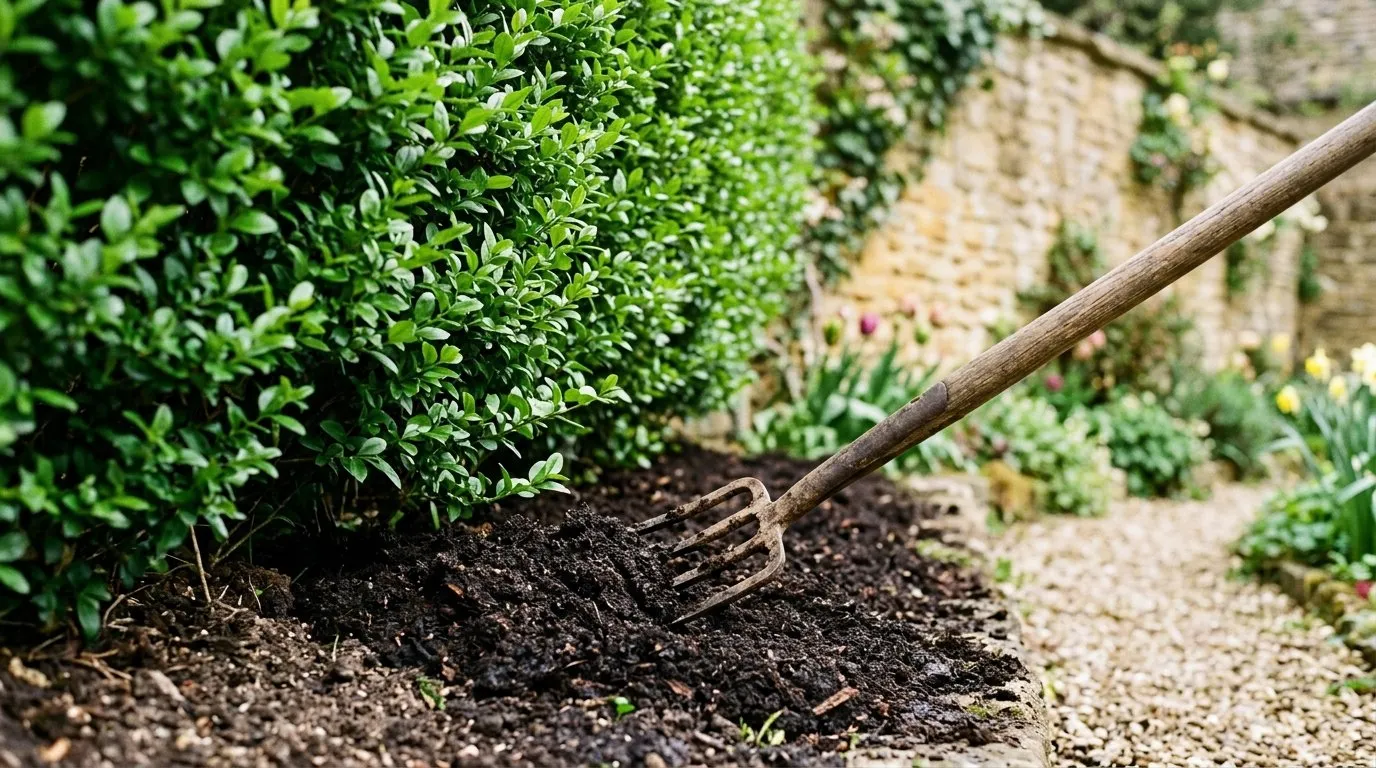 A spring handful of balanced fertiliser and a compost mulch keep hungry privet green. Keep mulch clear of the stems.
Water is only critical for the first two years and during genuine drought. Established privet is drought-tough, but a young hedge that dries out in its first summer will check badly or die in patches. In a dry spell, give new plants a 10-litre soak per metre once a week, at the base, rather than a daily sprinkle. Yellowing lower leaves in summer usually mean drought stress or hunger, not disease.
How do you renovate an overgrown privet hedge?
Renovate an overgrown privet hedge by cutting it hard back in late winter, because privet regrows readily from old, leafless wood. This is privet’s great trick. Unlike conifers such as Leyland cypress, which will not reshoot from bare brown wood, privet buds freely from apparently dead stumps.
Do the work in February or March, before growth starts. Cut the hedge back to 30-45cm below your target height, or right down to 30cm from the ground for a total rebuild. Use loppers and a pruning saw for the thick stems. It looks brutal, and it works.
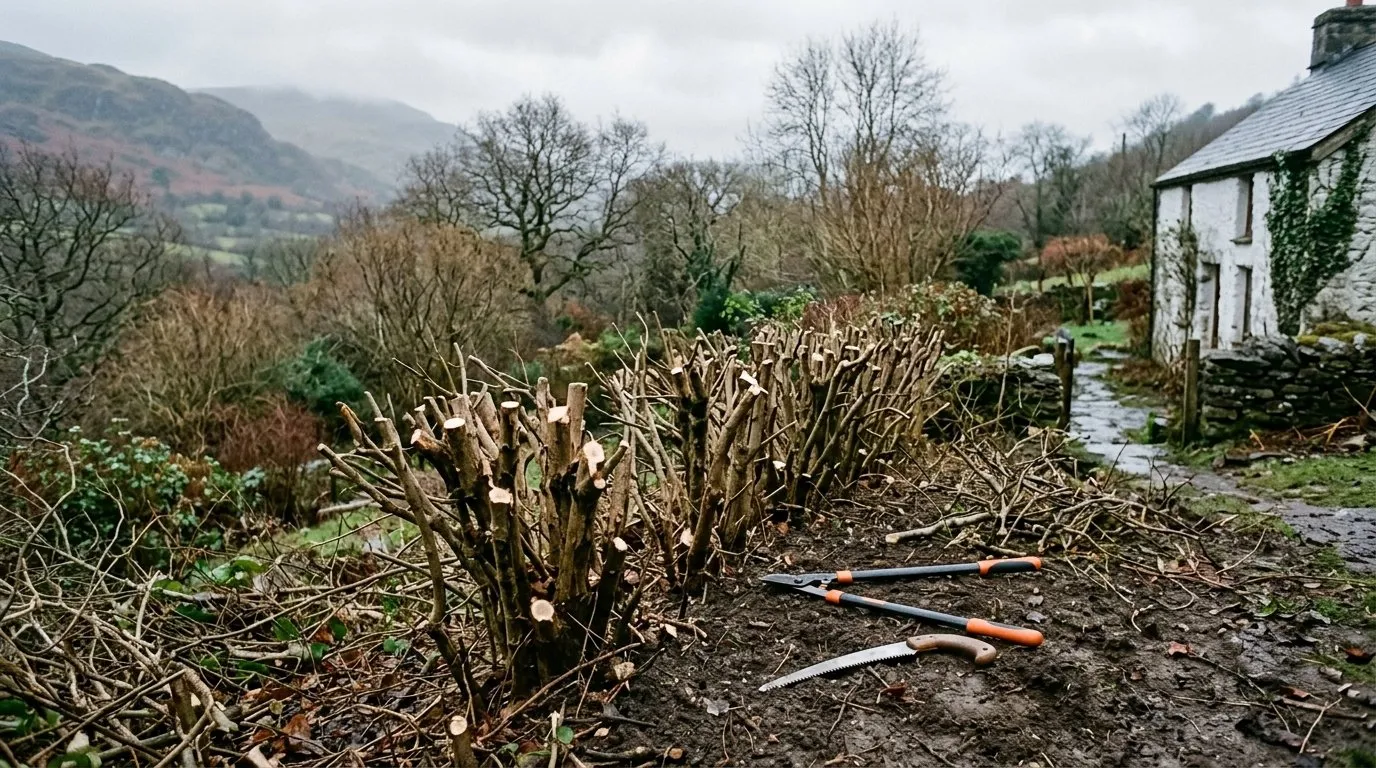 Privet renovated to bare stumps in February. New shoots break from old wood within one season, unlike conifers.
Stagger the job across two years for safety. Cut one face or side back hard the first winter, leaving the other in leaf to keep the plant fed. Cut the second side the following winter once the first has resprouted. Feed and mulch generously after cutting, and water through the first summer. The hedge typically throws 30-45cm of dense new growth in the first season. Keep the new shoots watered through their first dry summer, and resist trimming them until they reach your target height, because early growth needs its leaves to rebuild the plant. A spring feed the following April speeds recovery further. For the pruning technique on woody stems, our shrub pruning guide covers clean cuts and tool choice.
What are the common privet hedge problems?
Most privet troubles are cosmetic, but two are serious: honey fungus and privet thrips. Bare bases, the third common complaint, are a pruning fault rather than a disease.
Honey fungus is the one that kills. Privet is highly susceptible to this soil-borne root disease. Signs are sudden dieback of whole plants, white fungal sheets under the bark at the base, and honey-coloured toadstools in autumn. There is no chemical cure. Dig out and destroy affected plants and roots, and avoid replanting privet in the same spot. The RHS guidance on honey fungus lists resistant alternatives, and our own guide on dealing with honey fungus explains containment.
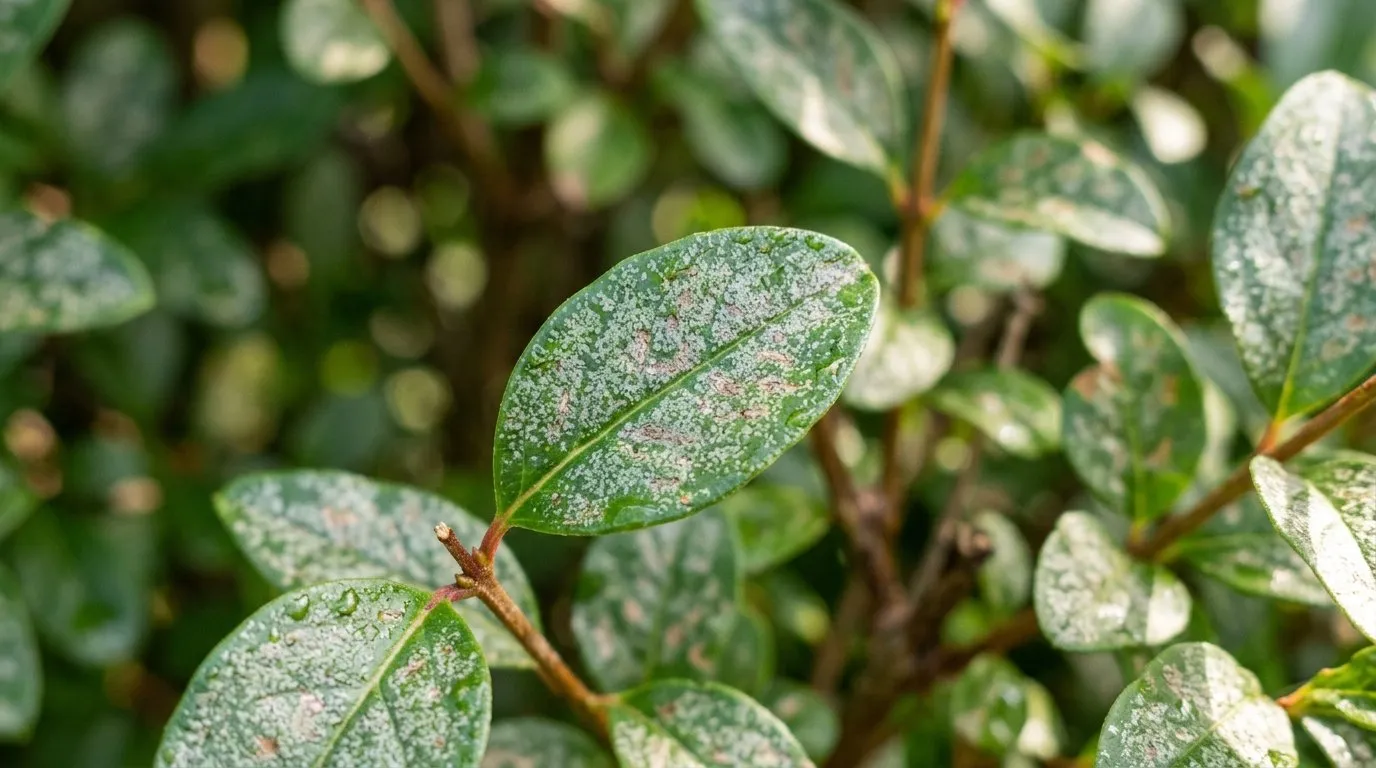 Privet thrips cause silvery, greyish mottling on the leaves in summer. The 1-2mm insects rarely kill, but they disfigure.
Privet thrips (Dendrothrips ornatus) cause a silvery, greyish speckling across the leaves in summer, sometimes with browning. The insects are barely 1-2mm long. Damage looks alarming but rarely threatens the hedge. Keep the plant well fed and watered so it grows through the attack, and expect fresh clean growth after the next cut.
Bare bases come from shading and bad trimming, as covered above. The fix is a proper batter and, for a badly bare hedge, a hard winter renovation to force new low shoots. If your hedge is browning rather than silvering, the cause is more likely drought or a root problem than thrips.
Which privet variety should you grow?
For most UK gardens, common oval-leaf privet (Ligustrum ovalifolium) is the best all-round choice. It is the cheap, vigorous, semi-evergreen workhorse that holds most of its leaves through a mild winter and drops them in a hard one. But a few others suit specific jobs.
| Variety | Leaf and habit | Evergreen? | Best for |
|---|---|---|---|
| Ligustrum ovalifolium (garden privet) | Glossy oval green leaves, dense, vigorous | Semi-evergreen | The standard UK formal hedge, cheapest option |
| Ligustrum ovalifolium ‘Aureum’ (golden privet) | Yellow-edged leaves, slightly slower | Semi-evergreen | Colour and contrast, brighter boundaries |
| Ligustrum vulgare (wild privet) | Narrow leaves, native, black berries | Deciduous | Wildlife and native mixed hedges |
| Ligustrum lucidum (Chinese privet) | Large glossy leaves, tree-like | Evergreen | Tall single specimens, not tight hedging |
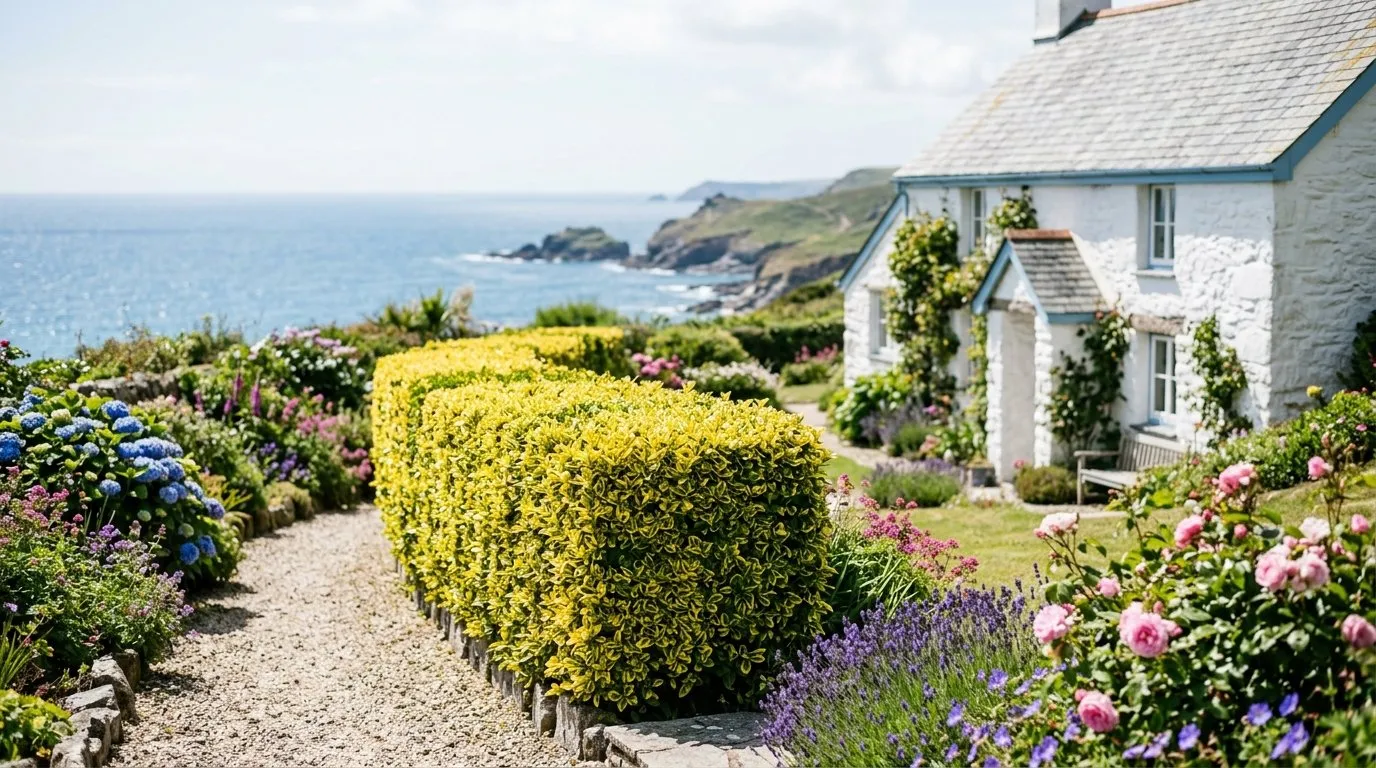 Golden privet, ‘Aureum’, brings yellow variegation to a boundary. It grows a little slower than the plain green form.
Golden privet (‘Aureum’) is the popular variegated form and mixes well with green privet for a two-tone hedge. Wild privet (Ligustrum vulgare) is the native species, better for a wildlife or native mixed hedge than a crisp formal face, and its flowers and berries feed insects and birds. One firm word of caution across all types: privet leaves and berries are toxic to dogs, horses and people, so keep clippings off grazed lawns.
Whichever you choose, the care is the same. Plant bare-root in winter, cut two or three times a summer with a batter, feed each spring, and renovate hard from old wood when it outgrows its space. Do that, and a privet hedge is the most durable, low-cost boundary a British garden can have.
Our team produces practical UK gardening guidance from source research, contributor records and established horticultural practice. Editorial standards are overseen by Matt W.