Key takeaways
- An avocado stone roots in 2-8 weeks, fastest at a steady 20-25C on a warm windowsill
- Two methods work: cocktail sticks over water, or planting straight into moist compost
- Set the stone broad flat end down and the pointed end up, or it will not sprout
- Pinch the growing tip at 30cm to force a bushy plant instead of one bare stem
- UK plants rarely fruit indoors: expect 10-plus years, two trees and warmth even then
- Keep the plant above 10C over winter and cut watering right back until spring
- Brown leaf tips usually mean fluoride in tap water, dry air or salt build-up
Learning to grow avocado from stone is the classic windowsill project, the one nearly every UK household tries at least once with a leftover pit from lunch. It costs nothing, and a split avocado stone sending down a pink taproot is genuinely exciting to watch.
How do you grow an avocado from a stone?
You grow avocado from stone by cleaning the pit, setting it broad-end-down, and keeping it warm and moist until it roots in 2-8 weeks. The avocado (Persea americana) is a subtropical tree, so warmth is everything. Get the orientation and the temperature right and the rest looks after itself.
Start with a fresh stone from a ripe avocado. Wash off every trace of the green flesh, because leftover fruit invites mould and rot. Do not soak it or scrub off the brown papery seed coat unless it lifts away easily.
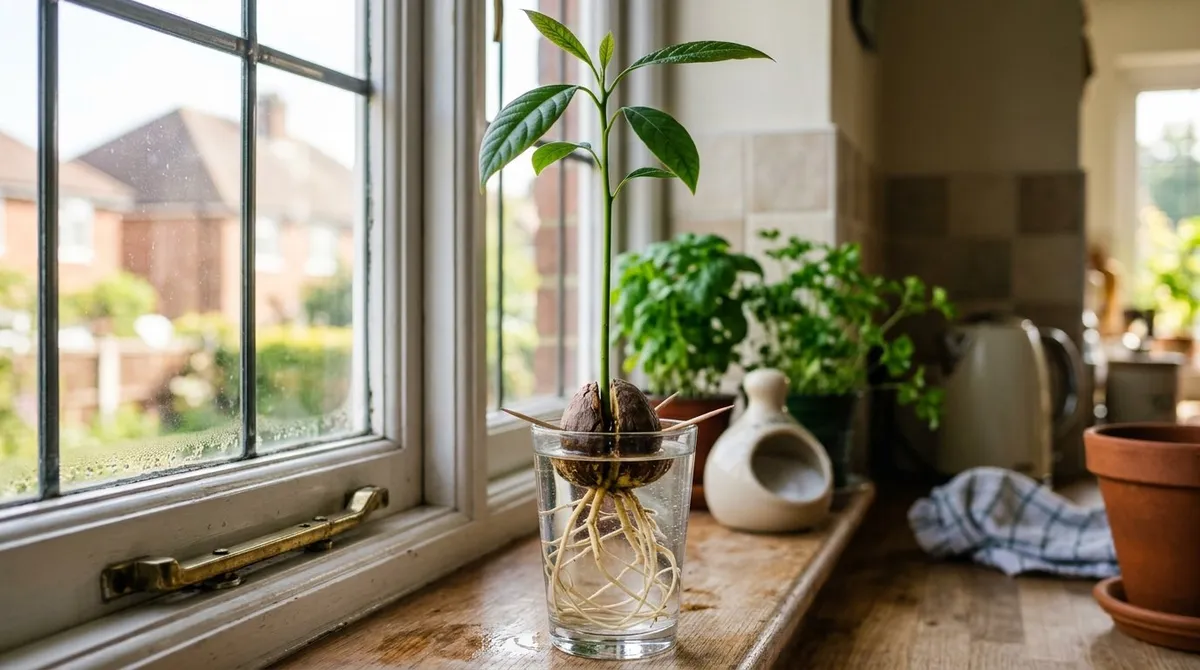
Now find the two ends. The broad, flatter end is the base, where roots emerge. The pointed, narrower end is the top, where the shoot appears. There is often a faint circular scar on the base. Getting this the right way up is the single most common beginner mistake.
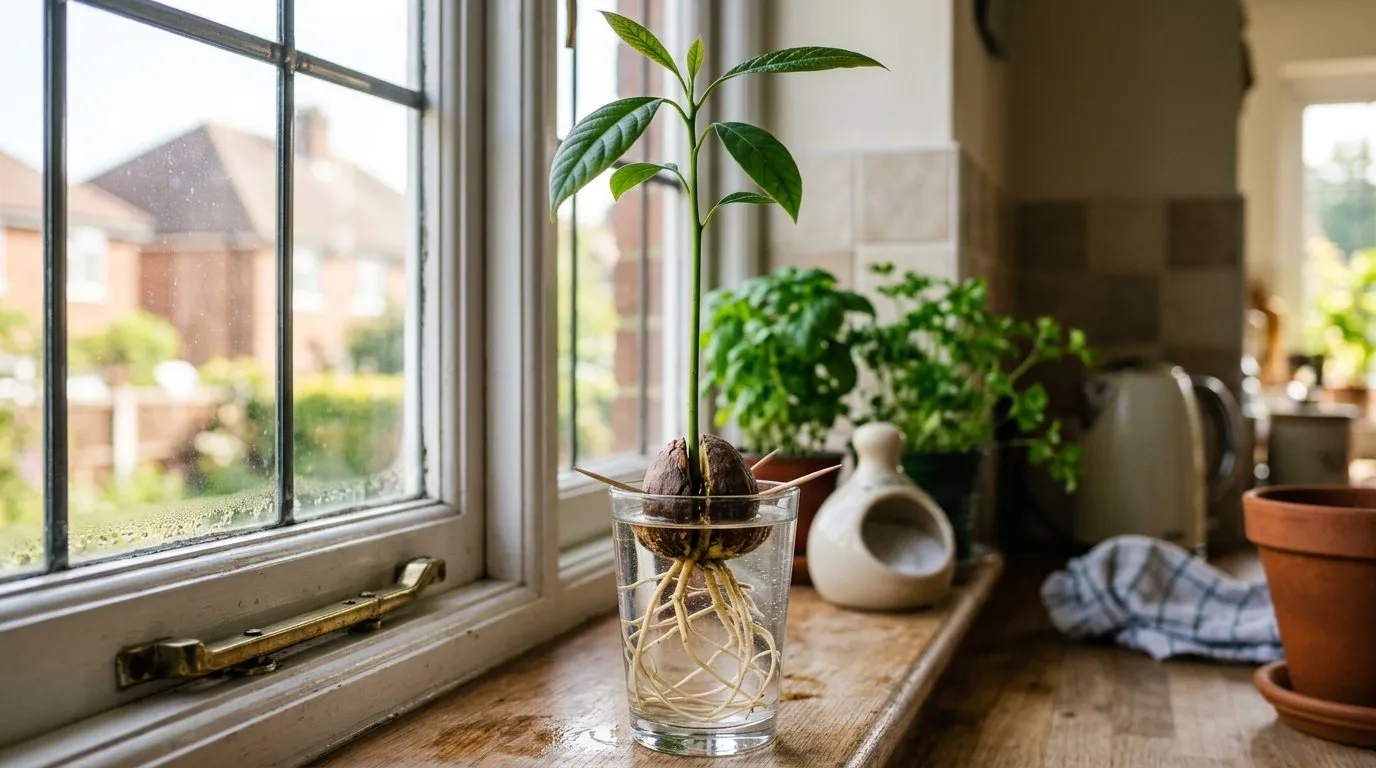 An avocado stone sprouting on a warm windowsill. The broad base sits down, the pointed tip up, and the first shoot pushes skyward.
Whichever method you pick, the costs are tiny. A ripe avocado is about £1, a glass or jam jar is free, and a bag of peat-free multi-purpose compost runs to £5-7. It sits happily alongside other thrifty windowsill jobs in our guide to regrowing food from kitchen scraps.
Cocktail stick method vs planting straight in compost
Both methods root avocado stones reliably, so the choice comes down to whether you want to watch the roots form or keep things tidy. The water method is the famous one, all cocktail sticks and jam jars on the sill. The compost method is quieter and often kinder to the young roots.
For the water method, push three or four cocktail sticks into the stone at a slight downward angle, about a third of the way up. Rest the sticks on the rim of a glass so the base sits 1-2cm deep in water and the top two-thirds stays dry. Use a clear glass so you can see the roots. Top up the water and refresh it fully every few days to stop it going stagnant.
For the compost method, part-bury the stone in a 9-10cm pot of moist compost. Leave the top third poking out above the surface. Keep the compost just moist, never soggy, and stand the pot somewhere warm and bright. You will not see the roots, but they never suffer the check of being moved from water to soil later.
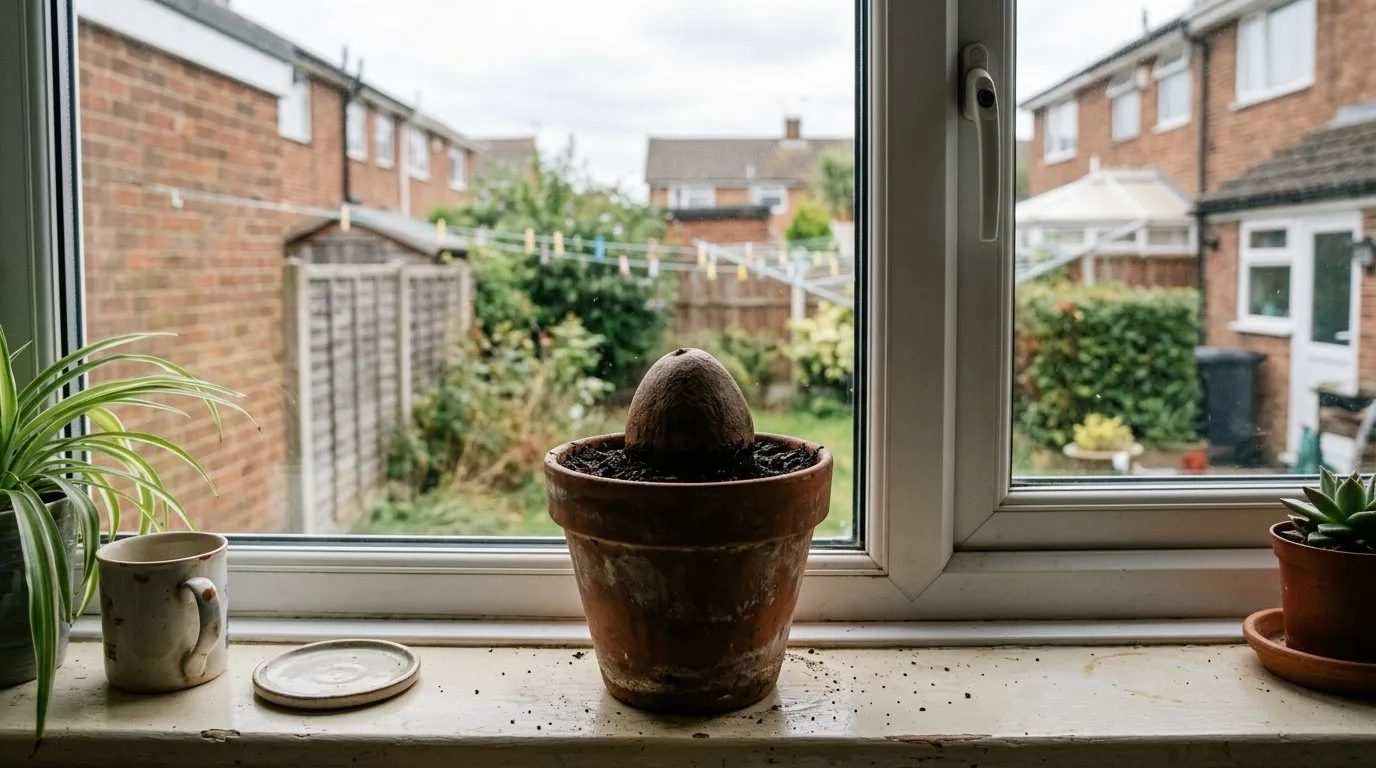 The compost method on a council-estate terrace sill. The stone sits with its top third proud, kept just moist and warm.
Here is how the two methods compare on the points that matter.
| Factor | Cocktail sticks in water | Straight into compost |
|---|---|---|
| Watch roots form | Yes, in a clear glass | No, hidden in the pot |
| Root disturbance later | Some, moving to soil | None |
| Tidiness | Fiddly, sticks and jars | Clean, one pot |
| Typical rooting time | 2-8 weeks | 3-8 weeks |
| Best for | Kids and curiosity | A stronger long-term plant |
If children are involved, the glass wins for sheer spectacle. For the healthiest eventual plant, compost has a slight edge.
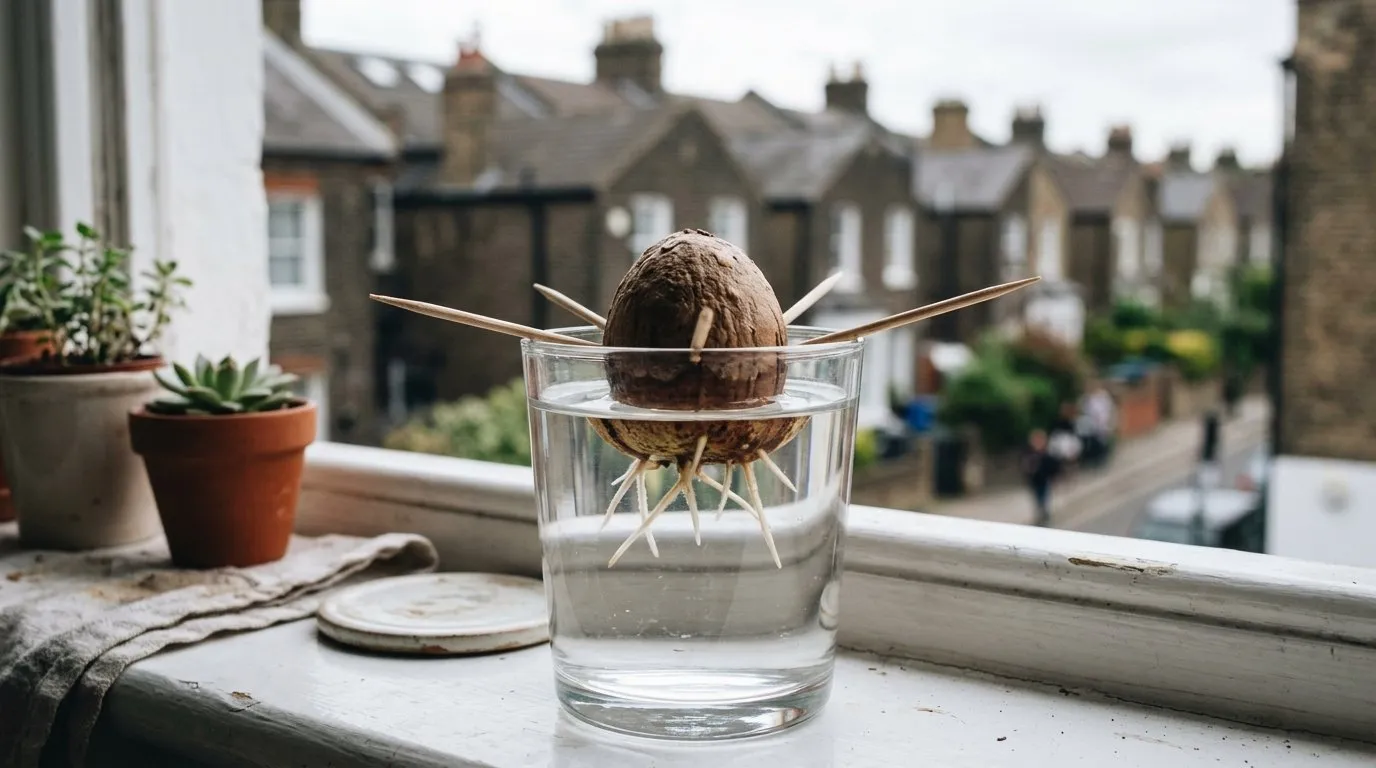 The cocktail-stick water method on a London flat windowsill. Three sticks hold the base 2cm deep so the roots emerge into clear water.
How long does an avocado stone take to root?
An avocado stone roots in 2-8 weeks, with most sprouting inside a month at the right temperature. There is no fixed schedule. Warmth, freshness and a little luck all play a part, and some stones simply never take.
The sequence is always the same. First the stone splits down the middle as it swells. Then a thick pink or white taproot pushes down from the base. Only later, sometimes weeks after the root, does the first shoot rise from the pointed top. Do not give up when you see roots but no shoot. The shoot lags behind by design.
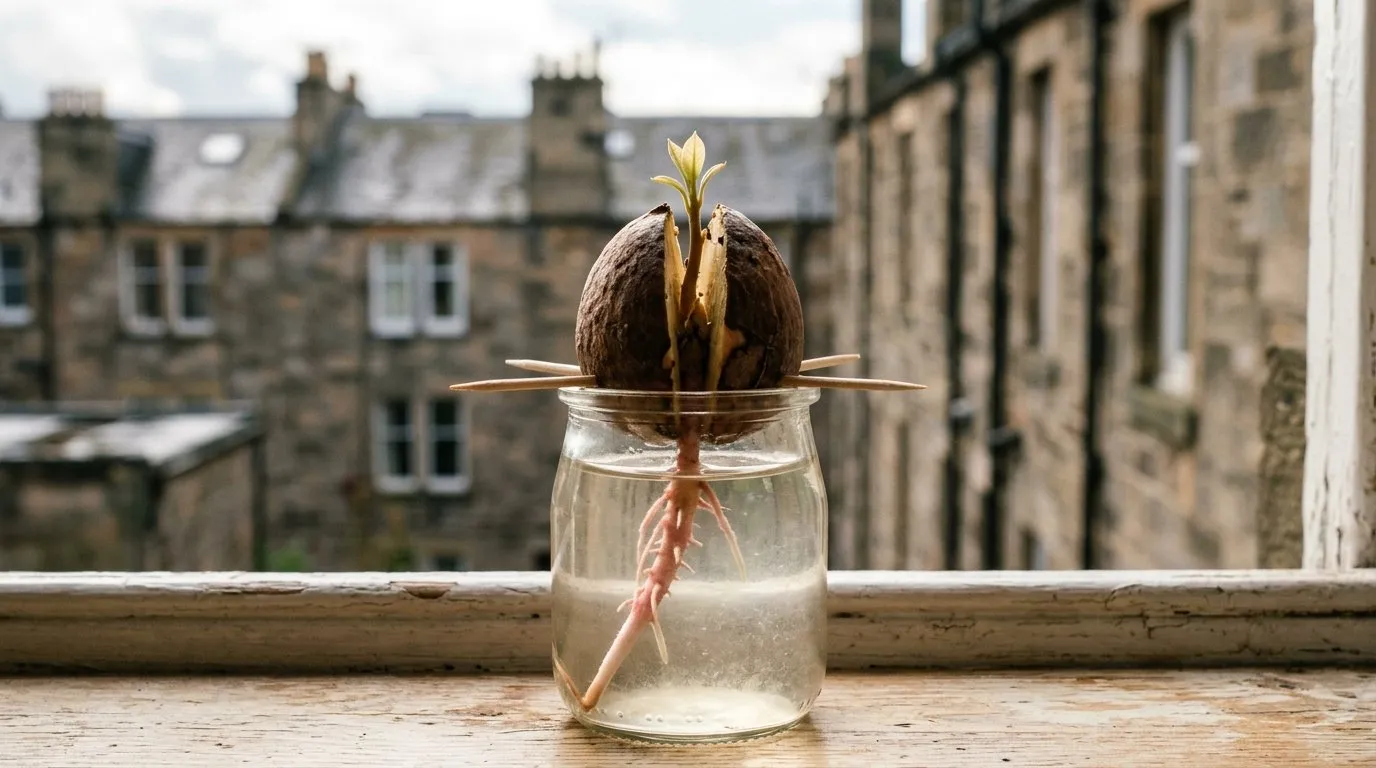 A split stone with its pink taproot and first shoot, on a Scottish tenement windowsill. Roots always come well before the shoot.
Temperature is the biggest lever you can pull. At a steady 20-25C, near a radiator or on a heated propagator, stones crack fastest. In a cool 15C room the same stone may take double the time or rot before it starts. An airing cupboard suits the earliest, rootless stage well, though you must move it to the light the instant a shoot appears.
Potting on and pinching to make a bushy plant
Pot your avocado on once the taproot reaches 5-8cm and the shoot is 15cm tall, then pinch the tip to force branching. This stage decides whether you end up with a leafy plant or a bare green broom handle.
Move the stone into a 13-15cm pot of peat-free multi-purpose compost with a handful of grit for drainage. Set it so the top half of the stone still shows above the soil, exactly as it sat before. Water it in, then let the surface dry slightly between waterings. Avocados hate sitting wet.
Give it the brightest windowsill in the house, ideally south or west facing. Turn the pot a quarter every few days so it grows evenly rather than leaning at the glass. If your light is poor, a grow light stops the stretching, and our guide to repotting houseplants covers the move-up-a-size routine.
Now the important part. Left alone, an avocado grows straight up as one unbranched stem and looks gawky within months. When the stem reaches about 30cm, pinch or snip out the top two sets of leaves. It feels brutal. It is the making of the plant. Within weeks several side shoots break from lower down and the plant fills out. Pinch again each time a shoot gains 20cm of new growth.
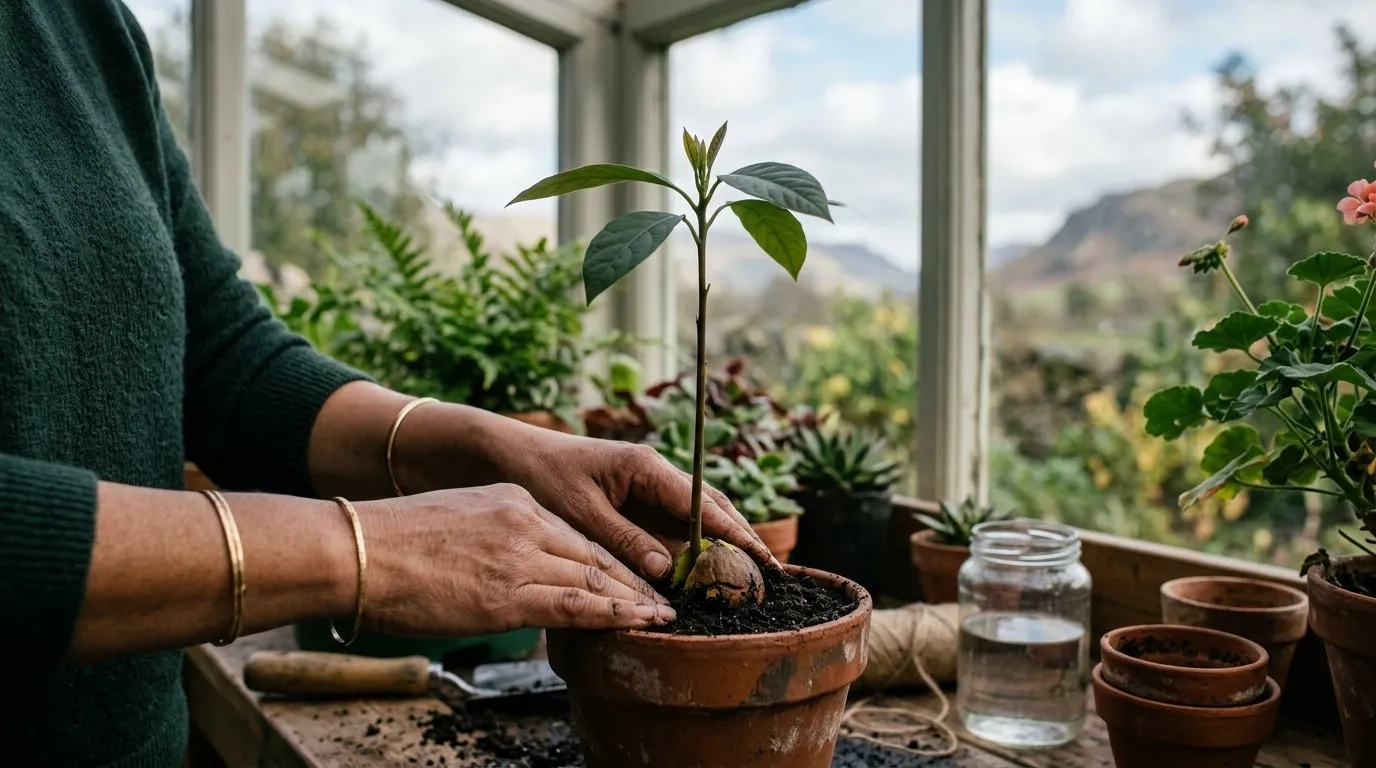 Potting on at 15cm into a terracotta pot. The top half of the stone stays proud of the compost, as it grew in the glass.
Feed from spring to late summer with a balanced liquid houseplant feed every two to three weeks. Ease right off in autumn and winter. Repot each spring into a pot one size larger, and it will keep pace happily for years. Bright light is the one thing it will not compromise on, so keep it in your sunniest window all year round.
Will an avocado grown from a stone ever fruit in the UK?
Almost never indoors, and not for at least 10 years if it does. A stone-grown avocado in a British home is a foliage plant, not an orchard.
Three things stand against fruit. First, seed-grown trees are slow, taking 10-13 years to reach flowering size against 3-4 years for a grafted tree. Second, avocados need two trees with complementary flower timing, so-called Type A and Type B, to pollinate at all. Third, they want months of warmth and strong light that a UK indoor space cannot supply.
For any real chance of fruit you need a grafted named variety and a heated conservatory or greenhouse kept frost-free and bright. Grafted young trees cost £20-40 and fruit far sooner than any pip. The hardiest are the Mexican types like ‘Bacon’, ‘Zutano’ and ‘Mexicola’, which shrug off a light touch of frost better than ‘Hass’. Even so, reliable UK fruit is a rarity.
The RHS avocado growing guide is refreshingly blunt on this: grow it as a curiosity and a handsome houseplant, and treat any flower as a bonus. If you want a citrus you can actually harvest indoors, our guide to growing citrus trees is a better bet, and so is our coffee plant guide for another edible-adjacent windowsill tree.
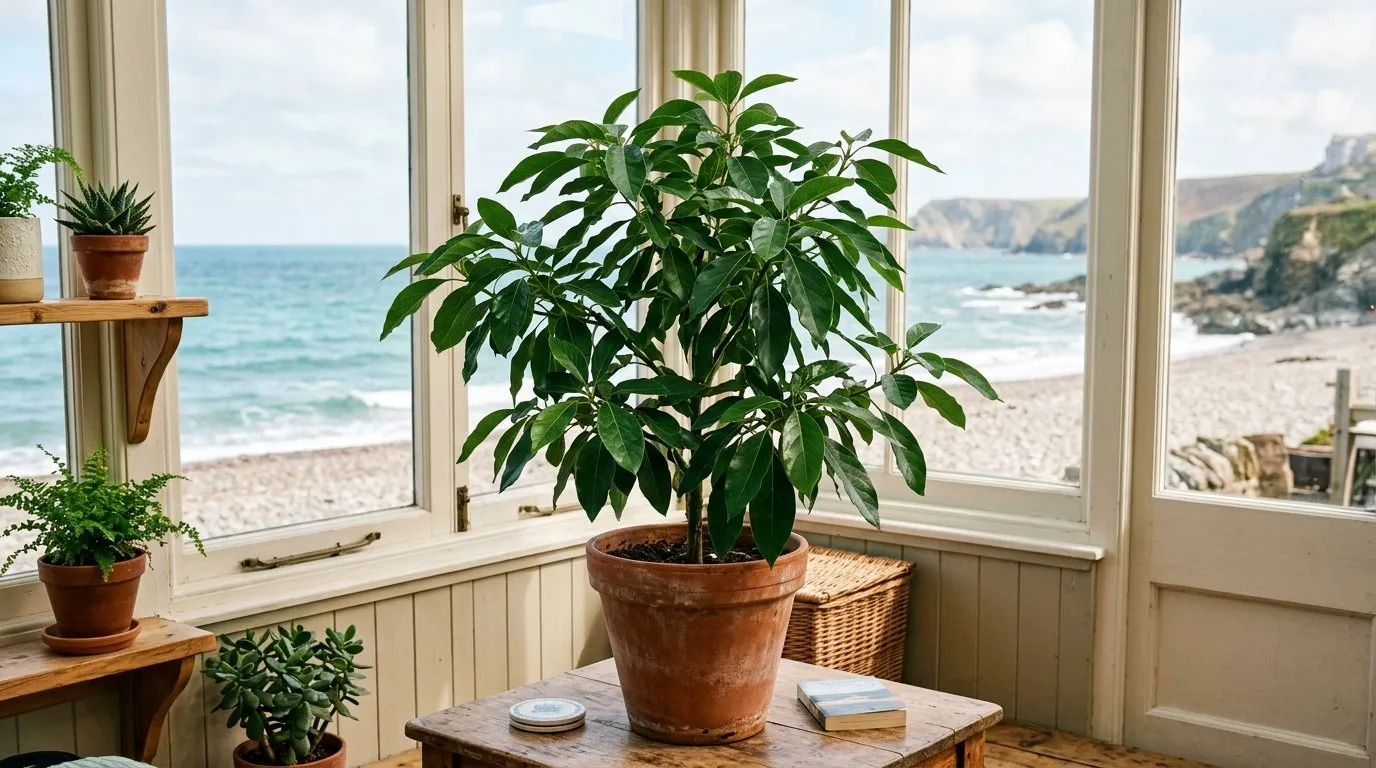 A well-pinched avocado after three years in a seaside sunroom. Glossy foliage and a bushy shape, but no fruit in a UK home.
How to overwinter an avocado plant in the UK
Keep an avocado above 10C all winter and cut watering right back, because cold and wet are what kill indoor plants. Avocados are subtropical and have no frost tolerance as young pot plants. Winter is the season most windowsill avocados are lost.
Bring the plant into the warmest, brightest room before nights turn cold, usually by late September. A minimum of 10C is survival, 13-15C is comfortable. Keep it off cold windowsills at night and away from unheated porches. A conservatory works only if it stays frost-free, a point our conservatory houseplants guide makes for all tender plants.
Water far less from October to March. Let the top few centimetres of compost dry out fully between waterings. Overwatering in a cold, dark room rots the roots faster than anything. Stop feeding entirely until growth restarts in spring.
Watch for draughts and radiators, the two winter enemies. A cold draught triggers leaf drop, while a nearby radiator scorches the tips and dries the air. Stand the pot on a tray of damp gravel to lift humidity. Come spring, resume normal watering and feeding, and the plant pushes fresh growth again.
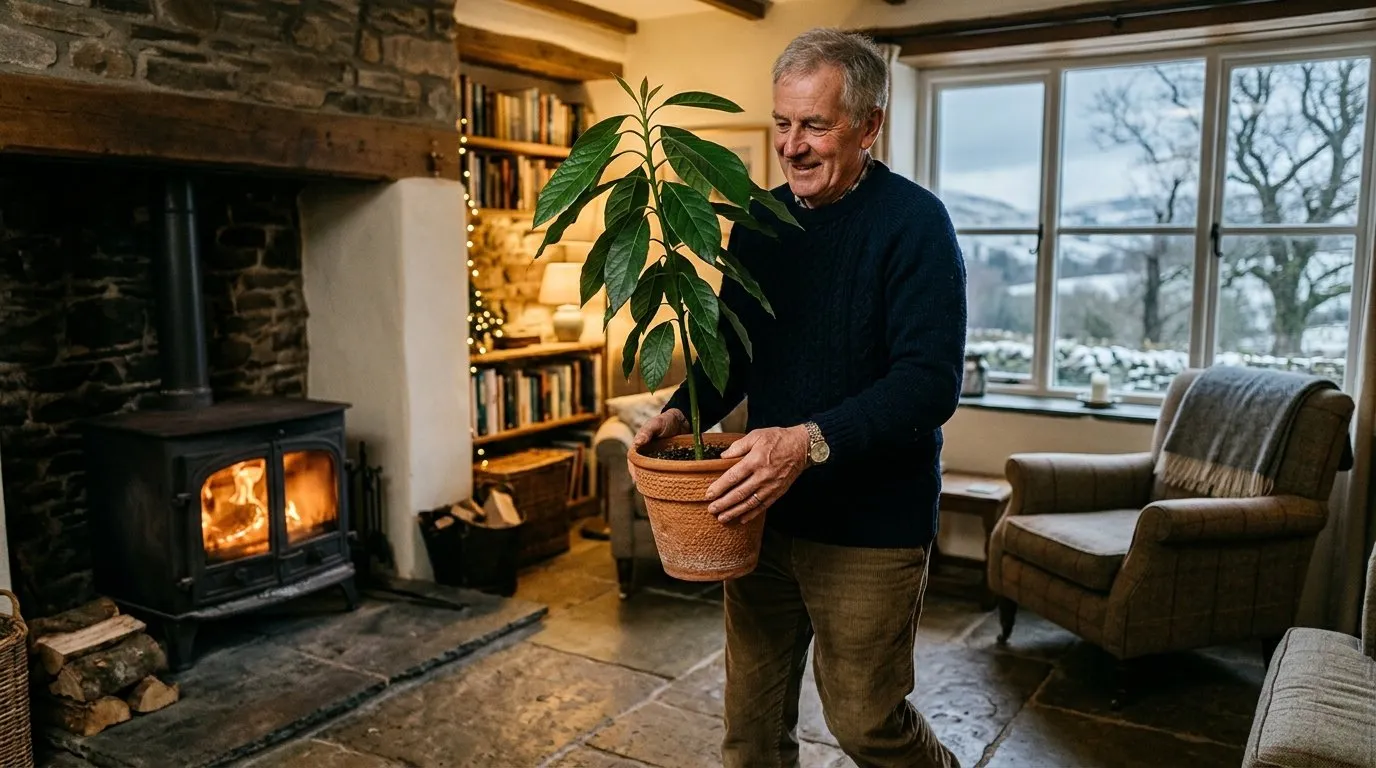 Moving an avocado to a warm, bright room for winter in a Welsh cottage. Keep it above 10C and water sparingly until spring.
Common avocado growing problems and how to fix them
Most avocado troubles trace back to three causes: too little light, too much water, or hard tap water. The plant is tough once you read its signals.
Leggy, bare stem with leaves only at the top
A tall, spindly avocado with a naked stem is starved of light and has never been pinched. Move it to the brightest window, add a grow light if needed, and pinch the growing tip to force lower shoots. If it is already a bare pole, cut it back hard to 20cm in spring. It will branch from below.
Brown, crispy leaf tips
Brown tips are the most common complaint and usually mean fluoride or chlorine in tap water. Switch to cooled boiled water or rainwater. Dry air near radiators and salt from over-feeding cause it too. Flush the pot with plenty of water once a month to wash out built-up salts, and mist the leaves in warm rooms.
Leaves yellowing and dropping
Yellowing lower leaves that fall usually signal overwatering and cold roots. Let the compost dry more between waterings and move the plant somewhere warmer. A sudden cold draught also drops leaves overnight. Check the pot drains freely and never let it stand in a saucer of water.
Stone rots before it sprouts
A stone that turns black and soft has rotted, and there is no saving it. Cold, stale water or leftover fruit flesh are the usual causes. Refresh the water every few days, wash the stone clean before starting, and keep it warm. Simply start more stones than you need. Some always fail.
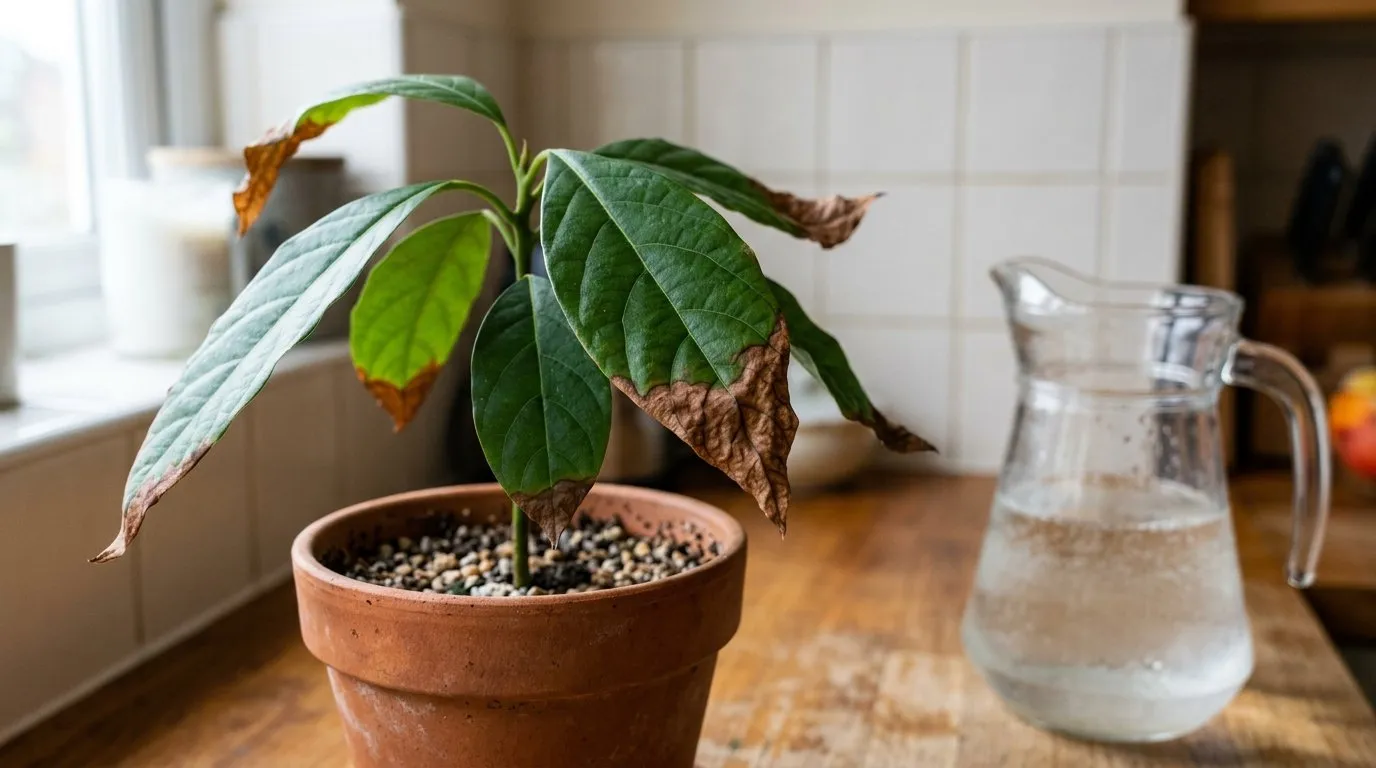 Brown leaf tips from hard tap water, the commonest avocado complaint. Switch to rainwater and flush the pot monthly to clear salts.
If your plant has outgrown its pot and roots are circling the base, it needs moving on, a job covered in our root-bound houseplants guide. And if you have caught the windowsill bug, our roundup of the best indoor plants for UK homes suggests easier companions to grow alongside it.
Frequently asked questions
How long does an avocado stone take to sprout?
An avocado stone roots in 2-8 weeks, then sends up a shoot. Warmth is the deciding factor. At a steady 20-25C on a warm windowsill or propagator, most stones crack and root within a month. In a cool room at 15C it can drag on for two months or fail. Patience and a warm spot matter more than anything else.
Which way up does an avocado stone go?
Broad flat end down, pointed end up. The wide base is where roots emerge, so it sits in the water or points into the compost. The tapered tip is where the shoot appears and stays uppermost. Plant it the wrong way up and it will not grow. Look for the faint scar at the base if you are unsure.
Do you have to use cocktail sticks to grow an avocado?
No, cocktail sticks are optional. They simply suspend the stone so its base sits in water while the top stays dry. You can skip them and plant the stone straight into moist compost with the top third showing. The compost method is tidier and the roots never need disturbing, though you cannot watch the taproot form.
Will an avocado grown from a stone produce fruit in the UK?
Very rarely, and not for at least 10 years. Seed-grown avocados fruit slowly, need two trees for pollination, and want more warmth and light than a UK home offers. Most become handsome foliage plants and never flower. For fruit, buy a grafted tree and grow it in a heated conservatory. Enjoy yours as a leafy houseplant instead.
Why has my avocado plant got brown leaf tips?
Brown tips usually mean fluoride or chlorine in tap water, dry air, or salt from over-feeding. Water with cooled boiled water or rainwater, mist the leaves, and flush the pot monthly to wash out built-up salts. Keep it away from radiators. Cold draughts and soggy compost cause browning too, so check watering and position.
How tall does an indoor avocado plant grow?
Left unpinched, an indoor avocado runs up to 1.5m or more as a single bare stem in a few years. Pinching the tip at 30cm forces branching and keeps it bushy at 60-90cm. Pot it on every spring into a slightly larger container. In a bright conservatory it can eventually reach the ceiling, so prune to control it.
Can you plant a supermarket avocado stone?
Yes, supermarket avocado stones sprout perfectly well. Most UK shop avocados are Hass, which grows into a fine plant. Wash the stone, remove any brown papery skin, and start it in water or compost. The fruit variety makes little difference to the houseplant you get. It just will not come true to type if it ever did fruit.
Once your first stone is away, start a second and a third from the next avocados you buy. The RHS advice on avocados confirms it: they make rewarding foliage plants, and half the fun is the free supply of pits waiting in the fruit bowl.
Our team produces practical UK gardening guidance from source research, contributor records and established horticultural practice. Editorial standards are overseen by Matt W.