Key takeaways
- Fish scraps, sugar and water ferment into a liquid feed of roughly 4-1-1 NPK in 4-6 weeks
- Shop fish emulsion sells at 5-1-1 and costs £8-14 a litre; the home version costs pennies
- Dilute the strained concentrate 1:20 for soil drenches and 1:50 for foliar feeding
- 250g of molasses or brown sugar per 2kg of fish tames the smell and speeds the ferment
- A weighted lid is non-negotiable: rats, foxes and gulls will all raid an open bucket
- Fish feed suits leafy crops; switch to high-potash comfrey once plants start flowering
- Never water it onto salad leaves within two weeks of picking, and always wash produce
Homemade fish fertiliser is the most powerful free plant feed a UK gardener can brew, and hardly anyone makes it. Fishmongers bin frames, heads and guts every single day. Ferment those scraps in a bucket with sugar and water and you get a nitrogen-rich concentrate that shop emulsions imitate at £8-14 a litre.
What is homemade fish fertiliser and is it worth making?
Homemade fish fertiliser is a fermented liquid feed made from waste fish, sugar and water. The trade calls the bottled version fish emulsion, and it is usually standardised at an NPK of 5-1-1. A home brew lands close behind, at roughly 4% nitrogen, 1% phosphate and 1% potash, with the exact figures set by what goes in the bucket. Bony frames push up phosphorus and calcium. Oily fish such as mackerel and herring carry more nitrogen. If those three numbers mean little to you, our NPK explained guide decodes them in five minutes.
The idea is far older than the garden centre. Coastal growers in Britain manured fields with fish waste for centuries, and the Wampanoag were teaching settlers to plant maize over a buried fish back in 1621. The RHS guide to fertilisers explains why feeds like this suit organic growing: soil microbes must break them down first, so nutrients release steadily instead of in one salty flush.
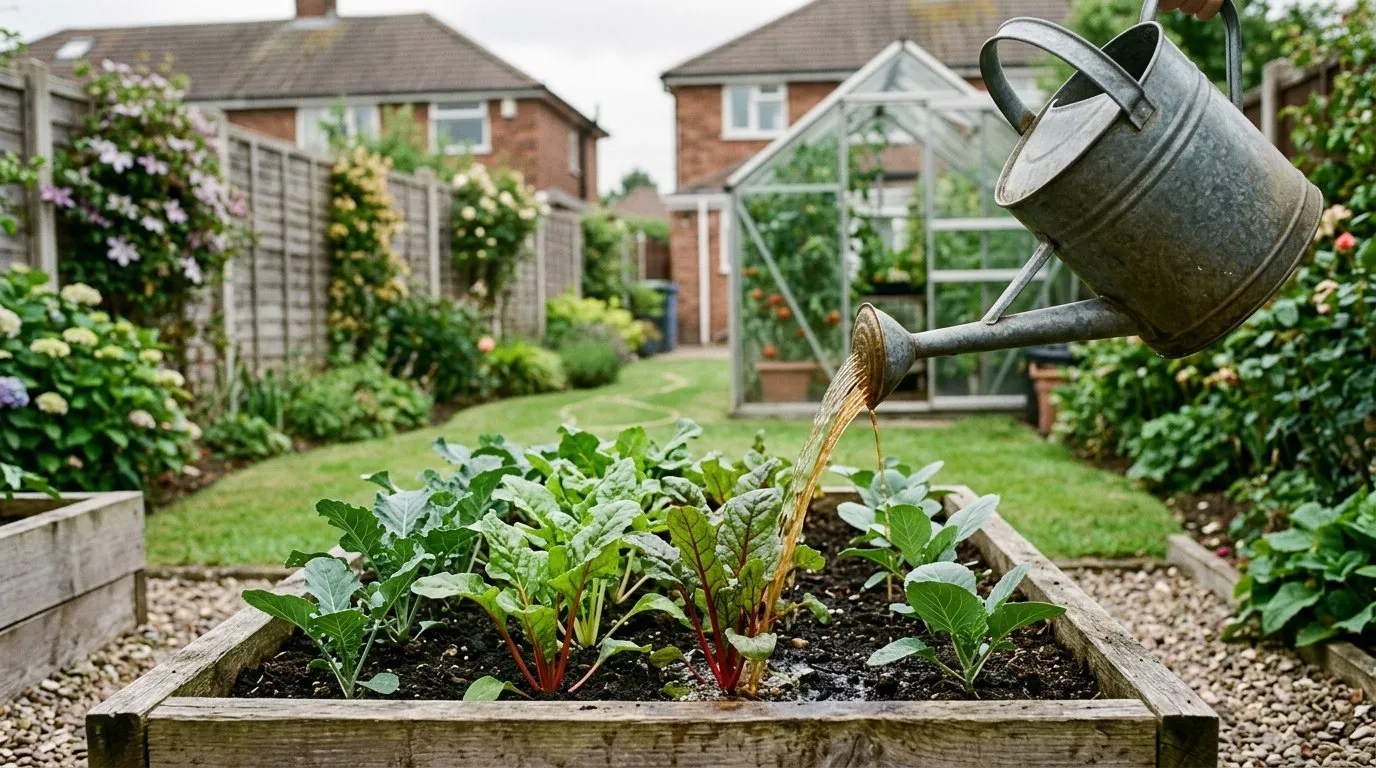 Diluted to 1:20, the finished feed looks like weak black tea and goes on like any other liquid fertiliser.
What do you need to make fish emulsion at home?
You need 2kg of fish scraps, 250g of sugar or molasses, 8 litres of water and a lidded 25-litre bucket. That is the whole shopping list. Everything else is optional.
Sourcing the fish is easier than people expect. Ask a fishmonger or market fish stall for filleting waste and most will hand it over free, or for a pound or two. Save your own trimmings too: a freezer bag in the drawer collects skins, heads and prawn shells over a month or so. Oily fish (mackerel, herring, sardines, trout, salmon) makes the richest brew. White fish frames work fine, just slightly leaner.
Two things to leave out. Smoked or salted fish carries enough salt to harm soil life, and anything battered or sauced brings oil and flour you do not want fermenting.
| Item | Amount | Notes |
|---|---|---|
| Fish scraps | 2kg | Heads, frames, skins, guts; oily species are richest |
| Molasses or brown sugar | 250g | Unsulphured molasses is best; sugar costs about £1.50 a kilo |
| Water | 8 litres | Rainwater ideally; let tap water stand 24 hours first |
| Bucket with lid | 25 litres | £6-10 new, free if you scrounge a catering tub |
| Stirring stick and sieve | 1 each | Keep them for this job only, for obvious reasons |
How do you make fish fertiliser step by step?
Layer chopped fish with sugar in the bucket, cover with water, lid it loosely and stir daily. Here is the full method.
- Chop the scraps into pieces of 5cm or less. Smaller pieces ferment faster.
- Layer fish and sugar in the bucket, a few handfuls of fish then a scatter of sugar, until both are used up.
- Pour on the water, leaving at least 10cm of headspace. The brew foams in week one and will find any excuse to overflow.
- Fit the lid loosely, or drill a small hole in it. Fermentation makes gas, and a sealed bucket becomes a slow-motion stink bomb.
- Stir every day for the first fortnight, then every two or three days. Stirring stops a putrid crust forming and mixes oxygen through the early brew.
- Site the bucket downwind, away from the house, and put a brick on the lid from day one.
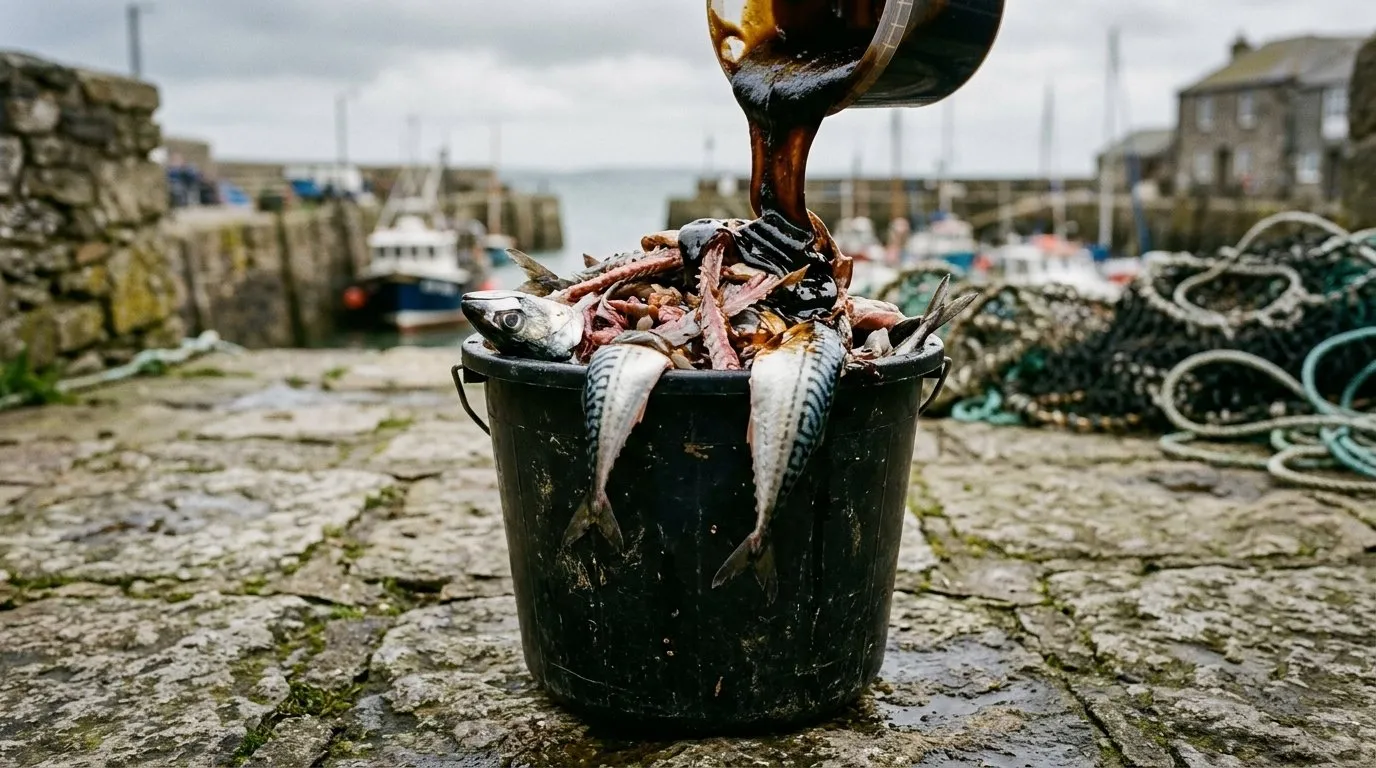 Layering mackerel frames with molasses. Fish stalls in coastal towns will often hand over a carrier bag of scraps for nothing.
How long does homemade fish fertiliser take to ferment?
You judge readiness by nose and eye, not the calendar. The smell shifts from foul to something closer to anchovy paste or fish sauce, sharp rather than rotten. The solids collapse and sink, the foaming stops, and the liquid turns a murky brown. At that point, strain it through a sieve lined with old net curtain into a second bucket, then bottle the concentrate. Stored in a cool dark shed with the caps cracked loose for the first month, it keeps for about 12 months.
The strained sludge still holds nutrients. Bury it 30cm deep in the middle of a working compost heap and it vanishes within weeks. And if an open bucket of fish is simply never going to happen at your place, a bokashi bin ferments fish scraps indoors in a sealed caddy, no smell, no fox interest.
 Stir daily for the first fortnight. The early brew is the ripest stage, so this is a hold-your-breath job.
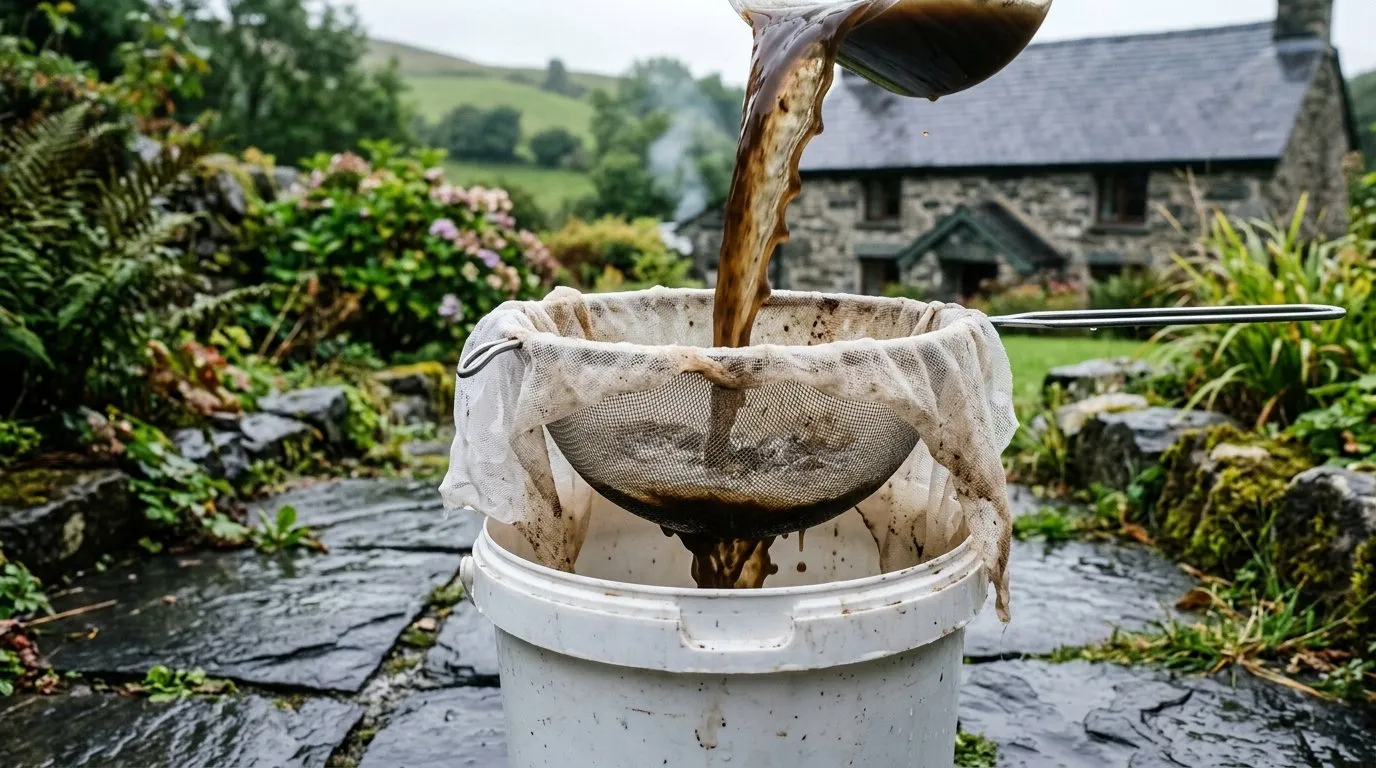 Strain through a sieve lined with net curtain. Expect 6-8 litres of concentrate from a 25-litre brew.
What dilution rate should you use for homemade fish fertiliser?
Dilute the concentrate 1:20 for watering onto soil, which is 50ml per litre, or 500ml in a 10-litre can. For spraying onto leaves, go weaker at 1:50. Seedlings and young plants get 1:100 or nothing at all. The mix should look like weak black tea; if you cannot see through it, add water.
Never use it neat. The concentrate is strong enough to scorch roots and burn foliage, and it will do both.
| Use | Dilution | How often |
|---|---|---|
| Established veg and borders | 1:20 (50ml per litre) | Every 14 days |
| Hungry leafy crops in full growth | 1:20 | Every 10 days |
| Foliar tonic on tired plants | 1:50 | Every 14 days, evening only |
| Containers and growbags | 1:30 | Weekly through summer |
| Seedlings past first true leaves | 1:100 | Once, then monthly |
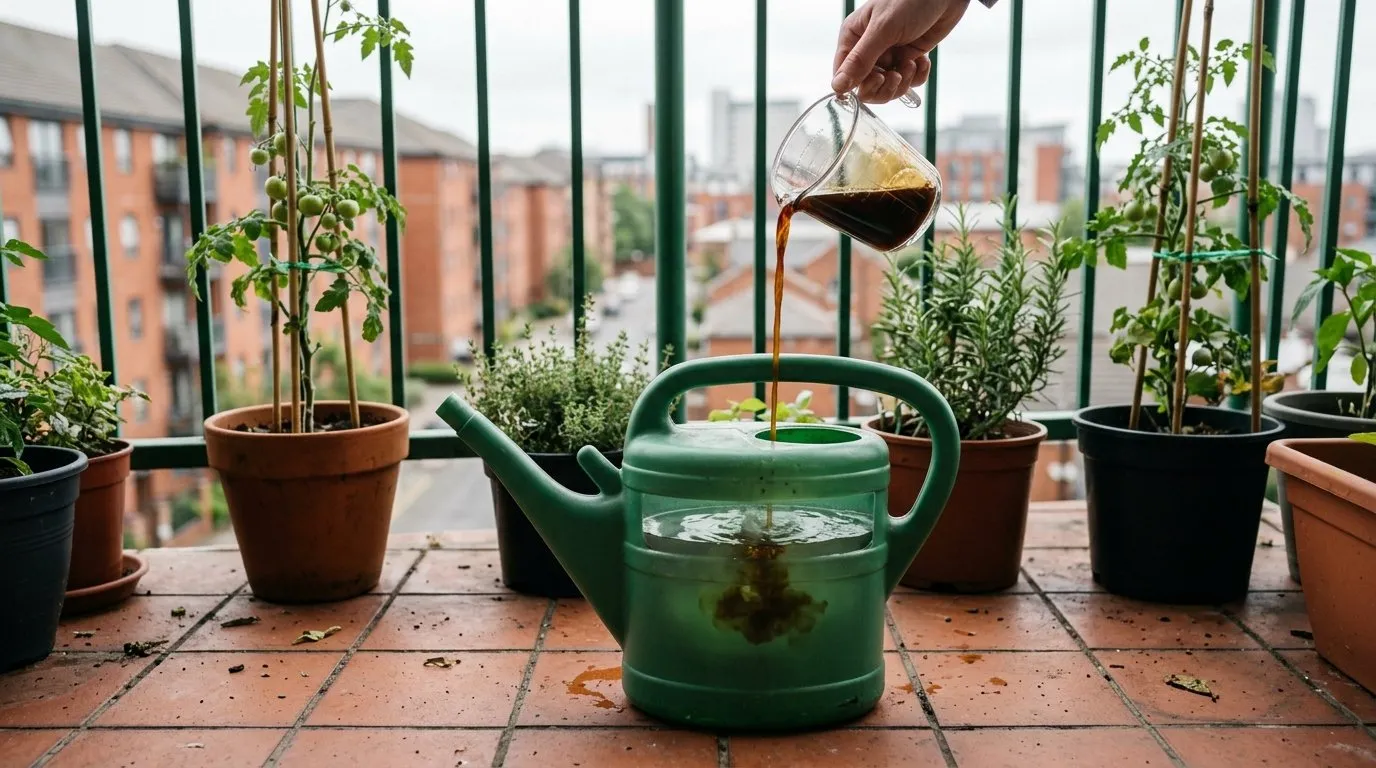 50ml per litre is the working drench rate. On a balcony, mix it outside and keep the bottle capped tight.
How do you stop fish fertiliser smelling and attracting vermin?
Sugar, a tight lid and a downwind site solve most of it. The molasses is not there for the plants: it feeds lactic acid bacteria, which acidify the brew and crowd out the putrefying microbes behind the worst of the stench. A sugared brew smells strong; an unsugared one smells criminal. Either way the first ten days are the ripest, so site the bucket well away from doors, washing lines and the neighbour’s patio.
Basic food hygiene applies throughout. This is raw fish, so wear gloves or wash your hands well after stirring and straining. Keep the bucket and bottles where children and dogs cannot reach them. Drench the soil rather than the leaves on any crop eaten raw, allow two weeks between the last feed and picking, and wash everything before it reaches the kitchen.
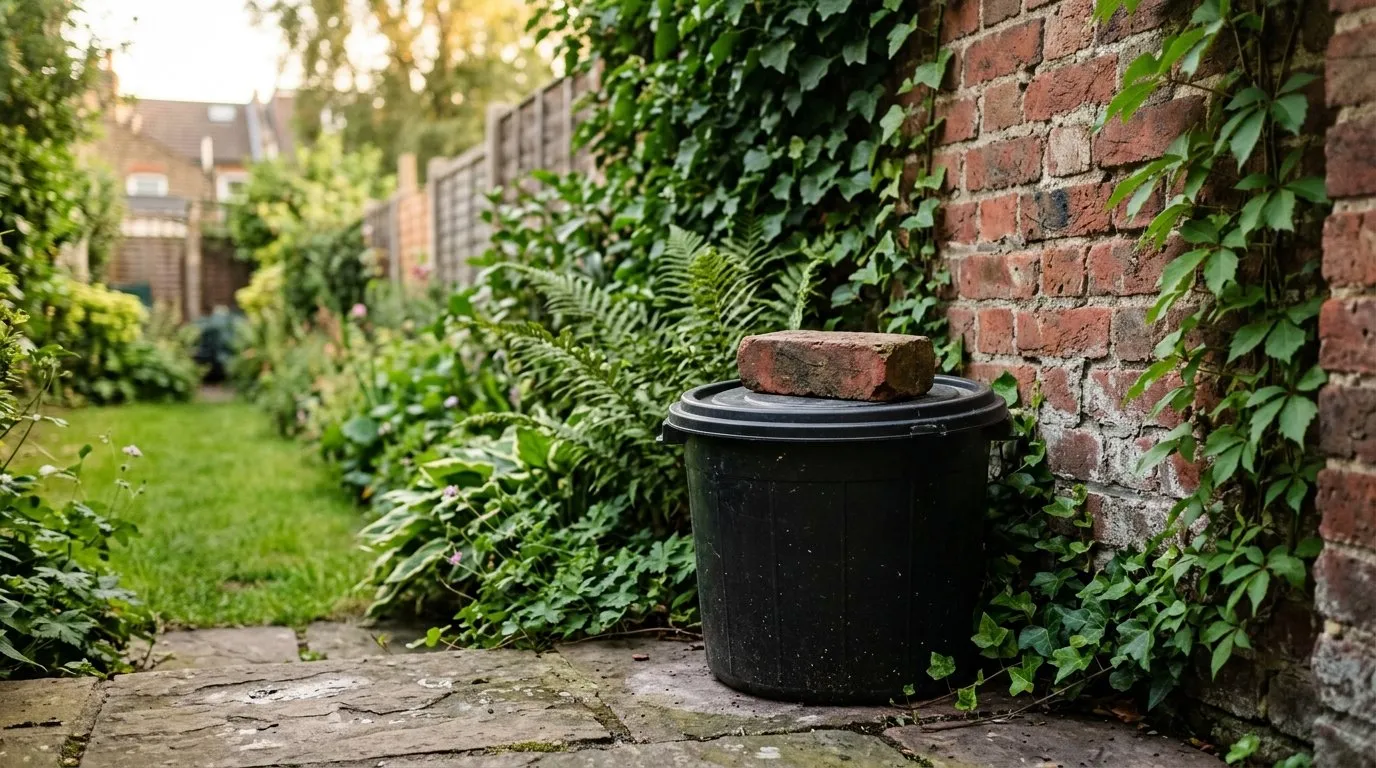 A tight lid, a brick and a downwind corner. Foxes will flip an unweighted lid within the week.
Which plants benefit most from fish fertiliser?
Skip it for root crops, because carrots and parsnips given rich nitrogen fork and go to leaf. Skip the legumes too: peas and beans fix their own nitrogen and will not thank you for more.
How does fish emulsion compare with comfrey, nettle and seaweed feeds?
Fish feed is the nitrogen heavyweight of the DIY liquid feeds; comfrey leads on potash, nettle is a quick spring tonic and seaweed is a trace-element supplement. They are teammates, not rivals, and most productive gardens run two or three of them across the season.
| Feed | Leads on | Brew time | Dilution | Best for |
|---|---|---|---|---|
| Fish emulsion | Nitrogen (about 4-1-1) | 4-6 weeks | 1:20 | Leafy crops, sweetcorn, early growth |
| Comfrey | Potash | 4-6 weeks | 1:10-1:15 | Tomatoes, fruit, anything flowering |
| Nettle | Nitrogen plus iron | 2-3 weeks | 1:10 | Spring greens, quick pick-me-ups |
| Seaweed | Trace elements | 6-8 weeks steeped | 1:20 | Overall plant health and resilience |
One near-relative worth knowing about: aerated compost tea is brewed in 24-48 hours, but it is a microbe inoculant rather than a feed. Different tool, different job.
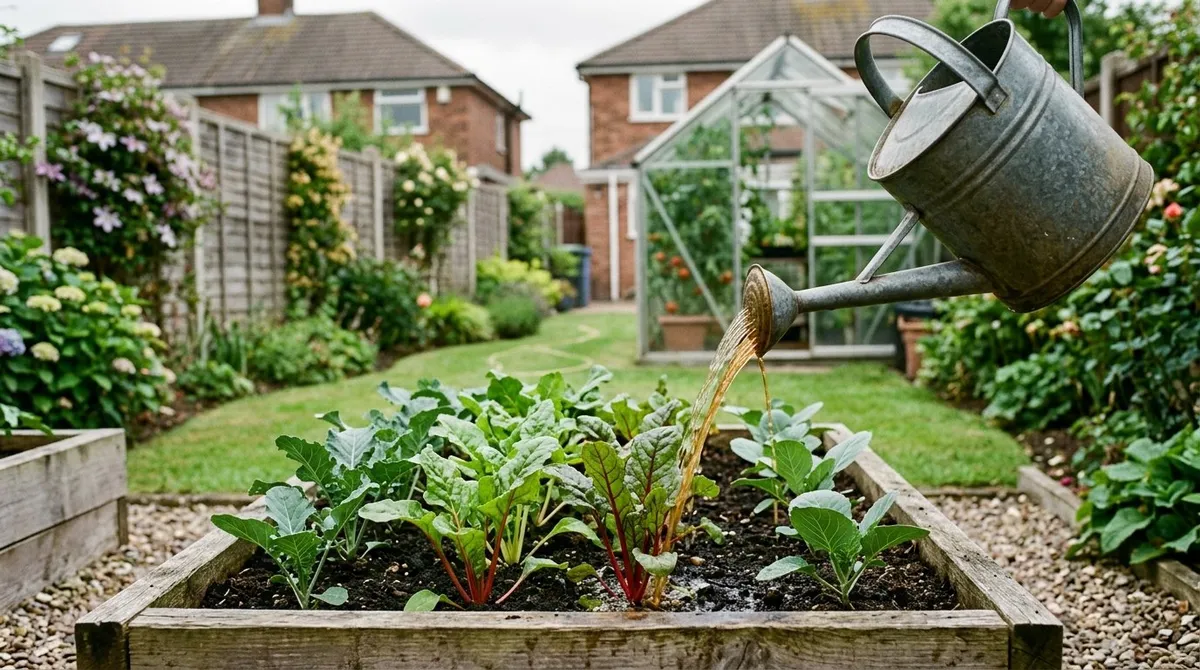
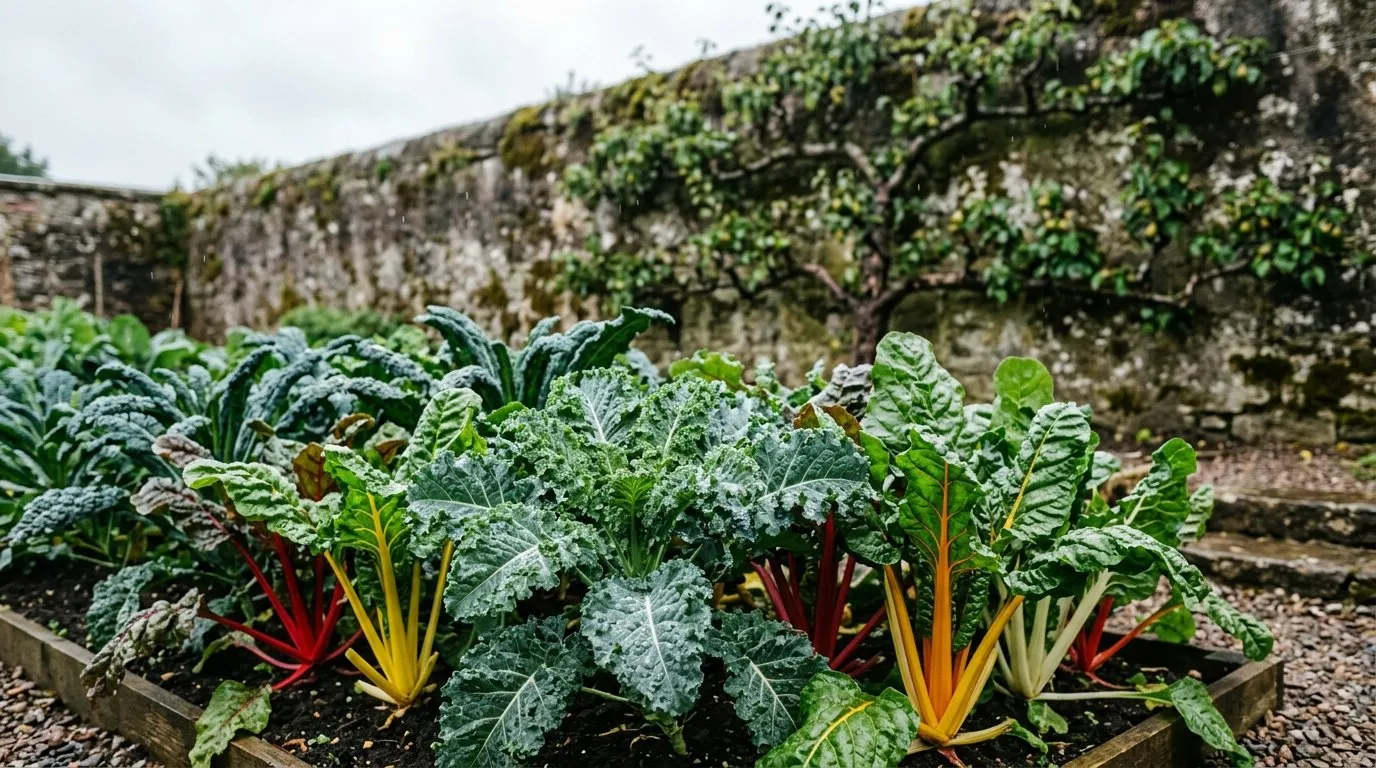 The payoff: nitrogen-hungry kale and chard in full production. Leafy crops show the response within a fortnight.
Frequently asked questions
What is the NPK of homemade fish fertiliser?
Around 4-1-1, though it varies with the fish that goes in. Oily fish such as mackerel push the nitrogen towards 5%, while bony frames and heads raise the phosphorus and add calcium. Shop fish emulsion is standardised at 5-1-1, so a good home brew lands close behind it.
How long does fish fertiliser take to ferment?
Four to six weeks in a typical UK summer at 15-25C. A hot spell can shorten that to three weeks, and a cold spring stretches it past eight. It is ready when the rotten smell fades to a sharp anchovy tang, the solids sink and the surface stops foaming.
How do you stop homemade fish fertiliser smelling?
Add sugar, keep the lid on and site the bucket downwind. Molasses or brown sugar feeds lactic acid bacteria, which crowd out the putrefying kind that cause the worst of the stink. The first ten days are still ripe, so keep the bucket well away from doors, windows and the neighbour’s fence.
Does fish fertiliser attract rats and foxes?
Yes, an unsecured bucket will draw rats, foxes, gulls and cats. Fit a tight lid and weight it with a brick, because a fox can flip a loose one in seconds. Never bury raw fish scraps shallow either: foxes and badgers will dig down 30cm or more for them.
Is homemade fish fertiliser safe to use on vegetables?
Yes, if you water the soil rather than the leaves. Keep it off anything eaten raw for two weeks before picking, wash your hands after handling the brew, and rinse all produce before it reaches the kitchen. Treat the concentrate like raw fish, because that is what it started as.
Can I use fish fertiliser on tomatoes?
Yes, but only until the first flower truss sets. Its nitrogen suits young plants building leaf and stem. From flowering onward a tomato wants potash, so switch to comfrey feed or a shop tomato feed, or you get lush foliage and few fruit.
What is the difference between fish emulsion and fish hydrolysate?
Emulsion is heat-processed; hydrolysate is broken down cold with enzymes. The cold process keeps more oils, proteins and vitamins intact, which is why hydrolysates cost more and carry a lower analysis of around 2-3-1. A home fermented brew sits somewhere between the two.
Once the fish bucket is bubbling away, see where it fits among the rest of the home-made options in our guide to natural and organic fertilisers.
Our team produces practical UK gardening guidance from source research, contributor records and established horticultural practice. Editorial standards are overseen by Matt W.