Key takeaways
- Remove the food source first: no trap fixes an open fruit bowl, a full compost caddy, or split greenhouse tomatoes
- Fruit flies go from egg to adult in 8-10 days at 24C, which is why a small problem explodes into a swarm
- A jam jar, cider vinegar and a paper cone make a trap that rivals shop-bought pots for under 20p
- In the greenhouse, windfall hygiene and a lidded compost caddy matter far more than any spray
- Fruit flies are not fungus gnats: fruit flies hover over ripe fruit, gnats run over damp compost
Fruit flies arrive from nowhere. One day the fruit bowl is fine, the next a cloud of tiny tan flies lifts off every time you reach for a banana. In the greenhouse it is the same story around a split tomato or a bucket of windfalls. They are harmless to healthy plants and to you, but they are maddening, and they multiply at a speed that catches most people out.
How to get rid of fruit flies organically
The organic method is a two-part job: remove the breeding source, then trap the adults. Neither half works alone. A trap beside an open fruit bowl empties itself of bait while the flies keep breeding faster than you can catch them. Clean-up without a trap leaves the existing adults circling for days.
The fruit fly lifecycle explained: egg to adult in 8-10 days
A fruit fly completes its whole lifecycle in 8-10 days at 24C, which is why infestations explode. The common kitchen fruit fly is Drosophila melanogaster. A single female lays up to 500 eggs in her short life, dropping them onto the surface of fermenting fruit or the film of gunk in a drain.
The eggs hatch in about 24 hours. The larvae, small pale maggots, feed on the yeast and rot for four to five days. They then pupate for a further four to five days before emerging as adults ready to breed within a day or two. At the height of a warm July, that means a fresh generation every week and a half. Start with a dozen flies on a Monday and you can have hundreds by the middle of the following week.
Temperature drives the whole thing. At 18C the cycle stretches to two or three weeks. At 24-28C, the temperature of a sunny kitchen or a greenhouse in summer, it runs at full speed. This is the single fact that explains why fruit flies seem to appear overnight and why a two-week holiday with fruit left out can end in a kitchen full of them.
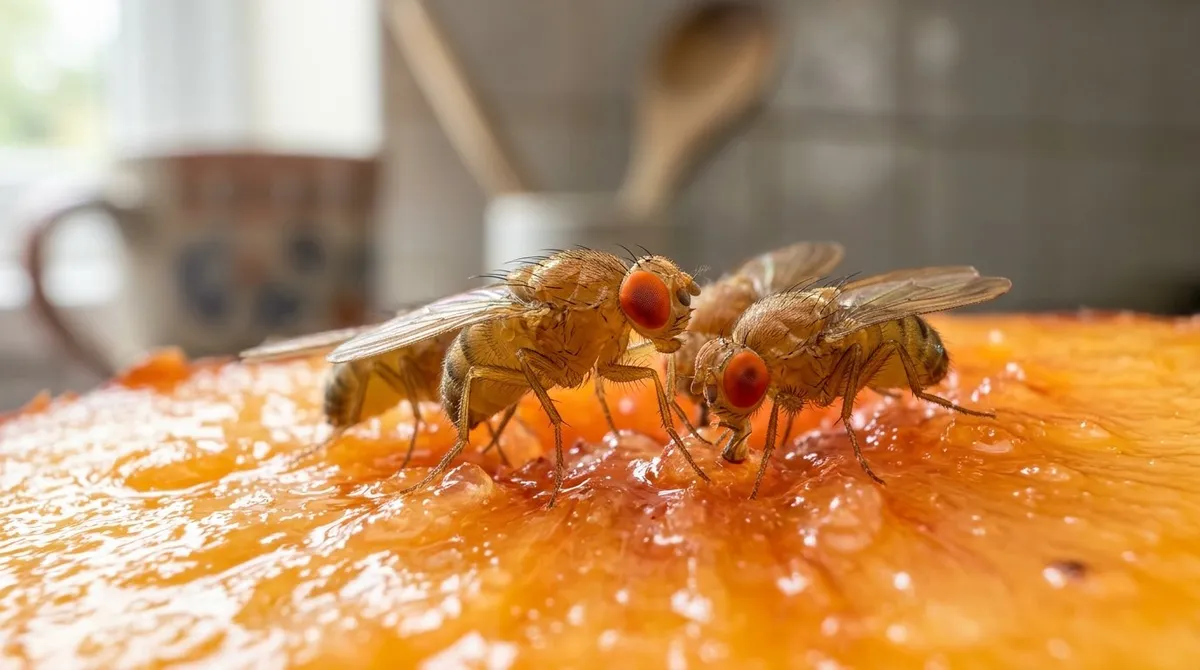
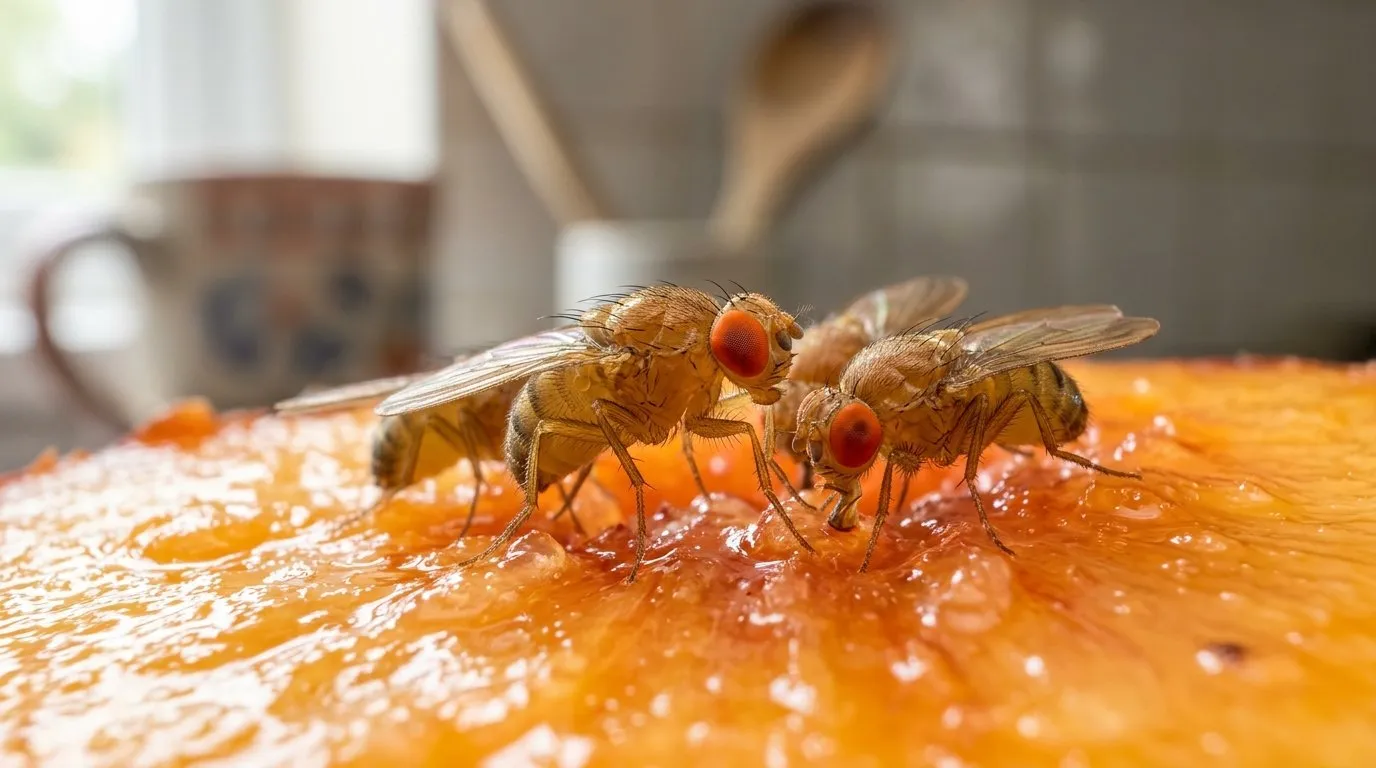 Common fruit flies (Drosophila melanogaster) on over-ripe fruit. Note the tan body and red eyes that tell them apart from darker fungus gnats.
Where fruit flies breed in the kitchen and greenhouse
Fruit flies breed on any moist, fermenting organic matter, and the source is almost always closer than you think. In the kitchen the usual sites are the fruit bowl, the compost caddy under the sink, the base of the swing bin, the recycling with unrinsed bottles, and the sink or drain where a film of food builds up. A forgotten potato in the back of a cupboard is a classic hidden source.
In the greenhouse the breeding grounds shift outdoors but the principle holds. Windfall apples and pears left on the floor, split tomatoes that have dropped and gone soft, the surface scum on an open water butt, and the compost heap or caddy are the prime sites. Split fruit is a big one under glass, because ripening tomatoes crack in the heat and the exposed flesh ferments in hours. Our guide to tomatoes splitting on the vine covers how to stop the cracking that feeds the flies in the first place.
The reason these sites matter so much is that adults are drawn to the smell, but it is the larvae in the rot that keep the numbers climbing. Kill the adults and leave the source, and a new batch hatches within days. Find the source and clear it, and you have cut off the supply.
Source elimination first: the step most people skip
Clearing the breeding source is the step that actually ends the outbreak, yet most people jump straight to traps. Work through the hotspots in order. Bin or eat any over-ripe fruit and store the rest in the fridge for a few days while you get on top of things. Empty and rinse the compost caddy, then wash it out. Pull out the swing bin and clean the base, where juice and crumbs collect unseen.
Drains are the site people miss most. A fruit fly can breed in the thin film of organic gunk inside a plughole or an overflow. Pour a kettle of boiling water down the drain, follow it with a stiff bottle brush, and finish with a slug of bicarbonate of soda and vinegar to fizz away the film. Do the same for the sink overflow, which is a hidden, permanently damp breeding site.
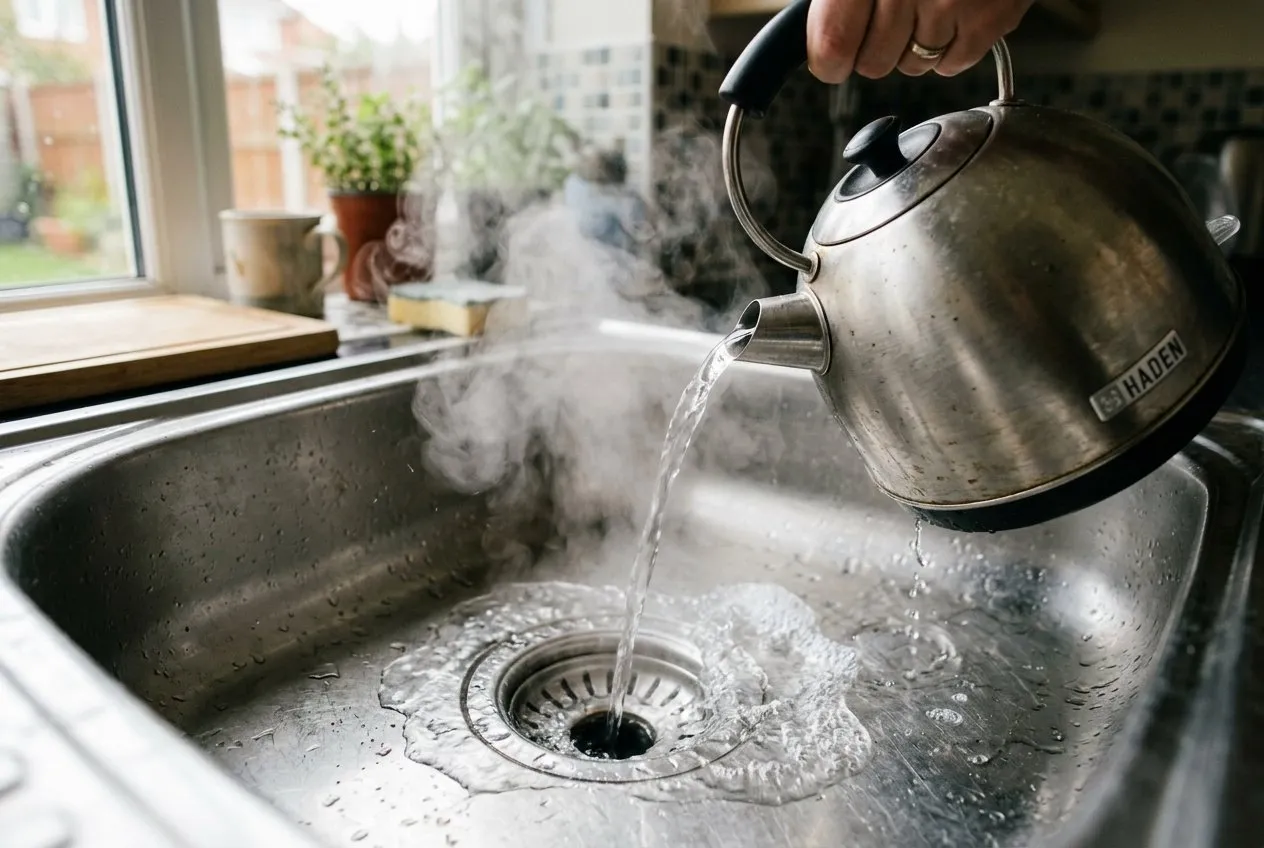 A weekly kettle of boiling water down the drain clears the film of gunk that fruit flies breed in unseen.
In the greenhouse, walk the floor daily and pick up every windfall and split fruit. Cover the water butt with a lid or a piece of fine mesh. Keep the compost caddy or heap away from the door. Good greenhouse hygiene does more against fruit flies than anything you spray, and it doubles as organic greenhouse pest control against a whole range of other summer pests.
Fruit fly trap trial: which trap catches the most
The gap between the top three and the sticky traps was the surprise. Sticky traps are sold as an all-purpose flying-insect fix, but fruit flies are drawn to smell far more than colour, so they walk right past the yellow card to the vinegar. Sticky traps earn their place against fungus gnats and whitefly, not fruit flies. The commercial pre-baited pot worked, but it caught fewer flies than a jar of vinegar costing a fraction of the price.
Cider vinegar beat white vinegar in a separate side test because its smell is closer to fermenting fruit. The one drop of washing-up liquid is not optional. Without it, flies land on the vinegar, walk about, and fly off again. The detergent breaks the surface tension so they sink and drown. The greenhouse results tracked the kitchen almost exactly, with the vinegar trap out in front.
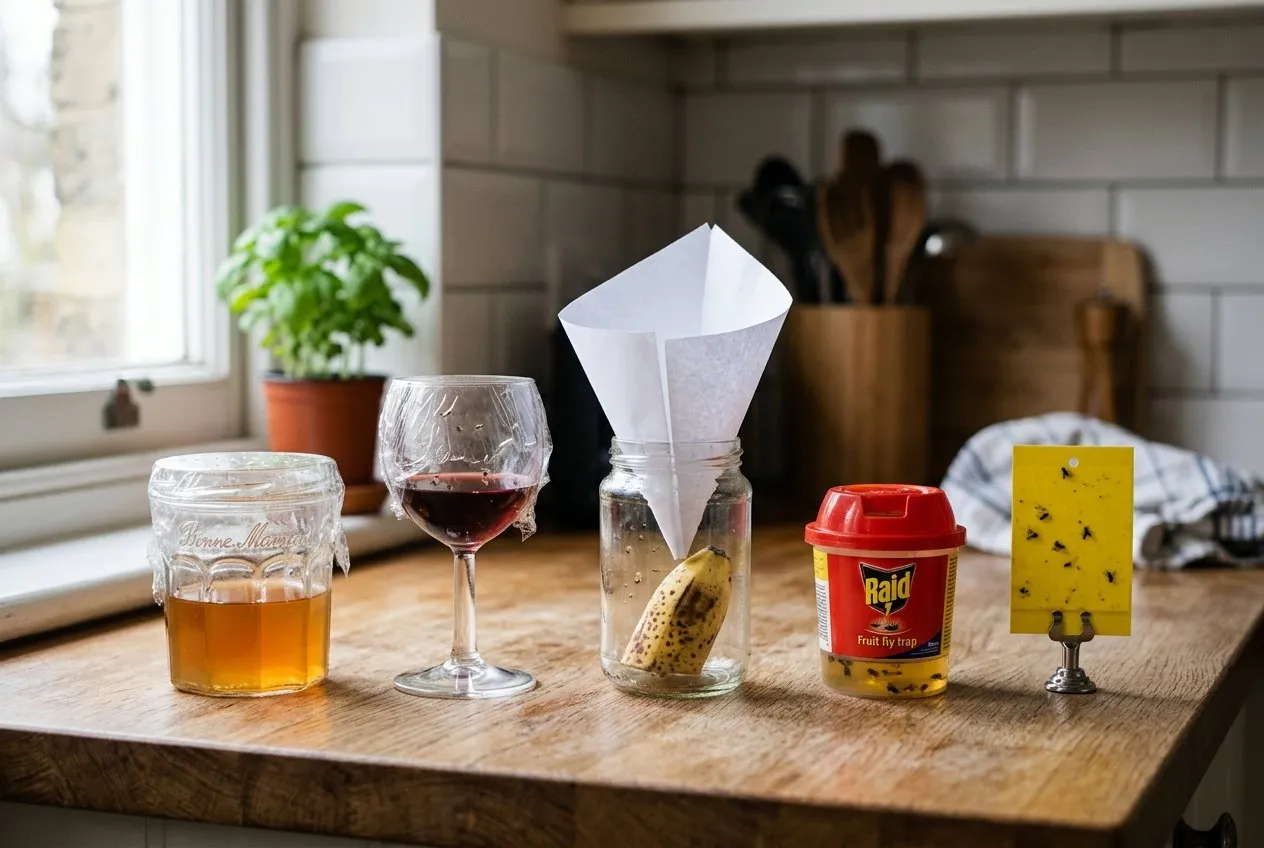 The five traps run side by side. The cider vinegar jar on the left caught 214 flies in a week, more than any other.
How to make a cone-jar fruit fly trap
The best trap is a jam jar of cider vinegar with a paper cone pushed into the neck. The cone is the clever part: flies smell the vinegar, walk down through the small hole at the tip, and then cannot find their way back out. It takes ten minutes and costs under 20p. The full step-by-step is in the howTo box above, but here is the logic behind each stage.
Use a clean glass jar so you can see the catch and so no old smell competes with the bait. Two to three centimetres of cider vinegar is plenty, with one drop of washing-up liquid swirled in to break the surface. Roll a paper cone with a 5mm hole at the tip, sit it point-down so the tip hovers just above the vinegar, and seal the rim so there are no escape gaps. Site it right next to the worst hotspot.
The cone version out-catches an open jar because flies that would otherwise crawl back out get trapped. If you skip the cone entirely and just leave an open jar of vinegar and detergent, it still works, just not quite as well. Empty and rebait every two to three days, because a stale trap stops pulling flies in. In a heavy outbreak, run two or three traps at once. For other chemical-free recipes worth keeping in the shed, our roundup of homemade pesticides that are legal in the UK is a useful companion.
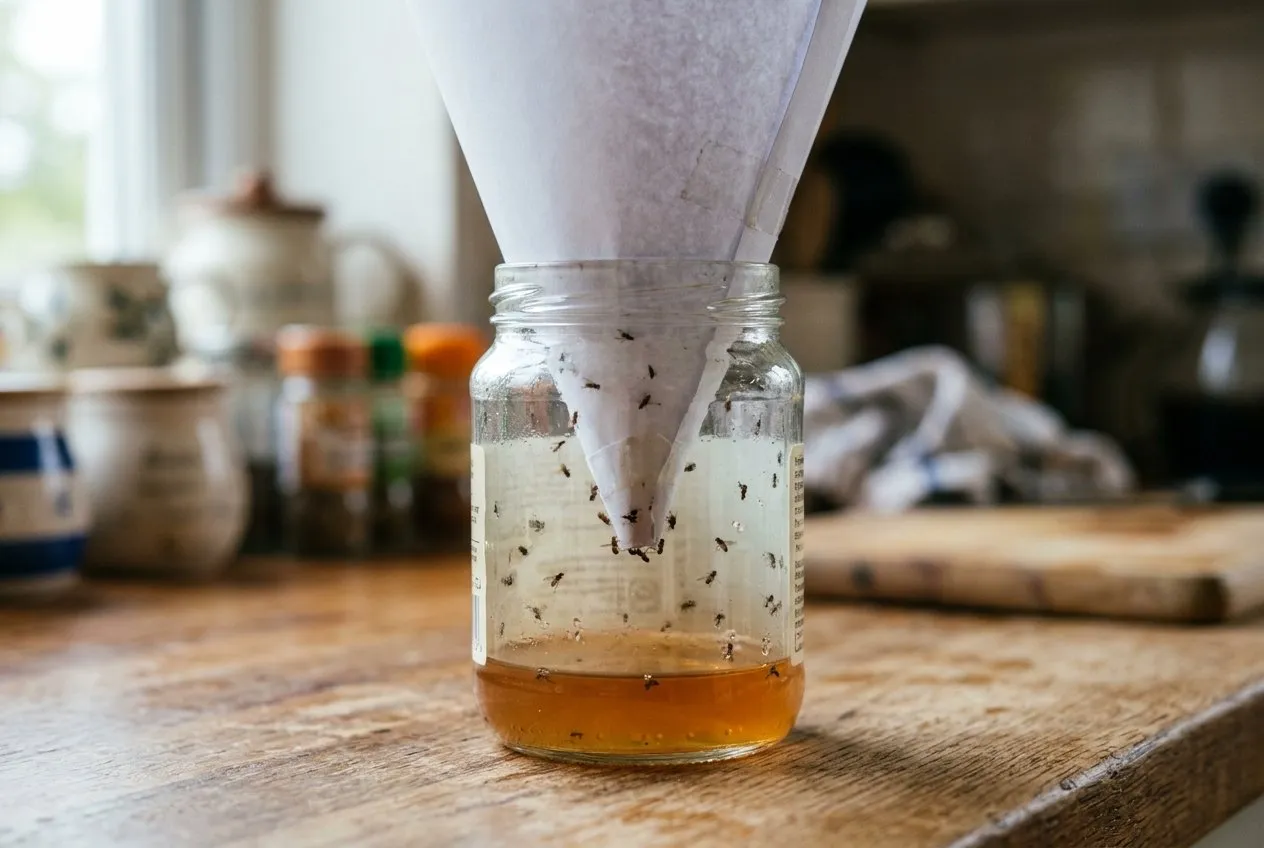 The cone-jar trap. Flies walk down through the small hole at the tip and cannot find their way back out.
Getting rid of fruit flies in the greenhouse
Greenhouse fruit flies are beaten with hygiene, not sprays, because the breeding sites are all around your feet. Under glass the heat that ripens your tomatoes also runs the fruit fly cycle at full speed, and there is more fermenting matter about than in any kitchen. Split tomatoes are the number one source. A cracked fruit left on the vine or the floor ferments within hours and pulls in every fly in the vicinity.
Walk the greenhouse daily and remove any split or fallen fruit the moment you see it. Do not leave a bucket of windfalls sitting inside; take them to a lidded bin or the far end of the compost heap. Keep the compost caddy out, cover the water butt, and clear the floor of dropped leaves and fruit. Ventilate well, because moving air and lower humidity make the space less inviting. Set two vinegar traps on the staging, one near the tomatoes and one by the door.
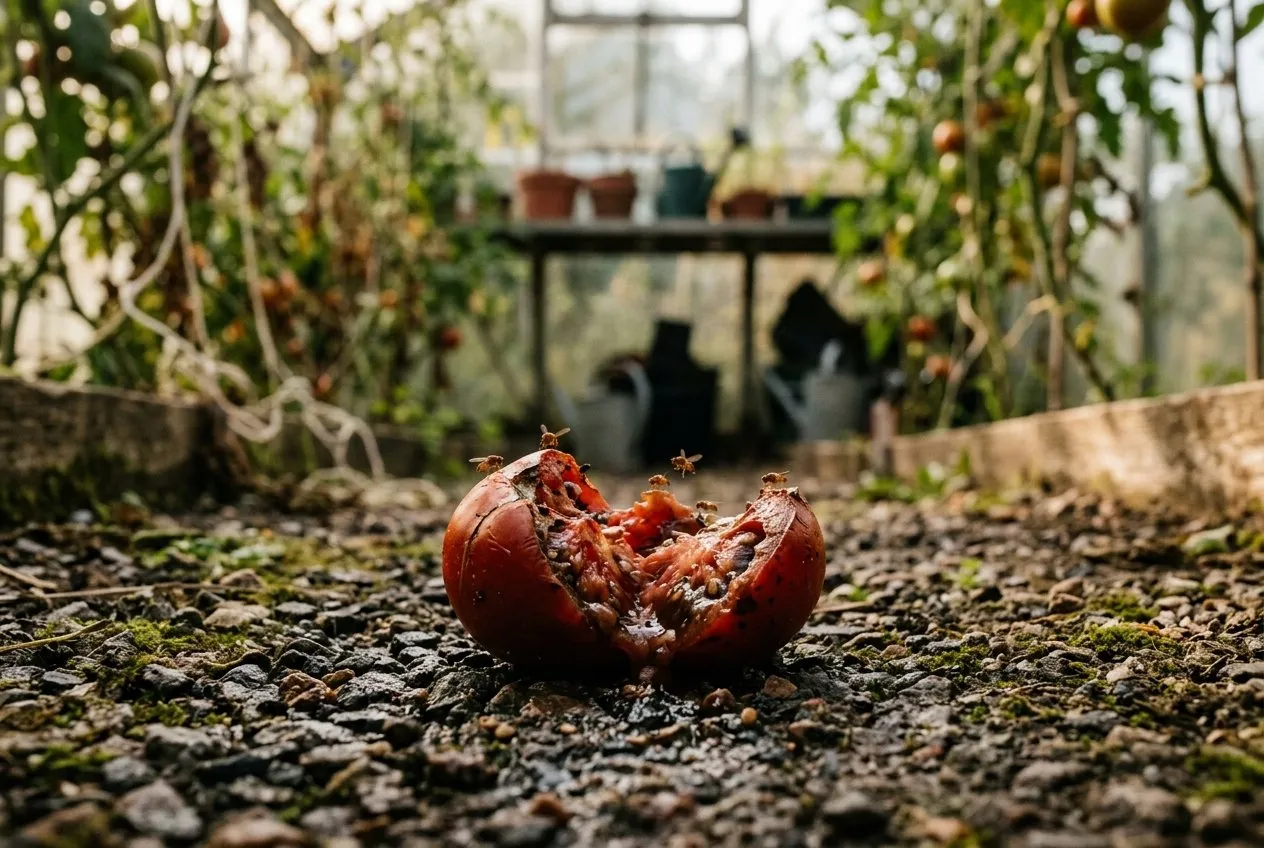 A split tomato left on the greenhouse floor ferments within hours and is the number one fruit fly source under glass.
Fruit flies do no harm to a healthy tomato or cucumber plant. They feed only on rot, so they are a nuisance and a sign of poor hygiene rather than a threat to the crop. That said, a greenhouse full of flies is unpleasant to work in and often points to fruit you should have picked or cleared already. Keeping on top of it sits alongside the other jobs in our greenhouse growing calendar through the summer months.
A year-round fruit fly pressure calendar
Fungus gnats vs fruit flies: telling them apart
Fruit flies and fungus gnats are different insects that need different fixes, and mixing them up wastes weeks. Fruit flies are tan or light brown, roughly 3mm, with distinctive red eyes, and they hover around ripe fruit, drains and bins. Fungus gnats are darker, greyish-brown, more slender, and they run and flit low over the surface of damp compost and houseplant pots rather than around your fruit.
The habits give them away. If the flies rise off the fruit bowl or the bin, they are fruit flies. If they lift off a houseplant pot or a seed tray when you water, and you see them scurrying over the compost surface, they are fungus gnats, also called sciarid flies. The larvae differ too: fungus gnat larvae live in the top few centimetres of wet compost and can nibble seedling roots, while fruit fly larvae live in rotting fruit and drains.
The treatments diverge. Fruit flies need source removal and vinegar traps. Fungus gnats need you to let the compost dry between waterings, top pots with grit or sand, and use yellow sticky traps, which actually work well against them. If your problem is on houseplants and seed trays rather than the fruit bowl, read our dedicated guide to getting rid of fungus gnats instead, and the houseplant flies guide for the wider indoor picture. The RHS keeps a clear identification page for fungus gnats and sciarid flies if you want to confirm which pest you have.
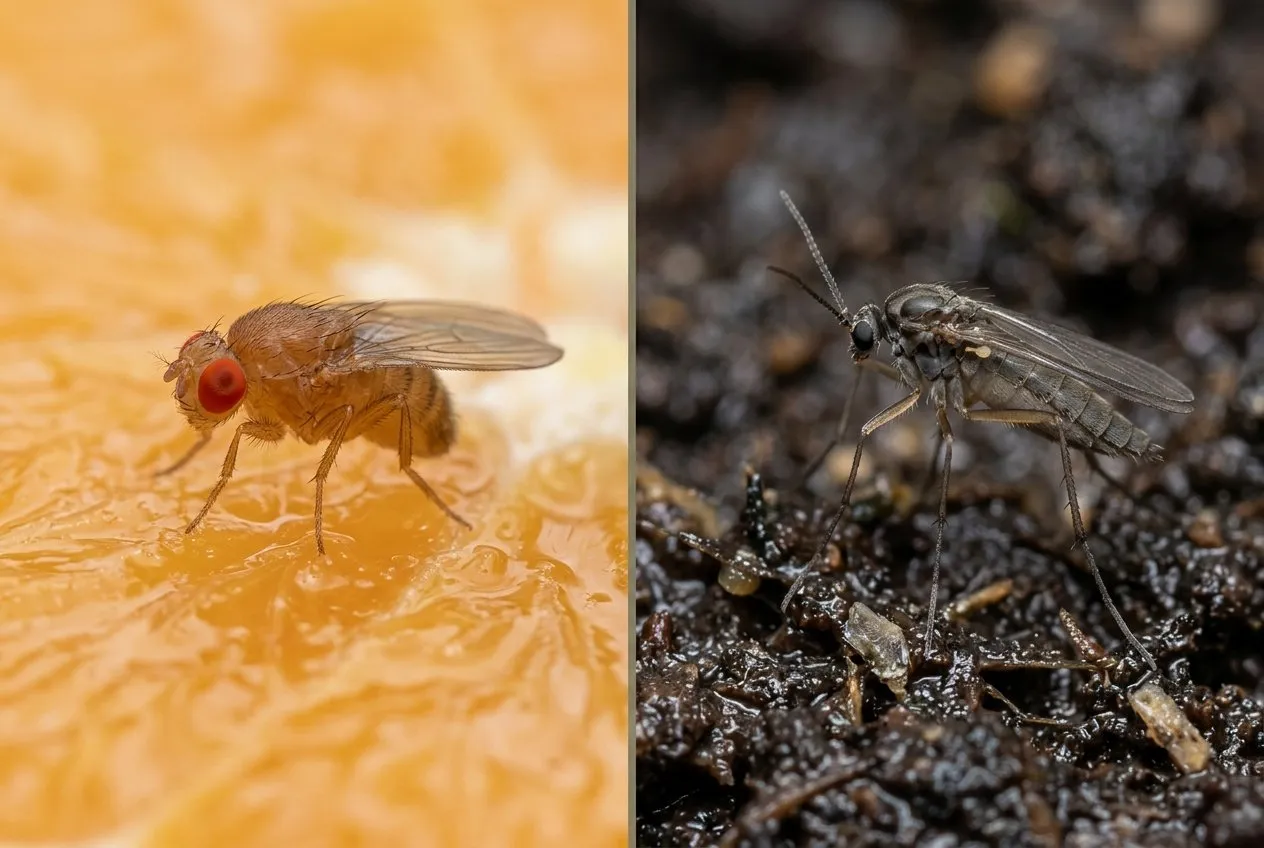 Fruit fly, left, versus fungus gnat, right. The fruit fly is tan with red eyes; the gnat is darker, thinner and lives on damp compost.
Spotted wing drosophila: the fruit fly that damages your crop
Spotted wing drosophila (SWD) is the one fruit fly that harms healthy fruit, and it is the outdoor cousin worth knowing about. Unlike the common kitchen fruit fly, which only touches rot, SWD females have a saw-like egg-laying organ that pierces the skin of sound, ripening fruit. They lay their eggs inside raspberries, blackberries, strawberries, cherries, plums and other soft and stone fruit, and the larvae ruin the crop from the inside.
SWD first turned up in Britain in 2012 and is now established across much of the country. The males carry a dark spot on each wing, which gives the pest its name, though you usually notice the damage before the fly. Fruit collapses and weeps as the larvae feed. It is active mainly in summer and autumn, and the RHS advises trapping right through until the end of November because the adults overwinter in wild and wooded areas ready to build up again in spring.
The organic defence is exclusion and hygiene. Cover soft fruit with very fine mesh netting, less than 0.98mm, to keep the adults off the ripening crop. Pick fruit as soon as it ripens, because over-ripe fruit is most at risk, and never leave fallen or damaged fruit lying about to breed more. Vinegar traps monitor the population but will not protect a crop on their own.
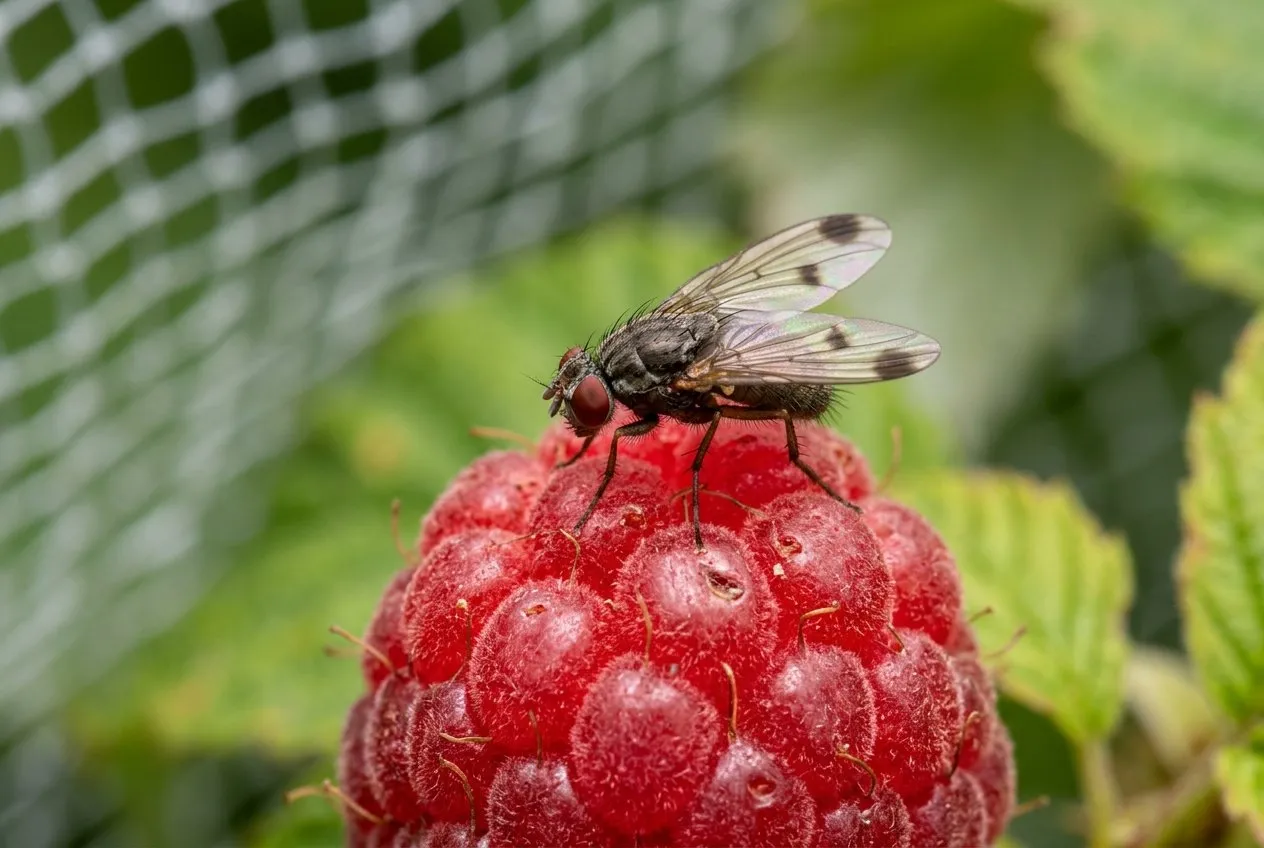 Spotted wing drosophila lays eggs in sound ripening fruit. Fine mesh under 0.98mm is the main organic defence. The RHS page on spotted wing drosophila has the current advice. If you grow cane fruit, our guide to raspberry pests and diseases covers SWD alongside the other threats to watch.
Warning: Do not add SWD-infested fruit to an open compost heap or caddy. The larvae carry on developing and the adults emerge to reinfest your crop. Bag windfalls and damaged soft fruit, seal them, and either freeze them for 24 hours to kill the larvae or put them in the general waste, not the compost.
Common mistakes when getting rid of fruit flies
Most failed fruit fly campaigns come down to the same handful of errors. Avoiding these gets you a clear kitchen or greenhouse in a week rather than a month.
Trapping without clearing the source
This is the big one. A trap next to an open fruit bowl or a full compost caddy is fighting a losing battle, because the flies breed faster than any trap catches. Always find and clear the breeding site first. The trap is the mop-up, never the main event.
Using white vinegar instead of cider vinegar
Forgetting the drop of washing-up liquid
An open jar of vinegar with no detergent lets most flies land, drink and leave. The single drop of washing-up liquid breaks the surface tension so they sink instead of walking off the top. Skipping it roughly halves the catch. One drop is enough; more makes a froth that puts them off.
Leaving the trap out until it goes stale
A trap that has done its work and gone cloudy or lost its smell stops attracting flies. Empty it every two to three days, rinse the jar, and rebait with fresh vinegar. A row of neglected, stale traps catches nothing and gives a false sense that traps do not work.
Relying on sticky traps for fruit flies
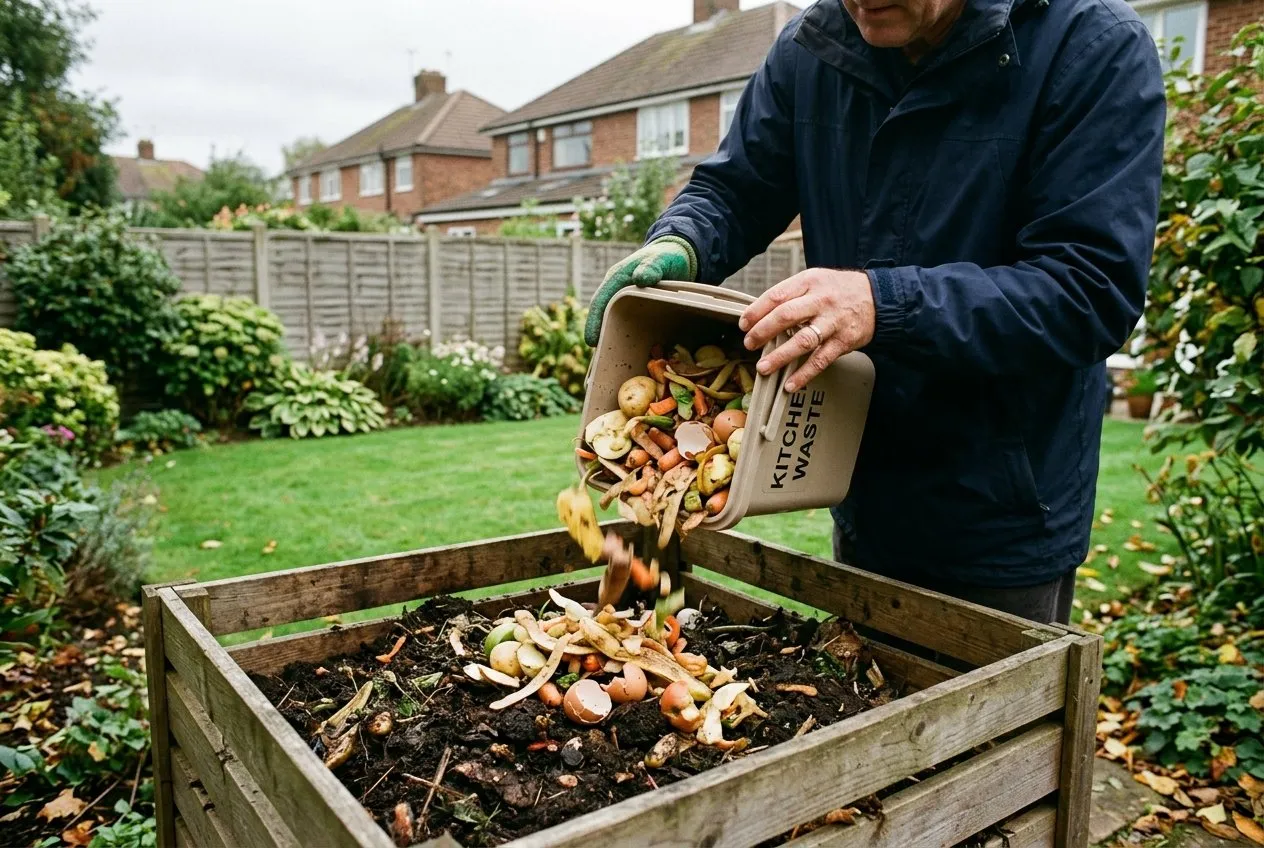 Emptying the compost caddy daily in summer removes the single biggest indoor breeding source before it seeds a swarm.
Keeping fruit flies away for good
Prevention is easier than cure once the outbreak is over. Store ripe fruit in the fridge through the warmest months, or keep only a day or two’s worth in the bowl. Empty the compost caddy daily rather than waiting for it to fill, and keep a tight lid on it. Rinse bottles and cans before they go in the recycling, and clean the bin base regularly.
Pour boiling water down the kitchen drains once a week in summer to clear the film that flies breed in. In the greenhouse, the routine is windfall and split-fruit patrol every day, a covered water butt, and good ventilation. None of this is hard work, but it removes the fermenting matter that fruit flies cannot breed without.
Get the hygiene right and you will rarely see more than a stray fly, even at the July peak. The vinegar trap is always there as a fast, cheap backstop for the odd flare-up. For the broader summer job list that keeps pests of all kinds down, our greenhouse pest control guide pulls the whole season together.
Frequently asked questions
What is the best homemade fruit fly trap?
How do I get rid of fruit flies fast?
Remove the breeding source, then set a vinegar trap. Bin over-ripe fruit, empty the compost caddy, and clean the bin base and drain. Adults die off within a few days once they cannot breed. A cider vinegar trap mops up the survivors. Doing only one half, trap without clean-up, never clears an outbreak.
Why do I suddenly have loads of fruit flies?
One breeding site can seed a swarm in under two weeks. Fruit flies go from egg to adult in 8-10 days at 24C. A single over-ripe banana or a split greenhouse tomato holds hundreds of eggs. Warm summer kitchens and greenhouses speed the cycle up, so a minor problem becomes a cloud of flies fast.
Are fruit flies the same as fungus gnats?
No, they are different insects with different habits. Fruit flies are tan, hover around ripe fruit and drains, and have red eyes. Fungus gnats are darker, thinner, and run or flit low over damp compost and houseplant soil. The fix differs too: fruit flies need source and fruit hygiene, gnats need drier compost and sticky traps.
Does apple cider vinegar really kill fruit flies?
How do I stop fruit flies in my greenhouse?
Clear windfalls and split fruit, and lid the compost caddy. Fruit flies breed on rotting tomatoes, split fruit, and the surface of an open water butt. Pick up anything fallen daily, remove split tomatoes at once, and cover water. Two vinegar traps on the staging mop up the adults. Good ventilation and hygiene beat any spray.
Do fruit flies harm my greenhouse plants?
Common fruit flies do not damage healthy plants, only rotting fruit. They are a nuisance and a hygiene issue, not a plant pest. The one to watch is spotted wing drosophila, which lays eggs in ripening soft and stone fruit outdoors. For that pest, fine netting under 0.98mm mesh is the main organic defence.
If your flies turn out to be running over the seed-tray compost rather than circling the fruit bowl, switch tactics with our guide to sciarid fly control in seed trays.
Our team produces practical UK gardening guidance from source research, contributor records and established horticultural practice. Editorial standards are overseen by Matt W.