Key takeaways
- A 5m x 5m corner holds 30 to 45 native whips at three plants per square metre
- Plant across four layers: canopy, understorey, shrub and ground
- Dense spacing closes the canopy in 3 to 4 years, not 15
- Use small UK natives: rowan, hazel, hawthorn, crab apple, silver birch
- Plant bare-root whips November to March, then mulch 15cm deep
- A mature pocket wood feeds 40-plus species of bird, insect and mammal
A pocket woodland turns a dead garden corner into a working native wood in the time it takes a hedge to fill out. The idea comes from the Japanese botanist Akira Miyawaki, who planted dense, layered native species and watched them mature ten times faster than conventional forestry. Scaled down, the same method fits a 5m x 5m corner. You plant 30 to 45 native whips packed three to a square metre, across four vertical layers, and let competition for light drive the growth.
After four seasons running one on heavy clay in Staffordshire, the rules are clear. Density is the engine. Layers do the work. Natives feed the wildlife. Get those three right and a bare corner becomes shaded, layered and full of birds inside three years.
Why Dense Planting Builds a Wood Faster
Density is the part everyone resists, and the part that makes the method work. In a natural wood, seedlings germinate in their hundreds per square metre. They race upward for light, and the winners pull the whole stand up with them. A pocket woodland copies that crowding deliberately.
The science is straightforward. Crowded trees cannot spread sideways, so they invest in height. They shade out competing grass and weeds within two seasons, which cuts your maintenance to near zero. The closed canopy then traps humidity and leaf litter, feeding the soil fungi that drive root growth. Sparse planting loses all three advantages at once.
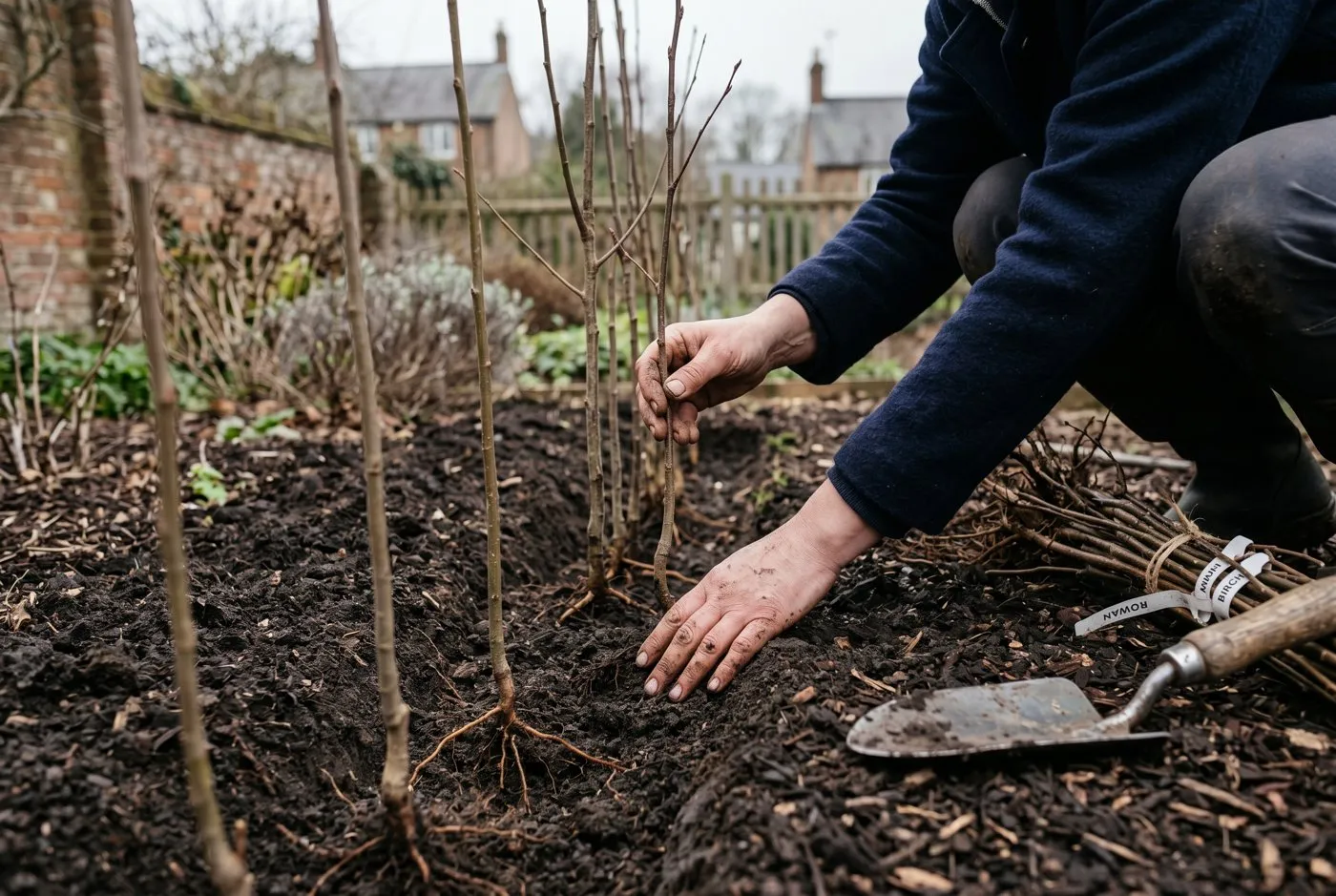 Bare-root whips planted three per square metre, roughly a hand-width apart, in a small town garden in February. The crowding looks wrong but drives the fast upward growth that defines the Miyawaki method.
The Four Layers of a Pocket Woodland
A real wood is not a single height of tree. It stacks into layers, and copying that structure is what separates a pocket woodland from a row of saplings. There are four layers to plant, each with a job.
Canopy layer (8m to 12m)
The canopy is the tallest tier, the trees that will eventually form the roof. In a small garden you want light, airy species that cast dappled shade rather than dense gloom. Silver birch (Betula pendula) and bird cherry (Prunus padus) are the picks. Birch reaches 12m but stays narrow, around 3m to 4m across. Plant only three or four canopy trees in a 5m x 5m wood, or you lose all light at ground level. Birch also supports over 300 insect species, more than almost any other UK native.
Understorey layer (4m to 8m)
The understorey fills the middle height beneath the canopy gaps. Rowan (Sorbus aucuparia), crab apple (Malus sylvestris) and field maple (Acer campestre) sit here. Rowan tops out near 8m, crab apple at 6m, and both flower then fruit, feeding pollinators in spring and birds in autumn. Field maple takes coppicing well, so you can keep it short. Plant six to eight understorey trees across the corner.
Shrub layer (1m to 4m)
The shrub layer is the dense, twiggy tier that gives the wood its body and nesting cover. Hazel (Corylus avellana) and hawthorn (Crataegus monogyna) are the backbone. Hazel coppices on a seven-year cycle and yields nuts; hawthorn flowers in May and carries haws into winter. Blackthorn fits here too. Plant the most whips in this layer, around 12 to 16, since it does most of the wildlife work. On damper ground, guelder rose slots into the same tier; our guelder rose guide covers this berry-heavy native shrub.
Ground layer (under 1m)
The ground layer is the woodland floor planting that arrives once the canopy shades the grass out. Native English bluebell (Hyacinthoides non-scripta), wild garlic (Allium ursinum), wood anemone and primrose all suit it. Plant these as bulbs and plugs in year two, once the trees have started to close in. They will not establish in full sun, so patience is the rule.
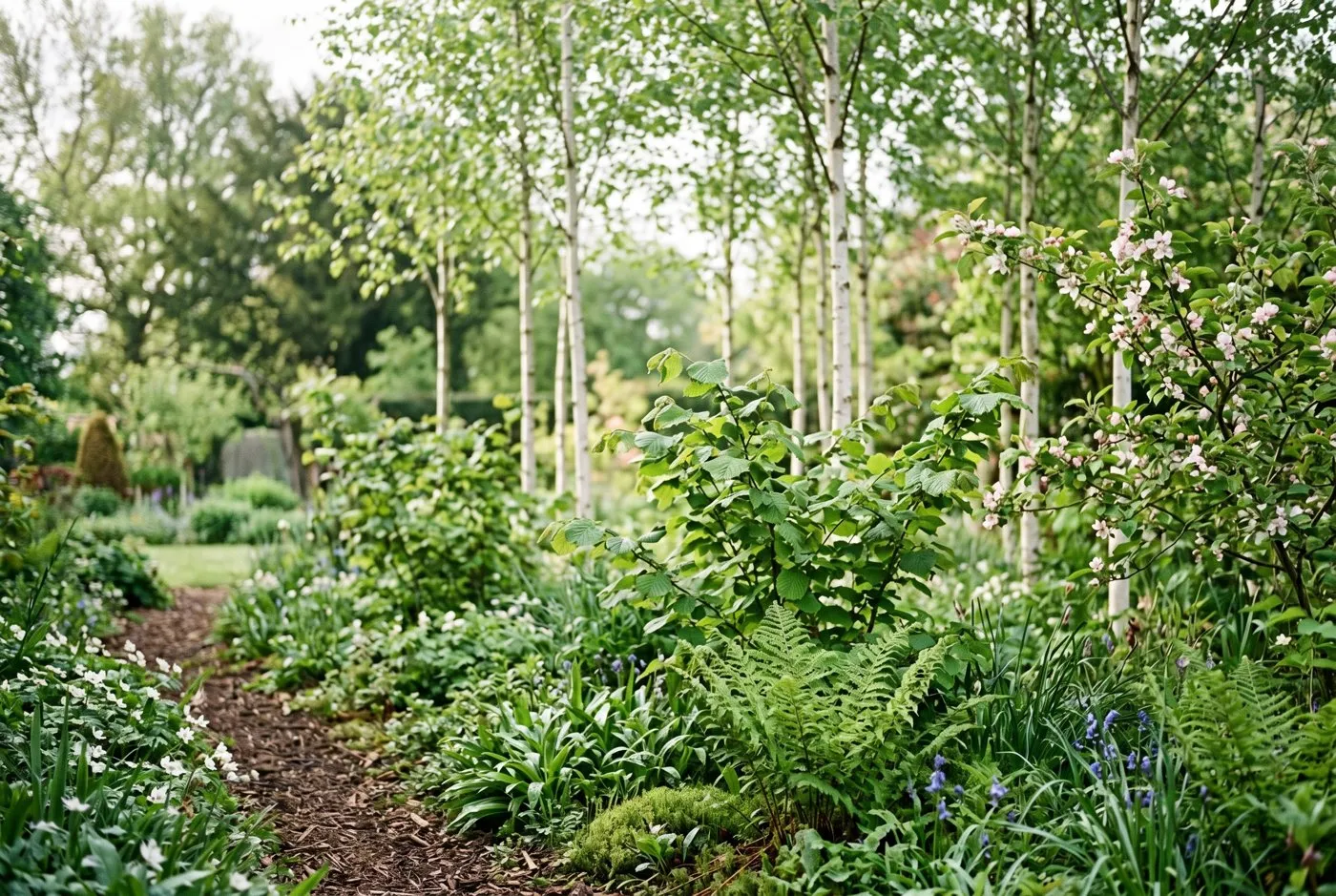 The four layers reading back to front: low ground plants, the twiggy shrub layer of hazel and hawthorn, the understorey of rowan and crab apple, and slender birch forming the canopy roof.
Best Small Native Trees for a Pocket Woodland
Choosing native is not sentiment. A native oak supports 326 insect species; a non-native sycamore supports 15. Wildlife value tracks the length of time a species has grown in Britain. Every tree below is UK native, stays under 12m, and earns its place. The table ranks them by overall usefulness in a small wood, with the layer each one fills.
| Tree | Layer | Height | Spread | Wildlife value | Best for |
|---|---|---|---|---|---|
| Silver birch | Canopy | 10-12m | 3-4m | Very high (300+ insects) | Fast light canopy, airy shade |
| Hawthorn | Shrub | 4-6m | 3-4m | Very high (300+ species) | Nesting cover, May blossom, haws |
| Rowan | Understorey | 6-8m | 3-4m | High (berries, blossom) | Bird food, small gardens, exposure |
| Hazel | Shrub | 4-6m | 3-5m | High (catkins, nuts) | Coppicing, dormouse and bird food |
| Crab apple | Understorey | 5-6m | 4-5m | High (blossom, fruit) | Pollinators, autumn fruit, pollination |
| Field maple | Understorey | 6-8m | 4-5m | Moderate to high | Coppicing, autumn colour, aphid predators |
| Bird cherry | Canopy | 8-10m | 4-5m | Moderate to high | Spring blossom, moth larvae, birds |
Soil Prep the No-Dig Way
Native trees evolved on undisturbed woodland soil, so heavy digging works against you. The fungal network that feeds tree roots, the mycorrhiza, gets shredded by a spade or rotavator. A no-dig start keeps it intact.
First, deal with compaction only. If the ground is hard, fork it through once to crack the pan, then stop. Do not turn it over. Next, kill the existing grass by laying cardboard across the whole corner in autumn, then pile 15cm of mulch on top: composted bark, leaf mould or well-rotted woodchip. The grass dies under the dark, and the mulch rots down to feed the soil over winter.
How to Plant Bare-Root Whips in a Small Garden
Bare-root whips are the only sensible way to plant a pocket woodland. They are cheap, often under 1 pound each, establish faster than pot-grown stock, and you can fit dozens in a small order. They are sold dormant between November and March.
The planting itself is quick. Mark a rough grid at 0.55m spacing, which gives your three plants per square metre. Stagger the rows so trees are not in straight lines; a natural wood is random. For each whip, push a spade in, lever a slit, drop the roots in to the old soil mark, firm with your heel, and move on. A skilled planter does 100 an hour. Mix the species across the grid so no two of the same sit together, which is exactly how a natural wood seeds.
Water in well, then leave them. Do not stake; whips need to flex to build strong stems. Protect against rabbits and deer with spiral guards or a low mesh fence if your garden has them. For the full technique on root handling and depth, see our bare-root tree planting guide.
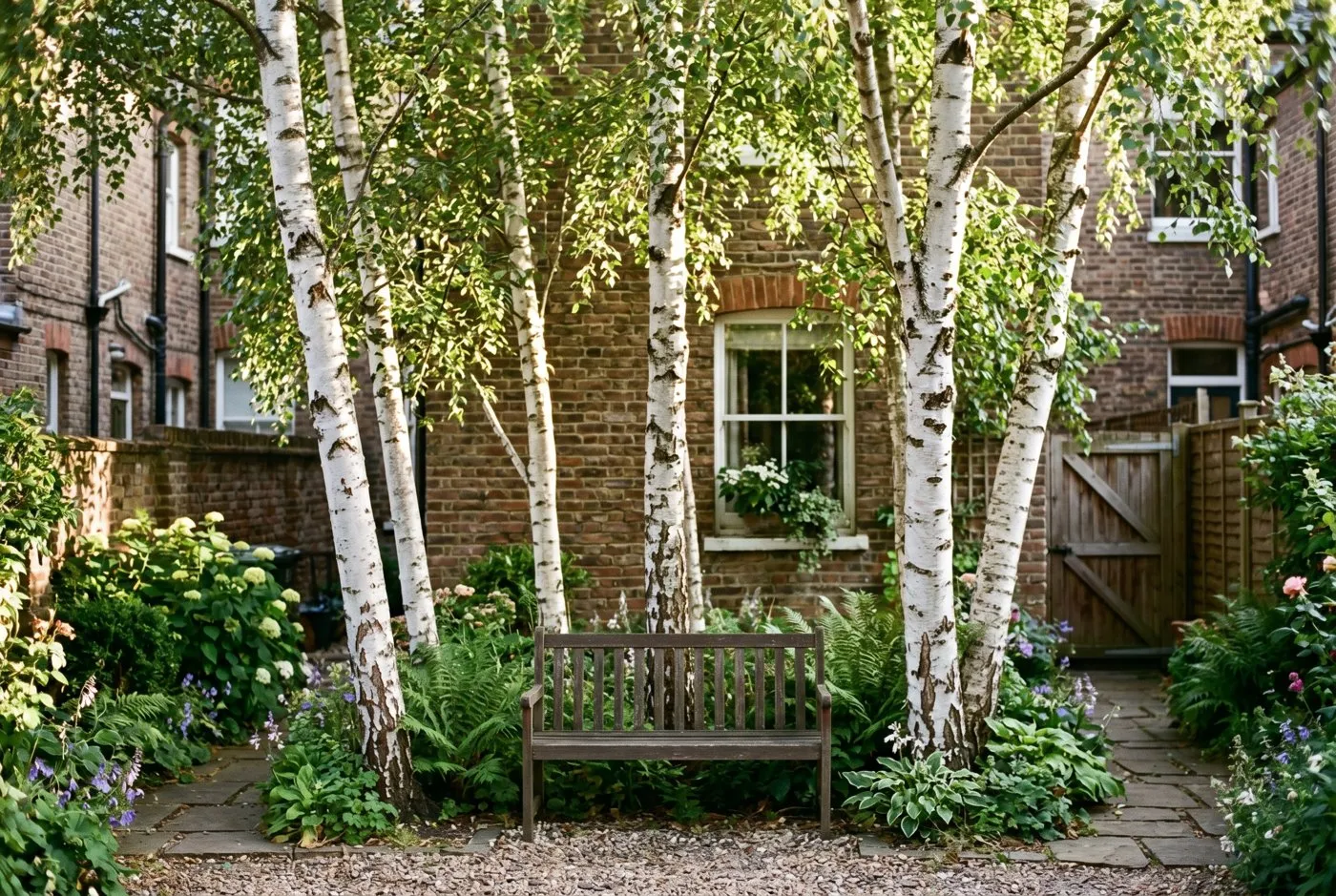 A young birch grove in a town garden three years on. Birch makes the ideal pocket-wood canopy: fast, narrow, light-shaded and host to over 300 insect species.
Planting and Establishment Calendar
A pocket woodland runs on a seasonal rhythm. The first year is the busy one; after that the wood largely runs itself. This calendar covers a planting started the autumn before a spring establishment.
| Month | Task |
|---|---|
| September | Mark out the corner, lay cardboard to kill the grass |
| October | Spread 15cm of mulch over the cardboard, order bare-root whips |
| November | Whips arrive dormant; plant in mild spells, heel in spares |
| December | Continue planting in frost-free weather, firm any lifted whips |
| January | Best bare-root planting window on clay; plant the bulk now |
| February | Finish planting, fit rabbit and deer guards |
| March | Last planting before bud break; water if dry |
| April | Watch for bud burst, replace any failed whips |
| May | Hand-weed only if grass breaks through the mulch |
| June | Water in dry spells through the first summer only |
| July | Check guards, top up mulch where thin |
| August | Leave alone; let competition drive height |
Year two adds the ground layer: plant native bluebell bulbs and wild garlic in autumn, once the canopy starts to shade the grass. Years three and four bring canopy closure and your first coppicing of fast hazel. For under-tree planting, our guides on growing bluebells and growing wild garlic cover bulb depth and timing.
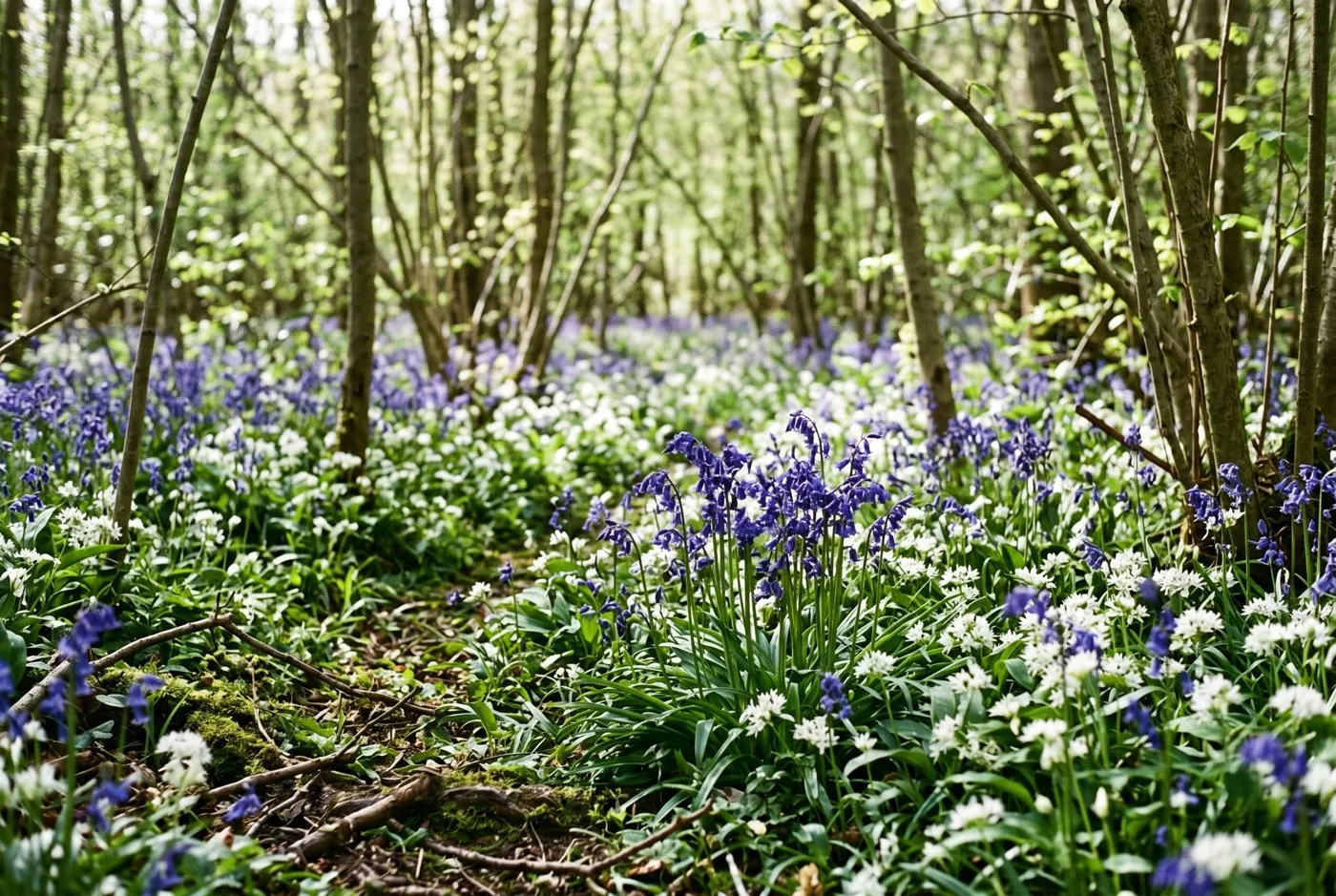 The ground layer in year three: native bluebells and wild garlic carpeting the floor once the canopy shades the grass out. Plant these as bulbs and plugs in year two, never at the start.
What a Pocket Woodland Does for Wildlife
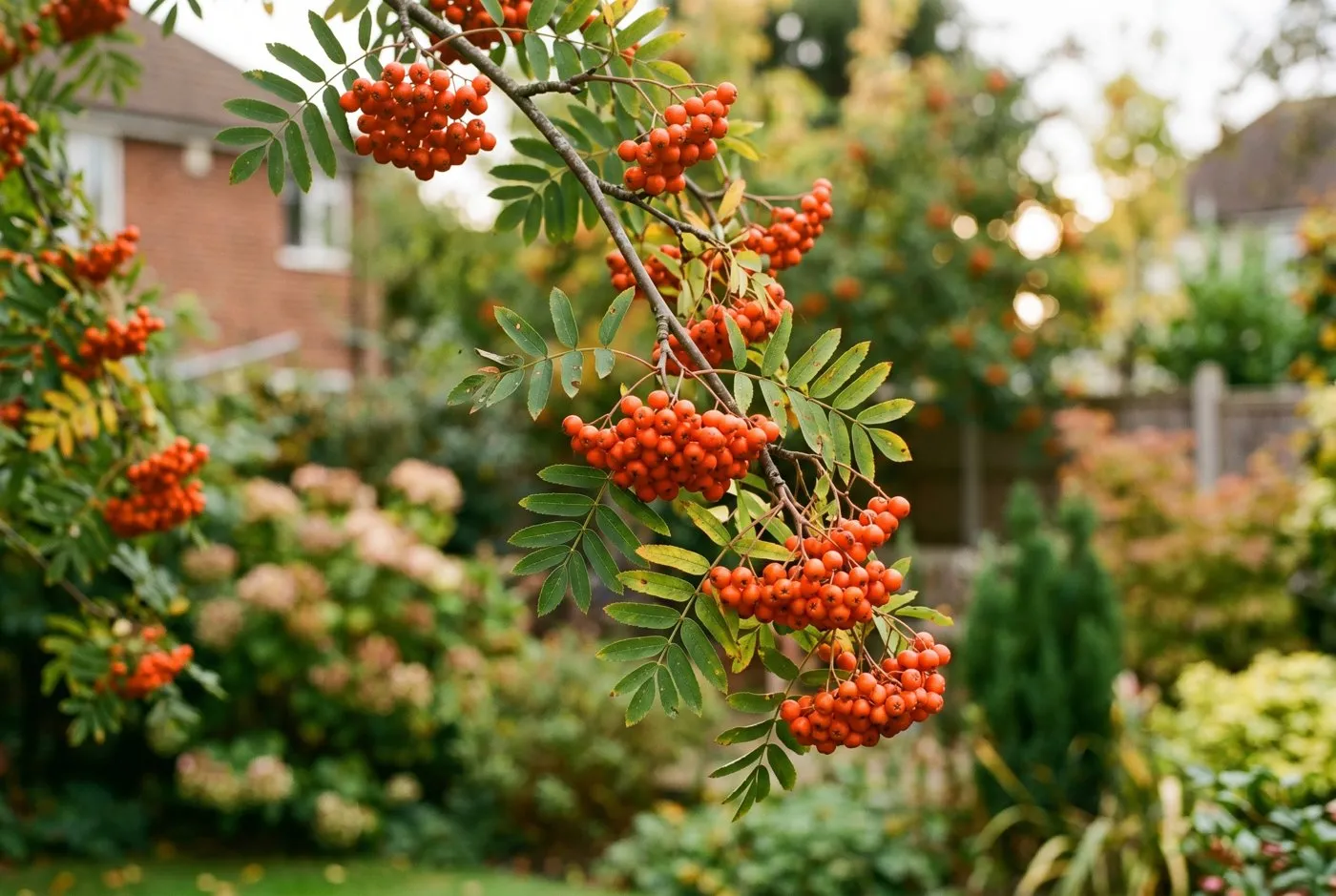 Rowan berries ripening in October. Rowan and crab apple draw redwings, blackbirds and waxwings into the understorey, one of the fastest wildlife wins a young pocket woodland delivers.
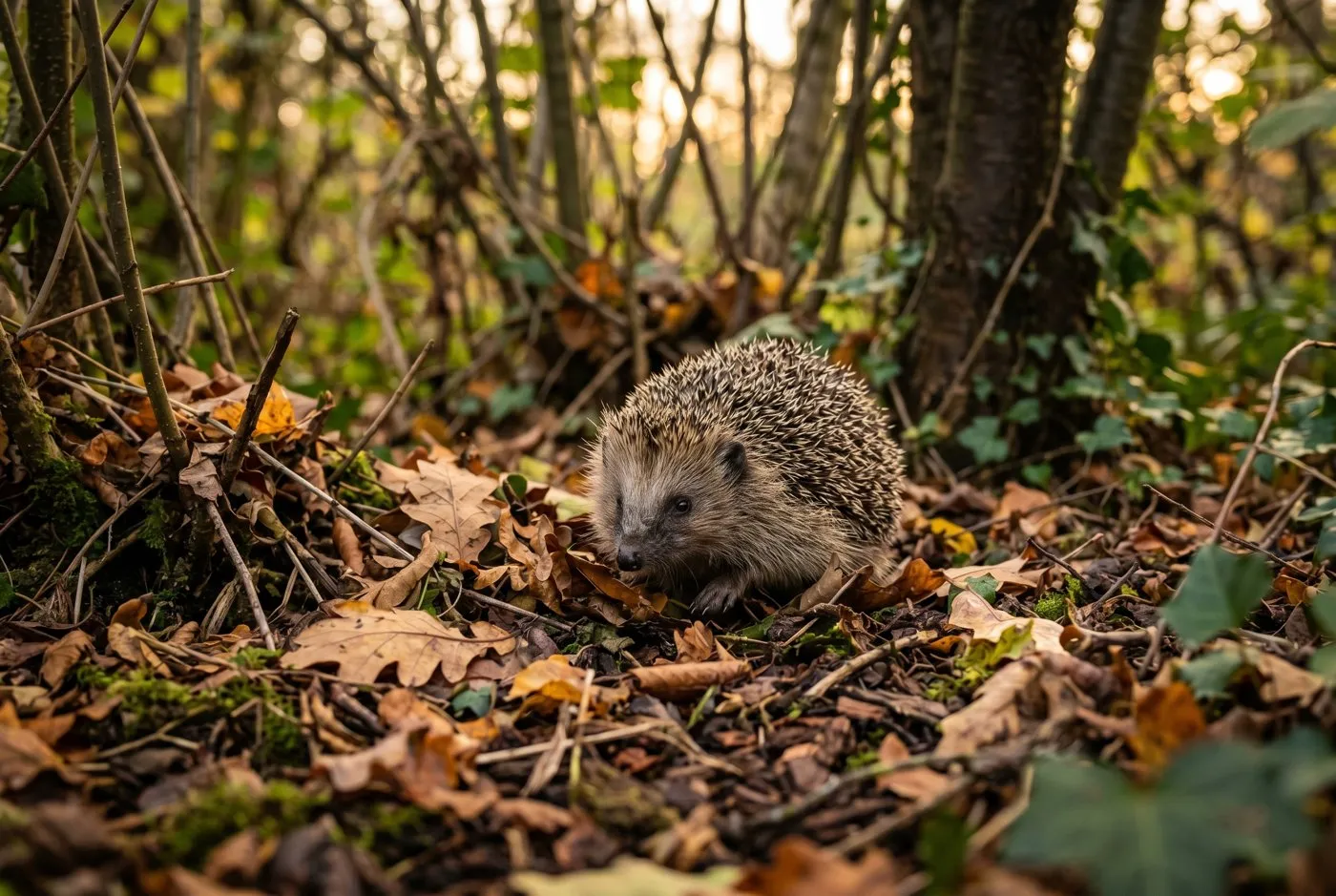 A hedgehog foraging the leaf litter at the base of the wood at dusk. The mulch and fallen leaves of a pocket woodland build the invertebrate-rich floor that hedgehogs hunt over.
Common Mistakes That Stall a Pocket Woodland
Most failed pocket woodlands trip on the same three errors. Each one undoes the method at its core.
Planting too sparse. The instinct is to space trees out so they look tidy and “have room”. This is the single biggest mistake. Sparse planting removes the competition for light that drives fast height, lets grass smother the whips, and gives you a slow, scrubby thicket instead of a wood. Plant the full three per square metre even when it feels wrong.
Using non-native or ornamental species. A cherry laurel, a photinia or an ornamental maple looks fine but feeds almost nothing. Non-natives support a fraction of the wildlife of a true native, and many spread or shade too densely. Stick to the UK native list. The whole point is a working ecosystem, not a screen.
Warning: Never plant invasive non-natives like cherry laurel or Rhododendron ponticum in a pocket woodland. They shade out the ground layer, support little wildlife, and are hard to remove once established. Check every species against a UK native list before you order.
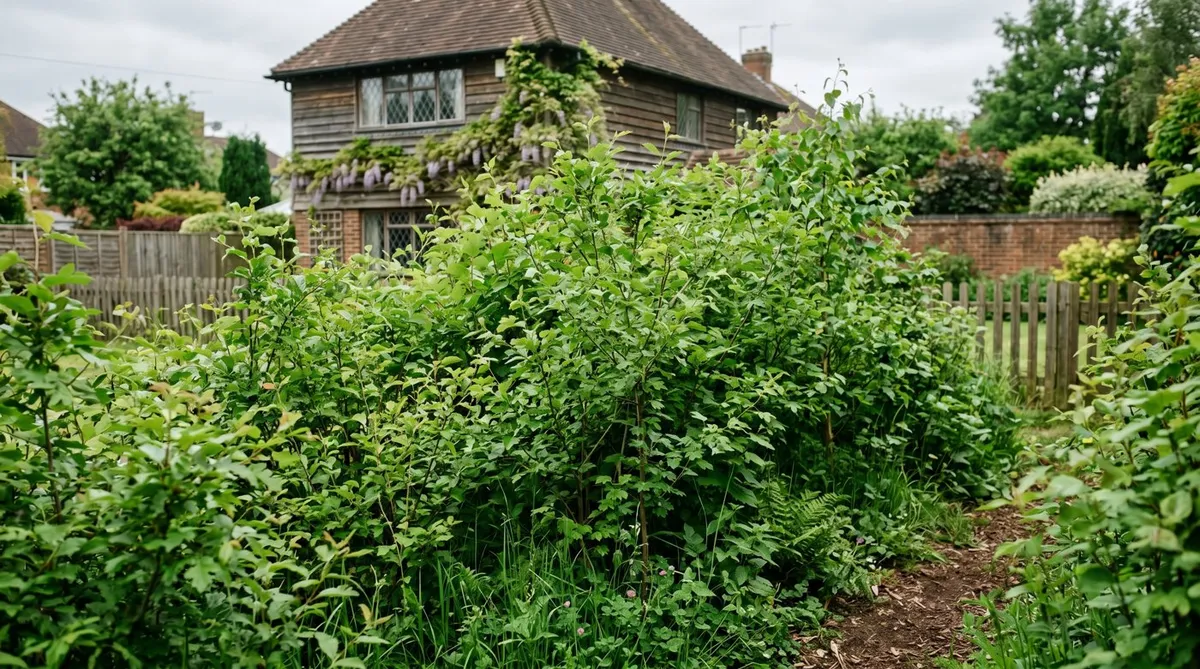
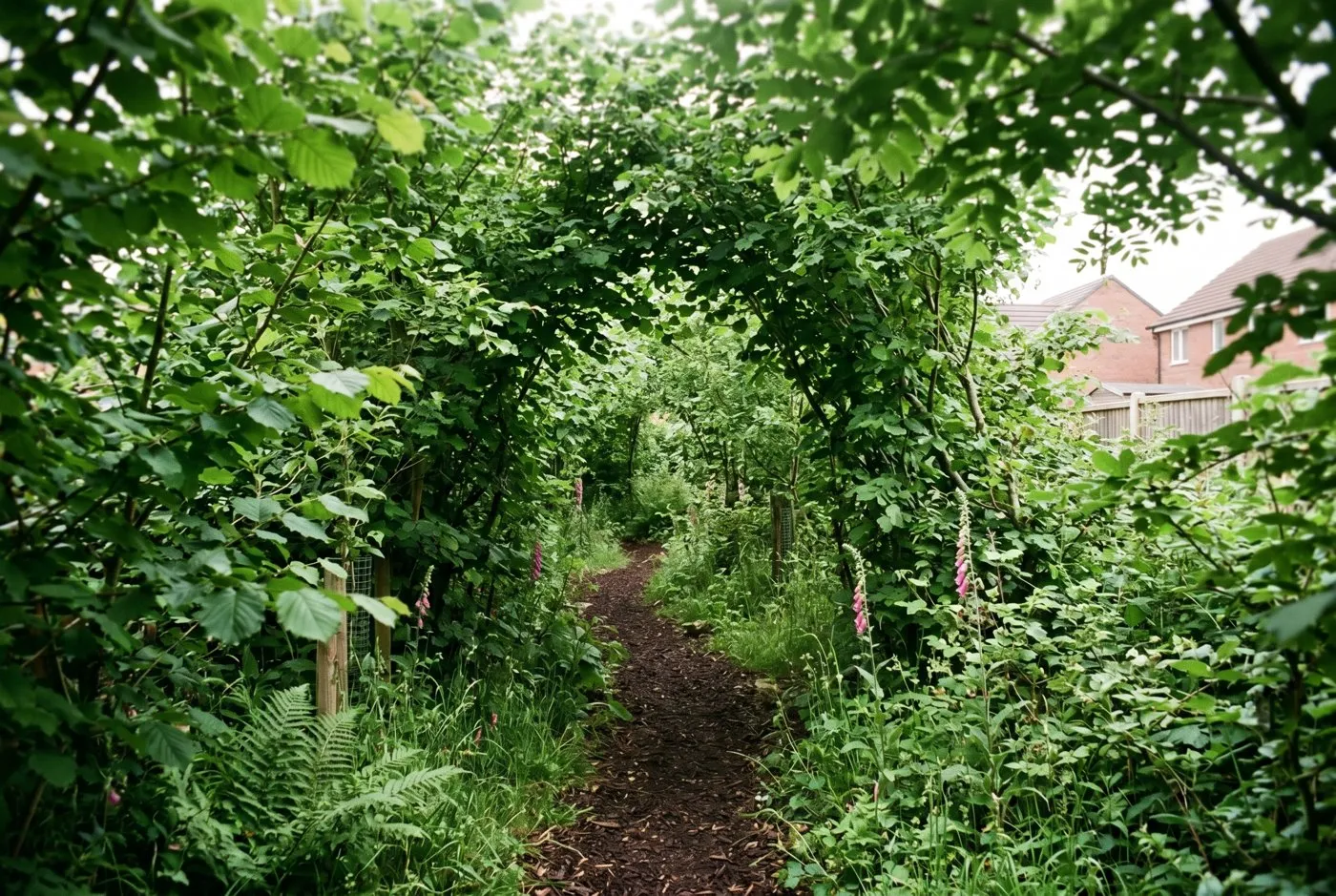 The same corner at three years: canopy closed, a shaded interior, and a mulch path through. Dense native planting reaches this in three to four years, where standard spacing takes fifteen.
What Fits a 5m x 5m Corner
A workable mix for that corner: 3 silver birch and 1 bird cherry for the canopy, 6 rowan, crab apple and field maple for the understorey, and 16 hazel, hawthorn and blackthorn for the shrub layer. That is 26 trees with room left for a 2m clearing. The bare-root cost runs to roughly 25 to 40 pounds for the lot, plus mulch and guards.
Frequently asked questions
What is a pocket woodland?
A pocket woodland is a dense patch of native trees in a small garden. It copies the Japanese Miyawaki method, planting three whips per square metre across four layers so the wood matures in a few years rather than decades. The crowding forces fast upward growth and a closed canopy.
How small a garden can hold a pocket woodland?
A corner of 3m x 3m is enough to start. That holds around 27 whips at three per square metre. A 5m x 5m corner, roughly 25 square metres, gives a proper four-layer wood with 30 to 45 trees and a usable interior with a clearing.
Which native trees suit a small pocket woodland?
Rowan, hazel, hawthorn, crab apple and field maple stay small. Add silver birch and bird cherry for the canopy layer. All are UK natives under 12m, they coppice well, and they feed far more wildlife than ornamental non-natives like laurel or photinia.
How long until a pocket woodland looks like a wood?
Three to four years for canopy closure. Whips put on 40 to 80cm a year once established. By year three you walk into shade and birdsong. Full structural maturity, with a working ground layer of bluebells and wild garlic, takes five to seven years.
Do I need to prepare the soil first?
Loosen compaction and add organic matter, but do not dig deep. A no-dig approach with 15cm of mulch keeps the soil fungal network intact. Native trees thrive on undisturbed soil biology, so heavy cultivation slows them rather than helping.
Now plant the layer that finishes the wood
A pocket woodland is only finished when the floor is planted. Now you have the trees in, read our guide to the best small native trees to fine-tune your species list, then build the ground layer with our growing silver birch guide for the canopy and the native hedgerow species guide for a matching wildlife boundary. For more outdoor design ideas, browse the full garden design section. The Woodland Trust also offers free trees for schools and communities worth checking before you order.
Our team produces practical UK gardening guidance from source research, contributor records and established horticultural practice. Editorial standards are overseen by Matt W.