Key takeaways
- Pot up just one size, 2-4cm wider, never several sizes at once
- Signs: circling roots, roots out of drainage holes, fast drying out
- Repot in spring or early summer during active growth
- Tease apart or score the circling roots before replanting
- Use fresh compost; old pot-bound compost is exhausted and water-repellent
- Overpotting into a huge pot causes root rot, not faster growth
A root-bound houseplant is one that has outgrown its pot, its roots wound so tightly round the inside that there is no room or compost left for them to work with. It is one of the most common reasons a once-healthy plant suddenly stalls, wilts between waterings, or stops putting out new leaves. The fix is straightforward, but it is easy to make it worse by jumping into a pot far too big. This guide explains how to spot a root-bound plant, how to free the roots, and the one-size-up rule that lets the plant recover without rotting.
Some plants actually flower better when a little snug, so part of the skill is knowing when to act and when to leave well alone.
What root-bound means and why it happens
A plant becomes root-bound, or pot-bound, when its roots fill the container completely and begin circling the inside wall, having run out of soil to grow into. Over time the roots form a dense, pot-shaped plug with almost no compost left between them. The plant can no longer take up enough water or nutrients, and growth stalls.
The root cause is simply time and growth: every healthy plant eventually fills its pot and needs more room. Two things make it worse. First, the compost breaks down and exhausts over a year or two, losing structure and nutrients, so even before the roots fill the pot the growing medium is failing. Second, old pot-bound compost often turns water-repellent, so water runs down the gap between rootball and pot and straight out the bottom without wetting the roots. This is why a pot-bound plant can wilt even right after watering. Understanding both causes points to the fix: more room and fresh compost together.
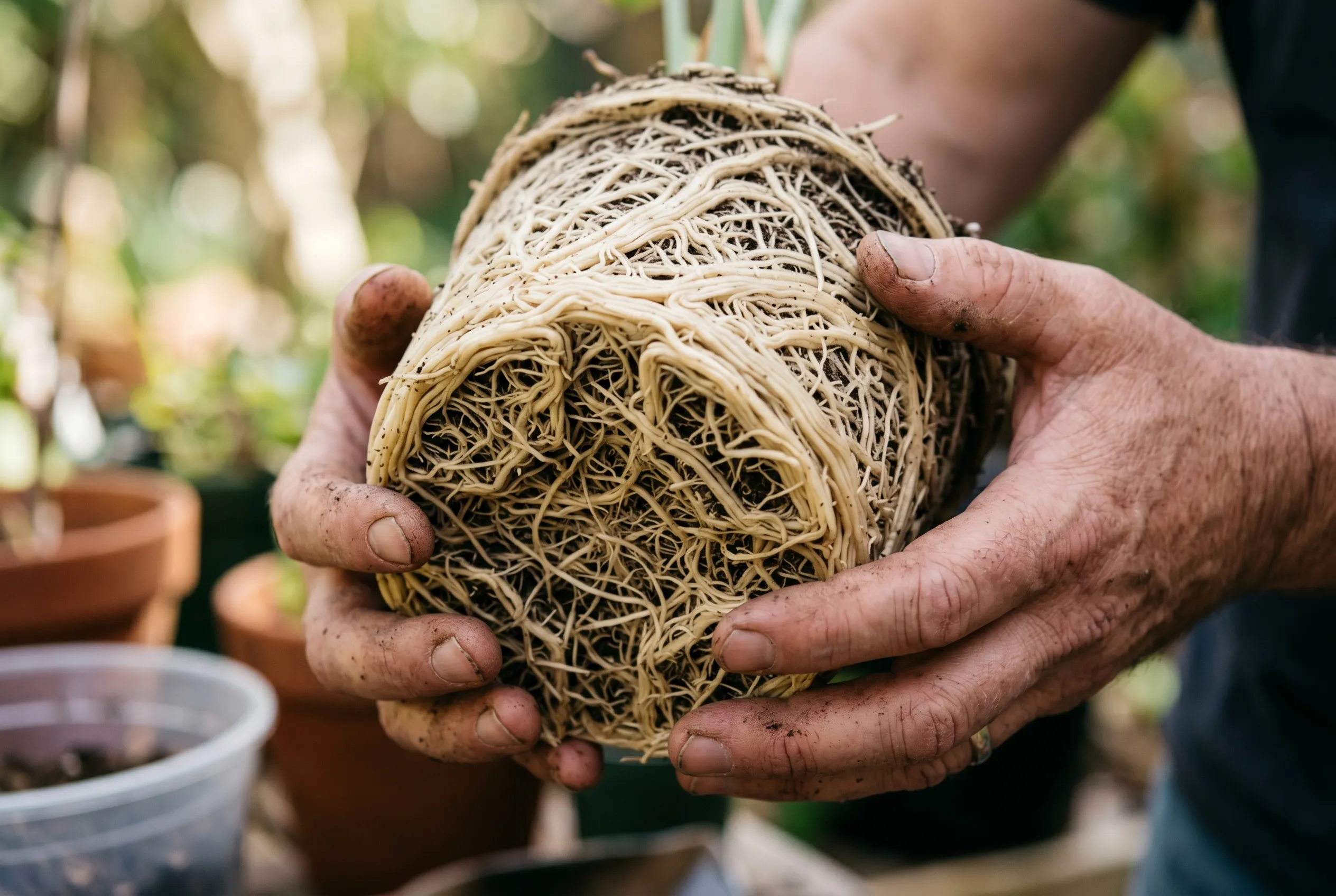 A classic root-bound rootball: roots circling the pot shape with barely any compost left between them.
How to tell if a houseplant is root-bound
You usually do not need to remove the plant to know. The clearest outside signs are roots growing out of the drainage holes and roots appearing on the compost surface. Others include:
- Fast drying out. The plant needs water every day or two and the pot feels light, because roots, not water-holding compost, fill it.
- Water runs straight through. Water pours out the bottom seconds after pouring in, a sign of channelling around a water-repellent rootball.
- Stalled or stunted growth. New leaves stop appearing, or come out small and pale.
- A deformed pot. Plastic pots bulge or crack, and the plant pushes itself upward out of the pot.
To confirm, slide the plant out and look. A healthy plant shows roots threaded through visible compost. A root-bound one shows a solid mass of circling roots holding the shape of the pot, with the compost barely visible between them.
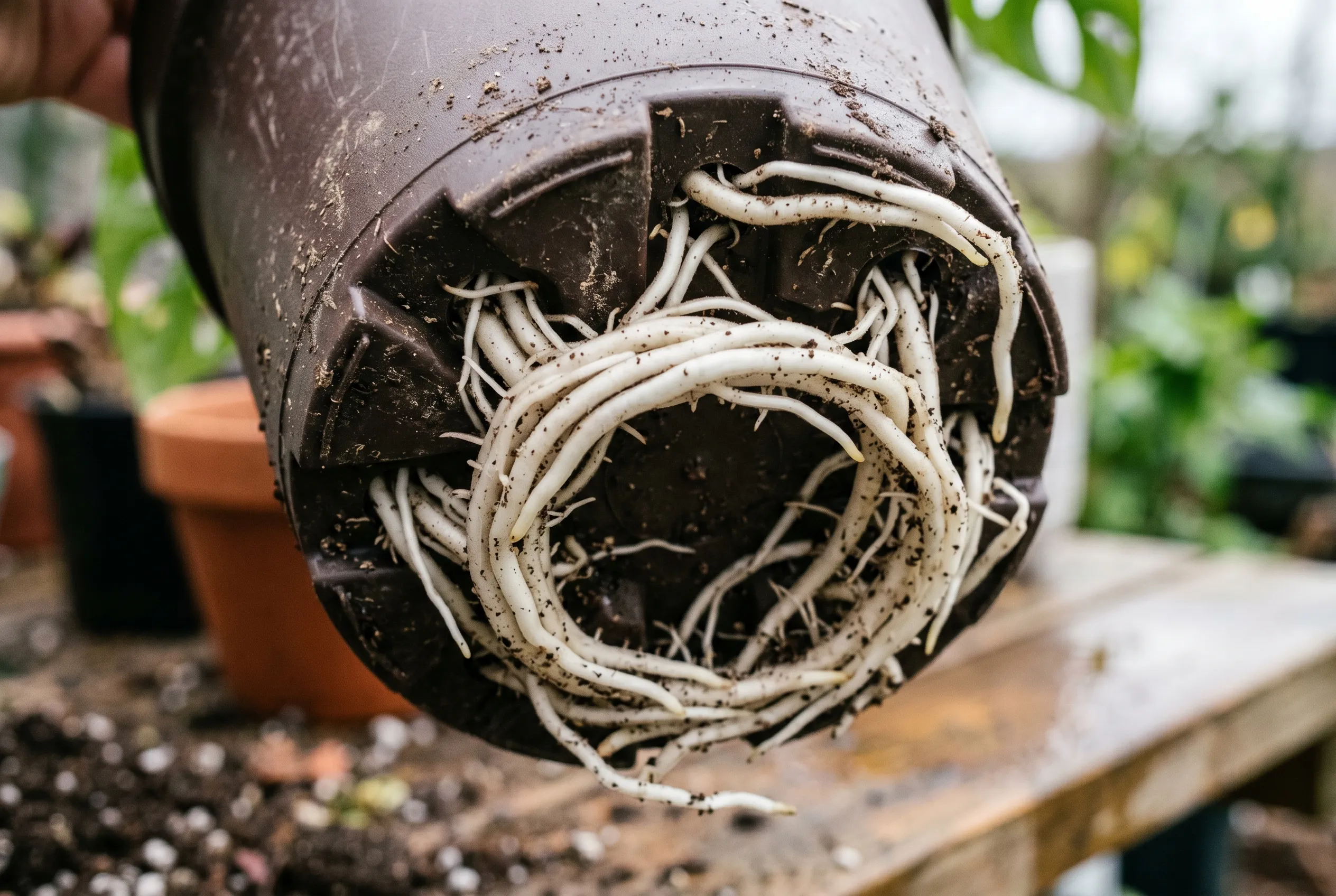 Roots pushing out of the drainage holes are the clearest outside sign that a plant has run out of room.
How to fix a root-bound houseplant step by step
The job takes ten minutes. Work in spring or early summer if you can, when the plant is growing and recovers fastest.
- Water first. Water the plant an hour before, so the rootball holds together and slides out cleanly.
- Ease it out. Tip the pot, support the base of the stems, and slide the rootball free. Squeeze a plastic pot or run a knife round a rigid one to loosen it.
- Tease the roots apart. Gently unpick the circling roots at the base and sides with your fingers, teasing them outward so they will grow into fresh compost rather than keep circling.
- Score or trim if severe. For a solid plug, make three or four shallow vertical cuts down the rootball with a clean knife, or shorten the thickest circling roots by up to a third.
- Choose a pot one size up. Pick a pot just 2-4cm wider with drainage holes. No bigger.
- Replant in fresh compost. Add fresh houseplant compost below and around the rootball, keeping the plant at its old depth. Firm gently and water in.
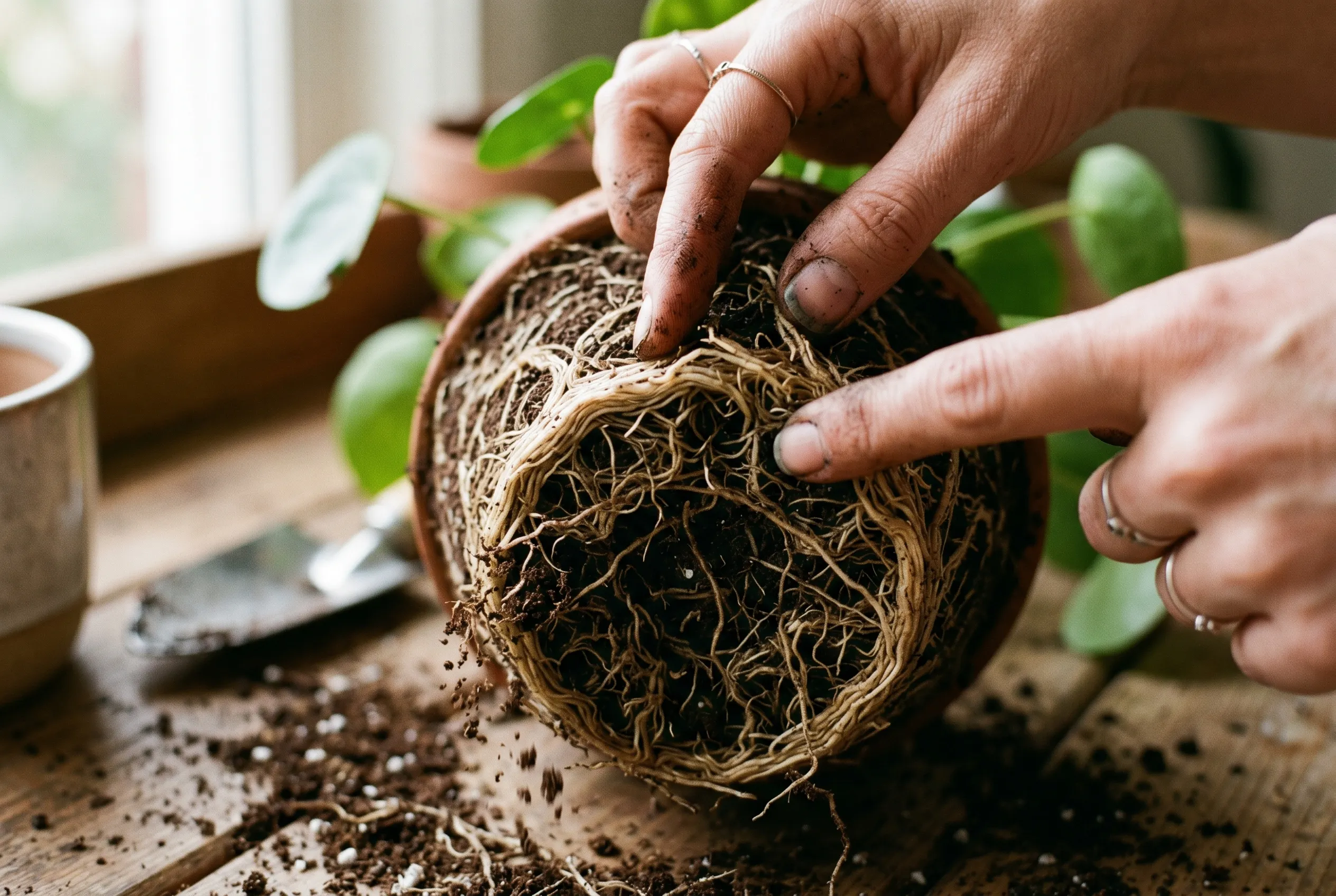 Tease the circling roots outward before replanting so they grow into the fresh compost instead of continuing to circle.
The one-size-up rule: why overpotting causes rot
The most damaging mistake is potting into a pot far too big, in the belief that more room means faster growth. The opposite happens. A small rootball sitting in a large volume of compost cannot drink up all the moisture that compost holds, so the excess stays wet for days. Constantly wet compost starves the roots of air and causes root rot, the very thing that kills more houseplants than under-watering.
Step up one size at a time, a pot 2-4cm wider in diameter, the approach the RHS houseplant advice also recommends. The roots then reach the new pot’s edge in a season or two, and you pot up again. This gradual approach keeps the moisture balance right and the plant growing steadily. If you would rather keep a plant at its current size, root-prune instead: trim the rootball back by a third, tease out the roots, and return it to the same pot with fresh compost. This is exactly how large specimen plants are kept in scale for years.
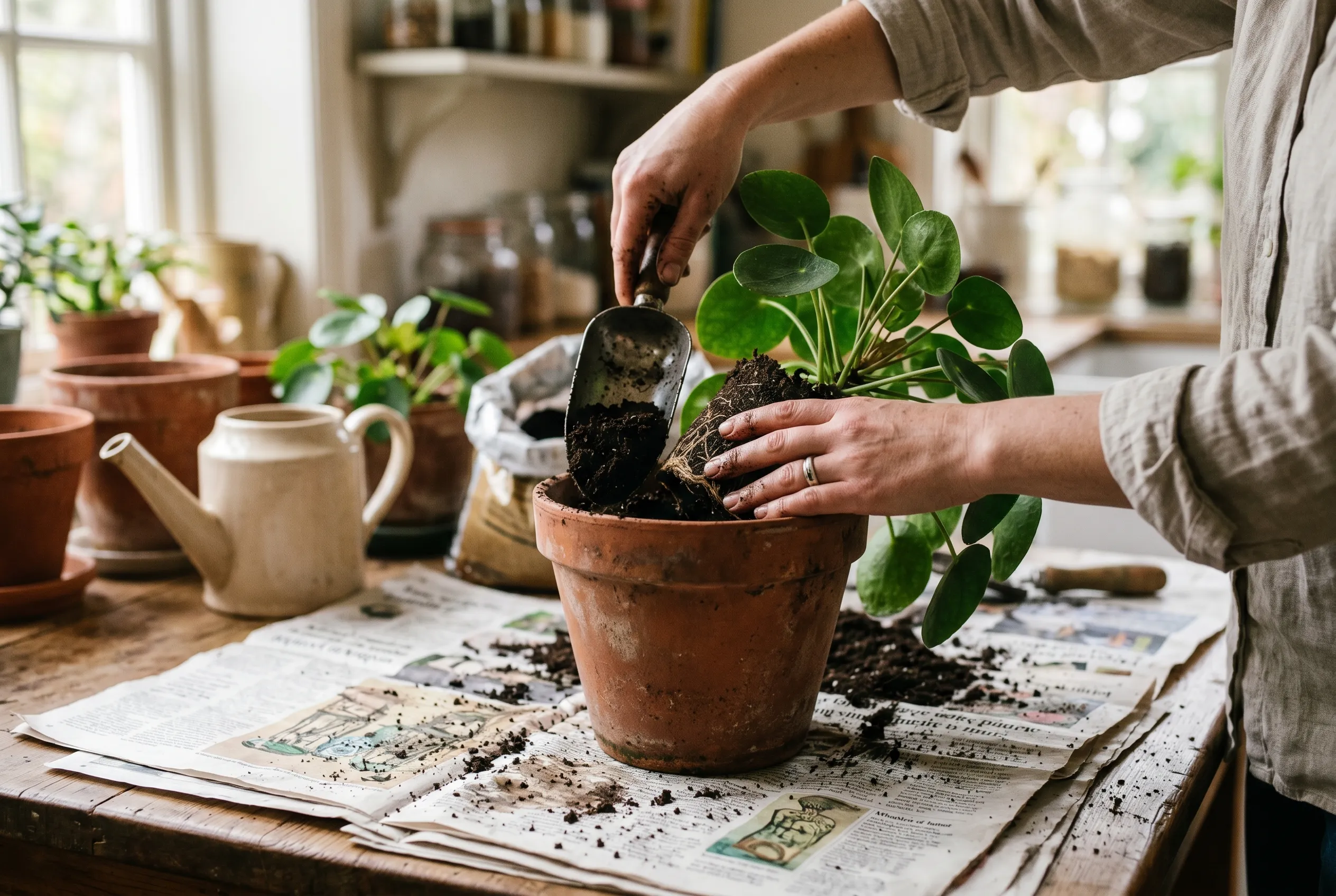 Pot up just one size into fresh compost. A pot only 2-4cm wider keeps the moisture balance right and avoids rot.
Which plants like being root-bound
Not every snug plant needs rescuing. A handful of houseplants flower or perform better when slightly pot-bound, because the restriction triggers flowering or suits their natural habit.
| Plant | Likes being snug? | Repot when |
|---|---|---|
| Peace lily | Yes, flowers better slightly tight | Roots fill pot, dries daily |
| Spider plant | Yes, tolerates crowding | Pot cracks or roots heave up |
| Clivia | Yes, flowers best pot-bound | Every 3-4 years only |
| Snake plant | Yes, slow grower, leave snug | Pot bulges or splits |
| Monstera and ferns | No, repot promptly | Roots circle, growth stalls |
| Most fast growers | No | Annually in spring |
For these tolerant plants, hold off until the pot is clearly cracking or the plant dries out daily. For everything else, pot up as soon as the roots circle. Our roundups of the best low-light houseplants and best hanging houseplants note which types are vigorous and need regular potting on.
Root-bound or just thirsty? How to tell
A root-bound plant and a simply under-watered one can look identical: both wilt, both dry out fast. Telling them apart saves you from repotting a plant that only needed a drink, or watering one that needs more room.
The deciding test is the rootball. Slide the plant out and look. If you see a solid mass of circling roots holding the pot’s shape with little compost, it is root-bound and needs potting up. If you see healthy roots threaded through plenty of compost, it is not, and the wilting is a watering issue. The water test helps too: if water runs straight out the bottom in seconds and the rootball stays dry inside, the compost has gone water-repellent around a pot-bound root mass. A quick fix for that is to soak the whole pot in a bucket of water for twenty minutes to rewet the rootball, but a plant that needs this repeatedly is telling you it has outgrown its pot. The same root-binding affects young plants in module trays, as our guide on fixing root-bound seedlings explains.
Common root-bound repotting mistakes
These errors turn a simple job into a setback.
- Overpotting into a huge pot. The number one killer. Excess wet compost rots the roots. Go up one size only.
- Not loosening the roots. A circling rootball planted as-is keeps circling and never grows out. Always tease or score it.
- Reusing old compost. Exhausted, water-repellent compost defeats the point. Use fresh.
- Repotting in winter. Dormant plants recover slowly and sit in wet compost. Wait for spring unless the plant is failing.
- Burying the stem deeper. Plant at the same depth as before. Burying the stem can rot it.
Once repotted, hold off feeding for four to six weeks, as fresh compost contains enough nutrients, then resume as our guide on feeding houseplants describes. Keep an eye out for fungus gnats, which thrive in the damp compost of a freshly repotted plant.
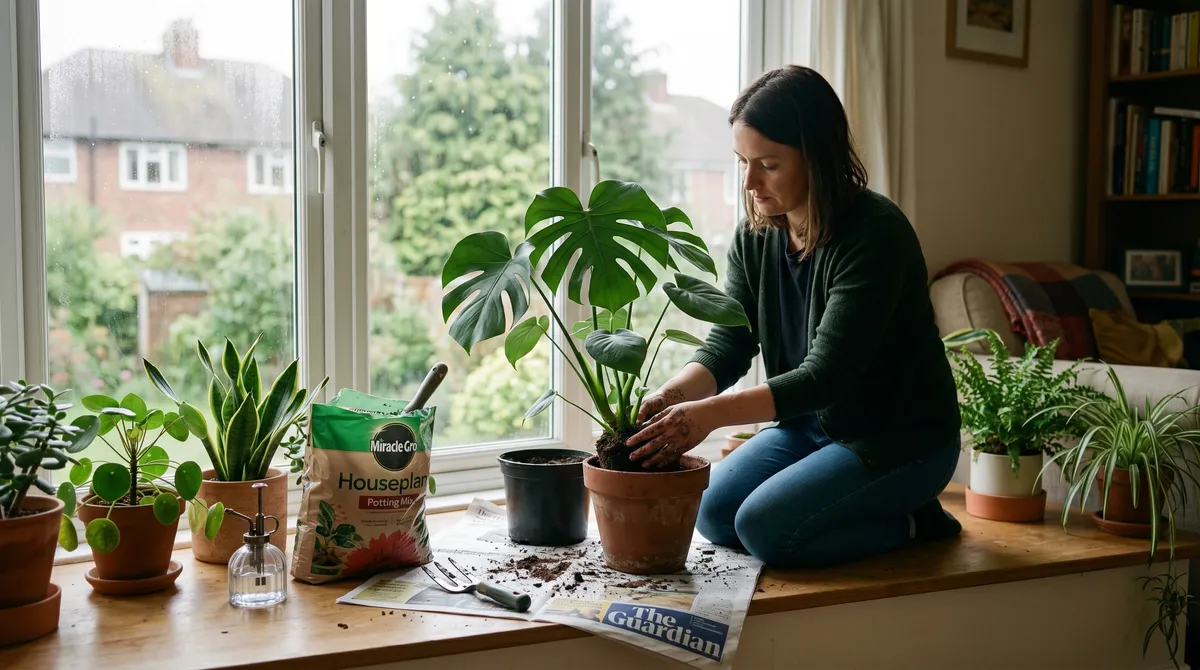
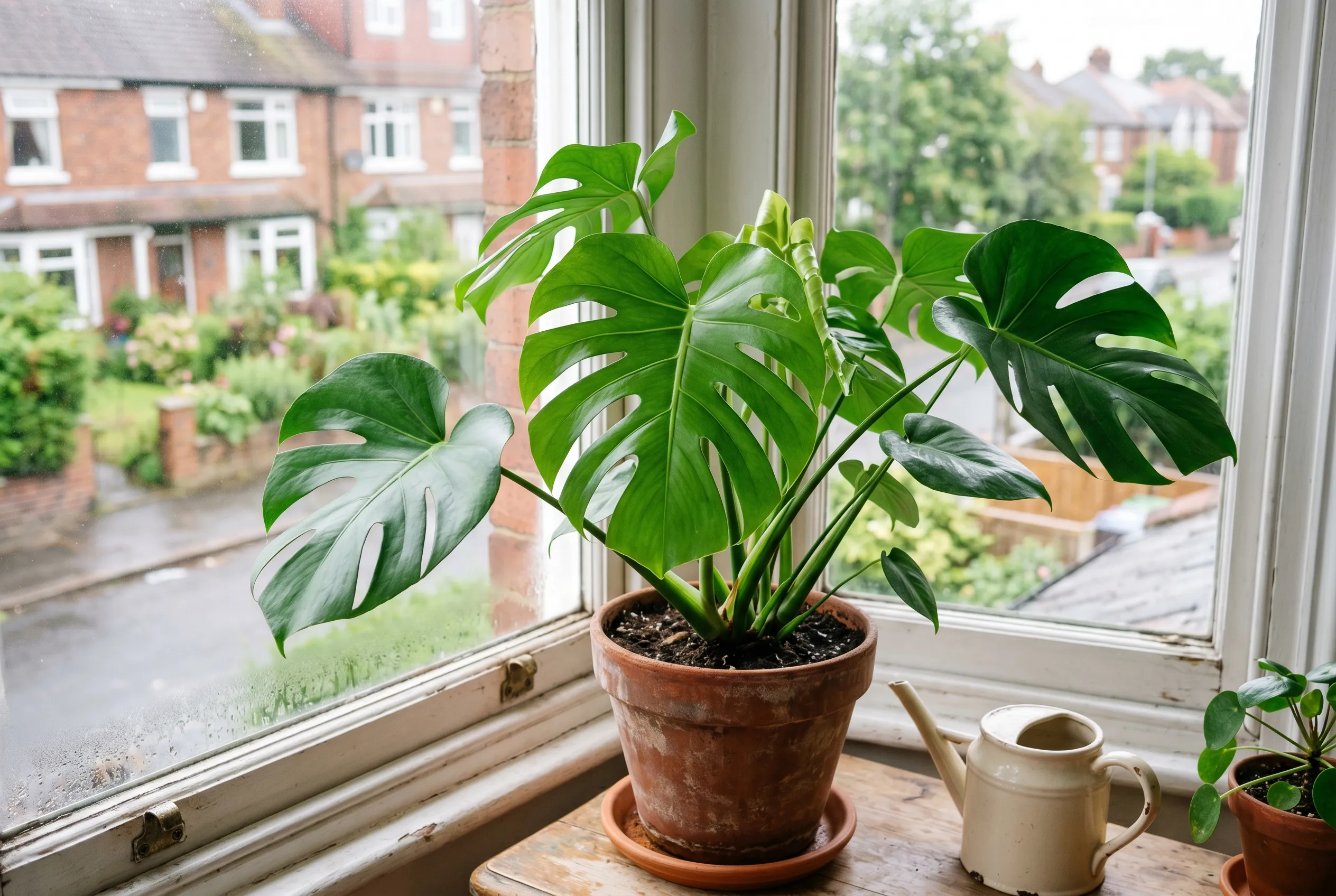 The reward: a freshly potted plant with room to grow, drinking normally again and pushing out healthy new leaves.
Frequently asked questions
How do you fix a root-bound houseplant?
Pot it up one size into fresh compost. Water the plant first, ease it out, tease apart the circling roots, and replant in a pot 2-4cm wider. Firm fresh compost around the rootball and water it in. Do this in spring or early summer for the fastest recovery.
What are the signs of a root-bound plant?
Roots circling the rootball, roots growing out of the drainage holes, and water running straight through are the main signs. The plant also dries out within a day or two, grows slowly, and may push itself up out of the pot or crack a plastic one.
Is it bad for a plant to be root-bound?
Yes, a badly root-bound plant stops growing, dries out fast, and starves as the compost runs out. A few plants, like peace lilies and spider plants, tolerate being slightly snug and even flower better, but severe root binding harms any plant.
How much bigger should the new pot be?
Only 2-4cm wider in diameter, one pot size up. A pot that is too large holds a mass of wet compost the small rootball cannot use, which stays soggy and rots the roots. Step up gradually, one size at a time, as the plant grows.
Can you cut the roots of a root-bound plant?
Yes, you can trim circling roots. Score the rootball with vertical cuts or unpick and shorten the thickest circling roots by up to a third. This encourages fresh outward growth. Root pruning also lets you keep a plant in the same pot rather than potting up.
When is the best time to repot a root-bound plant?
Spring and early summer are best, during active growth, when the plant recovers fastest. Avoid repotting in winter when most houseplants are dormant. If a plant is severely stressed and drying out daily, repot whatever the season to save it.
Now your plant has room to grow, follow our full guide on how to repot houseplants for the wider routine, turn spare growth into new plants with how to propagate houseplants, and browse all our common plant problems for more fixes.
Our team produces practical UK gardening guidance from source research, contributor records and established horticultural practice. Editorial standards are overseen by Matt W.