Key takeaways
- Abutilon flowers June to October, roughly 5 months of pendulous bells
- Hardiness splits by type: tender A. x hybridum (H2) up to hardy A. vitifolium (H4)
- A. megapotamicum and 'Kentish Belle' survive on a warm south or west wall to about -8C
- A. vitifolium is the tallest and fastest, a short-lived shrub reaching 4 to 5m in 3 years
- Overwinter tender types frost-free at 5 to 10C under glass; keep almost dry
- Grow in full sun with 6+ hours of light, sharp drainage and shelter from cold wind
Learning how to grow abutilon rewards you with pendulous bell flowers from June right through to October. Abutilon, known as Indian mallow or flowering maple, is a fast, floriferous plant with maple-shaped leaves and a long season. The catch is hardiness. Some types are tender and belong in a conservatory. Others survive outdoors on a warm wall, and one grows into a small tree.
The four abutilon types every UK gardener should know
Abutilon is a large group of mallow relatives, and the garden types differ so much that lumping them together causes most failures. Four groups cover almost everything sold in UK garden centres.
Abutilon x hybridum and A. pictum are the tender bedding and conservatory types. They carry the biggest, showiest bells in orange, red, yellow and pink. ‘Canary Bird’ is a clear yellow, ‘Nabob’ a deep glowing red. These are hardiness H2, so they die in frost and need winter cover.
Abutilon megapotamicum is the lax, trailing Brazilian species. Its flowers are unmistakable: a red calyx, yellow petals and purple anthers, hanging like tiny lanterns. It is far hardier than the hybrids and thrives against a warm wall.
Abutilon vitifolium is the odd one out. It is the hardiest and largest, a fast short-lived shrub reaching 4 to 5m with vine-shaped leaves and open saucer-shaped mauve or white flowers in early summer. ‘Kentish Belle’ completes the set, an AGM shrub with apricot-orange bells on dark stems for a warm wall.
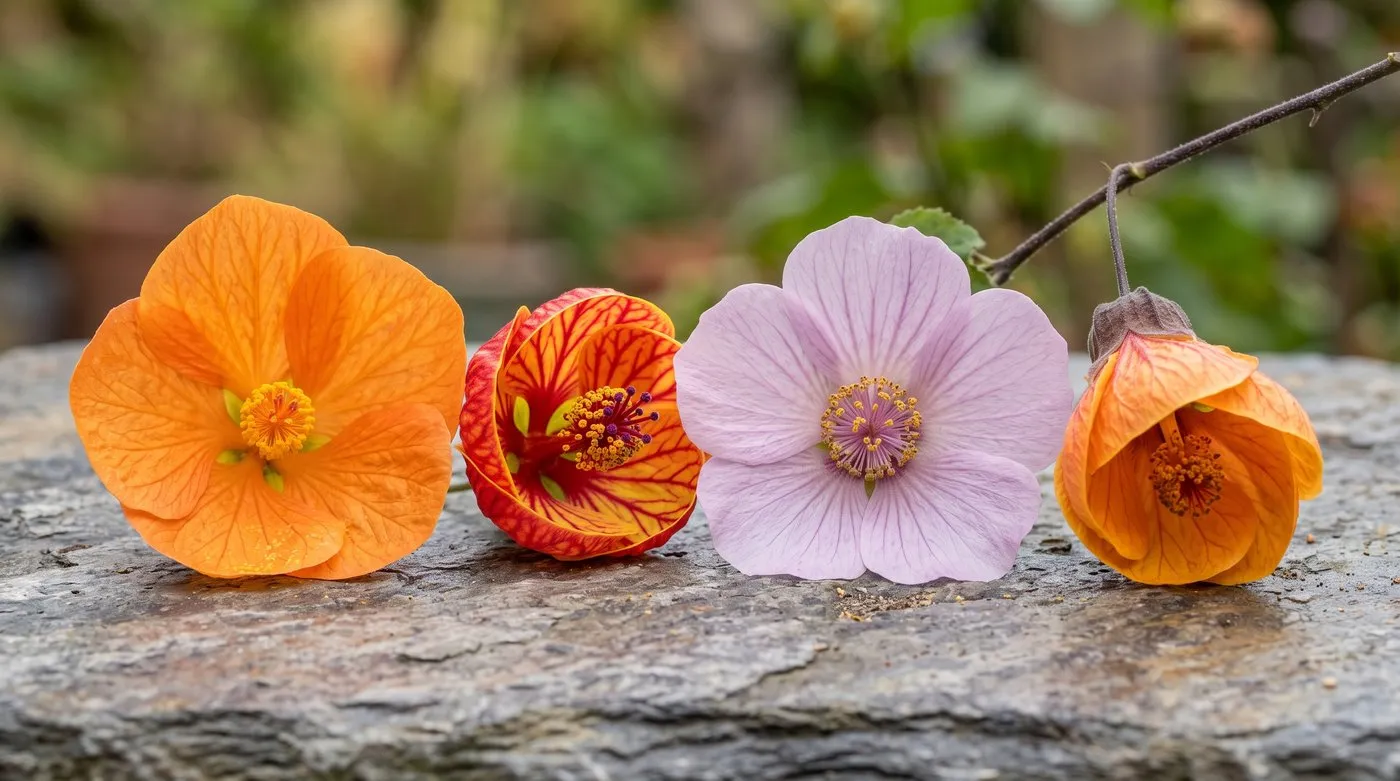 The four garden groups compared: large hybrid bells, the red-and-yellow lanterns of A. megapotamicum, the open saucers of A. vitifolium and the apricot bells of ‘Kentish Belle’.
Which abutilon is hardy enough for your garden
Abutilon vitifolium wins on outright cold tolerance but is short-lived, often declining after 5 to 7 years. For most gardeners the sweet spot is ‘Kentish Belle’ or A. megapotamicum trained on a warm wall. The hybrids give the best flowers but only if you can lift them under glass.
If cold-hardy exotics appeal, our guide to hardy exotic and tropical plants for UK gardens pairs abutilon with other tender-looking plants that survive outside with the right care.
Where to plant abutilon: sun, shelter and free drainage
Abutilon has three non-negotiable needs: sun, shelter and sharp drainage. Get these right and even borderline types survive.
Shelter from cold wind matters as much as temperature. Wind strips warmth and shreds the soft new growth. Plant 30cm out from the wall base, not tight against dry footings.
Soil must be free-draining. Abutilon roots rot in cold wet ground faster than frost alone will kill them. On our heavy clay-loam we dig in horticultural grit and plant on a slight mound. A sheltered Mediterranean-style planting scheme with gravel and sharp drainage suits abutilon perfectly.
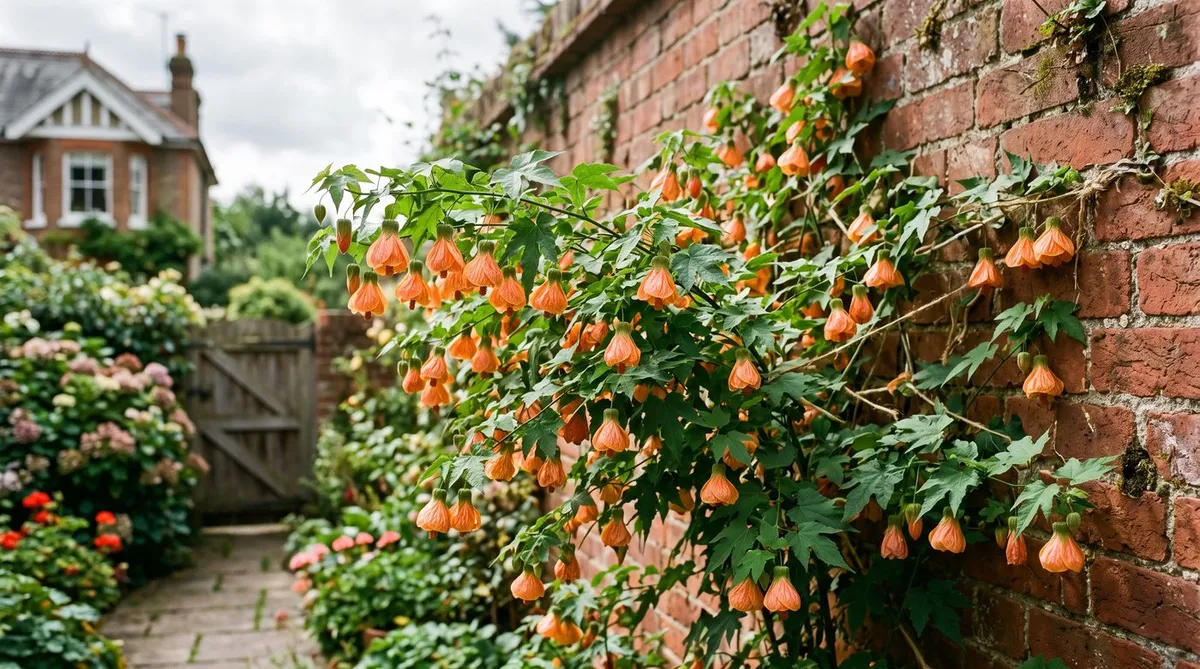
 A. megapotamicum trained flat against a warm south-west wall on horizontal wires. The lax stems need tying in, but the wall shelter lifts winter survival sharply.
Growing tender abutilon in pots and conservatories
The tender hybrids like ‘Canary Bird’ and ‘Nabob’ are best grown in pots you can move. This is the only reliable way to enjoy their large bells in most of the UK.
Pot into a loam-based compost such as John Innes No. 2, with 20 percent added grit for drainage. A 5-litre pot suits a young plant, moving up to 10 litres as it fills out. Stand it in the sunniest sheltered spot outdoors from June, on the patio or by a wall.
Feed drives the flowering. Use a high-potash tomato feed weekly from June to September. High-nitrogen feed makes lush leaf and few flowers, the commonest reason a healthy plant sulks. Water freely in summer but never leave the pot standing in a saucer of water.
These plants grow fast, often adding 40 to 60cm in a season. Pinch out the tips of young plants twice in spring to build a bushy shape. The same pinching technique works across many tender plants, as our guide to growing fuchsias explains for another conservatory favourite.
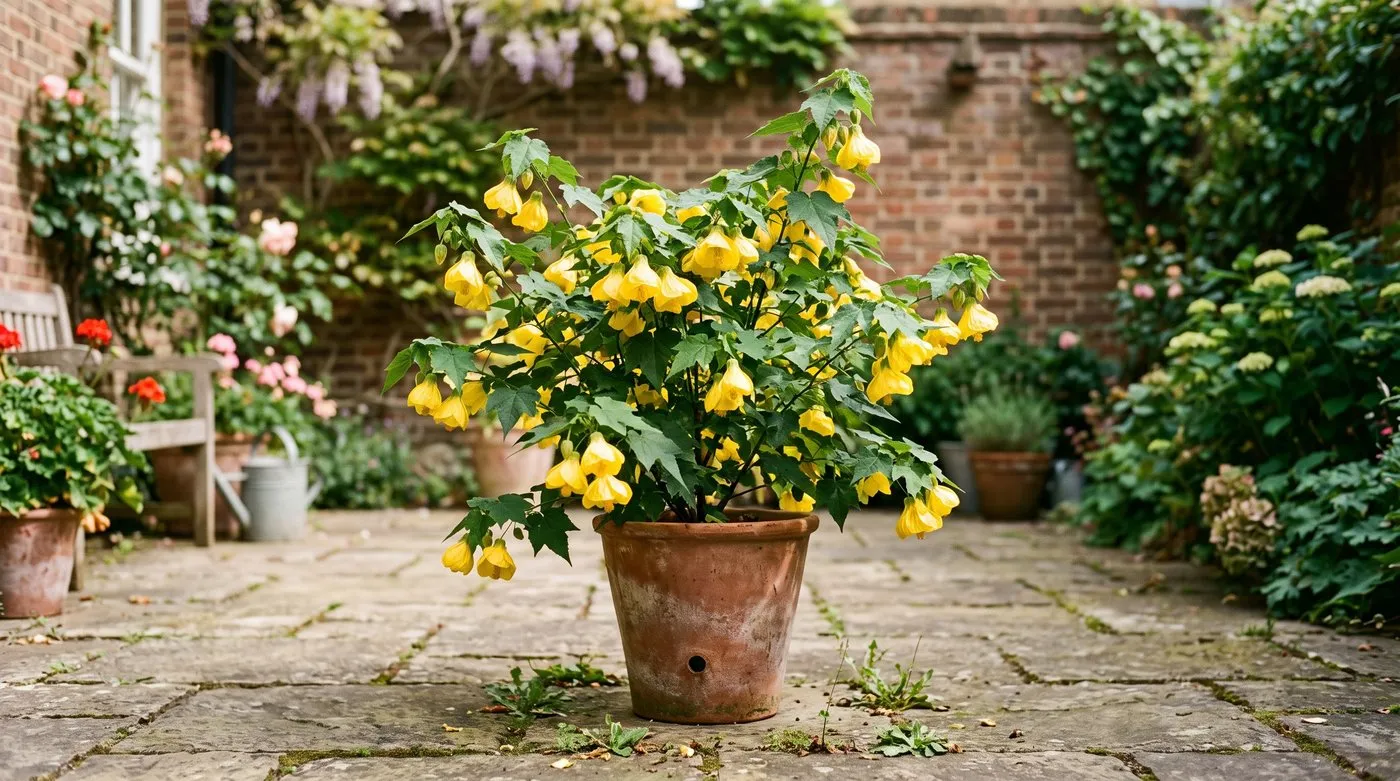 Tender ‘Canary Bird’ in a terracotta pot on a suburban patio. Grown this way it can be wheeled under glass the moment frost threatens.
Overwintering abutilon: keeping tender types alive
Overwintering is where most abutilon are lost. The tender hybrids will not survive a frost, so they must come in before the first one, usually mid to late October in the Midlands.
Move pots into a frost-free space at 5 to 10C: a conservatory, cool greenhouse or bright porch. The plant does not need warmth, it needs protection from frost and good light. Cut watering right back so the compost stays barely moist. Wet compost at low temperature rots the roots. Stop feeding entirely until March.
Expect some leaf drop over winter. This is normal and not a sign of death. In March, as light returns, increase watering, resume feeding and prune back any leggy or dead growth before the plant goes back out after the last frost.
For the wall-hardy types left outside, the job is different. Mulch the root zone with 8cm of bark or leaf mould in November. When a hard frost is forecast below -4C, drape double horticultural fleece over the top growth. Our full frost protection guide covers fleece weights and timing for borderline plants like these.
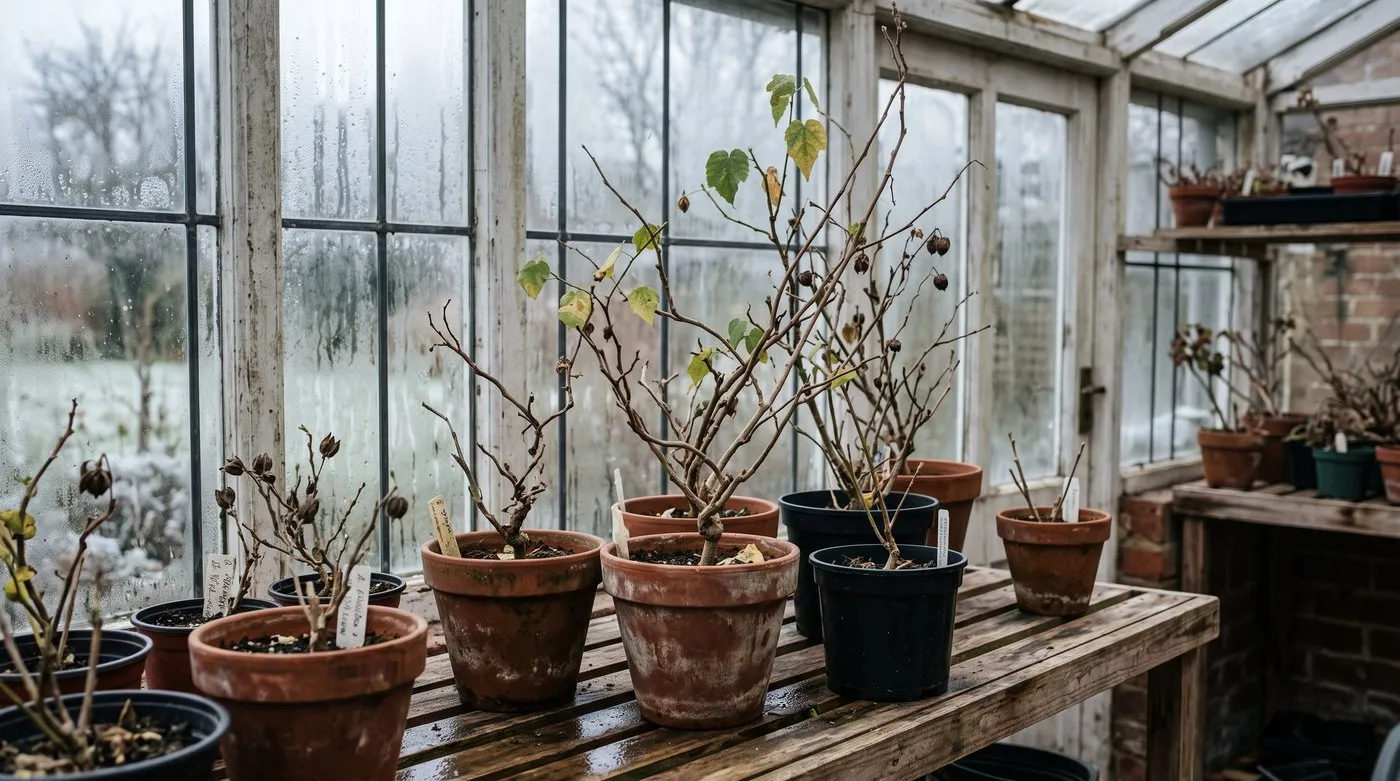 Tender abutilon overwintering in an unheated conservatory at 6 to 8C. Kept almost dry through the cold months, they leaf up again the moment March light returns.
How we prune abutilon for shape and more flowers
Abutilon flowers on the current season’s growth, so spring pruning improves both shape and flowering. Prune in mid-spring, usually April, as new growth begins.
First, cut back all frost-damaged tips to live green wood. On wall shrubs this often removes the top 10 to 20cm after a cold winter. Then shorten leggy or crossing stems by up to a third to keep a bushy, well-furnished plant. A. megapotamicum is lax by nature and needs its long stems tied in to wires rather than cut hard.
Tender pot plants can take harder pruning before they return outdoors, cutting them back by half to force fresh, flowering growth. Never prune in autumn. Late cuts push soft growth that frost then kills, and you lose the protective cover the old stems give the crown.
Training wall types onto horizontal wires at 30cm spacings keeps them flat and flowering. The technique mirrors that in our guide on training climbing plants against walls and fences.
Month-by-month abutilon calendar for UK gardens
| Month | Task |
|---|---|
| January | Check fleece is secure on wall plants. Keep tender pots frost-free at 5-10C and barely moist. |
| February | Order new plants or pot on rooted cuttings. Ventilate conservatory plants on mild days. |
| March | Increase watering under glass. Resume feeding. Begin hardening off tender plants late in the month. |
| April | Prune all types: cut frost damage to live wood, shorten leggy stems by a third. Repot pot plants. |
| May | Move tender pots outside after the last frost. Tie in new wall growth. Start weekly potash feed. |
| June | First flowers open. Water pots freely. Watch for whitefly under any glass. |
| July | Peak flowering begins. Feed weekly with high-potash tomato food. Check red spider mite in hot spells. |
| August | Full flush. Take semi-ripe cuttings as winter insurance. Keep tying in wall stems. |
| September | Still flowering hard. Reduce feeding at month end. Sow no new seed now. |
| October | Bring tender pots under glass before the first frost. Mulch wall plants with 8cm bark. |
| November | Fleece wall plants on nights below -4C. Cut watering of indoor plants right back. |
| December | Leave all top-growth on wall plants for frost cover. Keep indoor plants cool, bright and nearly dry. |
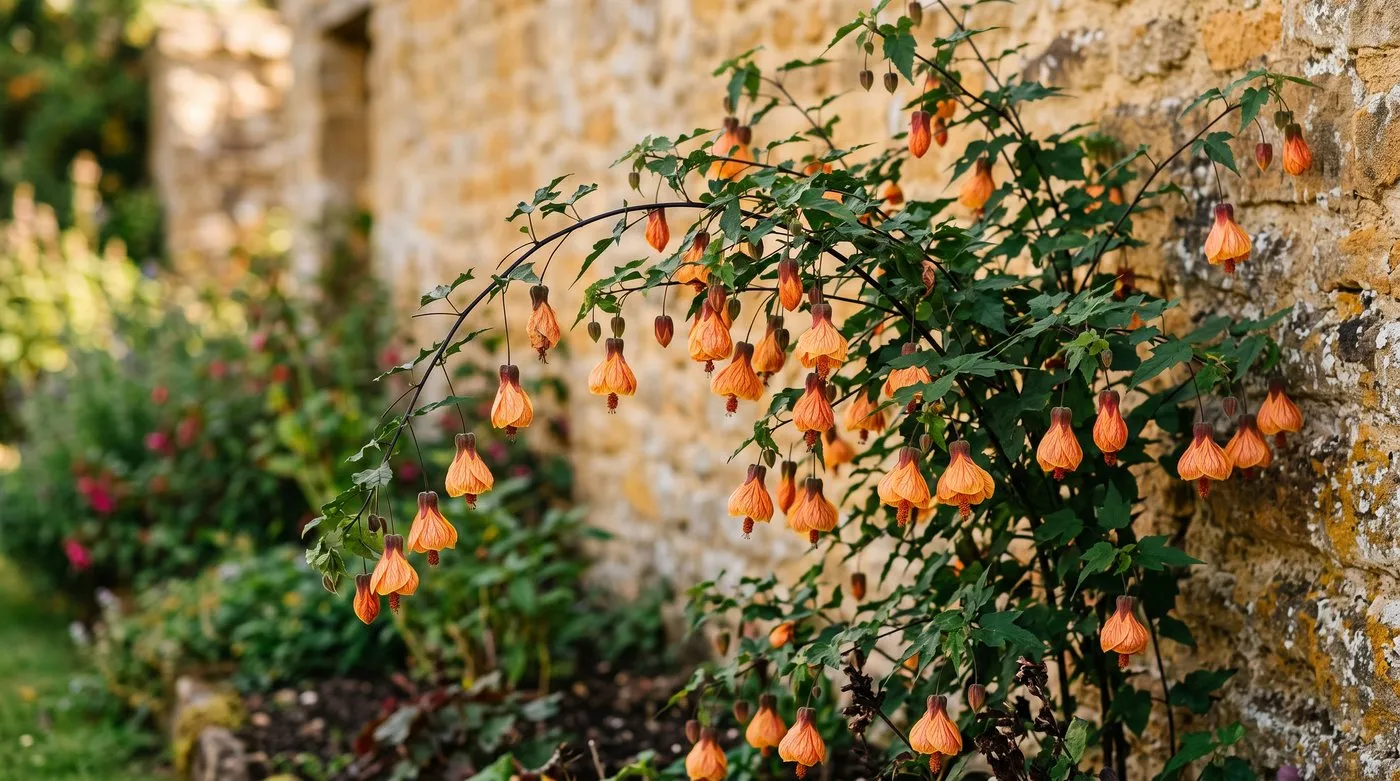 ‘Kentish Belle’ against a warm stone wall in a sheltered Welsh garden. The near-black stems set off the apricot-orange bells, and the shrub self-supports without constant tying in.
Whitefly and red spider mite under glass
Grown outdoors, abutilon has few pests. Under glass the story changes, and two pests cause almost all the trouble.
Glasshouse whitefly clusters on the undersides of leaves and rises in a white cloud when the plant is knocked. Adults and their scale-like young suck sap and drop sticky honeydew, which then grows sooty mould. Check leaf undersides weekly. A biological control, the parasitic wasp Encarsia formosa, is the most effective answer in a conservatory, best introduced early before numbers build.
Red spider mite thrives in hot, dry air. It leaves fine pale mottling on the leaves and, in bad cases, delicate webbing over the growing tips. The single best defence is humidity. Mist the plants and damp down the floor on hot days to keep the air moist, as the mite hates it. A predatory mite, Phytoseiulus persimilis, clears established infestations.
Root cause matters here. Both pests explode in the warm, still, dry air of a closed conservatory. Ventilating well, spacing plants for airflow and keeping humidity up prevents far more damage than any spray. The RHS entry for Abutilon is a useful cross-check on species, hardiness and glasshouse pest control.
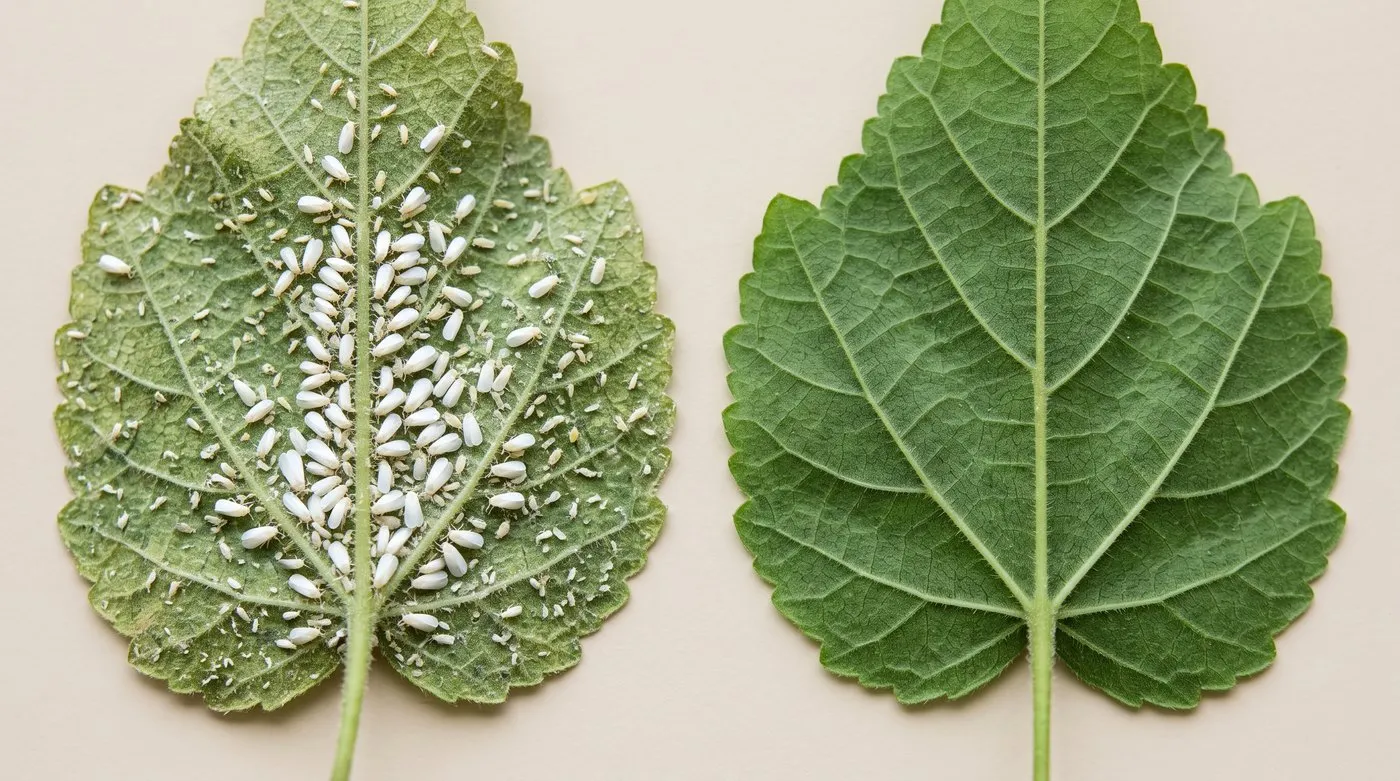 Diagnostic comparison: whitefly clustered on the underside of an abutilon leaf, left, beside a clean leaf. Weekly checks under glass catch an outbreak before it takes hold.
Common mistakes when growing abutilon
- Treating all abutilon as hardy. The single biggest error is leaving a tender A. x hybridum outside over winter. It dies in the first frost. Always identify your type before you plant, and lift tender ones under glass.
- Planting in a cold, exposed site. An open, windswept spot kills even the wall-hardy types. Cold wind strips warmth and shreds new growth. Plant against a warm south or west wall with shelter, never in an open frost pocket.
- Growing it in wet soil. Abutilon roots rot in cold, waterlogged ground, often before frost does any harm. Heavy undrained clay is fatal. Dig in grit, plant on a mound, and improve drainage before you plant.
- Feeding too much nitrogen. A general high-nitrogen feed produces lush leaf and almost no flowers. Switch to a high-potash tomato feed from June, and the plant flowers hard within weeks.
- Pruning in autumn. An autumn cut forces soft growth that frost then kills, and removes the old stems that shelter the crown. Always leave pruning until mid-spring when new growth starts.
Warning: Never pot tender abutilon into water-retentive multipurpose compost for winter. Standing wet and cold at 5C, the roots rot within weeks and the plant collapses. Use a gritty, loam-based mix, keep it barely moist through winter, and only increase watering when growth restarts in March.
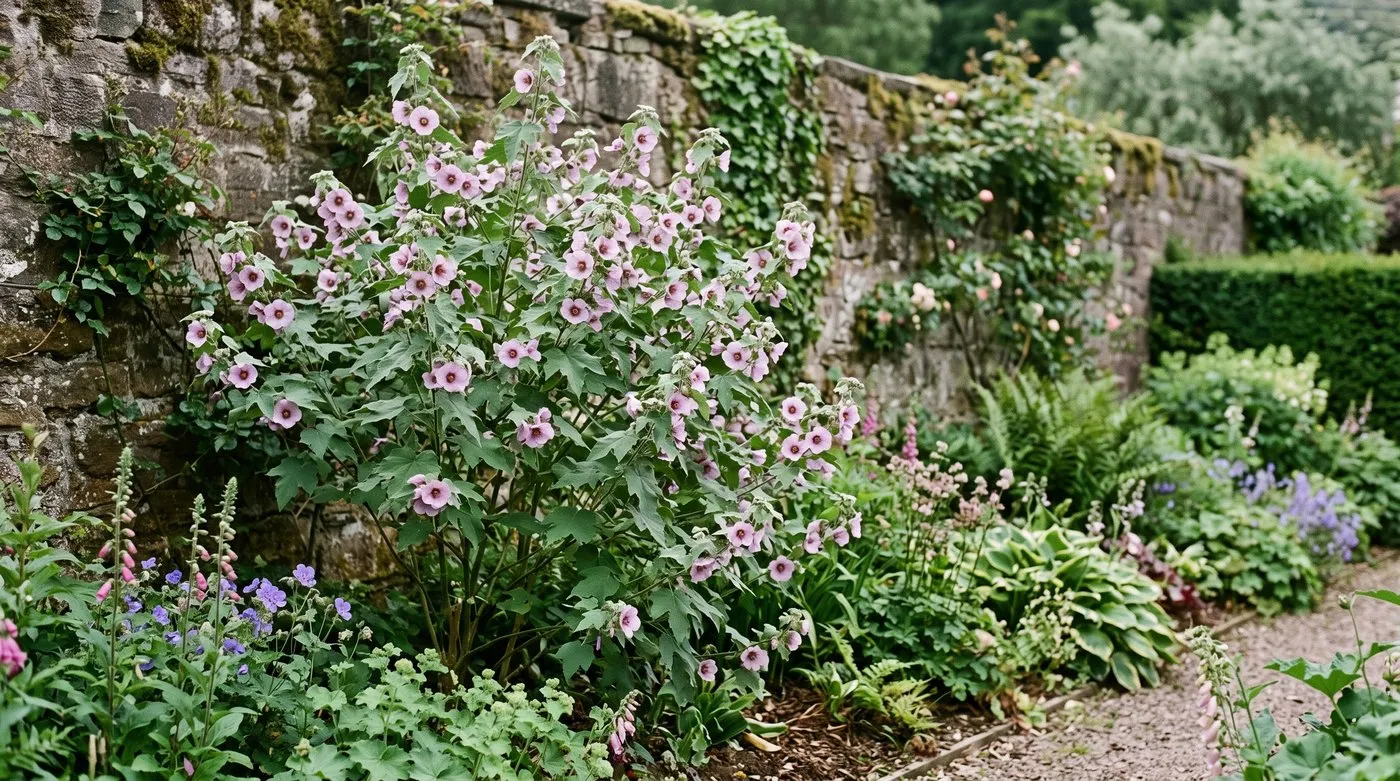 A. vitifolium as a fast, tall shrub in a sheltered Scottish walled garden. The hardiest type, it reaches 4 to 5m in three years but is short-lived, so keep cuttings coming.
Now you know how to match each abutilon to its spot, read our guide to overwintering tender plants in the UK for the next step in keeping your collection alive through the cold months. For more container-ready exotics, browse the full plants section.
Frequently asked questions
Is abutilon hardy in the UK?
It depends entirely on the type. Abutilon x hybridum is tender and needs frost-free winter cover. A. megapotamicum and ‘Kentish Belle’ survive on a warm sheltered wall to about -8C. A. vitifolium is the hardiest, coping with -12C in free-draining soil. Never treat all abutilon as one hardiness.
Where is the best place to plant abutilon?
Plant it in full sun against a warm south or west-facing wall. The wall stores heat and lifts the local minimum by 2 to 3C on cold nights. Give it sharp drainage and shelter from cold wind. Tender types are better in a pot you can move under glass for winter.
Why is my abutilon not flowering?
Too little light or too much nitrogen are the usual causes. Abutilon needs 6 or more hours of direct sun to flower well. A high-nitrogen feed pushes leaf at the expense of bells. Switch to a high-potash tomato feed from June and move the plant into brighter light.
How do you overwinter abutilon?
Move tender types under glass before the first frost, kept at 5 to 10C. Reduce watering so the compost stays barely moist, and stop feeding. For wall-hardy types left outside, mulch the roots and fleece the top when temperatures drop below -4C. Water sparingly, as wet cold rots the roots faster than frost alone.
Is abutilon the same as Chinese lantern?
No, they are different plants often confused by name. Abutilon is called Chinese lantern for its dangling bells, but the true Chinese lantern is Physalis alkekengi, with papery orange seed cases. Abutilon is a mallow relative grown for its long flowering season, not its fruit.
When should I prune abutilon?
Prune in mid-spring as new growth starts, usually April. Cut back frost-damaged tips to live wood and shorten leggy stems by up to a third to keep a bushy shape. Tender pot plants can be pruned harder before they go back outside. Avoid autumn pruning, which leaves soft growth exposed to frost.
What pests attack abutilon under glass?
Whitefly and red spider mite are the two main problems indoors. Whitefly clusters under leaves and rises in a cloud when disturbed. Red spider mite thrives in hot dry air, leaving fine webbing and pale mottling. Raise humidity, inspect weekly, and use a biological control such as Encarsia for whitefly.
Our team produces practical UK gardening guidance from source research, contributor records and established horticultural practice. Editorial standards are overseen by Matt W.