Key takeaways
- Acidanthera is a tender gladiolus relative, hardy only to about -3C, not a true hardy bulb
- Plant corms 10cm deep and 12cm apart from mid-May once frost risk has passed
- Starting corms under glass in March flowers them about three weeks earlier (mid-August not early September)
- Flowers run August to October and release a sweet scent strongest in the evening
- Mild south-west and coastal gardens can leave corms in well-drained soil under 8cm mulch; cold wet clay must lift and store
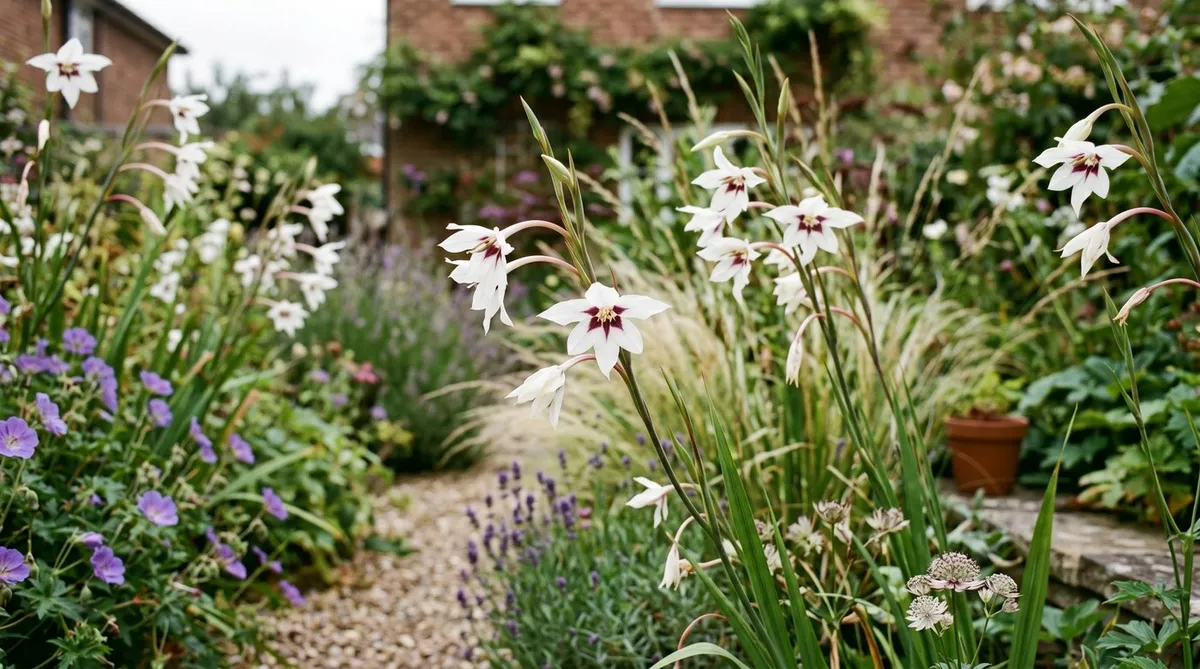
Acidanthera is one of the best scented corms for a late-summer UK garden, and it stays under the radar. Most gardeners know its cousin the garden gladiolus, but how to grow acidanthera in the UK is a slightly different job. The plant carries pure white flowers with a deep maroon throat on tall arching stems. They open from August into October and release a sweet evening scent that drifts across a patio. Sold under several names, Gladiolus murielae, Gladiolus callianthus, or the old Abyssinian gladiolus, it is the same tender corm from the Ethiopian highlands. Get the timing and the winter decision right and it returns for years.
The RHS lists Gladiolus murielae as a tender corm needing a sheltered, sunny spot. This guide covers the practical calls: when to plant, whether to start under glass, and the lift-or-leave decision that decides whether your corms survive a wet British winter.
How acidanthera differs from garden gladioli
Acidanthera is a true gladiolus, reclassified as Gladiolus murielae, but it behaves very differently from the tall spike gladioli you buy for cutting. The two share corms, sword-shaped leaves, and the same planting depth. Everything else diverges. Our guide to growing gladioli covers the hybrid spike types in full.
Garden gladioli flower July to September on dense one-sided spikes in bold colours. Acidanthera flowers later, August to October, with looser sprays of two to ten nodding white blooms per stem. Each flower has six pointed petals and a chocolate-maroon centre. The biggest practical difference is scent: hybrid gladioli have none, while acidanthera perfumes the evening air.
Hardiness also sets them apart. Both are tender, but acidanthera is the more delicate of the two, surviving only to about -3C in the ground. It originates from high-altitude grassland in Ethiopia and Eritrea, which is why it needs warmth to flower and protection to overwinter.
When to plant acidanthera corms outdoors
Plant acidanthera corms outdoors from mid-May, once the last frost has passed in your area. The corms are tender. They sit and sulk, or rot, in cold wet soil below 10C, so there is no advantage to planting early. In the south of England that means late April to mid-May; in the north and Scotland, hold off until the very end of May.
Choose a sunny, sheltered spot. Full sun ripens the corm and pushes the plant to flower before autumn. A south or west-facing border against a warm wall is ideal. The stems reach 90cm, so give them shelter from strong wind or they flop.
Plant the corms 10cm deep and 12cm apart in groups of at least seven for impact. On heavy soil, sit each corm on a 2cm layer of horticultural grit to stop water pooling around the base. Water in after planting, then leave them. Shoots appear in three to four weeks once the soil warms.
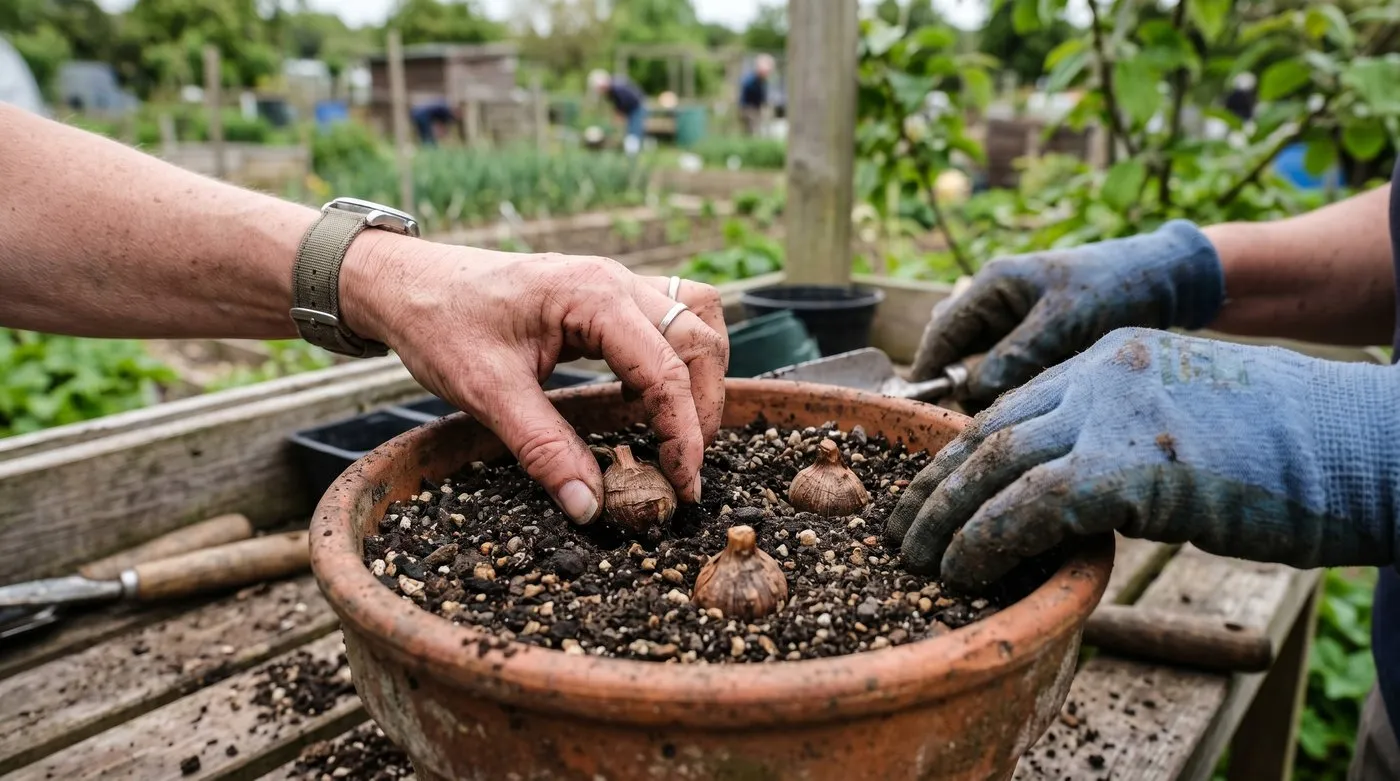 Plant corms 10cm deep, sitting each on a layer of grit on heavy soil to prevent rot.
Starting corms under glass for earlier flowers
Starting acidanthera under glass in March is the single most useful trick for reliable flowers in a cool UK summer. Direct-planted corms often flower too late, racing the first autumn frosts. A head start removes that gamble.
Pot the corms one per 9cm pot, or three to a 1-litre pot, in peat-free compost at 8cm deep. Keep them frost-free at 10 to 15C on a greenhouse bench, cold frame, or bright windowsill. They sprout within two to three weeks. Grow them on, harden off in mid-May, then plant the rooted, leafy plants into their final positions once frost has passed.
Gardener’s tip: Acidanthera bought in spring is often already dried and dormant. A fortnight on a warm windowsill before potting wakes the corm faster than starting it cold, and evens up sprouting across a batch.
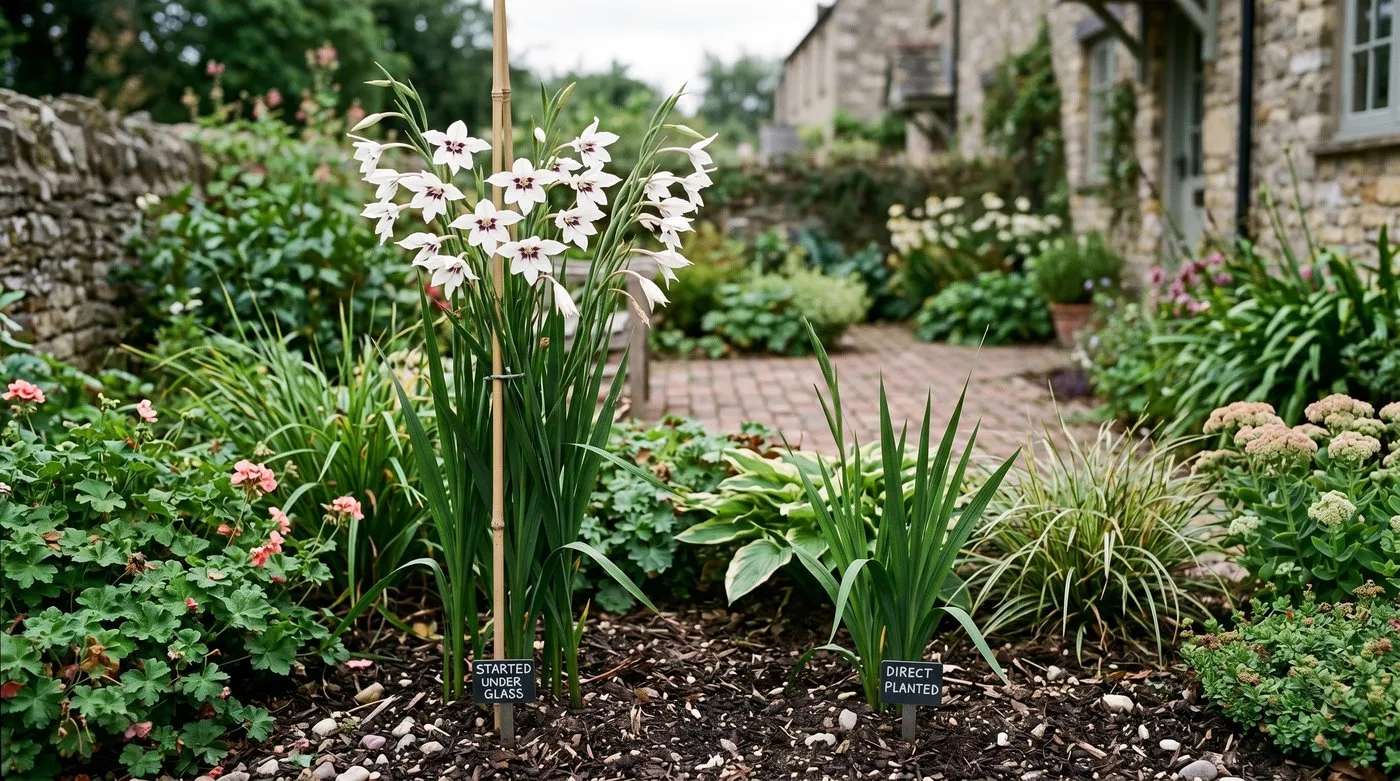 Corms started under glass in March (left) flower weeks earlier than those planted straight outside in May (right). In a cold, wet garden that gap decides whether you get flowers before the frosts.
The lift-or-leave decision by UK region
Whether you lift acidanthera or leave it in the ground is the call that decides survival. The plant is hardy only to about -3C, and it dies as often from wet as from cold. Soggy winter soil rots the dormant corm even when frost never reaches it. So the decision turns on two things: your winter minimum and your drainage.
Mild gardens in the south-west, west Wales, and coastal fringes with free-draining soil can leave corms in the ground under a deep mulch. Everywhere with cold winters or heavy clay should lift and store. The table below sets out the regional split.
| UK region / conditions | Winter low | Soil type | Recommendation | Notes |
|---|---|---|---|---|
| Cornwall, Devon, coastal SW | Rarely below -3C | Free-draining | Leave in ground | Mulch 8cm; reliable most years |
| West Wales, Pembrokeshire coast | Mild, wet | Free-draining loam | Leave with caution | Add grit; lift in very wet sites |
| South-east, London | -3 to -6C | Variable | Borderline, lift if clay | Sheltered town gardens may hold |
| Midlands, central England | -5 to -8C | Often clay | Lift and store | Wet clay kills more than frost |
| North England, Scotland | Below -8C | Variable | Lift and store | Too cold and wet to risk |
| Any region, heavy wet clay | n/a | Clay | Lift and store | Rot is the main killer |
Where you do leave corms in, apply an 8cm mulch of bark or composted leaves in late October once foliage dies back. Mark the spot so you do not fork through dormant corms in spring.
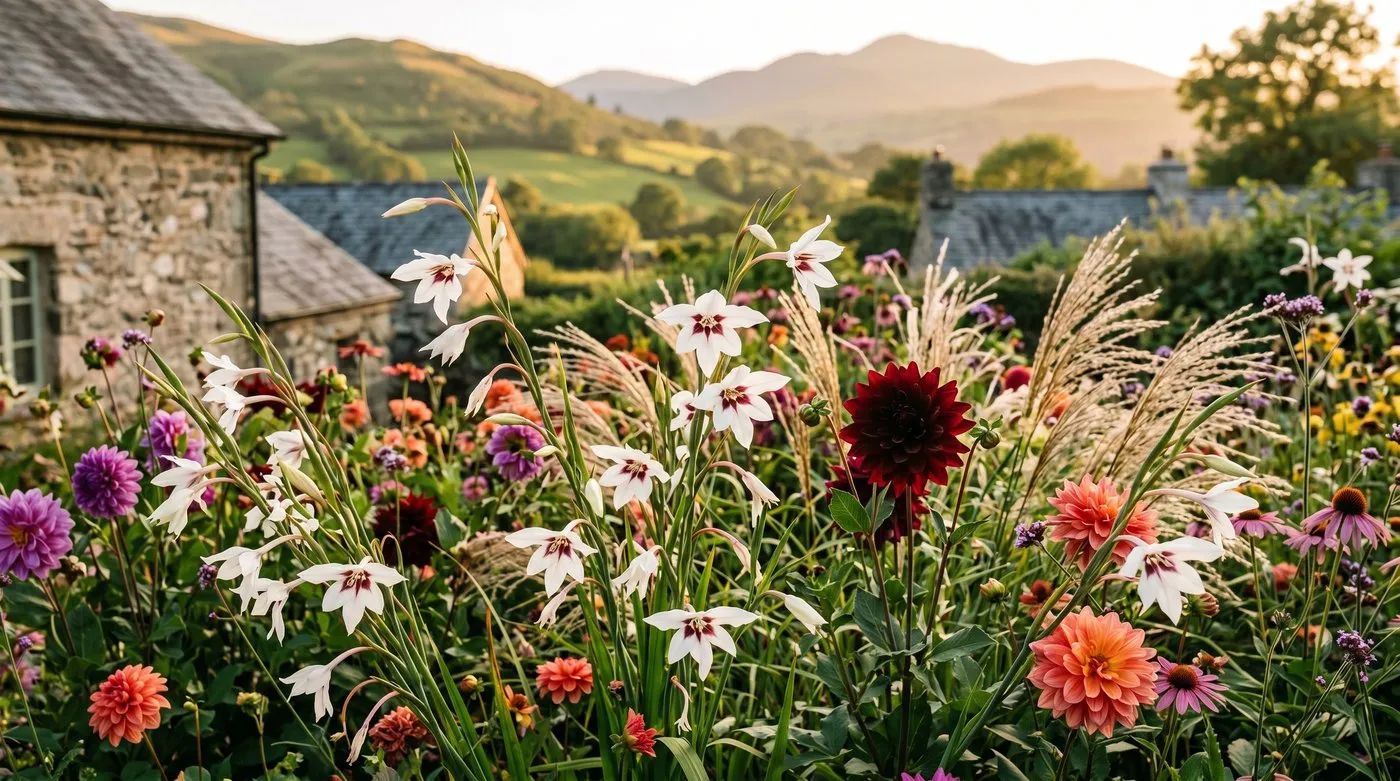 Acidanthera threads through late dahlias and grasses, extending colour and scent into October.
How to lift and store corms over winter
Lift acidanthera corms in mid to late October, after the first light frost has blackened the foliage but before the ground turns sodden. Lifting is straightforward and gives by far the best survival on cold or wet soils.
Ease the clump up with a fork, working well clear of the corms so you do not spear them. Shake off loose soil. Cut the stems back to 2cm above the corm. You will find the old corm has shrivelled and a fresh new corm sits on top, often with several small cormlets clustered around the base.
Dry the corms for two to three weeks in a frost-free shed at 10 to 15C, spread in a single layer on newspaper or in open trays. Once the skins are papery, rub off the old withered corm, soil, and dead roots. Store the cleaned corms in paper bags or open trays of dry sand somewhere frost-free and dry until spring.
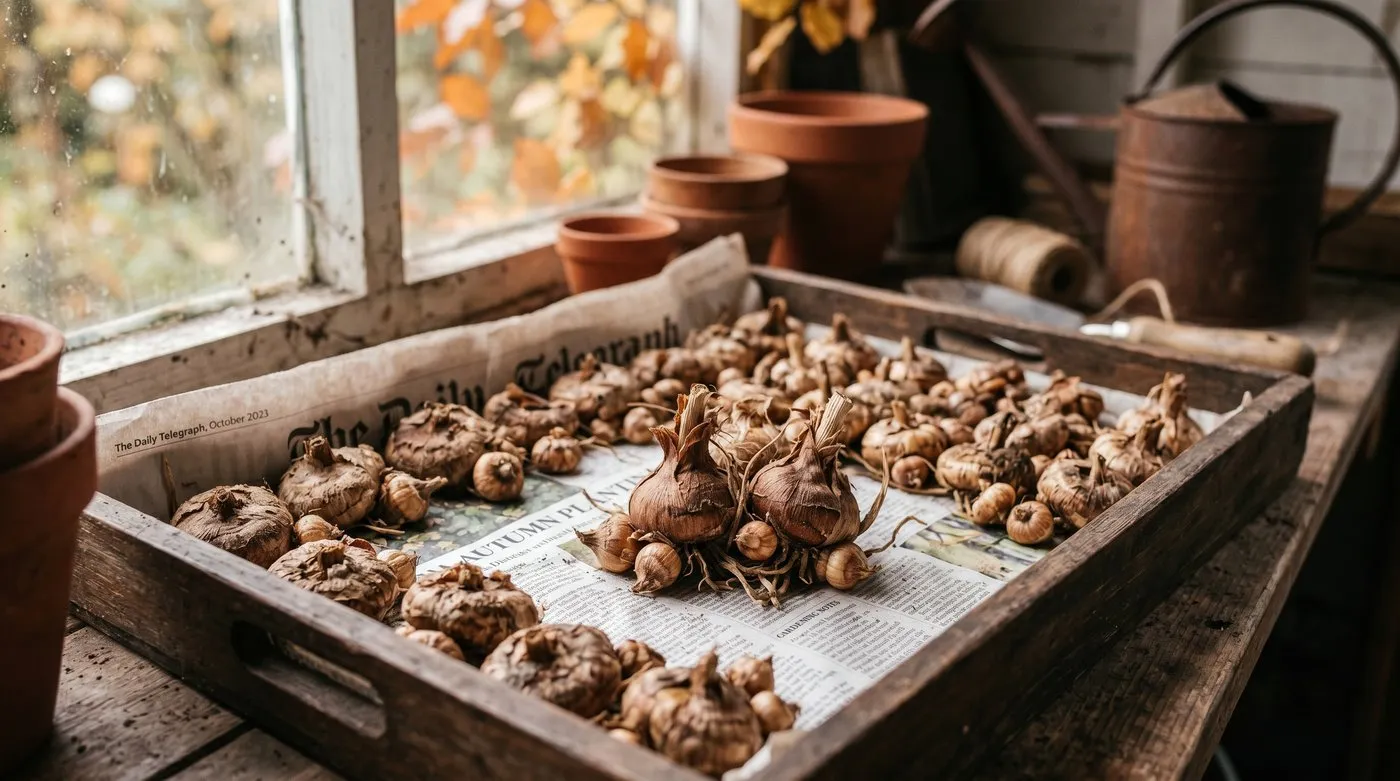 Dry lifted corms in a single layer for two to three weeks before cleaning and storing frost-free.
Growing acidanthera in pots and containers
Acidanthera is superb in pots, and containers solve the overwintering problem in one move. You simply shift the whole pot under cover. Pots also let you stand the scent right beside a seat or doorway for late-summer evenings.
Use a pot at least 30cm wide. Fill with peat-free multipurpose compost mixed roughly 3:1 with horticultural grit for drainage. Plant 7 to 9 corms per 30cm pot, 8cm deep, for a full clump. Water consistently through the growing season and feed every fortnight from June with a high-potassium tomato feed to drive flowering and ripen the corms.
The tall stems can topple a top-heavy pot, so use a heavy container or push three short canes in for support. After flowering, move the pot somewhere frost-free and dry. Stop watering and let the compost dry out fully. Either store the dormant corms in the dry pot or lift, clean, and bag them. Repot into fresh compost the following spring.
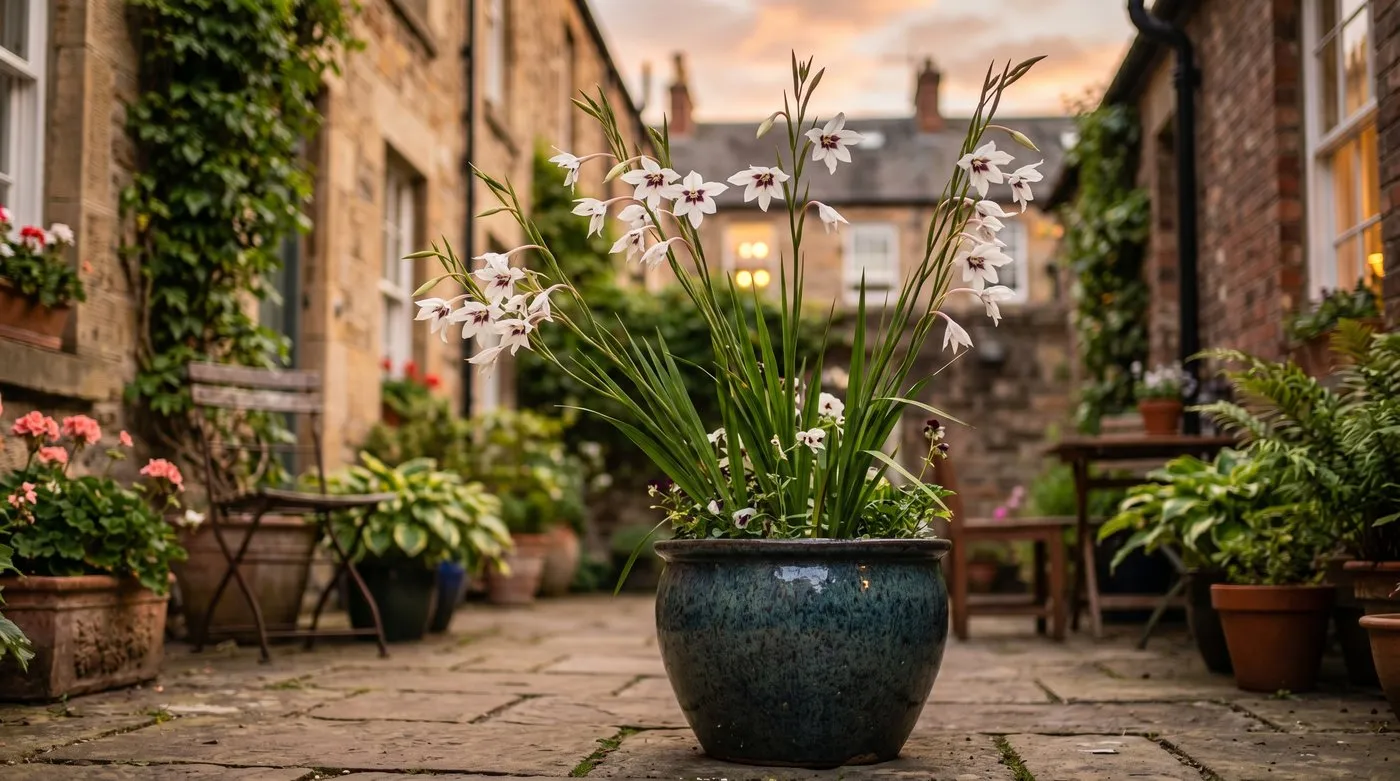 A large pot of acidanthera carries the evening scent to a patio and moves under cover for winter.
Feeding, watering and the late-summer scent
Acidanthera needs steady moisture and feeding through summer to flower well and build a corm strong enough to overwinter. Water regularly in dry spells, especially plants in pots, which dry out fast. Aim for soil that stays evenly moist but never waterlogged.
Start feeding once flower stems appear, usually late June. A high-potassium liquid feed such as tomato fertiliser every two weeks supports flowering and, just as important, fattens next year’s corm. Skip nitrogen-heavy feeds, which push soft leaf at the expense of bloom and ripening.
The scent is the whole point of growing acidanthera. It is sweet and jasmine-like, faint by day and strong after dusk, carrying several metres on warm still evenings. The plant times this to attract night-flying moths in its native range. Site it where you sit out: beside a patio, under a kitchen window, or along a path you walk at dusk. A pot of acidanthera by the back door beats one lost at the back of a border every time.
How acidanthera fits a late-summer planting scheme
Acidanthera earns its place by flowering when many borders are tiring, from August into October. Its white stars and dark eyes lift hot late-season colour and read beautifully at dusk. It pairs naturally with other tender performers you lift or protect over winter.
Plant it among dahlias for a classic late-summer mix: the dahlias bring the colour, the acidanthera the scent and airy height. It works the same trick alongside cannas, whose bold foliage contrasts with its slender stems. For an exotic, jungly feel, group it with other hardy exotic and tropical plants.
White flowers also bridge the gap to autumn bulbs. Acidanthera finishing in October hands over to nerines, which flower into November on bare stems. Underplant with ornamental grasses to catch the low autumn light behind the white blooms.
Common acidanthera growing mistakes
Most acidanthera failures come down to four avoidable errors. Each is easy to fix once you know the cause.
Planting too early into cold soil. Gardeners eager for an early start plant in April. The tender corm rots or stalls in soil below 10C. Wait until mid to late May, or start under glass and plant out rooted plants after the frosts.
No head start in cool areas. Direct-planted corms in the north often flower too late and get caught by frost. Starting under glass in March buys roughly three weeks and secures the display.
Underfeeding and overcrowding. Hungry, congested clumps make thin corms that fail to flower or survive. Feed with high-potassium feed from June, and divide cormlets off so each has room.
Warning: Do not be fooled by a mild autumn into leaving corms in the ground on heavy soil. It is the wet winter weeks after Christmas, not the first frost, that rot dormant acidanthera. Drainage matters more than your minimum temperature.
Month-by-month acidanthera calendar
| Month | What to do |
|---|---|
| January | Check stored corms in the shed. Discard any soft or mouldy ones. Keep them dry and frost-free at 5 to 10C. |
| February | Order fresh corms if topping up. Inspect stored stock again for rot. |
| March | Start corms under glass: one per 9cm pot, 8cm deep, at 10 to 15C for flowers three weeks early. |
| April | Grow on potted corms on a bright frost-free bench. Do not plant outdoors yet in most regions. |
| May | Harden off potted plants. Plant corms and rooted plants outside from mid to late May once frost has passed. |
| June | Begin fortnightly high-potassium feeding as stems develop. Water consistently in dry spells. |
| July | Stake tall stems if exposed. Keep feeding and watering. Buds begin forming. |
| August | First flowers open, earliest on under-glass plants. Enjoy the evening scent. Keep feeding. |
| September | Peak flowering. Deadhead spent blooms to tidy the clump. Continue watering pots. |
| October | Last flowers. After first frost blackens foliage, lift corms on cold or wet soil. Mulch any left in mild gardens. |
| November | Finish drying lifted corms, then clean and bag them. Store frost-free and dry. |
| December | Check stored corms once. Plan next year’s pot positions for scent near seating. |
Comparing acidanthera with related summer corms
Acidanthera sits in a group of tender corms and tubers that all flower late and need similar winter care. Knowing how it compares helps you plan a border that earns its keep from July to November.
| Plant | Flowering | Height | Scent | Hardiness | Overwinter |
|---|---|---|---|---|---|
| Acidanthera (G. murielae) | Aug to Oct | 90cm | Strong, evening | To -3C | Lift on cold/wet soil |
| Garden gladioli | Jul to Sep | 60 to 150cm | None | To -5C | Lift in most regions |
| Dahlias | Jul to Oct | 30cm to 1.5m | None | To -2C | Lift or deep mulch |
| Cannas | Jul to Oct | 1 to 2m | None | To -5C | Lift or protect |
| Nerine bowdenii | Sep to Nov | 45cm | Light | To -10C | Usually hardy, leave in |
Acidanthera is the most scented of the group and among the most tender. For other tender plants that need bringing through winter, our guide to overwintering plants covers the principles, and you will find more bulb guides across the plants section.
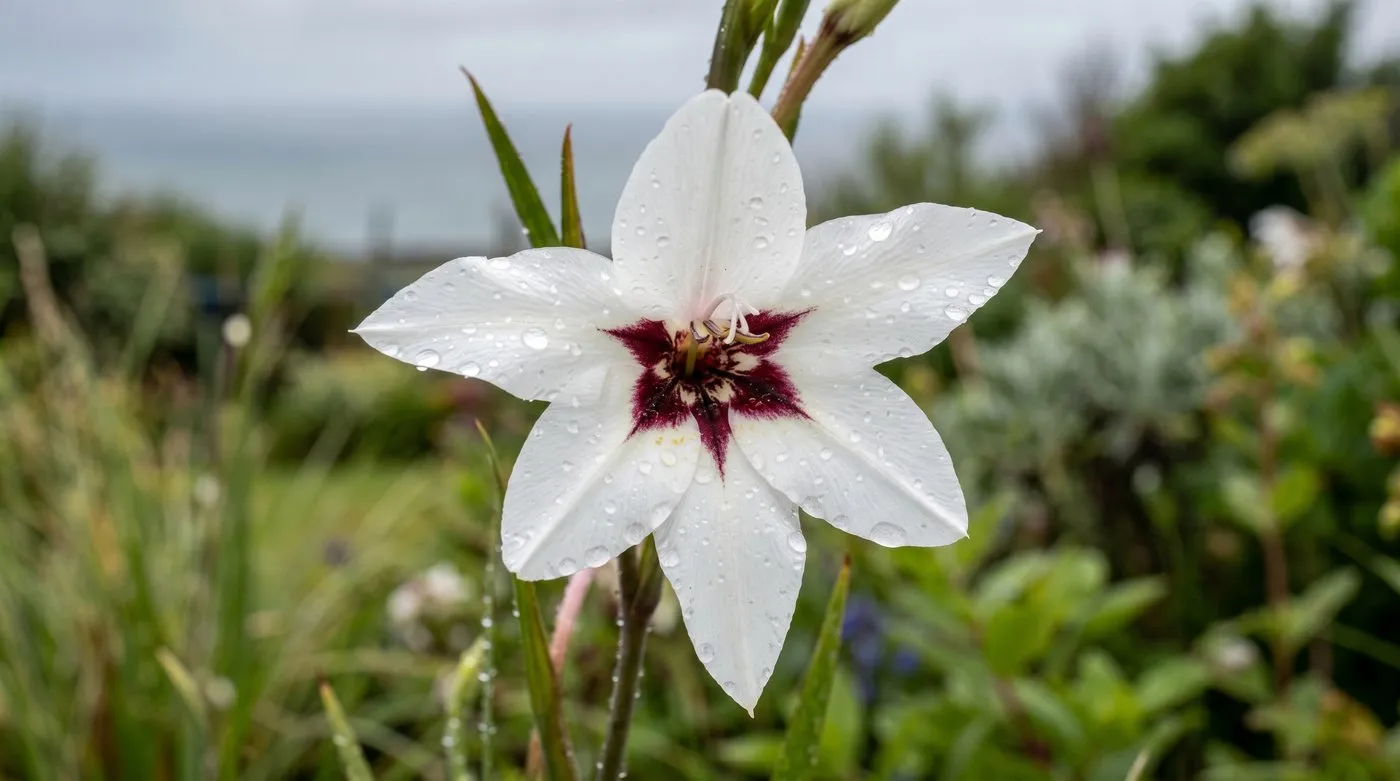 Each acidanthera flower has six pointed white petals and a chocolate-maroon throat.
Now you have got to grips with acidanthera, read our guide on growing lilies in the UK for another scented summer star that pairs beautifully with it in pots and borders.
Frequently asked questions about growing acidanthera
Is acidanthera the same as gladiolus?
Yes, acidanthera is now classed as Gladiolus murielae. It is a tender species gladiolus from the Ethiopian highlands, still sold under the old names Acidanthera bicolor and Gladiolus callianthus. It grows from a corm like garden gladioli, but flowers later, carries a strong evening scent, and is less hardy than the hybrid spike types.
When should I plant acidanthera corms in the UK?
Plant outdoors from mid-May once frost risk has passed. The corms are tender and rot or stall in cold wet soil below 10C, so early planting gains nothing. In the south, late April to mid-May works; in the north and Scotland, wait until the end of May. For earlier flowers, start corms under glass in March and plant out hardened-off plants.
Do I need to lift acidanthera over winter?
On cold or wet soil, yes, lift and store the corms. They are hardy only to about -3C and rot in waterlogged clay over winter. In mild south-west or coastal gardens with free-draining soil, you can leave them under 8cm of mulch. Across the Midlands, the north, and any heavy clay, lift in October for the best survival.
Why has my acidanthera not flowered?
The usual cause is planting too late for the long season. Acidanthera flowers August to October and needs warmth and time. Corms planted direct in late May may not bloom before autumn frosts in cold areas. Start them under glass in March, give full sun, and feed with high-potassium feed to ripen the corm and trigger flowering.
Does acidanthera come back every year?
Yes, if the corm survives winter. It is a perennial corm, not an annual. Corms lifted, dried, and stored frost-free return reliably year after year. Each parent corm produces two to four cormlets annually, so a clump bulks up over time and can be divided for more plants.
How deep do you plant acidanthera?
Plant acidanthera corms 10cm deep and 12cm apart. In pots, 8cm deep is fine. Deeper planting anchors the tall 90cm stems against wind and keeps the corm cooler through summer. On heavy soil, sit each corm on a 2cm layer of grit to improve drainage and stop the base rotting.
Is acidanthera scented?
Yes, acidanthera is strongly scented, especially after dusk. The fragrance is sweet and jasmine-like, drifting several metres on warm still evenings. Plant it near a patio, doorway, or seating area where you sit out on late-summer evenings. The scent is the main reason to grow it, so do not hide it at the back of a border.
Can you grow acidanthera in pots?
Yes, acidanthera grows very well in large pots. Use a 30cm pot of peat-free compost mixed with grit, planting 7 to 9 corms 8cm deep. Pots make winter easy, you just move them under cover, and let you stand the scent right beside a seat. Feed fortnightly with tomato feed from June for the best flowering.
Our team produces practical UK gardening guidance from source research, contributor records and established horticultural practice. Editorial standards are overseen by Matt W.