Key takeaways
- Plant out only after the last frost: late May in the south, early June in the north
- Needs full sun, 6+ hours, and free-draining compost at pH 5.5-6.3
- Trails 30-60cm and is self-cleaning, so no deadheading is needed
- Feed weekly to fortnightly with high-potash tomato feed from June or flowering stalls
- Yellow leaves with green veins mean iron chlorosis: treat with sequestered iron
- Overwinter stock plants or cuttings frost-free at 7-10C to save money next year
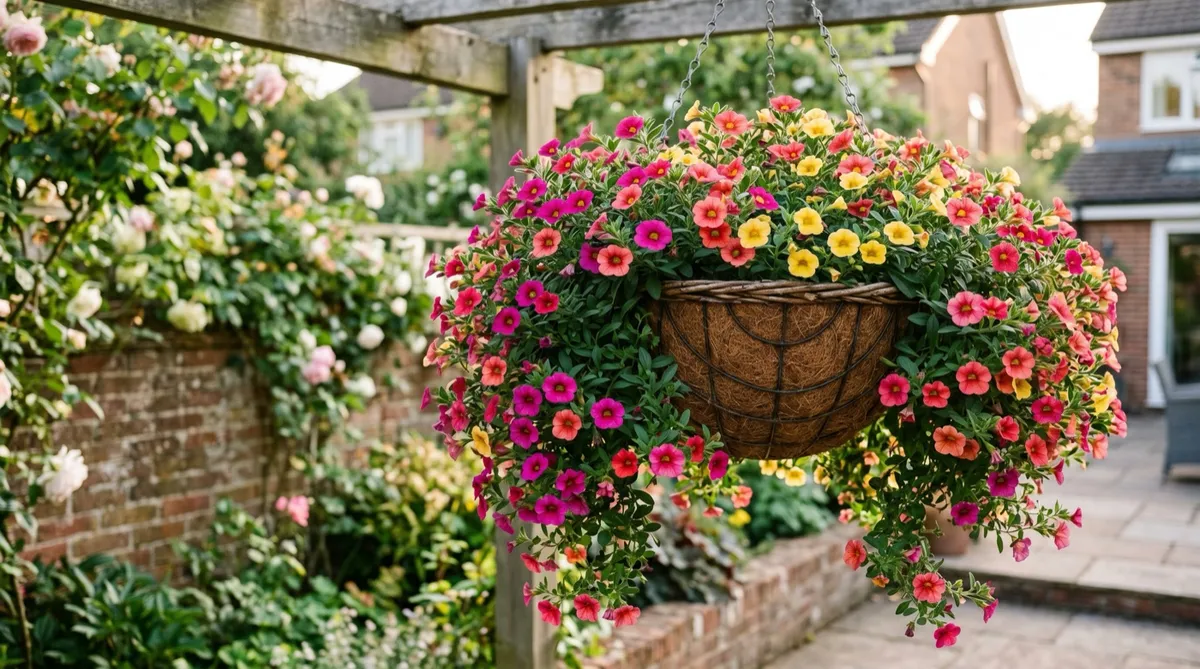
Calibrachoa, sold in UK garden centres as Million Bells, is the trailing basket plant that flowers from June to the first frost without a single deadhead. It looks like a miniature petunia, throws out a sheet of 2-3cm trumpet blooms, and spills 30-60cm over the edge of a basket. The catch is that it is a hungry, thirsty plant that sulks the moment you neglect it. Get the feed, the water, and the planting time right and you have the best value summer colour in the garden. This guide covers when to plant out, how to feed for non-stop flower, and how to cure the yellow leaves that catch most growers out.
The plant is a tender perennial from South America, grown here as a half-hardy annual because it cannot survive frost. Everything that follows is built around that one fact: it grows fast, flowers hard, and must come out of the cold to live another year.
What calibrachoa is and how it grows
Calibrachoa is a tender trailing perennial in the nightshade family, closely related to the petunia. UK growers treat it as a half-hardy annual, planting fresh each spring because frost kills it. The flowers are small, 2-3cm bell-shaped trumpets, carried in such numbers that a single plant can hide its own foliage by July.
The plant is free-flowering and self-cleaning, the two traits that made it a basket favourite. Self-cleaning means spent flowers drop on their own, so you never deadhead. It trails rather than climbs, sending stems out and down 30-60cm by late summer, which suits hanging baskets, window boxes, and the front edge of mixed containers.
You will see it sold under several series names, each a breeding line with its own habit and colour range. Million Bells is the original. Superbells, Cabaret, Aloha, and Can-Can are the others you meet most often. They behave the same way in the garden, so choose on colour and trail rather than series.
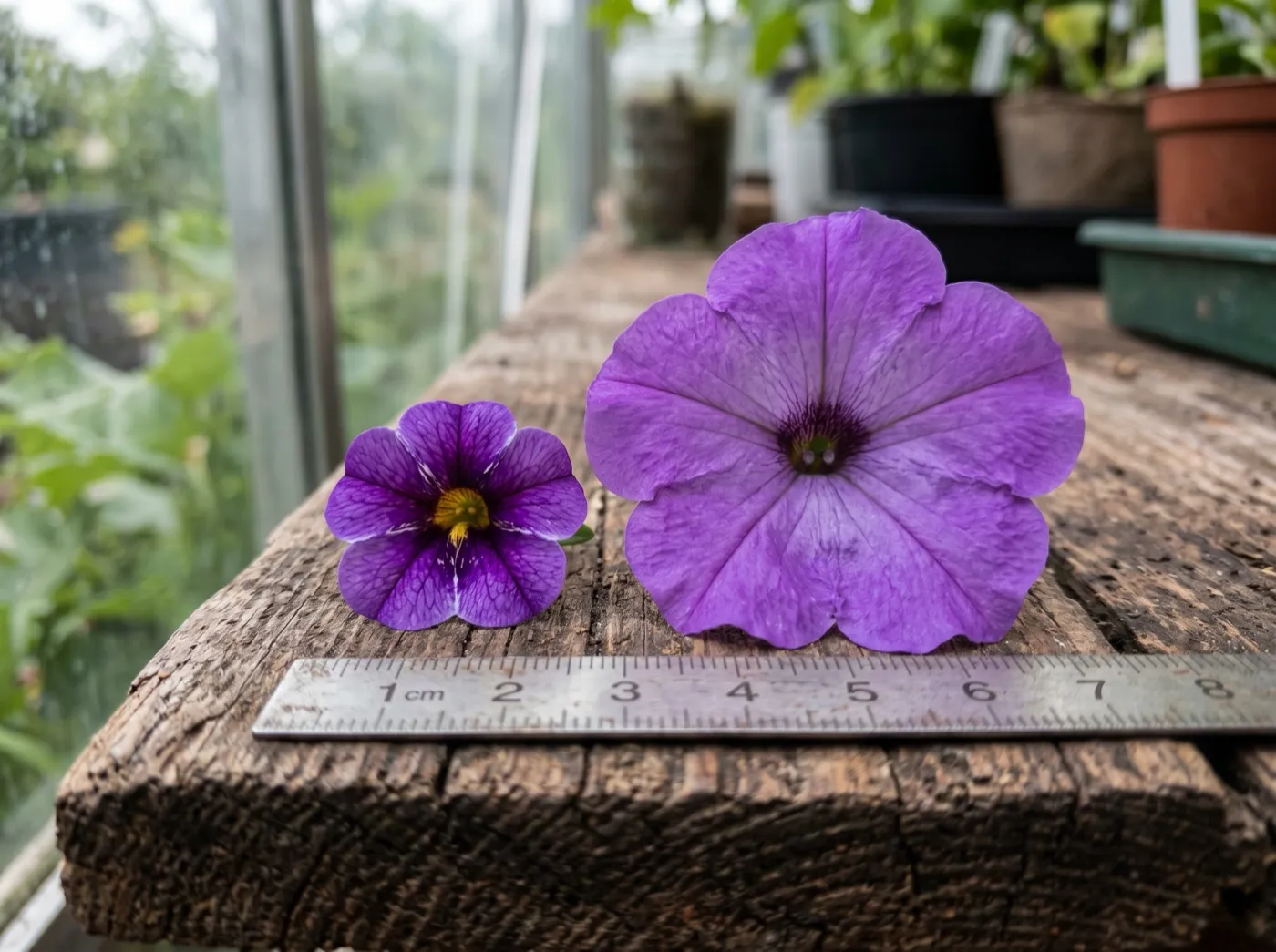 Calibrachoa blooms are 2-3cm across, roughly half the width of a petunia. The smaller flowers fall away cleanly, which is why calibrachoa never needs deadheading.
When to plant calibrachoa out in the UK
Plant calibrachoa out only after the last frost. It is frost tender and dies at 0C, so a single late frost on a basket of plug-grown plants wipes out the lot. In the south of England, the safe date is the last week of May. In northern England, Wales, and Scotland, wait until the first week of June.
Plants bought as small plugs in March or April must be grown on under cover first. Pot them into 9cm pots, keep them at 12-15C on a bright sill or in a frost-free greenhouse, and pinch the growing tips once to force branching. This single pinch at the 4-5 leaf stage doubles the number of trailing stems and gives a fuller basket.
Before planting out, harden off over 7-10 days, moving plants outside by day and back under cover at night, then leaving them out once frost has passed. Skipping this step checks growth for two to three weeks. Our guide on hardening off bedding and half-hardy plants sets out the full routine.
Warning: Do not be rushed by garden centre displays of calibrachoa in April. They are kept under glass. Planted into a cold basket before late May, they stall, and one frosty night kills them outright.
Sun, soil, and the right compost
Calibrachoa demands full sun, meaning at least 6 hours of direct light a day. In shade it grows leggy, flowers thinly, and turns soft and disease-prone. A south or west-facing basket gives the best display.
The compost must be free-draining. Calibrachoa hates sitting wet, and waterlogged roots rot fast. Use a multipurpose compost with 20-25% added perlite or grit, or a dedicated container compost. Avoid heavy garden soil, which compacts and holds water in a basket.
Crucially, calibrachoa prefers slightly acidic compost, ideally pH 5.5-6.3. This is lower than most multipurpose composts and far lower than hard UK tap water. Get this wrong and you trigger the iron chlorosis covered below. Where you garden on chalk or in a hard-water area, an ericaceous or acidic container compost gives the plant the conditions it actually wants.
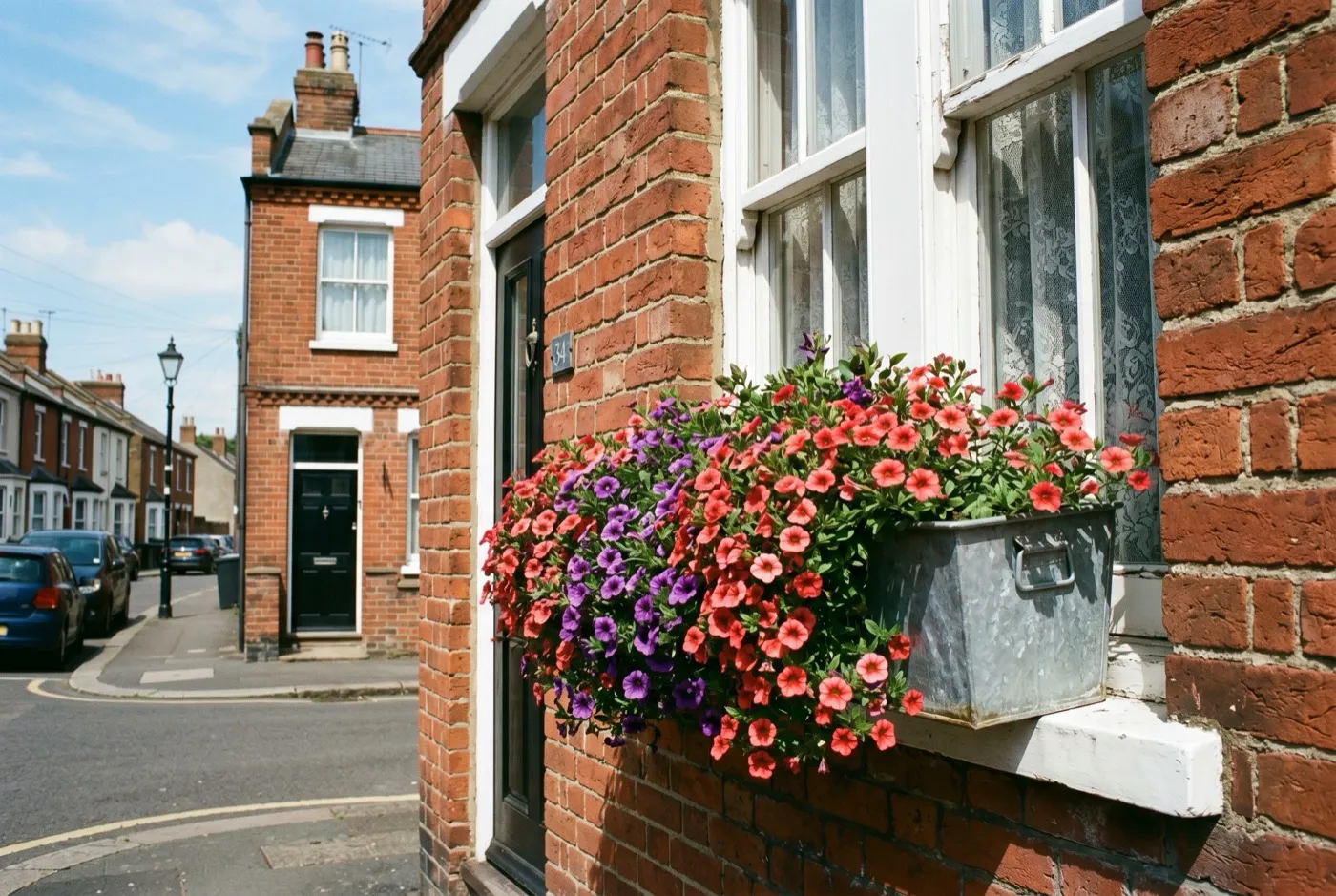 A south-facing window box on a terraced street. Six hours of direct sun and free-draining compost give the dense, even flowering calibrachoa is known for.
Watering and feeding for non-stop flower
This is where most calibrachoa fail. The plant is both hungry and thirsty, and it punishes neglect within a fortnight. Without regular feeding, flowering stalls and the leaves yellow.
Water daily in summer, twice on hot days, because a flowering basket in full sun dries fast. Aim to keep the compost evenly moist, never bone dry and never sodden. Wilting plants recover, but a check costs you a week of flower.
Feed with a high-potash feed, the same tomato food you use on tomatoes. Start in June, two to three weeks after planting, and feed weekly at half strength or fortnightly at full strength. Potash drives flower over leaf, which is exactly what a basket plant needs. A nitrogen-heavy feed gives lush foliage and few blooms.
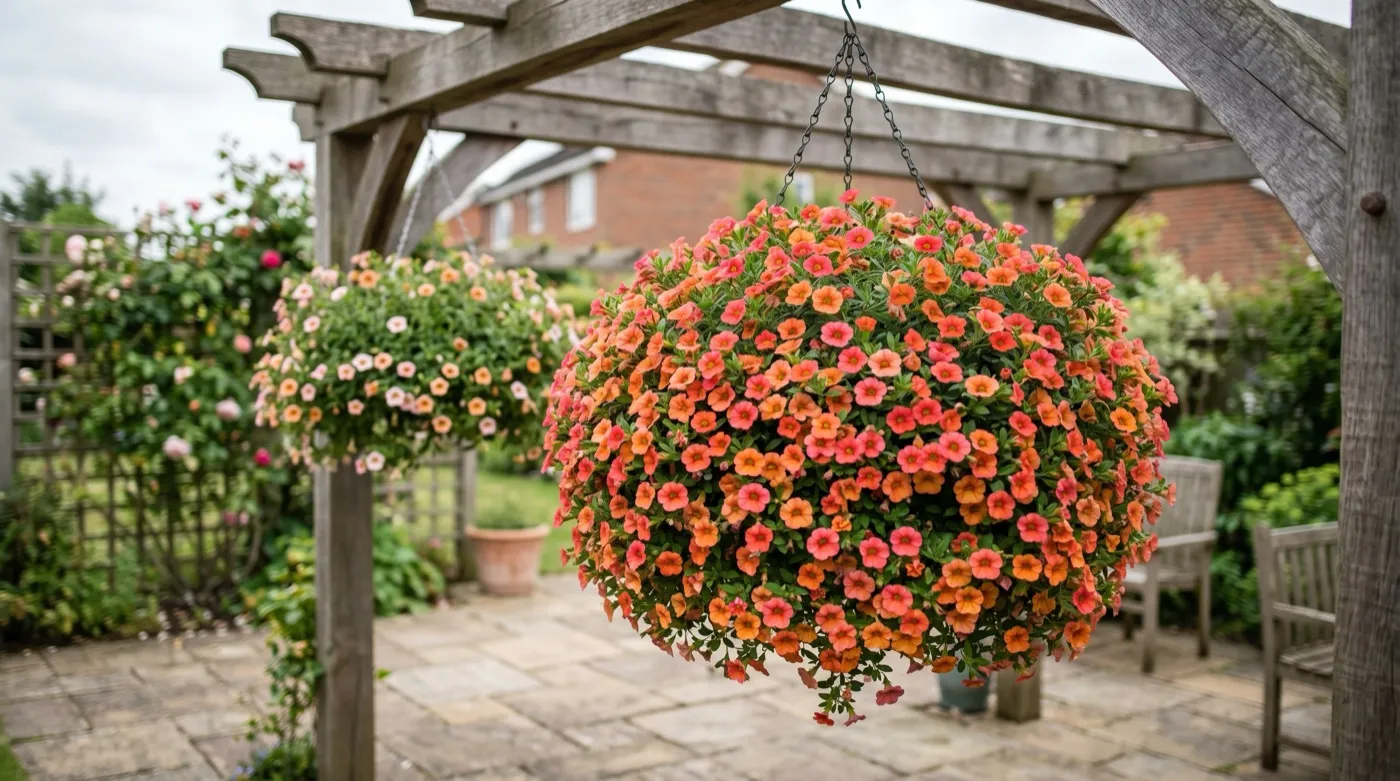 A weekly tomato feed from June gives this dome of unbroken colour. The unfed plant beside it stalled at half the trail and shed flower from the crown.
Why calibrachoa leaves turn yellow and how to fix it
Yellowing leaves are the single most common calibrachoa problem, and the cause is almost always iron chlorosis. The tell-tale sign is interveinal yellowing: the leaf goes pale yellow while the veins stay green. It starts on the youngest leaves at the stem tips.
The root cause is not a lack of iron in the compost. It is high pH from hard water. Most UK tap water is alkaline, and as it raises the compost pH above 6.5, iron becomes chemically locked up and the plant cannot absorb it. The iron is there; the plant simply cannot reach it. This is why the problem is worst on chalk and limestone areas and why feeding more general fertiliser does not fix it.
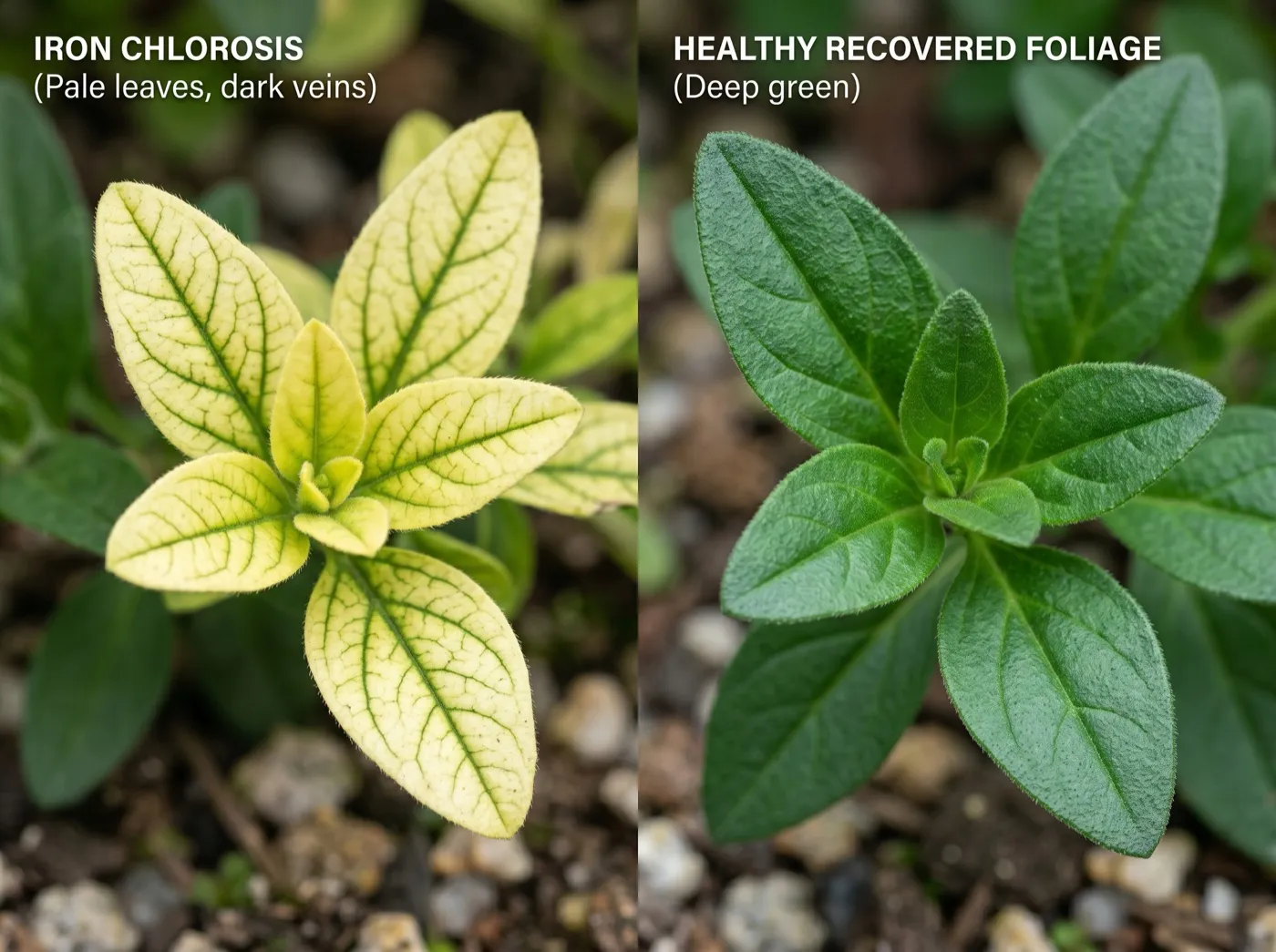 Left: classic iron chlorosis, yellow leaf with green veins, from hard alkaline water. Right: the same cultivar two weeks after a sequestered iron feed.
Calibrachoa compared with other basket trailers
Calibrachoa is not the only trailing plant for a basket, and choosing the right one depends on flower size, how much deadheading you will tolerate, and how greedy a feeder you can keep up with. Here is how the main UK basket trailers compare.
| Plant | Flower size | Deadheading | Feed demand | Trailing length | Role / Best for |
|---|---|---|---|---|---|
| Calibrachoa (Million Bells) | 2-3cm | None (self-cleaning) | High | 30-60cm | Gold standard basket trailer for non-stop colour |
| Surfinia trailing petunia | 5-7cm | Light, occasional | High | 60-90cm | Big, bold flowers and the longest trail |
| Bedding petunia | 5-7cm | Heavy, frequent | Medium | 20-40cm | Cheap colour, but rain-marks and needs deadheading |
| Trailing lobelia | 1cm | None | Low | 25-40cm | Filler and contrast, fine in part shade |
| Ivy-leaf pelargonium | 3-4cm | Light | Low | 40-70cm | Drought-tolerant, best where watering is unreliable |
The calibrachoa is the gold standard for a low-fuss sheet of colour because it never needs deadheading and shrugs off UK rain better than a petunia. Surfinia trails further and flowers larger, but the big blooms tear in heavy rain. What no trailer here can do is flower well in shade or survive frost, so all of them are summer-only plants for a sunny spot. For more options, see our roundup of the best annual bedding plants for UK gardens.
Pinching, shearing, and keeping plants bushy
Two simple cuts keep calibrachoa full instead of straggly. The first is the early pinch: nip out the growing tip when young plants have 4-5 leaves, before planting out. This forces side shoots and gives a basket with many trailing stems rather than a few long bare ones.
The second is a midsummer shear. By late July, established plants can grow leggy and flower mainly at the tips. A light shear-over, removing the top third of growth, triggers a flush of fresh branching and flower within 10-14 days. Feed straight after to fuel the regrowth.
Do not be timid. Calibrachoa responds to cutting back like few other bedding plants, and a hard tidy in midsummer earns its keep by September. If you grow it alongside petunias, the same principle applies, as our guide to growing petunias in the UK explains.
Pests and root problems to watch for
Calibrachoa is mostly trouble-free, but three issues turn up in UK gardens. Aphids cluster on soft new tips, distorting growth and leaving sticky honeydew. Squash small colonies by hand or wash them off with a jet of water; treat heavy infestations early before they spread.
Whitefly rise in a cloud when you disturb the plant, especially in a warm sheltered spot or greenhouse. They weaken plants and spread virus. Yellow sticky traps catch adults, and a soft-soap spray knocks down numbers.
The most damaging problem is root rot from waterlogging. Calibrachoa roots need air, and compost left sodden in a poorly drained basket turns black and the plant collapses from the base. The fix is prevention: free-draining compost, drainage holes, and never standing baskets in saucers of water. Once root rot sets in, the plant rarely recovers.
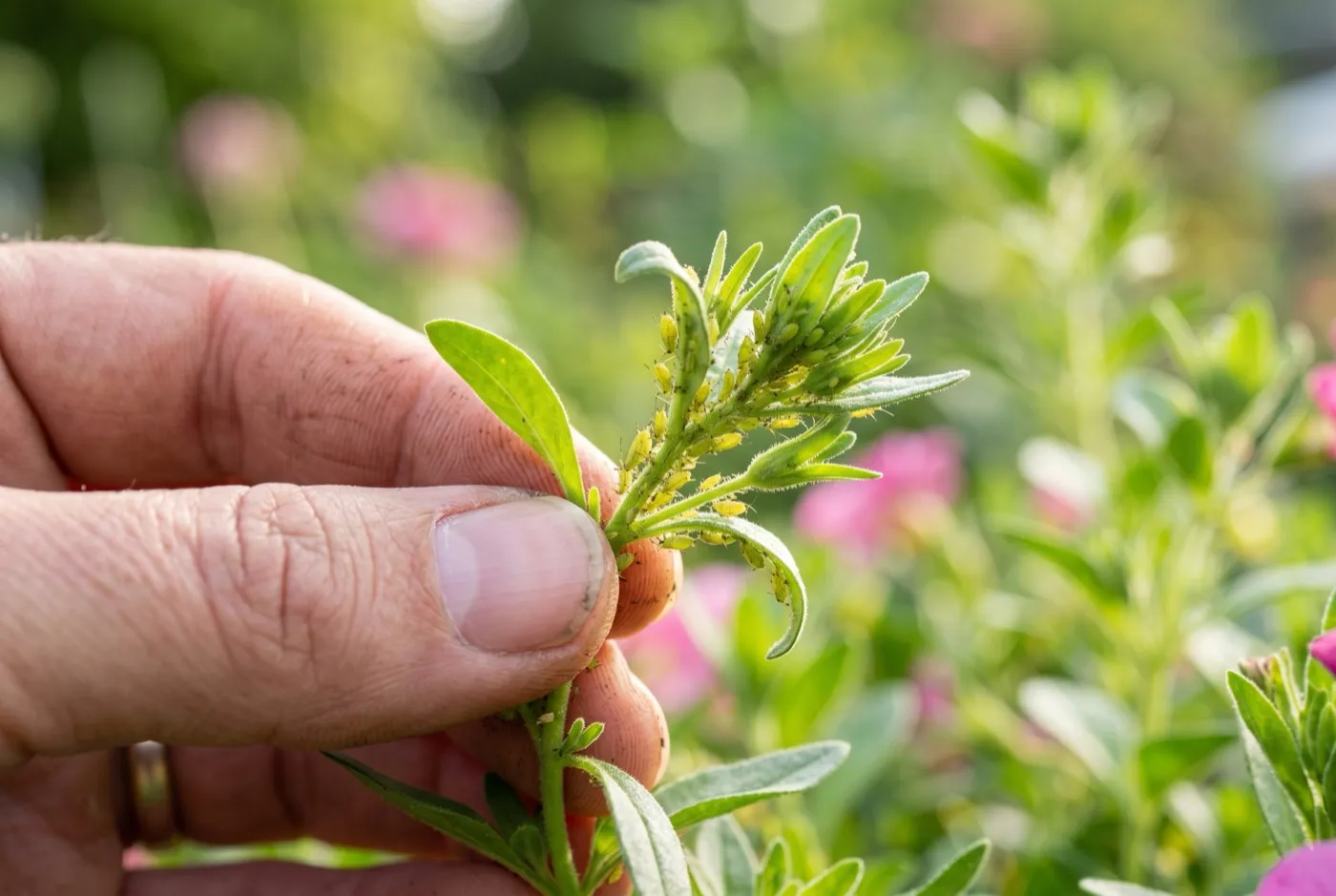 Aphids gather on the softest new shoots first. Catch them at this stage and a single wash-off keeps the plant clean for weeks.
Month-by-month calibrachoa basket calendar
Calibrachoa runs to a tight UK timetable built around the frost dates. This calendar covers buying plugs or taking cuttings through to overwintering stock plants for next year.
| Month | Task |
|---|---|
| March | Buy plug plants; pot into 9cm pots; grow on at 12-15C under cover |
| April | Pinch growing tips at 4-5 leaves; keep frost-free; do not plant out |
| May | Harden off over 7-10 days; plant out in the south from the last week |
| June | Plant out in the north; begin weekly high-potash feed; water daily |
| July | Feed and water hard; light shear-over if plants grow leggy |
| August | Peak flowering; keep up feed and water; watch for chlorosis |
| September | Stop feeding late month; take cuttings or lift stock plants |
| October | Move stock plants frost-free at 7-10C before first frost |
Common calibrachoa mistakes to avoid
Most calibrachoa disappointments trace back to a handful of avoidable errors. These are the ones that cost a season of colour.
- Planting out too early. Calibrachoa is frost tender. Planted before late May in the south or June in the north, one cold night kills it. Wait for the frosts to pass.
- Forgetting to feed. This is the big one. Skip the weekly high-potash feed and flowering stalls inside three weeks. The plant cannot flower hard on compost nutrients alone.
- Ignoring yellow leaves. Interveinal yellowing is iron lock-up from hard water, not a general deficiency. More tomato feed will not fix it; sequestered iron will.
- Letting the compost go bone dry. A wilted basket loses a week of flower even after it recovers. Water daily in summer, twice in heat.
- Standing baskets in trays of water. Waterlogged roots rot. Calibrachoa needs free drainage above all else; never let it sit in standing water.
How to overwinter calibrachoa for next year
Calibrachoa is a perennial, so you can keep favourite plants alive rather than buying fresh each spring. The whole job hinges on getting them under cover before the first frost, which in most of the UK falls between mid-October and mid-November.
You have two routes. Lift the whole stock plant, cut it back hard by two-thirds, pot it into fresh compost, and keep it frost-free at 7-10C in a greenhouse, conservatory, or bright porch. Water sparingly through winter so it ticks over without rotting.
Alternatively, take cuttings in early September. Pull 5-7cm non-flowering shoots, strip the lower leaves, and root them in gritty compost on a warm windowsill. Rooted cuttings overwinter in less space than a full plant and give you several new plants from one. Either way, you save the cost of replacing a basket-full of plugs at £1.50 to £3 each next spring.
Frequently asked questions
When can I plant calibrachoa outside in the UK?
Plant out after the last frost, late May to early June. Calibrachoa is frost tender and dies at 0C. In the south, plant from the last week of May; in northern England and Scotland, wait until the first week of June. Harden plants off for 7-10 days before planting out to avoid a check in growth.
Do you need to deadhead calibrachoa?
No, calibrachoa is self-cleaning and drops its own spent flowers. Unlike petunias, the small blooms fall away cleanly, so no daily deadheading is needed. A light shear-over in midsummer keeps plants bushy, but it is for shape, not flower production.
Why are my calibrachoa leaves turning yellow?
Yellow leaves with green veins are iron chlorosis from hard water. The high pH of UK tap water locks up iron in alkaline compost. Treat with sequestered iron or an ericaceous feed, water with rainwater where possible, and new growth greens up within 10-14 days.
How often should I feed calibrachoa?
Feed weekly from June with a high-potash tomato feed. Calibrachoa is a heavy feeder, and flowering stalls within two to three weeks without food. Use a half-strength feed weekly or full strength fortnightly. Stop feeding in late September as growth slows.
What is the difference between calibrachoa and petunia?
Calibrachoa has smaller flowers and is self-cleaning; petunias need deadheading. Calibrachoa blooms are 2-3cm across against a petunia’s 5-7cm. Calibrachoa also trails more reliably and tolerates rain better, which suits the wet UK summer.
Can calibrachoa survive winter in the UK?
No, calibrachoa cannot survive a UK winter outdoors. It is frost tender and killed by the first hard frost. Lift stock plants or take cuttings in September and keep them frost-free at 7-10C in a greenhouse or porch to grow on next spring.
Now you know how to keep Million Bells flowering all summer, browse our full range of plant growing guides for more borders and container ideas, and learn the technique that makes every basket fuller in our guide to planting and maintaining hanging baskets.
Our team produces practical UK gardening guidance from source research, contributor records and established horticultural practice. Editorial standards are overseen by Matt W.