Key takeaways
- Cleome reaches 1.2-1.5m tall, making it a back-of-border annual for July to October colour
- Seed needs warmth near 24C plus light: surface-sow, never bury, and use bottom heat
- Sow indoors February to April, then harden off and plant out only after the last frost
- Stems carry prickles and sticky scented foliage: wear gloves, or grow thornless 'Senorita Rosalita'
- Drought tolerant once established and a strong pollinator plant, it self-seeds freely in mild gardens
Growing cleome from seed teaches you a lesson most plant labels skip. Cleome hassleriana, the spider flower, is a half-hardy annual that fails for many UK gardeners at the very first step: germination. The seed needs real warmth, around 24C, plus light to break dormancy. Sow it cool or bury it deep and almost nothing comes up. Get the heat right and you grow a striking back-of-border plant reaching 1.2-1.5m, topped with airy pink, white or purple flowers from July to October. This guide covers the germination trick that fixes erratic results, the right sowing window, hardening off, and where cleome earns its place in a UK border.
The RHS profile of Cleome hassleriana is a useful reference for botanical detail. This guide focuses on the practical decisions that decide success or failure: temperature, sowing depth, timing, and aftercare.
Why cleome seed is so hard to germinate
Cleome seed carries a built-in dormancy that protects it from sprouting in the wrong conditions. Three triggers must line up before a seed will grow. The first is warmth: cleome evolved in the warm grasslands of South America, and the seed expects soil near 24C. The second is light: the seed is photoblastic, meaning it germinates only when exposed to light at the surface. The third is a fluctuating temperature between day and night, which signals open ground rather than deep burial.
Most UK gardeners trip on the first two. They sow indoors in a cool spare room at 15C, then cover the seed with compost. Both moves block germination. A constant warm propagator helps, but it removes the day-night swing that cleome reads as a cue. Understanding these three triggers turns a frustrating plant into a reliable one.
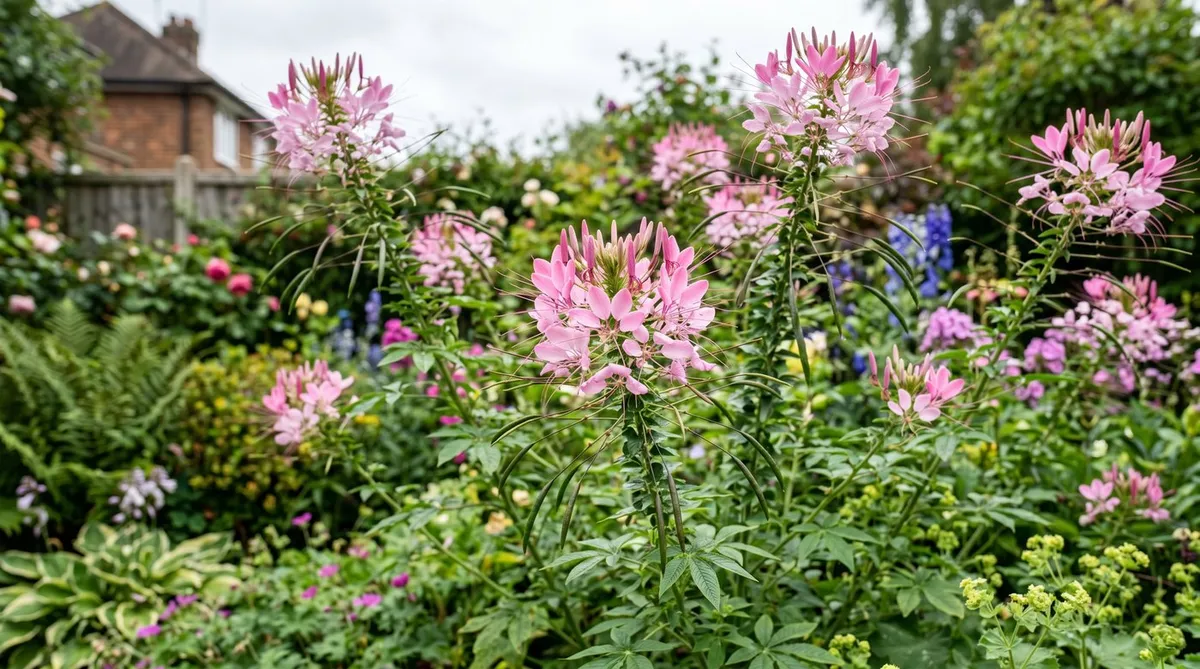
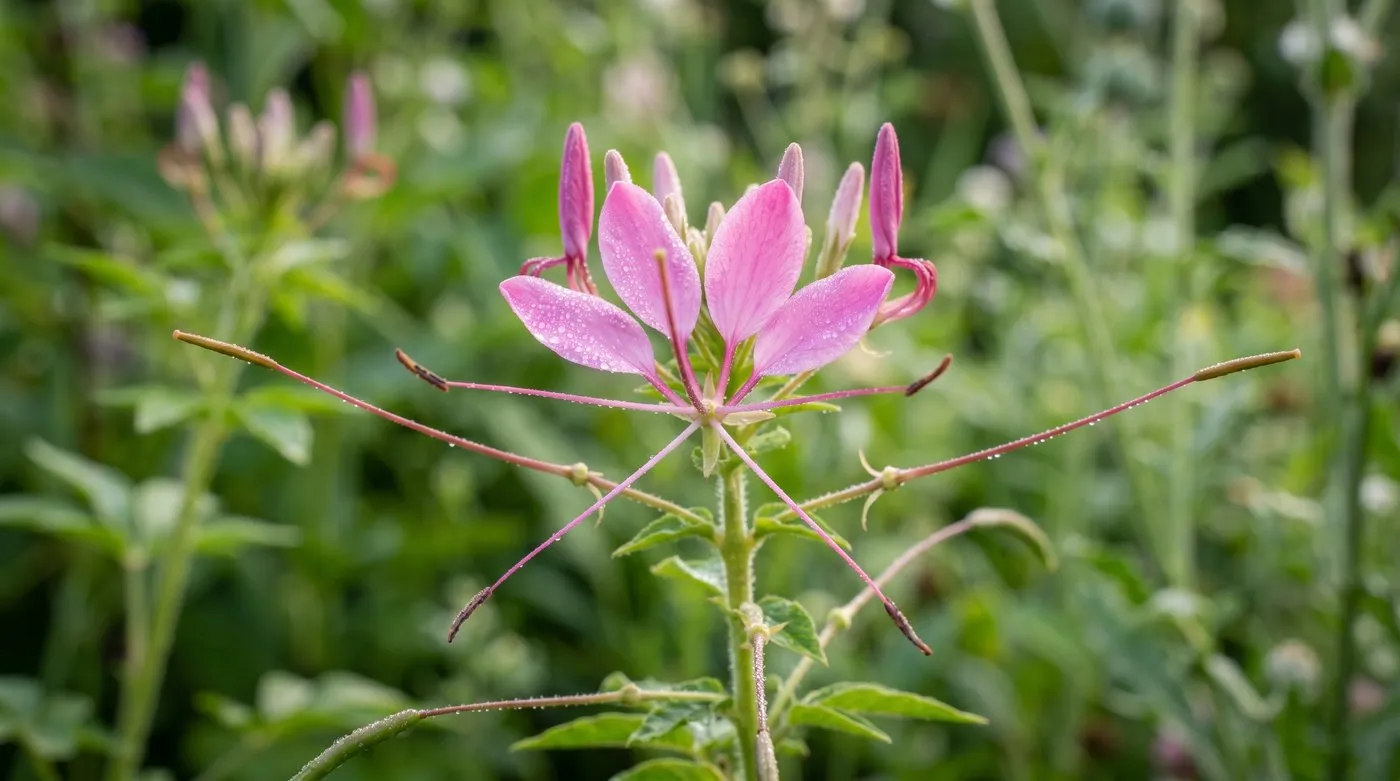 The spidery flower with its long protruding stamens gives cleome its common name and a texture nothing else in the border matches.
The germination temperature trick that works
The results were clear. A constant 18C propagator gave patchy, slow germination. A fluctuating 15/25C cycle, warm by day and cooler at night, beat it on both speed and total emergence. A steady 24C heat mat sat in between, good on speed but not as high on final count as the fluctuating regime.
| Sowing temperature | Germination rate | Days to emerge | Notes |
|---|---|---|---|
| Fluctuating 15/25C day-night | 78% | 11 | Best overall, mimics open ground |
| Constant 24C heat mat | 64% | 9 | Fastest, but lower final count |
| Constant 18C propagator | 41% | 21 | Slow and patchy, common failure point |
| Cold spare room, ~15C | 12% | 28+ | Near total failure, avoid |
Two practical setups deliver the winning swing. A heated propagator switched off overnight cools the seed while a warm day reheats it. A bright windowsill above a radiator does the same: warm afternoons, cool nights. Either beats a thermostatically held constant temperature.
How to sow cleome seed step by step
Get the method right and cleome becomes straightforward. Follow these stages.
- Fill a tray with moist, fine seed compost and firm it level. Water before sowing so you do not wash seed about afterwards.
- Surface-sow the seed thinly across the top. Do not cover it. Press each seed into contact with the compost using a flat board so it sits in the light.
- Give bottom heat with a propagator or heat mat set to deliver a warm-day, cool-night swing near 15/25C. Place in bright light, out of direct scorching sun.
- Keep humid with a clear lid or a plastic bag until seedlings show. Aim for 11 to 14 days at the right temperature.
- Ventilate once seedlings appear to stop damping off. Remove the lid gradually.
Sow from February to April. February sowings produce the tallest plants by August but stretch toward the light, so they need grow lights to stay sturdy. April sowings catch up quickly in spring warmth and need less support. Never direct-sow outdoors in early spring: UK soil rarely reaches 24C before June.
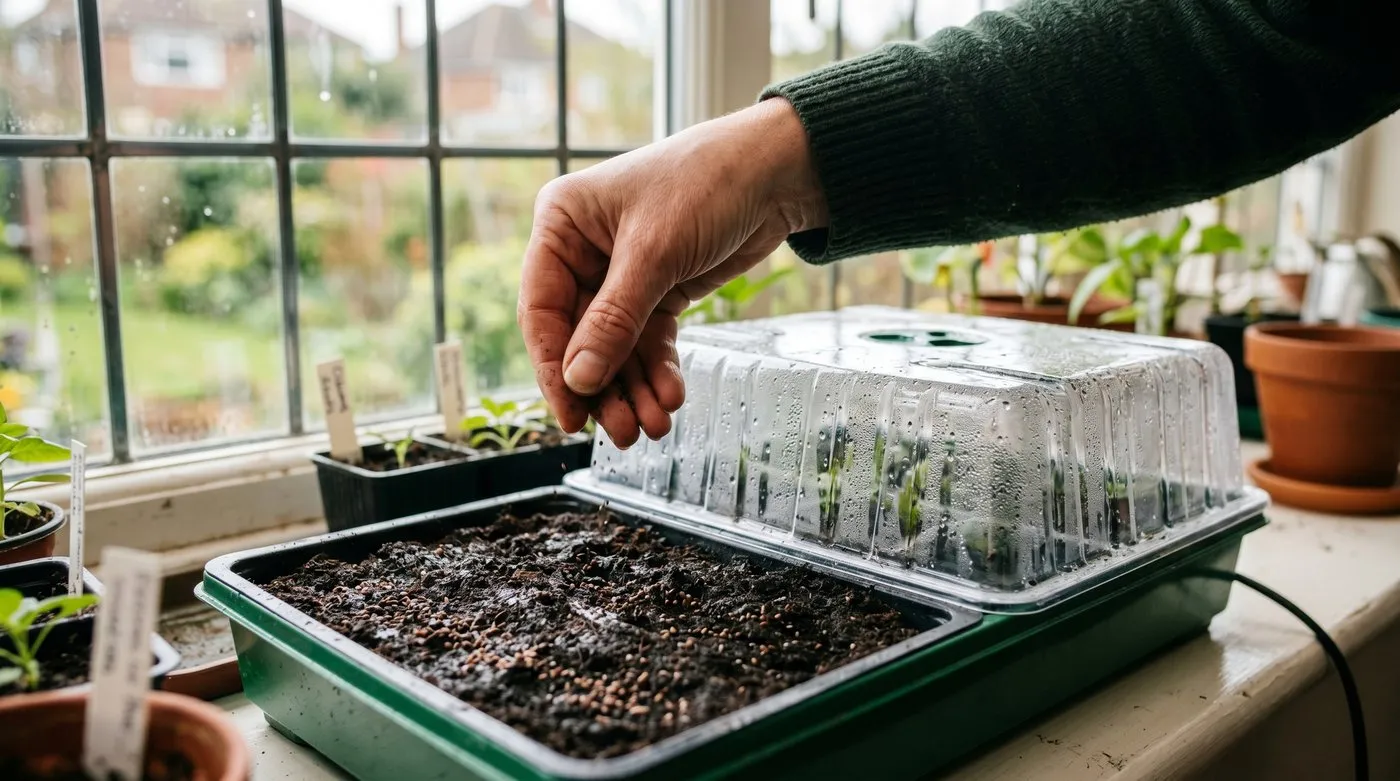 Surface-sow cleome onto moist compost in a heated propagator and never cover it: the seed needs light to break dormancy.
Pricking out and growing on strong seedlings
Cleome seedlings resent root disturbance, so move them early. Prick out when the first true leaves appear, usually two weeks after germination. Handle each seedling by a leaf, never the stem, and lift with a dibber to keep the root intact. Move them into 9cm pots of multipurpose compost.
Grow on at 15 to 18C in good light. Seedlings raised too warm or too dim grow leggy and weak. If you sowed in February, run grow lights for 14 hours a day to keep stems short. A cold, bright greenhouse from late March gives ideal conditions: cool nights firm the growth.
Pinch out the growing tip once plants reach 20cm to encourage branching. This produces more flower stems and a bushier plant. Plants grow fast once roots fill the pot, so pot on to 1-litre containers if planting out is delayed by cold weather.
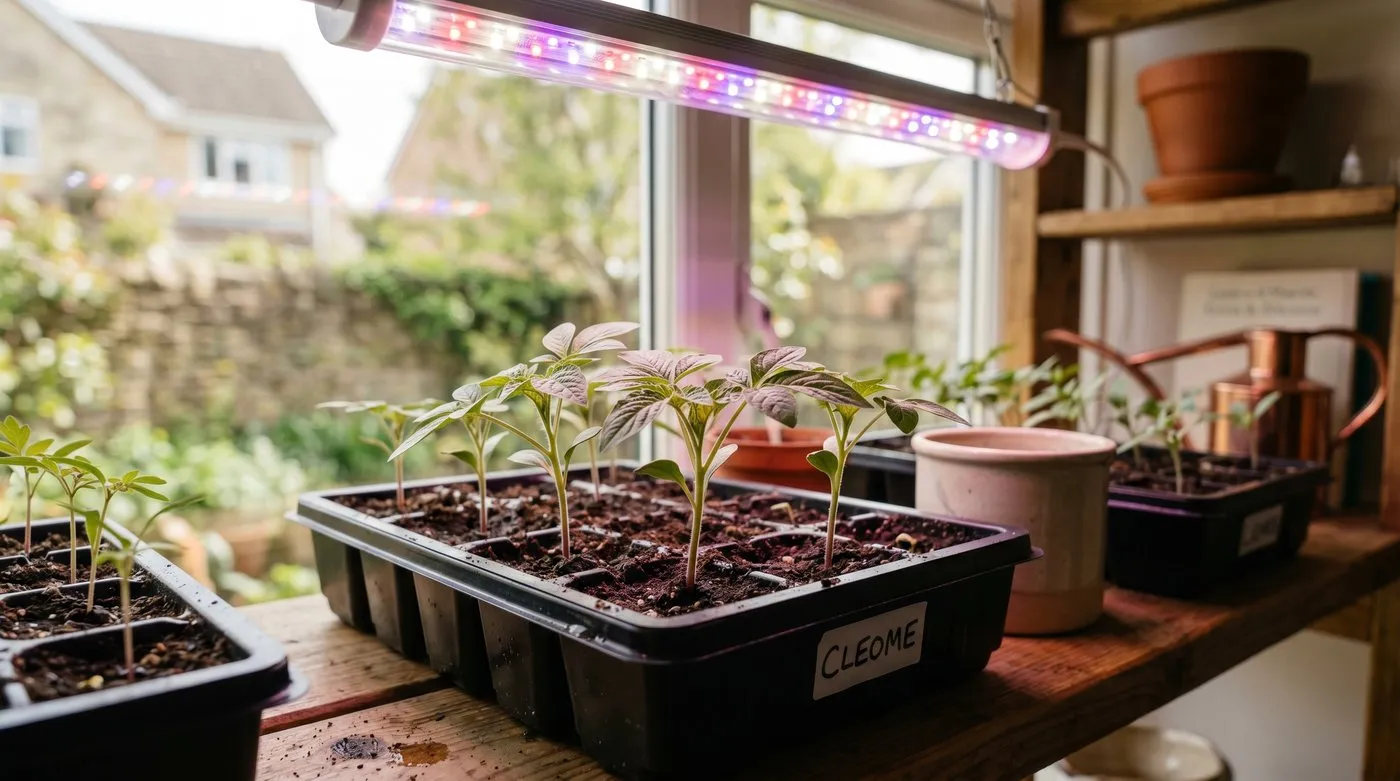 February-sown cleome needs 14 hours of grow light a day to stay short and sturdy until it can be hardened off.
Hardening off and planting out after frost
Cleome is half-hardy, killed by the lightest frost. Never plant out until the last frost has passed. In most of the UK that means late May, or early June in the north and Scotland. Watch the local forecast rather than the calendar.
Harden off over 10 to 14 days. Stand plants outdoors by day in a sheltered spot, then bring them in at night for the first week. From the second week, leave them out overnight unless frost threatens. This gradual exposure thickens leaf cuticles and prevents the check that stunts unhardened plants.
Plant into free-draining soil in full sun, spacing plants 45 to 60cm apart. Cleome tolerates poor soil and copes with drought once established, so it suits a hot, dry border. Rich, wet soil produces tall, soft growth that flops, so resist heavy feeding. Water in well, then let the plant root deep on its own.
Where cleome belongs in a UK border
Cleome earns its keep at the back of a border. At 1.2-1.5m it stands above dahlias, cosmos and salvias, adding height and a see-through, airy quality that stops a planting looking solid. The spidery flowers, with their long protruding stamens and whiskery seed pods, give a distinctive texture nothing else matches.
Plant it in drifts of three or five for impact rather than as single specimens. The pink, white and purple forms blend well together, or pick one colour for a cleaner look. It pairs beautifully with the dark foliage of dahlias and the daisy flowers of cosmos, both of which share its long summer flowering window. You will find more half-hardy annuals like it across our plant growing guides. For a fuller late-summer scheme, combine it with dahlias and the bold leaves of cannas.
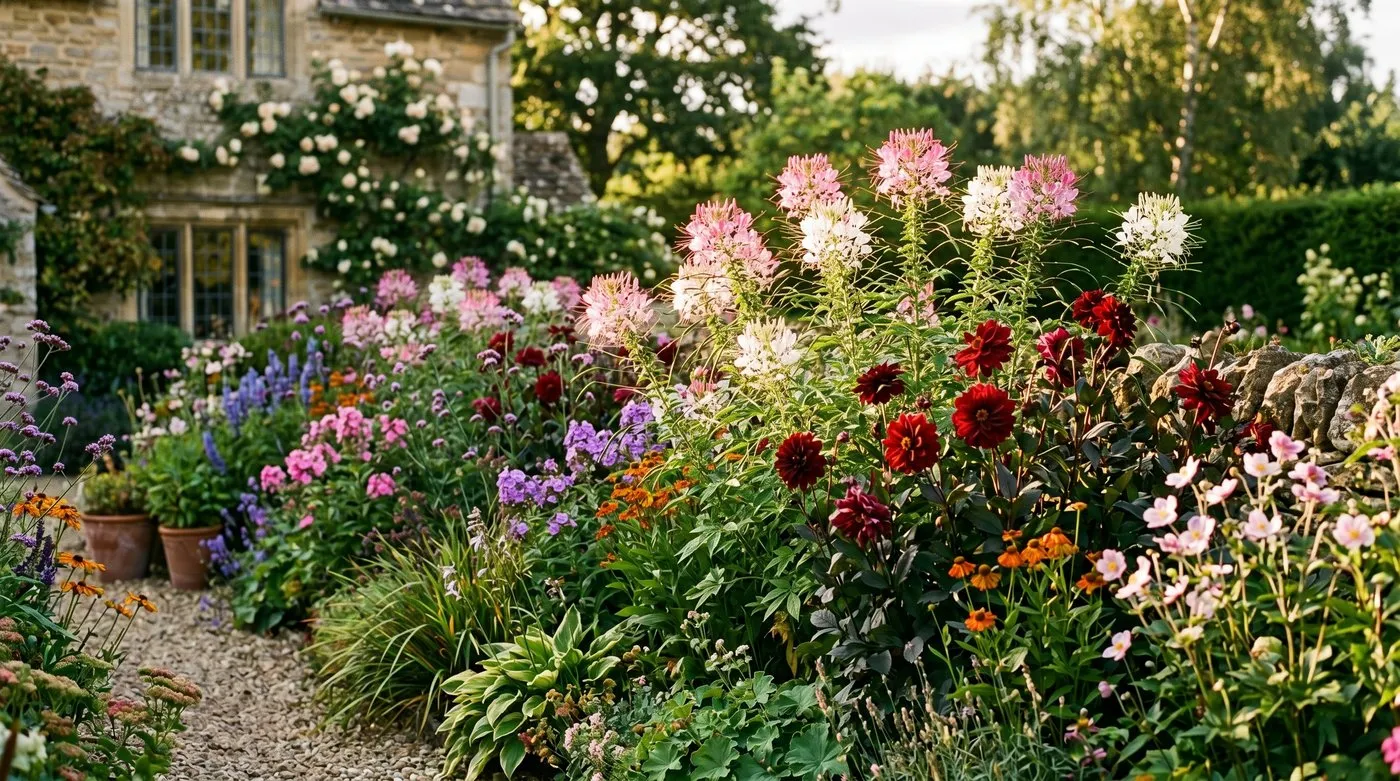 At 1.2-1.5m, cleome stands above dahlias at the back of a border and adds an airy, see-through texture.
Month-by-month cleome calendar
| Month | What to do |
|---|---|
| January | Order seed. Plan border positions. Optional: start a fridge chill on stubborn seed batches. |
| February | First indoor sowings under grow lights at a fluctuating 15/25C. Surface-sow only, never cover. |
| March | Main sowing month. Prick out February seedlings into 9cm pots. Grow on at 15-18C in bright light. |
| April | Final sowings. Pinch out tips at 20cm to branch plants. Begin hardening off late-month if mild. |
| May | Harden off over 10-14 days. Plant out after the last frost, 45-60cm apart in full sun. |
| June | Plant out in the north once frost risk passes. Water new plants until rooted, then ease off. |
| July | First flowers open. Stake tall plants in exposed sites. Deadhead lightly to extend flowering. |
| August | Peak flowering. Leave some pods to ripen if you want self-sown seedlings next spring. |
| September | Flowering continues. Collect ripe seed pods on a dry day for next year. Label and store cool. |
| October | Last flowers before frost. Pull spent plants after the first hard frost kills them. |
| November | Clear debris. Note where self-seeders may appear. Compost frosted top growth. |
| December | Review the season. Order fresh seed if self-seeding is unreliable in your garden. |
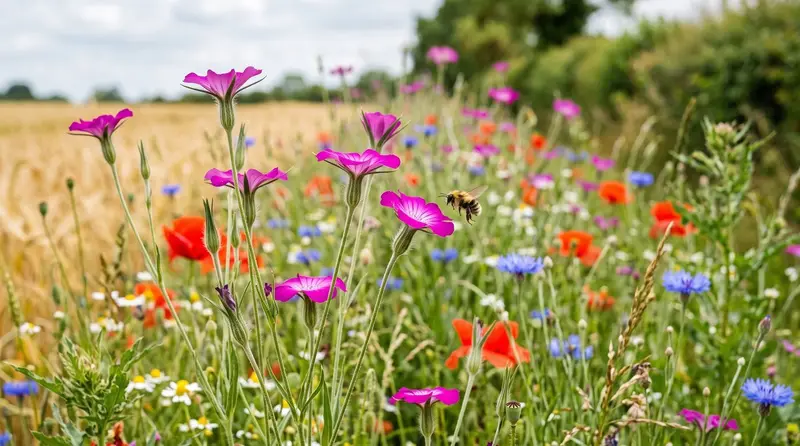
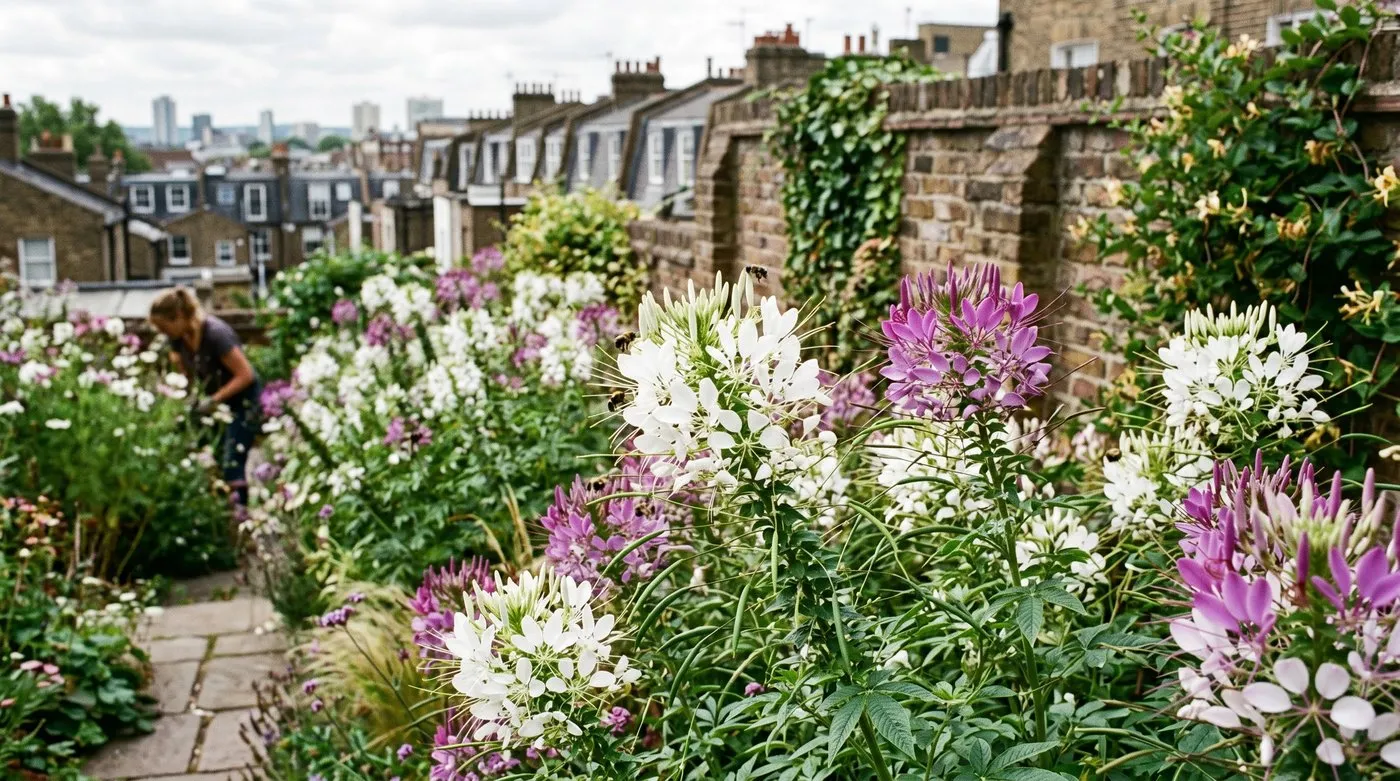 Cleome flowers from July to October and works steadily for bees, hoverflies and dusk-flying moths, even in a small city border.
Self-seeding, seed saving and next year’s plants
To save seed, watch the lowest pods on each spike. They ripen first, turning from green to pale brown. Snip whole pods on a dry day before they shatter, then dry them indoors in a paper bag for a week. Shake out the small round seeds and store them cool and dry in a labelled envelope. Viability holds for two to three years.
If you want guaranteed plants, do not rely on self-seeding alone: a cold, wet spring can wipe out volunteers. Sow a tray indoors as insurance. The thornless ‘Senorita Rosalita’ is sterile and sets no seed, so it never self-sows and must be bought fresh or grown from cuttings each year.
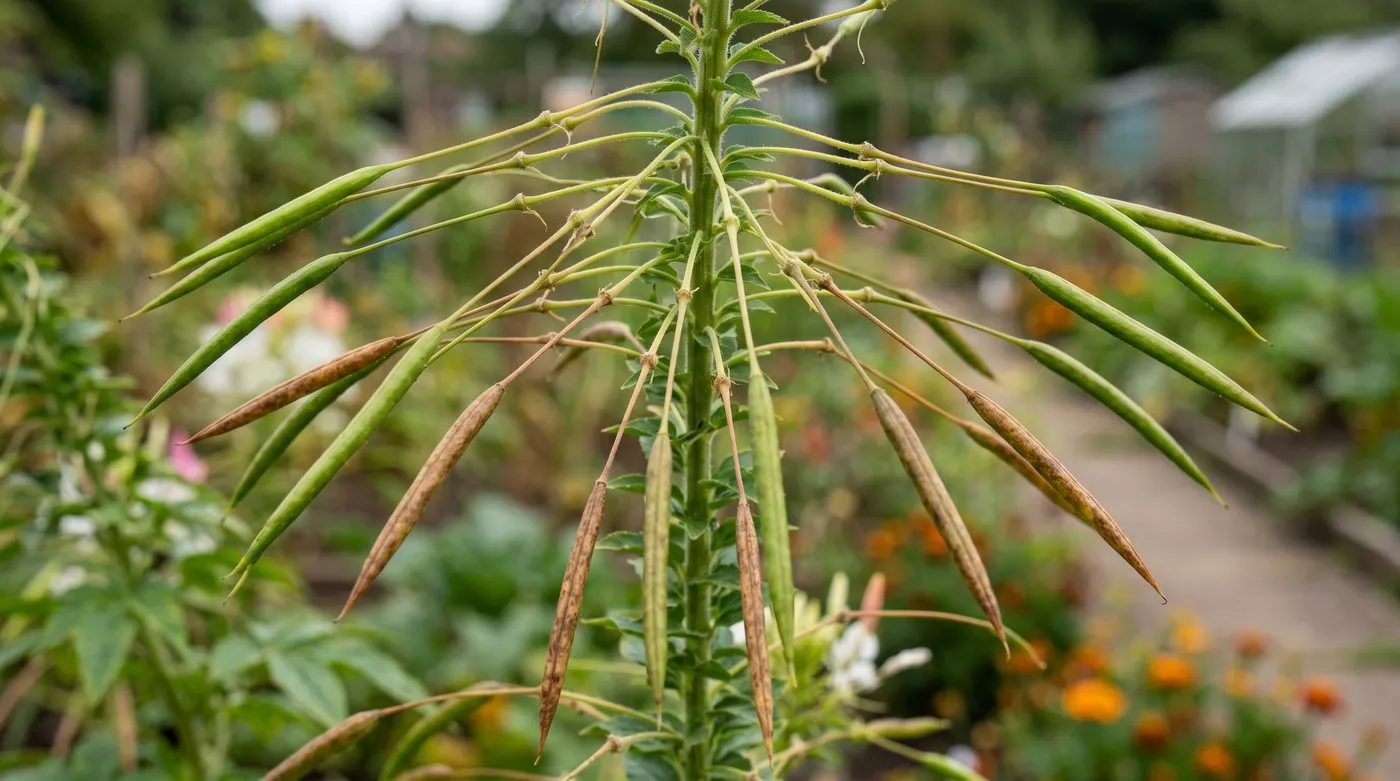 The long whiskery seed pods split when ripe and scatter seed: collect them on a dry day to save or leave them to self-sow.
Common mistakes when growing cleome
Most cleome failures trace back to a handful of avoidable errors.
- Sowing too cool. This is the number one cause of no germination. Seed sown at 15C barely sprouts. Give bottom heat and a 24C peak. Without warmth, nothing else matters.
- Burying the seed. Cleome needs light to germinate. Covering it with compost blocks the light cue. Surface-sow and press in gently instead.
- Planting out too early. The first frost kills half-hardy cleome outright. Wait until late May or June and harden off fully. A rushed planting loses the whole batch.
- Overfeeding rich, wet soil. Lush soil grows tall, soft, floppy plants that need staking. Cleome flowers best in lean, free-draining ground. Hold back the feed.
- Handling bare-handed. The stems carry prickles and the foliage is sticky and pungent. Wear gloves when staking or pulling plants, or choose the spineless ‘Senorita Rosalita’.
Warning: Cleome hassleriana carries sharp spines at the leaf joints and on the stems. The sap and foliage can irritate sensitive skin. Always wear gloves when handling mature plants, and site them away from paths where bare arms brush past.
Choosing the right cleome variety
Not all cleome behaves the same. The classic seed-raised types reach full height and self-seed; the modern sterile hybrids stay tidier and thornless.
| Variety | Type | Colour | Height | Spines | Self-seeds |
|---|---|---|---|---|---|
| ’Colour Fountain’ mix | Seed-raised | Pink, white, purple | 1.2-1.5m | Yes | Yes |
| ’Violet Queen’ | Seed-raised | Deep purple | 1.2m | Yes | Yes |
| ’Helen Campbell’ | Seed-raised | Pure white | 1.2m | Yes | Yes |
| ’Senorita Rosalita’ | Sterile hybrid | Lavender pink | 60-90cm | No | No |
| ’Senorita Blanca’ | Sterile hybrid | White | 60-90cm | No | No |
The seed-raised mixes give the true tall spider flower look and cost little: a packet of ‘Colour Fountain’ runs about 2 to 3 pounds for 50 or more seeds. The ‘Senorita’ series, bought as young plants for 5 to 8 pounds each, suits smaller borders and patio pots where height and prickles are a problem. For a sunny, free-draining spot, cleome partners well with other heat-lovers covered in our guide to the best plants for sandy soil.
Cleome makes a fine cut flower too, lasting four to six days in a vase, and its summer-long display rewards the small effort at the seed stage. Pair it with summer-flowering gladioli for a tall, exotic border that peaks in August. For richer planting soil that holds the moisture young plants need before they toughen up, our guide to making compost shows three methods from cold to hot.
Now you’ve learned how to grow cleome, read our guide on growing cosmos from seed for another easy, long-flowering annual that lifts a UK border from July to the first frost.
Frequently asked questions about growing cleome
Why won’t my cleome seeds germinate?
Cleome seed needs warmth near 24C and light to germinate. Most failures come from sowing too cool or burying the seed. Surface-sow onto moist compost, press in gently, and give bottom heat. A fluctuating day-night temperature works better than constant warmth.
What temperature does cleome need to germinate?
When should I sow cleome seeds in the UK?
Sow cleome indoors from February to April with bottom heat. February sowings give the tallest plants but need grow lights to prevent legginess. April sowings catch up fast in warmth. Do not direct-sow outdoors: UK spring soil is too cold for reliable germination.
How tall does cleome grow?
Cleome reaches 1.2-1.5m tall in one season. It belongs at the back of a border where its height and airy flowers carry colour above shorter plants. In rich soil with steady moisture it can top 1.5m, so allow space and avoid windy sites.
Does cleome come back every year?
Is cleome good for pollinators?
Yes, cleome is a strong pollinator plant. Bees and hoverflies work the flowers through summer, and moths visit at dusk. The long flowering window from July to October feeds insects when many spring plants have finished. The nectar-rich blooms suit a wildlife-friendly border.
Why does my cleome have prickles?
Cleome hassleriana naturally carries small spines on its stems and leaf joints. Wear gloves when handling or staking plants. The foliage is also sticky and pungently scented. If you dislike the prickles, grow the thornless cultivar ‘Senorita Rosalita’, which has no spines and no scent.
Can you direct-sow cleome outdoors in the UK?
Direct-sowing rarely works in the UK because spring soil is too cold. Cleome needs around 24C to germinate, which outdoor beds reach reliably only in June. Start seed indoors with heat, or in mild southern gardens scatter seed in late May once soil has warmed.
Our team produces practical UK gardening guidance from source research, contributor records and established horticultural practice. Editorial standards are overseen by Matt W.