Key takeaways
- Crinum x powellii survives to roughly -10C against a south-facing wall; it is the only crinum to grow outdoors in most of the UK.
- Plant the huge bulb with its neck and top shoulder sitting 5cm above the soil surface, never buried fully.
- Crinum hates root disturbance: leave it undivided for 3 to 5 years before flowering peaks.
- Fragrant trumpets open August to September on stems 60 to 90cm tall, in pink or pure white 'Album'.
- Tender species (Crinum moorei, Crinum asiaticum) need a frost-free pot kept above 5C over winter.
- Apply a 15cm dry mulch over the crown in late November to protect newly planted bulbs through their first two winters.
Which crinum to grow: hardy x powellii versus tender species
Crinum x powellii is the one to plant outdoors. It is a hybrid bred for UK conditions and survives to roughly -10C in free-draining soil. The tender species need glasshouse warmth and cannot stay outside through a British winter.
Crinum x powellii produces strappy arching leaves and stems 60 to 90cm tall, each carrying six to ten fragrant trumpets in soft pink. The white form, ‘Album’, is the choice for paler schemes and looks fine against dark brick. Both flower from August into September.
The tender species are showier but fussier. Browse our full range of plant growing guides for the relatives that share these conditions. Crinum moorei has broad leaves and wide pink flowers; Crinum asiaticum is a near-tropical giant with thick white spider-flowers. Neither tolerates frost. They earn their keep as container plants moved under cover before the first hard night. Treat the choice between hardy and tender as the first fork in the road, because everything else follows from it.
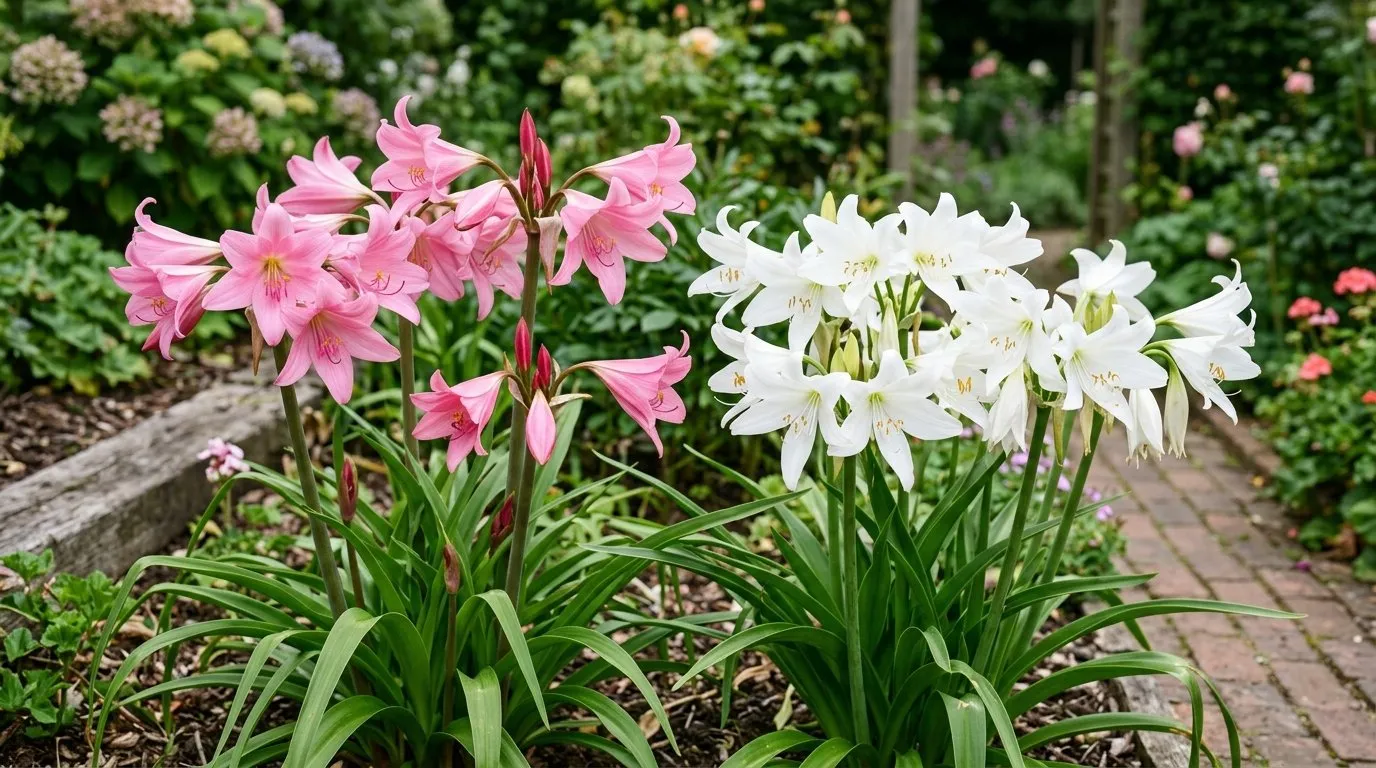 Crinum x powellii in classic pink alongside the white ‘Album’ form.
Why the neck of the bulb must sit above the soil
The single biggest planting mistake is burying the bulb. A crinum bulb is enormous, often 15cm across and weighing over a kilo, with a long tapering neck. Set the bulb so the neck and top shoulder sit about 5cm above the soil surface. Only the rounded base stays underground.
Bury that neck and water collects in the crown, rot sets in, and the bulb sulks for years without flowering. Plant it proud and the neck stays dry while the deep roots feed below.
Dig the hole 40cm deep and wide. Fork a 10cm layer of horticultural grit into the base. Backfill with a rich, gritty mix, settle the bulb on top, then firm soil around the lower half only. The Royal Horticultural Society notes that crinum needs deep, fertile, moisture-retentive yet free-draining ground, and that combination is what the grit-and-compost backfill delivers. Water in well, then leave it alone.
 The neck and shoulder of the bulb stay above the soil; only the base is buried.
The hot south-facing wall: why position decides everything
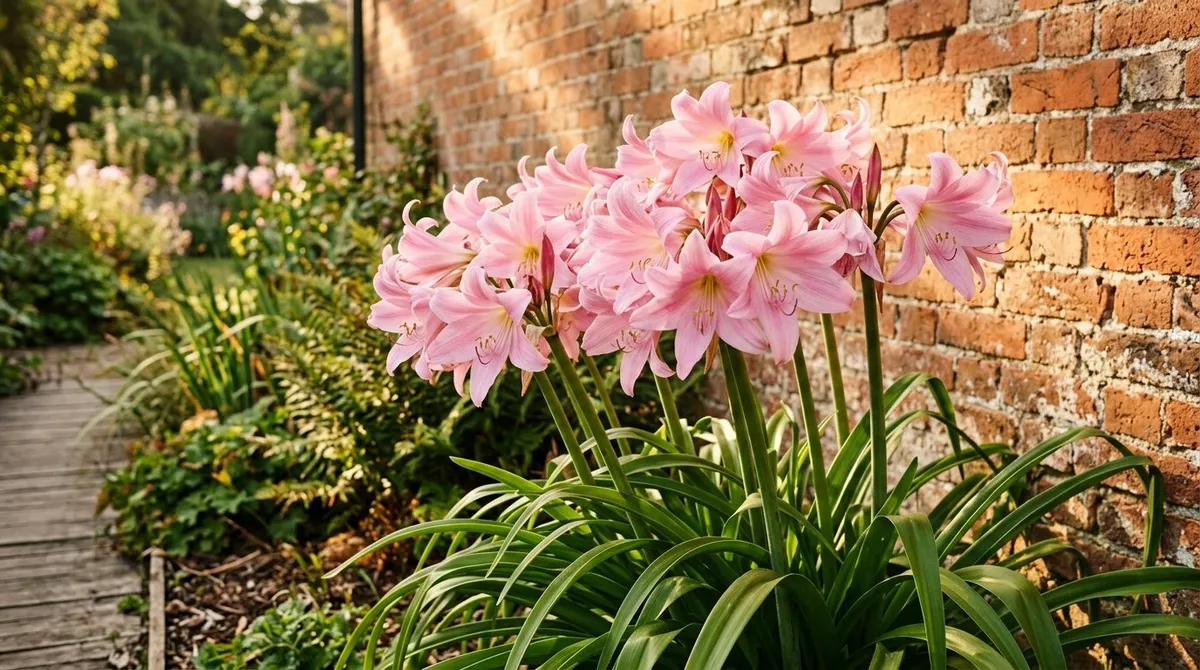
Crinum x powellii wants the warmest, sunniest spot you have. The base of a south-facing wall is ideal. The brick stores heat through the day and releases it at night, lifting the local temperature by a few degrees. That margin is the difference between flowering and failure.
Walls also keep the worst of the winter wet off the crown. Cold alone rarely kills a crinum in the UK; cold combined with sodden soil does. A wall base drains faster and dries quicker after rain.
Comparison of crinum types for UK gardens
Use this table to match the species to your conditions and the result you want.
| Type | Hardiness | Height | Outdoor or pot | Flowering | Best for |
|---|---|---|---|---|---|
| Crinum x powellii | to -10C | 60-90cm | Outdoor (hardiest) | Aug-Sep pink | Warm wall borders |
| Crinum x powellii ‘Album’ | to -10C | 60-90cm | Outdoor | Aug-Sep white | Pale and dark-brick schemes |
| Crinum moorei | to 0C | 60-100cm | Pot, frost-free | Aug-Oct pink | Sheltered terraces |
| Crinum asiaticum | to 5C | 90-150cm | Pot, frost-free | Summer white | Conservatory and porch displays |
Crinum x powellii ranks top for UK outdoor growing on hardiness and reliability. The tender pair score higher on drama but demand winter cover.
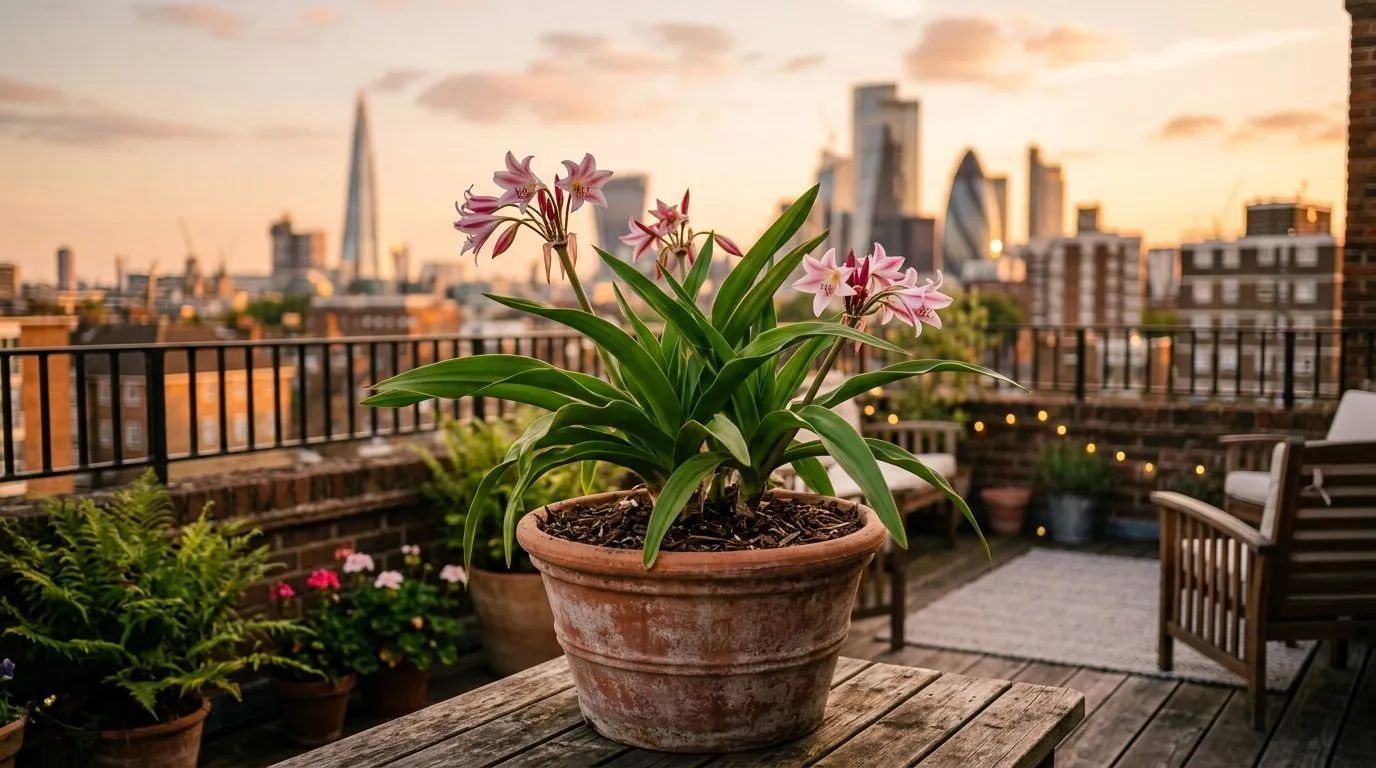 A tender Crinum moorei thrives in a pot on a sheltered city terrace, ready to move under cover.
There is no fully hardy white-flowered species for open ground, so ‘Album’ is your only outdoor white. For a contrast in season, pair crinum with the autumn-flowering nerines, which take over as the crinum fades.
A tender Crinum moorei thrives in a pot on a sheltered city terrace, ready to move under cover.
There is no fully hardy white-flowered species for open ground, so ‘Album’ is your only outdoor white. For a contrast in season, pair crinum with the autumn-flowering nerines, which take over as the crinum fades.
Crinum care month by month in the UK
Crinum is low-maintenance once settled. This calendar keeps you on track through the year.
| Month | Task |
|---|---|
| March | Top-dress with compost; apply sulphate of potash around the clump |
| April | Resume watering tender pot crinums; bring them back into growth |
| May | Watch for slug damage on emerging foliage; protect new shoots |
| June | Water deeply in dry spells; bulbs are filling for late flowering |
| July | Liquid feed pot specimens fortnightly; stake tall stems if exposed |
| August | Peak flowering begins; enjoy and deadhead spent trumpets |
| September | Flowering continues; reduce watering of pots as growth slows |
| October | Move tender crinums under cover before the first frost |
| November | Mulch outdoor crowns 15cm deep on young or wall-grown plants |
| December | Check pot crinums stay above 5C; water lightly once monthly |
| January | Leave outdoor bulbs undisturbed; clear heavy snow off the crown |
| February | Order new bulbs; plan planting holes before spring growth starts |
The pattern is simple: feed and water through summer, protect and dry off through winter. Crinum stores its energy in that vast bulb, so a steady season of light feeding pays off in stem count the following August.
The overwintering protocol: outdoor mulch and pot storage
Winter is where crinums are won or lost. The protocol differs for outdoor and potted plants, and getting both right is the whole game.
For outdoor Crinum x powellii, follow these stages:
- In late November, after the foliage flops, clear any rotting leaves from the crown.
- Heap a dry, loose mulch 15cm deep directly over the crown. Use composted bark or dry bracken, not wet leaf mould.
- Cover that with horticultural fleece if hard frost below -8C is forecast, weighting the edges.
- In late February, pull the mulch back gradually so the crown sees light and air.
- Repeat for the first two winters only; established bulbs at a warm wall rarely need it after that.
For tender pot crinums, the stages are:
- In early October, before the first frost, move the pot into a frost-free space above 5C.
- Stop feeding and cut watering right back as the leaves yellow.
- Keep the compost barely moist, watering once a month so the bulb does not shrivel.
- Hold the temperature between 5C and 10C through the depth of winter.
- From April, increase water and warmth to wake the bulb for the new season.
The single critical mistake is using a wet, dense mulch over an outdoor crown. Leaf mould or grass clippings pack down, trap moisture against the neck and cause exactly the rot you are trying to prevent. Keep the mulch dry and airy.
 Dry bark mulch topped with fleece protects the crown through the first winters.
Cheap, undersized bulbs from general retailers often take an extra year or two to reach flowering size. A premium bulb of 12cm or more across can flower in its second summer if planted well. The price difference, often £8 to £15 per bulb, buys you time.
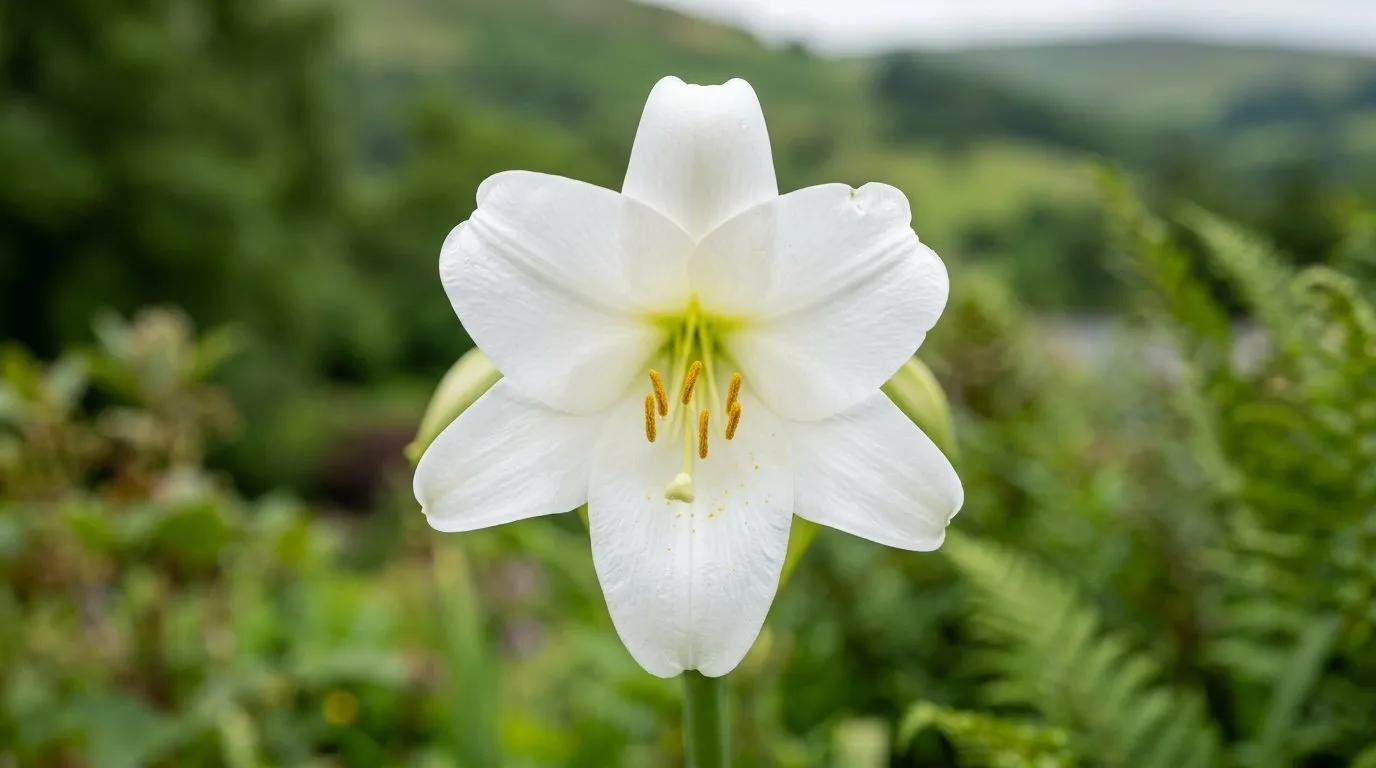 The white ‘Album’ form is the only outdoor white crinum for UK borders.
Why crinum refuses to flower: the real cause
Most crinum failures are not about feeding. The root cause is disturbance. Crinum forms thick fleshy roots that resent being moved, lifted or divided. Every time you dig around it, the bulb diverts energy into rebuilding roots instead of forming flower buds.
A newly planted bulb takes three to five years to settle. During that window it may produce only leaves. This is normal, not failure. The temptation to dig it up “to check” or move it to a better spot is exactly what keeps it leaf-bound.
Shade is the second cause. Crinum needs full sun to ripen its bulb and trigger flowering. A spot that loses afternoon sun behind a fence will give you straps of leaf and nothing else. The fix for both causes is patience and position: plant it once, in full sun, and leave it for years. Like agapanthus, crinum flowers best when its roots are crowded and undisturbed.
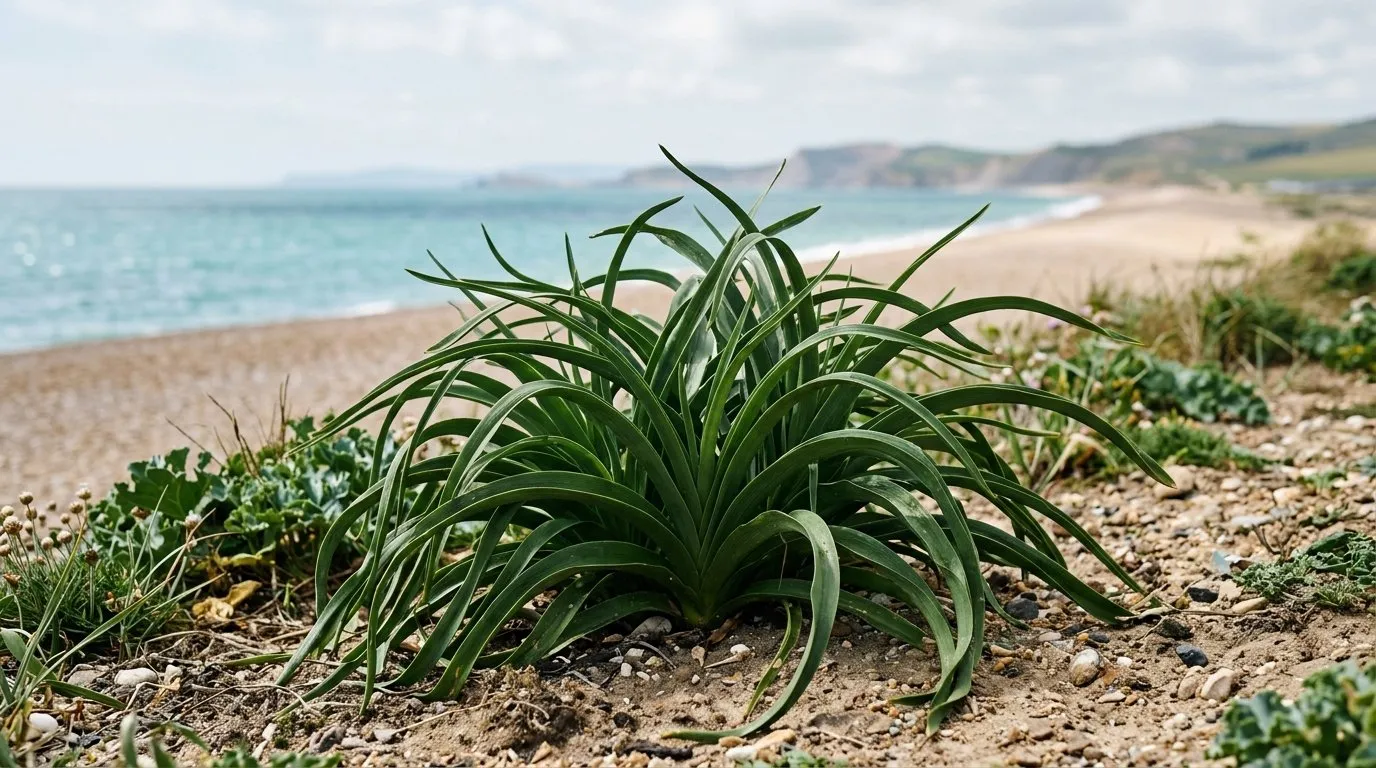 An undisturbed clump in a sandy Dorset border, left in place for years to flower well.
Common mistakes that stop crinum thriving
Three errors account for most disappointing crinums.
Planting too deep. Gardeners treat the bulb like a daffodil and bury the neck. This happens because the bulb is so large it feels wrong to leave it proud. Avoid it by setting the neck 5cm above soil and resisting the urge to cover it.
Dividing too soon. People split clumps to spread them, as you might with other bulbs. Crinum punishes this with years of sulking. Avoid it by leaving the clump for at least five years; only divide if it is clearly congested and pushing out of the ground.
 Handle bulbs gently and only when necessary; crinum dislikes root disturbance.
Gardener’s tip: Mark the planting spot with a short cane. The bulb sits dormant and invisible through winter and early spring, and it is easy to slice into the neck with a fork while weeding. A cane saves the bulb and your nerves.
Warning: All parts of crinum are toxic and the sap can irritate skin. Wear gloves when lifting or dividing large bulbs, and keep dug bulbs away from children and pets.
Designing with crinum in a hot, dry border
Crinum earns its space as a late-season anchor. The strappy foliage holds structure all summer, then the trumpets arrive when the border needs a lift in August. Plant it with grasses and silver-leaved shrubs that share its love of sun and sharp drainage.
It sits well in a Mediterranean planting scheme, where the gravel mulch and reflected heat suit it perfectly. Pair it with the same baking conditions you would give other sun-lovers in a south-facing border.
Give each bulb room. A mature clump spreads to 60cm and resents competition at the neck. Underplant with low, shallow-rooted plants like thyme rather than anything that needs digging up. When you lift other bulbs to store them, as in our guide to storing flower bulbs, leave the crinum exactly where it is.
Frequently asked questions
Is Crinum x powellii hardy in the UK?
Yes, it survives to about -10C in free-draining soil. Crinum x powellii is the hardiest crinum and the one to grow outdoors. It needs a hot, sheltered spot such as a south-facing wall base. In cold or wet inland gardens, mulch the crown deeply for the first two winters.
How deep do you plant crinum bulbs?
Set the bulb so its neck and top shoulder sit 5cm above soil. The giant bulb stays mostly buried but the long neck must show. Burying it fully causes rot and delays flowering. Dig the hole 40cm deep and fill the base with grit for drainage.
Why won’t my crinum flower?
Usually it is too young, too disturbed, or too shaded. Crinum dislikes root disturbance and takes three to five years to settle and flower well. Leave the clump alone, give it full sun, and feed with sulphate of potash in spring. Moving or dividing resets the clock.
When do crinum lilies flower in the UK?
They flower from August to September. The fragrant pink or white trumpets open on stout stems 60 to 90cm tall. Flowering comes late in the season, after most summer bulbs have faded. A warm wall position can bring the first flush a couple of weeks earlier.
Can you grow crinum in pots?
Yes, and pots suit the tender species best. Grow Crinum moorei or Crinum asiaticum in a 35cm pot of free-draining compost. Overwinter the pot frost-free above 5C in a greenhouse or porch. Crinum x powellii also grows in large containers but flowers more reliably in open ground.
Are crinum lilies poisonous?
Yes, all parts are toxic if eaten. The bulbs and sap contain alkaloids that can cause stomach upset in people and pets. Wear gloves when handling large bulbs, as the sap can irritate skin. Keep dug bulbs away from children and dogs.
How do you overwinter a tender crinum?
Keep the pot dry and frost-free above 5C from October. Reduce watering as growth slows in autumn. Move the container into a frost-free greenhouse, conservatory or cool porch. Water lightly once a month so the bulb does not shrivel, then resume normal care in April.
Now you’ve got the hardy giant settled at a warm wall, read our guide on How to Grow Amaryllis for the indoor relative that brings the same dramatic trumpets to a winter windowsill.
Our team produces practical UK gardening guidance from source research, contributor records and established horticultural practice. Editorial standards are overseen by Matt W.