Key takeaways
- Flower spikes reach 1.2m to 3m tall depending on variety, flowering June to July
- Plant the fleshy crown 5-8cm deep on a 10cm bed of sharp sand and grit in full sun
- Hardy to minus 20C when dry, but the crown rots in wet winter soil on heavy clay
- Stake every spike with a 1.5-2m cane before it reaches 60cm tall to beat UK wind
- Space crowns 45-60cm apart; the giant species needs 90cm as spikes hit 3m
- Lift and divide congested crowns every 5-6 years in late summer when leaves yellow
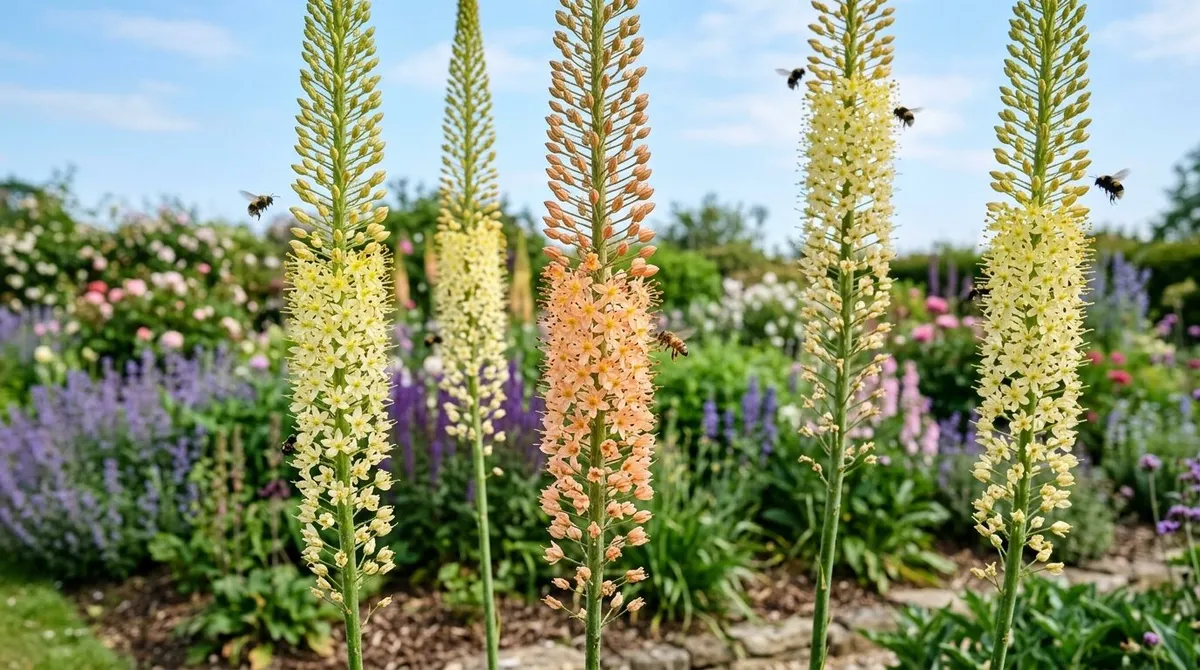
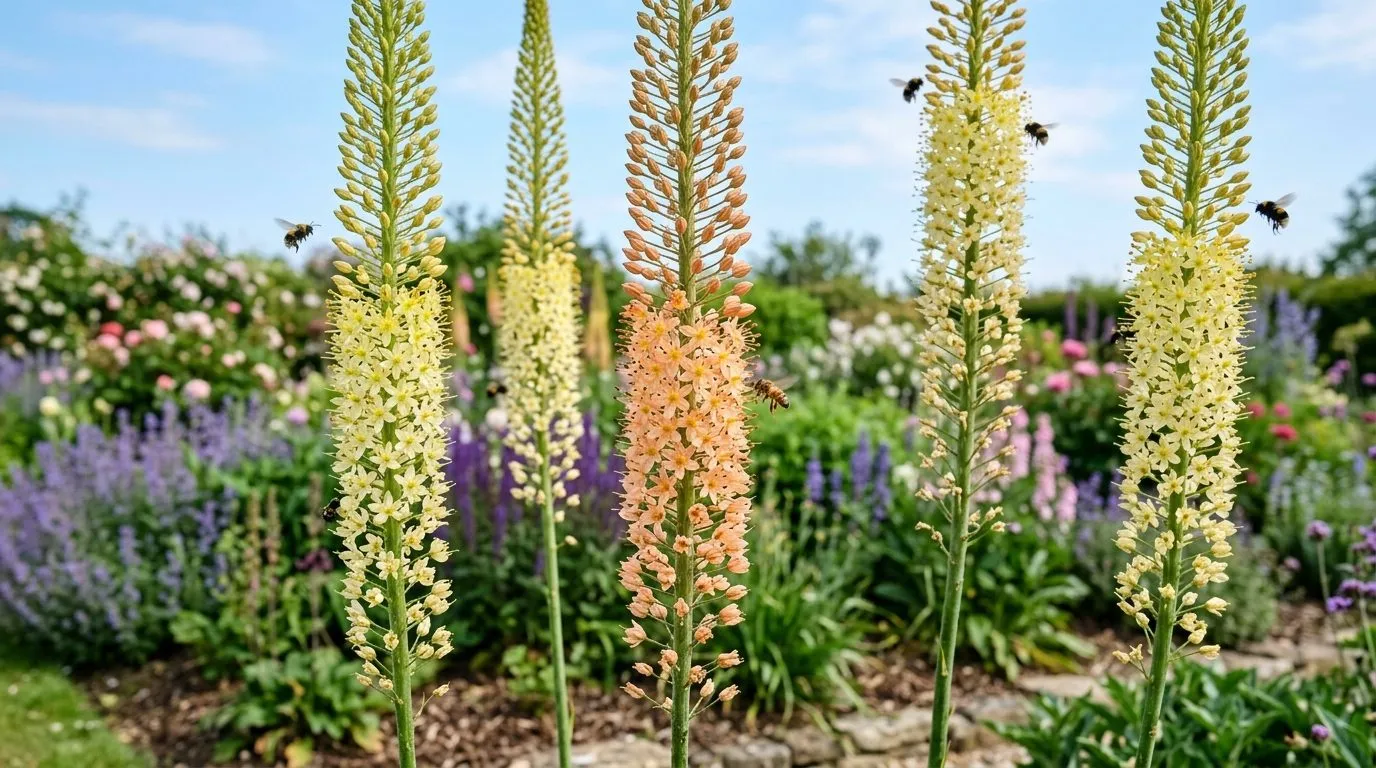
Eremurus, the foxtail lily or desert candle, sends up spectacular flower spikes from 1.2m to 3m tall in June and July. Each spike carries hundreds of small star-shaped flowers. Two things decide success in UK gardens: sharp drainage and staking. Get those right and a single crown lasts decades.
Native to the dry steppes and semi-deserts of central Asia, Eremurus expects baking summers and dry winters. UK gardens give it the opposite: wet, cold winters on heavy soil. The fleshy, starfish-shaped crown rots in waterlogged ground. This guide covers every step, from choosing varieties to overwintering crowns on clay, based on growing them on West Midlands clay for three decades.
Choosing the right Eremurus variety
Match the variety to your space, because heights range from 90cm to a towering 3m. A small border swamped by the giant species looks wrong, while a tiny E. stenophyllus lost at the back of a big bed disappears. Colour runs from white through yellow, copper, peach, and burnt orange.
The big species need room and serious staking. The Ruiter hybrids, bred in the Netherlands, give the widest colour range on more manageable stems. These plants share the same starting point as other bulbs, corms, tubers and rhizomes, though the Eremurus crown is technically a fleshy rootstock rather than a true bulb.
| Variety | Height | Flower colour | Flowering month | Notes |
|---|---|---|---|---|
| Giant species (E. r.) | 2.5-3m | Soft pink | June | The tallest type; needs 90cm spacing and heavy staking |
| E. stenophyllus | 90cm-1m | Bright golden yellow | June-July | The toughest and shortest; best for smaller gardens and pots |
| E. ‘Cleopatra’ | 1.2-1.5m | Burnt copper-orange | June | Ruiter hybrid; dark stems, strong colour, reliable |
| E. ‘Pinokkio’ | 1.2-1.5m | Lemon-yellow | June-July | Ruiter hybrid; free-flowering and good value |
| E. ‘Romance’ | 1.5m | Salmon-pink | June | Soft warm tone, blends well with grasses |
| E. himalaicus | 1.5-2m | Pure white | May-June | Earliest to flower; copes with slightly heavier soil |
If you only grow one, choose E. stenophyllus. Its shorter, sturdier spike copes far better with British wind than the giants, and the golden colour carries across a border.
Why sharp drainage decides everything
On UK clay, drainage is the single factor that keeps an Eremurus alive. The crown is a brittle starfish of fleshy roots radiating from a central growing point. Those roots store water and sugars. In wet winter soil they soften and rot, and once rot reaches the centre the plant is finished.
Eremurus comes from places where winter rain drains away in hours. Heavy UK clay holds water for weeks. The fix is mechanical: lift the crown above the wet zone and surround it with material that water runs straight through. If your soil is a problem, read our soil drainage and structure guide first, then tackle the specific job of improving drainage in clay soil before planting anything.

How to plant the crown on a sand bed
Plant Eremurus crowns in September or October so the roots settle before winter. Spring planting works for pot-grown crowns but bare crowns establish best in early autumn. Choose the sunniest, most sheltered spot you have.
Dig a wide, shallow hole about 30cm across and 20cm deep. Tip in 10cm of sharp sand mixed half-and-half with horticultural grit, then shape it into a low mound. Sit the crown on top with the central growing point uppermost. Spread the brittle roots out flat and downward over the mound like a starfish, never bunched.
Cover the crown so the growing point sits 5-8cm below the finished soil level. Backfill with soil mixed with more grit. Firm gently and water once to settle, then leave it dry. Space single crowns 45-60cm apart, or 90cm for the giant species. Mark each one with a labelled cane immediately, because the roots are invisible and easily speared in spring.
Position, sun, and shelter
Eremurus needs full sun and shelter from wind, a combination that takes planning. It wants at least six hours of direct sun to ripen the crown and trigger flowering. Shade gives weak, leaning spikes that never colour up properly.
The catch is wind. A south-facing site against a wall or hedge gives sun plus shelter. Avoid open, exposed corners and wind funnels between buildings. A sunny Mediterranean-style planting suits it perfectly, surrounded by gravel that radiates heat and drains fast. Eremurus also earns its place among other drought-tolerant plants, needing no summer watering once the spike has finished.

Staking foxtail lily spikes against wind
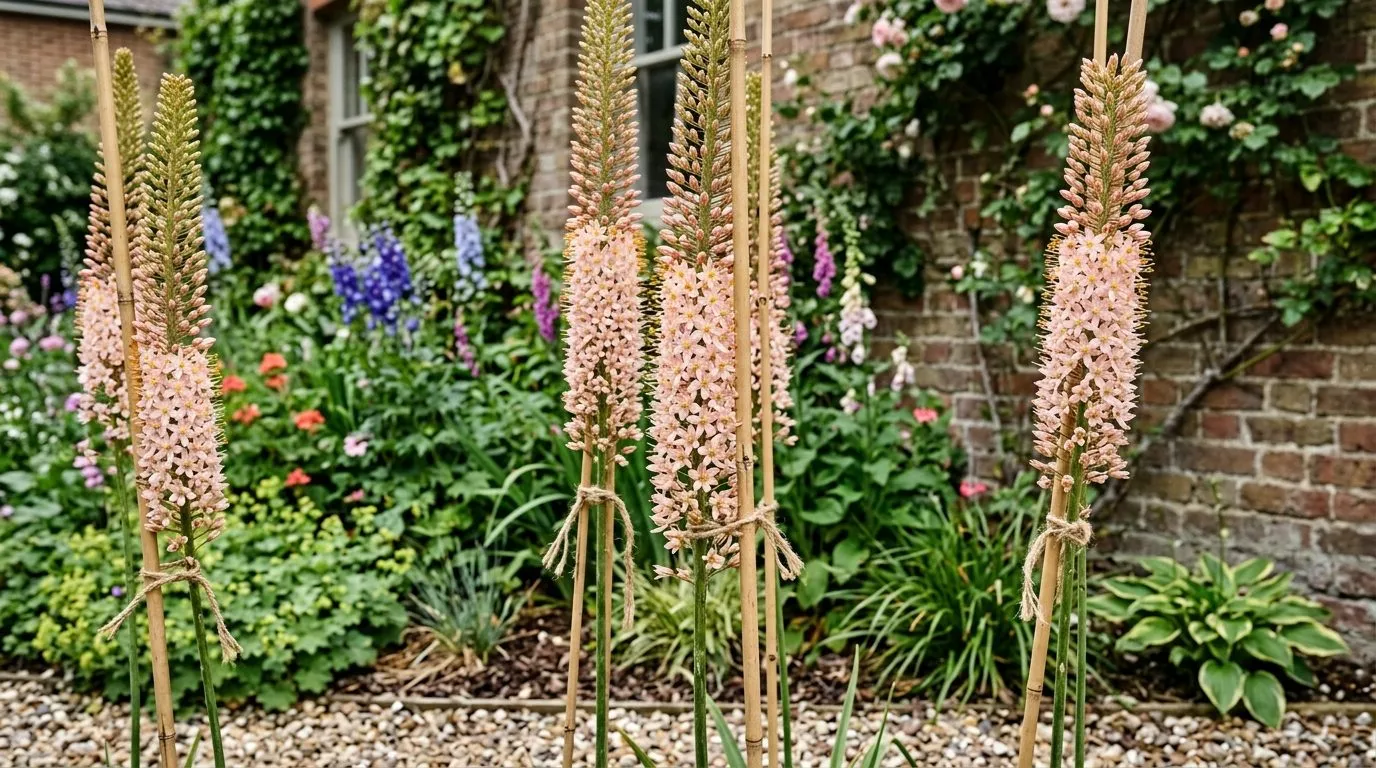
Stake every spike before it reaches 60cm, because the hollow stem snaps once the heavy flower head forms. This is the second make-or-break job. A 2m spike acts like a sail. One summer gust can fold it at the base, and a snapped stem never recovers that year.
Push a 1.5m to 2m bamboo cane into the ground 10cm from the crown, angled slightly away so you miss the roots. Tie the stem to the cane with soft jute or garden twine at 30cm intervals as it grows. Keep ties loose enough to slide a finger under. For the giant species, use a stout 8mm cane or a steel rod, as bamboo bends under a 3m spike.
Tie early and tie often. The temptation is to wait until the spike is tall and obvious, but by then the stem is already brittle and the flower head is forming. Discreet canes pushed in during May disappear once the foliage fills out.
Feeding for strong spikes
Feed Eremurus with a high-potash feed in spring to build flowering reserves. The crown spends a full year storing energy for one short flowering burst, so the feed it gets after flowering matters as much as the spring boost.
Apply a balanced general fertiliser as the leaves emerge in March, then switch to a high-potash feed such as a tomato feed every two weeks from April until the spike opens. Avoid heavy nitrogen feeds, which push soft leaf growth that flops and rots. A spring mulch of garden compost helps, but keep it clear of the crown itself to avoid trapping moisture against it.
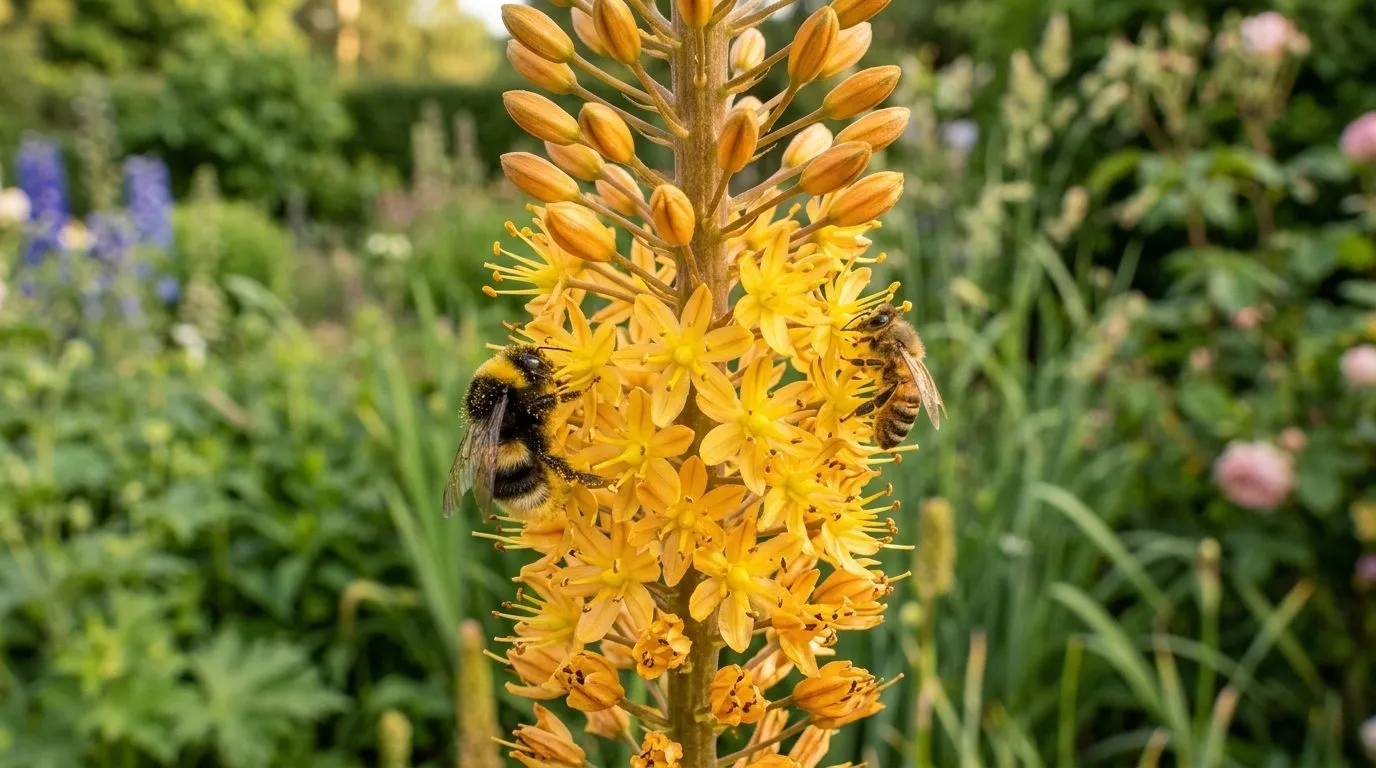
A well-fed crown produces a longer, fuller spike, and the densely packed florets open from the base upward over two to three weeks. Each one is a magnet for bees and hoverflies, which makes Eremurus one of the best tall plants for pollinators in a sunny border.
Eremurus through the year
A foxtail lily follows a strict annual rhythm, so timing each task to the right month keeps the crown healthy. The leaves appear early, flower in midsummer, then die back completely by late summer. The plant is fully dormant and bare from August onward, which is normal and not a sign of failure.
| Month | Task |
|---|---|
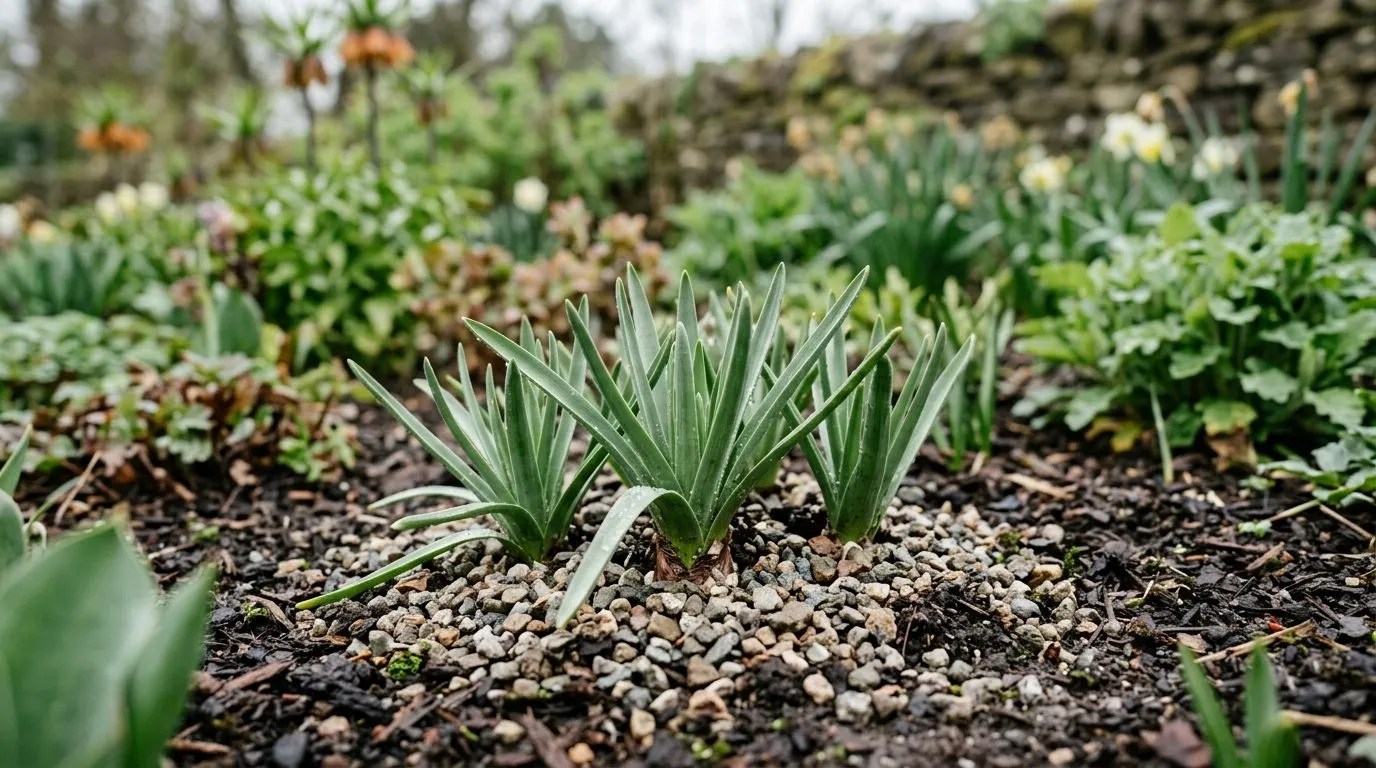
| March | Leaves emerge. Apply balanced feed. Top-dress grit around the crown to deter slugs |
| April | Begin fortnightly high-potash feed. Push staking canes in beside each crown |
| May | Tie spikes to canes as they extend. Watch for late frost on early shoots |
| June | Main flowering for most varieties. Tie regularly. Enjoy the show |
| July | Late varieties flower. Deadhead spent spikes unless saving seed |
| August | Foliage yellows and dies back. Lift and divide congested crowns now |
| September | Plant new bare crowns on sand beds. Reduce any watering to nothing |
| October | Plant remaining crowns. Cover crowns on heavy clay before winter rain |
| November-February | Keep crowns dry. A cloche or dry mulch beats winter wet on clay |
Dividing and propagating Eremurus
Lift and divide congested clumps every 5-6 years in late summer as the leaves yellow. A crowded crown flowers less and the spikes thin out. Division is the reliable way to make more plants, since the alternative is growing from seed, which takes 4-6 years to reach flowering size.
Lift the whole crown with a fork, digging from a wide radius to avoid spearing the roots. Separate the natural offsets by hand where they pull apart cleanly. Each piece needs a central growing point and a fan of roots. Replant immediately on fresh sand beds and expect divided crowns to skip flowering for one season while they re-establish.
For seed, sow fresh in autumn in a gritty mix and leave the pots outside, as the seed needs a cold winter to germinate. It is a slow route, but the only way to bulk up the giant species cheaply.
Growing Eremurus in containers
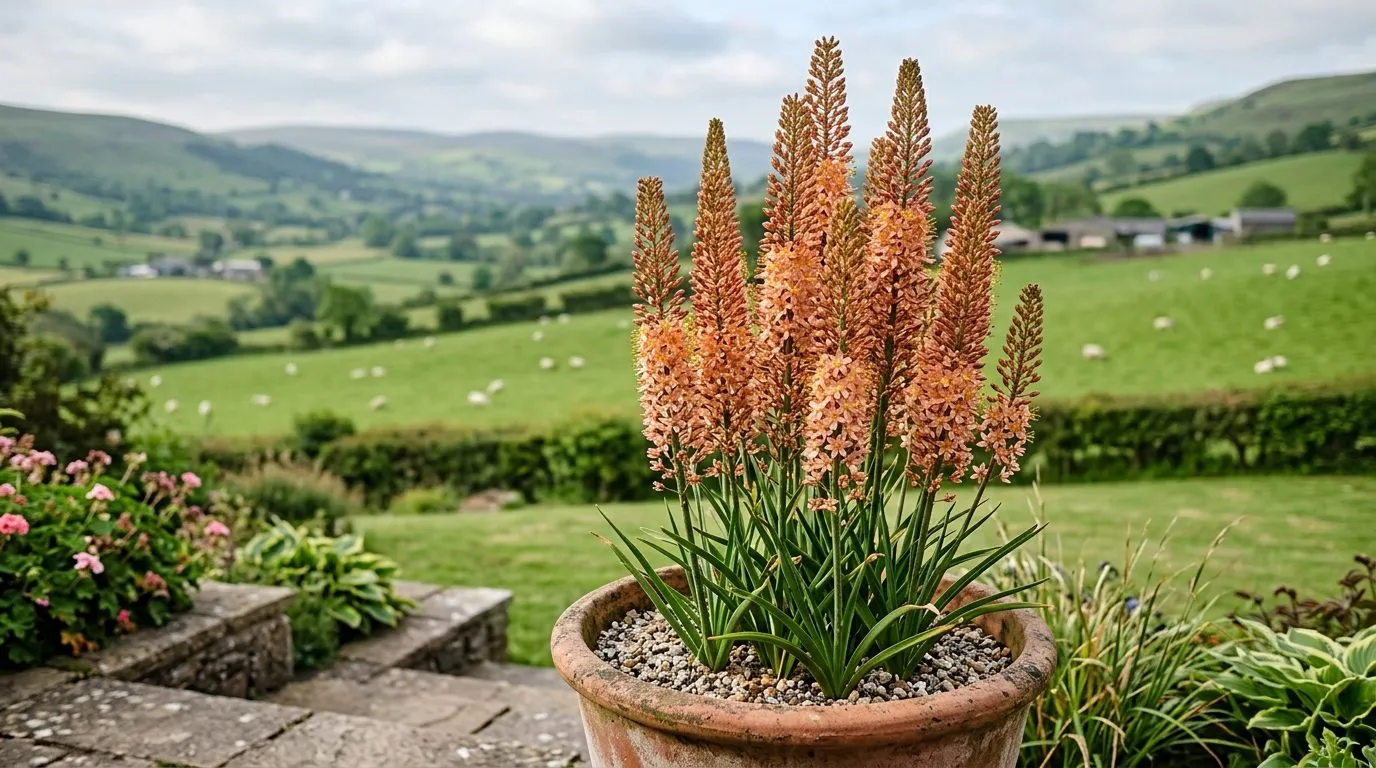
Container growing suits gardeners on cold, wet clay because you control the drainage completely. A pot lets you keep the crown bone-dry over winter, which is the hardest thing to achieve in open ground.
Choose a deep pot at least 40cm wide to fit the spreading roots, with large drainage holes. Fill with John Innes No 3 mixed with 30 percent horticultural grit. Plant the crown on a grit layer, growing point 5cm below the surface. Pick a shorter variety such as E. stenophyllus or a compact Ruiter hybrid; the giants are too top-heavy for pots. Move the pot to an unheated greenhouse or a dry, sheltered wall for winter to keep rain off the dormant crown.
Common mistakes when growing Eremurus
Planting too deep
The most common error is burying the crown too deep. Set the growing point more than 10cm down and it sulks, rots, or simply never flowers. The roots spread out flat just below the surface, so dig wide and shallow, not deep.
Leaving the crown in wet soil
Planting straight into unimproved clay is the second killer. Wet, not cold, is what kills Eremurus in UK winters. Without a sand bed and a raised position the crown sits in standing water all winter and rots from the centre out.
Skipping the stake
Gardeners admire the emerging spike, then lose it to one windy afternoon. A 2m hollow stem topped with a heavy flower head needs support before it is tall enough to look like it needs any. Stake at 60cm, not at 2m.
Forgetting where the crown is
The crown vanishes underground from August. Fork it by accident in spring and the brittle roots shatter. A labelled cane left in place year-round saves the plant.
Letting slugs reach the spring shoots
The fat emerging shoots are a magnet for slugs in March and April. A ring of sharp grit around each crown deters them, and it doubles as drainage. Catch them early, before they rasp the growing tip.
Overwintering crowns on heavy clay
On heavy clay, keeping the crown dry through winter matters more than keeping it warm. Eremurus shrugs off minus 20C when dry, so frost is rarely the problem in the UK. Standing water is.
Cover each dormant crown from October with a cloche, a propped pane of glass, or a deep, loose mulch of grit and dry bracken that sheds rain without trapping damp against the crown. Lift the cover in March as the shoots push through. If your soil stays wet all winter despite a sand bed, the surest fix is to grow in pots or build a raised, gravel-filled bed where water never sits. The same dry-winter logic applies whether you are growing foxtail lilies or planting spring bulbs that hate sitting wet.
For deeper background on hardiness ratings and dry-winter plants, the RHS guide to Eremurus is a useful reference alongside this one. Foxtail lilies pair beautifully with alliums, whose round seed heads carry the display on once the spikes fade.
Frequently asked questions
Why is my Eremurus not flowering?
Most non-flowering Eremurus are planted too deep or in too much shade. The crown needs full sun and shallow planting, 5-8cm deep at most. Young plants from seed take 4-6 years to flower. Crowns disturbed or moved often skip a year. Feed with a high-potash feed in spring to build flowering reserves.
Will Eremurus survive winter in the UK?
Yes, Eremurus is hardy to minus 20C when the crown stays dry. Wet, not cold, kills it in UK winters. On heavy clay the fleshy crown rots in waterlogged soil. Plant on a sharp sand bed and cover the crown with a cloche or dry mulch through the wettest months to keep it alive.
How deep do you plant Eremurus crowns?
Plant the crown 5-8cm below the soil surface. Set the central growing point shallow and spread the brittle starfish roots out flat over a mound of sharp sand. Planting deeper than 10cm encourages rot and delays flowering. The roots radiate outward, not down, so dig a wide, shallow hole.
What is the difference between Eremurus and foxtail lily?
They are the same plant; foxtail lily is the common name for Eremurus. It is also called desert candle. The name describes the tall, tapering flower spike packed with hundreds of small star-shaped flowers. Despite the name it is not a true lily and belongs to the asphodel family.
How do you stake a foxtail lily?
Push a 1.5-2m bamboo cane in beside the crown before the spike reaches 60cm. Tie the stem loosely with soft jute at 30cm intervals as it grows. Stake early, because the hollow flower stem snaps in wind once the heavy flower head forms. Place plants in a sheltered spot to reduce strain.
Can you grow Eremurus in pots?
Yes, but use a deep pot at least 40cm wide to fit the spreading roots. Fill with a gritty, free-draining mix of John Innes No 3 and 30 percent horticultural grit. Choose shorter varieties like E. stenophyllus. Keep the pot dry over winter, ideally in an unheated greenhouse or against a sheltered wall.
When do you divide Eremurus?
Divide congested crowns in late summer, around August or September, as the foliage yellows. Lift the whole crown carefully with a fork from a wide radius. Separate the natural offsets by hand, keeping roots intact. Replant immediately on fresh sand beds. Expect divided crowns to skip flowering for one season.
Our team produces practical UK gardening guidance from source research, contributor records and established horticultural practice. Editorial standards are overseen by Matt W.