Key takeaways
- Gravel is the cheapest hard surface at £25-£45/m² laid, and it drains freely without breaching SuDS rules
- Porcelain pavers cost most up front (£70-£120/m²) but last 50+ years and never need sealing
- Resin-bound gravel gives a smooth, permeable, weed-free finish for £60-£90/m² but needs a solid base
- Block paving flexes with ground movement, so it outlasts rigid slabs on clay soils that heave
- Any impermeable surface over 5m² draining to the road may need planning permission under UK SuDS rules
- Mixing two surfaces, such as gravel with porcelain stepping pads, cuts cost and adds drainage
Most people reach for paving slabs by default, then balk at the price, the heaving on clay soil, or the new drainage rules. There are better options for plenty of UK gardens. The right alternative depends on three things: your budget per square metre, how freely the surface needs to drain, and how much foot traffic it carries.
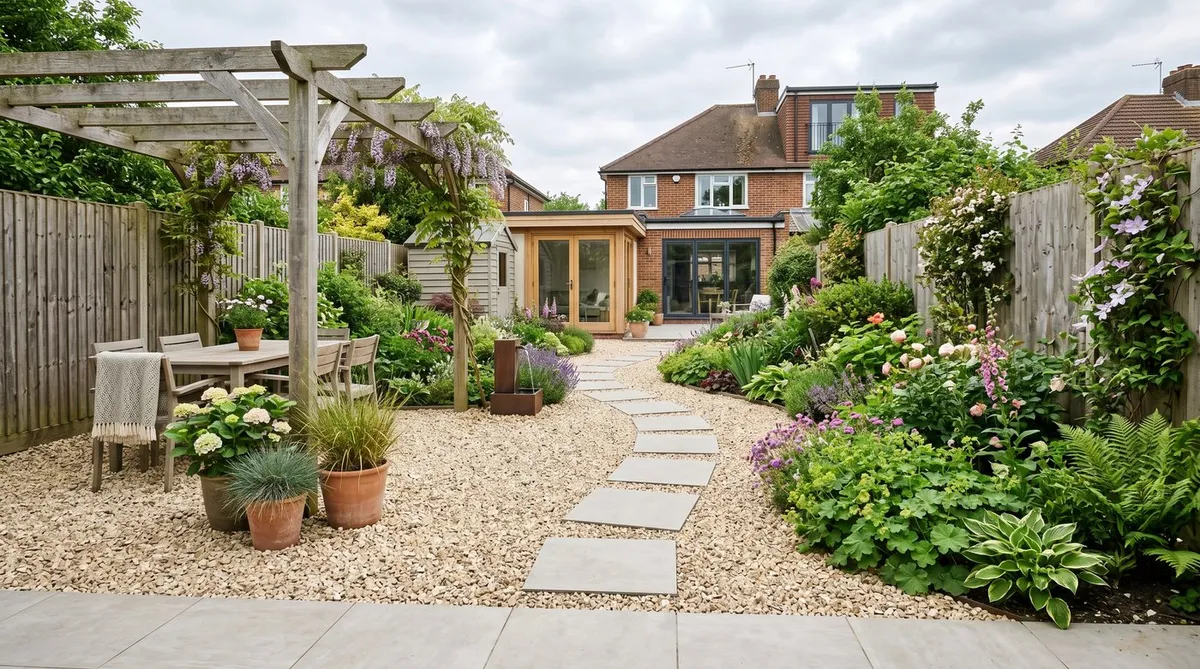
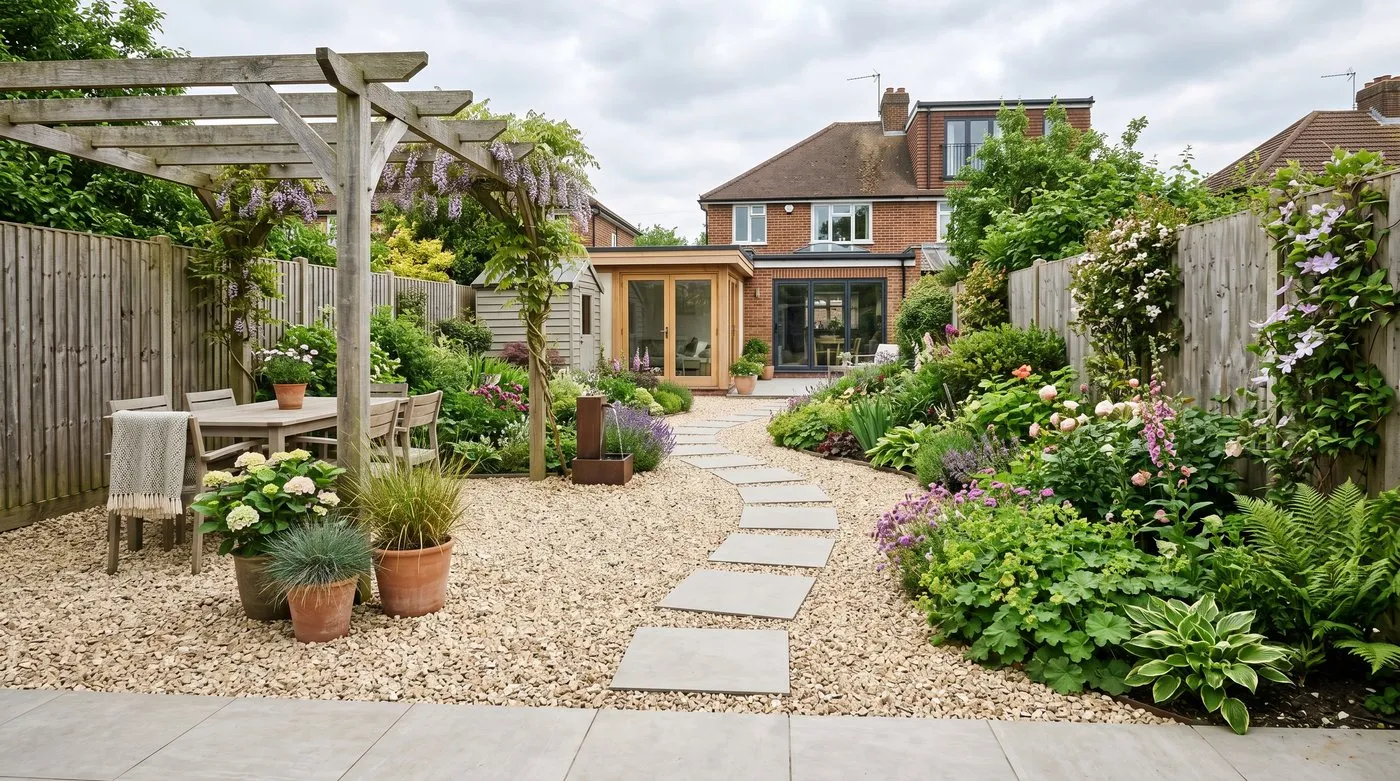 A gravel-and-porcelain garden: cheaper and better-draining than a full slab patio. The right alternative depends on budget, drainage, and traffic.
Why look beyond paving slabs at all
Traditional concrete slabs are not bad. They are just rarely the best answer. Three things push UK gardeners toward alternatives.
The first is drainage law. Since 2008, laying more than five square metres of impermeable surface in a front garden that drains onto the road needs planning permission. Permeable surfaces sidestep this entirely. The second is ground movement. Rigid slabs crack when shrinkable clay soils swell and shrink through wet and dry spells, which is most of central and southern England. The third is simply cost and looks: a sea of grey slabs is the most common surface and the least interesting.
Every alternative below answers at least one of those problems. Several answer all three.
The six best paving slab alternatives compared
The pattern is clear once you see it laid out. Gravel wins on cost and drainage. Porcelain wins on lifespan and maintenance. Block paving wins on slopes and movement. Reclaimed materials win on character. There is no single best surface, only the best surface for your garden’s budget, drainage, and use.
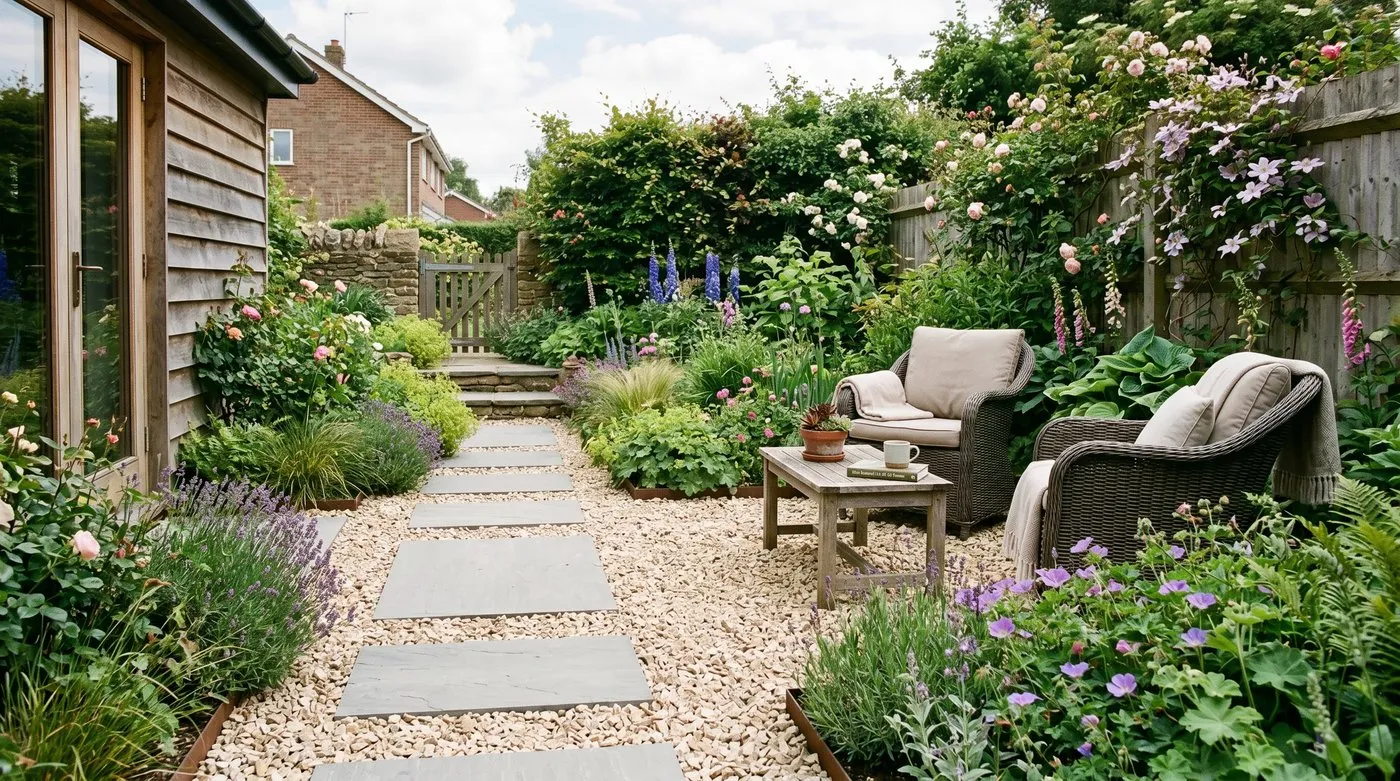 A gravel-and-porcelain mix: the gravel drains freely and keeps cost down, while the porcelain pads carry the foot traffic. This combination beats a full slab patio on both price and drainage.
Gravel: the cheapest and most forgiving
The key word is angular. Rounded pea gravel rolls underfoot and migrates; angular self-binding gravel locks together and stays put. For the look and the lifespan, get the base right and edge it firmly. Without edging, gravel spreads into borders and thins out where you walk.
Resin-bound gravel: gravel without the loose stone
Resin-bound surfacing is gravel mixed with a clear resin and trowelled onto a solid base, setting into a smooth, permeable, jointless surface with no loose stone. It costs £60-£90 per square metre and lasts 15-25 years.
This is the surface to choose when you want gravel’s drainage and natural look without the maintenance. It is fully permeable, so it meets SuDS rules; it is weed-free; and it is firm enough for wheelchairs, buggies, and bins. The catch is the base. Resin-bound must go over sound concrete or compacted aggregate with a binding layer, and it is a job for an experienced installer, not a weekend. Lay it over a poor base and it cracks and lifts like anything else.
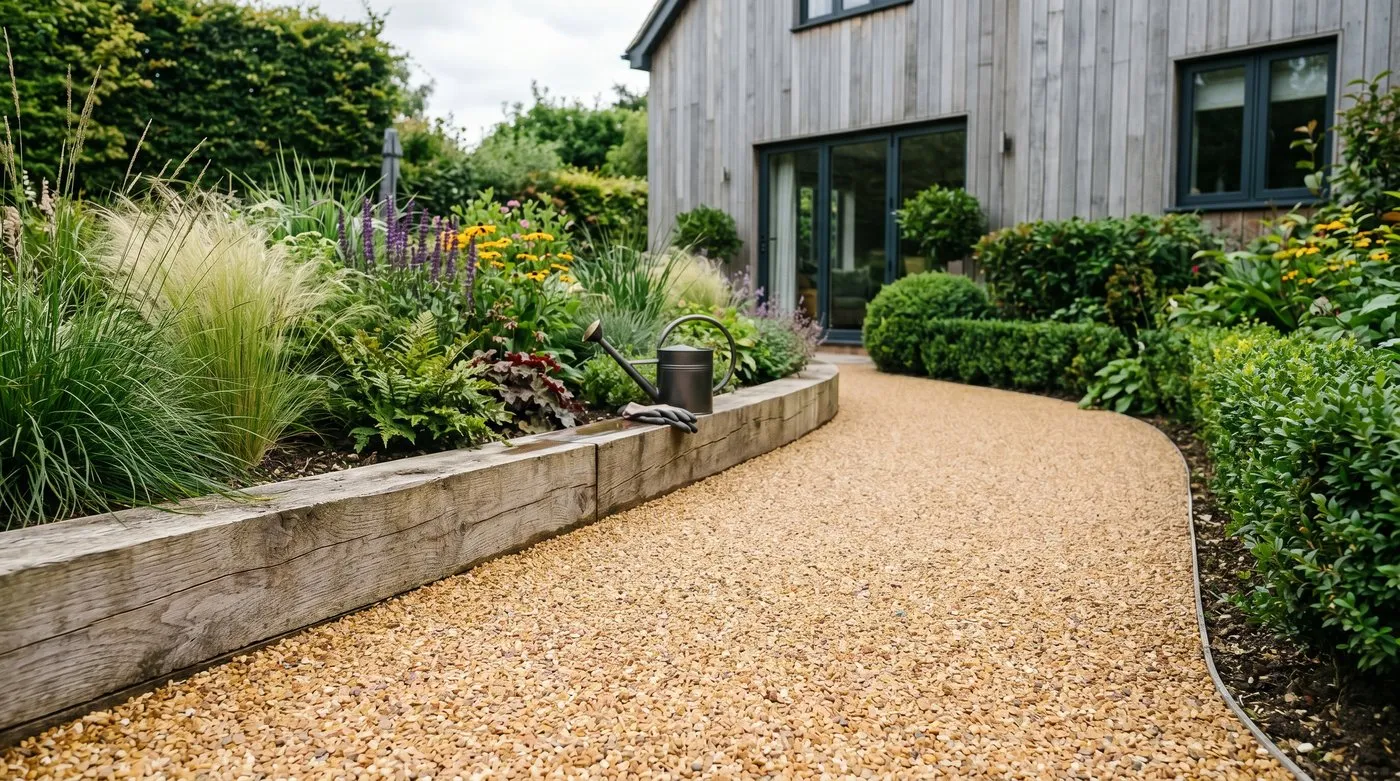 Resin-bound gravel sets into a jointless, fully permeable surface with no loose stone to scatter. It is firm enough for wheelchairs and bins, which loose gravel never is.
Porcelain pavers: the longest-lasting choice
If you want a surface you lay once and forget, porcelain pavers are it. Fired clay porcelain is dense, near-zero porosity, and almost impossible to stain or scratch. It costs the most to buy and lay, £70-£120 per square metre, but it lasts 50 years or more and never needs sealing.
Porcelain resists the algae and green film that make natural stone slippery, holds its colour in UK sun, and wipes clean. The trade-off beyond cost is that it is not permeable, so open joints, a permeable bedding layer, or a soakaway are needed to handle run-off and stay within drainage rules. It is also brittle to cut, needing a wet saw and a careful hand, which is why most people have it laid rather than tackling it themselves.
Block paving: the surface that flexes
Block paving, whether concrete blocks or clay pavers, is laid on a sand bed over a compacted base and locked in place by edge restraints. Because the units are small and independent, the surface flexes with ground movement instead of cracking like a rigid slab. That makes it the smart choice on the shrinkable clay soils that cover much of England, and on driveways.
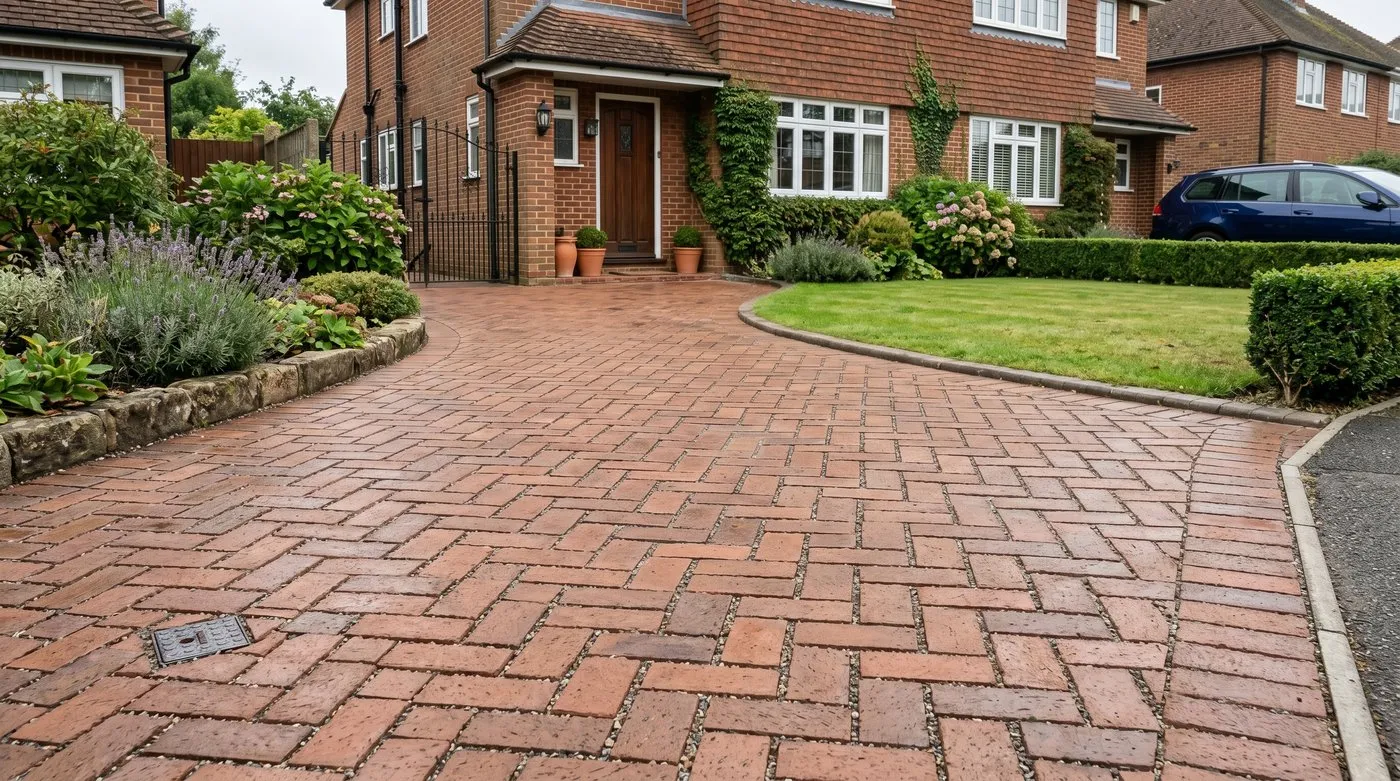 Permeable block paving: the wide, grit-filled joints let water drain straight through, so it meets SuDS rules and flexes with clay-soil movement instead of cracking.
Reclaimed brick and stone: character on a budget
Reclaimed materials, salvaged brick, old stone setts, or second-hand flagstones, give a surface with instant age and a low carbon footprint. Costs vary widely, £40-£90 per square metre depending on what you source, and a good reclaimed stone surface can last a century.
This is the route for character gardens and for anyone who values sustainability. Reclaimed brick laid on edge makes a beautiful, hard-wearing path; old York stone is the classic English terrace. The work is in the sourcing and the laying: units are irregular, so expect more cutting, more jointing, and slower progress. Reclamation yards, online marketplaces, and demolition sales are the places to look. It suits an eco-friendly garden design better than any factory product.
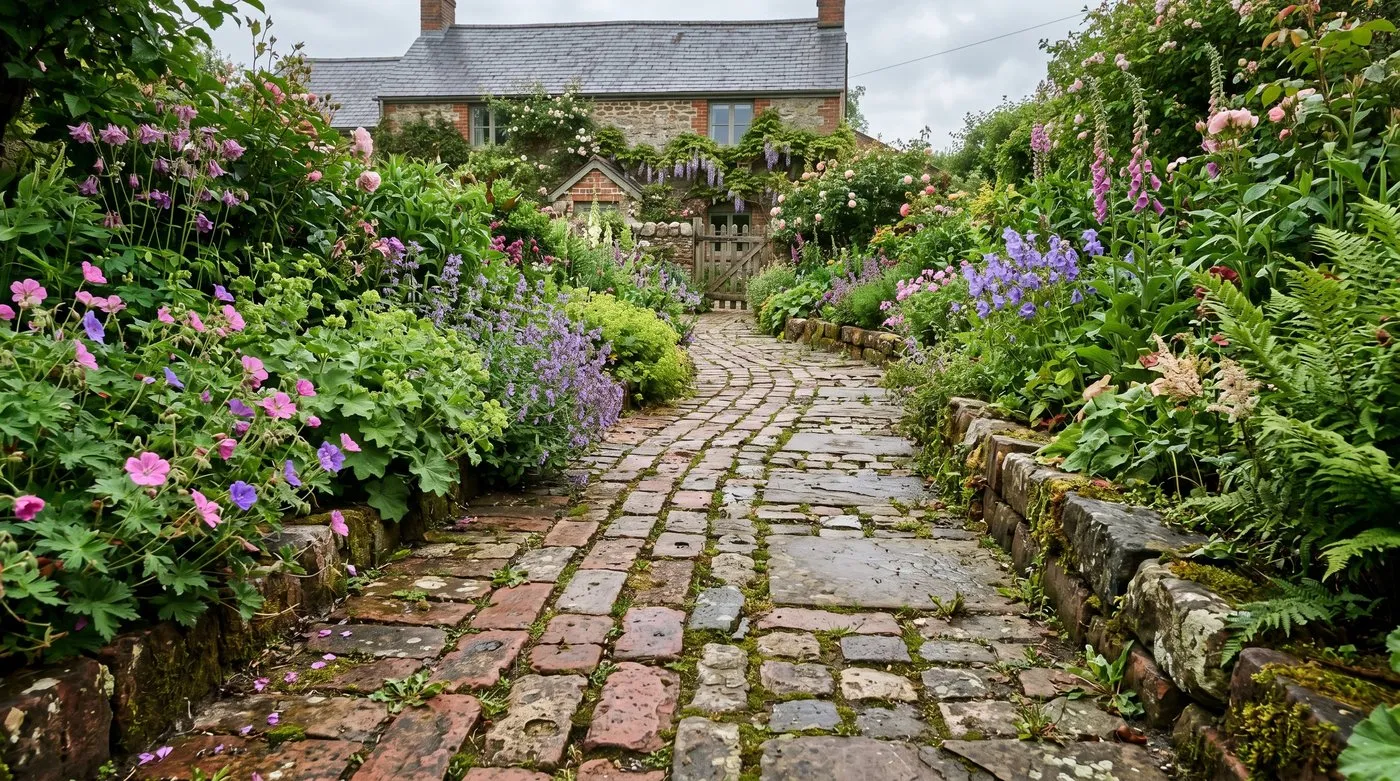 Reclaimed brick and stone give instant age and a low carbon footprint. Expect more cutting and slower laying, but a surface that can last a century.
Planted ground cover: the greenest surface
For low-traffic areas, the best alternative to paving may be not paving at all. Tough, low-growing ground-cover plants knit into a living surface that takes occasional footfall, drains perfectly, and feeds wildlife. Think creeping thyme, chamomile, or Soleirolia between stepping stones.
At £15-£35 per square metre in plug plants it is cheap, and it lasts indefinitely once established. It will not take a dining table and daily chairs, but for a path, a side return, or the gaps in a stepping-stone run it turns dead surface into something alive. Our guide to lawn alternatives and ground cover covers the best species for foot traffic.
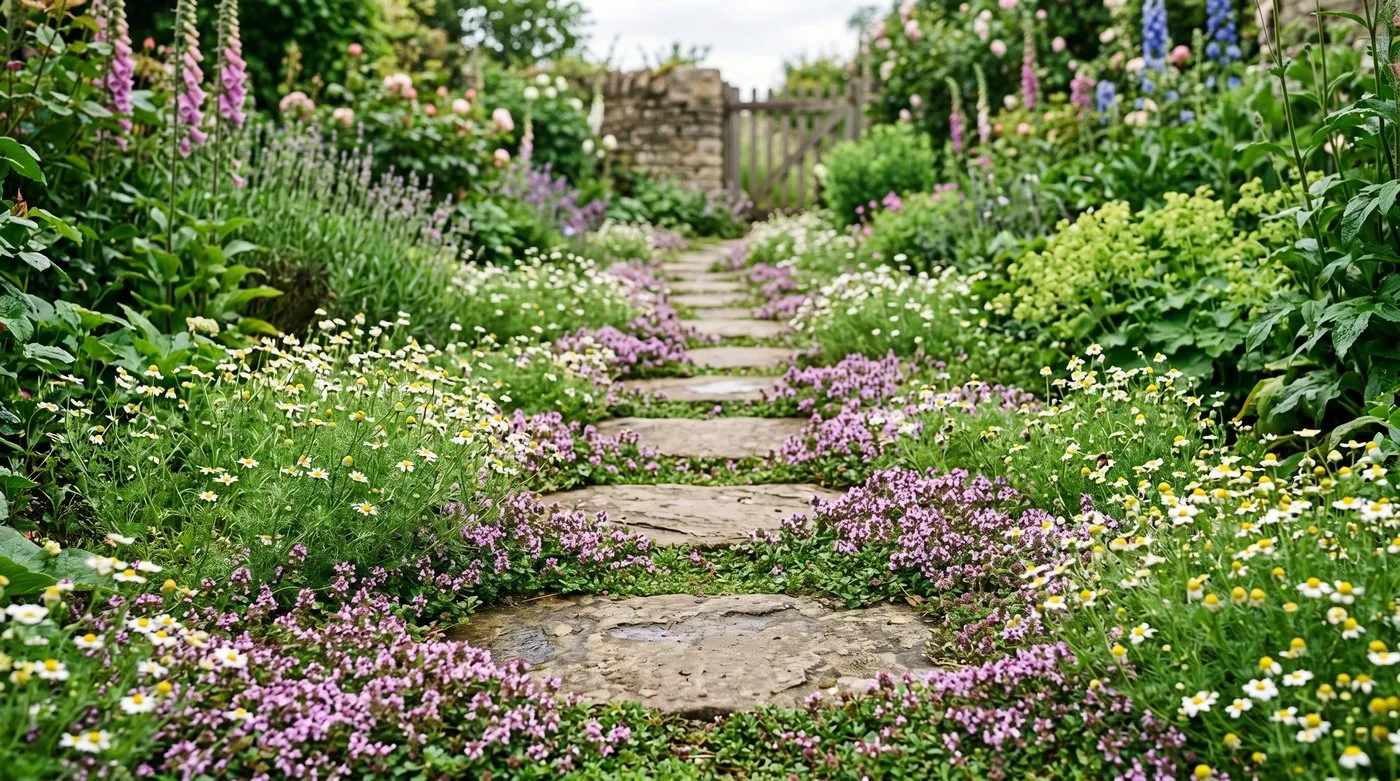 Low ground-cover plants between stepping stones turn dead surface into a living, free-draining one. It will not take a dining set, but for paths and side returns it beats any slab.
The decision that matters more than the surface
Get these three right and any surface above will last:
- Sub-base depth. 100mm of compacted MOT Type 1 for a patio, 150mm for anything taking vehicles. Compact it in layers with a plate compactor, not by treading it down.
- A fall for drainage. Lay a slope of about 1:80 (roughly 12mm per metre) away from the house so water runs off, never toward the building.
- Edge restraint. Gravel, blocks, and bound surfaces all need a firm edge, or they creep and spread over time.
Spend your money and care here. A cheap surface on a good base outlasts an expensive surface on a bad one, every time. The same principle runs through our guide to laying a patio properly.
Warning: Before surfacing a front garden, check the drainage rules. More than five square metres of impermeable surface draining to the road needs planning permission. Choose a permeable surface, or direct run-off to a border or soakaway on your own land, to stay within the law.
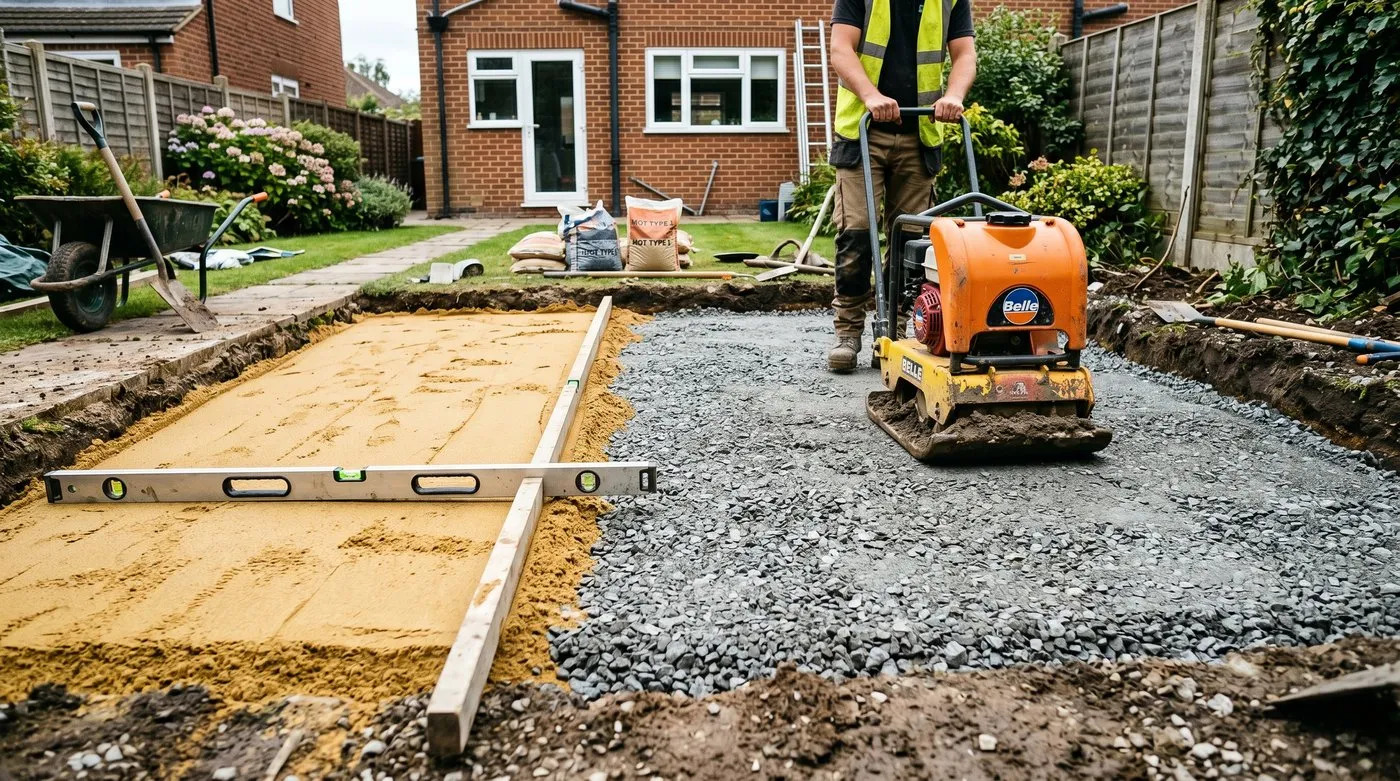 The part that decides everything: 100-150mm of compacted MOT Type 1 with a fall built in. A cheap surface on a good base outlasts the reverse.
Common mistakes when replacing paving slabs
Skimping on the sub-base
Laying any surface on soft ground or a thin scatter of hardcore guarantees sinking and cracking. The base is the surface’s foundation. Compact 100-150mm of Type 1 properly before you lay a single stone.
Forgetting the fall
A perfectly flat patio ponds water, grows algae, and floods toward the house in heavy rain. Build in a 1:80 fall away from buildings from the start. You cannot add it later.
Using rounded gravel for a patio
Pea gravel looks fine in the bag and rolls underfoot for years afterward. Use angular, self-binding gravel that locks together, and edge it firmly.
Laying impermeable surfaces without thinking about run-off
A new impermeable patio sends water somewhere. Plan where, into a border, a soakaway, or a permeable margin, or you create a flood risk and may breach SuDS rules. If drainage is already a problem, fix it first; our guide to improving drainage on clay soil is the place to start.
Choosing on looks alone
The prettiest surface in the showroom may be wrong for your traffic, slope, or soil. Match the surface to the use: porcelain or block for daily traffic, gravel or planting for relaxed low-traffic areas.
A realistic budget for a 20m² patio
To put the numbers together, here is what a typical 20-square-metre seating area costs in materials and labour at 2026 rates, including the all-important base.
| Surface | Materials | Labour | Total (20m²) |
|---|---|---|---|
| Loose gravel | £200-£350 | £300-£550 | £500-£900 |
| Resin-bound | £500-£800 | £700-£1,000 | £1,200-£1,800 |
| Porcelain pavers | £700-£1,400 | £700-£1,000 | £1,400-£2,400 |
| Block paving | £500-£900 | £700-£1,100 | £1,200-£2,000 |
A confident DIYer can lay gravel or simple block paving and cut the labour figure to near zero, which is where the biggest saving sits. Porcelain and resin are worth paying a professional for: the cutting and the base preparation reward experience, and mistakes are expensive to undo.
Related reading: soften hard paving with self-sown daisies using our guide to growing Erigeron in paving cracks.
Frequently asked questions
What is the cheapest alternative to paving slabs?
Loose gravel is the cheapest hard surface, at roughly £25-£45 per square metre laid over a compacted sub-base. Bark or wood chip is cheaper still for paths but breaks down within two to three years and is not a long-term patio surface. Gravel drains freely, suppresses weeds when laid over membrane, and is the simplest surface for a competent DIYer to install.
What can I use instead of paving slabs for a patio?
Porcelain pavers, resin-bound gravel, block paving, and clay pavers all make durable patios without traditional concrete slabs. Porcelain is the hardest-wearing, resin gives a smooth, jointless finish, and block paving flexes with ground movement. For a relaxed look, bound gravel or a gravel-and-stepping-stone mix works well and costs less.
Are paving slab alternatives cheaper than slabs?
Gravel is cheaper than slabs; porcelain and resin usually cost more. A budget concrete slab patio runs about £50-£70 per square metre laid. Gravel comes in below that, while porcelain (£70-£120) and resin (£60-£90) sit above. The real saving from gravel comes from lower labour, since it needs no precise jointing or cutting.
Do I need planning permission for a new patio?
Usually not for a patio, but front gardens are different. Under UK sustainable drainage (SuDS) rules, laying more than five square metres of impermeable surface in a front garden that drains to the road needs planning permission. Permeable surfaces such as gravel, resin-bound, or porous block paving are exempt, which is one reason they have become popular.
What is the most low-maintenance garden surface?
Porcelain pavers are the lowest maintenance. They do not need sealing, resist algae and stains, and a brush and occasional wash keep them looking new for decades. Resin-bound surfacing is close behind, with no loose stone to top up and few weeds. Loose gravel needs occasional raking and topping up, so it is slightly more hands-on.
Can I lay gravel or porcelain over an existing patio?
Sometimes. Porcelain pavers can be laid on a mortar bed over a sound, well-draining concrete base. Gravel can go over old slabs if drainage is adequate and edges are restrained, though the build-up raises the level. A cracked, heaving, or poorly draining base must be lifted first, or the new surface will fail the same way.
Which paving alternative is best for a sloping garden?
Block paving and porcelain on a bound base handle slopes best, because they stay put and can be laid in level terraces. Loose gravel migrates downhill on anything steeper than about a 1-in-20 gradient unless it is resin-bound or held by frequent edging. On slopes, terrace the ground first, then choose a fixed surface.
Once your surface is down, the next job is keeping it looking good. Read our guide to cleaning a patio without damaging it, and for tighter plots see patio ideas for small gardens. For authoritative drainage guidance, the Royal Horticultural Society’s advice on sustainable drainage is worth a read before you start.
Our team produces practical UK gardening guidance from source research, contributor records and established horticultural practice. Editorial standards are overseen by Matt W.