Key takeaways
- Leucocoryne is not hardy: it needs a frost-free minimum of 5C under glass in the UK
- Pot bulbs 5cm deep in autumn, 7 to 9 bulbs per 1 litre pot
- Use 50% John Innes No 2 plus 50% horticultural grit for sharp drainage
- Scented flowers open April to May on stems 25 to 45cm tall
- Keep the compost dry through a warm summer dormancy from June to August
What Leucocoryne is and where it comes from
Leucocoryne is a genus of about a dozen bulbous plants from central and northern Chile. It sits in the Amaryllidaceae, the onion and amaryllis family, and the foliage carries a faint onion scent when crushed. The common name glory of the sun reflects the way the flowers open wide in bright spring light.
In the wild these bulbs grow on free-draining coastal hills around the Atacama fringe and the Coquimbo region. They take winter rain, flower in the southern spring, then bake through a long dry summer. That cycle is the single most important thing to understand. Everything we do under glass mimics it.
The flowers are the draw. Each bulb throws up a slender stem 25 to 45cm tall carrying an open umbel of three to seven flowers. The blooms are flat and star-shaped, usually six-lobed, in shades of sky blue, lilac, violet and white. Most forms have a contrasting darker or paler eye. Several species and hybrids are sweetly scented, strongest on warm afternoons.
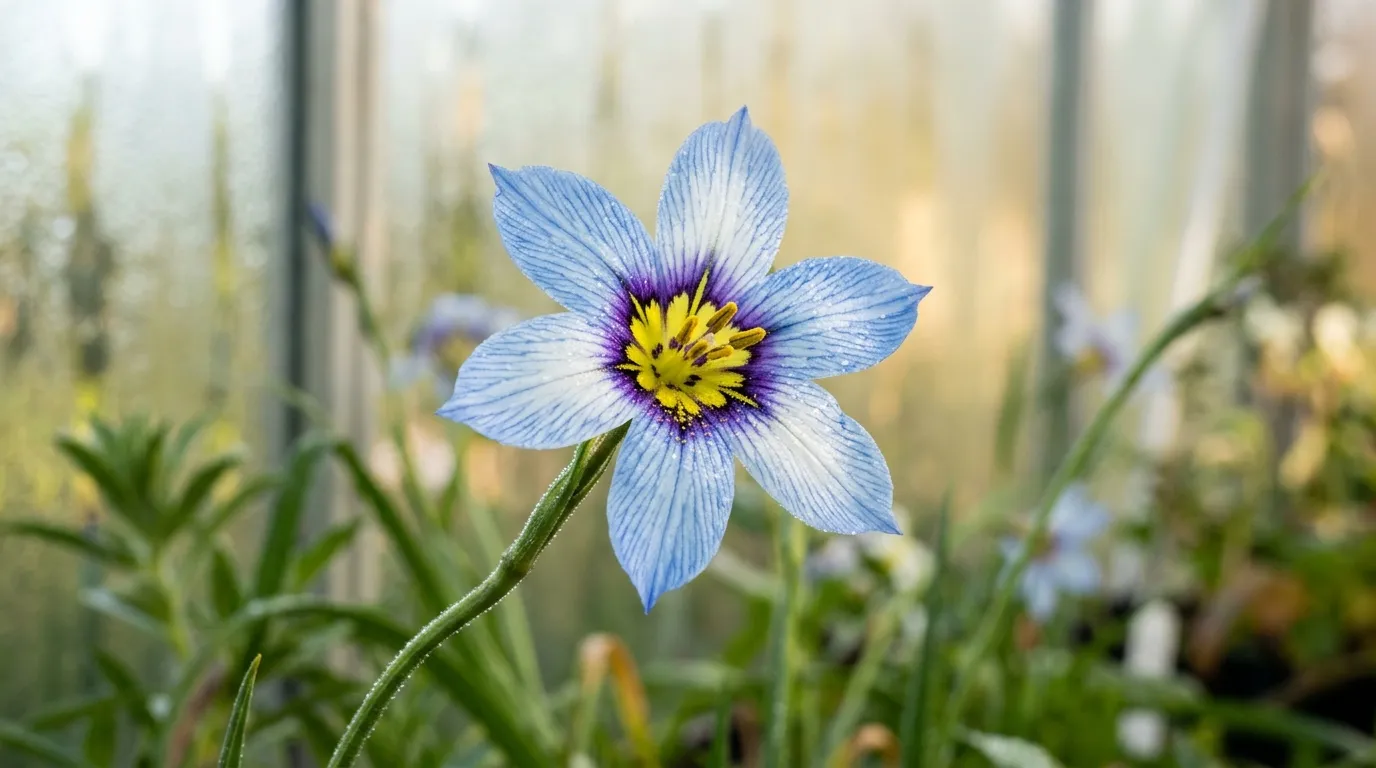 The six-lobed star shape and the contrasting central eye are the signatures of Leucocoryne. Most forms carry a sweet scent on warm afternoons.
The species and hybrids worth growing
Three species turn up most often in UK bulb catalogues, plus a run of named hybrids. They differ in colour, scent strength and vigour.
Leucocoryne ixioides is the classic sky-blue glory of the sun, scented, with a white throat and a green or yellow eye. It is the most widely sold species and the easiest first choice.
Leucocoryne coquimbensis carries larger flowers in deeper blue-violet with a striking white centre. It is a touch more tender and slightly slower to bulk up.
Leucocoryne purpurea brings the violet-purple end of the range, with a bold dark and white eye. Flowers can be a little smaller but the colour is the deepest of the three.
The named hybrids, including the ‘Caravelle’ strain and the Andes series, were bred for uniform colour, longer stems for cutting, and reliable scent. They are the best value for a first-time grower who wants a dependable display.
| Species or hybrid | Flower colour | Scent | Height | Vigour | UK availability |
|---|---|---|---|---|---|
| L. ixioides | Sky blue, white throat | Strong | 30-45cm | Good | Common |
| L. coquimbensis | Deep blue-violet | Moderate | 25-40cm | Moderate | Occasional |
| L. purpurea | Violet-purple, dark eye | Light | 25-35cm | Moderate | Occasional |
| ’Caravelle’ hybrids | Mixed blue, white, pink | Strong | 35-45cm | Strong | Common |
| Andes series | Uniform blue or violet | Strong | 30-40cm | Strong | Increasing |
Start with L. ixioides or a ‘Caravelle’ mix. Both flower freely in their first spring and bulk up well over two or three years.
Why Leucocoryne has to grow under glass in the UK
Leucocoryne is not frost hardy. The bulbs and emerging foliage are damaged below about minus 1C and killed by a hard freeze. In their Chilean home, winter lows rarely drop below 2 to 4C, and the growing season is frost-free. UK open ground cannot offer that.
This puts Leucocoryne in the same growing group as freesias and other tender Cape and Andean bulbs. If you already overwinter freesias under glass, the regime is nearly identical: cool, bright, frost-free, dry in summer.
Do not try to plant Leucocoryne outdoors in a UK border. Even in mild Cornwall or the Scilly Isles, winter wet combined with a cold snap will rot or freeze the bulbs. Pots under glass give you control over the two things that kill them: cold and summer moisture.
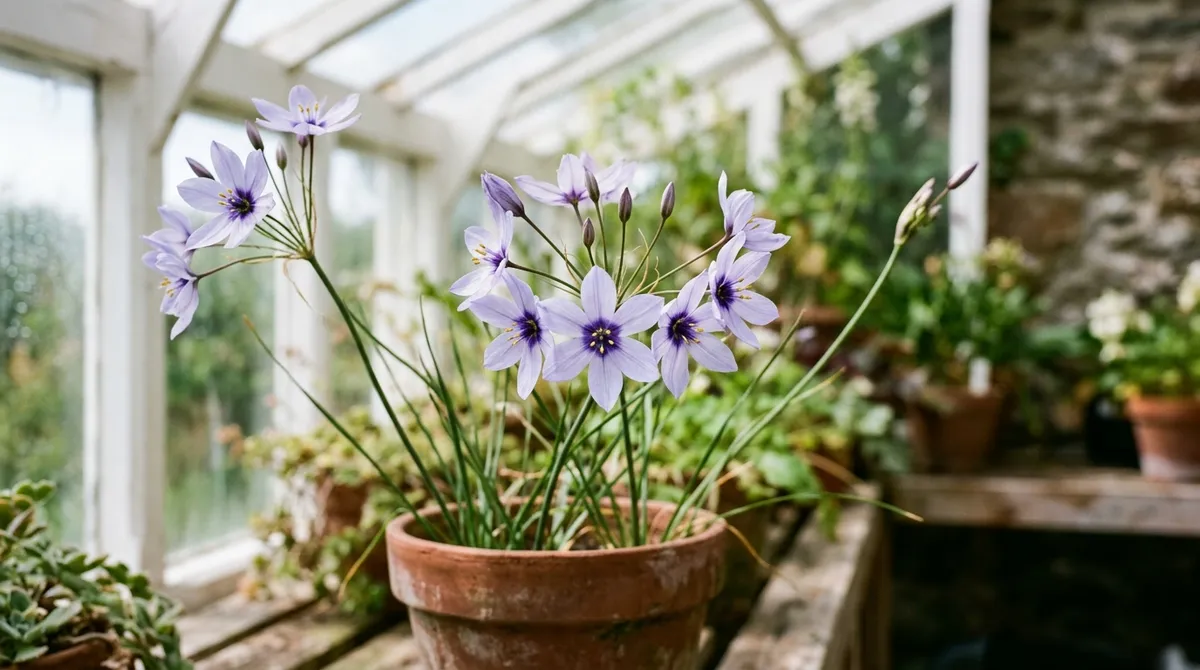
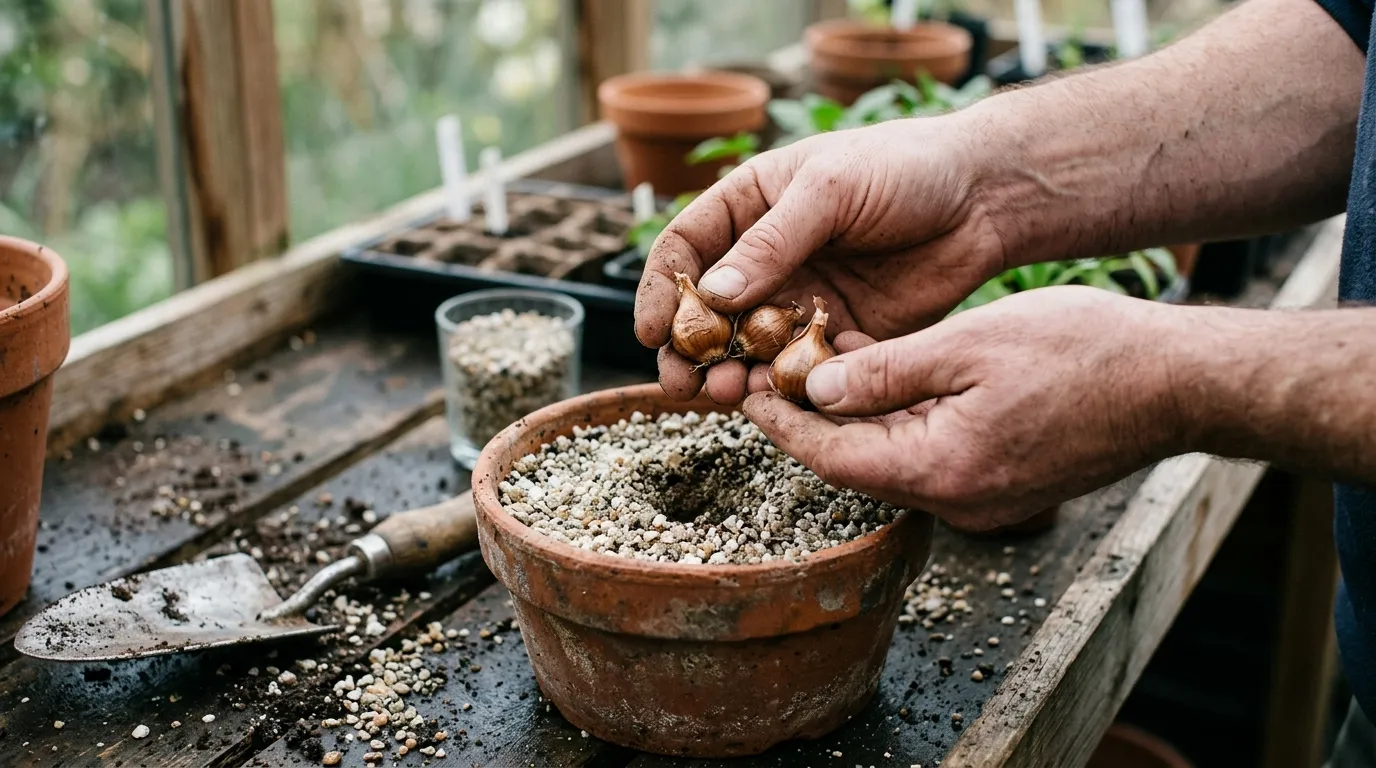 Leucocoryne bulbs are small, around the size of a crocus corm. Plant them in autumn into a sharply drained, gritty mix.
How to pot Leucocoryne bulbs in autumn
Pot the bulbs in September or October, as soon as you receive them. They start into root growth in autumn, so early potting gives the best result.
Set the bulbs 5cm deep to the base, spaced 3 to 4cm apart, nose upward. Cover with the gritty mix and finish with a 10mm grit mulch over the surface. The grit collar keeps the emerging necks dry and clean.
Use clay pots where you can. Terracotta breathes and dries faster than plastic, which suits a bulb that hates a wet neck. Water the pots in once after planting, then keep them barely moist until top growth appears.
The annual growth and dormancy cycle
Leucocoryne runs on a Mediterranean-style cycle: cool wet winter growth, then a hot dry summer rest. Get the timing right and the bulbs thrive. Get it wrong and they rot.
Autumn to winter: root and leaf growth
After autumn potting, roots form first, then narrow grassy leaves emerge. Keep the greenhouse frost-free at 5C minimum and as bright as possible. Water sparingly: enough to keep the compost just moist, never wet. Through the darkest weeks of December and January, growth is slow, so water lightly, perhaps once every 10 to 14 days.
Late winter to spring: flowering
As light returns in February and March, growth speeds up. Increase watering to keep the pots evenly moist. Flower stems rise in March and April and the umbels open from April to May. Feed every two weeks with a high-potash liquid feed at this stage. A 5C minimum is enough, though the flowers last longer in a cool, airy, lightly shaded greenhouse than in a hot one.
Summer: the dry dormancy
This is the make-or-break stage. After flowering, the leaves yellow and die back through late May and June. Stop watering completely from about mid June. Let the pots go bone dry and keep them warm, ideally 20 to 30C, to ripen the bulbs. A sunny greenhouse bench or a cold frame in full sun is perfect. Resume watering in early September to start the cycle again.
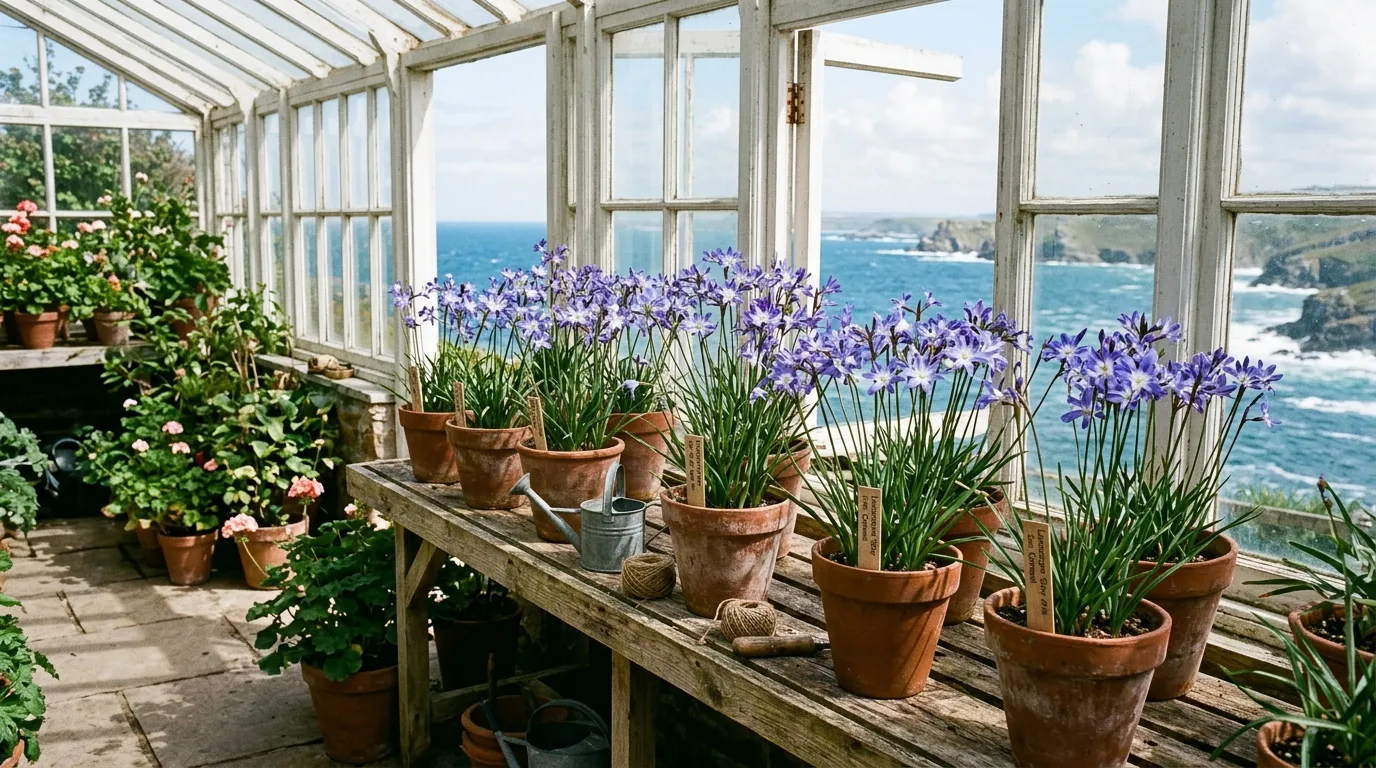 A bright, airy greenhouse holding a steady 5C minimum gives the best flowering. The blooms last longer in cool, lightly shaded conditions than in a hot house.
Watering and feeding through the year
Watering is the skill that separates a good Leucocoryne grower from a frustrated one. The rule is simple: water in growth, withhold in dormancy.
In autumn and early winter, keep the compost just moist. Overwatering when the soil is cold and light is low causes most early losses. Aim for the compost to feel barely damp, not wet.
From late winter to flowering, step up watering to keep pots evenly moist as growth accelerates. This is the only period of generous watering. Tip away any water that sits in the saucer within 20 minutes.
For feeding, start a fortnightly high-potash liquid feed once flower buds show, at half the maker’s recommended strength. Potash supports flowering and bulb ripening better than a high-nitrogen feed, which only pushes soft leaf. A tomato feed diluted to half strength works well. Stop feeding once flowering ends.
In summer, give no water and no feed at all. The bulbs are resting. Any moisture during the warm dormant months invites the rot that kills more Leucocoryne than cold ever does.
Gardener’s tip: If you grow other tender bulbs, group Leucocoryne with your freesias and forced bulbs so the whole bench follows one watering routine. They share the same cool, bright, dry-in-summer needs, which makes the greenhouse easier to manage.
Repotting, dividing and bulking up
Leucocoryne does not need repotting every year. Disturbing the bulbs too often checks flowering. Repot every two to three years, in late summer while the bulbs are dormant, when the clump has filled the pot.
To repot, tip the dry pot out and tease the bulbs apart. You will find the original bulbs plus a scatter of small offsets around them. Replant the largest bulbs at 7 to 9 per 1 litre pot in fresh gritty mix. Pot the offsets separately in a community pan. They take two to three years to reach flowering size.
Replace the top grit mulch every autumn even in non-repotting years, and top-dress with a thin layer of fresh ericaceous-free John Innes to refresh nutrients. Leucocoryne is not fussy about pH but resents stale, exhausted compost.
How to grow Leucocoryne from seed
Leucocoryne sets seed readily and comes true enough from the species to be worth raising. Seed is the cheapest way to build a large stock, though it needs patience.
Sow fresh seed in autumn, in September or October, into pots of the same gritty 50/50 mix. Cover lightly with grit and keep the pots frost-free at 5C minimum, just moist. Germination takes three to eight weeks. The seedlings look like fine grass.
Grow the seedlings on without disturbing them. Do not separate them in their first year. Follow the same dry summer dormancy as mature bulbs, then resume watering in autumn. Seedlings reach flowering size in three to four years from sowing. Pot the small bulbs on into their own pans at the end of the second summer.
Seed-raised plants give you a wider colour spread than named hybrids, which is part of the fun with the species. If you grow nerines under glass you already know the rhythm of raising tender bulbs from seed over several seasons.
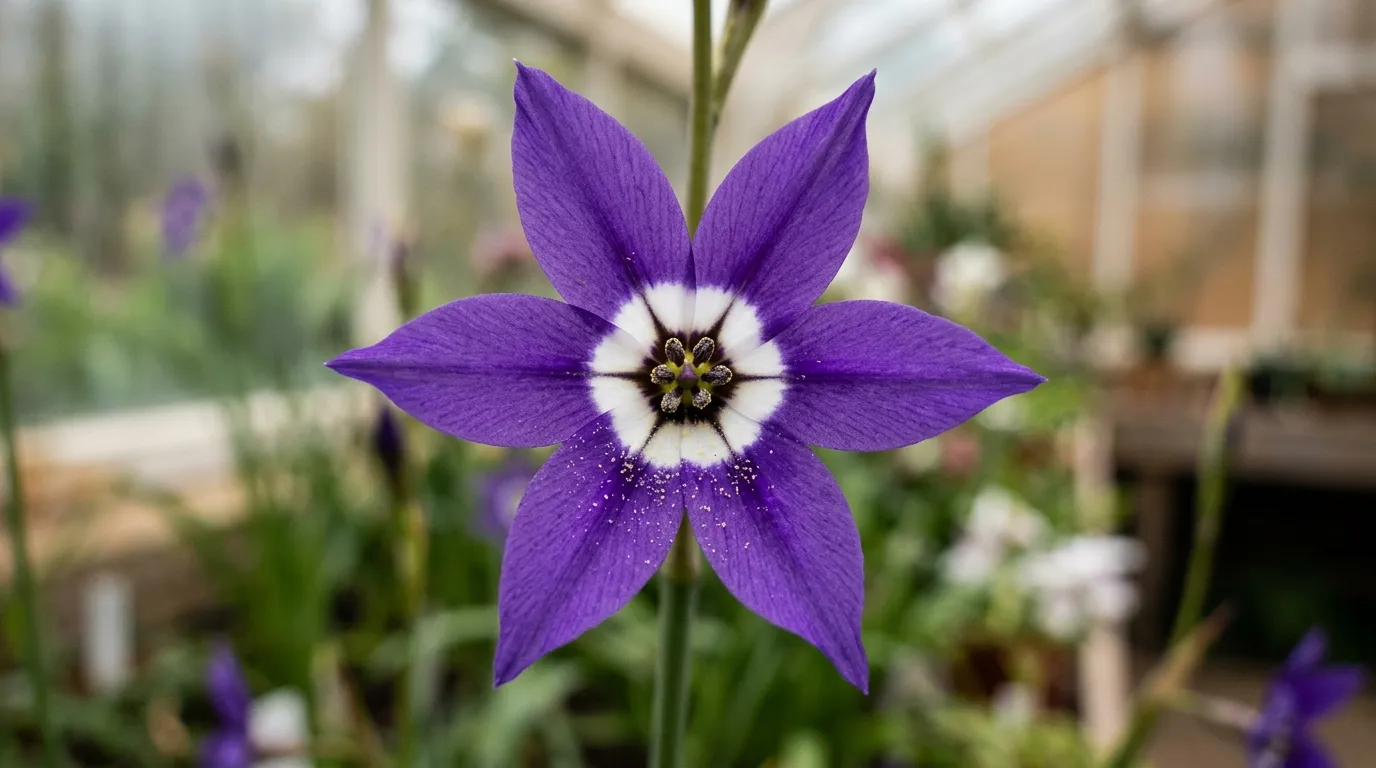 Leucocoryne purpurea carries the deepest colour in the genus. The white and dark eye at the centre of each star is the identifying mark.
Pests and problems under glass
Leucocoryne is largely trouble-free, but two pests and one disease account for nearly all losses under glass.
Aphids are the main pest. They cluster on the soft flower stems and bud umbels in spring, weakening growth and spreading virus. Check stems weekly from March. A soft soap spray or a squash by hand controls light infestations. Yellow sticky traps catch the winged adults.
Bulb mite (Rhizoglyphus species) attacks bulbs already weakened by rot or damage. The mites are tiny, pearly and slow-moving, found in the bulb tissue. They are a symptom of poor storage as much as a primary pest. Discard any soft or mite-infested bulbs and keep the rest dry and airy in summer.
Basal rot is the real killer, and it traces straight back to summer moisture. A bulb kept damp and warm in dormancy goes soft at the base and collapses. There is no cure once it sets in. Prevention is the whole game: a hard dry summer rest, free-draining compost, and clay pots that breathe.
Warning: Never leave Leucocoryne pots standing in a saucer of water, and never let them stay damp through summer. Wet warm compost in the dormant months is the single biggest cause of bulb loss. A dry bulb survives a missed watering. A wet one rots.
Month-by-month pot calendar
This calendar tracks the full cycle. It is built around the dry-summer dormancy that Leucocoryne demands.
| Month | Task |
|---|---|
| September | Pot or repot bulbs 5cm deep in gritty mix, water in once |
| October | Keep frost-free at 5C, water sparingly as roots form |
| November | Light watering, ventilate on mild days, watch for slugs |
| December | Minimal water, hold 5C minimum, maximise light |
| January | Slow growth, water every 10 to 14 days, frost-free |
| February | Growth speeds up, increase watering, check for aphids |
| March | Flower stems rise, water evenly, start high-potash feed |
| April | Peak flowering begins, feed fortnightly, ventilate to keep cool |
| May | Flowering finishes, leaves begin to yellow, reduce watering |
| June | Stop watering, begin the dry summer dormancy, keep warm |
| July | Bone dry rest, full sun, no feed, ripen the bulbs |
| August | Continue dry rest, plan repotting and new bulb orders |
Common mistakes that kill Leucocoryne
Most failures come down to a handful of repeated errors. Avoid these five and the bulbs are easy.
Watering through summer dormancy. This is the biggest killer. The bulbs need a bone-dry, warm rest from June to August. Any water during this window rots them. Mark the calendar and resist the urge.
Planting outside in the ground. Leucocoryne is not hardy. A UK winter outdoors, even in mild areas, will freeze or rot the bulbs. They must grow in pots under glass with a 5C minimum.
Keeping them too warm in winter. A hot, stuffy greenhouse forces soft, floppy growth and shortens flower life. They want cool and bright, around 5 to 10C, not a heated living room.
Using a wet, peaty compost. A water-retentive mix holds moisture around the bulb neck and invites rot. Always cut John Innes No 2 with at least 50% grit for sharp drainage.
Repotting every year. Frequent disturbance checks flowering. Leave the clumps undisturbed for two to three years and only repot when the bulbs have filled the pot.
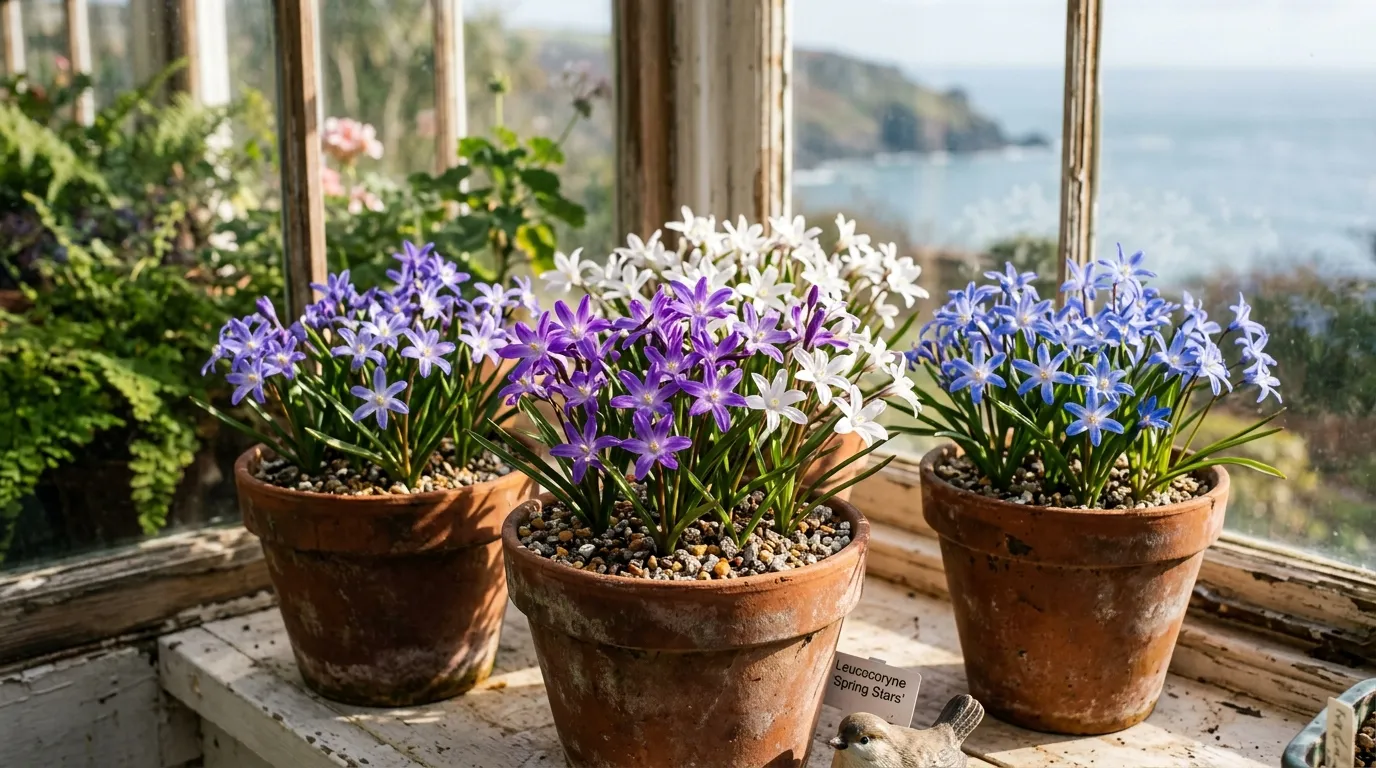 A grouping of clay pots in a cool, bright conservatory gives the best spring display. Grit mulch on the surface keeps the bulb necks dry.
Frequently asked questions
Is Leucocoryne hardy in the UK?
No, Leucocoryne is not frost hardy in the UK. The bulbs come from central Chile and need a frost-free minimum of 5C. Grow them in pots under glass in a cool greenhouse or conservatory, not outside in open ground.
How deep do you plant Leucocoryne bulbs?
Plant Leucocoryne bulbs 5cm deep in autumn. Space them 3 to 4cm apart, around 7 to 9 bulbs in a 1 litre pot. Use a gritty free-draining mix so the necks never sit in wet compost over winter.
When does Leucocoryne flower?
Leucocoryne flowers from April to May in the UK under glass. The scented star-shaped blooms sit on slender stems 25 to 45cm tall. Each bulb sends up one stem carrying three to seven flowers in an open umbel.
Why are my Leucocoryne bulbs rotting?
Rot is almost always summer watering during dormancy. Leucocoryne needs a bone-dry rest from June to August. Keep the pots dry and warm in summer, then start watering again in early autumn when growth begins.
Where can I buy Leucocoryne bulbs in the UK?
Specialist bulb nurseries sell them in autumn. Farmer Gracy and Broadleigh Bulbs both list Leucocoryne, usually as named hybrids or the species L. ixioides and L. purpurea. Order early, as stocks of these niche bulbs sell out by October.
Next step
Now you can grow the glory of the sun under glass, read our guide on how to grow amaryllis in the UK for another tender bulb that gives a spectacular indoor show, or browse the full range of plant growing guides to plan your greenhouse year. For a month-by-month plan of what to flower under glass, see our best greenhouse plants month by month guide.
Our team produces practical UK gardening guidance from source research, contributor records and established horticultural practice. Editorial standards are overseen by Matt W.