Key takeaways
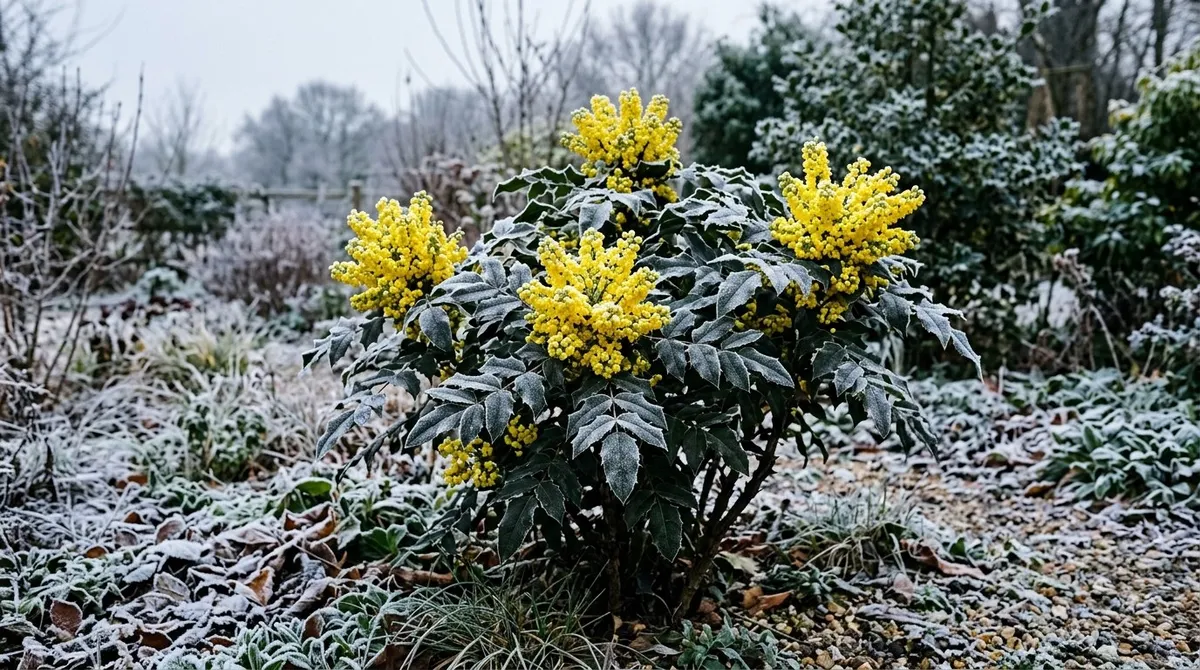
- Mahonia flowers from November to March, providing colour and scent when virtually no other garden shrub blooms
- M. japonica has a lily-of-the-valley scent detectable at 3 metres — the best-scented winter shrub for UK gardens
- All species tolerate deep shade, dry soil under trees, and heavy clay without complaint
- Blue-black berries ripen May to July and are a valuable food source for thrushes, blackbirds, and waxwings
- M. aquifolium (Oregon grape) spreads by suckers as evergreen ground cover in the darkest garden corners
- Prune leggy plants hard in April to 30-60cm and they regenerate with bushy new growth within one season
Mahonia flowers when almost nothing else in the garden does. From November through to March, depending on species, sprays of bright yellow flowers open on evergreen stems carrying spiny, holly-like leaves. On still winter days, the scent of M. japonica carries across the garden, a lily-of-the-valley sweetness that seems impossible in December.
These are tough evergreen shrubs native to Asia and North America. They tolerate deep shade, dry soil, heavy clay, and urban pollution. They require almost no maintenance beyond occasional pruning to prevent leggy growth. Yet mahonia remains underused in British gardens, overshadowed by more familiar winter-interest plants.
Which mahonia species are best for UK gardens?
Five mahonia species and their hybrids cover most garden situations in the UK. They differ in size, flowering time, and growth habit.
Mahonia japonica is the finest garden species. Arching sprays of pale yellow flowers with a strong lily-of-the-valley scent appear from December to February. Mature plants reach 2m tall and 1.5m wide. The compound pinnate leaves are spiny-toothed and glossy dark green, turning burgundy at the tips in cold weather. This is the species to choose if you want scent above all else. For more plants that provide winter fragrance, see our guide to scented plants for UK gardens.
Mahonia x media ‘Charity’ is the most commonly planted mahonia in UK gardens. Long upright sprays of yellow flowers from November to January, often the first mahonia to bloom each winter. It reaches 2.5-3m if unpruned and has a rather stiff, upright habit. The scent is pleasant but weaker than M. japonica. ‘Winter Sun’ is a similar hybrid with denser flower sprays and a slightly later flowering period.
Mahonia aquifolium (Oregon grape) is the ground-cover species. It grows to 1m tall and spreads by underground suckers to form dense evergreen colonies. Yellow flower clusters appear in March-April, followed by blue-black berries. The leaves turn bronze-purple in winter. This is the toughest mahonia, growing in the deepest shade and driest soil. It has naturalised in parts of Britain and is occasionally found wild in woodland edges.
Mahonia x media ‘Lionel Fortescue’ has the largest individual flower sprays of any mahonia, up to 40cm long. Bright yellow, upright sprays from November to January. Height reaches 2.5m. The display is dramatic but the plant can look gaunt unless pruned regularly.
Mahonia species comparison table
| Species / Variety | Height | Flowering | Scent | Spreads? | Spiny? | Best For |
|---|---|---|---|---|---|---|
| M. japonica | 2m | Dec-Feb | Strong, lily of the valley | No | Yes | Scent, shade borders |
| M. x media ‘Charity’ | 2.5-3m | Nov-Jan | Moderate | No | Yes | Tall back-of-border |
| M. aquifolium | 1m | Mar-Apr | Weak | Yes (suckers) | Mild | Ground cover, dry shade |
| M. x media ‘Lionel Fortescue’ | 2.5m | Nov-Jan | Moderate | No | Yes | Dramatic flower sprays |
| M. eurybracteata ‘Soft Caress’ | 1.2m | Oct-Nov | Light | No | No | Thornless option |
Where should I plant mahonia?
Mahonia grows in any position from full sun to deep shade. This versatility is its greatest strength. The shrub fills spots where most other flowering plants fail.
Near paths and entrances is the ideal position for scented species. Plant M. japonica within 3 metres of a door or path you use daily in winter. The scent is the main reward, and you want to walk through it regularly between December and February. Position the plant so you approach it but do not brush against the spiny leaves.
How to plant and establish mahonia
Plant container-grown mahonia at any time of year, though autumn (October-November) gives the best establishment. The roots grow through winter while the evergreen top provides a low level of photosynthesis.
Dig a planting hole twice the width of the root ball and the same depth. Do not bury the stem, set the plant at the same level it was growing in its pot. Backfill with excavated soil. On heavy clay, add a handful of grit to the backfill.
Water thoroughly after planting and apply a 5cm mulch of bark or leaf mould. Water during dry spells in the first spring and summer. Established mahonia (after one growing season) tolerates drought well, the deep root system extracts moisture from soil that dries out other plants.
Feeding is unnecessary on most soils. On very poor sandy ground, a single application of fish, blood, and bone in March supports growth. On clay and loam, mahonia extracts everything it needs from the native soil.
How to prune mahonia to prevent leggy growth
Left unpruned, mahonia grows into a tall, bare-stemmed plant with a tuft of leaves and flowers at the top. This is the main aesthetic criticism of the genus. Regular pruning prevents it.
Annual tip pruning is the lightest approach. After flowering finishes (February for M. japonica, January for ‘Charity’), remove the spent flower clusters and shorten the tallest stems by 15-20cm. This encourages branching lower down and keeps the plant bushy. Do this every year and leggy growth never develops.
Hard renovation works on neglected, leggy plants. In April, cut all stems back to 30-60cm from ground level. The plant looks drastic for 6-8 weeks. Dormant buds along the stems and at the base then break, producing strong new growth. By midsummer, a rosette of fresh foliage covers the cut stems. Flowers return the following winter.
M. aquifolium needs different treatment. Control spread by severing unwanted suckers with a spade in spring. Cut back the main plant after flowering in April if it has grown too tall. It regenerates readily from hard pruning.
For general guidance on pruning different shrub types, see our shrub pruning guide.
Mahonia berries and wildlife value
Mahonia provides three distinct wildlife resources across the year, winter nectar, spring pollen, and summer berries.
Winter nectar from November to March feeds early-emerging bumblebee queens. On mild winter days (above 6C), buff-tailed bumblebees visit mahonia flowers in visible numbers. These are among the first nectar sources available to pollinators each year, making mahonia valuable for bee-friendly gardening.
Evergreen shelter is the third wildlife benefit. The dense, spiny foliage provides year-round nesting cover for small birds. Wrens, dunnocks, and robins use mahonia as nesting sites. The spiny leaves deter cats and squirrels from reaching nests. For another thorny evergreen that earns its place on berries and nesting cover, see our guide to growing berberis in the UK.
The berries are technically edible for humans, though very tart. Mixed with sugar and sweeter fruits, they make an acceptable jelly. On their own, they are mouth-puckeringly acidic. Most gardeners leave them for the birds.
How to combine mahonia with winter plants
Mahonia works best in a winter garden scheme surrounded by other plants that earn their place from November to March.
With hellebores: The combination of mahonia flowers above and hellebores below is one of the strongest winter planting partnerships. Both tolerate shade. The yellow mahonia flowers contrast with the white, pink, and purple hellebore blooms from January to March.
With witch hazel: Plant mahonia near witch hazel for two complementary winter-flowering shrubs. Witch hazel provides spidery red or yellow flowers on bare branches, while mahonia adds evergreen structure and fragrance. Together they make a winter garden genuinely worth visiting.
With snowdrops and winter aconites: Underplant mahonia with drifts of snowdrops and winter aconites for a layered winter display from ground level to 2m. The white snowdrops and yellow aconites echo the mahonia’s yellow flowers. All three thrive in the same shady, moist conditions.
With evergreen ferns: Asplenium scolopendrium (hart’s tongue fern) and Polystichum (shield ferns) provide a green backdrop that sets off mahonia’s architectural form year-round. Both tolerate the same deep shade and dry soil.
What problems affect mahonia?
Mahonia has very few problems in UK gardens. The shrub’s tough constitution means disease and pest issues are rare.
Mahonia rust is the only common disease. Orange-brown pustules appear on the underside of leaves, with yellow spots on the upper surface. It is most prevalent on M. aquifolium in damp autumns. Remove and bin affected leaves. Improve air circulation by thinning overcrowded growth. Rust is rarely severe enough to threaten the plant’s health.
Powdery mildew occasionally affects M. aquifolium in dry summers. White powdery coating on the leaves. Improve watering during drought and remove badly affected foliage. It does not affect the other species.
No serious pests attack mahonia in Britain. The spiny leaves deter most browsers. Deer leave mahonia alone, useful if you garden in rural areas where deer damage is a problem.
Leaf scorch can occur on plants in full sun during severe cold snaps. The evergreen leaves turn brown at the edges. This is cosmetic damage, the plant recovers in spring with new growth. Plants in shade are less affected because the leaves are not exposed to direct frost radiation on clear nights.
Frequently asked questions
When does mahonia flower in the UK?
Mahonia flowers from November to March depending on species. M. x media ‘Charity’ starts earliest, often in November. M. japonica peaks December to February. M. aquifolium flowers latest, from March to April. Flowers are yellow, held in long sprays, and strongly scented on most species. They provide nectar for early-flying bumblebees on mild winter days.
Can mahonia grow in full shade?
Yes, mahonia is one of the best evergreen shrubs for full shade. All species tolerate deep shade, including north-facing walls and under dense tree canopies. Flowering is slightly reduced in the darkest positions but remains reliable. M. aquifolium is the most shade-tolerant, thriving where almost nothing else grows.
How do I stop mahonia getting leggy?
Prune leggy mahonia hard in April, cutting stems back to 30-60cm from ground level. New growth breaks from dormant buds along the stem and from the base. The plant looks bare for 6-8 weeks but regenerates into a bushy shape by midsummer. Repeat every 3-4 years to prevent the plant reverting to a tall, bare-stemmed shape.
Are mahonia berries poisonous?
Mahonia berries are not poisonous and are technically edible, though very tart. They can be made into jam or jelly when mixed with sweeter fruits. Birds eat them readily, thrushes, blackbirds, and fieldfares strip the clusters May to July. The berries are a useful wildlife food source in late spring when natural berry supplies are low.
What is the best mahonia for scent?
M. japonica has the strongest and most pleasant scent of all mahonia species. The fragrance resembles lily of the valley and carries 3 metres or more on still air. M. x media ‘Charity’ is also scented but less intensely. M. aquifolium has minimal scent. Plant scented varieties near paths, doors, or windows where you pass regularly in winter.
Does mahonia spread?
M. aquifolium spreads by underground suckers and can colonise an area over time. This makes it useful as ground cover but problematic if space is limited. M. japonica and M. x media varieties do not spread, they form single-stemmed or multi-stemmed clumps that stay where you plant them. Remove unwanted M. aquifolium suckers with a spade in spring.
Is mahonia good for wildlife?
Yes, mahonia provides winter nectar, spring pollen, and summer berries. The flowers feed early-emerging bumblebee queens on mild winter days when no other nectar source is available. Blue-black berries in May-July feed thrushes, blackbirds, and visiting waxwings. The dense evergreen foliage offers nesting cover for small birds year-round.
Our team produces practical UK gardening guidance from source research, contributor records and established horticultural practice. Editorial standards are overseen by Matt W.