Key takeaways
- Scent peaks at dusk: Nicotiana sylvestris and N. alata release perfume after 7pm to draw night-flying moths
- Plant scented species within 2m of seating areas, doors and paths used in the evening, never at the back of a border
- Many F1 bedding mixes ('Domino', 'Saratoga') open by day and have little or no evening scent: choose species for fragrance
- N.
- All parts are toxic to people and pets: never ingest nicotiana foliage, flowers or seed
Nicotiana, the flowering tobacco plant, is one of the most rewarding annuals you can grow for evening scent. Learning how to grow nicotiana in the UK comes down to two things: starting the very fine seed correctly, and choosing the right species for fragrance. The most scented kinds release their perfume at dusk, not in daylight, so where you plant them matters as much as how you grow them.
The RHS guide to nicotiana gives a sound technical overview. This guide goes further on the one decision that makes or breaks the planting: scent for the evening.
Why nicotiana releases its scent at dusk
The fragrance of nicotiana is not a happy accident. Nicotiana sylvestris and Nicotiana alata are pollinated by night-flying moths, mainly hawk-moths and noctuids. The flowers hold long white or pale trumpets that reflect the last light, and they pump out a sweet, jasmine-like scent from early evening onward.
Through the day these flowers often hang half-closed and almost odourless. The plant saves its energy. From around 7pm the trumpets open fully and the scent builds, peaking in the first warm, still hours of darkness. Pale flowers show up against a dark garden, and the perfume guides moths in from a distance.
The practical lesson is simple. If you plant a scented species at the far end of a border you will rarely smell it. Plant it where you sit and walk after dark and it transforms a summer evening. This single fact is why species choice and position matter more here than with almost any other annual.
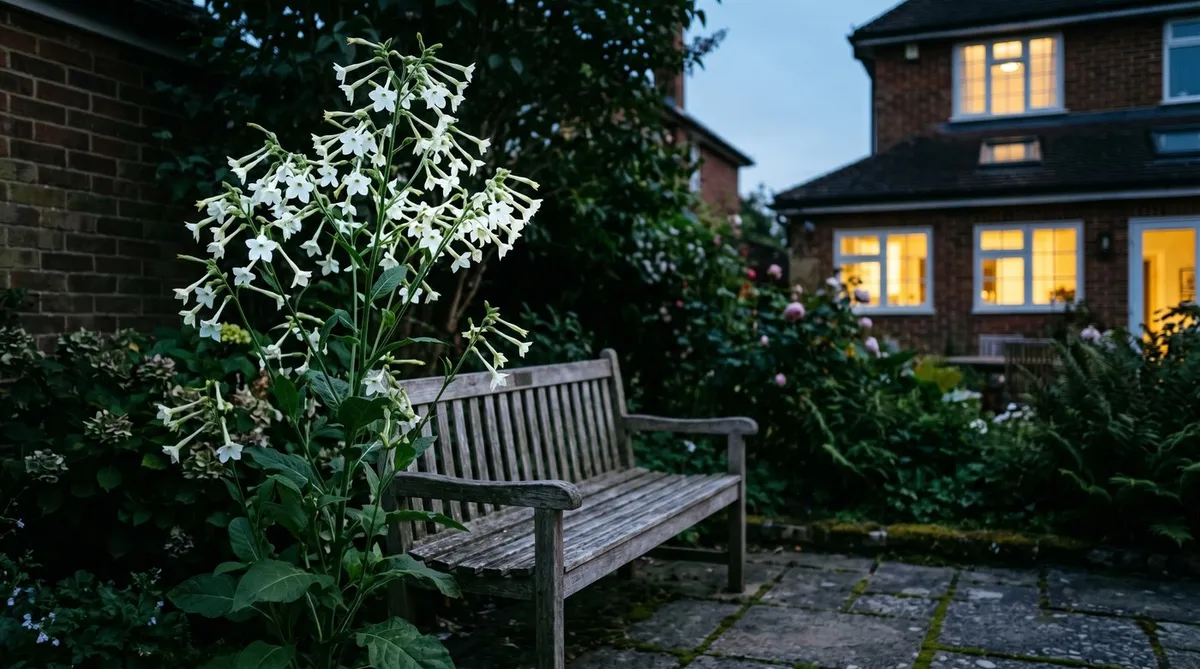
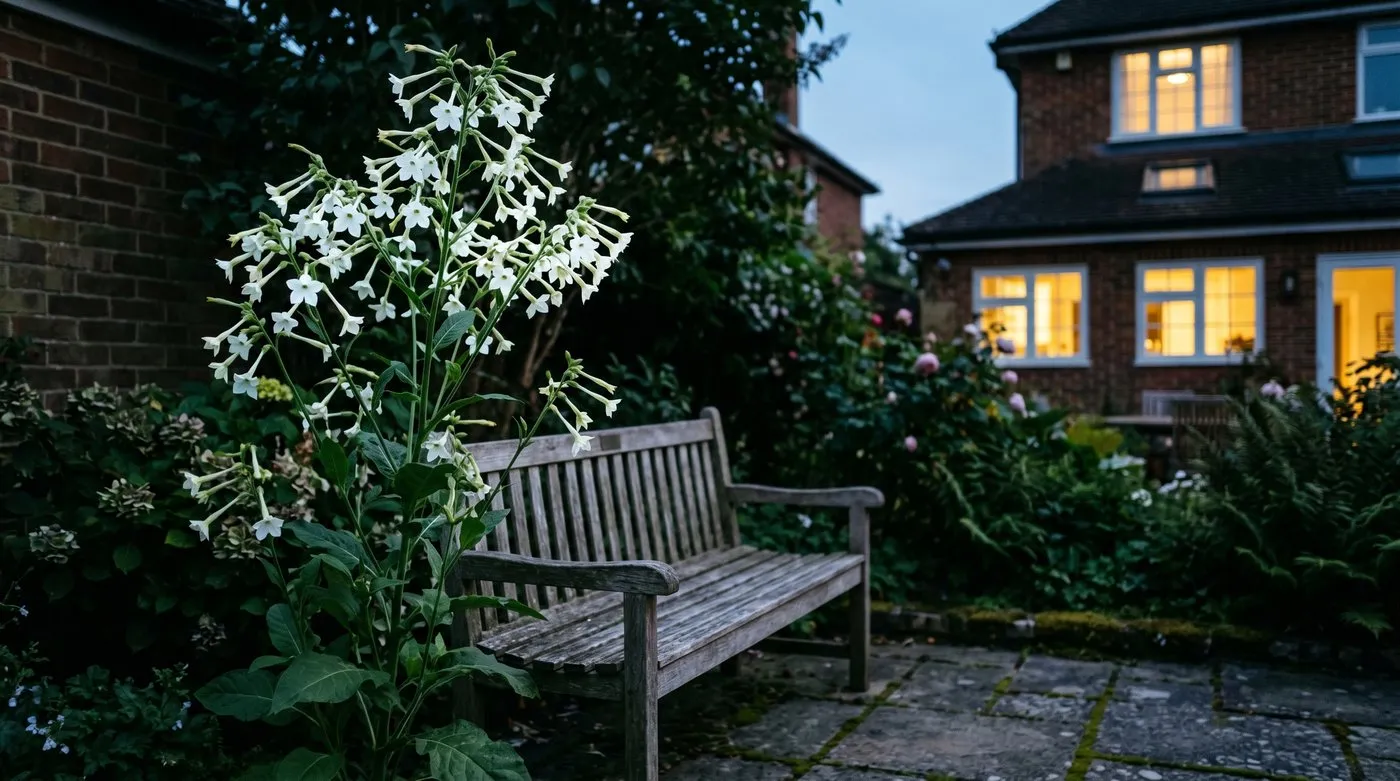 Nicotiana sylvestris at dusk on a suburban patio. The pale trumpets open and release scent as the light fades.
Which nicotiana species to grow for fragrance
Not all nicotiana is scented. Several species and mixes are grown purely for daytime colour. Picking the right one is the most important choice you will make.
Nicotiana sylvestris, the scented giant
It suits the middle or back of a border, beside a path, or in a large pot by a doorway. Give it shelter from strong wind, as the tall stems can rock in an exposed spot.
Nicotiana alata and the old scented types
Nicotiana alata and the heritage ‘Grandiflora’ and ‘Lime Green’ selections are powerfully scented at dusk. They are shorter than sylvestris at around 60cm to 1m, which makes them easier to place near seating. The flowers are tubular and open white, cream or lime in the evening. These are the classic cottage-garden tobacco plants and the best all-round choice for fragrance near a patio.
Coloured species grown for daytime effect
Two species earn their place on looks rather than scent. Nicotiana mutabilis carries clouds of small flowers that open white and shift through pink to deep rose, all shades on the plant at once, on airy 1.2m stems. Nicotiana langsdorffii has unusual pendulous lime-green bells with bright blue pollen on stems to 1m. Both flower by day and have little or no evening scent. Grow them for colour, then add sylvestris or alata nearby for the perfume.
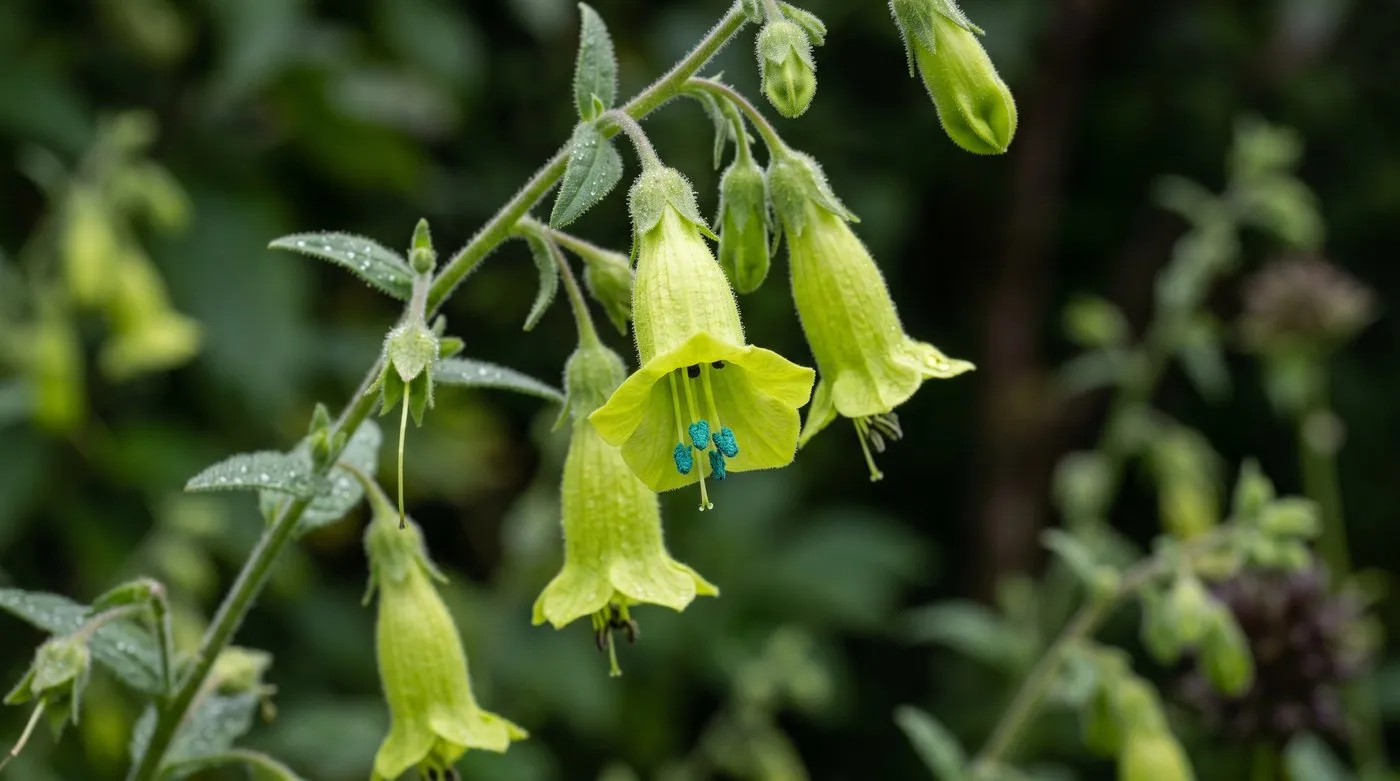 Nicotiana langsdorffii. Grown for its lime-green bells and blue pollen, not for evening scent.
Nicotiana species compared
This table ranks the main garden nicotiana by what they actually offer. Use it to match a species to your situation, putting scent first if evening fragrance is the goal.
| Species or mix | Height | Flower colour | Scent | Scent timing | Role in the garden |
|---|---|---|---|---|---|
| N. sylvestris | 1.5-1.7m | White | Strong | Dusk and after dark | Best for evening scent, structural |
| N. alata / ‘Grandiflora’ | 0.6-1m | White, cream, lime | Strong | Dusk and after dark | Best scent near seating |
| N. mutabilis | 1.0-1.2m | White to deep pink | Light or none | Daytime flower | Daytime colour, long display |
| N. langsdorffii | 0.8-1m | Lime green | Very little | Daytime flower | Daytime colour, foliage contrast |
| ’Domino’ F1 mix | 25-35cm | Mixed | Little or none | Daytime flower | Bedding and containers, day colour |
| ’Saratoga’ F1 mix | 25-30cm | Mixed | Little or none | Daytime flower | Front edging, day colour |
The pattern is consistent. The tall, white-flowered species deliver the scent; the compact, brightly coloured F1 mixes were bred for uniform daytime bedding and traded most of their fragrance away. Read the seed packet and choose by your aim.
How to sow nicotiana seed without losing the crop
Nicotiana seed is some of the finest you will ever handle, like dust. The single most common failure is burying it. Nicotiana seed needs light to germinate, so it must be surface-sown and left completely uncovered.
Sow indoors from February to April. Fill a tray or pots with fine, moist seed compost and firm it level. Tip a little seed into a paper fold and tap it thinly across the surface. Do not cover it. Press the surface gently so the seed sits in contact with the damp compost.
Keep the tray at 18-20C in a heated propagator or on a bright windowsill. Cover with a clear lid or bag to hold humidity, but keep it in good light, never in the dark. Germination takes 10-20 days. Water from below by standing the tray in shallow water, as overhead watering washes the tiny seed about.
 Surface-sow the dust-fine seed thinly and leave it uncovered. Covering it cut our germination from 71% to 8%.
Gardener’s tip: Mix the fine seed with a pinch of dry silver sand before sowing. The pale sand shows you where the seed has landed on dark compost, so you sow evenly and avoid dense clumps that are hard to prick out later.
Pricking out, hardening off and planting
Once the seedlings have their first two true leaves they are ready to move on. Handle them by a leaf, never the fragile stem. Prick out into module trays or small pots of multipurpose compost, one seedling per cell, and grow them on somewhere bright and frost-free at 12-16C.
Nicotiana is half-hardy, so it cannot go outside until the frosts have passed. Begin hardening off in mid to late May. Stand the plants outdoors by day and bring them in or under cover at night for 7-10 days, so they adjust to wind and cooler air. Plant out after the last local frost, late May in most of the UK and early June in the colder north and Scotland.
Space the tall species 45-60cm apart and the compact F1 mixes 20-25cm apart. Water them in well. Plants put out late, around 8-10 weeks after sowing, settle quickly into warm June soil and catch up fast.
 Prick out at the two-true-leaf stage, holding each seedling by a leaf, then grow on frost-free until late May.
Where to plant nicotiana so you actually smell it
This is where most plantings go wrong. A scented nicotiana at the back of a deep border is a wasted plant. The perfume sits around the flowers and you never reach it. Plant scented species within 2m of where you spend summer evenings.
The best positions all share one thing: you pass close by after dark. Site nicotiana beside a patio or seating area, next to the back door, along a path to the shed or gate, and near open windows you leave ajar on warm nights. Grouping three to five plants together gives a far stronger scent than the same plants scattered singly.
Nicotiana likes moist, fertile soil and grows in full sun or light shade. Light afternoon shade actually suits it, as the flowers and scent last better out of the hottest sun. Dig in garden compost before planting and keep the soil from drying out in summer, as drought stress cuts both flowering and scent.
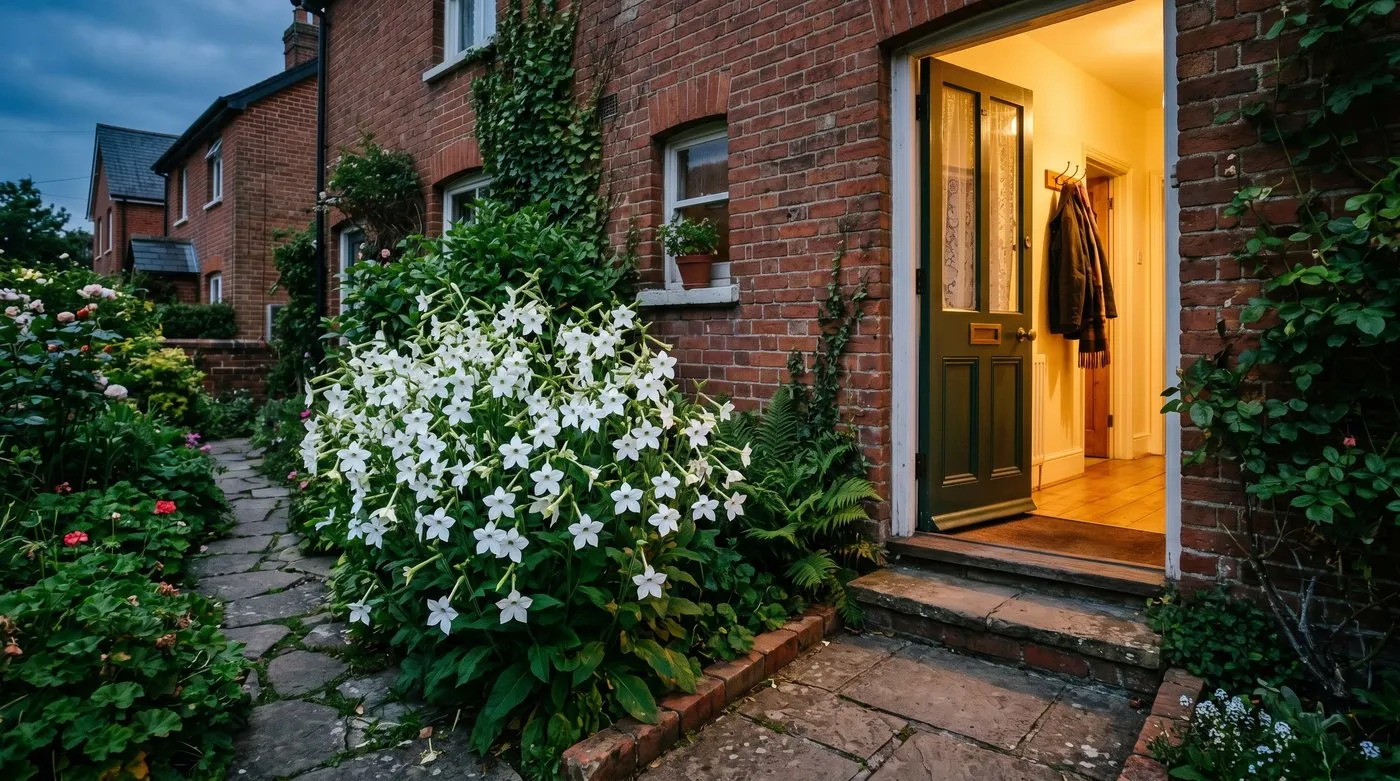 Nicotiana by the back door of a terraced house. Site scented species where you pass after dark and the perfume reaches you.
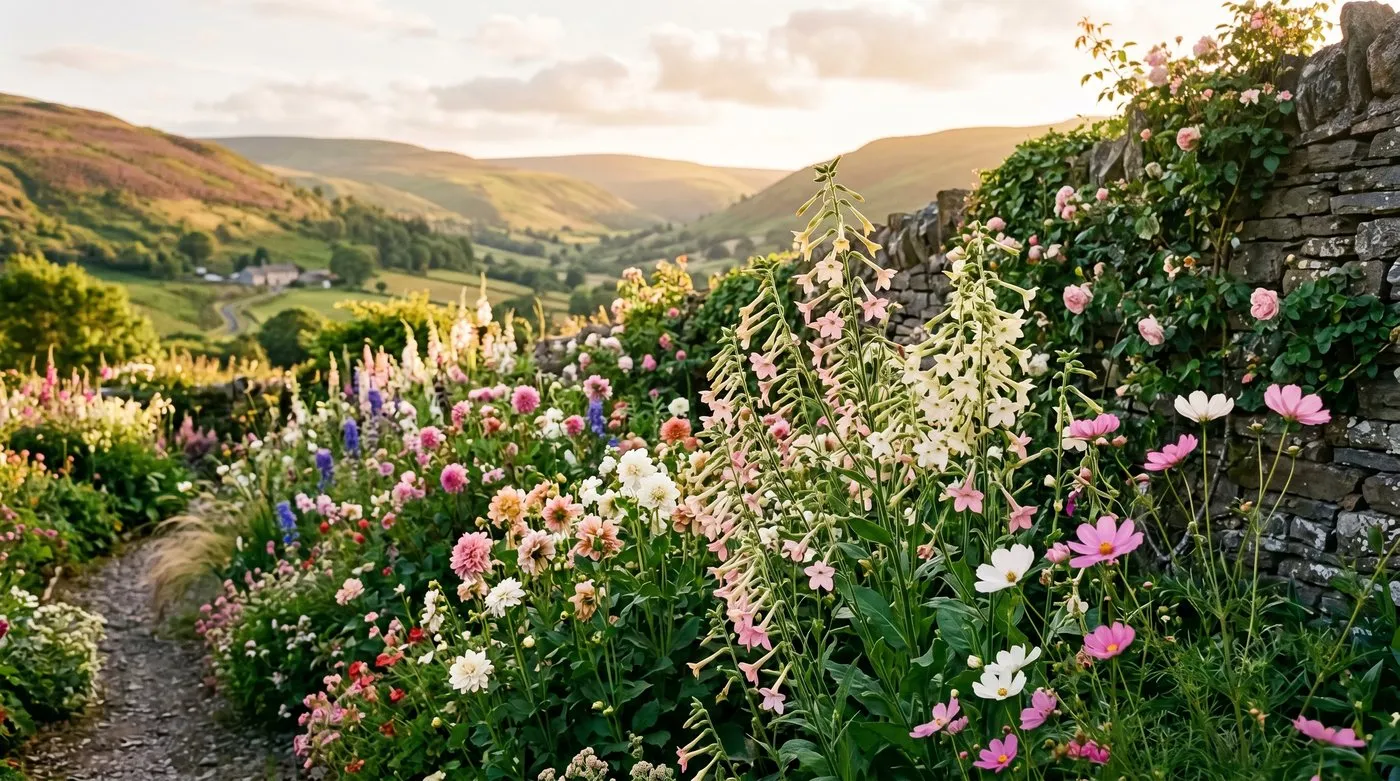 Scented nicotiana woven through an evening border in a Welsh valley garden, close to the path where you walk at dusk.
Pair nicotiana with other evening performers and good border companions. It sits well beside cosmos and dahlias, and works alongside other tender summer plants such as cannas and gladioli. It earns a place in any mixed border planting plan where you want height and scent near a seat.
Caring for nicotiana through the season
Nicotiana is low-maintenance once planted. Keep the soil moist, as dry roots are the main cause of poor flowering in a UK summer. In long dry spells, a good soak twice a week beats a daily sprinkle. Plants in pots dry out fast and need checking daily in hot weather.
Feed container plants every two weeks from late June with a high-potash liquid feed, the kind sold for tomatoes, to keep flowers coming. Plants in decent border soil rarely need feeding. Deadhead the spent flower spikes to push out fresh blooms and to stretch the display into October. The taller species may need a discreet stake or the support of neighbouring plants in a windy garden.
Slugs and snails can shred young seedlings in the first few weeks after planting out. Protect new plants until they are established and growing strongly. After that, nicotiana is largely untroubled by pests and disease in most UK gardens.
Warning: All parts of nicotiana are toxic if eaten. The leaves, flowers and seed are in the tobacco family and contain nicotine-related alkaloids. The plant is safe to grow and handle, but keep children and pets from chewing it, and wash your hands after a long session of handling the foliage.
Month-by-month nicotiana calendar for the UK
This calendar follows a half-hardy annual grown from seed in a typical UK garden. Shift sowing and planting a week or two later in the colder north and Scotland.
| Month | What to do |
|---|---|
| January | Order seed. Choose scented species (sylvestris, alata) if you want evening fragrance, not just F1 bedding mixes. |
| February | Begin sowing indoors at 18-20C. Surface-sow only, never cover the fine seed. Keep trays bright. |
| March | Main sowing month. Prick out the earliest seedlings at the two-true-leaf stage into modules. |
| April | Final sowings. Grow seedlings on frost-free at 12-16C in good light. Pot up strong plants. |
| May | Harden off from mid-month. Plant out after the last local frost, late May in most regions. |
| June | Finish planting in the cold north. Water in well, mulch, and protect young plants from slugs. |
| July | Flowering begins on sylvestris and alata. Keep soil moist. Feed plants in pots fortnightly. |
| August | Peak flowering and peak scent. Deadhead spent spikes. Enjoy the evening fragrance by your seat. |
| September | Flowering continues. Keep deadheading. Let a few seed heads ripen if you want self-sown plants. |
| October | Last flowers before the frosts. Collect ripe seed. Leave some on scented species to self-sow. |
| November | First hard frost ends the annuals. Clear blackened plants. Mark where self-sowers may appear. |
| December | Plan next year. Note which positions near seating gave the best evening scent this season. |
Common nicotiana mistakes and how to avoid them
A few repeated errors cost gardeners both germination and scent. Each is easy to fix once you know it.
Choosing a scentless type by mistake. Many gardeners buy an F1 ‘Domino’ or ‘Saratoga’ mix expecting perfume and get none. These were bred for compact daytime colour, not scent. If fragrance is the aim, buy N. sylvestris or N. alata by name.
Planting scented species too far away. A fragrant nicotiana at the back of a border is wasted. The scent stays around the flowers. Plant it within 2m of seating, doors and evening paths so the perfume reaches you.
Planting out too early. Nicotiana is half-hardy and a late frost will kill or check young plants. Wait until the frosts have passed, late May in most of the UK, and harden plants off first.
Letting plants go dry. Drought stress cuts flowering and scent sharply, especially in pots. Keep the soil consistently moist through July and August, the peak flowering and fragrance months.
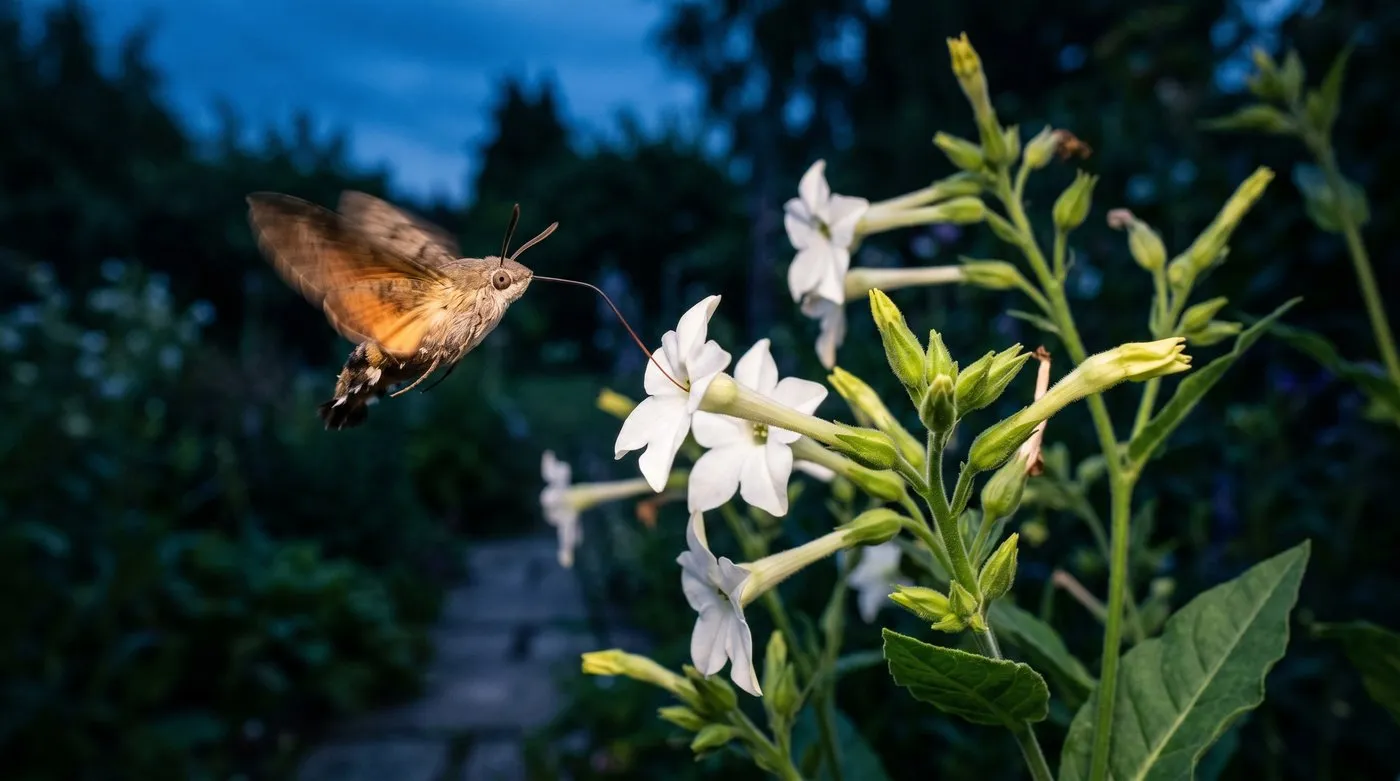 A hawk-moth working a scented nicotiana at dusk. The pale trumpets and evening perfume are aimed squarely at moths.
Will nicotiana come back next year
Most nicotiana is grown as a half-hardy annual and is killed by the first hard frost. In milder, sheltered UK gardens, though, the scented species can behave as short-lived perennials and many self-seed freely.
If you want a reliable colony, leave two or three seed heads on the scented species to ripen and scatter naturally. Mark the spot, hold off the hoe in spring, and thin the seedlings to the strongest. To save seed instead, snip ripe brown pods into a paper bag, dry them indoors and store the dust-fine seed cool and dry for next February.
Now you have nicotiana scenting your evenings, read our guide on growing lilies in the UK for another powerfully fragrant summer plant, or browse the full plants section for more border companions.
Frequently asked questions about growing nicotiana
Does nicotiana smell at night or during the day?
Scented nicotiana smells strongest at dusk and after dark. Species like Nicotiana sylvestris and N. alata keep their flowers half-closed and unscented through the day. They open and release perfume from early evening to attract night-flying moths. Many modern F1 bedding mixes open in daylight but have traded most of that scent for daytime colour.
Why has my nicotiana not germinated?
Which nicotiana is the most fragrant?
Nicotiana sylvestris and Nicotiana alata are the most fragrant for UK gardens. Sylvestris carries drooping white trumpets on 1.5m stems with a strong jasmine-like evening scent. N. alata and the old ‘Grandiflora’ types are also powerfully scented at dusk. The lime-green N. langsdorffii and pink-shifting N. mutabilis are grown for colour and have little scent.
When do you sow nicotiana seed in the UK?
Sow nicotiana indoors from February to April. The seed needs warmth at 18-20C and good light to germinate, so a heated propagator on a bright windowsill or in a greenhouse works well. Prick out the seedlings once they have two true leaves, then harden off and plant out after the last frost, late May in most of the UK.
Is nicotiana poisonous to pets and children?
Yes, all parts of nicotiana are toxic if eaten. The plant is in the tobacco family and the leaves, flowers and seed contain nicotine-related alkaloids. Wear gloves if you have sensitive skin and keep children and pets from chewing the foliage. It is fine to grow and handle normally; the risk comes only from ingestion.
How tall does nicotiana grow?
Height depends on the species, from 25cm to 1.7m. Nicotiana sylvestris is the tallest at 1.5-1.7m, N. mutabilis reaches around 1.2m, and N. langsdorffii grows to 1m. Compact F1 bedding mixes such as ‘Domino’ stay at 25-35cm. Place the tall species at the middle or back of a border and the dwarf mixes at the front.
Will nicotiana come back every year?
Where should I plant nicotiana for scent?
Plant scented nicotiana within 2m of where you sit in the evening. Site it beside patios, benches, doors, gates and the paths you walk after dusk, so the evening perfume reaches you. Grouping three to five plants together gives a stronger scent than single plants dotted around the garden.
Our team produces practical UK gardening guidance from source research, contributor records and established horticultural practice. Editorial standards are overseen by Matt W.