Key takeaways
- Two types: perennial Rudbeckia fulgida returns yearly, annual Rudbeckia hirta is sown each spring
- 'Goldsturm' is the most reliable UK perennial at 60cm, hardy to -20°C, flowering August to October
- Rudbeckia tolerates moist, fertile clay far better than echinacea, which needs sharp drainage
- Sow R. hirta February to April at 20-22°C, surface-sown as the seed needs light to germinate
- Deadhead through summer to extend flowering, then leave the final seedheads for goldfinches
- Angular leaf spot and powdery mildew are the two problems that bite 'Goldsturm' in UK summers
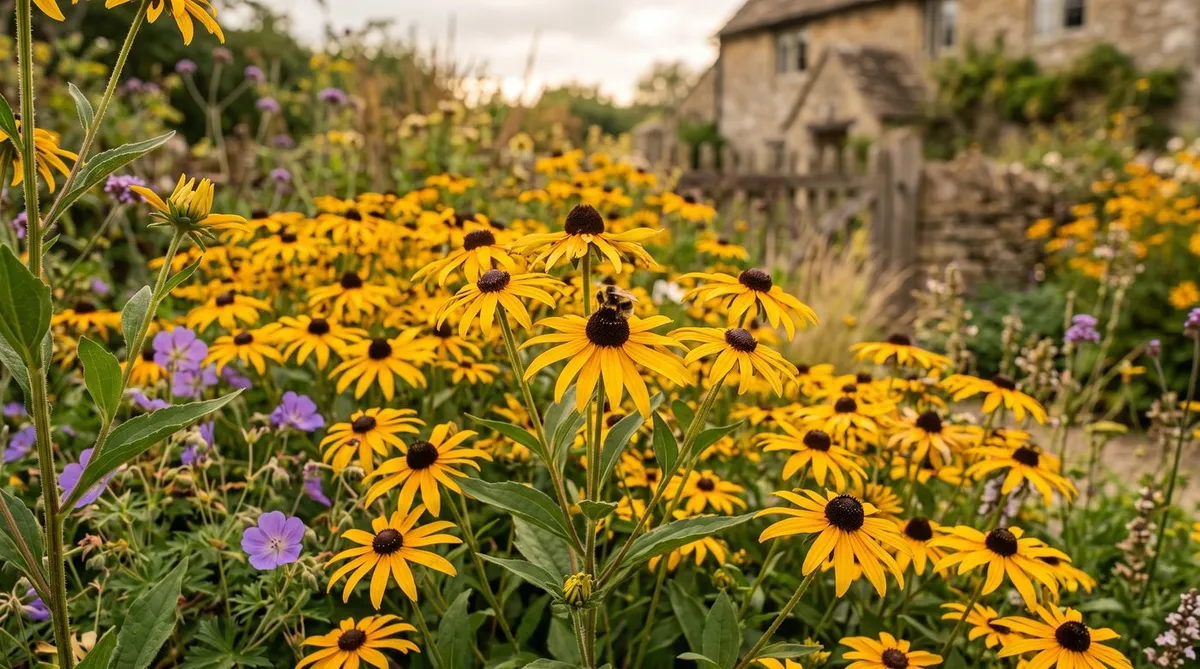
Rudbeckia is the plant that carries a UK border from high summer into autumn. When many perennials are fading, the golden daisies with their dark central cones are just hitting their stride. The common name, black-eyed Susan, describes them perfectly: bright petals around a near-black eye. Bees work the flowers all day, and the seedheads feed goldfinches once the petals drop.
The confusion most gardeners hit is that rudbeckia is not one plant. Some types are permanent perennials, others are one-season annuals. Getting that right is the difference between a clump that returns for a decade and a gap in the border next spring. This guide sorts out the types, the best varieties for UK gardens, and the moisture trick that makes rudbeckia easier than its prairie cousin echinacea.
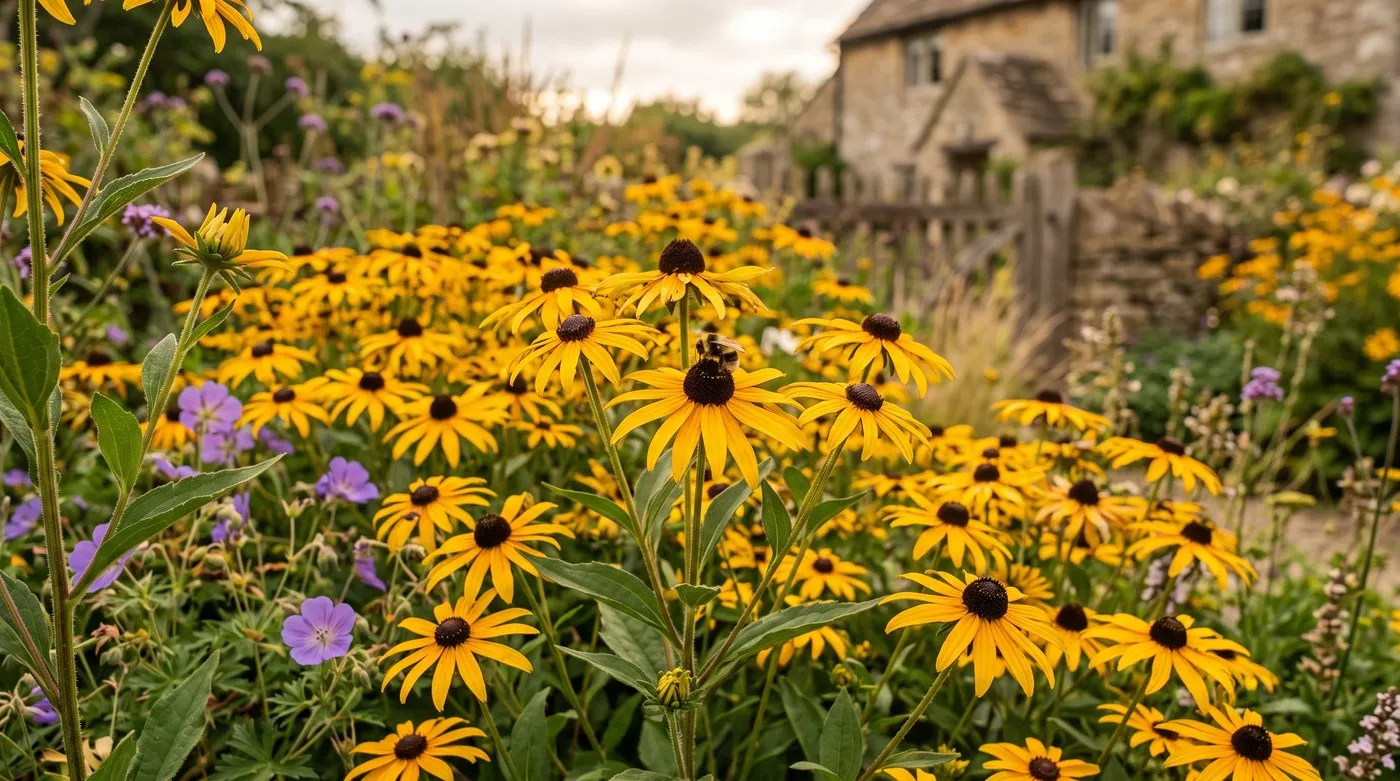 Rudbeckia carries the border from July into October, long after most summer perennials have gone over.
What conditions does rudbeckia need in the UK?
Rudbeckia comes from North American prairies and damp meadows, so it wants sun and steady moisture. This is where it differs sharply from echinacea, which needs dry, sharp-draining soil.
Sun: Full sun, at least 6 hours a day. South or west-facing borders are ideal. In shade, plants grow tall, flop, and flower poorly.
Soil: Moist but not waterlogged, and fertile. Rudbeckia tolerates heavy clay far better than most prairie perennials, provided the ground does not sit under water all winter. On light, sandy soil, dig in garden compost to hold moisture.
Water: This is the one plant in the prairie palette that resents drought. Dry roots in July cause wilting, poor flowering, and a flush of powdery mildew. Keep the soil moisture-retentive.
Fertility: Unlike echinacea, rudbeckia appreciates reasonable fertility. A spring mulch of garden compost supports the long flowering season. Avoid high-nitrogen feeds, which push soft, floppy growth.
These conditions overlap with helenium, aster, and other late perennials, which is why rudbeckia anchors so many prairie-style schemes.
Annual or perennial? Choosing the right rudbeckia
The single most useful thing to know is which type you are buying. The label’s Latin name tells you everything.
Rudbeckia fulgida is a fully hardy perennial. It survives to -20°C, dies back in winter, and re-emerges each spring, spreading slowly by short rhizomes into a wider clump. This is the group that includes ‘Goldsturm’. Plant it once and it stays for years.
Rudbeckia laciniata, R. maxima, and R. triloba are also perennial, adding height and different flower forms.
Rudbeckia hirta is technically a short-lived perennial but behaves as a half-hardy annual in UK gardens. It rarely survives a wet winter. You sow it in spring, it flowers the same summer, then usually dies. The trade-off is colour: hirta gives you mahogany reds, bronzes, and bicolours that the perennials cannot.
Gardener’s tip: For a permanent clump that returns every year, buy R. fulgida ‘Goldsturm’ as a plant. For one season of bold, unusual colours, sow R. hirta from seed. Growing both gives you reliable structure plus a changing colour display each year.
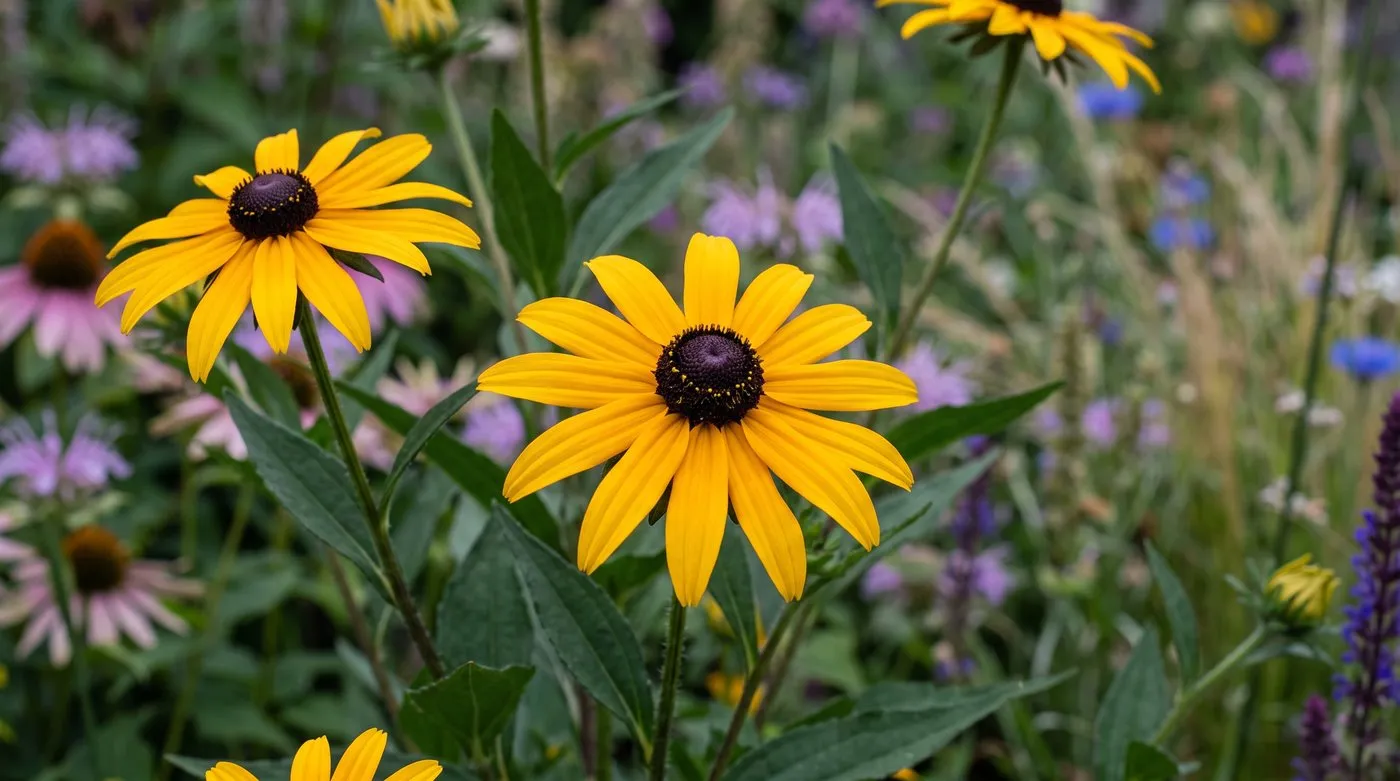 Rudbeckia fulgida ‘Goldsturm’, a hardy perennial to -20C and the most reliable black-eyed Susan for UK gardens.
Best rudbeckia varieties for UK gardens
The type you choose sets height, hardiness, and colour. Perennials give reliability; annuals give the widest colour range.
| Variety | Type | Colour | Height | Notes |
|---|---|---|---|---|
| Goldsturm | Perennial (fulgida) | Golden yellow, black cone | 60cm | RHS AGM. The reliable UK benchmark. Strong stems |
| Little Goldstar | Perennial (fulgida) | Golden yellow | 35-40cm | Compact, floriferous, good for the front of a border |
| Herbstsonne | Perennial (laciniata) | Lemon yellow, green cone | 180-200cm | Towering back-of-border plant, needs no staking in sun |
| Rudbeckia maxima | Perennial | Yellow, tall black cone | 150-250cm | Glaucous blue paddle leaves, architectural seedheads |
| Marmalade | Annual (hirta) | Deep golden orange | 45-60cm | Fast from seed, long flowering, excellent for cutting |
| Cherry Brandy | Annual (hirta) | Deep cherry red | 50-60cm | Unusual red tones the perennials cannot match |
| Sahara | Annual (hirta) | Dusky rose, bronze, caramel | 50-60cm | Muted vintage shades, superb cut flower |
| Prairie Sun | Annual (hirta) | Yellow tips, green cone | 60-90cm | RHS AGM. Green eye instead of black, softer look |
| Toto | Annual (hirta) | Golden yellow | 25-30cm | Dwarf, ideal for pots and window boxes |
Buying tip: Perennial fulgida types are best bought as pot-grown plants or divisions. Annual hirta varieties are cheap and easy from seed, and a single packet raises 30 or more plants. ‘Cherry Brandy’ and ‘Sahara’ are the reason to grow from seed: those colours are rarely sold as plants.
How to grow rudbeckia from seed
Annual R. hirta is one of the easiest flowers to grow from seed. The seed is fine and needs light, so surface sowing is essential.
When to sow: February to April indoors for summer flowering. A March sowing is the sweet spot for most UK gardens. You can also sow perennial fulgida from seed, though named clones like ‘Goldsturm’ must be bought as plants to come true.
How to sow:
- Fill trays or modules with peat-free seed compost and firm gently.
- Surface-sow the seed and press it lightly onto the compost. Do not cover it, as light triggers germination.
- Water from below by standing trays in shallow water, then drain.
- Keep at 20-22°C in a propagator or on a warm windowsill.
- Germination takes 7-21 days.
- Prick out into 7-9cm pots once seedlings have two true leaves.
- Grow on cool and bright to avoid leggy, drawn seedlings.
- Harden off for 10-14 days and plant out after the last frost, mid-May in most regions.
For a head start, follow our indoor seed sowing method and check timings against the seed sowing calendar.
 Prick out rudbeckia seedlings once they have two true leaves, holding them by the leaf, never the stem.
How to plant rudbeckia in the garden
When to plant: May to June for young plants and hardened-off seedlings. September also suits pot-grown perennials, giving roots time to settle before winter.
Preparing the soil: Dig in a bucket of garden compost per square metre. On sandy soil this holds moisture; on clay it improves structure without harming the moisture rudbeckia wants.
Spacing: Plant 30-45cm apart. Compact varieties go at 30cm, taller perennials at 45cm. Good spacing keeps air moving and reduces mildew and leaf spot.
Planting depth: Set the crown level with the soil surface, exactly as it sat in the pot. Burying the crown invites rot.
After planting: Water in well and keep the soil moist through the first summer. This is the opposite of echinacea care, where you would hold back water. Rudbeckia flowers most on soil that never fully dries.
Rudbeckia partners well in a cottage garden planting plan alongside echinacea, salvia, and ornamental grasses.
Month-by-month rudbeckia growing calendar
| Month | Task |
|---|---|
| February | Sow R. hirta indoors at 20-22°C. Surface-sow only. Divide old perennial clumps before growth starts |
| March | Main indoor sowing time. Pot on early seedlings. Mulch established perennials with compost |
| April | Prick out and grow on. Sow direct outdoors from mid-month in mild areas |
| May | Harden off and plant out after the last frost. Watch for slugs on soft new growth |
| June | Plants establish fast. Water in dry spells. Pinch tips of annuals for bushier plants |
| July | Flowering begins on early sowings and perennials. Deadhead to keep buds coming |
| August | Peak flowering. Keep roots moist to prevent mildew. Cut stems for the vase |
| September | Flowering continues strongly. Collect ripe seed from open-pollinated hirta types |
| October | Flowers fade to seedheads. Leave the last cones standing for birds |
| November | Perennials die back. Do not cut down. Lift or discard spent annuals |
| December | Seedheads feed goldfinches. Frost outlines the cones. No action needed |
| January | Order fresh hirta seed. Leave perennial crowns undisturbed |
| February | Cut perennial rudbeckia to ground level as new basal shoots appear. Cycle restarts |
Deadheading and keeping rudbeckia flowering longer
Regular deadheading is the single biggest lever on flowering length. Removing faded blooms stops the plant setting seed and pushes it to produce more buds.
Annual R. hirta responds most to deadheading. Snap or snip off each flower as the petals brown, cutting back to the next bud or leaf. This can add 4-6 weeks to the display. Our guide on how to deadhead flowers covers the technique.
Perennial fulgida benefits too, though it flowers hard regardless. Deadhead the first flush, then stop in early October and let the final flowers form seedheads.
Timing the switch matters. Deadhead through summer for maximum flowers, then let the last blooms stand from mid-October. That gives you both a long display and winter food for wildlife. Rudbeckia is one plant where knowing when not to deadhead pays off twice over.
 Deadhead annual rudbeckia through summer to add up to six weeks of extra flowering.
Common rudbeckia problems and how to fix them
Rudbeckia is easy, but three issues recur in UK gardens. Ranked by how often they cause real damage, here is what to do.
| Problem | Cause | Effectiveness of fix | Role |
|---|---|---|---|
| Slug and snail damage | Soft new growth in spring | 90% with nematodes on young plants | Primary, protect seedlings |
| Powdery mildew | Drought stress, poor air flow | 85% by watering and spacing | Primary, prevention beats cure |
| Angular leaf spot | Wet summers, splashback | 60%, remove leaves and mulch | Maintenance, cosmetic mostly |
| Aphids | Soft growth, dry spells | 80% with a water jet or predators | Supplementary, rarely serious |
Slugs and snails are the biggest threat to young plants. New spring shoots and freshly planted seedlings are vulnerable. Use nematode drenches, copper tape on pots, or evening patrols. Our full slug control guide sets out the ranked options.
Powdery mildew is a drought signal, not a disease you catch. The white coating appears on ‘Goldsturm’ from August when roots dry out. The fix is water and air flow, not fungicide.
Root cause on mildew: gardeners blame the plant, but the real cause is dry soil in a sunny spot. Rudbeckia’s prairie-meadow origins mean it needs moisture the border may not hold. The permanent fix is a moisture-retentive soil improved with compost and a spring mulch, not repeated spraying.
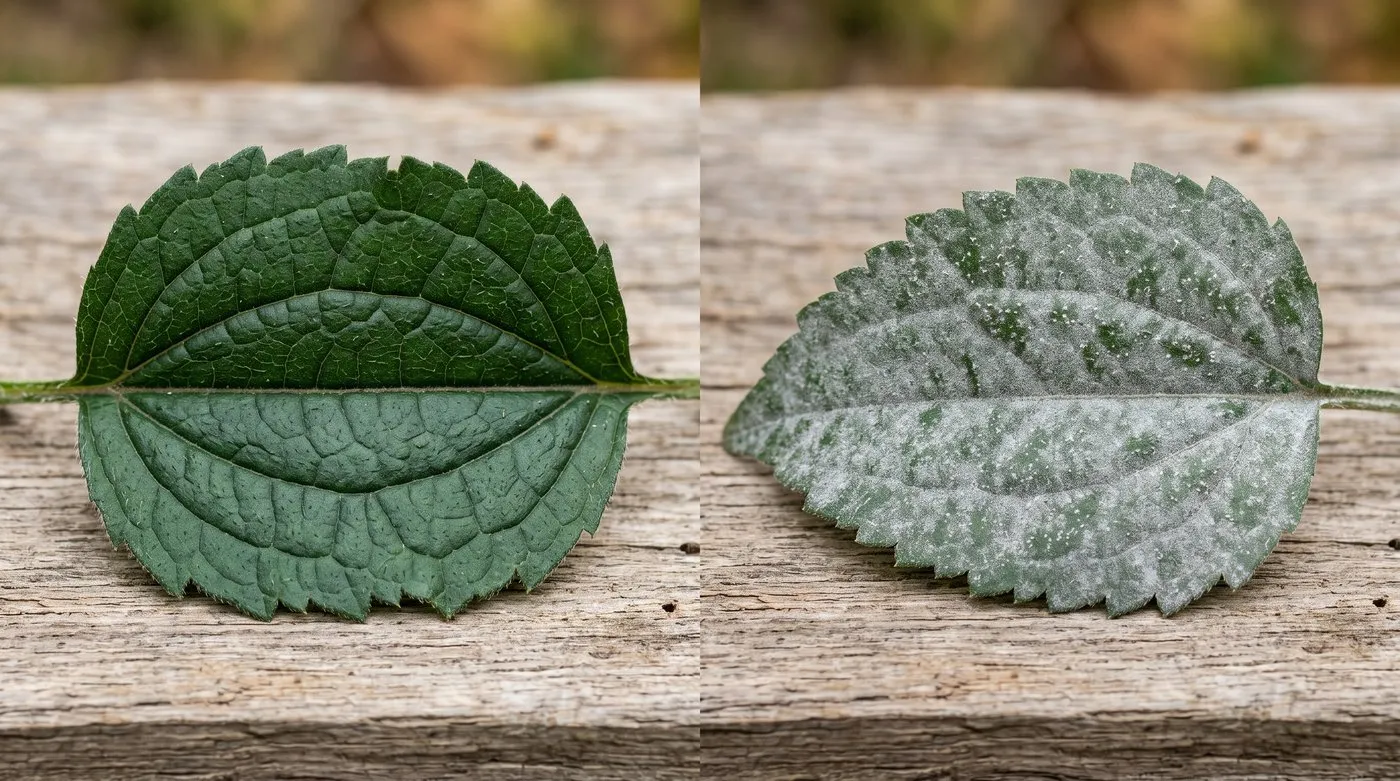 Powdery mildew, right, is a sign of dry roots. Water the soil and improve air flow rather than reaching for a spray.
Rudbeckia for pollinators and winter wildlife
Rudbeckia earns its place twice over: nectar in summer, seed in winter. The open, flat flower centres give bees and hoverflies easy access to pollen and nectar from July to October, filling the gap as earlier perennials fade.
Bumblebees, honeybees, and solitary bees all work the flowers. Late in the season they matter more, because autumn forage for bees is scarce. Butterflies including small tortoiseshells and red admirals visit on warm September days.
When the petals drop, the dark cones dry on the stem and become a natural bird feeder. Goldfinches are the main visitors, clinging to the stems and picking seed straight from the cone through winter. Leaving the seedheads makes rudbeckia one of the best plants for winter seedheads.
The RHS Plants for Pollinators scheme lists rudbeckia as a high-value plant for insects, and its seed value for finches makes it a rare double win.
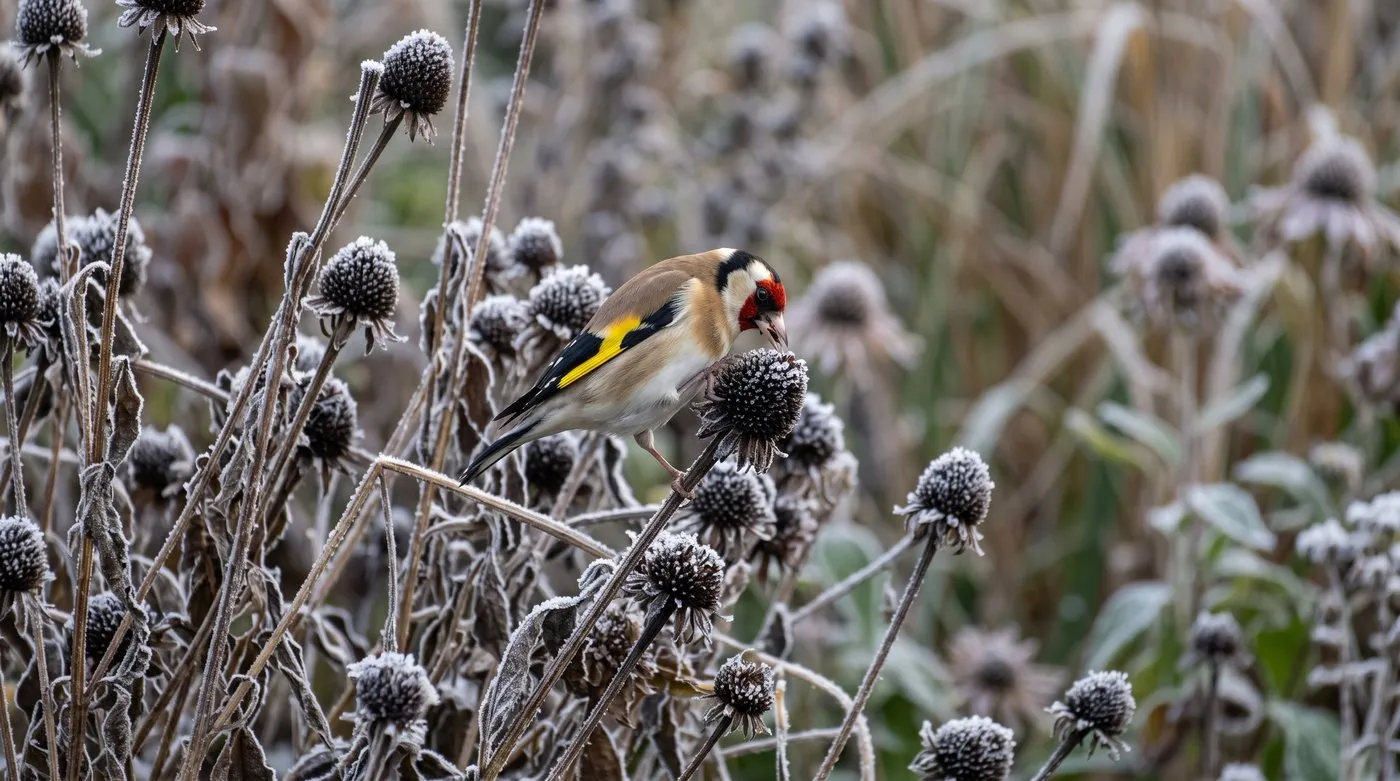 Left standing, rudbeckia seedheads feed goldfinches through winter and hold the frost well.
Using rudbeckia in prairie and cottage borders
Rudbeckia is a cornerstone of naturalistic planting. Its upright habit and strong colour contrast with airy grasses and flat-topped perennials.
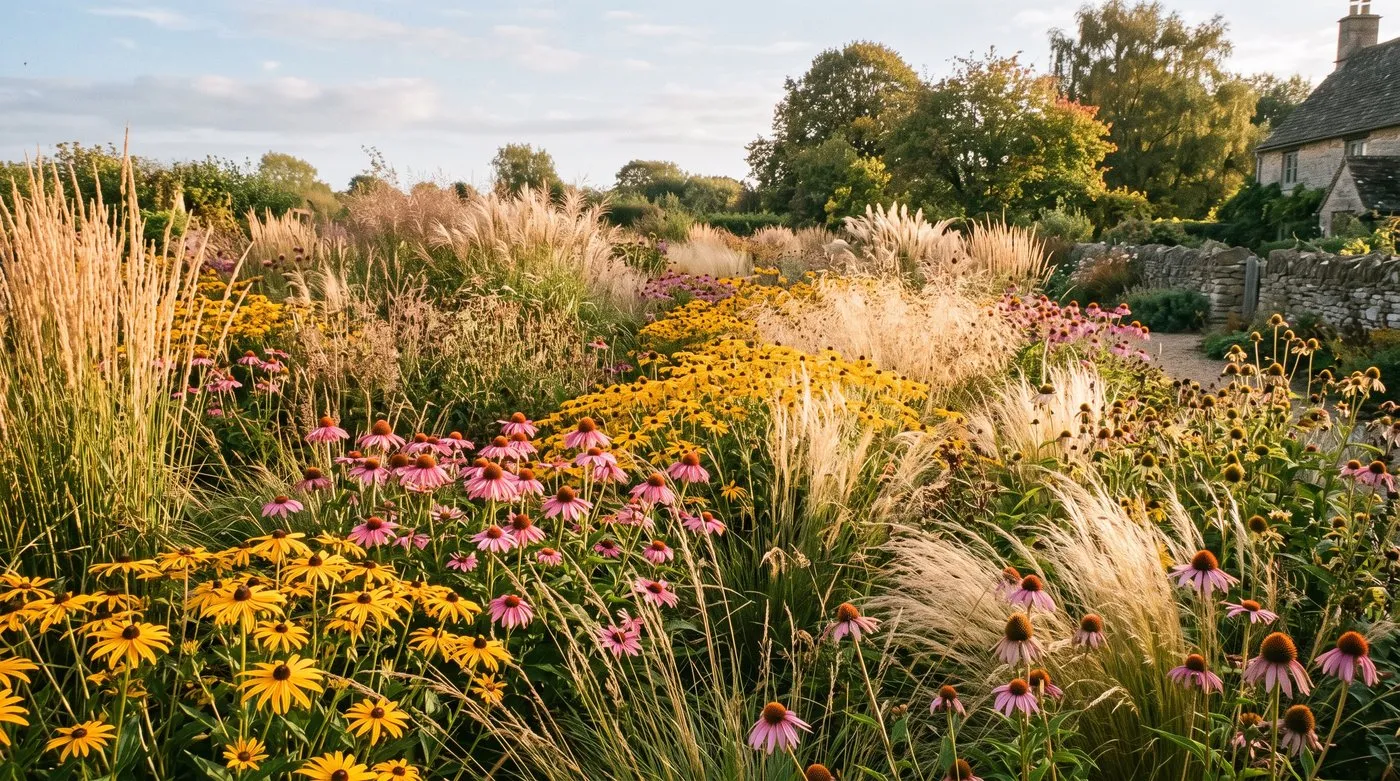 Rudbeckia among grasses and echinacea in a prairie scheme, catching low autumn light.
In a cottage border, rudbeckia sits happily with dahlias, salvias, and asters for a warmer, denser look. It also makes an outstanding cut flower: stems last 6-10 days in a vase if you sear the cut ends. Grow a row for cutting alongside other cut flowers for the UK garden.
The name honours Olof Rudbeck, the Swedish botanist Linnaeus admired, a small piece of history behind a plant that works hard in any late-season border.
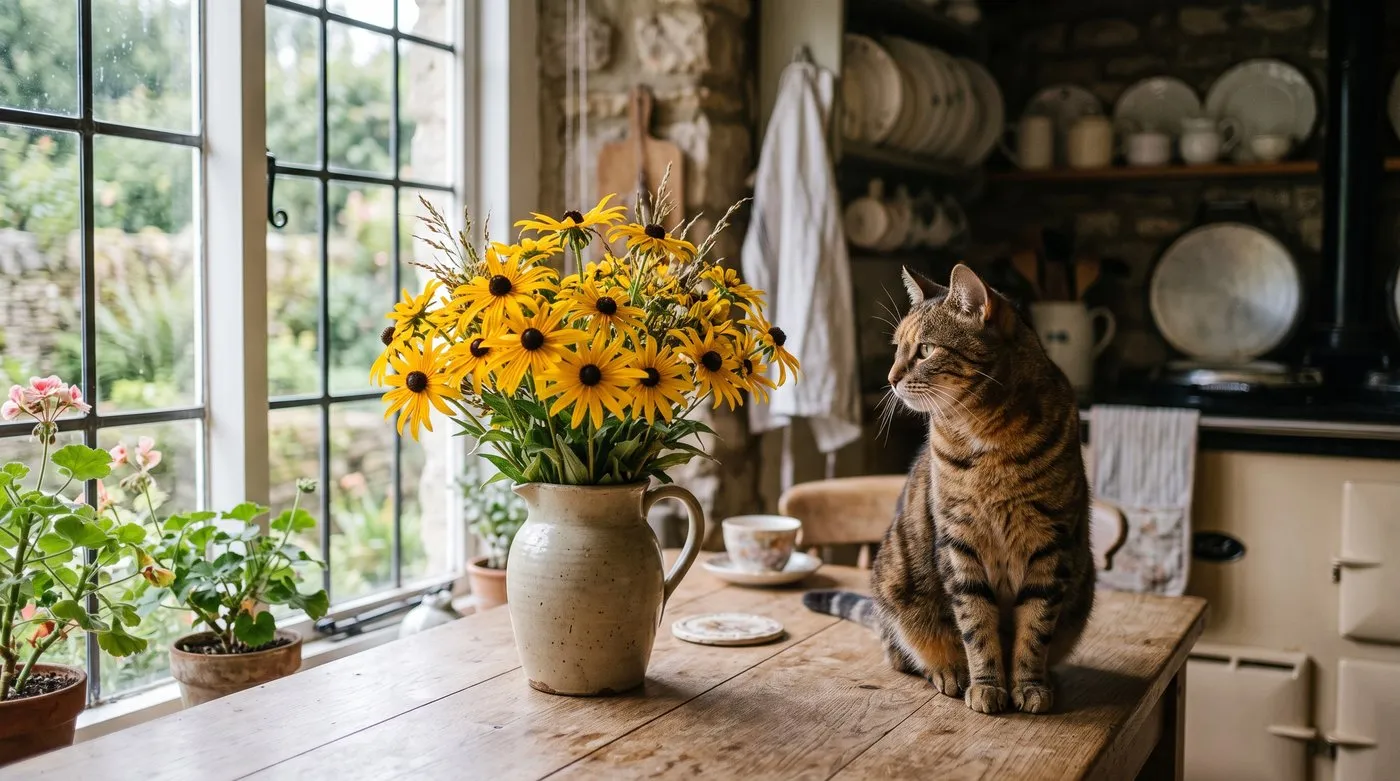 Rudbeckia lasts 6-10 days as a cut flower. Sear the stem ends to stop them wilting.
Common mistakes to avoid
Buying the wrong type. Gardeners expecting a perennial buy R. hirta, then wonder why it dies over winter. Check the Latin name: fulgida returns, hirta does not.
Letting the soil dry out. Treating rudbeckia like drought-tolerant echinacea causes wilting and mildew. Rudbeckia wants moisture. Water in dry spells and mulch in spring.
Cutting back too early. Removing seedheads in autumn strips winter bird food and crown protection. Leave the final cones until late February.
Sowing seed too deep. R. hirta seed needs light. Burying it stops germination. Surface-sow and press it on, never cover it.
Planting in shade. Less than 6 hours of sun gives tall, floppy, shy-flowering plants. Rudbeckia is a full-sun plant, full stop.
Now you have mastered rudbeckia, read our guide to growing echinacea in the UK for its perfect prairie partner.
Frequently asked questions
Is rudbeckia a perennial or an annual?
Both, depending on the species. Rudbeckia fulgida and R. laciniata are hardy perennials that return every year. Rudbeckia hirta is a short-lived perennial grown as a half-hardy annual, sown fresh each spring. Check the label: fulgida for a permanent clump, hirta for one bold season.
When does rudbeckia flower in the UK?
Rudbeckia flowers from July to October in most UK gardens. Annual R. hirta sown in February starts in July. Perennial ‘Goldsturm’ peaks from early August to the first hard frost. Deadheading through the season keeps fresh buds coming for 11 weeks or more.
Does rudbeckia come back every year?
Perennial types come back every year; annual types do not. Rudbeckia fulgida ‘Goldsturm’ returns reliably and spreads into a wider clump each spring. Rudbeckia hirta usually dies over winter, though it self-seeds on free-draining soil in mild areas. Sow fresh seed to keep hirta going.
Where should I plant rudbeckia?
Plant rudbeckia in full sun on moist, fertile soil. It needs at least 6 hours of direct sun for strong stems and full flowering. Unlike echinacea, it copes with heavier, moisture-retentive ground and clay. Avoid dry, poor soil in full sun, where plants wilt.
Why is my rudbeckia not flowering?
Too little sun is the usual cause. Plants in shade grow leafy and floppy with few blooms. Drought stress, very poor soil, and slug-damaged growing tips also reduce flowering. First-year divisions of perennial types may flower lightly before hitting full stride in year two.
How do I stop powdery mildew on rudbeckia?
Keep the roots moist and improve air flow. The white coating appears on ‘Goldsturm’ in dry, crowded plantings from August. Water the soil in dry spells, space plants 40cm apart, and cut affected stems. Mildew is a drought-stress signal, not a soil-borne disease.
Should I cut rudbeckia back in autumn?
No, leave the seedheads standing through winter. The dark cones feed goldfinches from October to February and add frost-lined structure. Cut perennial rudbeckia to ground level in late February as new basal growth appears. Autumn cutting removes bird food and crown protection.
Can rudbeckia grow in pots?
Yes, rudbeckia grows well in pots of 30cm diameter or more. Use a loam-based compost such as John Innes No 3 that holds moisture, and water regularly in summer. Compact varieties like ‘Toto’ and ‘Becky’ suit containers best. Feed fortnightly with high-potash tomato feed from June.
Further reading
- How to grow echinacea in the UK, the drought-loving prairie partner to rudbeckia
- Prairie planting for UK gardens, grasses and perennials to plant with rudbeckia
- Best plants for winter seedheads, keep structure and bird food through the cold months
- How to grow cut flowers in the UK, grow a cutting patch of rudbeckia and more
- Autumn-flowering plants for bees, late nectar sources to grow alongside rudbeckia
Our team produces practical UK gardening guidance from source research, contributor records and established horticultural practice. Editorial standards are overseen by Matt W.