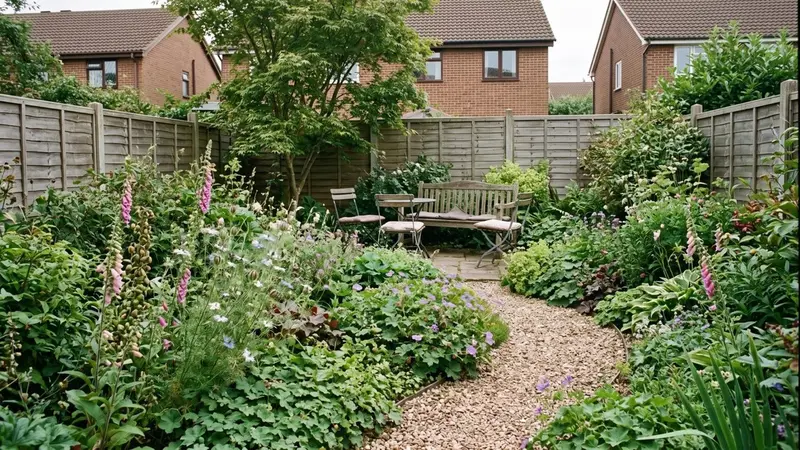
Key takeaways
- Aim for 40 to 70 percent grasses by area, woven through late perennials in repeating drifts
- Plant at high density, 5 to 7 plants per square metre, so the matrix knits together and needs no staking
- Choose lean, free-draining soil in full sun; rich ground makes plants flop and rot
- Leave every stem standing over winter, then make one hard cut in late February or March
- Key grasses: Calamagrostis 'Karl Foerster', Molinia, Deschampsia; key perennials: Echinacea, Sedum, Veronicastrum
- Superb for bees and hoverflies in summer, then finches feeding on seedheads in winter
Prairie planting turns a border into a piece of grassland, all movement, structure and long seasons. Done well, prairie planting reads as natural rather than fussy, with ornamental grasses woven through late-flowering perennials in flowing drifts. The style sits at the heart of the New Perennial movement, associated with the Dutch designer Piet Oudolf and the British planting scientists Nigel Dunnett and James Hitchmough.
This guide draws on ten years running a 42 square metre prairie border on heavy clay in north Staffordshire. It covers the grass-to-flower ratio that makes the look work, the plants that earn their place, the lean soil these schemes demand, and the single yearly cut that keeps it all going. Get the ratio and the drainage right, and a prairie border almost runs itself.
What prairie planting and the New Perennial style really mean
Prairie planting copies the habit of North American tallgrass prairie. Grasses form a living matrix, and broad-leaved flowering plants, called forbs, rise through it in drifts. The result moves in the wind, changes through the seasons, and holds shape long after the flowers fade.
The garden version is often called naturalistic or New Perennial planting. Piet Oudolf brought it to a wide audience through gardens like the High Line in New York and Hauser and Wirth Somerset. In Britain, Nigel Dunnett and James Hitchmough at the University of Sheffield turned the ideas into tested seed and plant mixes, including the meadows at the 2012 Olympic Park.
The core idea is structure over prettiness. A plant is chosen for its shape, its seedhead and how long it stands, not just its flower. Repetition and rhythm matter. The same few species reappear across the bed, so the eye reads calm patterns rather than a jumble. For a wider view of the movement, the modern mixed border design guide sets prairie planting against other contemporary styles.
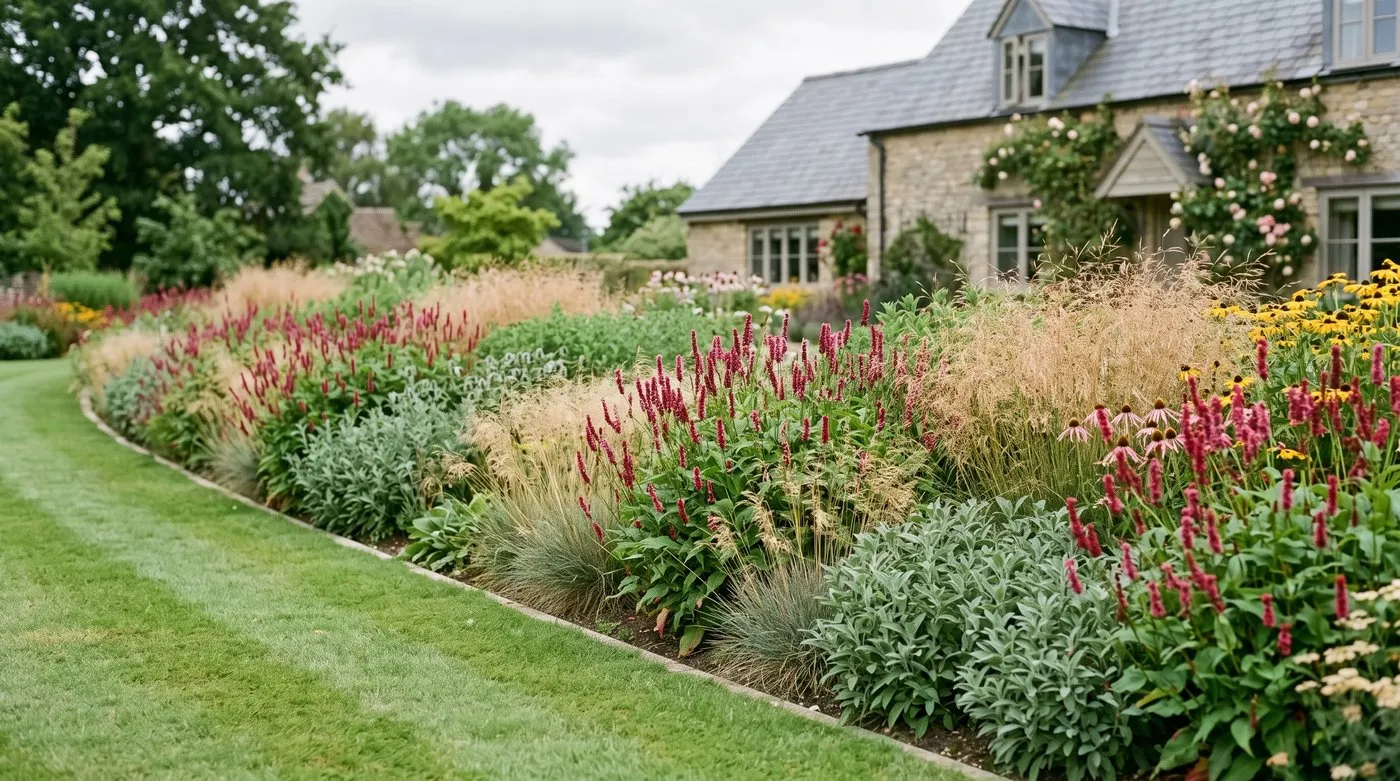 An Oudolf-style scheme reads as calm, repeating drifts rather than a jumble. The same few species reappear across the bed to give rhythm.
The 40 to 70 percent grass ratio that makes it work
The single number that defines prairie planting is the grass ratio. Aim for grasses to fill 40 to 70 percent of the planted area. Below 40 percent it reads as an ordinary herbaceous border with a few grasses added. Above 70 percent it becomes a grass garden and the flowers get lost.
Think of the planting in four roles. Matrix grasses form the background weave. Structural or emergent perennials punch up through it with strong flowers or shapes. Seasonal fillers provide colour in waves. Groundcover knits the base and shades out weeds. Getting the proportions right between these roles matters more than any single plant choice.
Choosing plants by role: the prairie matrix compared
‘Karl Foerster’ is the backbone almost every UK prairie should start with. It greens up early, flowers in June, and holds a rigid vertical shape through the worst winter weather. Molinia ‘Transparent’ and ‘Poul Petersen’ give the tall, see-through veil that makes the style feel like grassland rather than a border. For the airy summer haze, few grasses beat Deschampsia, and our tufted hair grass guide covers its habit, hardiness and cutting times in depth.
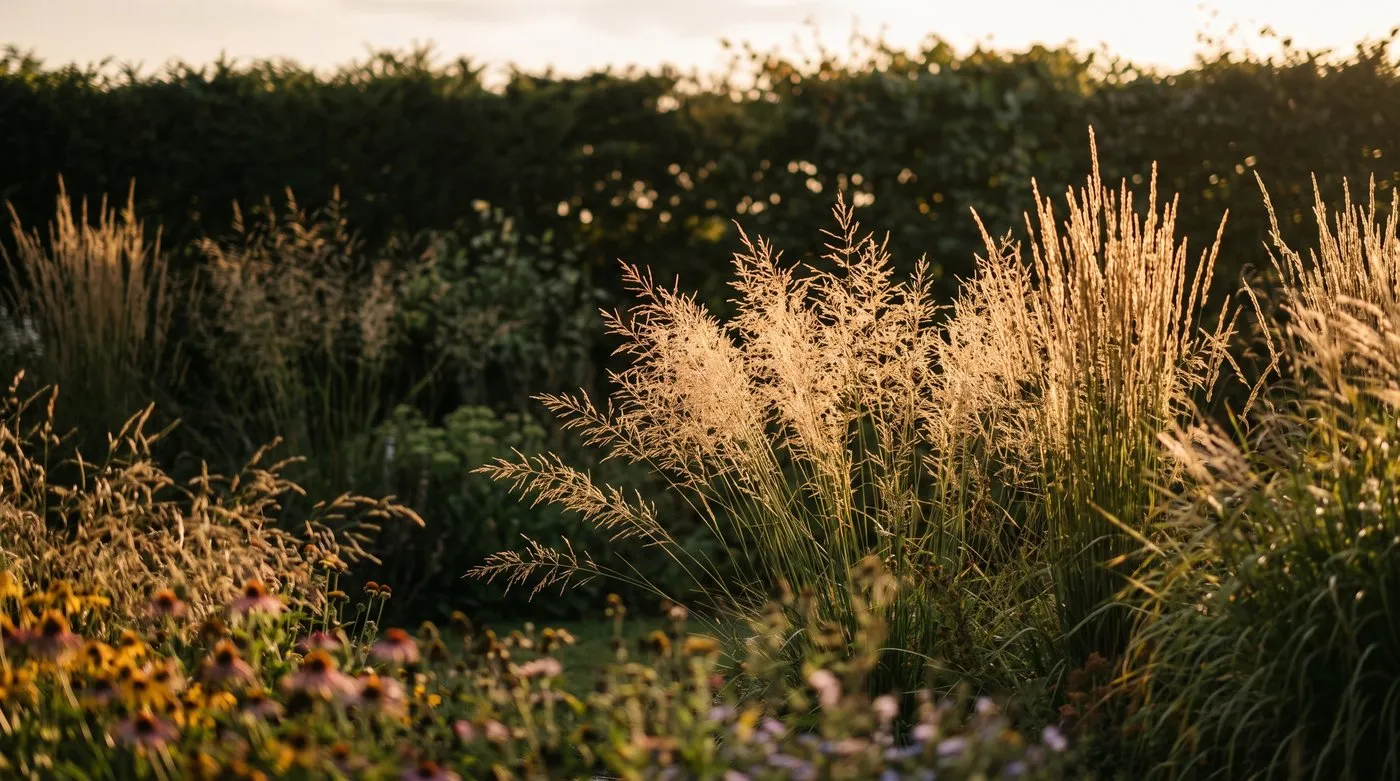 Matrix grasses catch low evening light in a Norfolk garden. Molinia and Calamagrostis give the see-through veil that reads as true grassland.
Structural perennials and seasonal fillers worth planting
The flowers in a prairie scheme are chosen for shape and staying power, not just colour. Structural emergents are the ones with strong outlines that hold through autumn and winter. Echinacea, Rudbeckia, Echinops, Eryngium and Veronicastrum all leave good dark seedheads once the petals drop.
Domed and plate-shaped flowers add contrast against all the vertical grass. Sedum ‘Matrona’ and other Hylotelephium forms give flat autumn plates that turn rich russet and stand until spring. Achillea and Monarda repeat that horizontal note lower down.
For long colour, few plants beat Persicaria amplexicaulis, which throws slim red or pink spikes from July into October. Salvia nemorosa flowers early and rebloom if sheared, while Helenium, Symphyotrichum asters and Echinacea carry the show from midsummer to the frosts. To see how these knit with other reliable perennials, the best perennial plants roundup lists proven UK performers. The strong upright drama of echinacea and the flat autumn heads of sedum both earn their own dedicated growing guides.
Soil, sun and why lean ground beats rich
Prairie plants come from open, sunny grassland on low-fertility soil. Getting this right is the difference between a self-supporting border and a flopping mess. Two conditions are non-negotiable: full sun, meaning six or more hours a day, and free-draining soil.
Warning: Never enrich a prairie bed with manure or general fertiliser. It seems helpful but wrecks the scheme within a season. Fed plants grow tall and soft, then collapse in the first summer storm and rot over winter. If your soil is already fertile, choose tougher, shorter cultivars rather than trying to make lush plants stand up.
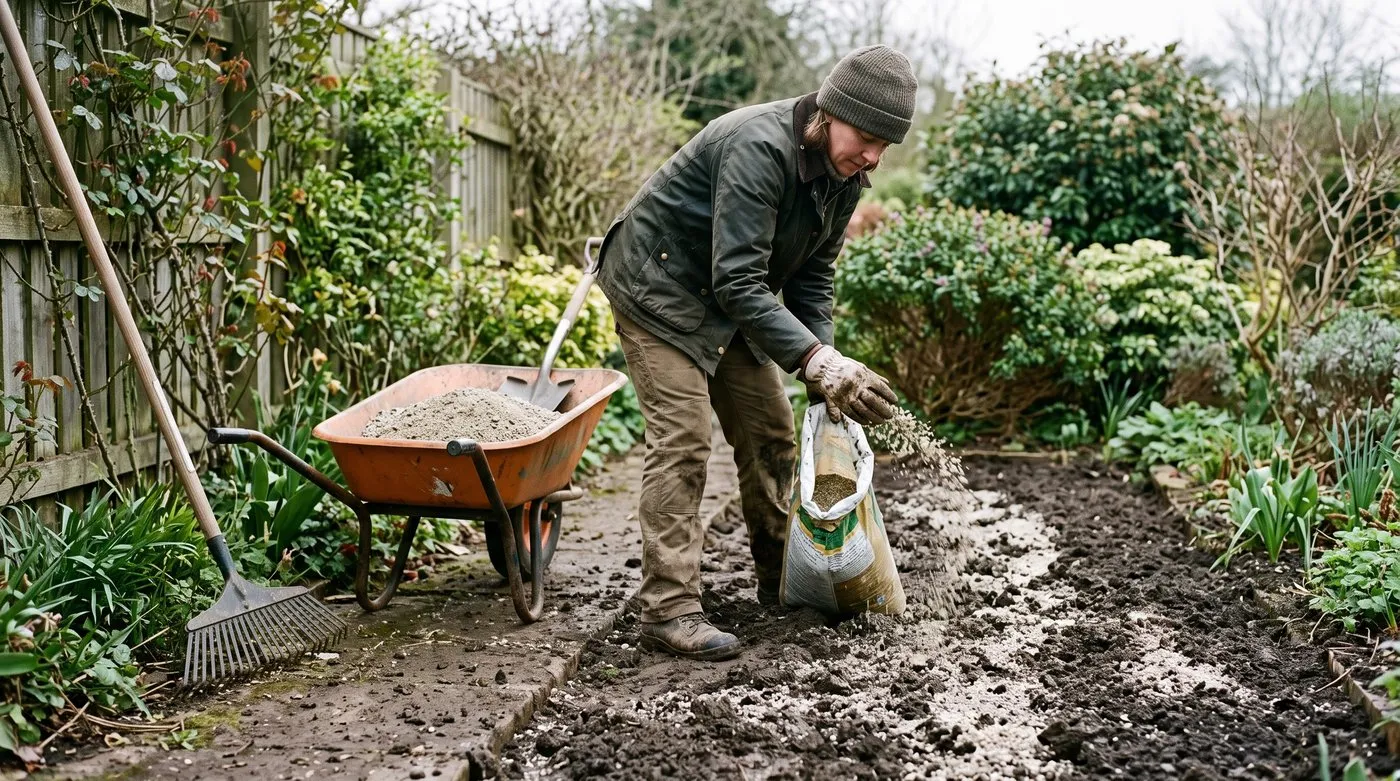 Grit and coarse sand worked into heavy clay before planting. On wet ground this drainage layer is what stops prairie crowns rotting over winter.
First came drainage. In spring 2016 we forked in a 60mm layer of 6mm grit and coarse sand across the whole area, then rotavated it through the top 200mm. This single job changed everything. Overwinter survival of Echinacea purpurea rose from around 40 percent on raw clay to 85 to 90 percent across the next three winters.
Costs were modest. The grit came to about £180, the plants roughly £4 to £9 each as 9cm and 2-litre pots, and the whole bed cost under £1,600 to plant. Ten years on it needs one afternoon of work a year. That running cost is why prairie schemes suit anyone chasing a low-maintenance garden.
 A drift of echinacea rising through grasses in a Yorkshire garden. High-density planting, five to seven per square metre, is what holds the flowers upright without stakes.
Season by season: what a prairie border does through the year
The discipline is holding your nerve in autumn. The urge to tidy is strong, but cutting in October throws away five months of the best structure. The whole design depends on those winter seedheads standing until spring.
 Frosted seedheads and bleached grasses in a Scottish garden in January. Leaving every stem standing is the whole point of prairie planting, not neglect.
The one cut: pruning a prairie border in late winter
Prairie borders get one cut a year, and timing it is the main skill. Make the cut in late February or early March, just before new growth breaks. Cut everything, grasses and perennials together, down to 5 to 10cm above the crowns.
Cutting this late does two jobs. It gives you the full winter show of standing structure and frost. It also leaves seedheads as bird food through the leanest months, when finches and other seed-eaters need it most. Cut in autumn and you lose both, plus you expose the crowns to winter wet.
For a small bed, sharp shears or hedge shears are enough. For anything over about 20 square metres, a hand-held hedge trimmer or a strimmer with a blade saves a lot of time. We clear ours in one afternoon. Rake off the cuttings and compost them, or chop and drop a thin layer as mulch. Do not feed after cutting. The lean regime is what keeps the plants standing next winter.
Feeding pollinators in summer and birds in winter
A prairie border is one of the best things you can plant for wildlife, because it feeds animals across two seasons. In summer the open, nectar-rich flowers of Echinacea, Monarda, Sedum, Salvia and Persicaria draw bees, hoverflies and butterflies in numbers.
The winter role is what sets prairie planting apart. Left standing, the seedheads of grasses, echinacea, rudbeckia and eryngium feed goldfinches, greenfinches and other seed-eaters from November onward. The dead stems also shelter overwintering insects, including ladybirds and lacewings. Cutting in autumn destroys all of this at a stroke.
 A bumblebee working echinacea in a London townhouse garden. Open, nectar-rich flowers make prairie borders a magnet for summer pollinators.
Common mistakes with prairie planting
- Planting in soil that is too rich. This is the number one failure. Fertile ground makes plants grow tall, soft and top-heavy, so they flop by August and rot in winter. Never feed a prairie bed. On rich soil, add grit and choose shorter, tougher cultivars.
- Planting too sparsely. Spacing plants like a traditional border, one per square metre, leaves gaps for weeds and gives no mutual support. Plant the matrix at 5 to 7 per square metre so it knits together and holds itself up.
- Cutting back in autumn. The winter structure, frost display and bird food are half the reason to grow prairie. Cutting in October throws all of it away and leaves bare soil for five months. Wait until late February.
- All flowers and no grasses. Skimping on grasses to fit in more colour turns the scheme back into an ordinary border. Keep grasses at 40 percent of the area or more, or the naturalistic feel disappears.
- Ignoring drainage on clay. Prairie crowns rot on wet ground. Planting straight into unimproved clay kills half the plants by spring. Add a deep grit layer, build a raised bed, or mulch with gravel before you plant.
Prairie planting rewards restraint. The best beds come from a short plant list, repeated in generous drifts, on poor soil, left almost alone. It is a style built for the garden as a whole, not one perfect plant, and it fits the wider move toward naturalistic, wildlife-first garden design across Britain.
Now you understand how a prairie border is built and kept, read our guide to ornamental grasses for UK gardens to choose the matrix that will anchor your own scheme.
Frequently asked questions
What is prairie planting in a garden?
Prairie planting mixes ornamental grasses with late-flowering perennials in natural-looking drifts. It copies the North American grassland habit, with grasses forming a matrix and flowers rising through it. The style is central to the New Perennial movement led by Piet Oudolf. Structure, movement and winter seedheads matter more than tidy summer colour.
What percentage of a prairie border should be grasses?
Does prairie planting work on clay soil in the UK?
Yes, but only after you improve drainage first. Prairie plants come from lean, free-draining grassland and rot on wet clay. We added 60mm of grit and coarse sand to our clay and overwinter survival rose from 40 to 85 percent. Raised beds or a gravel mulch also help on heavy ground.
When do you cut back a prairie border?
Cut everything down once, in late February or early March. Leave every stem standing through winter for structure, frost display and bird food. Cut just before new growth starts, taking the whole bed to about 5 to 10cm. Never cut in autumn, or you lose the entire winter show.
Do prairie plants need staking?
No, a properly built prairie border supports itself. High-density planting and a grass matrix hold flowers upright without canes. Lean soil keeps stems short and sturdy. Staking becomes necessary only when the soil is too rich, which makes plants grow soft and tall.
What are the best grasses for a UK prairie border?
Calamagrostis ‘Karl Foerster’, Molinia and Deschampsia are the reliable backbone. ‘Karl Foerster’ gives early upright structure, Molinia adds see-through height, and Deschampsia forms an airy summer haze. Panicum and Sporobolus suit warmer, sheltered gardens. All four cope well with British weather and stand through winter.
Is prairie planting low maintenance?
Yes, once established it is one of the lowest-maintenance styles. There is one cut a year, little or no feeding, and no staking or deadheading. The first two seasons need weeding and watering while plants knit together. After that the dense matrix suppresses most weeds itself.
Our team produces practical UK gardening guidance from source research, contributor records and established horticultural practice. Editorial standards are overseen by Matt W.