Key takeaways
- Sow indoors February to April at 20-22C in darkness; germination takes 14-21 days
- Plant out late May after the last frost, spacing plants 25-30cm apart
- Needs full sun and free-draining soil; it shrugs off drought and heat once established
- Flowers July to October, giving 8-12 cuttable stems per plant over the season
- Cut for drying just as the globes colour fully, then hang upside down 2-3 weeks
- Fresh vase life is 7-10 days; dried blooms hold colour for 12 months or more
Globe amaranth is the everlasting flower most UK gardeners overlook. Knowing how to grow gomphrena gives you armfuls of papery, clover-like globes that work fresh in a vase and dry to keep their colour for over a year. This half-hardy annual asks for warmth at the start and almost nothing once it settles in. It laughs off drought and August heat while soft border flowers flop.
What gomphrena is and why it earns its space
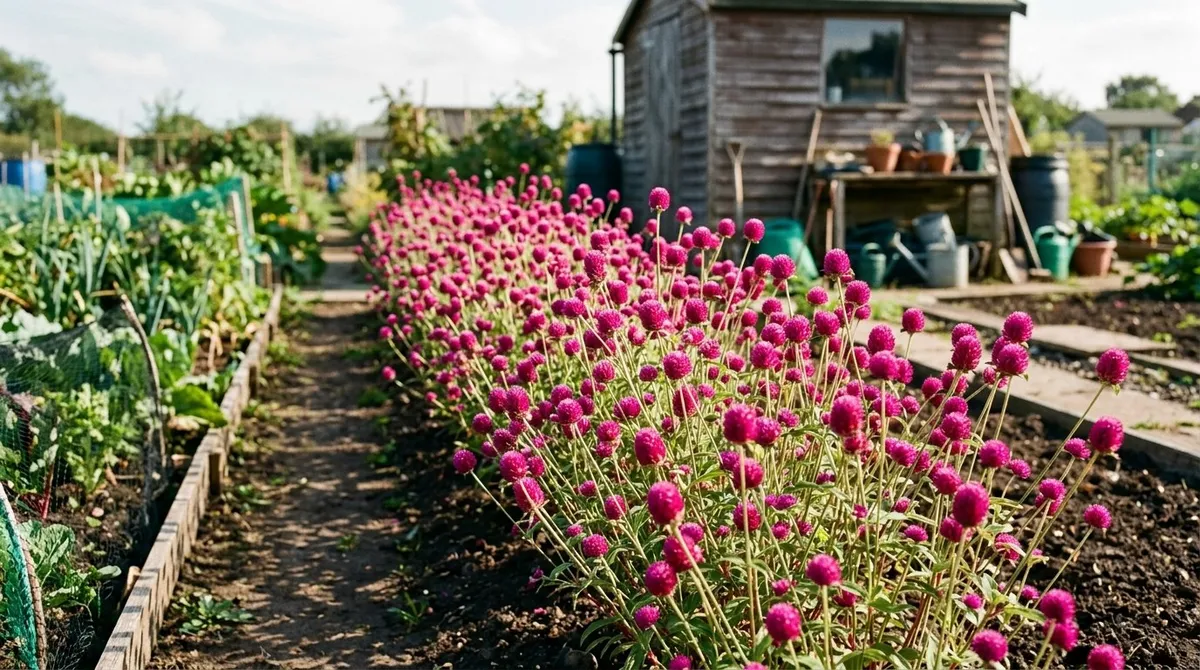
Gomphrena globosa is a half-hardy annual from Central America, grown across UK gardens for its rounded papery flower heads. Each “flower” is a tight cluster of bracts, clover-shaped and stiff to the touch. That papery structure is why it dries so well and holds colour for so long.
The plant forms a bushy mound 20-75cm tall depending on cultivar. From July it throws up wiry stems topped with globes in magenta, purple, white, pink, and red. Bees and hoverflies work the blooms all summer. For a fuller view of summer annuals worth the effort, see our guide to the best half-hardy annuals.
Its real value is dual use. Few flowers cut well fresh AND dry to keep their shape. Gomphrena does both, which makes it a backbone plant in any cutting garden layout.
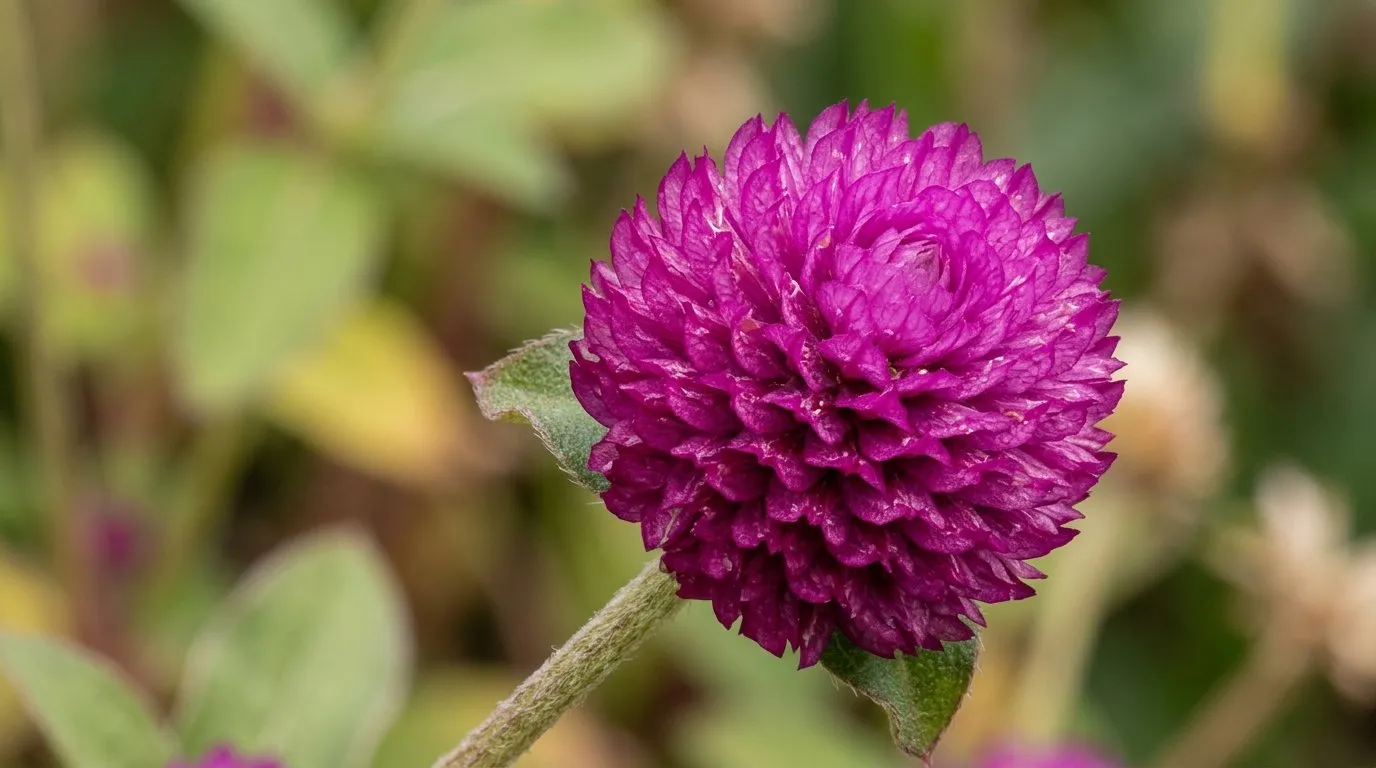 The papery bracts of a globe amaranth bloom, the structure that lets it dry without collapsing.
When and how to sow gomphrena seeds
Sow gomphrena indoors from February to April at a steady 20-22C. This is a warmth-loving seed and the single biggest reason people fail with it is sowing too cold. Below 18C the seed sulks and rots in the compost.
Germination is slow even when warm, taking 14-21 days. Be patient and resist the urge to give up. The seed also needs darkness to sprout, so cover it after sowing. A heated propagator or warm airing cupboard gives the most reliable results. For target figures on different crops, our seed germination temperatures guide sets out the ranges.
Numbered sowing stages:
- Soak the seed in warm water for 24 hours before sowing to soften the woolly coat.
- Fill module trays with fine seed compost and firm gently.
- Sow two seeds per cell on the surface, then cover with a thin layer of vermiculite to exclude light.
- Place in a propagator at 20-22C and keep the compost barely moist.
- Wait 14-21 days; thin to the strongest seedling once two true leaves form.
The critical mistake most people make is sowing in light and letting the temperature drop overnight. A cold windowsill at night undoes the daytime warmth. Keep the seed warm around the clock until it germinates.
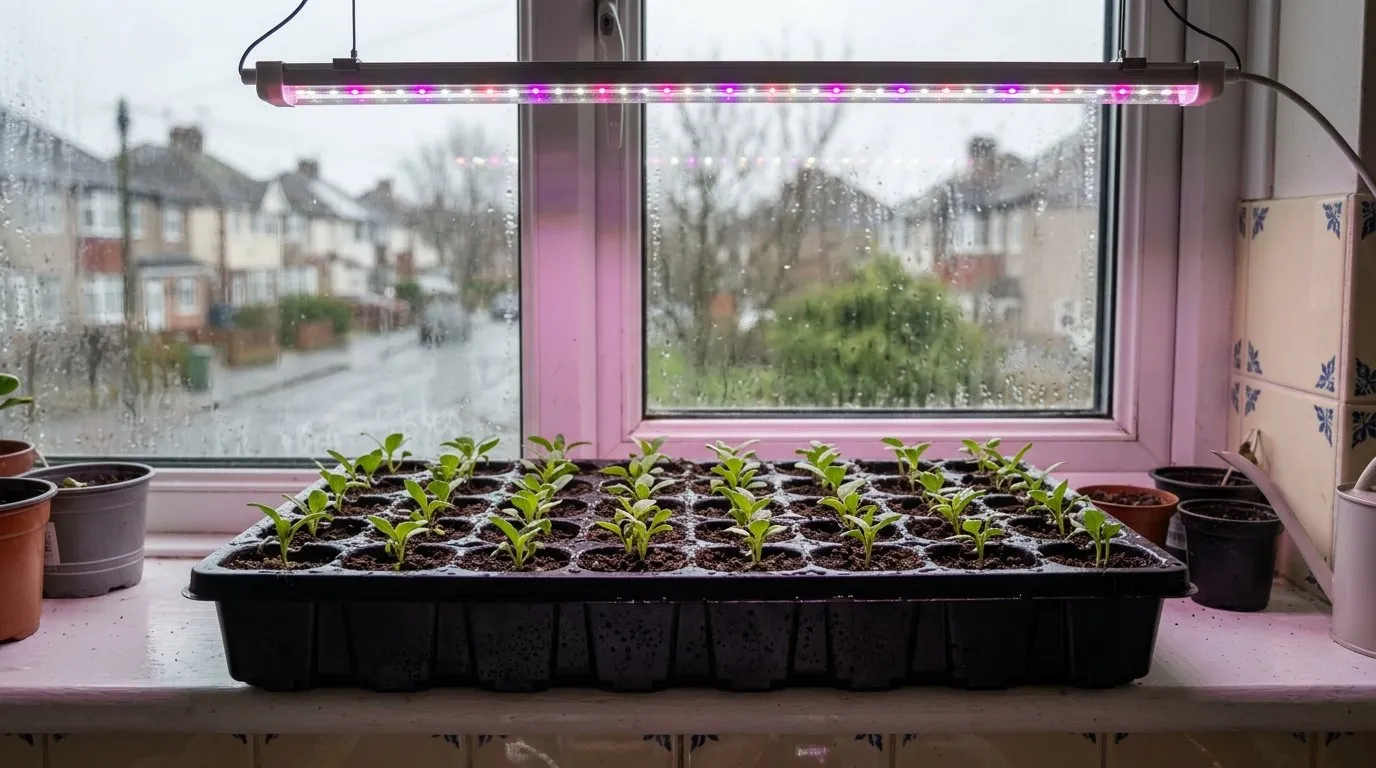 Young gomphrena seedlings under grow lights, kept at a steady 20C while late frosts pass outside.
Pricking out, hardening off, and planting out
Once seedlings have two true leaves, prick them out into 7cm pots. Handle them by the leaf, never the stem, and grow them on in good light at around 15-18C. Leggy seedlings usually mean too little light, so a bright sill or grow lights help. Our grow lights for seed starting guide covers the kit. Water from below to keep the surface dry and damping-off at bay.
Gomphrena is half-hardy and frost kills it outright. Do not rush it outside. Harden off plants over 10-14 days from mid-May, moving them out by day and in at night, then leaving them out once the risk of frost has passed. The full method is in our hardening off seedlings guide.
Gardener’s tip: Do not feed gomphrena rich soil or high-nitrogen fertiliser. Like cosmos, it flowers harder on lean ground. Fat, leafy plants give you fewer and weaker stems.
Month-by-month UK growing calendar
This calendar assumes a Midlands or southern garden. Shift each step about two weeks later for Scotland, the north, and exposed coastal plots.
| Month | Task | Detail |
|---|---|---|
| February | Sow (early) | First sowing in a heated propagator at 20-22C for the longest season |
| March | Sow (main) | Main indoor sowing window; warmth and darkness essential |
| April | Sow (last) / pot on | Final sowing; prick out and pot on earlier batches |
| May | Harden off | Acclimatise plants over 10-14 days; plant out late May in the south |
| June | Plant out / pinch | Plant out in the north; pinch tips at 15cm on all plants |
| July | First cuts | Flowering begins; take first stems for fresh posies |
| August | Cut and dry | Peak flowering; main harvest for drying as globes colour |
| September | Keep cutting | Cut-and-come-again continues; last big drying harvest |
| October | Final cuts | Cut everything before the first frost blackens the plants |
| November | Clear | Pull spent plants and compost; sort dried bunches for storage |
How to harvest and dry gomphrena for everlasting flowers
Drying is where gomphrena pays you back through winter. The timing of the cut decides everything. Cut stems just as the globes reach full colour and feel firm, but before they soften or start to fade. Cut too early and the heads stay small; cut too late and colour dulls.
- Cut in the cool of early morning when stems are turgid, using sharp snips.
- Strip every leaf from the stem; leaves trap moisture and go mouldy.
- Bundle 8-10 stems and secure with an elastic band, which tightens as stems shrink.
- Hang the bunches upside down on a line or hook in a dark, airy place such as a shed or spare bedroom.
- Leave undisturbed for 2-3 weeks until the stems snap rather than bend.
The critical mistake here is drying in light or in a damp room. Light bleaches the colour and damp brings mould. A dark, well-ventilated shed is ideal. Stored out of sunlight, dried gomphrena holds its colour for 12 months or more.
For fresh use, vase life runs 7-10 days. Condition stems first in deep cool water for a few hours. Our guide to conditioning cut flowers for longer vase life explains the method that doubles fresh life on most stems.
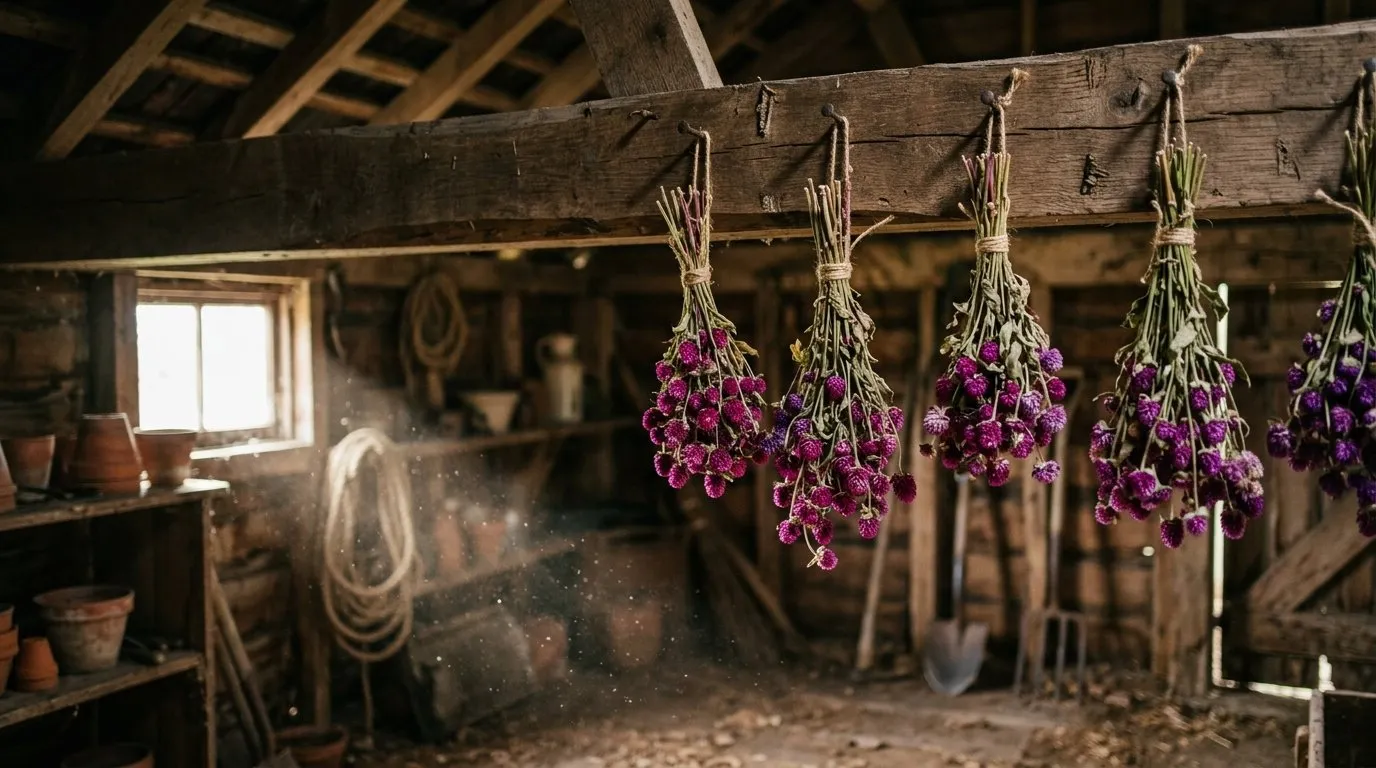 Stems bundled and hung in a dark, airy shed; they snap clean after two to three weeks.
Best gomphrena cultivars for UK cutting gardens
Cultivar choice changes stem length, colour, and whether a plant suits drying or bedding. The QIS series is the cut-flower grower’s first pick for its long stems and strong colour hold. Strawberry Fields (Gomphrena haageana) gives unusual orange-red globes that dry beautifully. The RHS holds an Award of Garden Merit for several globe amaranth selections, and their plant guidance is worth checking before you buy.
| Cultivar | Colour | Height | Best use |
|---|---|---|---|
| QIS series | Mixed: purple, pink, white, red | 60-75cm | Cutting and drying (top pick) |
| Strawberry Fields | Orange-red | 50-60cm | Drying; rare warm tone |
| Las Vegas | Purple, pink, white | 20-30cm | Bedding and short posies |
| Fireworks | Bright pink, gold-tipped | 75-90cm | Tall fresh cutting |
| Audray series | Purple, rose, white | 40-50cm | Compact cutting |
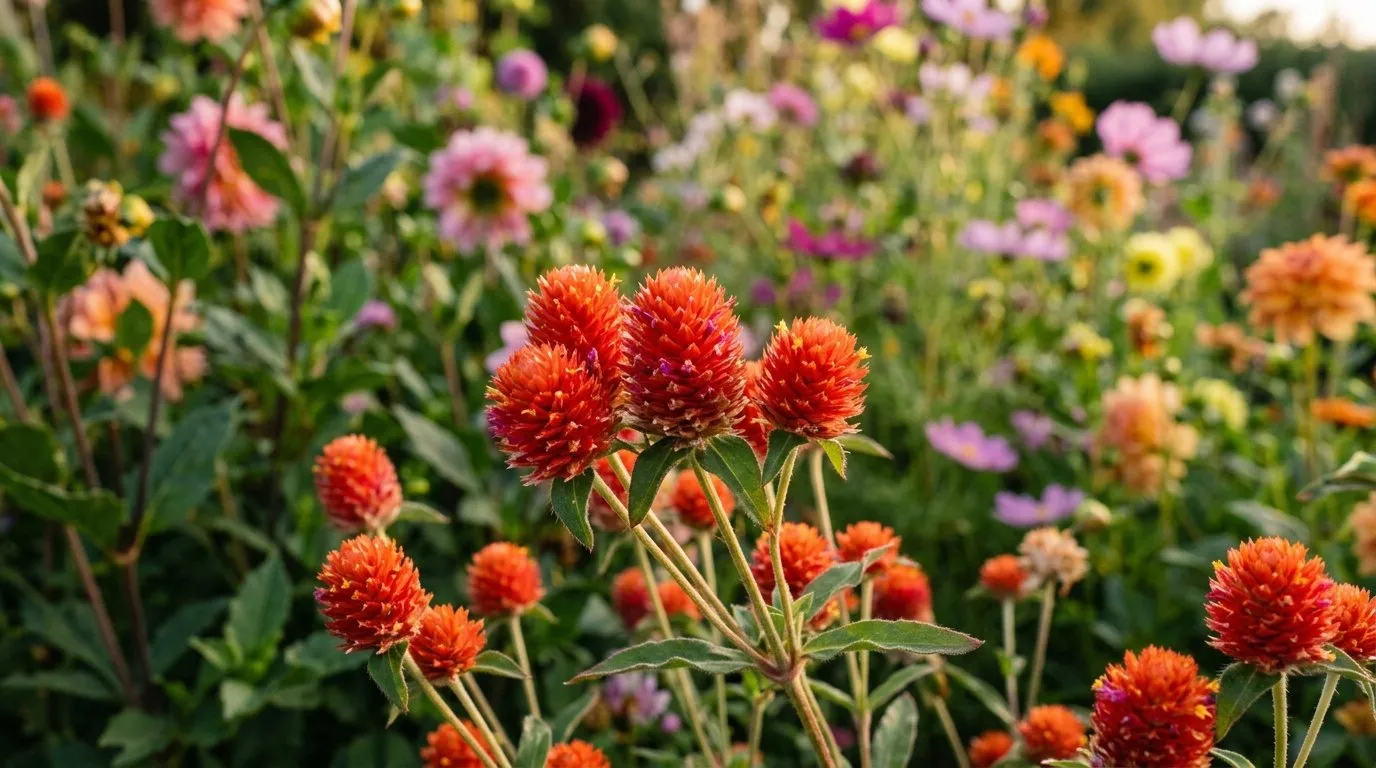 Strawberry Fields brings a rare orange-red tone that few everlasting flowers can match.
Why gomphrena thrives on neglect
The reason gomphrena copes with drought and heat lies in its origin, not in any trick of cultivation. It evolved in the hot, dry grasslands of Central America. Its tissues are built to hold water and its papery bracts lose very little to evaporation. This is why it keeps flowering through an August dry spell that flattens softer annuals.
The practical lesson follows from that. Rich, moist soil works against the plant by pushing soft leafy growth that flops and rots. Lean, free-draining ground in full sun mimics its native conditions. Get the position right and the plant looks after itself. It rarely needs watering once established and is untroubled by most pests, including slugs that devastate dahlias.
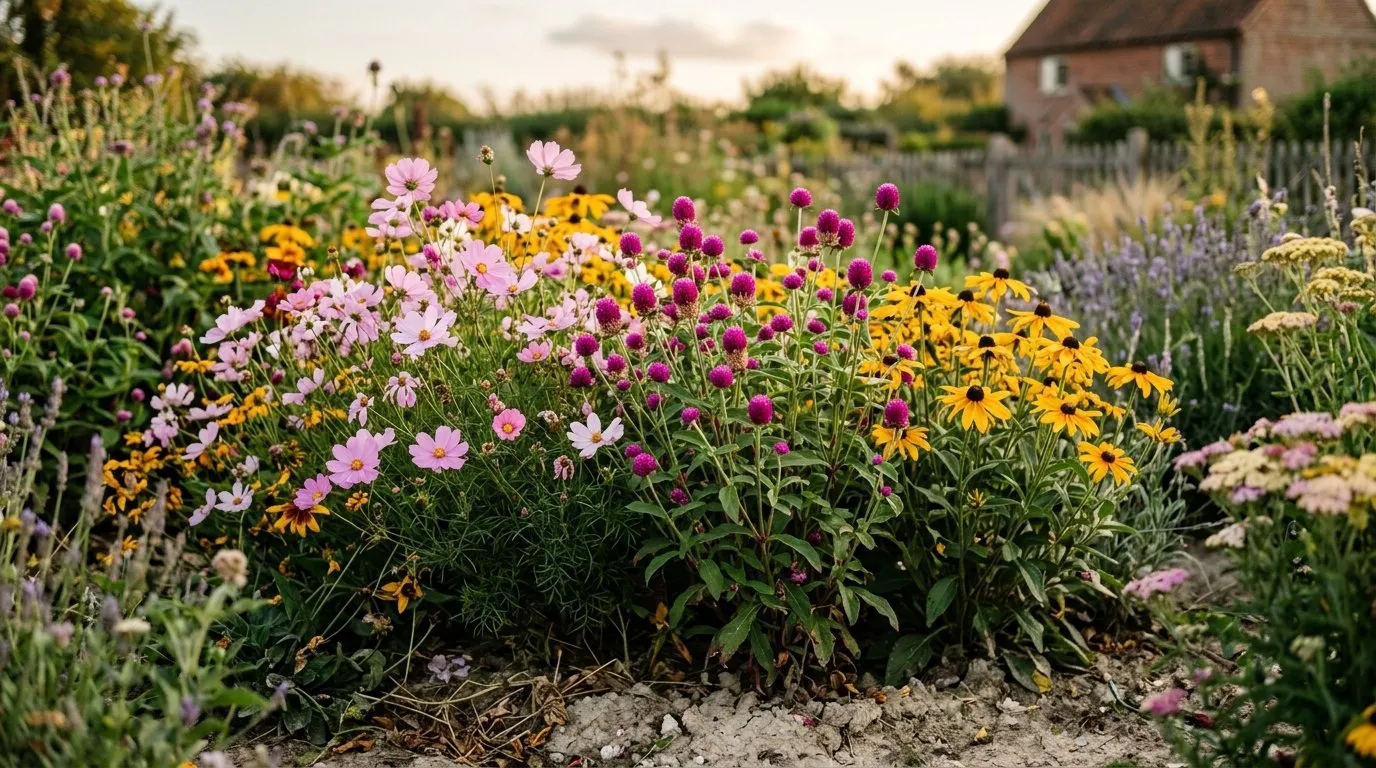 Gomphrena slots into a mixed cut-flower border, still standing crisp after a dry August.
Common mistakes with gomphrena and how to avoid them
Most failures trace back to a handful of repeated errors. Knowing them in advance saves a whole season.
- Sowing too cold. Gomphrena needs 20-22C to germinate. A cool windowsill stalls the seed and it rots. Use a heated propagator and keep warmth steady overnight.
- Sowing in light. The seed needs darkness to sprout. Cover with vermiculite. Uncovered seed germinates poorly and erratically.
- Planting out too early. It is half-hardy and one late frost kills it. Wait until late May in the south, early June in the north, after proper hardening off.
- Feeding too richly. High nitrogen gives leaves not flowers. Grow it lean in free-draining soil for the most stems.
- Cutting for drying too late. Once globes soften and dull, dried colour is poor. Cut as they reach full firm colour, not after.
Warning: Never dry gomphrena in a sunny window or a damp utility room. Light bleaches the colour within days and humidity brings grey mould that spoils the whole bunch.
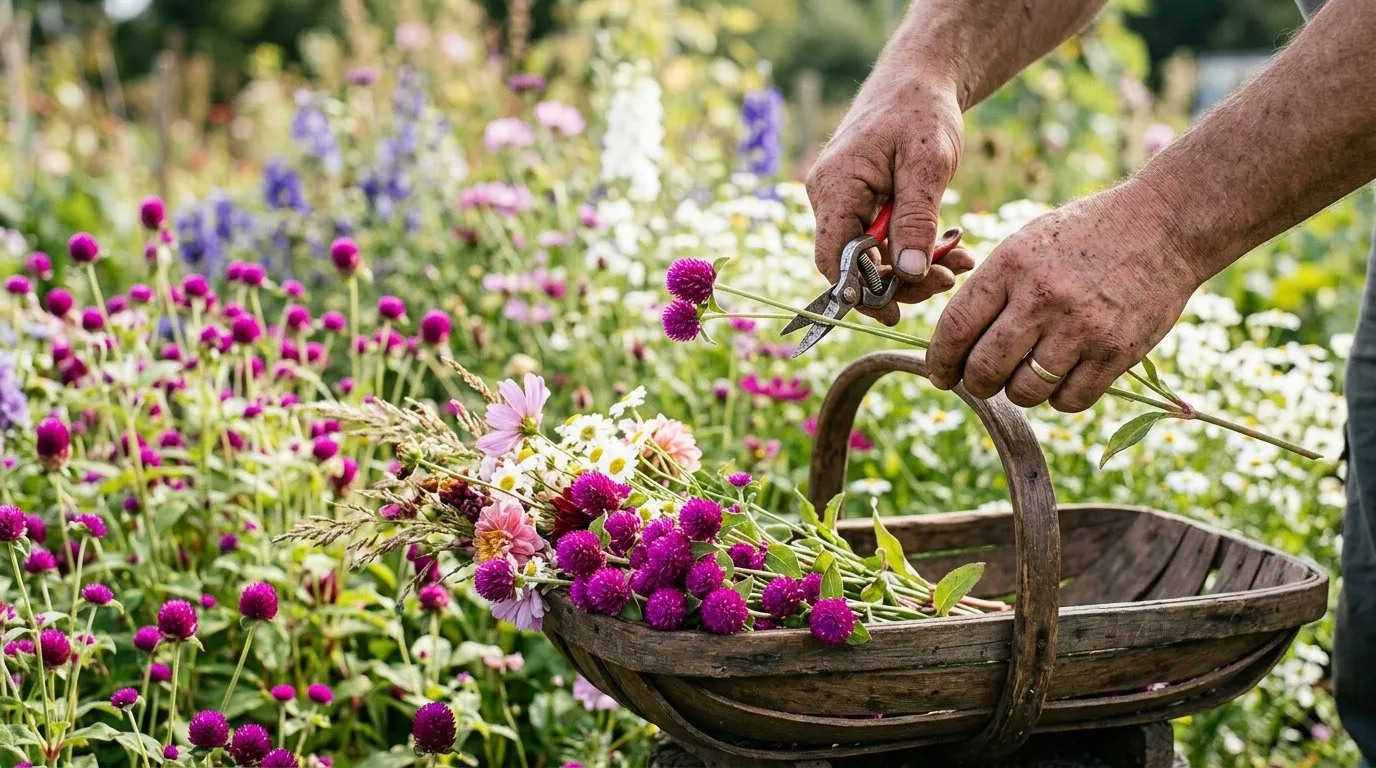 Cut-and-come-again: regular harvesting through August keeps the plants throwing fresh stems.
Using gomphrena fresh and dried through the year
A single sowing stretches across two uses and two seasons. Through summer, cut stems for fresh posies; the more you cut, the more it flowers, true cut-and-come-again behaviour. A dozen stems make a bright kitchen-table posy that lasts well over a week.
From August, switch to harvesting for drying. The dried bunches see you through the dark months for wreaths, dried arrangements, and winter posies. Paired with hydrangeas, the everlasting display lasts until spring. Our guide to drying hydrangea flowers covers a flower that combines well with gomphrena in dried work.
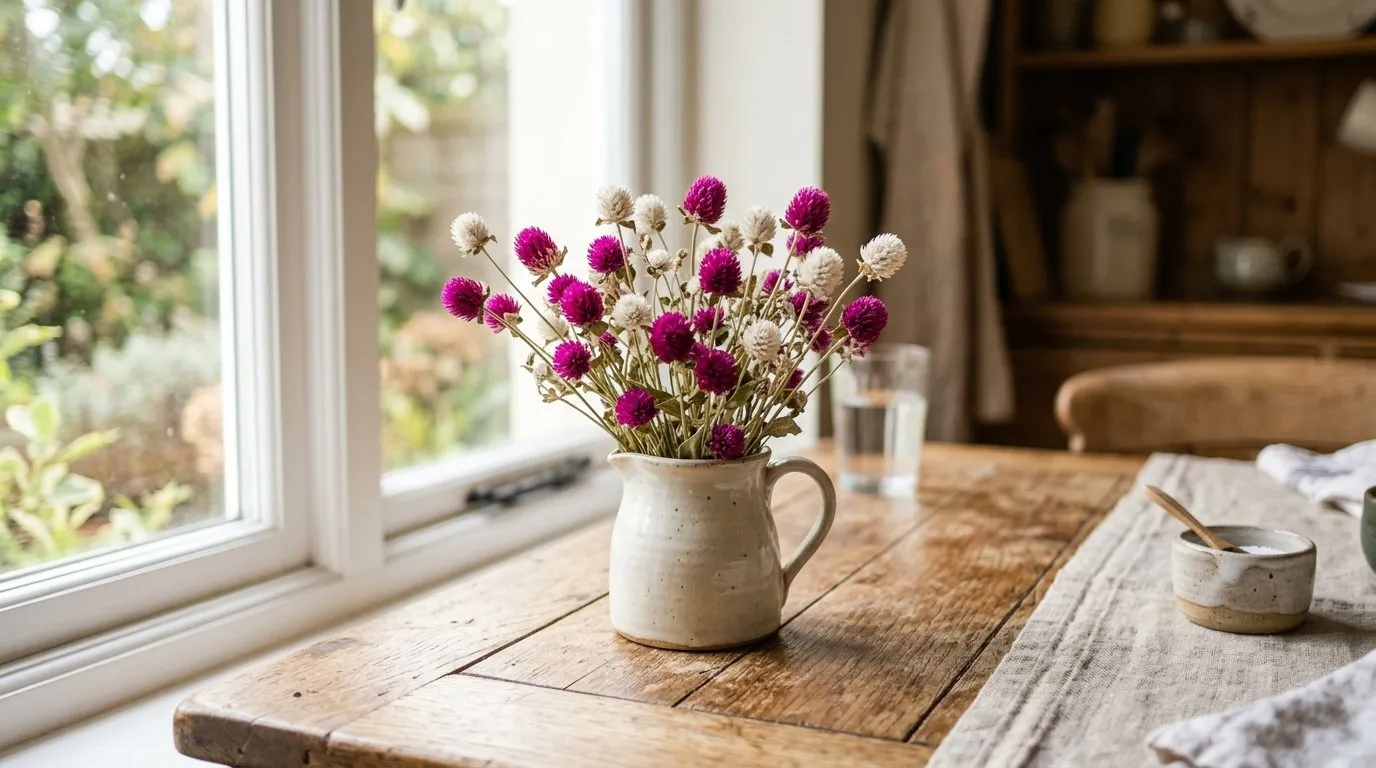 A dried posy on the kitchen table; the colour holds for over a year out of direct sun.
Frequently asked questions
When should I sow gomphrena seeds in the UK?
Sow indoors from February to April at 20-22C. Germination is slow, taking 14-21 days, so an early start matters. The seed needs steady warmth and darkness to sprout. Direct sowing outdoors rarely works in the UK because our late springs stay too cold for reliable germination.
Why won’t my gomphrena seeds germinate?
Cold soil and light are the usual causes. Gomphrena germinates best at 20-22C in the dark, covered with vermiculite. Below 18C the seed sits and rots. A heated propagator solves this. Soaking seed for 24 hours before sowing also lifts germination rates noticeably.
How do I dry globe amaranth flowers?
Cut stems just as the globes colour fully, before they soften. Strip the leaves, bundle 8-10 stems with an elastic band, and hang upside down. Choose a dark, airy place such as a shed or spare room. They dry in two to three weeks and hold colour for over a year.
Is gomphrena a perennial or an annual?
In the UK it is grown as a half-hardy annual. Gomphrena globosa is technically a tender perennial in frost-free climates. UK frosts kill it each winter, so we sow fresh each year. It will not survive outdoors here, even in a mild southern garden.
How tall does gomphrena grow?
Most cutting types reach 45-75cm tall. Compact bedding cultivars like Las Vegas stay around 20-30cm. Taller series such as QIS and Audray reach 60-75cm, giving longer stems for the vase. Strawberry Fields sits in the middle at roughly 50-60cm.
What is the vase life of fresh gomphrena?
Fresh cut gomphrena lasts 7-10 days in water. Cut in the cool of early morning and condition stems in deep water for a few hours first. Change the water every two days. The papery texture means it wilts far slower than soft-petalled flowers.
Does gomphrena need full sun?
Yes, it needs full sun and at least six hours of direct light daily. Gomphrena originates from hot regions and loves heat. In shade it grows leggy and produces few flowers. A south or west-facing, free-draining bed gives the best stem counts.
Which gomphrena variety is best for drying?
The QIS series is the standout for drying, with long stems and strong colour hold. Strawberry Fields offers rare orange-red globes for drying too. Las Vegas suits bedding and short posies. Fireworks adds bright pink sparkler-like blooms on tall stems.
Now you’ve mastered globe amaranth, read our guide on how to grow cut flowers for a fuller plan to fill your garden with stems all summer. You can also browse all our plants guides for more growing inspiration.
Our team produces practical UK gardening guidance from source research, contributor records and established horticultural practice. Editorial standards are overseen by Matt W.