Key takeaways
- Tuberose needs 20-25C to start into growth: a cold windowsill at 12C will not break dormancy
- Allow 90-120 days from potting to first flower, so start indoors by mid-March for August blooms
- Single 'Mexican' is more reliable and stronger-scented; double 'The Pearl' is showier but slower
- Plants are frost-tender at 0C: lift before the first October frost and store dry at 13-18C
- Scent is strongest from dusk onward, with 12-20 waxy florets opening up the spike over 2-3 weeks
- Cut stems last 5-10 days in a vase, and the main offset reblooms only in its second or third year
Tuberose is the most intensely night-scented bulb you can grow, and learning how to grow tuberose in the UK comes down to one thing: heat. The plant (long known as Polianthes tuberosa, now reclassified as Agave amica) is a tender Mexican native that needs steady warmth to wake up and flower. Treat it like a daffodil and you will get strap leaves and no scent. Give it the heat it expects and a single spike will perfume a whole conservatory after dark.
This guide covers the heat requirement most growers miss, the single versus double types, growing in pots, cutting for the vase, and lifting the tubers before frost. The RHS profile of Agave amica confirms the name change and its tender status. Everything below comes from four seasons of pot trials under glass in Staffordshire.
Why tuberose needs so much heat to start
Tuberose evolved in the warm, frost-free regions of central Mexico. It carries no cold tolerance and no clever dormancy trigger that responds to chilling. The tuber simply waits for warmth before it puts out roots and a shoot. That single fact decides everything about how it behaves in a British garden.
Once growing, the plant also needs a long warm season. It takes 90-120 days from a started tuber to an open flower spike. Lose six weeks to a cold start and you run out of summer before the spike forms. Bottom heat at the beginning is not optional. It is the difference between flowers and foliage.
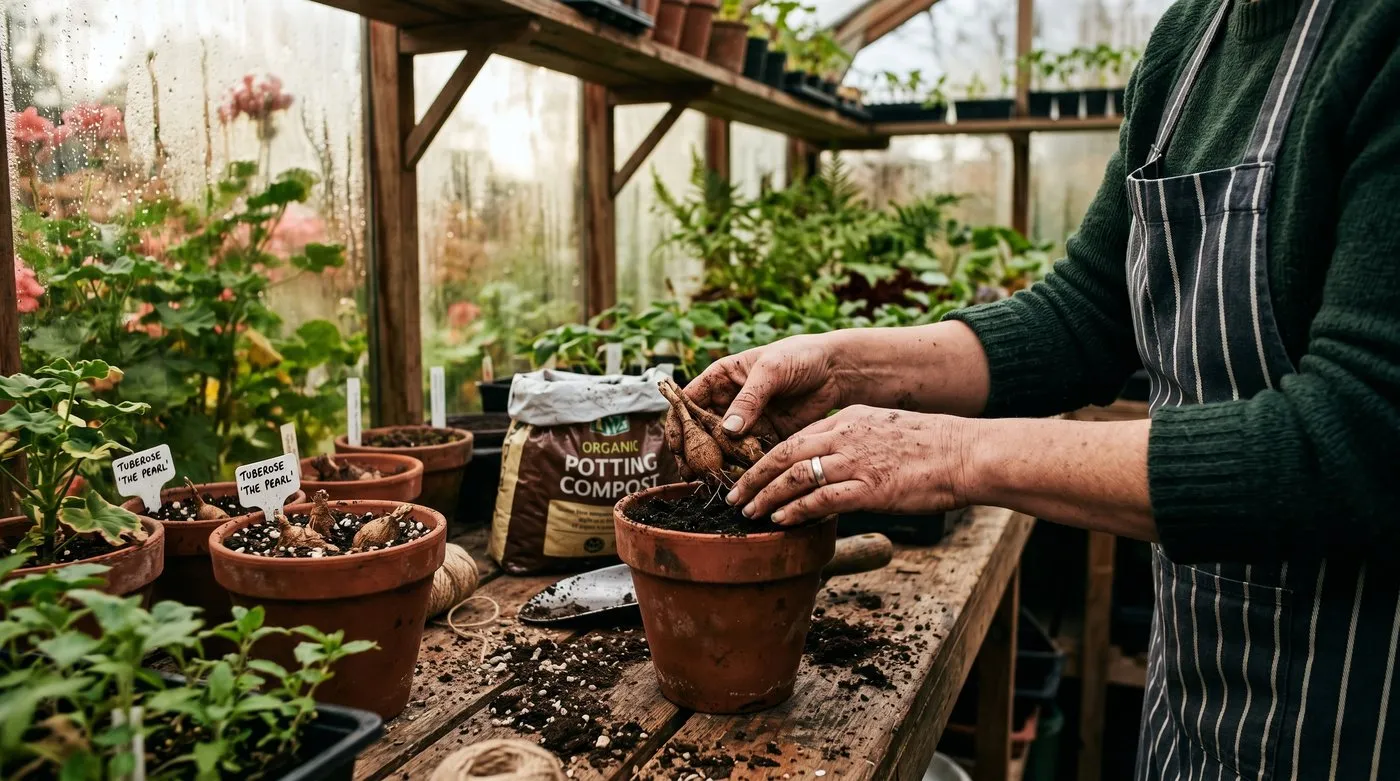 Potting tubers into warm compost under glass. Bottom heat at 20-25C is what breaks dormancy, not the calendar date.
Single ‘Mexican’ or double ‘The Pearl’
Two types dominate the trade, and they behave differently. Choosing the right one for your conditions matters more than any feeding regime.
Double ‘The Pearl’ produces dense, many-petalled florets that look closer to a tuberose you would see in a florist’s bouquet. It is showier and the cut stems sell the plant to visitors. The trade-off is real: it took 8-12 days longer to flower, demanded more consistent heat, and sulked badly below 18C. For a first attempt, start with the single.
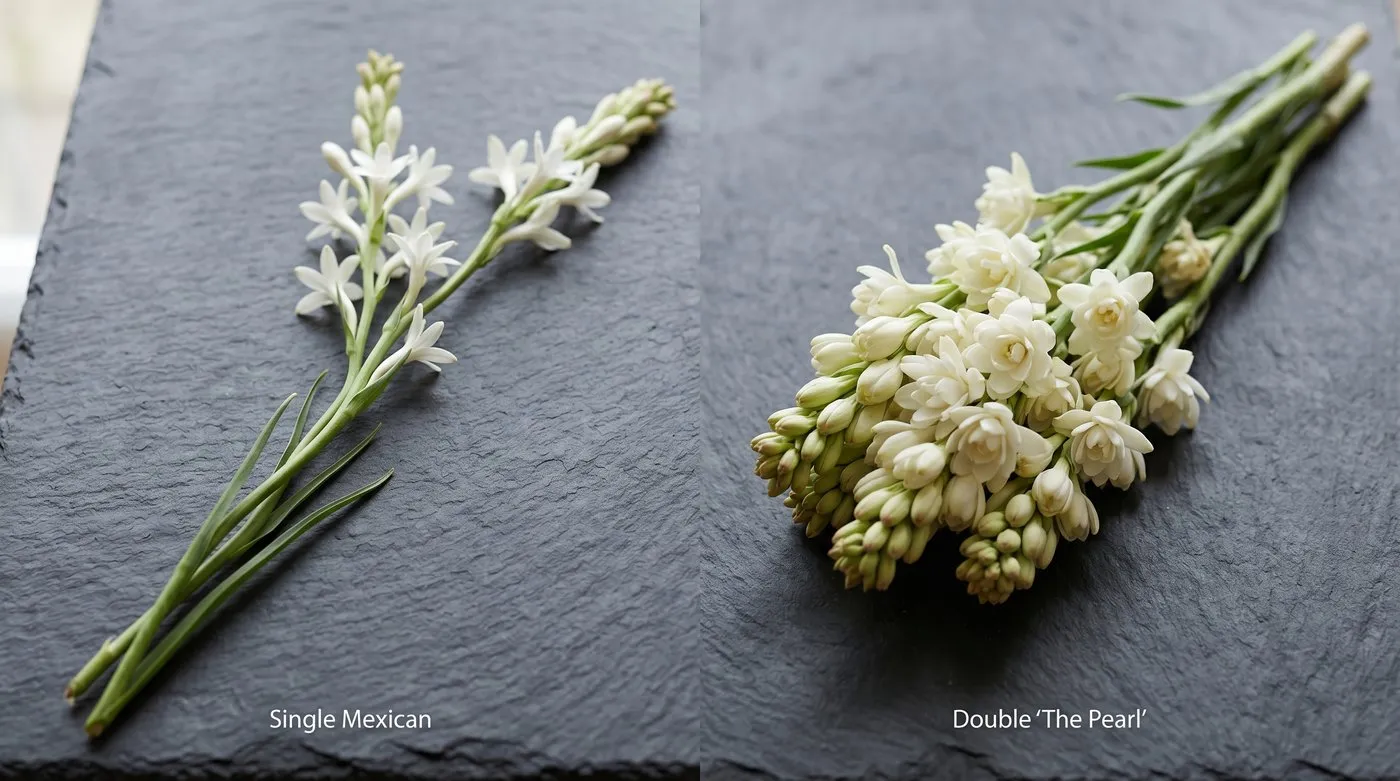 Single ‘Mexican’ on the left, double ‘The Pearl’ on the right. The single is more reliable and more strongly scented.
Tuberose type comparison
| Type | Floret form | Scent strength | Days to flower | Reliability in UK | Reblooms from offsets |
|---|---|---|---|---|---|
| Single ‘Mexican’ | Star-shaped, single row | Very strong | 90-100 | High | Better |
| Double ‘The Pearl’ | Dense, many-petalled | Strong | 100-120 | Moderate | Slower |
| ’Pink Sapphire’ | Single, pink-flushed | Moderate | 110-130 | Low | Poor |
Order the tubers as dormant, plump, firm bulbs in late winter. Reject any that feel soft, light, or shrivelled. A good tuberose tuber is 4-6cm across at the base with a clear growing point. Small offsets under 3cm rarely flower in their first season, whatever heat you give them.
How to start tuberose tubers indoors
Start the tubers indoors six to eight weeks before your last expected frost. In most of the UK that means mid-March to early April. Aim to have growing plants ready to move outside in late May, with the whole flowering run finished before the October cold.
Pot one tuber per 15cm pot, or three in a 30cm pot, using free-draining compost. A mix of two parts multipurpose to one part grit or perlite stops the base sitting wet while dormant. Set the tuber so its nose sits just at the surface, with the top barely covered. Plant it deep and it will often rot before it sprouts.
Water once, lightly, then keep the compost barely moist until a shoot appears. The classic killer is generous watering of a dormant tuber in cold compost. The tuber takes up water it cannot use, and rot sets in. Place the pots somewhere genuinely warm: a heated propagator at 22C, an airing cupboard, or a windowsill above a radiator. Move them into full light the moment the shoots break the surface.
Growing tuberose in pots and moving them outside
Tuberose grows best for UK gardeners in pots, because pots let you chase the heat. You start them under cover, move them to the warmest outdoor spot in summer, then bring them back in before frost. A pot also keeps the brittle roots together for lifting.
Once the shoot is growing strongly and all frost has passed, usually late May or early June, harden the pots off over a week. Then stand them in the hottest, most sheltered sun trap you have. A south-facing wall, a patio that bakes, or a spot against the house all work. The plant wants at least six hours of direct sun and warmth into the evening.
Through summer, water freely once the plant is in active growth and the pot is full of roots. Feed every two weeks with a high-potash tomato feed from the moment the flower spike shows. Potash drives the flower, not the leaves. Stake the spike if it leans, as a spike in full bloom is top-heavy and snaps in wind.
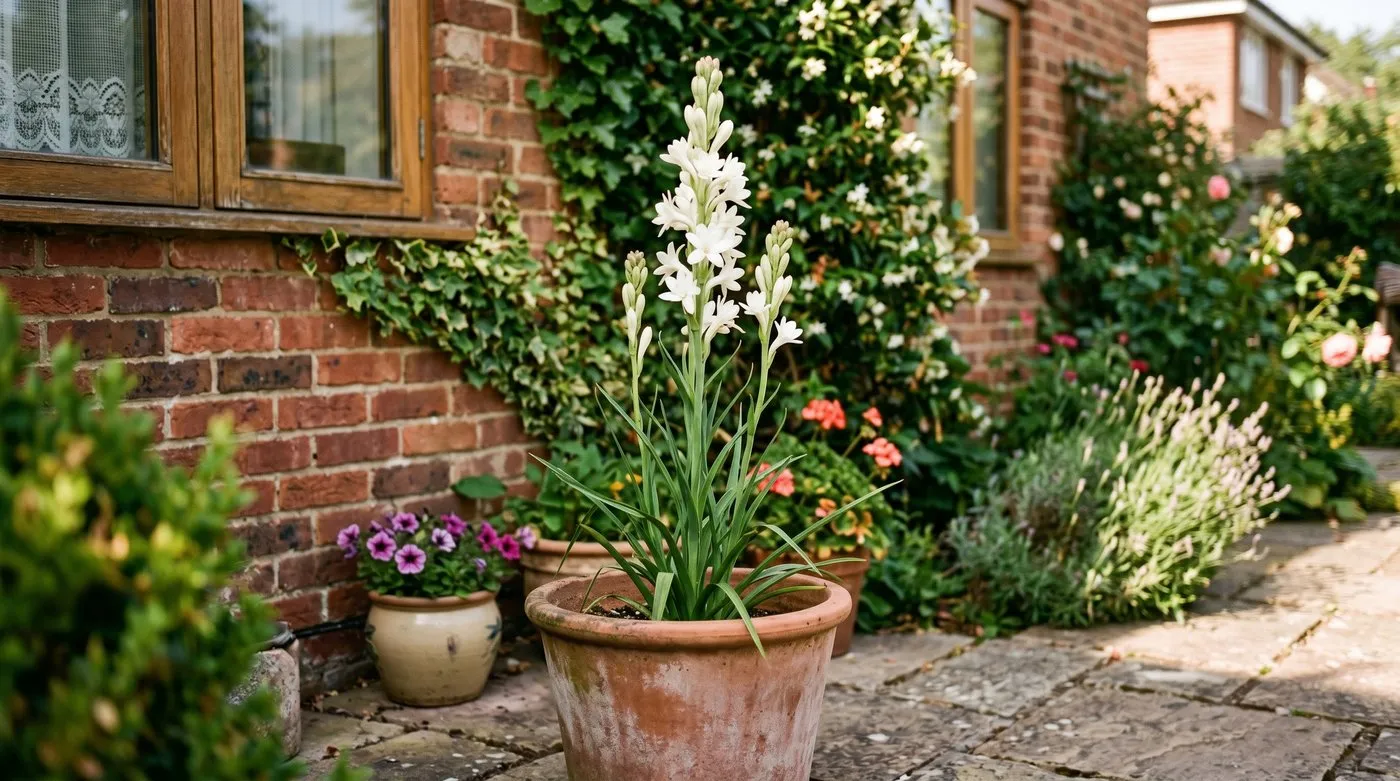 A pot lets you move tuberose to the hottest corner of the garden in summer, then rescue it before frost.
When tuberose flowers and how the scent works
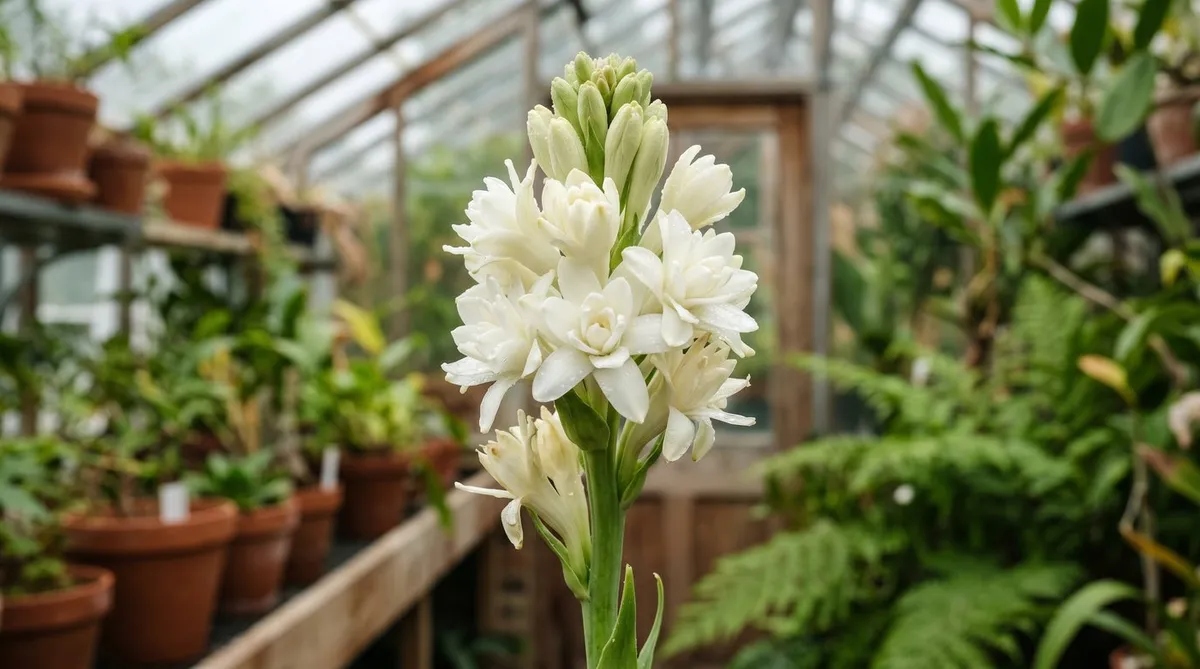
Tuberose flowers from August to October in the UK from a March start. The spike rises to 60-90cm, then the waxy white florets open from the base upward. A healthy spike carries 12-20 florets that open over two to three weeks, so the display is long even though each floret is brief.
The scent is the whole point. It is heavy, sweet, and almost creamy, and it is timed for night-flying moths in its native range. Florets release the most fragrance from dusk through the night, which is why a single pot can fill a conservatory after sunset. In daylight the scent is present but muted. Site the pot where you sit on summer evenings, near a door or a seating area, and the plant earns its keep.
One spike per tuber is the norm. A strong, mature tuber may throw a second smaller spike, but do not expect it. The energy goes into that first flush.
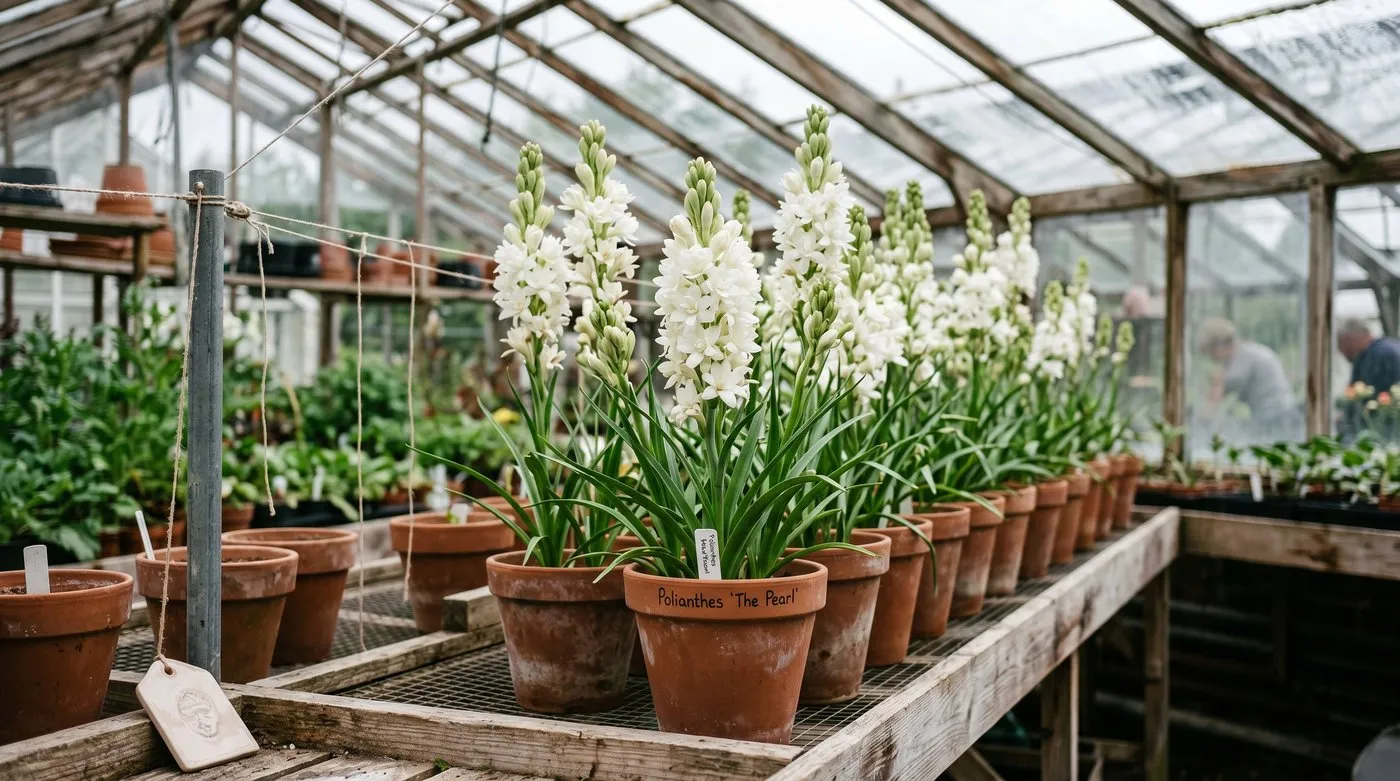 Forcing tuberose in greenhouse rows gives the longest, straightest stems for cutting. Start the pots under cover in March for blooms from August.
Cutting tuberose for the vase
Tuberose is a superb cut flower, and cutting does not weaken the tuber any more than letting the spike fade in the pot. Cut when the lowest two or three florets have opened and the rest are plump buds. The buds open in sequence in the vase, so you get the full run indoors.
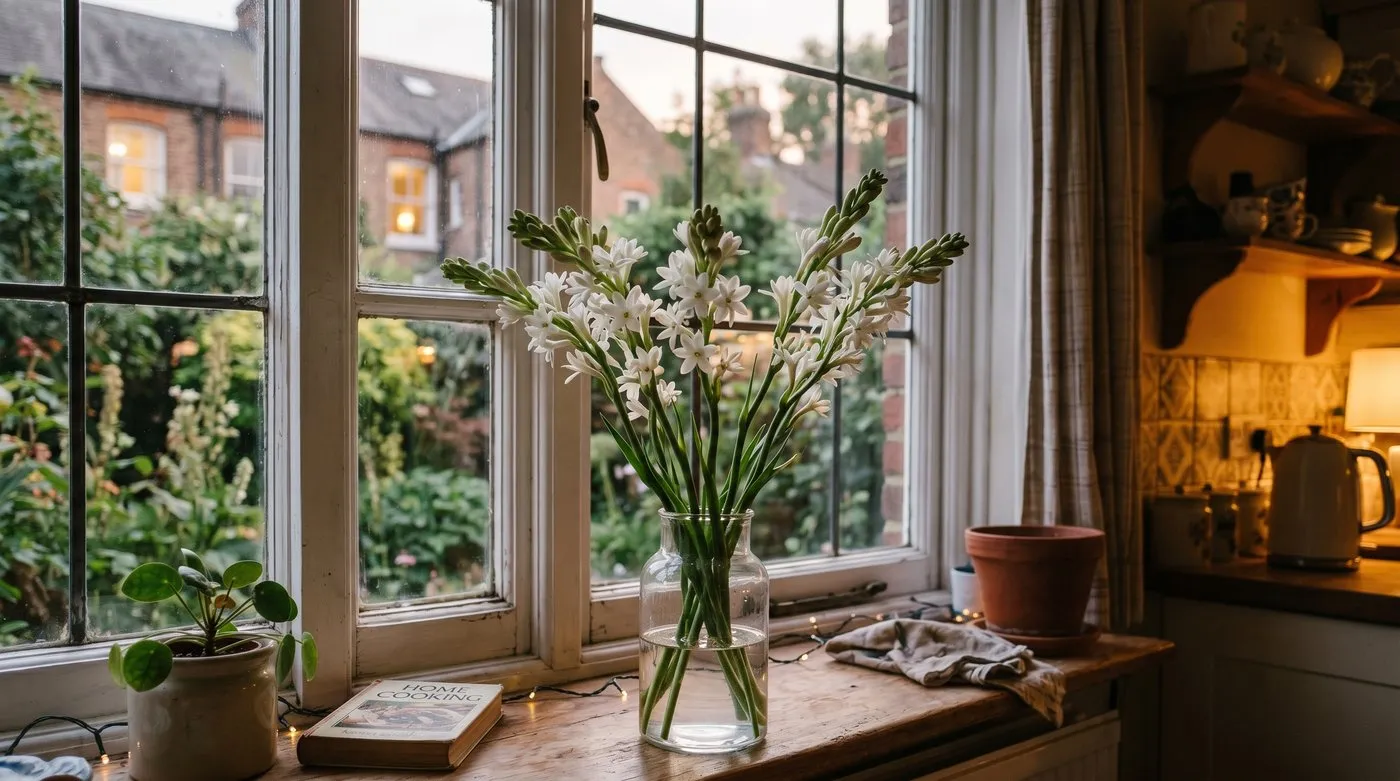 Cut the spike when the lowest florets open. The rest follow in the vase, scenting the room each evening.
Lifting and storing tubers over winter
Tuberose is frost-tender and damaged at 0C, so it cannot stay outside or in an unheated greenhouse over a British winter. Lift the tubers before the first hard frost, usually early to mid-October, while the foliage is still green.
Knock the plant out of its pot, cut the foliage back to 5cm, and gently separate the offsets from the main tuber. Brush off loose compost but do not wash the tubers. Let them dry on a tray in an airy, frost-free place for about a week so the cut surfaces seal. Then pack them in dry compost, vermiculite, or sand and store at 13-18C: an airing cupboard, a heated garage, or a spare bedroom. Cold below 10C or any damp will rot them. Check the box monthly and discard anything soft.
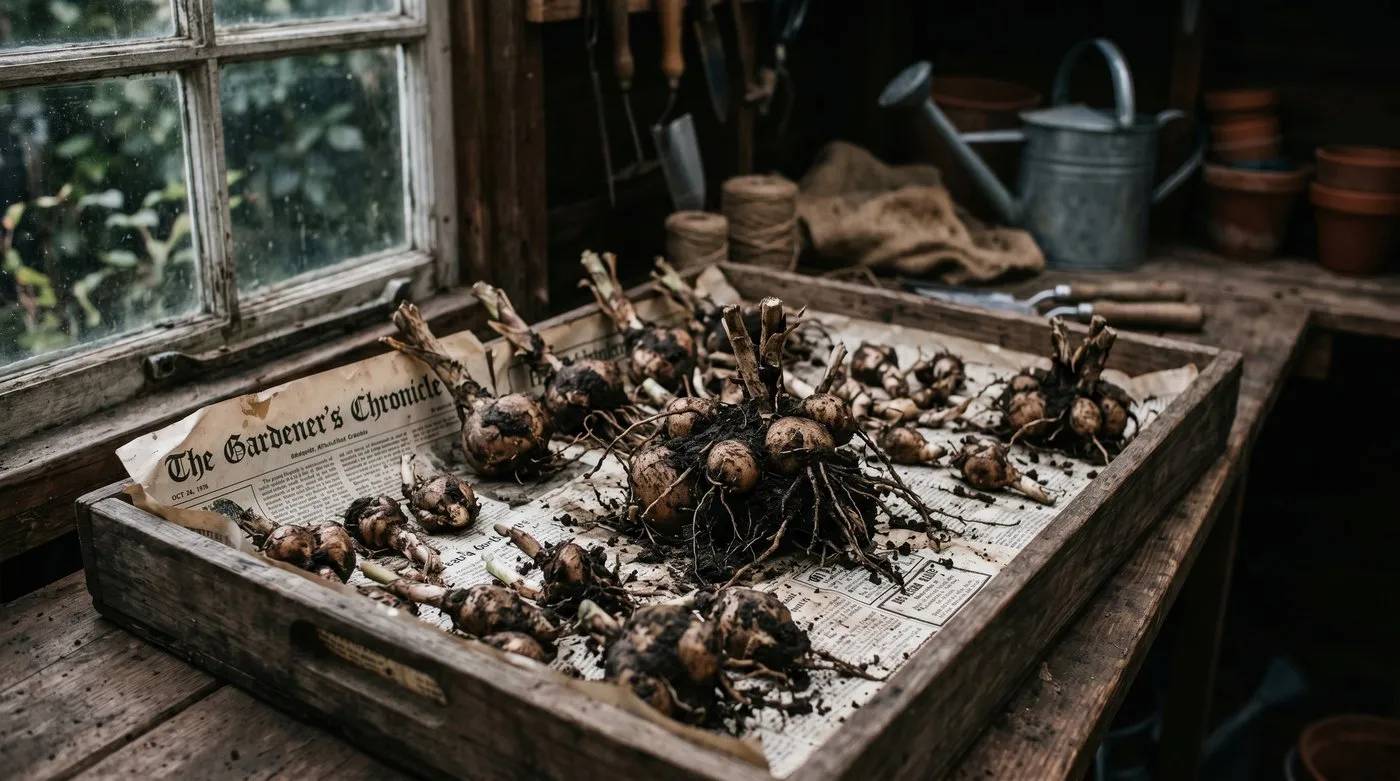 Lifted tubers drying before dry, frost-free storage at 13-18C. Damp or cold over winter is the usual killer.
Month-by-month tuberose calendar
| Month | What to do |
|---|---|
| January | Tubers dormant in storage at 13-18C. Check monthly and discard any soft or mouldy ones. |
| February | Order fresh tubers if needed. Choose firm bulbs 4-6cm across with a clear growing point. |
| March | Pot up one tuber per 15cm pot in free-draining compost. Start at 20-25C in a propagator or airing cupboard. |
| April | Shoots appear. Move pots into full light. Keep compost barely moist and warm. Water sparingly. |
| May | Harden off once growth is strong and frost has passed. Stand pots in the hottest, sunniest spot. |
| June | Water freely now roots fill the pot. Begin a high-potash feed every two weeks once a spike shows. |
| July | Stake tall spikes. Keep the plant warm and in full sun. Watch for the flower spike rising. |
| August | Peak flowering begins. Florets open from the base. Scent peaks at dusk. Cut stems for the vase if wanted. |
| September | Flowering continues. Keep feeding and watering. Move pots under cover on cold nights. |
| October | Lift tubers before the first frost. Cut foliage back, separate offsets, dry for a week. |
| November | Pack dried tubers in dry compost or vermiculite. Store frost-free at 13-18C. |
| December | Tubers fully dormant. No water. Keep storage dry, frost-free, and checked monthly. |
Common mistakes with tuberose
Starting too cold. This is the big one. A windowsill at 12-15C will not break dormancy, and the tuber sits and rots. Use a propagator or airing cupboard at 20-25C until the shoot appears, then move into light. The root-zone temperature is what counts, not the air.
Starting too late. Tuberose needs 90-120 days to flower. Pot up in May and the spike forms in September, then frost arrives before it opens. Start by mid-March so the flowering run finishes by October.
Overwatering a dormant tuber. Generous watering of a tuber that has not yet rooted causes rot. Water once after potting, then keep the compost barely moist until a shoot shows. Only water freely once the plant is in active growth.
Leaving them out for winter. Tuberose is killed by frost and rots in cold, damp storage. Lift in October and store dry at 13-18C. An unheated shed or greenhouse is not warm enough.
Warning: Never leave tuberose tubers in cold or damp storage over winter. Below 10C or in moist compost they rot, and a soft tuber cannot be saved. Dry, airy, frost-free storage at 13-18C is the only reliable method.
Growing tuberose alongside other tender bulbs
Tuberose fits naturally into a collection of tender summer bulbs that share the lift-and-store routine. If you already grow gladioli or dahlias, you have the storage space and the habit. The difference is the heat: tuberose needs far more warmth at the start than either of those.
For pot-grown scent and structure on a patio, it pairs well with lilies for early summer and agapanthus for blue clouds of bloom. Autumn-flowering nerines carry the colour on once the tuberose comes indoors. If you like the exotic look, cannas and calla lilies enjoy the same warm, sheltered, well-fed conditions in pots.
Browse the full range of bulb and perennial guides in our plants section to plan a sequence of scent and colour through the whole season.
Now you’ve learned how to grow tuberose, read our guide on how to overwinter tender plants in the UK to keep your tubers and other half-hardy treasures safe through the cold months.
Frequently asked questions about growing tuberose
Can you grow tuberose outdoors in the UK?
Not for the whole season in most of the UK. Tuberose needs steady warmth above 18C to grow and flower well. Start the tubers indoors in spring, then move pots outside to a sun trap after the last frost. Bring them back under cover before the first autumn frost.
Why won’t my tuberose flower?
The most common cause is too little heat at the start. Tubers need 20-25C to break dormancy and a long warm season to build a flower spike. Cold compost below 15C, a late start, or a small immature offset will all prevent flowering. Many offsets skip a year before flowering again.
What temperature does tuberose need to start growing?
Tuberose needs 20-25C to break dormancy reliably. Use a heated propagator or a warm airing cupboard until shoots appear. Below 15C the tubers sit dormant and often rot in damp compost. This heat requirement is the single thing most UK growers underestimate.
What is the difference between single and double tuberose?
Single ‘Mexican’ has simple star-shaped florets and the strongest scent. Double ‘The Pearl’ has dense, many-petalled florets and looks showier. The single type is more reliable, flowers slightly earlier, and reblooms more readily. The double is slower and often needs more heat to perform.
Do tuberose bulbs come back every year?
Rarely the next year, but often the year after. The main tuber usually flowers once strongly, then exhausts itself. The offsets it produces need a year or two of growing on before they reach flowering size. Lift, dry, and store them frost-free each winter to keep the cycle going.
How do you store tuberose tubers over winter?
Lift before the first frost and store them dry and frost-free. Cut back the foliage, let the tubers dry for a week, then pack them in dry compost or vermiculite at 13-18C. A heated garage, airing cupboard, or spare room works. Cold or damp storage kills them.
How long do cut tuberose flowers last?
Cut tuberose stems last about 5-10 days in a vase. Cut the spike when the lowest two or three florets have opened. Change the water every two days and keep stems out of direct sun. The scent intensifies in a warm room each evening.
When does tuberose flower in the UK?
Tuberose flowers from August to October under UK conditions. Tubers started indoors in March reach flowering size by late summer. The waxy florets open from the base of the spike upward over two to three weeks. Scent peaks at dusk and through the night.
Our team produces practical UK gardening guidance from source research, contributor records and established horticultural practice. Editorial standards are overseen by Matt W.