Quick answer
Skimmia japonica 'Rubella' is a compact evergreen shrub grown for its deep red flower buds, which last from autumn right through winter. They open into scented white flowers in spring. It's a male plant, so it never has berries. Grow it in part or full shade, in acid to neutral soil or a pot of ericaceous compost.
Key points6 at a glance
- 'Rubella' has deep red buds from autumn to spring, then scented white flowers
- It's a male skimmia, so it has no berries but pollinates female plants
- It grows slowly to about 1m tall and wide
- Grow it in part or full shade, out of hot afternoon sun
- It needs acid to neutral soil, or ericaceous compost in a pot
- Plant Christmas pot skimmias into the garden in spring
In this article8 sections
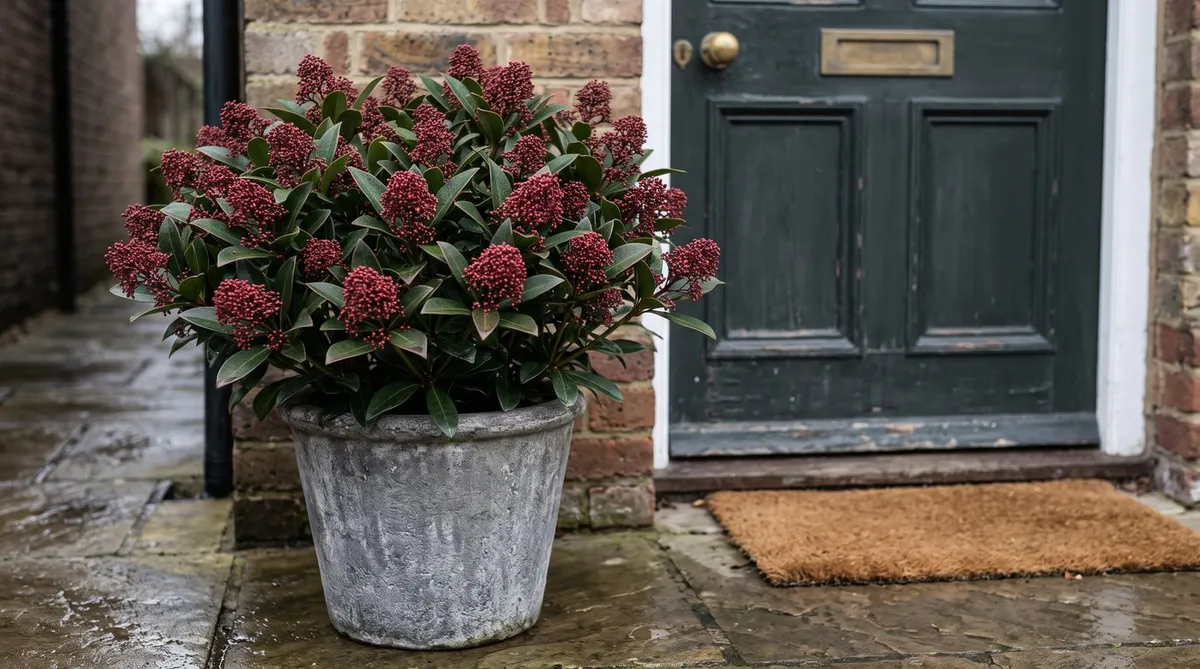
Skimmia ‘Rubella’ is a compact evergreen shrub with deep red buds that last all winter. In spring they open into scented white flowers. It’s a male plant, so it never has berries. Grow it in shade, in acid to neutral soil or a pot of ericaceous compost. It’s one of the easiest ways to brighten a shady doorstep from autumn to spring.
What is Skimmia ‘Rubella’?
Skimmia japonica ‘Rubella’ is one of the most popular winter shrubs in the UK. You’ll see it in garden centre displays, winter pots and Christmas planters everywhere.
| Feature | What to expect |
|---|---|
| Size | About 1m tall and wide, slowly |
| Leaves | Glossy dark green, often with red edges |
| Winter buds | Deep red clusters from autumn to spring |
| Flowers | Small, scented, white, March to April |
| Berries | None, as it’s a male plant |
| Hardiness | Hardy across the UK |
| Light | Part or full shade |
| Soil | Acid to neutral, moist but well-drained |
For other varieties, including berrying females, see our full guide to growing skimmia.
Why doesn’t ‘Rubella’ have berries?
Most skimmias are either male or female. ‘Rubella’ is male, so it never berries. That’s no bad thing, as its red buds give colour all winter anyway.
If you want berries too, plant a female skimmia, such as ‘Nymans’ or ‘Veitchii’, close by. ‘Rubella’ provides the pollen, and the female carries red berries the following winter.
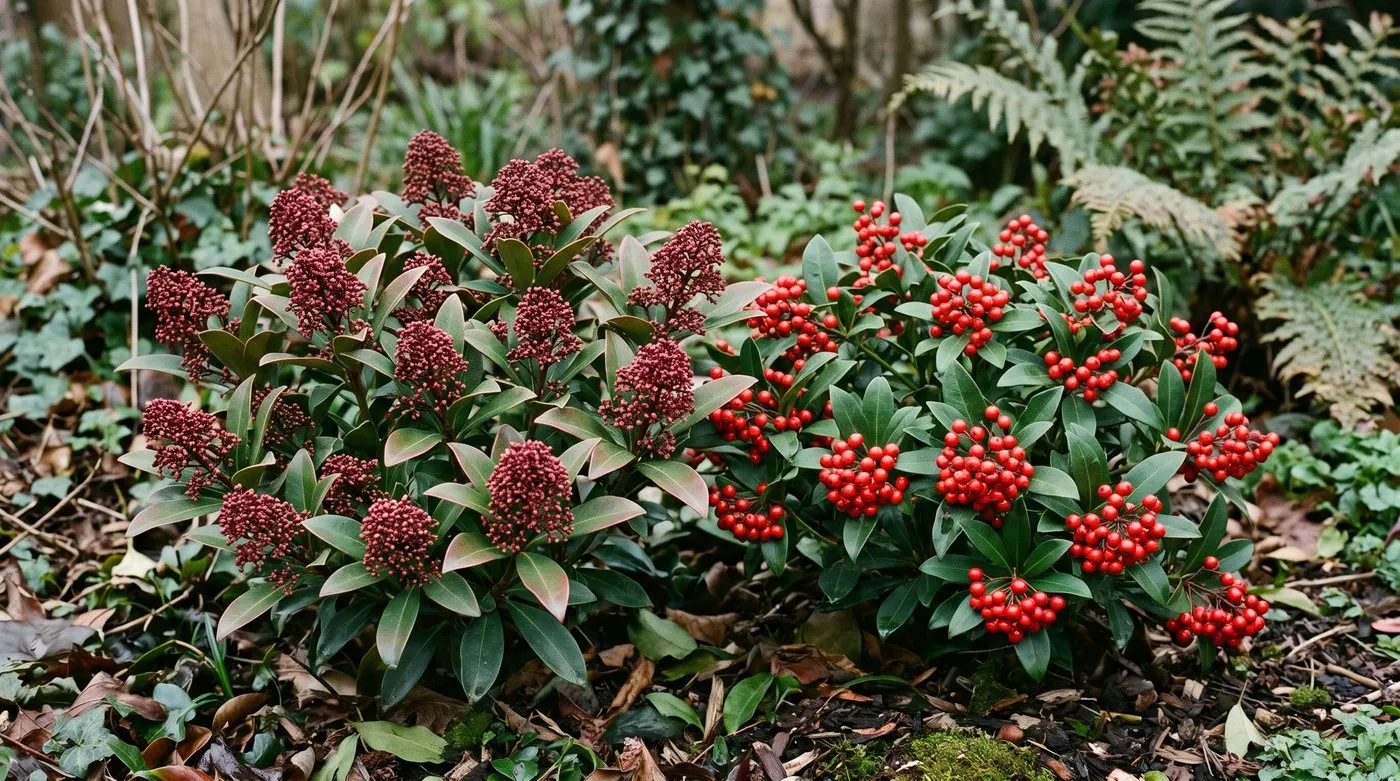
Plant ‘Rubella’ next to a female skimmia and you get red buds and red berries together.
Gardener’s tip: The buds are at their reddest in cold, bright weather. If you bring a pot indoors, the warmth makes them open early and fade.
Where to plant Skimmia ‘Rubella’
Shade is best. Part or full shade suits it perfectly. A north- or east-facing border or doorstep is ideal.
Avoid hot sun. In full sun, especially on dry soil, the leaves often turn yellow and scorch.
Choose acid to neutral soil. On chalky soil the leaves turn yellow because the plant can’t take up iron. If your soil is chalky, grow it in a pot instead. Our guide to the best plants for acid soil has more ideas.
Keep the soil moist. It likes moist but well-drained soil, rich in organic matter. It dislikes both drought and waterlogging.
Growing ‘Rubella’ in pots
‘Rubella’ is perfect for pots, window boxes and winter planters because it’s small and slow-growing.
- Choose a pot a little wider than the root ball, with drainage holes.
- Use ericaceous compost, or a mix of ericaceous and loam-based compost.
- Plant at the same depth it was growing.
- Water with rainwater if you can, as tap water in hard-water areas can slowly yellow the leaves.
- Stand it in shade or part shade.
It looks great with ivy, heucheras, cyclamen, white heather and small ferns. Our guide to winter container planting has lots of combinations.
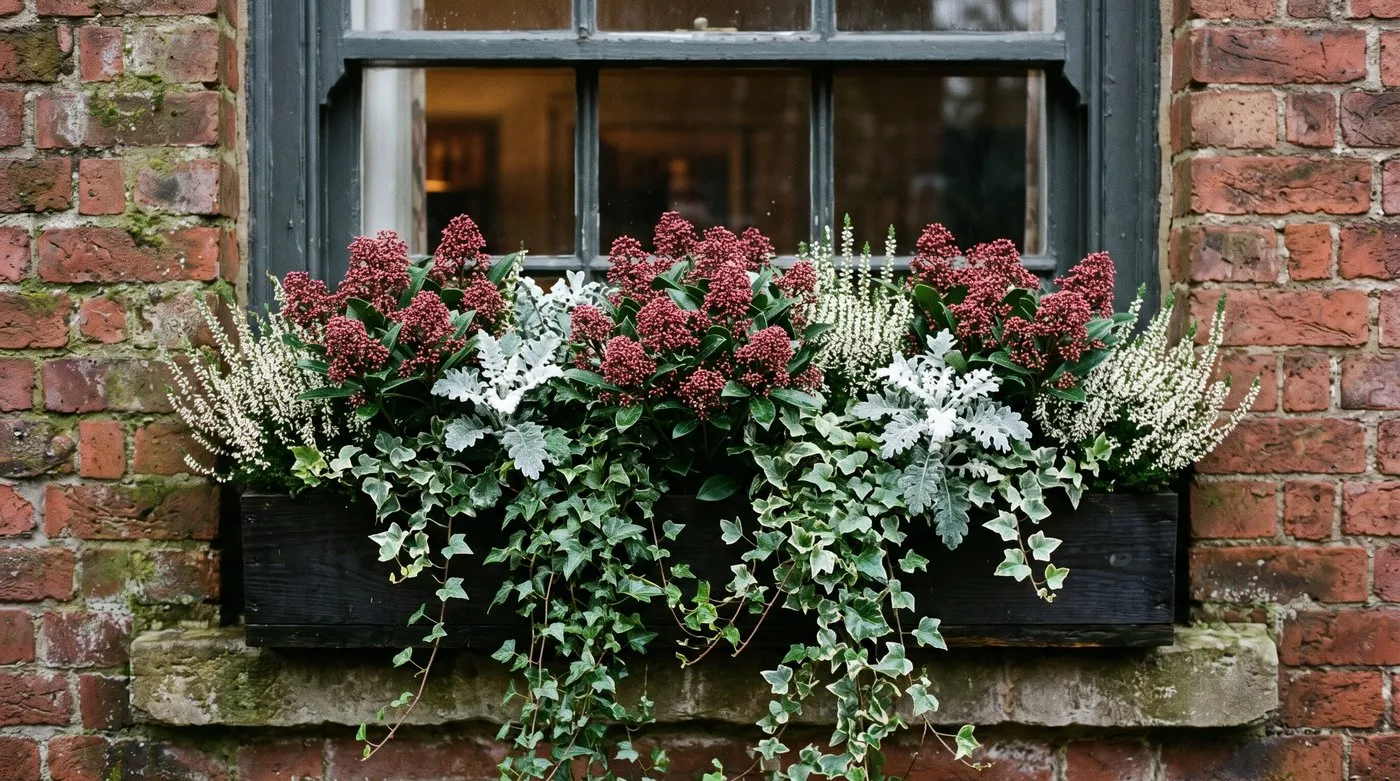
‘Rubella’ is small enough to star in a winter window box or hanging basket.
What to do with a Christmas skimmia
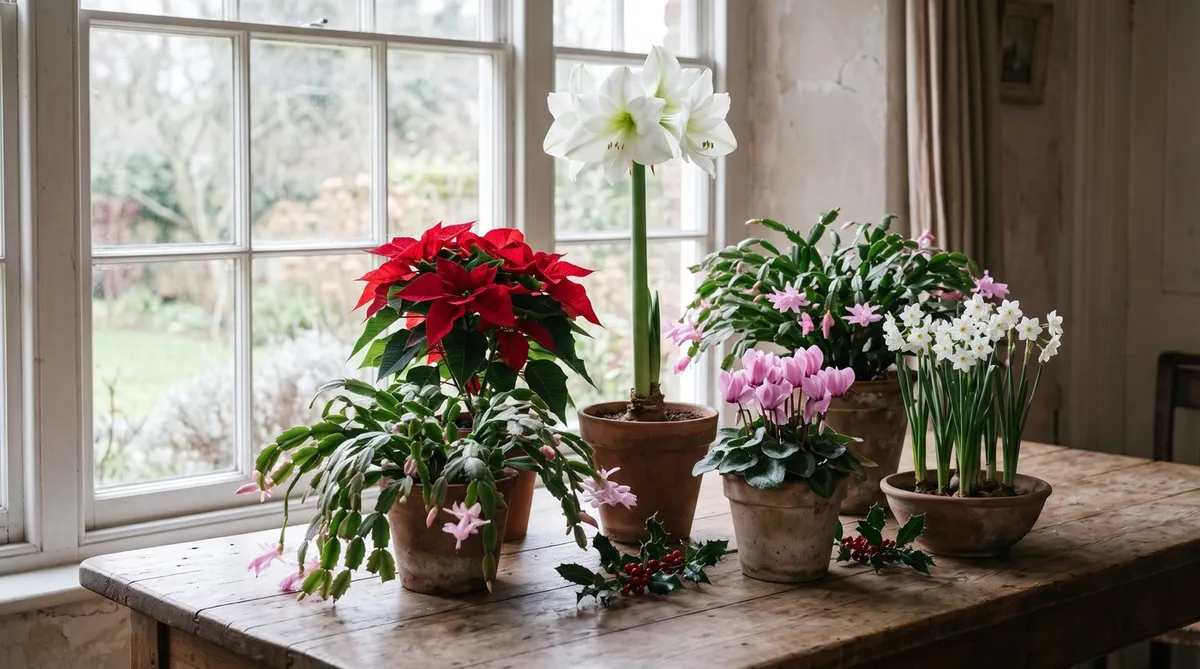
Lots of people buy ‘Rubella’ in a Christmas pot or planter. You don’t need to throw it away afterwards.
- Keep it outside. It’s a hardy outdoor shrub. Indoors, warmth makes the buds open and fade quickly.
- Plant it out in spring. Move it to a shady border, or repot it into a bigger pot of ericaceous compost.
- Water it well in its first summer, especially in pots.
It will keep giving red buds every winter for years. Use spare sprigs in a Christmas wreath too.
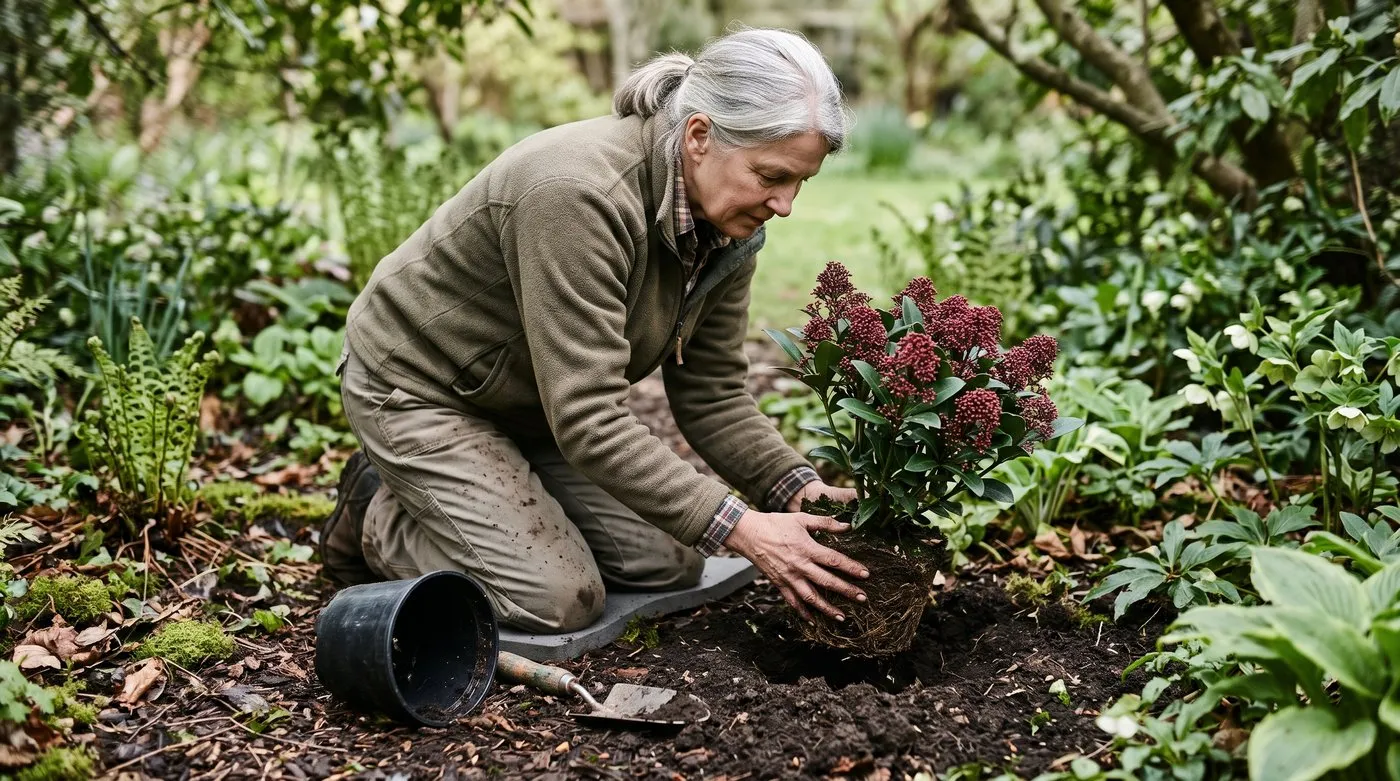
Plant Christmas skimmias out in spring and they’ll come back every winter.
Caring for Skimmia ‘Rubella’
Watering. Keep the soil evenly moist. Pots need regular watering in summer.
Feeding. Give pots a feed for acid-loving plants in spring. Garden plants rarely need feeding.
Mulching. Spread leaf mould or composted bark around border plants in spring to keep the roots cool and moist.
Pruning. It needs almost no pruning. Trim any straggly shoots after flowering in spring.
Common problems
Yellow leaves. Usually chalky soil, hard tap water, too much sun or roots that are too wet or dry.
Brown leaf tips. Often caused by drought, scorch or cold, drying winds. Move pots to a sheltered spot.
Buds opening too early. The plant is too warm. Keep it outdoors.
Poor growth. Check the soil isn’t waterlogged or too dry, and feed pots in spring.
For more shady shrubs, see our guides to the best shrubs for shade and best winter-flowering shrubs.
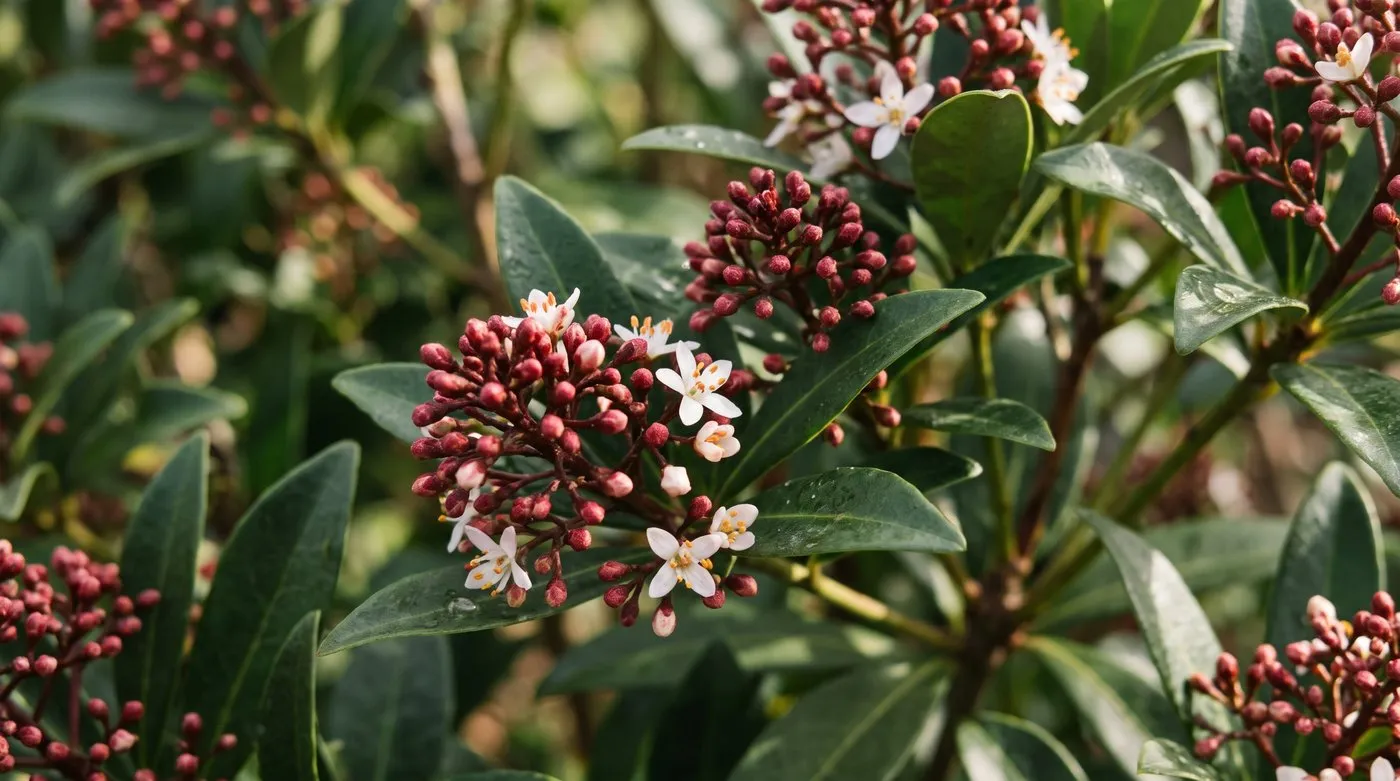
In spring the red buds open into small, scented white flowers that bees love.
Frequently asked questions
Does Skimmia ‘Rubella’ have berries?
No. ‘Rubella’ is a male plant, so it never has berries. Its pollen helps nearby female skimmias, such as ‘Nymans’ or ‘Veitchii’, to berry.
How big does Skimmia ‘Rubella’ grow?
It grows slowly to about 1m tall and wide over several years. That makes it a good choice for pots, window boxes and small borders.
Can Skimmia ‘Rubella’ grow in full sun?
It’s happiest in part or full shade. In hot sun, especially on dry soil, the leaves often turn yellow and scorch.
Why are my Skimmia ‘Rubella’ leaves turning yellow?
Yellow leaves usually mean chalky soil, too much sun, or roots that are too wet or too dry. Grow it in ericaceous compost in shade and keep it evenly moist.
Can I plant out a Christmas skimmia?
Yes. After winter, plant it in a shady border or a bigger pot of ericaceous compost in spring. It will keep going for years.
Is Skimmia ‘Rubella’ poisonous?
Yes, all parts of skimmia are harmful if eaten and can upset a pet’s stomach. ‘Rubella’ has no berries, but keep pets from chewing the leaves.
When does Skimmia ‘Rubella’ flower?
The red buds form in autumn and stay all winter. They open into small, scented white flowers in March and April.
So pick up a ‘Rubella’ for a shady doorstep this winter. With a little ericaceous compost and some shade, it will glow red for years to come.
Our team produces practical UK gardening guidance from source research, contributor records and established horticultural practice. Editorial standards are overseen by Matt W.