Quick answer
The most popular Christmas plants in the UK are poinsettia, amaryllis, Christmas cactus, cyclamen and paperwhite daffodils indoors, with skimmia, Christmas rose, holly and ivy outside. Most festive houseplants want bright light, a cool room of about 12-18°C and no cold draughts. Christmas cactus is the safest choice for homes with pets, while amaryllis, lilies, paperwhites, hyacinths and kalanchoe are toxic to cats and dogs.
Key points6 at a glance
- Poinsettia, amaryllis, Christmas cactus and cyclamen are the classic indoor Christmas plants
- Most festive houseplants last longest in a bright, cool room away from radiators and draughts
- Wrap any plant for the trip home, as a few minutes of cold can make leaves drop days later
- Christmas cactus is the most pet-friendly choice. Amaryllis, paperwhites, hyacinths and lilies are not
- Skimmia, Christmas rose, sarcococca and winter jasmine bring colour and scent to doorsteps outside
- Many festive plants keep going for years: amaryllis, Christmas cactus and Christmas rose all flower again
In this article9 sections
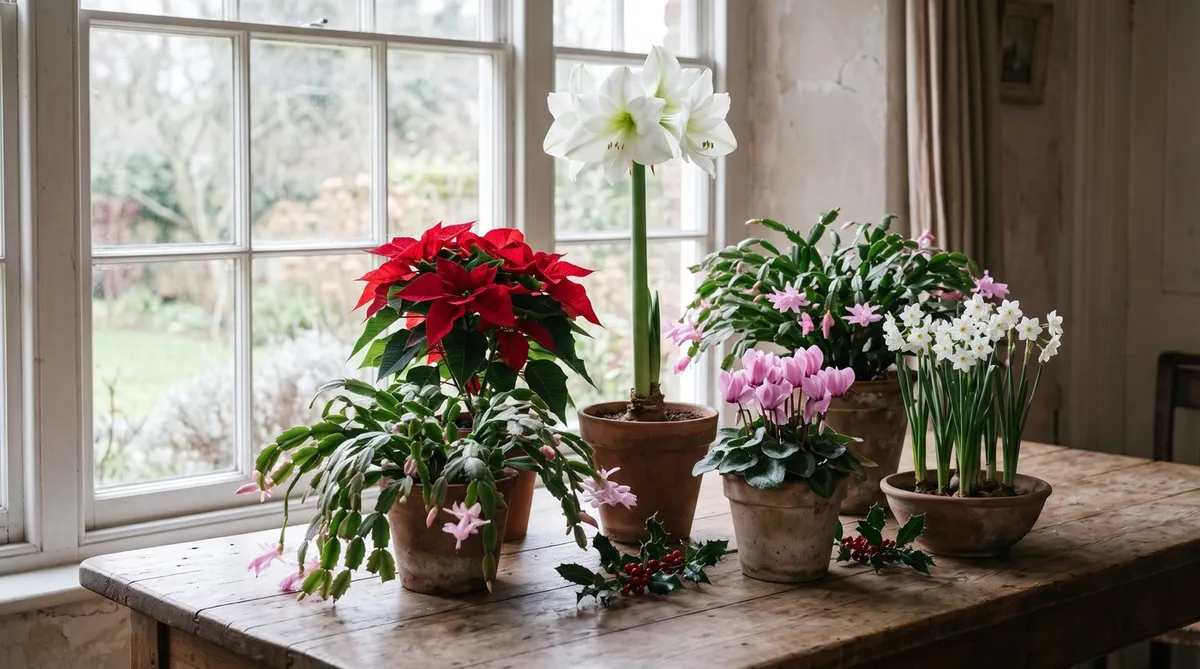
Christmas plants and flowers bring colour into the house when the garden is at its quietest. The classic choices are poinsettia, amaryllis, Christmas cactus and cyclamen indoors, with skimmia, Christmas rose, holly and ivy outside. Most are easy to keep looking good until January if you give them a bright, cool spot.
This guide picks 16 festive plants for windowsills, tables and front doors. For each one you’ll find what it looks like, how to keep it going and whether it’s safe with pets. There’s also a quick list of the best Christmas flowers for a vase. Many of these plants come back year after year, so you’re not just buying decorations.
The best Christmas plants at a glance
Poinsettia is the best-known Christmas plant, but Christmas cactus and amaryllis last longer and flower again next year. This table helps you match a plant to a spot.
| Plant | Where | Colour | Lasts | Pets |
|---|---|---|---|---|
| Poinsettia | Indoors, bright | Red, white, pink | To February | Mildly toxic |
| Amaryllis | Indoors, bright | Red, white, pink, striped | 3-4 weeks in flower | Toxic |
| Christmas cactus | Indoors, bright shade | Pink, red, white | Flowers again yearly | Non-toxic |
| Cyclamen | Indoors, cool | Red, pink, white | Into spring | Toxic |
| Paperwhite daffodils | Indoors | White, scented | About 2 weeks | Toxic |
| Hyacinths | Indoors | Blue, pink, white, scented | About 2 weeks | Toxic |
| Christmas rose | Doorstep or border | White | Dec to Feb, every year | Toxic |
| Skimmia ‘Rubella’ | Doorstep pot | Red buds | All winter | Keep out of reach |
| Holly | Garden, cut stems | Red berries | All winter | Berries toxic |
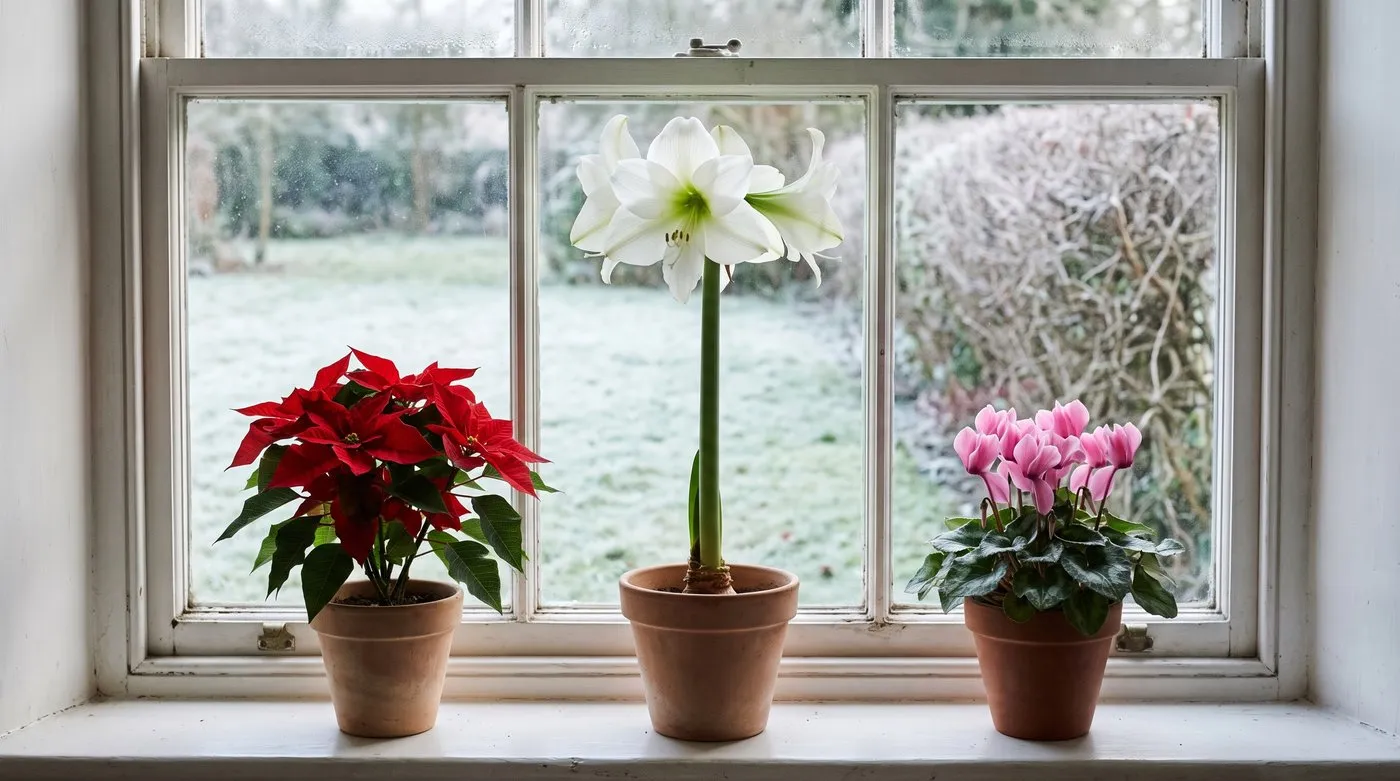
A bright, cool windowsill suits most festive houseplants. Just keep them off the radiator below.
Indoor Christmas plants for windowsills and tables
These are the festive plants you’ll find at every garden centre from November. They all want bright light, a fairly cool room and compost that’s moist but never soggy.
1. Poinsettia
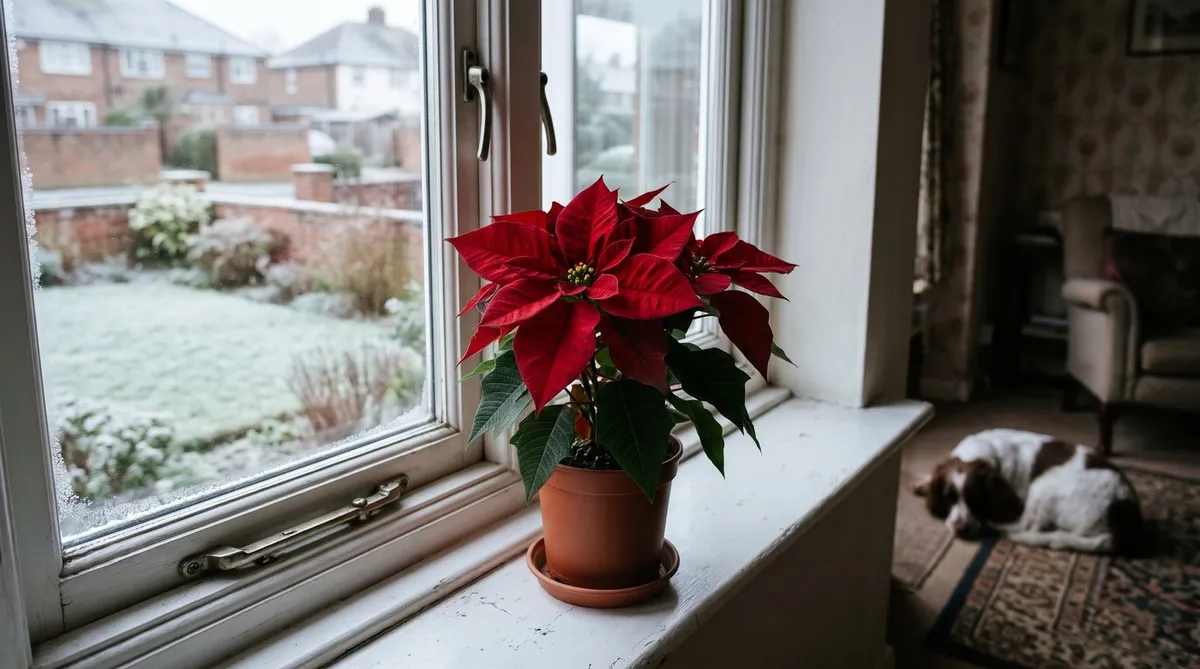
Poinsettia is the red Christmas star of the houseplant world. The coloured parts are leaves called bracts, and the tiny yellow flowers sit in the middle. Give it the brightest spot you have at 15-21°C, away from draughts. Water when the top of the compost feels dry. Cold is its main enemy, so wrap it well for the journey home. Our poinsettia care guide covers getting it red again next year.
2. Amaryllis
Amaryllis (Hippeastrum) grows from a big bulb and opens three or four huge trumpet flowers on a tall stem. A bulb in bud flowers in a few weeks. A dry bulb planted now usually flowers in six to ten weeks, so it may be a January treat. Turn the pot every few days so the stem grows straight. The bulb flowers again next winter with a little care, as explained in our amaryllis growing guide.
3. Christmas cactus
Christmas cactus (Schlumbergera) has flat, jointed stems that end in bright pink, red or white flowers. It’s a forest cactus, so it likes bright light out of hot sun and compost kept lightly moist. Once buds form, don’t move it, or the buds may drop. It’s the most pet-friendly plant on this list and can live for decades. See our Christmas cactus care guide.
4. Cyclamen
Indoor cyclamen (Cyclamen persicum) has swept-back flowers above silver-marbled leaves. It loves a cool room, ideally 10-15°C, so it’s perfect for a porch, hallway or bedroom windowsill. Water from below by standing the pot in a saucer for 20 minutes, then drain. A warm living room makes it flop and yellow quickly. Our cyclamen guide covers the hardy garden types too.
5. Paperwhite daffodils
Paperwhites are tender daffodils with clusters of small white, very scented flowers. They flower about four to six weeks after planting in pebbles or compost, so plant by late November for Christmas. The scent is strong, so some people prefer them in a hallway. The steps are in our guide to growing paperwhites indoors.
6. Hyacinths
Prepared hyacinths are bulbs treated to flower early indoors. Their chunky blue, pink or white spikes fill a room with scent. Buy them already sprouting in pots or bowls for Christmas. Wear gloves when handling the bulbs, as they can irritate skin. After flowering, they can go out into the garden, where they’ll flower in spring in later years.
7. Kalanchoe
Kalanchoe, often sold as Flaming Katy, is a succulent with dense heads of small red, orange, pink or yellow flowers. It flowers for weeks and copes with central heating better than most. Water only when the compost is nearly dry. It’s toxic to cats and dogs, so keep it high up. See our kalanchoe care guide.
8. Indoor azalea
Indoor azaleas are covered in ruffled pink, red or white flowers around Christmas. They’re thirsty plants: never let the compost dry out, and use rainwater if you can, as they dislike hard tap water. Keep them cool and bright. They’re toxic to pets, so place them carefully.
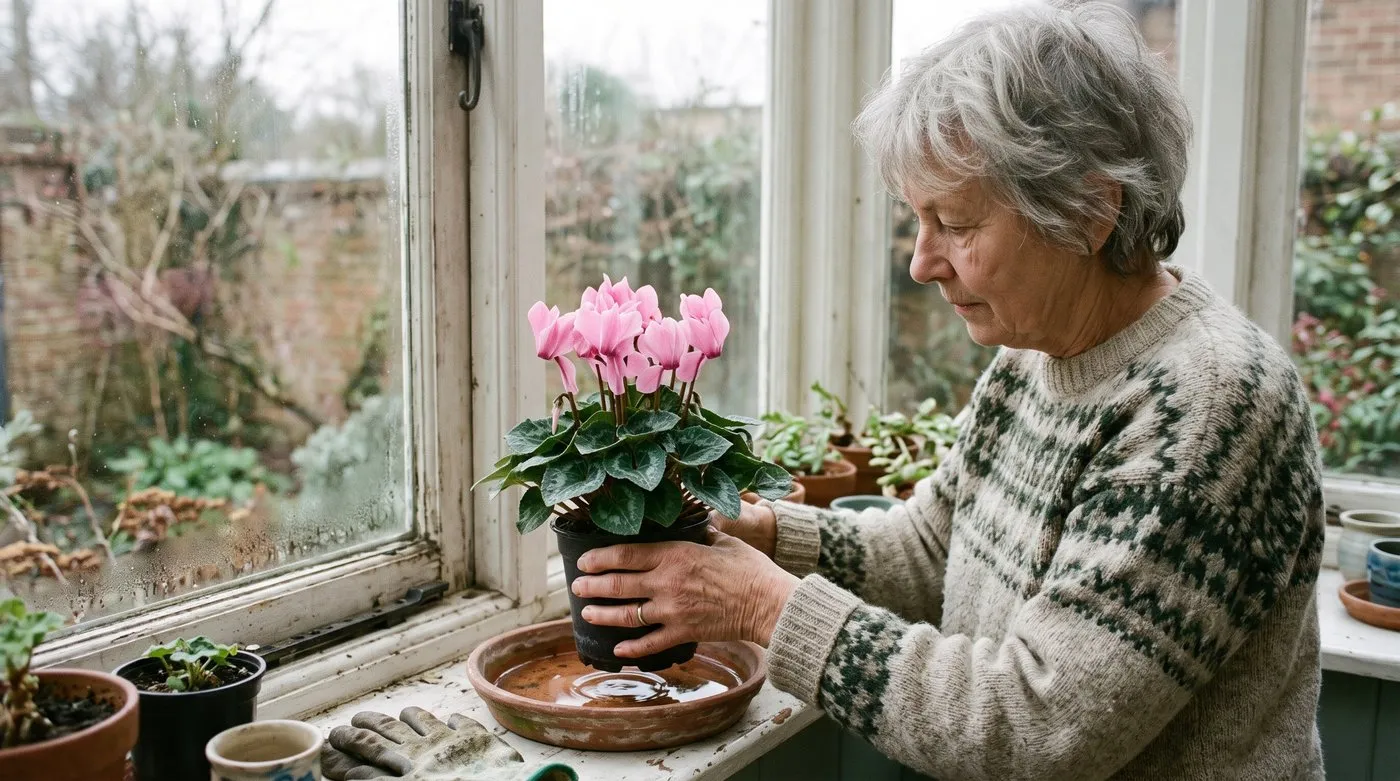
Watering cyclamen from below keeps the crown dry and stops it rotting.
Christmas plants for doorsteps and outdoor pots
A festive front door doesn’t have to be all lights and baubles. These hardy plants look good from December to spring and can go in the garden afterwards.
9. Christmas rose
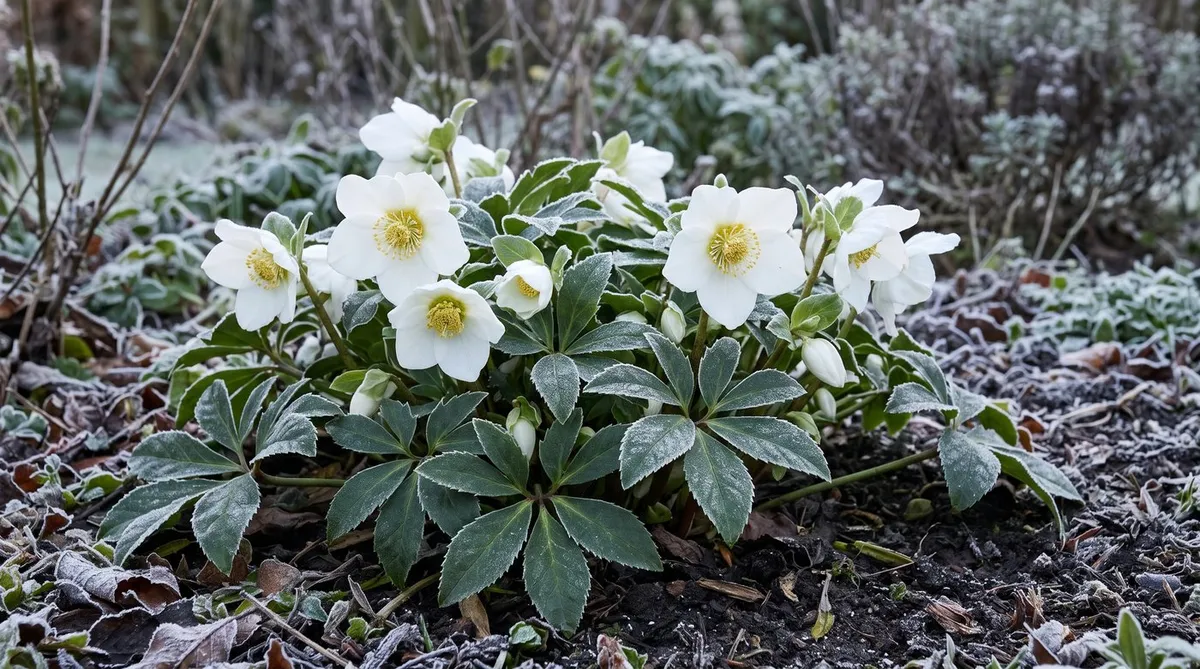
Christmas rose (Helleborus niger) opens pure white, saucer-shaped flowers from December to February, often as frost settles. Buy one in flower for a doorstep pot, then plant it in a shady border in spring. It’ll flower every winter for years. Our Christmas rose guide has the details.
10. Skimmia ‘Rubella’
Skimmia japonica ‘Rubella’ is a small evergreen shrub covered in tight, deep red flower buds all winter. The buds open into scented white flowers in spring. It suits a shady doorstep pot filled with ericaceous compost. Read more in our skimmia guide.
11. Christmas box (sarcococca)
Sarcococca, also called Christmas box or sweet box, has tiny white flowers in December and January. They have a honey-like scent that carries a long way on a cold day. It’s happy in shade, so it’s ideal by a front door. Our sarcococca guide explains how to grow it.
12. Winter jasmine
Winter jasmine (Jasminum nudiflorum) produces small bright yellow flowers on bare green stems from November to March. Train it up a wall or trellis by the door for a cheerful splash of colour. It has no scent but plenty of flowers. See our winter jasmine guide.
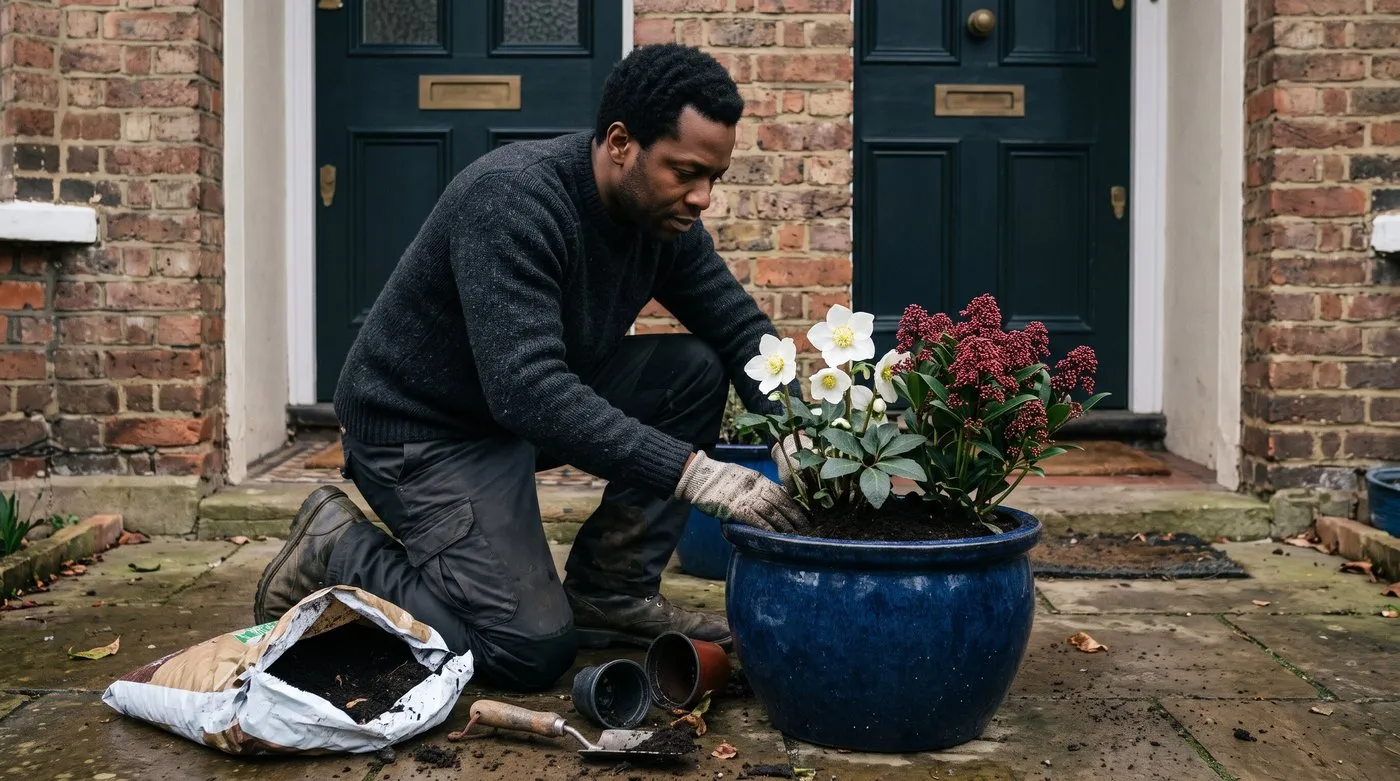
Christmas rose and skimmia make a long-lasting festive doorstep pot that can go in the border afterwards.
Holly, ivy and mistletoe: the oldest Christmas plants
Holly, ivy and mistletoe were brought indoors in British midwinter long before Christmas trees arrived. They’re still the best plants for wreaths, garlands and a sprig over the door.
13. Holly
Holly is the classic Christmas evergreen. Only female plants carry berries, and they usually need a male holly nearby. Cut stems in mid-December and stand them in a bucket of water outside until you use them. Birds may strip the berries first, so cut a few branches early if you need them. See our holly growing guide.
14. Ivy
Ivy trails beautifully from a mantelpiece or wraps round a wreath frame. Variegated types brighten up a dark corner. Wear gloves when cutting lots, as the sap can irritate skin. Our English ivy guide covers growing and controlling it.
15. Mistletoe
Mistletoe grows on apple trees, limes and poplars, and has white, sticky berries. Hang a sprig high over a door, out of reach of children and pets, as the berries are poisonous. Our mistletoe guide explains how to grow your own on an apple tree.
16. Norfolk Island pine
Norfolk Island pine (Araucaria heterophylla) is a houseplant that looks like a tiny, soft Christmas tree. Decorate it with light baubles for December, then enjoy it as a houseplant all year. It wants bright light and a cool room, and it isn’t hardy outdoors in the UK.
The best Christmas flowers for a vase
Red roses, amaryllis stems and white chrysanthemums are the most popular Christmas cut flowers in the UK. Mix them with evergreen foliage and berries for a festive vase that lasts well over a week.
- Flowers: red or white roses, amaryllis stems, chrysanthemums, carnations, anemones and white lilies (not in homes with cats)
- Berries: holly, deciduous holly (ilex) stems, hypericum, plus red skimmia buds
- Foliage: eucalyptus, pine, fir offcuts, ivy, bay and rosemary
- Extras: pine cones, dried orange slices and cinnamon sticks
To make cut flowers last, trim the stems at an angle, strip any leaves below the water line and change the water every couple of days. Keep the vase away from radiators and the fruit bowl, as ripening fruit speeds up wilting. Garden evergreens are free and last for weeks. Our Christmas wreath guide shows which garden foliage works best.
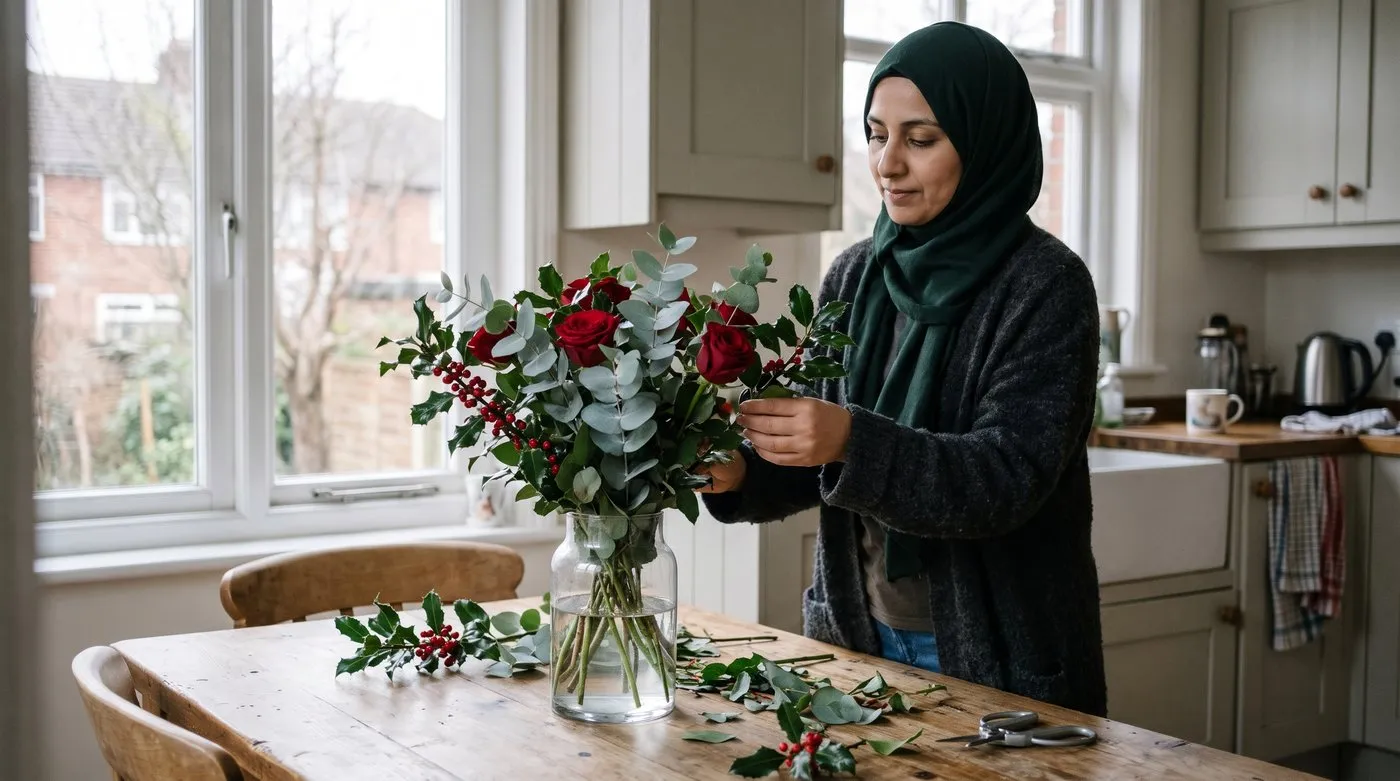
Red roses with eucalyptus and holly from the garden make a simple Christmas vase.
Are Christmas plants safe for cats and dogs?
Christmas cactus is the safest festive plant for pets. Most others are toxic to some degree, so place them where pets can’t chew them.
- Lilies are extremely dangerous to cats. Even pollen licked from fur can cause kidney failure. Don’t bring them into a home with a cat.
- Amaryllis, paperwhites, hyacinths, kalanchoe, azalea and cyclamen can make cats and dogs ill if chewed, and bulbs are the worst part.
- Holly, ivy and mistletoe berries can upset a pet’s stomach. Sweep up fallen berries.
- Poinsettia is only mildly toxic. It may cause drooling or a mild upset stomach.
If you think a pet has eaten a toxic plant, call your vet straight away. Our guides to plants toxic to cats and plants toxic to dogs have the full lists.
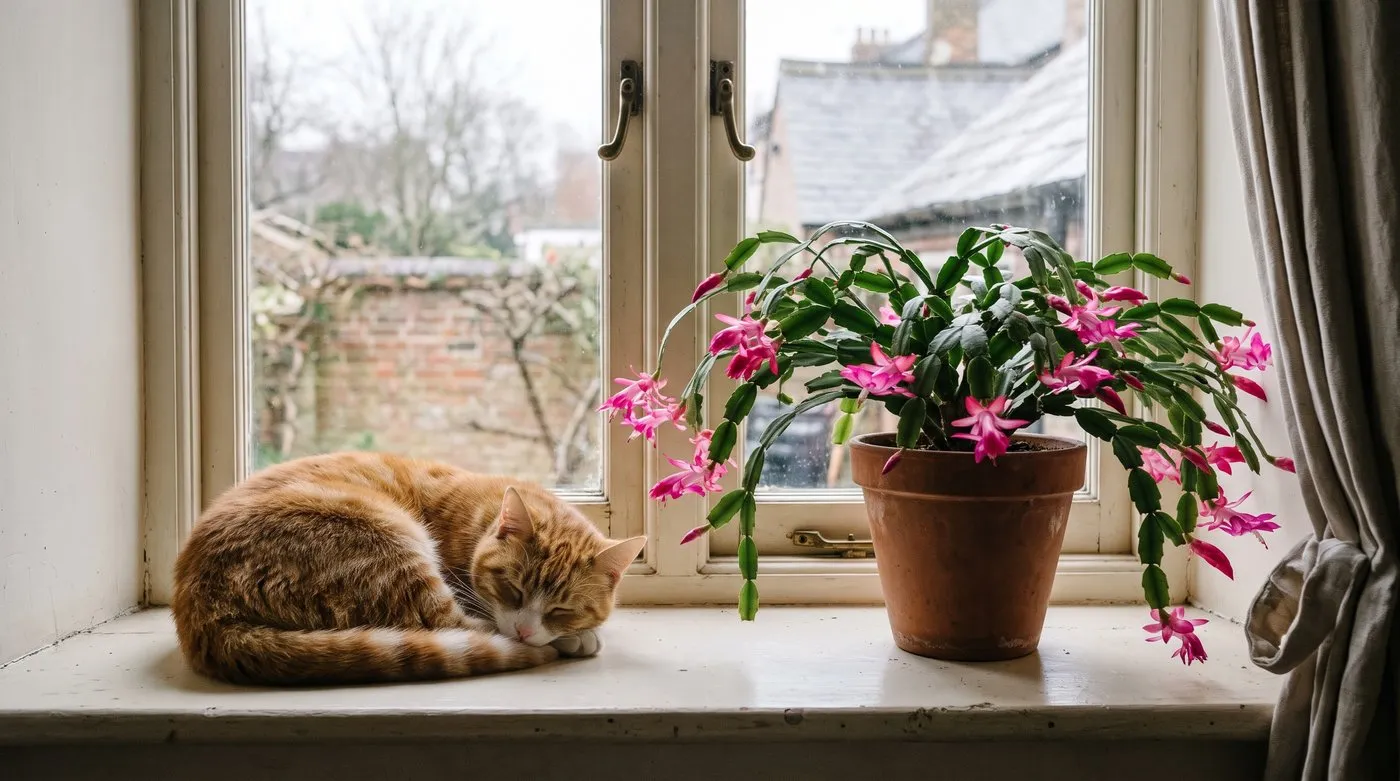
Christmas cactus is listed as non-toxic to cats and dogs, so it’s the one to choose for pet homes.
Christmas plant care through the season
| When | What to do |
|---|---|
| November | Plant amaryllis and paperwhite bulbs. Buy skimmia and Christmas roses for doorstep pots |
| Early December | Buy poinsettia, cyclamen and Christmas cactus. Wrap them for the journey home |
| Mid-December | Cut holly, ivy and evergreens. Keep them in water outside until needed |
| Christmas week | Check watering every couple of days. Move plants away from radiators and fires |
| January | Plant out Christmas roses and hyacinths. Keep amaryllis leaves growing for next year |
| February | Feed Christmas cactus and amaryllis lightly as they grow. Trim faded flowers |
Common mistakes with Christmas plants
Carrying plants home unwrapped. A few minutes in the cold can make poinsettia and other tender plants drop leaves days later. Ask for a sleeve and get them straight in the car.
Putting plants above a radiator. Hot, dry air shortens flowering and dries out compost fast. A bright windowsill without a radiator below is ideal.
Overwatering. More festive plants die from soggy compost than dry. Empty foil sleeves and saucers after 10 minutes.
Moving a Christmas cactus in bud. A change of light or temperature can make it drop its buds. Pick its spot and leave it there.
Choosing lilies in a cat home. They’re the most dangerous festive flower for cats. Pick roses or Christmas cactus instead.
Frequently asked questions
What are the traditional Christmas plants?
Holly, ivy, mistletoe and evergreen trees are the oldest Christmas plants in Britain. Poinsettia, amaryllis and Christmas cactus joined them in the last century. Christmas rose is another traditional favourite.
What flowers are in season at Christmas in the UK?
Very few garden flowers bloom outdoors in December. Christmas rose, winter jasmine, sarcococca, mahonia and early hellebores do. Indoors, amaryllis, paperwhites, hyacinths, cyclamen and poinsettia are at their best.
Which Christmas plants are safe for cats and dogs?
Christmas cactus is the safest choice, as it’s listed as non-toxic to cats and dogs. Most others are toxic to some degree. Lilies are extremely dangerous to cats, so keep them out of cat homes altogether.
How do I keep Christmas plants alive?
Give them bright light, a cool room and careful watering. Most festive houseplants hate radiators, cold draughts and soggy compost. Water when the top of the compost feels dry, and empty saucers after 10 minutes.
What is the best Christmas plant to give as a gift?
An amaryllis bulb in bud makes a great gift, as it flowers a few weeks later. Christmas cactus suits anyone with pets. A potted Christmas rose can be planted in the garden and flowers every winter.
Can I plant my Christmas plants in the garden afterwards?
Some, yes. Christmas rose, skimmia, ivy, holly, hyacinths and pot-grown conifers can all go outside after Christmas. Poinsettia, amaryllis, Christmas cactus and indoor cyclamen are tender, so keep them as houseplants.
Now you’ve picked your festive plants, read our guide to the types of Christmas tree to choose the centrepiece. For colour outside long after the decorations come down, see our best winter flowering plants.
Our team produces practical UK gardening guidance from source research, contributor records and established horticultural practice. Editorial standards are overseen by Matt W.