Key takeaways
- Bay sucker is Trioza alacris, a 3-4mm psyllid, not frost, scale or disease
- The giveaway is curled, thickened, pale-yellow leaf edges with white waxy fluff underneath
- Potted bays in still, shaded corners are hit hardest, especially clipped lollipop standards
- Several overlapping generations run from May to September, always worst on new growth
- The damage is cosmetic: it rarely weakens an otherwise healthy bay
- Pick off curled leaves, prune affected tips, and let ladybirds and lacewings do the rest
Bay sucker is the reason your bay tree leaves are curling at the edges, thickening and turning a sickly pale yellow. It is a small sap-feeding insect, not a disease, not a nutrient problem, and almost never frost. The proper name is Trioza alacris, a psyllid or jumping plant louse that lives only on bay laurel. If you grow a clipped bay in a pot by the door, you have probably met it, even if you never knew what it was.
What is bay sucker and what does it do to bay trees?
Bay sucker is a 3-4mm psyllid, Trioza alacris, that feeds only on bay laurel and distorts the new leaves at the shoot tips. The yellowish-green adults have two pairs of wings held in a roof shape over the body, and they jump when disturbed, which is where “jumping plant louse” comes from. They are easy to miss. The damage they cause is not.
The insect feeds by piercing the soft tissue of expanding leaves and sucking sap. That feeding releases something that makes the leaf grow unevenly, so the margin thickens, rolls downwards and pales to yellow. Tuck back a curled edge and you find the real culprits: clusters of tiny flat nymphs smothered in a white waxy fluff that protects them. This is the single most reliable sign, and it is what separates bay sucker from every other cause of an unhappy bay.
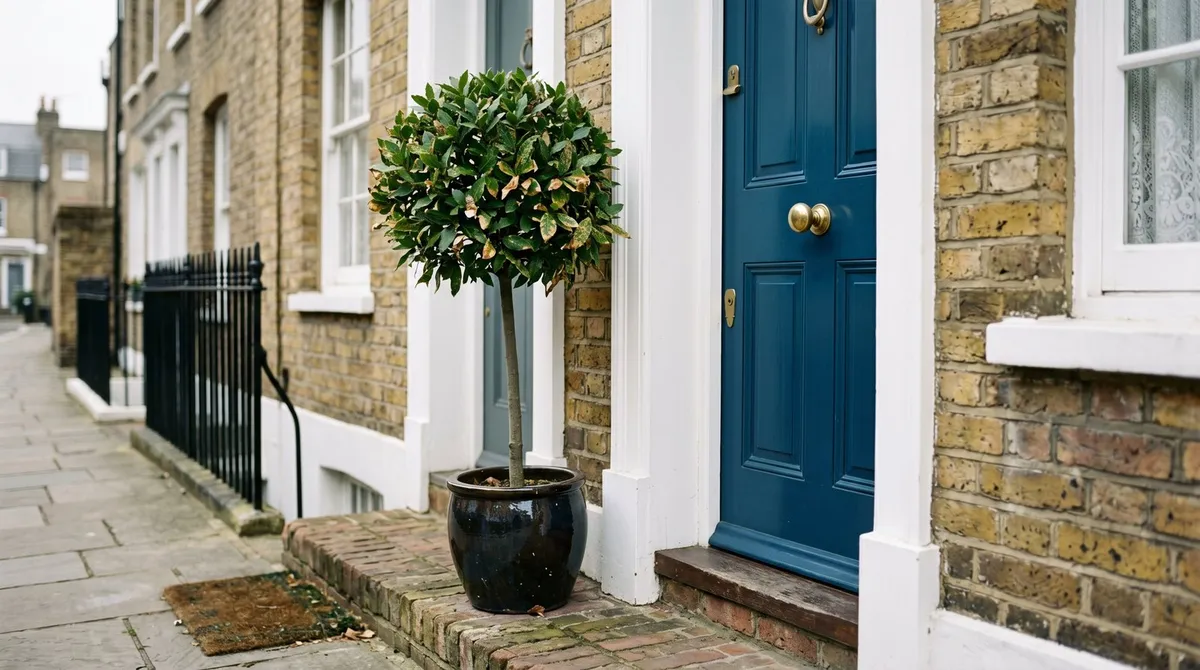
 A potted bay by a sheltered front door is the classic bay sucker hotspot: still air, close inspection, and damage you cannot help but notice.
How to identify bay sucker damage
The diagnostic combination is curled, thickened, pale-yellow leaf margins on new growth, with white waxy fluff and tiny nymphs underneath. Often only one half of a leaf is affected, which gives the foliage a lopsided, puckered look. As the season goes on the curled areas dry out and turn brown and brittle, and badly hit shoots can shed leaves.
Timing is the other clue. Bay sucker works on soft, expanding leaves, so the damage appears on the spring and summer flush from May onwards, never on the old hardened leaves lower down. If your bay looks ragged at the tips in July but clean and leathery further in, that pattern alone points to sucker rather than root or watering trouble.
Use the table below to match what you are seeing to the most likely cause. Bay leaves go wrong in several ways, and the treatment is completely different depending on which one you have. For broader container care, our guide to caring for a bay tree covers feeding, watering and winter protection in full.
| What you see on the bay | Most likely cause | When it shows | Tell-tale detail |
|---|---|---|---|
| Curled, thickened, yellow leaf edges + white fluff | Bay sucker | May to Sept, new growth | Tiny nymphs and waxy wool under the curl |
| Whole leaves or shoot tips browned, no curling | Frost or cold wind | Winter, early spring | No insects, no fluff, hits exposed sides |
| Brown leaf tips and edges, leaves drop | Drought or waterlogging | Any time, often summer | Compost bone-dry or sodden, roots stressed |
| Sticky leaves, black sooty mould, brown bumps | Scale insects | Spring to autumn | Immobile limpet-like bumps on stems and leaf backs |
| White fluff in leaf joints, sticky residue | Mealybug | Mostly under cover | Fluff sits in joints, not along leaf margins |
| Yellow leaves all over, oldest first | Hunger or poor drainage | Spring, late summer | Even yellowing, not edge-curling |
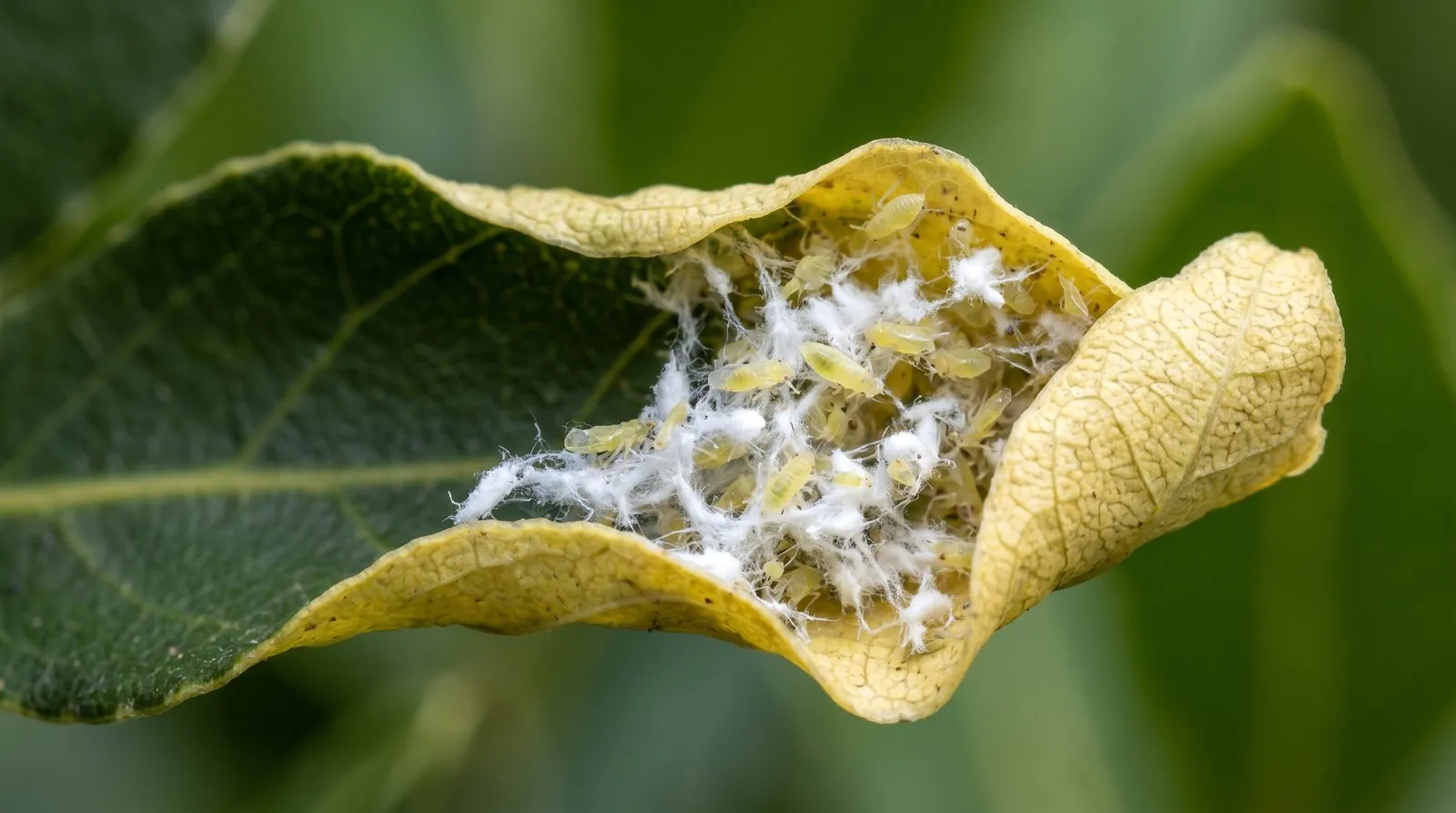 Fold back a curled edge and the diagnosis is made: flat nymphs hidden under a protective coat of white waxy fluff.
Bay sucker or frost? Telling the difference
Frost and cold drying winds scorch bay in the colder months. The leaves go brown from the tip or across the whole blade, the worst damage faces the prevailing wind, and the leaf itself stays flat. There is no rolling of the margin and nothing living underneath. Cold damage on an evergreen often shows up weeks after the cold snap, once milder weather arrives, which catches people out. If your bay browned over winter, protect it better next year rather than reaching for a treatment, as set out in our guide to overwintering container plants.
Bay sucker, by contrast, is a fair-weather pest. It needs the soft growth of late spring and summer, the margins curl and pucker rather than simply browning, and the white fluff and nymphs are there if you look. Warm-season curling with fluff is sucker. Cold-season browning without fluff is frost. Hold those two apart and you will diagnose almost every bay correctly.
The bay sucker life cycle through the year
Adult bay suckers overwinter in sheltered spots near the plant, then emerge in spring to lay eggs on the new leaves, giving several overlapping generations through summer. Understanding that rhythm is what lets you stay ahead of it rather than reacting once the damage is done.
The adults shelter through winter in evergreen foliage, cracks and other protected places, which is one reason a bay tucked against a warm wall or in a sheltered porch is such a reliable host. As the spring flush softens in April and May, the females lay eggs along the developing leaves. The nymphs hatch, settle under the leaf margins, start feeding and trigger the curling. There are several generations during the summer, and because they overlap you can find eggs, nymphs and adults all at once by July.
This is why early action pays off. Catch the first curled leaves in May and you remove a whole founding generation before it multiplies. Leave it until August and you are dealing with the great-grandchildren. The same logic underpins all good organic pest control: hit a pest early and lightly, and you rarely need anything stronger.
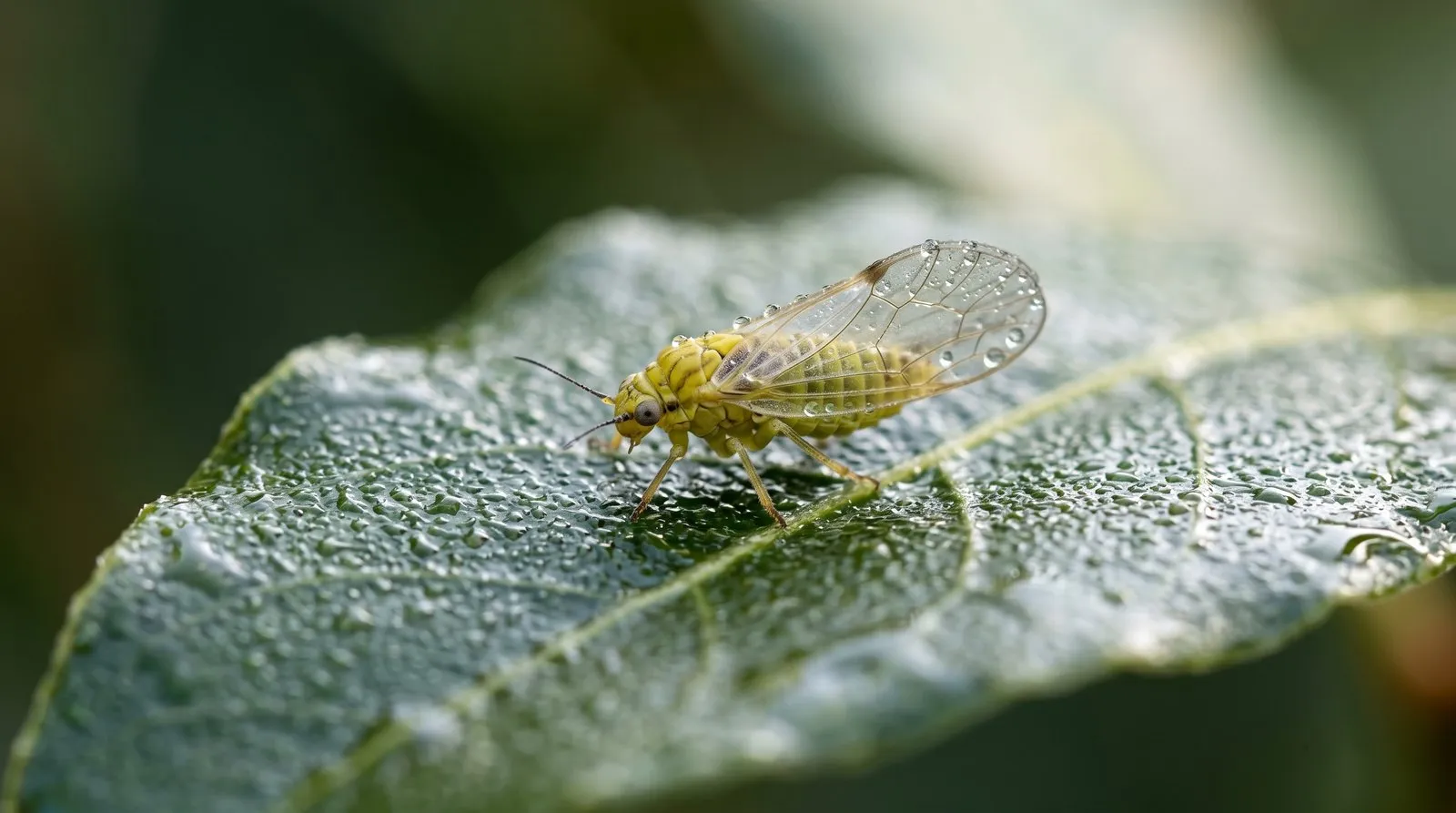 The adult bay sucker is only 3-4mm long, yellow-green, with wings held in a roof shape. It jumps when disturbed.
How to control bay sucker, organically first
Picking off curled leaves and pruning affected tips is the most effective home control, and it costs nothing. Because the nymphs live inside the curl, removing the leaf removes the colony. Bin or burn the prunings; do not compost them, or you simply move the problem. On a clipped standard this doubles neatly with shaping, which our bay topiary guide covers in detail.
Work through the options in order, from gentlest to least necessary:
- Pick and prune. From May, snip off curled and fluff-lined leaves and the worst shoot tips. Weekly checks in early summer stop it ever building up.
- Improve light and airflow. Move shaded, sheltered pots into a brighter, breezier spot. Still, stagnant air is the sucker’s best friend. Turning the pot every couple of weeks helps too.
- Wash off nymphs. A firm jet of water on the leaf undersides on a dry morning knocks off young nymphs. Repeat every week or so while the flush is soft.
- Feed the predators, not the pest. Ladybirds, lacewings and their larvae, parasitic wasps, ground beetles and birds all eat bay sucker. A garden that supports them keeps the pest in check for free.
- Ease off the nitrogen. Heavy feeding pushes the soft, sappy growth suckers love. A balanced feed in moderation gives tougher leaves and less damage.
- Skip the spray if you can. On a culinary bay you pick leaves from, broad insecticides are rarely justified and they kill the very predators keeping the pest down.
The principles are the same ones that work on aphids: act early, act lightly, and let nature carry most of the load. Reserve any contact treatment for a young or prized plant being overwhelmed, and spray only the leaf undersides, early or late in the day.
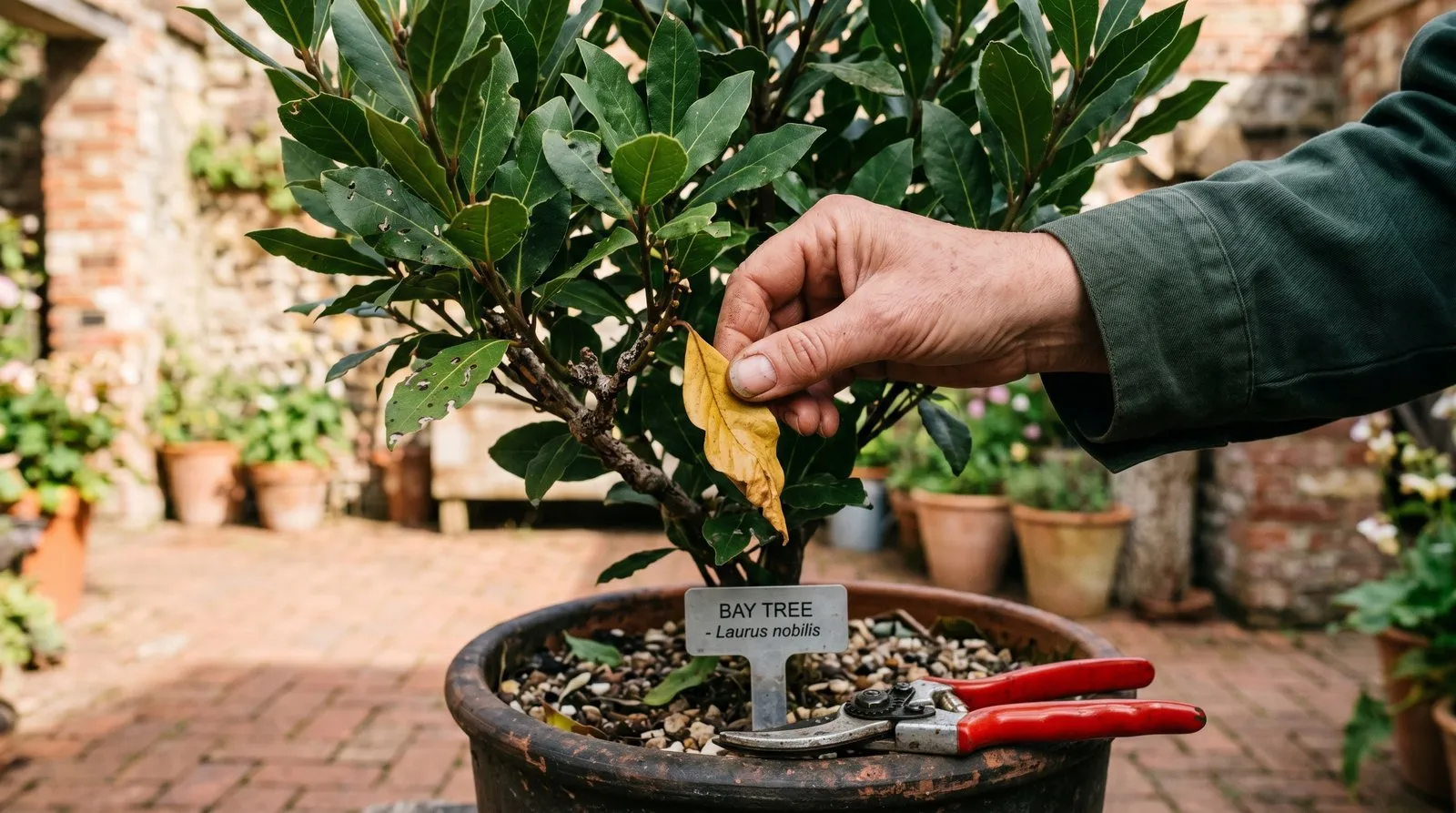 Hand-picking the first curled leaves in May removes whole colonies before they multiply. It is the single most effective control.
Keeping container bays healthy and sucker-free
A vigorous bay in good light and steady moisture is far less troubled by bay sucker than a stressed, pot-bound one in deep shade. Most of prevention is simply good container practice, and it pays back in a fuller, glossier plant whether or not the sucker turns up.
Repot pot-bound bays every two to three years in spring into a loam-based compost such as John Innes No. 3, with extra grit for drainage, and stand the pot on feet so winter wet drains away. Keep the compost evenly moist in summer but never waterlogged, and feed in moderation through the growing season. In autumn, clear fallen leaves and debris from around the pot and off the saucer, because that litter is exactly where overwintering adults shelter. A pot in a brighter, more open position, turned now and then so all sides get light and air, breaks the yearly cycle that sheltered corners encourage. The full picture on potting, feeding and winter care is in our bay tree growing guide.
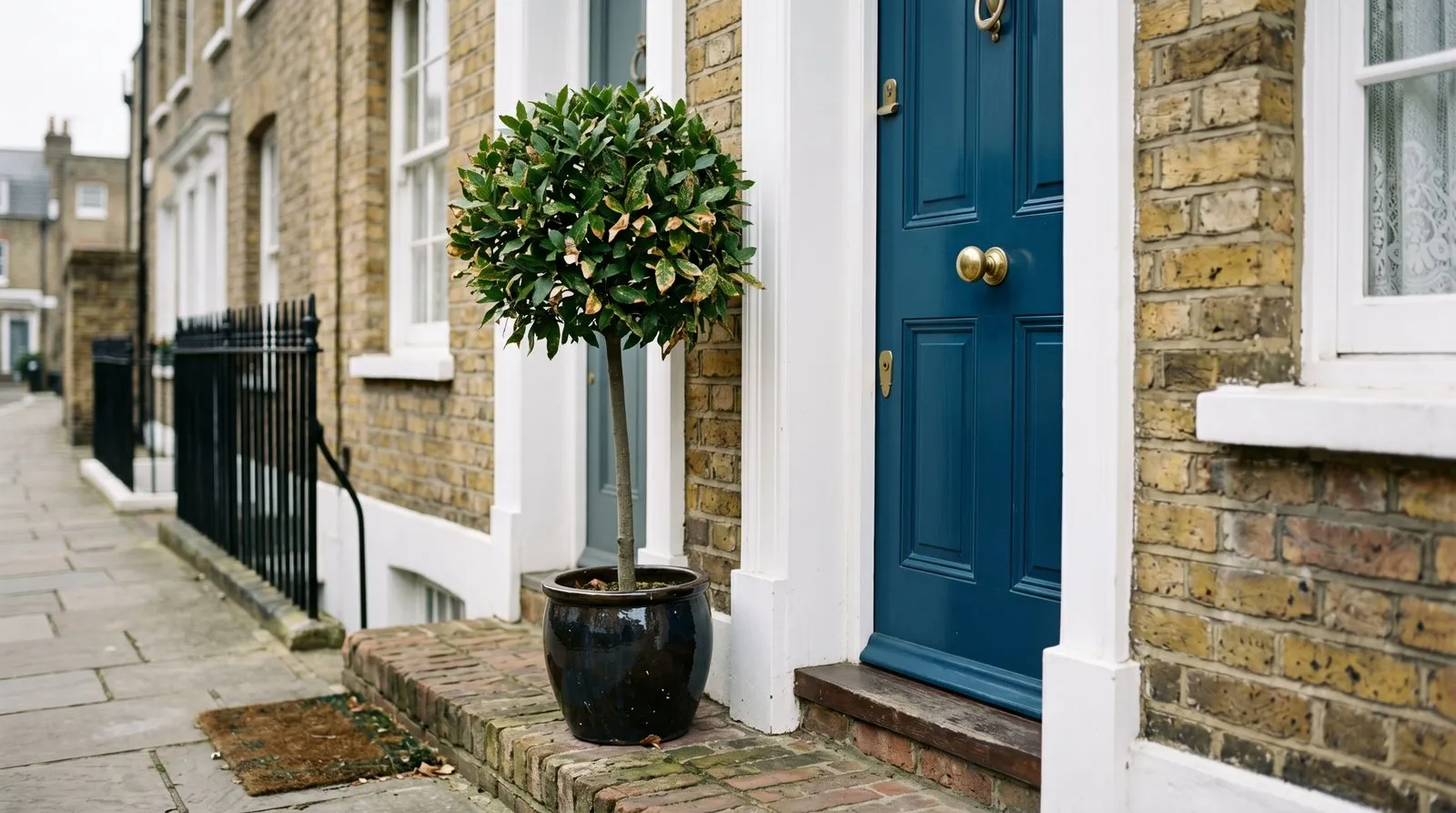
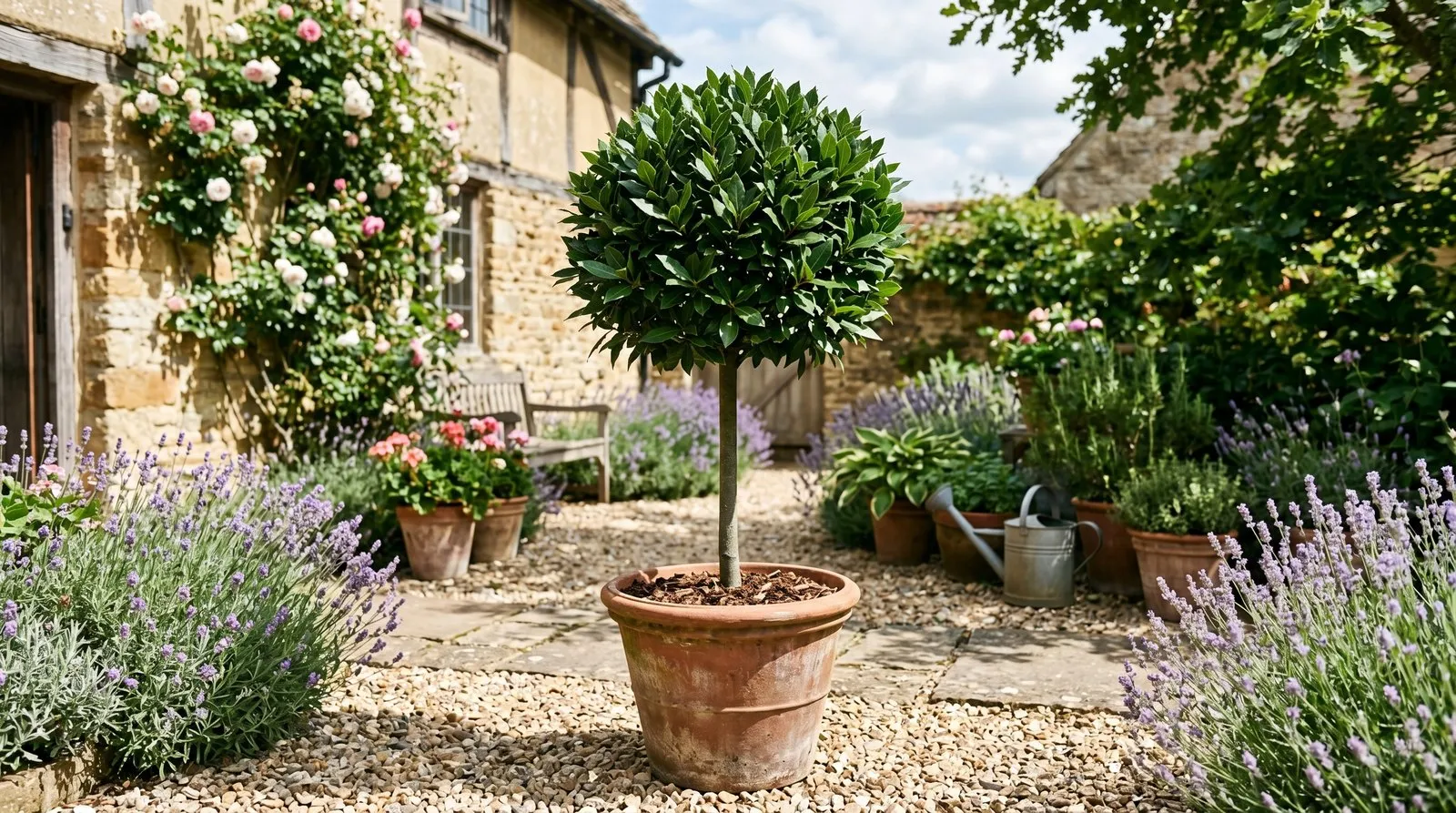 A bay in good light and moving air, like this courtyard standard, rarely suffers more than a few curled leaves.
Should you worry? When control actually matters
So should you worry? Almost never. A bay sucker outbreak on an established plant is a cosmetic nuisance that comes and goes with the season, and the plant recovers each year without help. Put your effort into light, air and early picking, keep the plant well grown, and accept a few curled leaves in high summer as the price of growing bay in a pot. For the authoritative position, the Royal Horticultural Society agrees that control is not usually necessary, and their wider bay tree growing guide is worth a read for overall care.
For more on keeping bays and other evergreens in good shape, browse our problems section, or read up on the look-alike pests above so you never mistreat a healthy plant again.
Frequently asked questions
What does bay sucker damage look like?
Bay leaf edges curl downwards, thicken and turn pale yellow, often on just one side of the leaf. Underneath the curled margin you find tiny yellow-green nymphs and white waxy fluff. The damaged areas later dry to brown. It always shows worst on the soft new growth at the shoot tips from late spring onwards.
Will bay sucker kill my bay tree?
No, bay sucker very rarely kills or even weakens a healthy bay. The Royal Horticultural Society classes it as cosmetic, because it disfigures leaves at the shoot tips but does not reduce the plant’s vigour. A well-fed, well-watered bay shrugs it off. The damage looks far worse than it is, especially on a clipped standard you see up close.
How do I get rid of bay sucker?
Pick off and bin curled leaves as soon as they appear in May, and prune out badly affected shoot tips. Move potted bays into better light and air, and avoid soft sappy growth from heavy feeding. Encourage ladybirds, lacewings and birds, which all eat the nymphs. Insecticides are seldom worth it on a plant you pick leaves from to cook with.
Is it bay sucker or frost damage?
Bay sucker curls and yellows leaf edges in summer and leaves white fluff and live insects under the curl. Frost or cold wind browns whole leaves and shoot tips in winter or early spring, with no curling and no insects. If the damage appears on new growth in warm weather and you find waxy fluff, it is bay sucker, not frost.
Why does my potted bay get bay sucker every year?
Container bays in still, shaded, sheltered spots suffer most, because the adults overwinter nearby and the lack of air movement lets nymphs build up undisturbed. Pots by a sheltered door or wall are classic hotspots. Improving light and airflow, turning the pot regularly, and clearing fallen leaves in autumn all break that yearly cycle better than any spray.
Our team produces practical UK gardening guidance from source research, contributor records and established horticultural practice. Editorial standards are overseen by Matt W.