Key takeaways
- 1.5m solid fence stops muntjac; 1.8-2m stops roe and fallow
- Deer jump, they do not climb; a barrier they cannot see over works best
- Repellents fade in 2-4 weeks and fail once deer are hungry
- Aromatic, hairy and toxic plants (lavender, euphorbia, daffodils) get browsed least
- Muntjac are small but persistent; they push through gaps under 30cm
- No single plant is fully deer-proof in a hard winter
Keeping deer out of a UK garden comes down to one thing the spray bottles will not tell you: height. Roe, fallow and muntjac all browse gardens hard, especially in late winter when wild food runs short. This guide covers the fence heights that actually work, why deer jump instead of climb, the plants they leave alone, and why every repellent eventually fails.
After six winters on a village edge in Staffordshire, the pattern is settled. Height beats repellents. A solid barrier beats a see-through one. No plant is fully deer-proof.
Which UK Deer Is In Your Garden
Three deer species cause most UK garden damage. Telling them apart sets the fence height you need.
Muntjac (Muntiacus reevesi) are the size of a large dog, hunched, and barely 50cm at the shoulder. They stay all year, breed all year, and squeeze through any gap over 30cm. They browse low and neat.
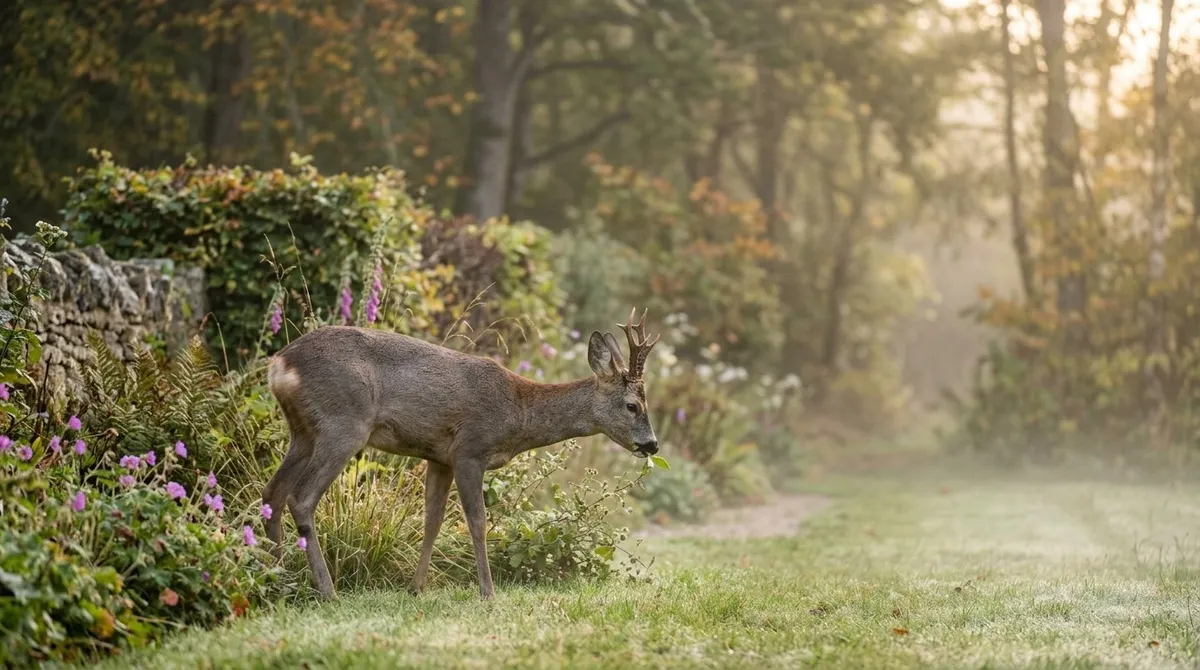
Roe deer (Capreolus capreolus) stand around 65-75cm at the shoulder, reddish in summer, grey in winter, with a pale rump and no visible tail. They bark at night and clear fences with ease.
Fallow deer (Dama dama) are larger, often spotted, and move in groups. They are common near parkland and ancient woodland. Where fallow visit, you need the tallest barrier.
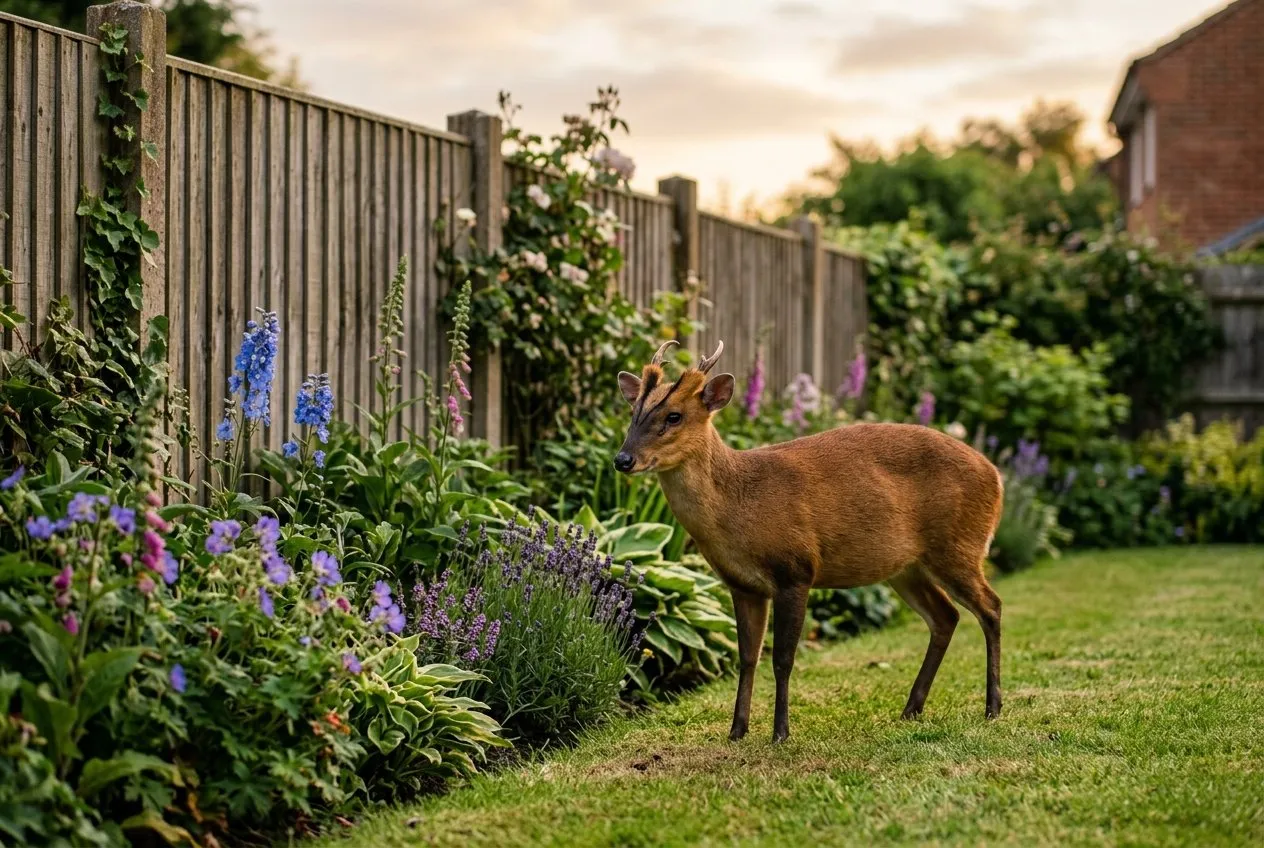 A muntjac on a Staffordshire back lawn at dusk. Dog-sized, hunched, and present year-round. Muntjac push through gaps rather than jump, so a low fence with a sealed base stops them.
Read the clues before you build. Slot-shaped hoof prints, torn rather than cleanly cut shoots, and droppings the size of a thumbnail all point to deer. Rabbits cut at an angle; deer tear, because they have no upper front teeth.
 Fresh deer slots in a Staffordshire border after overnight rain. The two-toed cloven print and the ragged torn shoot beside it separate deer from rabbits, which leave clean angled cuts.
Why Fence Height Beats Everything Else
Deer jump. They do not climb. That single fact decides your whole approach.
A deer judges a jump by what it can see on the far side. Give it a clear view of the landing and a fit roe deer will clear 1.8m without breaking stride. Block that view with a solid panel and the same deer hesitates. It will not commit to a leap into the unknown.
This is why a solid 1.5m fence often outperforms a see-through 1.8m one. Height matters, but visibility matters nearly as much. For the British Deer Society species notes on jumping ability, see the British Deer Society species guide.
Here is what works, species by species:
| Deer species | Shoulder height | Fence height needed | Key habit |
|---|---|---|---|
| Muntjac | ~50cm | 1.5m solid, base sealed | Pushes through gaps; rarely jumps high |
| Roe deer | 65-75cm | 1.8m, solid preferred | Jumps cleanly; clears low fences |
| Fallow deer | 85-95cm | 2m solid or angled top | Moves in groups; strongest jumper |
| Red deer (rural) | 110-120cm | 2m+ specialist deer fence | Rare in gardens; farmland edges |
The honest answer for a mixed-deer area is 1.8m as the working minimum, 2m where fallow visit. Anything shorter is a speed bump.
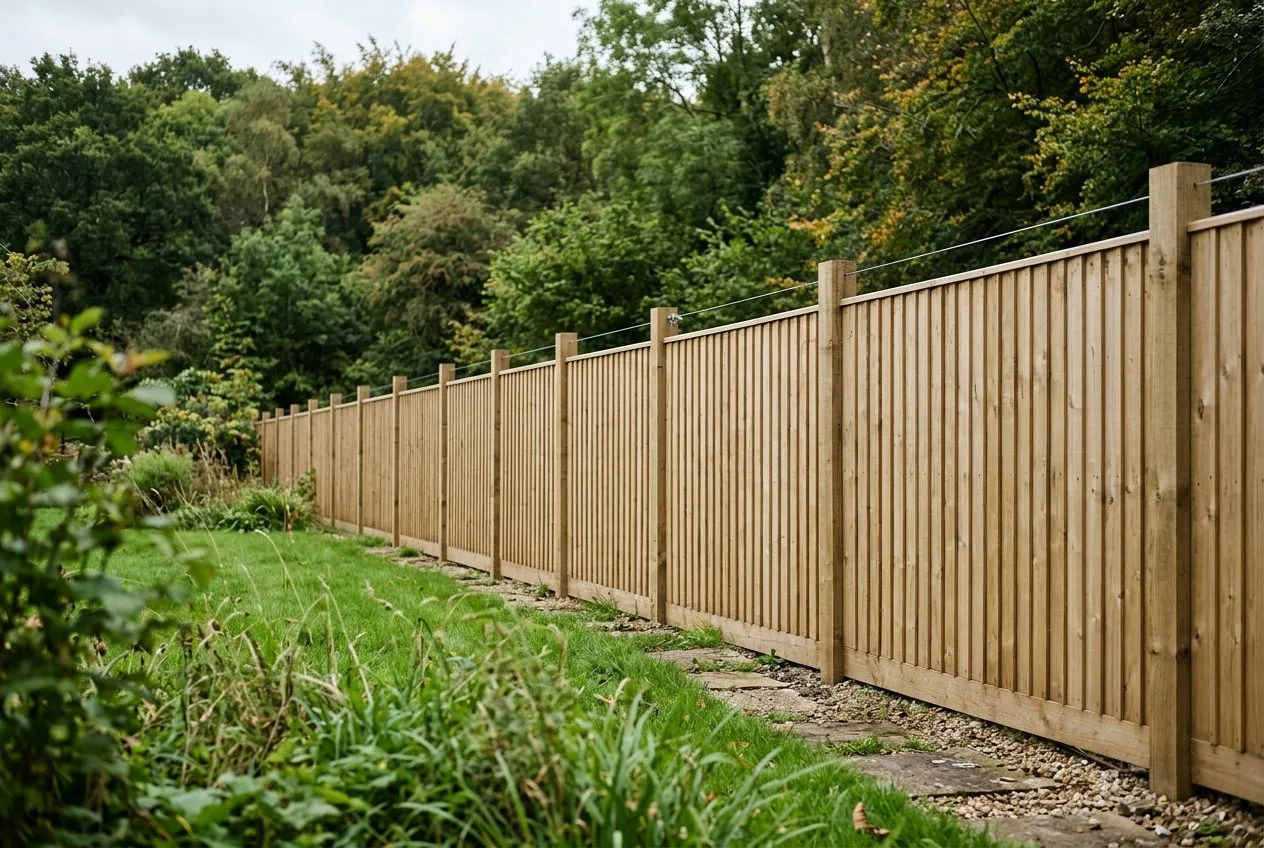 A 1.8m solid boundary fence on the Staffordshire village edge. The deer cannot see the landing, so they will not jump. A single tensioned wire above the panels adds height without the cost of taller boards.
Building A Deer Fence That Holds
A deer fence does not need to be a fortress. It needs height, no gaps, and a sound base.
The essentials:
- 1.8m minimum height for roe and fallow; 1.5m for muntjac-only areas
- Solid panels or close mesh, not open post-and-rail
- Base pinned to the ground or buried 15cm so muntjac cannot push under
- Gates the same height as the fence, with no gap beneath
- Tensioned top wire to add 200-300mm cheaply
Muntjac are the reason gardeners think their fence has failed. The deer is not jumping. It is squeezing under a 30cm gap at the bottom. Seal that base and the muntjac problem usually ends.
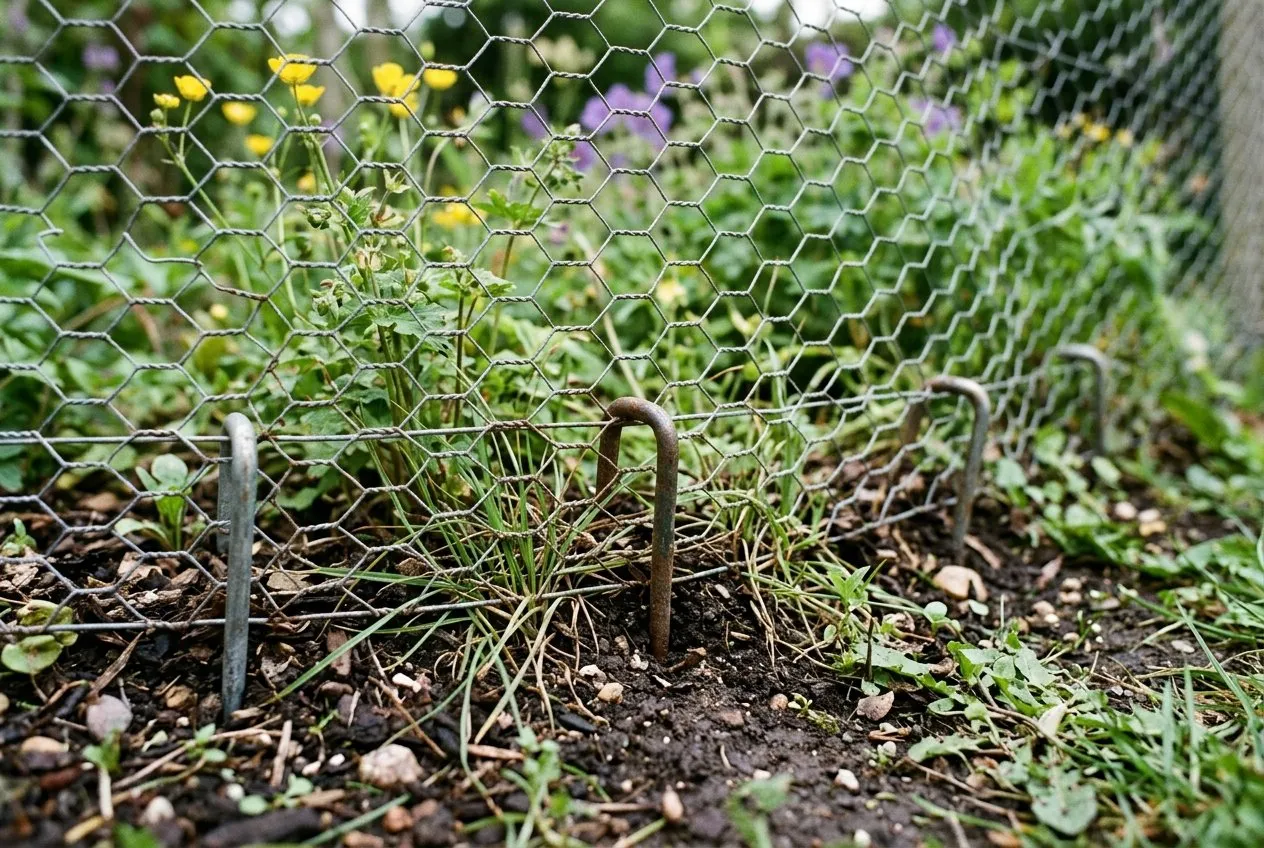 The sealed base is the part most people forget. Close mesh pinned to the soil stops muntjac squeezing under. A 30cm gap is all a determined muntjac needs to get in.
Deer-Resistant Planting That Actually Helps
Deer avoid three kinds of plant: aromatic, hairy, and toxic. The strong scent confuses their browsing, the texture puts them off, and the toxins they simply learn to leave.
This works as a second line, never the wall. A hungry deer in February will test anything. But planting the right things reduces casual nibbling through spring and summer.
Plants deer browse least:
- Lavender, rosemary and sage (aromatic, oily foliage)
- Euphorbia (toxic milky sap)
- Daffodils and other narcissi (toxic bulbs)
- Foxgloves (toxic)
- Ferns (most are left alone)
- Ornamental grasses (tough, unpalatable)
- Bergenia, with its thick leathery leaves
Plants deer treat as a buffet:
- Roses, especially the soft new growth
- Tulips (the spring favourite; they strip the buds)
- Hostas (browsed to stumps overnight)
- Fruit tree shoots and bark
- Pansies and most soft bedding
| Use case | Deer-resistant choice | Deer-magnet to avoid |
|---|---|---|
| Spring colour | Daffodils, hellebores | Tulips, pansies |
| Border structure | Euphorbia, bergenia | Hostas |
| Scent and edging | Lavender, rosemary | Roses |
| Shade planting | Ferns, foxgloves | Soft hosta clumps |
For a fuller picture of which shrubs hold up, our guide to the best flowering shrubs for UK gardens flags the tougher, less-browsed options. The RHS keeps a useful working list too, in its deer advice.
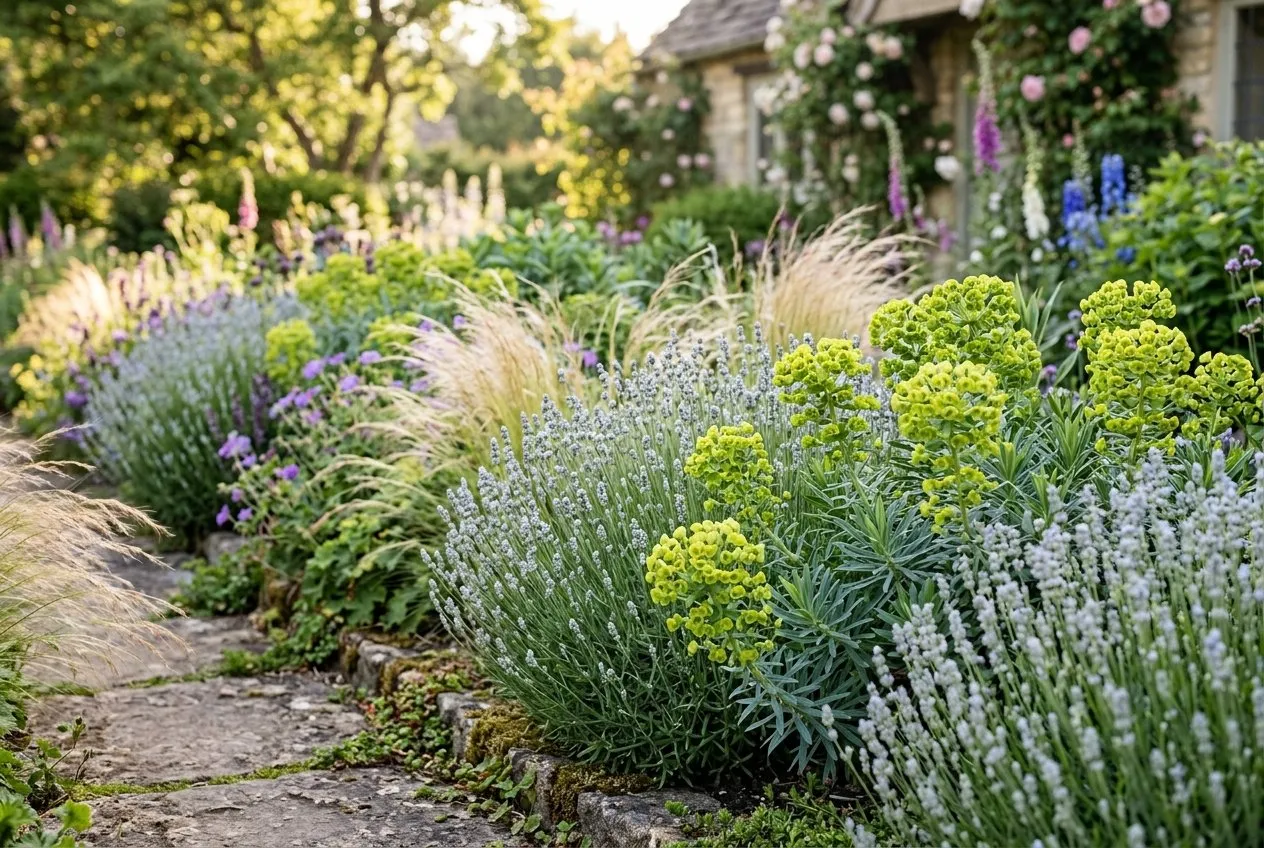 A deer-resistant border at Staffordshire in June. Lavender, euphorbia and grasses, all aromatic, toxic or tough. This planting gets browsed last, but a hungry roe deer will still test it in a hard winter.
Why Repellents Always Let You Down
The reason is simple. Repellents rely on a deer having a better option elsewhere. Through spring and autumn that holds. In a hard February, your tulips are the better option, and the deer takes them.
Where repellents do earn their keep:
- Protecting new tree whips for the first few weeks after planting
- Bridging the gap while a fence or hedge establishes
- Knocking back light summer browsing on roses
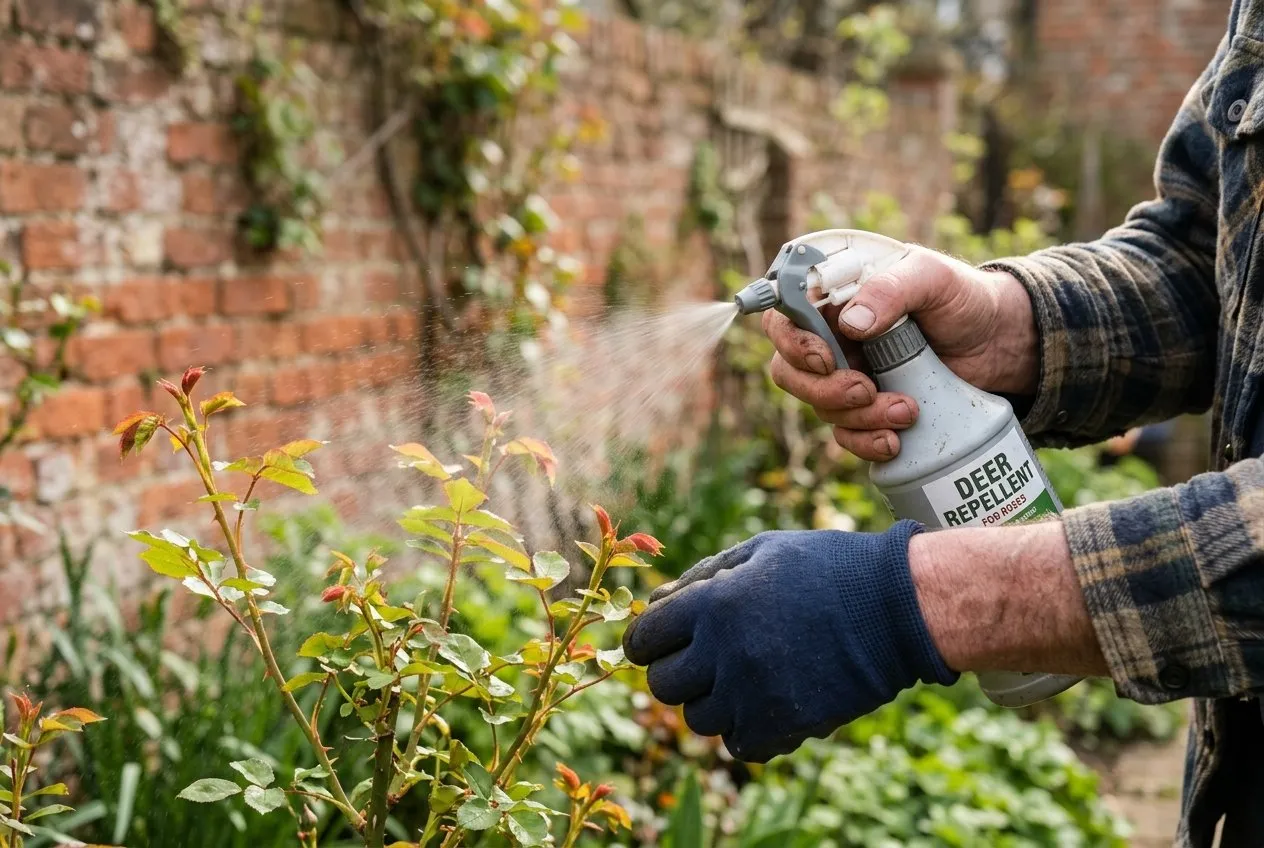 Spraying repellent on rose growth in spring. It buys two to four weeks at best. Rain washes it off and hungry deer ignore it entirely, so it never replaces a fence.
Putting It Together For Your Plot
The right answer depends on which deer visit and how much you can spend.
Muntjac only: a 1.5m solid fence with a sealed base solves it. This is the cheapest scenario.
Roe deer: 1.8m solid fencing, or 1.8m mesh backed by a hedge. Add a tensioned top wire if they keep clearing it.
Fallow nearby: 2m, solid or angled outward at the top. Group jumpers need the full height.
Mixed or unsure: build for the worst case at 1.8-2m and seal the base for muntjac.
Layer the planting behind the fence. Lavender, euphorbia and daffodils on the outer edge, your roses and tulips safe inside. The fence does the work; the planting reduces the casualties if a deer ever gets in.

Frequently asked questions
What fence height keeps deer out of a UK garden?
1.5m stops muntjac; 1.8-2m stops roe and fallow deer. Deer jump rather than climb, so a solid barrier they cannot see over works best. A see-through fence at the same height is easier for them to clear because they judge the landing. Close gaps under 30cm or muntjac push through.
Do deer repellents actually work?
Repellents work for 2-4 weeks, then deer ignore them. Scent and taste sprays wash off in rain and lose potency fast. Once deer are hungry in late winter, no spray stops them. Use repellents to buy time on new planting, never as the main defence. Height is the only reliable answer.
Which plants do deer not eat in UK gardens?
Deer avoid aromatic, hairy and toxic plants most. Lavender, rosemary, euphorbia, ferns, daffodils, foxgloves and ornamental grasses get browsed least. No plant is fully deer-proof in a hard winter. Use resistant planting as a second line behind a fence, not instead of one.
How can I tell which deer is in my garden?
Muntjac are dog-sized, hunched, and leave neat low browsing. Roe deer stand taller with a pale rump and bark like a dog at night. Muntjac stay year-round and push through gaps; roe and fallow jump fences. Slot-shaped hoof prints and torn rather than cut shoots confirm deer over rabbits.
Will a hedge stop deer getting in?
A dense hedge over 1.8m slows deer but rarely stops them alone. Roe and fallow push through or jump young, thin hedging. Pair a fast-growing hedge with a wire fence inside it for the first five years. Once the hedge is thick and tall it becomes a real barrier and a wildlife haven too.
Now plan the wider garden defence
Our team produces practical UK gardening guidance from source research, contributor records and established horticultural practice. Editorial standards are overseen by Matt W.