Key takeaways
- Rabbit fencing must be 0.9-1.2m high with 31mm maximum mesh; juveniles squeeze through anything wider.
- Bury or turn the bottom 150-300mm outward as an L-footer; rabbits dig 100-150mm down at a fence line.
- Rabbits breed January to July, producing up to 5 litters of 3-7 young, so numbers climb fast.
- Repellents fade after rain; aluminium ammonium sulphate needs reapplying every 7-14 days.
- Galvanised rabbit netting costs around £1.90-£2.50 per metre, far cheaper than repeated turf repair.
- Over-seed bare scrapes at 35g per square metre using a hard-wearing perennial ryegrass mix.
Rabbits will wreck a lawn faster than almost any other UK garden visitor. To stop rabbits digging up your lawn for good, you need to understand why they scrape the turf in the first place, then block them at the boundary. Most people reach for a spray, watch it fail after the first downpour, and assume nothing works. The truth is simpler. Correctly built exclusion fencing stops rabbits reliably, while repellents and gadgets only ever buy a few quiet weeks. This guide covers how to confirm rabbits are the culprit, the exact fence specification that keeps them out, where most fences fail, and how to bring a chewed-up lawn back to health.
How to tell rabbit damage from other diggers
Rabbits leave a recognisable signature, and reading it correctly saves you from buying the wrong solution. Rabbit damage shows as shallow scrapes in the turf, grass nibbled right down to the crown, and clusters of round droppings about 7-10mm across. Scrapes are loose patches of soil where a rabbit has scratched at the surface, often near a hedge or fence line.
Other diggers behave differently. Foxes dig deeper, narrowing conical holes when hunting leatherjacket and chafer grubs, and they leave musky scat. Moles push up loose soil heaps from below without breaking the surface horizontally. Badgers rip up wide strips of turf overnight, far more violent than a rabbit scrape. If you find small neat holes rather than scrapes, our guide to small holes in the lawn overnight walks through the full set of suspects.
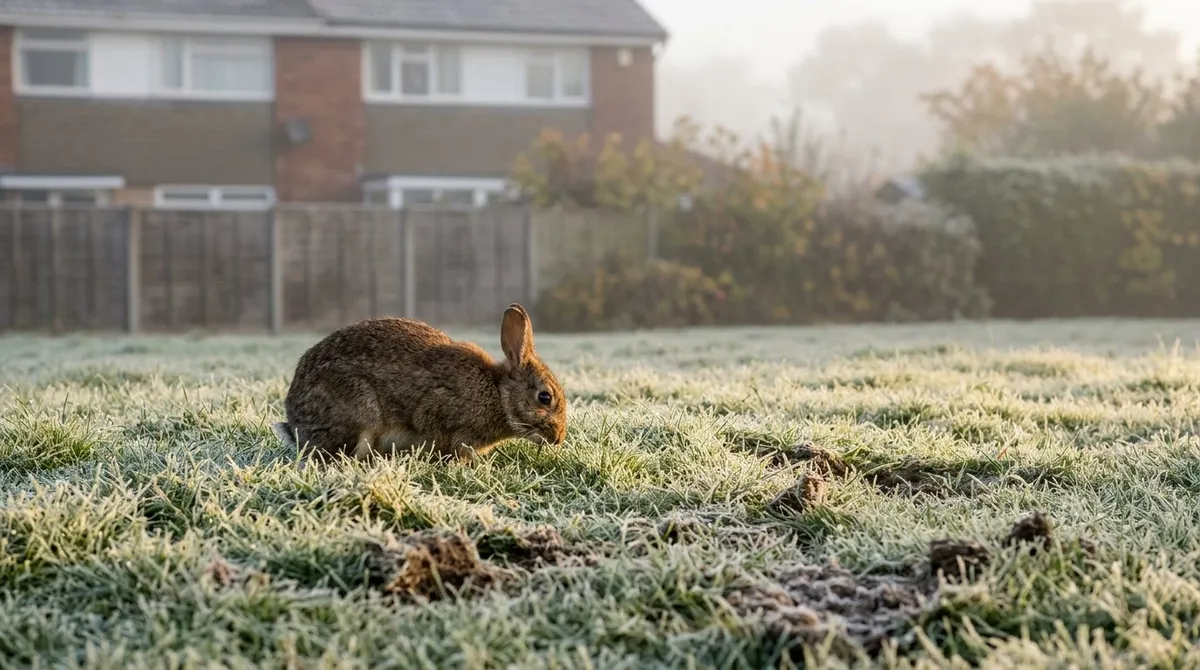
Watch the lawn at first light or dusk if you can. Rabbits feed mainly between dusk and dawn, so dawn frost often shows fresh prints and droppings most clearly.
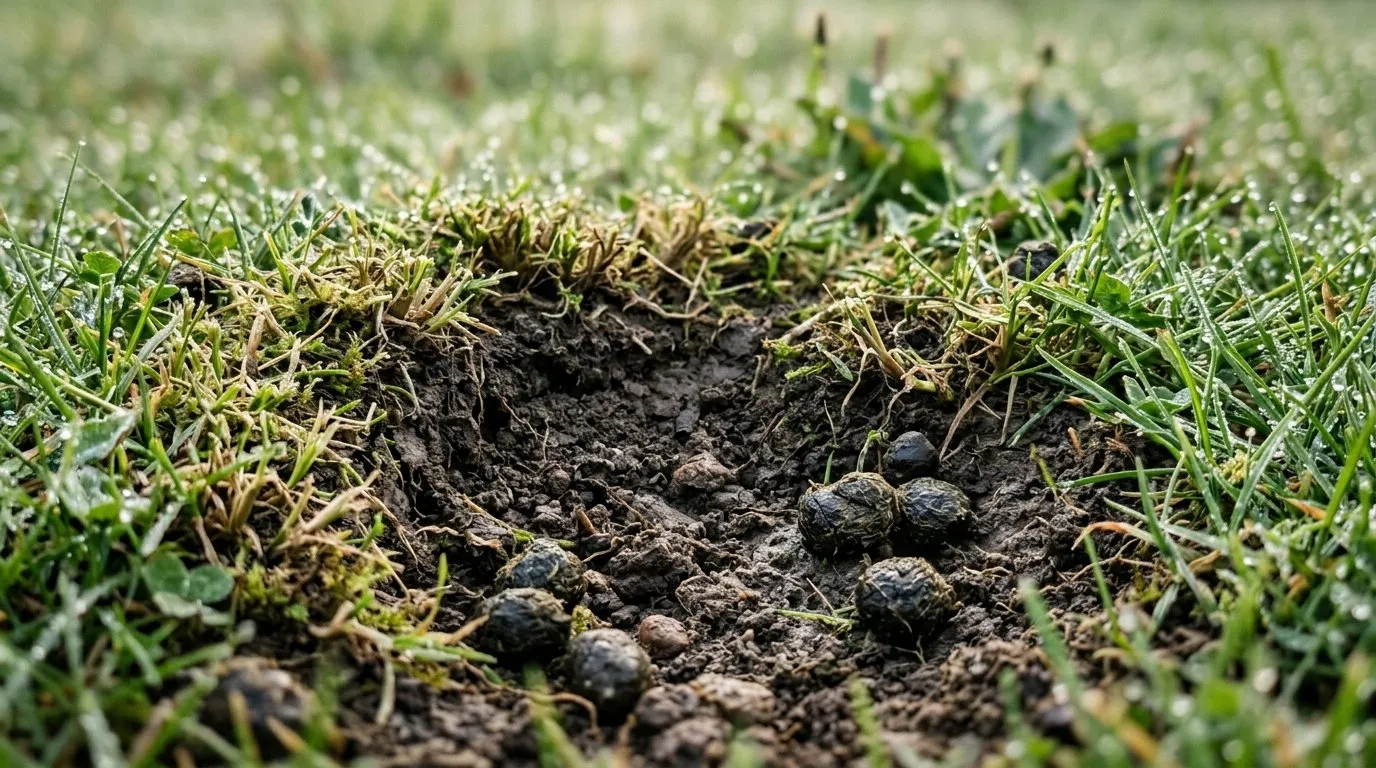 Shallow scrapes, nibbled grass and round droppings are the classic rabbit signature.
Why rabbits scrape and dig your turf
Rabbits dig for three clear reasons, and the underlying cause matters more than the visible mess. First, they feed, grazing grass down to the crown and scratching at the surface to reach tender roots and emerging shoots. Second, males make scrapes to mark territory, urinating and leaving droppings in the disturbed soil as a scent signal. Third, females dig nesting burrows during the breeding season.
This is why scattering one repellent over a single patch rarely helps. The rabbit is not attacking that spot. It is feeding and marking across its whole range, and your lawn sits inside that range. The Mammal Society describes the European rabbit as a highly social grazer that lives in connected warren systems, so where you see one, more follow.
The breeding maths explains the speed. Rabbits breed from January to July, with does producing up to five litters of three to seven young, sometimes around 30 offspring in a season. Kits are weaned at 21-25 days and reach breeding age near four months. Leave the boundary open and a minor nuisance becomes a colony by late summer.
The exclusion fence that actually keeps rabbits out
Exclusion fencing is the single reliable answer, and the specification is not negotiable. Build it wrong and rabbits walk straight through.
The Royal Horticultural Society sets out the standard fence in its rabbit advice. Use galvanised wire netting 0.9-1.2m high above ground. The mesh must be 31mm or smaller, the British Standard hole size, because juvenile rabbits squeeze through anything wider from late spring onward. Below ground, bury the bottom 150-300mm and turn the lowest 150mm outward at a right angle to form an L-shaped footer pointing toward the rabbits.
That outward footer is the part most guides skip. When a rabbit digs at the base of a fence, it scratches straight down. Hitting the buried L-footer stops it, and the design is far easier than digging a deep vertical trench. For weld-mesh, a 50 x 25mm rectangular mesh resists chewing and lasts longer than thin hexagonal wire.
Galvanised rabbit netting costs roughly £1.90-£2.50 per linear metre, so a typical 30m garden run sits near £60-£75 in materials. Set that against the cost of repeated turf repair and it pays for itself in a single season.
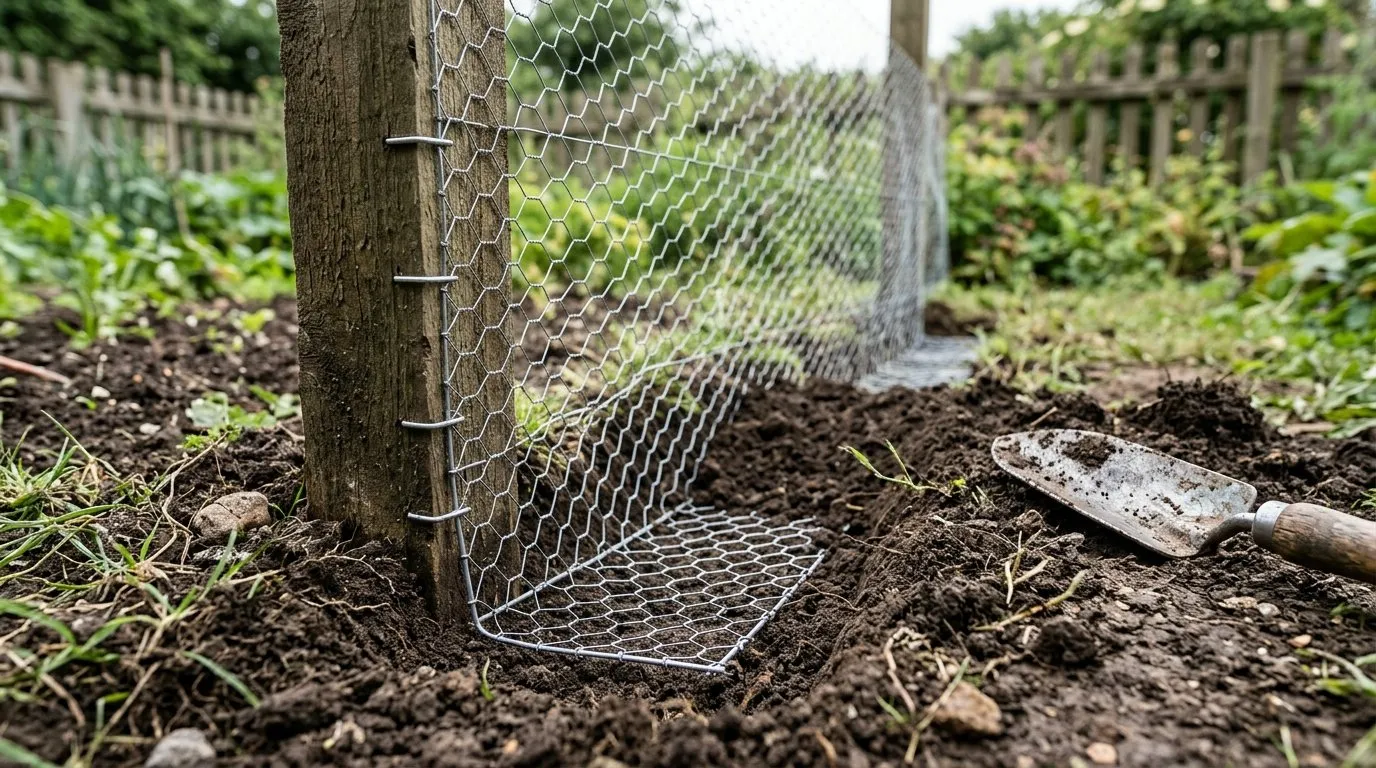 The L-footer turns outward underground, stopping rabbits as they dig at the fence base.
Why most rabbit fences fail
The most common fault is no buried footer. People staple netting to posts and stop at ground level. Rabbits simply dig under it within days. Second, the mesh is too big. Stock netting or chicken wire with 40-50mm holes stops adults but lets summer juveniles through, and by August you have a colony inside the barrier.
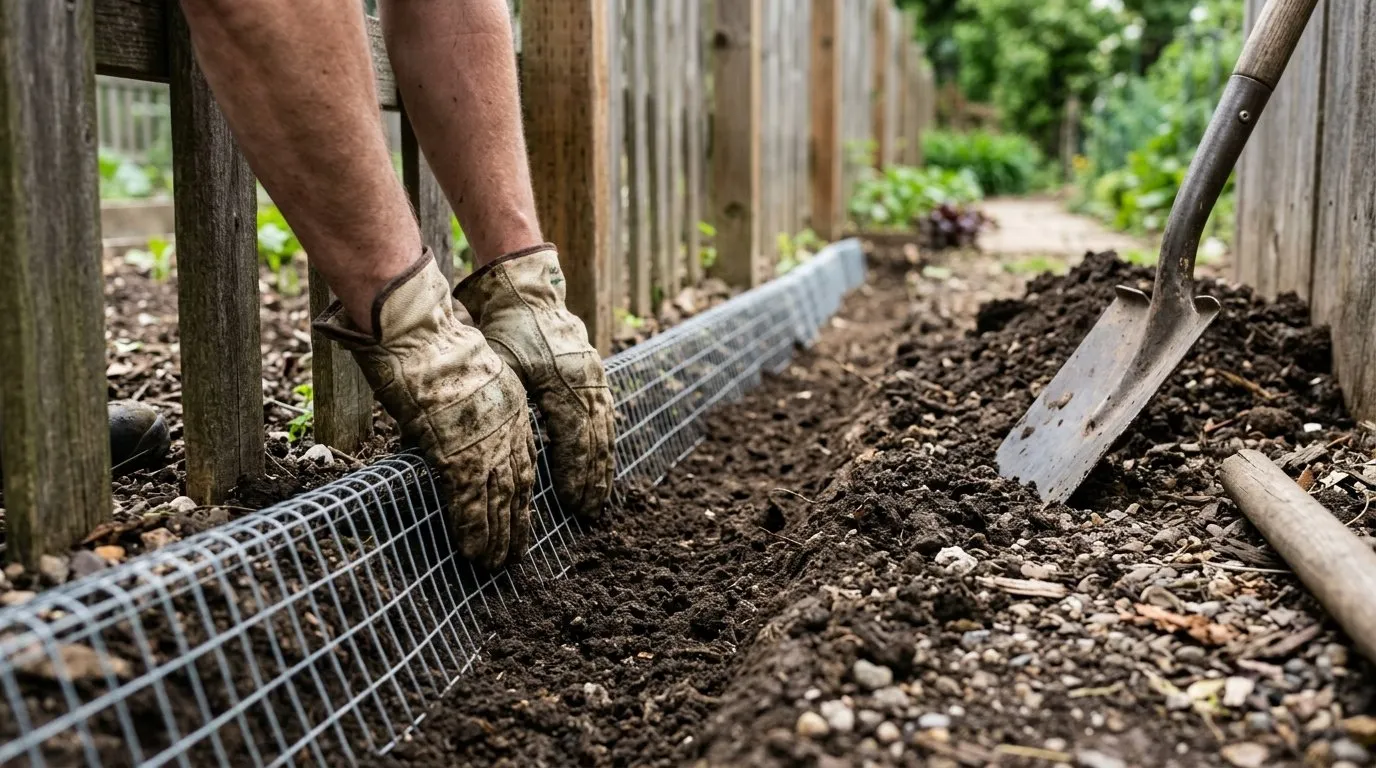 Lay the turned footer flat in a shallow trench so rabbits cannot dig beneath the fence.
Control methods ranked by what actually works
Not every method earns its place. The table below ranks the realistic options by long-term effectiveness, with the role each one should play.
| Method | Long-term effectiveness | Role | Notes |
|---|---|---|---|
| L-footer wire-netting fence | Very high | Barrier (primary) | 31mm mesh, 0.9-1.2m high, 150-300mm buried |
| Electric netting or wires | High | Barrier (primary, large plots) | Live wire at 50mm; keep 2.5kV+ |
| Habitat removal | Moderate | Maintenance | Clear cover, block warren entrances |
| Aluminium ammonium sulphate repellent | Low to moderate | Maintenance | Reapply every 7-14 days, washes off in rain |
| Predator-scent and garlic repellents | Low | Emergency | Brief effect, rabbits habituate fast |
| Scaring devices | Very low | Emergency | Rabbits ignore them within days |
Fencing and electric barriers do the real work. Everything below them is a stopgap to use while you build the fence, not a substitute for it.
 A correctly fenced allotment plot keeps rabbits off the turf and the vegetable beds alike.
Electric fencing for larger and rural plots
Where a buried wire fence is impractical across a long boundary, electric fencing protects bigger areas at lower material cost. It suits paddocks, smallholdings and rural gardens backing onto fields.
The principle is a low live wire. Run the bottom wire at 50mm above ground so a rabbit crawling under is shocked on the nose, then add wires at 100mm and 150mm. Keep at least 2.5kV on the line, which needs an energiser delivering around 1 joule or more at 500 ohms. Strained-wire systems space seven wires from 50mm up to 400mm, with the lowest earthed.
For a quick installation, pre-made electric netting stands 500-750mm high in 25m sections with integral posts. It is the fastest way to fence a vegetable patch against rabbits for a season. Keep the line clear of long grass, which drains the charge and leaves gaps a rabbit will find.
 Electric netting with a live wire near ground level shocks rabbits as they try to crawl under.
The honest truth about repellents
Repellents are where most money gets wasted, so here is the straight version. Taste repellents based on aluminium ammonium sulphate, sold as Vitax Stay Off or Growing Success Animal Repellent, do deter grazing because they taste bitter. The catch is that they wash off. The RHS states plainly that these products may not give complete protection, particularly during wet periods or active growth.
That means reapplying every 7-14 days, and again after every meaningful shower. In a wet UK summer you could be respraying twice a week. Calcium chloride products such as Grazers G1 work on similar terms.
Predator-scent granules and garlic sprays perform worse. Rabbits habituate within days once they learn no fox actually appears. Homemade chilli or garlic mixes smell strong to us but rarely change rabbit behaviour for long. Treat all of these as a bridge while the fence goes up, never as the plan itself. For a wider view of garden-safe options, our organic pest control guide sets out which natural methods are worth the effort.
Warning: Never use repellents on edible crops close to harvest. Aluminium ammonium sulphate is unsuitable for plants you will eat soon, so keep treatments to ornamental turf and boundaries.
Repairing a rabbit-damaged lawn
Repair only works once digging has stopped, so secure the fence first. Patching turf while rabbits still feed there is throwing seed at the problem.
Follow these stages in order.
- Clear and firm. Remove droppings, lift any loose dead turf, and tread the bare soil level. Rake the surface to a fine tilth in the top 10mm.
- Choose the right seed. Use a hard-wearing mix high in perennial ryegrass for worn areas, or a fine fescue blend for ornamental lawns. Ryegrass recovers fastest from grazing.
- Over-seed at the right rate. Sow at 35g per square metre on bare patches, lighter on thin grass. Sow from March to October when soil temperature stays above 8C.
- Top with compost. Cover seed with 5-10mm of sieved topsoil or compost to hold moisture and hide it from birds.
- Water and protect. Keep the soil moist for three weeks until germination, watering daily in dry spells.
The single critical mistake is reseeding before the fence is finished. New shoots are the most tempting food a rabbit can find, so an unprotected repair vanishes within nights. Build the barrier, then sow. For the full method on bare areas, see our guide to fixing a patchy lawn, and fold the repair into your lawn care calendar so timing lines up with the growing season.
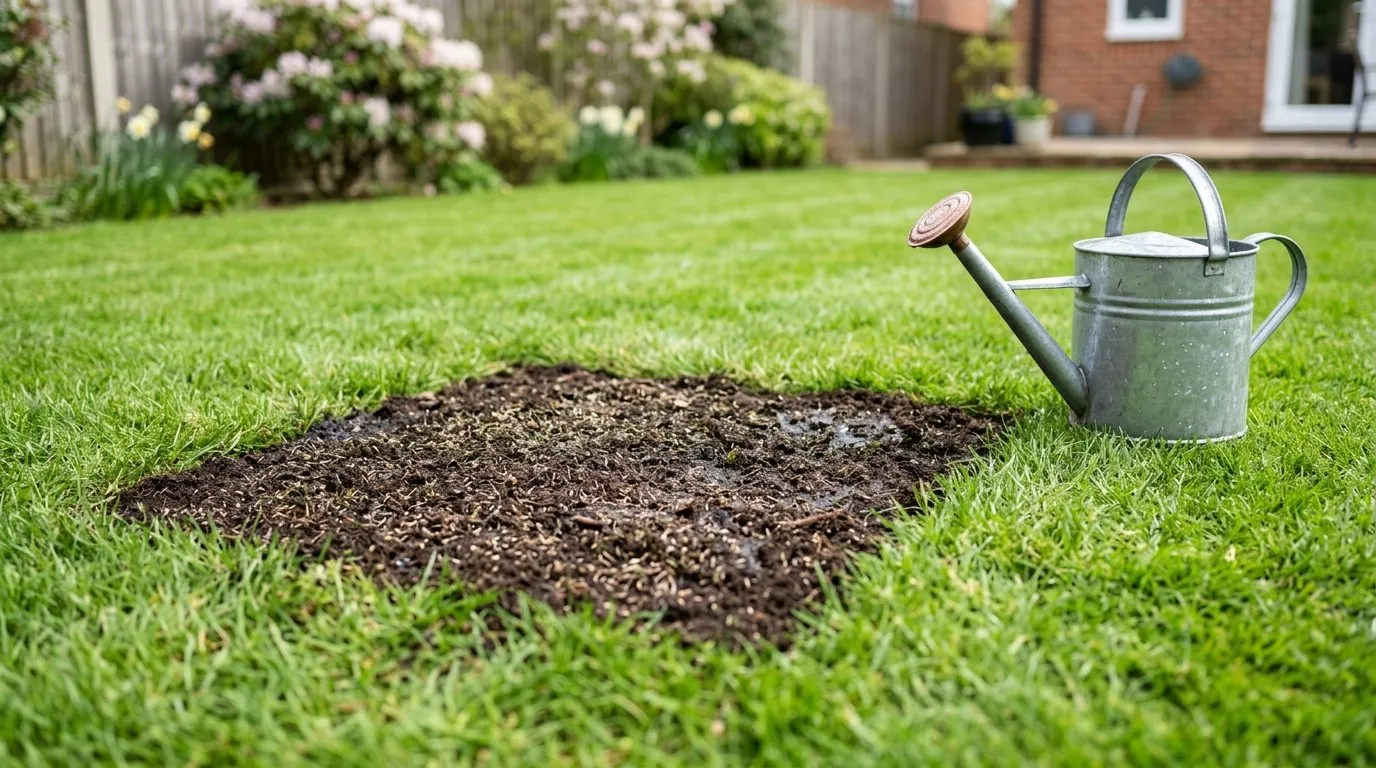 Over-seed bare scrapes at 35g per square metre, then top-dress with fine compost and keep moist.
Planting a rabbit-resistant lawn edge
You can make the boundary itself less inviting. Rabbits avoid strongly aromatic and tough-textured plants, so a planted edge reduces grazing pressure where they enter.
Good edge choices include lavender (Lavandula angustifolia), catmint (Nepeta), euphorbia, bergenia and ornamental alliums. These are rarely touched, while soft new grass and clover are rabbit favourites. The Wildlife Trusts offer useful background on living alongside garden wildlife rather than fighting it constantly.
 Aromatic edge plants like lavender and catmint make a boundary less tempting to grazing rabbits.
Common mistakes that let rabbits win
Three errors account for most repeat infestations.
Spraying instead of fencing. What happens: people buy repellent because it is quick and cheap. Why it fails: it washes off and rabbits keep feeding. How to avoid it: treat repellent as a holding measure only, and commit to fencing the boundary.
Skipping the buried footer. What happens: netting is stapled to posts at ground level. Why it fails: rabbits dig under in days. How to avoid it: always turn 150mm outward and bury 150-300mm.
Reseeding too early. What happens: gardeners patch the turf while rabbits still visit. Why it fails: fresh shoots are prime food and disappear overnight. How to avoid it: finish the fence, confirm no new scrapes for two weeks, then sow.
Gardener’s tip: Walk your boundary at dawn after rain for a week before you build. Fresh prints, droppings and pushed-down grass show exactly where rabbits enter, so you can concentrate fencing and footer depth on the real access points rather than guessing.
If neighbouring foxes or moles are also at work, the fox control guide and our advice on getting rid of moles cover those species, while garden fence ideas and notes on fence repair and maintenance help you build a barrier that lasts.
Frequently asked questions
Why do rabbits dig holes in my lawn?
Rabbits dig to feed, mark territory and reach roots. Males make shallow scrapes for scent-marking, often urinating and leaving droppings in the disturbed soil. They also nibble grass to the crown. Most digging happens between dusk and dawn during the January to July breeding season.
What is the best way to stop rabbits digging up a lawn?
Correctly installed exclusion fencing is the only reliable long-term fix. Use 31mm wire netting 0.9-1.2m high with the bottom 150-300mm turned outward and buried. Repellents and scaring devices only buy time. Fencing stops the problem at the boundary rather than chasing symptoms across the turf.
What mesh size keeps rabbits out?
Use 31mm hexagonal mesh or smaller. The British Standard for rabbit netting is a 31mm hole. Anything wider lets juvenile rabbits squeeze through from late spring. A 50 x 25mm welded mesh also works and resists chewing better than thin hexagonal wire.
Do rabbit repellents actually work?
They help a little but never solve the problem alone. Aluminium ammonium sulphate products like Vitax Stay Off taste bitter and deter grazing, yet they wash off in rain. The RHS notes they give incomplete protection during wet weather or active growth. Reapply every 7-14 days.
How deep do I need to bury rabbit fencing?
Bury the bottom 150-300mm of netting. Turn the lower 150mm outward at a right angle to form an L-footer pointing toward the rabbits. They dig down at the fence, hit the buried wire and give up. A turned footer is easier to install than a deep vertical trench.
Will an electric fence stop rabbits?
Yes, on larger or rural plots. Run a live wire at 50mm above ground so a crawling rabbit is shocked, plus wires at 100mm and 150mm. Keep at least 2.5kV on the line using a 1 joule or stronger energiser. Electric netting 50-75cm high is a quicker option.
How do I repair a lawn after rabbit damage?
Firm the soil, then over-seed bare patches at 35g per square metre. Use a hard-wearing perennial ryegrass mix from March to October when soil is above 8C. Keep the area moist for three weeks. Repair only works once fencing stops fresh digging.
Are rabbits or another animal digging my lawn?
Rabbits leave shallow scrapes, nibbled turf and round droppings about 7-10mm wide. Foxes dig deeper, conical holes hunting grubs. Moles push up soil heaps from below. Badgers tear wide turf strips. Matching the sign to the culprit decides which control method you actually need.
Now you have stopped the digging at the boundary, read our guide on small holes in the lawn overnight for identifying any other overnight visitors before they undo your repair.
Our team produces practical UK gardening guidance from source research, contributor records and established horticultural practice. Editorial standards are overseen by Matt W.