Key takeaways
- Badgers are protected; killing, trapping or sett interference is a criminal offence
- They dig lawns for chafer grubs and leatherjackets, not to spite you
- Remove the food source first: nematodes, windfall clearance, secured bins
- Sturdy or electric fencing works, but never fence a sett in or out
- Scent deterrents like citronella have limited evidence; food removal beats them
- Sett work or fencing near a sett may need a Natural England licence
Badgers are one of Britain’s most protected mammals, and that single fact changes everything about how you deal with them. You cannot trap one, harm one, or block its sett. So the whole job becomes humane, legal deterrence. This guide covers how to spot badger damage, why they come, and the lawful ways to move them on.
After six seasons sharing a boundary with a badger path at Staffordshire, the pattern is clear. Badgers dig for food, not for spite. Remove the food and the digging stops. Sett interference is a criminal offence, full stop.
How to Tell If It Is Badgers
Badger damage has a signature once you know it.
Diagnostic signs:
- Lawn rolled back like a carpet, often in strips, exposing soil and grub larvae
- Cone-shaped “snuffle holes” 50-150mm wide where they have rooted for food
- Dug-up bulbs and disturbed planting, especially after rain
- Latrines: shallow dung pits, often near a boundary or path
- Well-worn paths squeezing under a fence at the same spot each night
- Distinctive five-toe prints, around 50-65mm, with a wide rear pad and claw marks ahead of the toes
The five-toe print is the giveaway. Foxes and cats leave four toes. A badger’s broad pad with five toes and long fore-claws is unmistakable in soft ground.
Confused with other UK garden visitors:
| Animal | Key difference |
|---|---|
| Fox | Four-toe print, scattered digging, less turf rolled |
| Rabbit | Two-toe print, neat grazed patches, no deep snuffle holes |
| Cat | Four-toe print, small scrapes, no lawn lifting |
| Crows / starlings | Surface pecking for grubs, no soil rolled back |
If turf is peeled back in strips and you find five-toe prints, it is a badger.
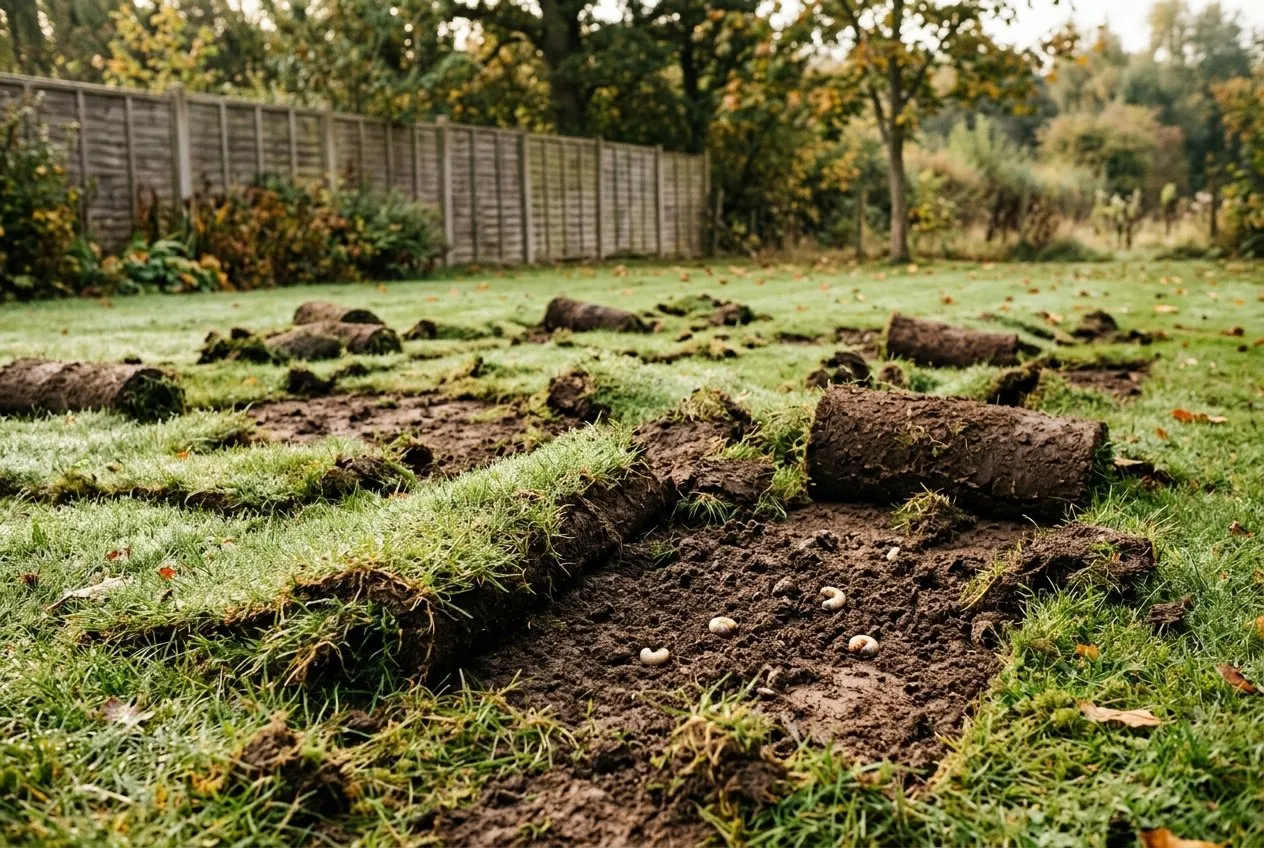 A Staffordshire back lawn peeled open overnight in early October. The badger rolled the turf like a carpet to reach the chafer grubs beneath. The damage looks brutal but the cause is simple: a heavy grub population in the top 50mm of soil.
Why Badgers Come Into Gardens
Badgers visit gardens for one reason: easy food. Take it away and the visits stop.
What pulls them in:
- Chafer grubs and leatherjackets in the lawn, their favourite garden food
- Fallen fruit under apple, pear and plum trees in late summer and autumn
- Open compost heaps with kitchen scraps
- Bin bags and unsecured wheelie bins
- Pet food and bowls left out overnight
- Bird-feeder spillage and fat balls within reach
A single badger eats up to 200 earthworms a night in good conditions, and grubs are an even richer target. Once a badger learns your lawn is a larder, it returns on a nightly circuit. The food source is the magnet. Every legal deterrent below works by removing or guarding it.
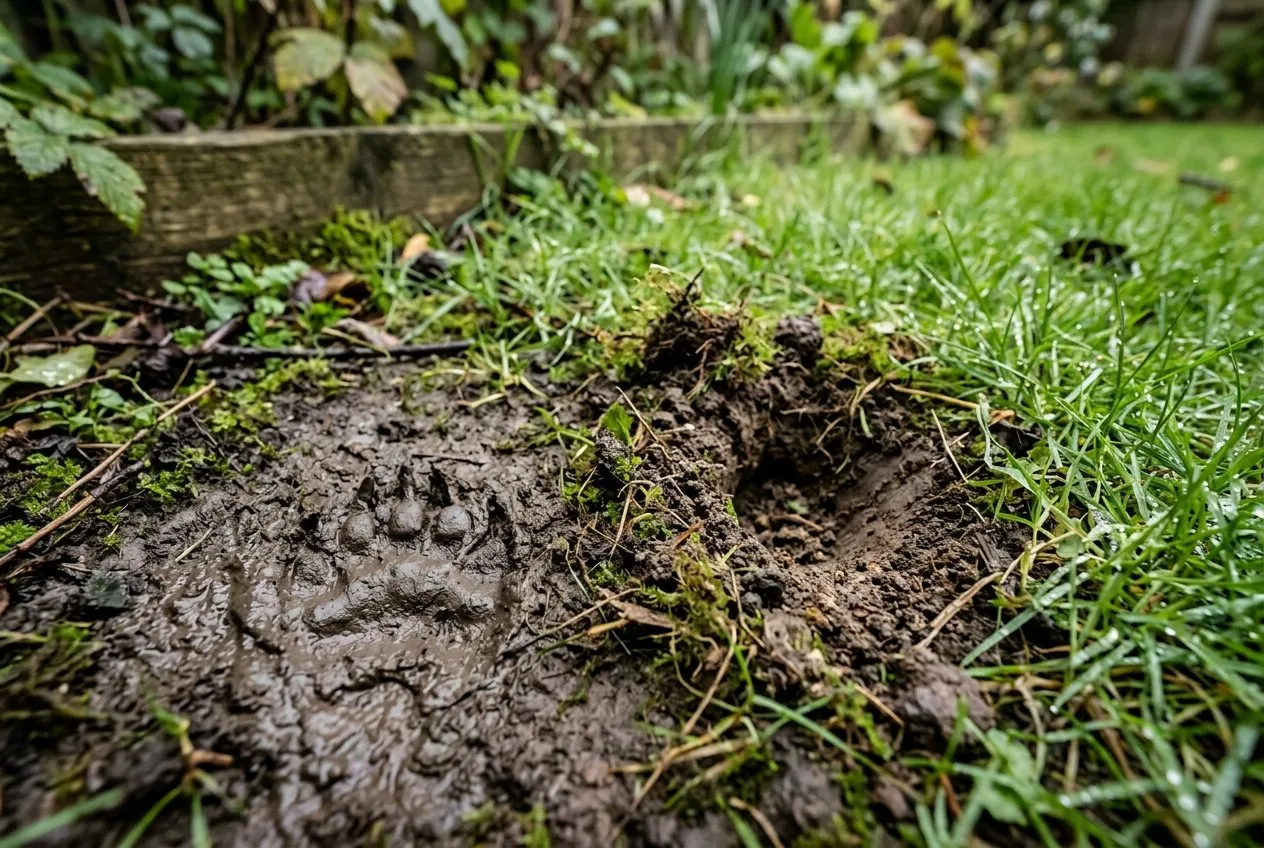 A cone-shaped snuffle hole and a textbook five-toe print in soft Staffordshire mud the morning after rain. The wide rear pad and the claw marks ahead of the toes confirm a badger, not a fox.
The Law: What You Can and Cannot Do
This section matters more than any deterrent. Get it wrong and you commit a crime.
Badgers and their setts are protected under the Protection of Badgers Act 1992. It is a criminal offence to kill, injure, take, or cruelly ill-treat a badger. It is also an offence to damage, destroy or block access to a sett, or to disturb a badger while it is in one. Penalties run to an unlimited fine and up to six months in prison per offence.
You may legally:
- Remove food sources from your garden
- Erect or repair sound fencing along a boundary
- Use scent deterrents and lights
- Clear windfalls, secure bins and lift pet food
You may not, without a Natural England licence:
- Block, dig out or interfere with a sett
- Fit a one-way badger gate to exclude them from a sett
- Fence in a way that traps a badger inside or seals it away from its sett
If a sett sits in or near your garden, or fencing might cut a badger off from one, you need a licence and often a survey first. The gov.uk guidance on badger protection, surveys and licences sets out exactly when a licence is required. When in doubt, assume the hole is an active sett and leave it alone.
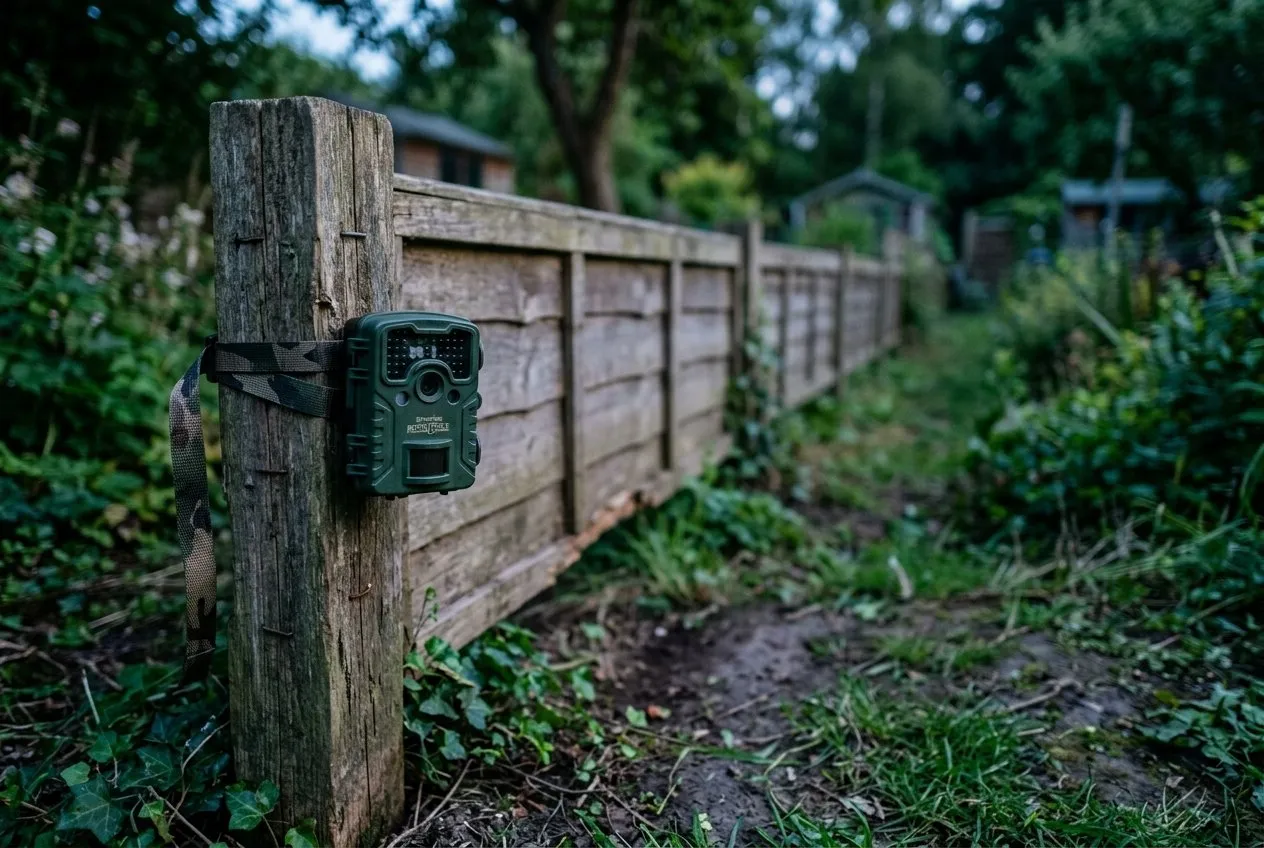 A trail camera lashed to a fence post at Staffordshire, aimed at the gap the badger uses. Before touching any fencing, log where the animal travels for a week. It tells you the entry point and rules out blocking a route to a sett.
Remove the Food Source First
Treat the grubs. Apply pathogenic nematodes to the lawn for chafer grubs (Heterorhabditis bacteriophora) or leatherjackets (Steinernema feltiae). Water them in when soil is warm and moist, ideally late August to early October for chafers, and again in spring for leatherjackets. A 100m² pack costs around £20-£30. Keep the lawn damp for two weeks after applying.
Clear the windfalls. Pick up fallen apples, pears and plums daily through autumn. A badger will hoover a whole tree’s drop in one night.
Secure the food. Bring pet bowls in at dusk. Move bins into a closed store or strap the lids. Cover compost heaps and keep cooked scraps out of open piles. Sweep up bird-feeder spillage.
 Watering chafer-grub nematodes into a Staffordshire lawn in early September. Soil temperature still above 12°C, ground moist, applied at dusk out of direct sun. This single step removed the badger’s main reason to dig.
Legal Fencing and Electric Fencing
Fencing works, but only when it is done legally and built to badger strength.
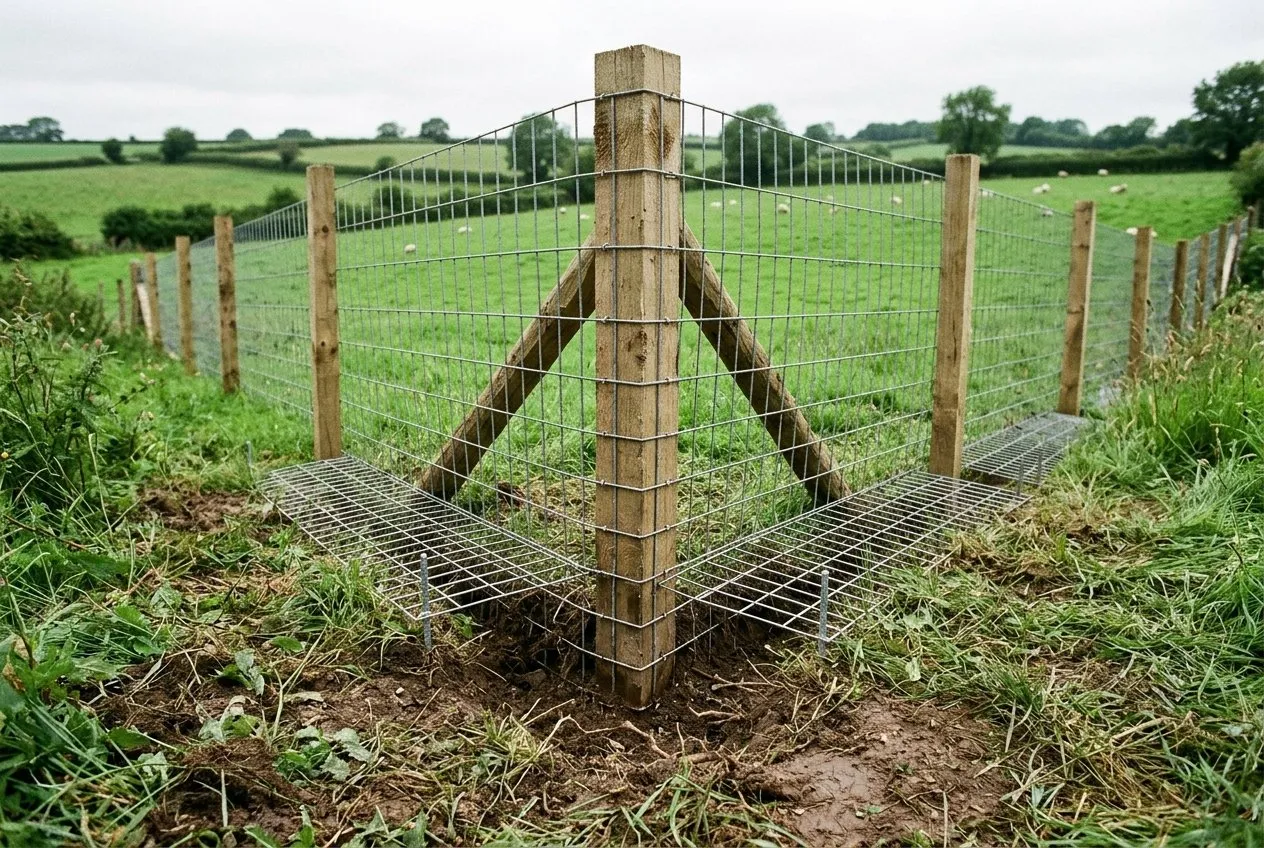
A badger is low, heavy and astonishingly strong. It will push under weak panels, dig beneath, and force gaps. For a stock fence, dig the bottom in 300mm deep or turn an L-shaped skirt of wire mesh outward at the base to stop digging. Use heavy-gauge weldmesh, not flimsy chicken wire.
Electric fencing is often the most practical answer along a single entry point. A single live wire 100-150mm above ground, run off a battery energiser, gives a humane shock that teaches the badger to stop. It harms nothing. Many gardeners pair one low wire with a second at around 200mm.
The hard legal rule: never use fencing to seal a badger inside an area, or to cut it off from its sett. That counts as interference and needs a licence. Fence the garden boundary, not the animal’s home.
Scent Deterrents and What Actually Works
Scent deterrents get talked up, but the evidence is thin.
Citronella, male human urine, chilli powder and proprietary repellents are all suggested for badgers. They may unsettle a badger for a few nights. A hungry, habituated animal ignores them quickly. They are a short-term top-up, never the main plan.
Honest ranking of legal deterrents:
| Method | Effectiveness | Cost | Legal? |
|---|---|---|---|
| Nematodes for grubs | High; removes the cause | £20-£30 per 100m² | Yes |
| Windfall + bin removal | High; cuts easy food | £0 | Yes |
| Electric fence (1-2 wires) | High along entry point | £80-£150 | Yes, never seal a sett |
| Sturdy dug-in fencing | Medium-high | £15-£40 per metre | Yes, never seal a sett |
| Scent deterrents | Low; short-lived | £10-£20 | Yes |
| Motion lights / sprinklers | Low; badgers habituate | £20-£60 | Yes |
| Blocking a hole or sett | Illegal | - | No, criminal offence |
Spend your effort at the top of that table. The bottom row is a crime, not an option.
When to Call a Professional
Some situations are beyond a DIY fix and need expert help.
Call a licensed ecologist or your local badger group if a sett is in or beside your garden, if foundations or a wall are being undermined, or if fencing might cut a badger off from its sett. They can survey the site, confirm whether the sett is active, and apply for a Natural England licence if any sett work is genuinely justified.
For wider wildlife questions, The Wildlife Trusts can point you to a regional badger group. Never let a general pest-control firm “deal with” a badger off the books. Both you and they can be prosecuted.
Badger Activity Calendar UK Month-by-Month
| Month | Badger task |
|---|---|
| January | Activity low in cold spells; check fencing |
| February | Cubs born underground; never disturb setts |
| March | Foraging picks up; watch for first snuffle holes |
| April | Apply spring leatherjacket nematodes if soil warm |
| May | Cubs above ground; latrines more obvious |
| June | Earthworm feeding; keep pet food in at dusk |
| July | Dry spells push badgers to dig harder for grubs |
| August | Start chafer-grub nematode window; clear early windfalls |
| September | Peak chafer-grub treatment; daily windfall clearance |
| October | Worst lawn damage; secure bins, repair fence skirts |
| November | Feeding hard before winter; lock down all food |
| December | Activity drops; review what worked this year |
Frequently asked questions
Is it illegal to deter badgers in the UK?
No, humane deterrence is legal. The Protection of Badgers Act 1992 only bans killing, injuring, trapping or interfering with a sett. You can remove food sources, fence the garden, and use scent deterrents. You must not block a sett or fence a badger in or out without a survey and, where needed, a Natural England licence.
Why are badgers digging up my lawn?
They are hunting chafer grubs and leatherjackets in the turf. Badgers roll back lawn like a carpet to reach the larvae underneath. Damage peaks in autumn and after rain when grubs sit near the surface. Treat the grubs with nematodes and the digging usually stops within two to three weeks.
What is the best badger deterrent for a garden?
Removing the food source works better than any spray or device. Apply nematodes for chafer grubs and leatherjackets, clear windfall fruit daily, and lock down bins and pet food. Pair that with sturdy or electric fencing along their entry point. Scent deterrents like citronella have limited evidence on their own.
Can I block a badger hole or sett?
No, blocking a sett is a criminal offence under the 1992 Act. Even an entrance you think is disused may be active. Interfering with it can carry an unlimited fine and up to six months in prison. Sett work and one-way badger gates require a licence from Natural England.
Do badger scent deterrents like male urine work?
Evidence is weak and any effect is short-lived. Citronella, male human urine and chilli are sometimes suggested, but a hungry badger ignores them once habituated. Use scent only as a short-term top-up while you remove food and fix fencing. The food source is what actually keeps them coming back.
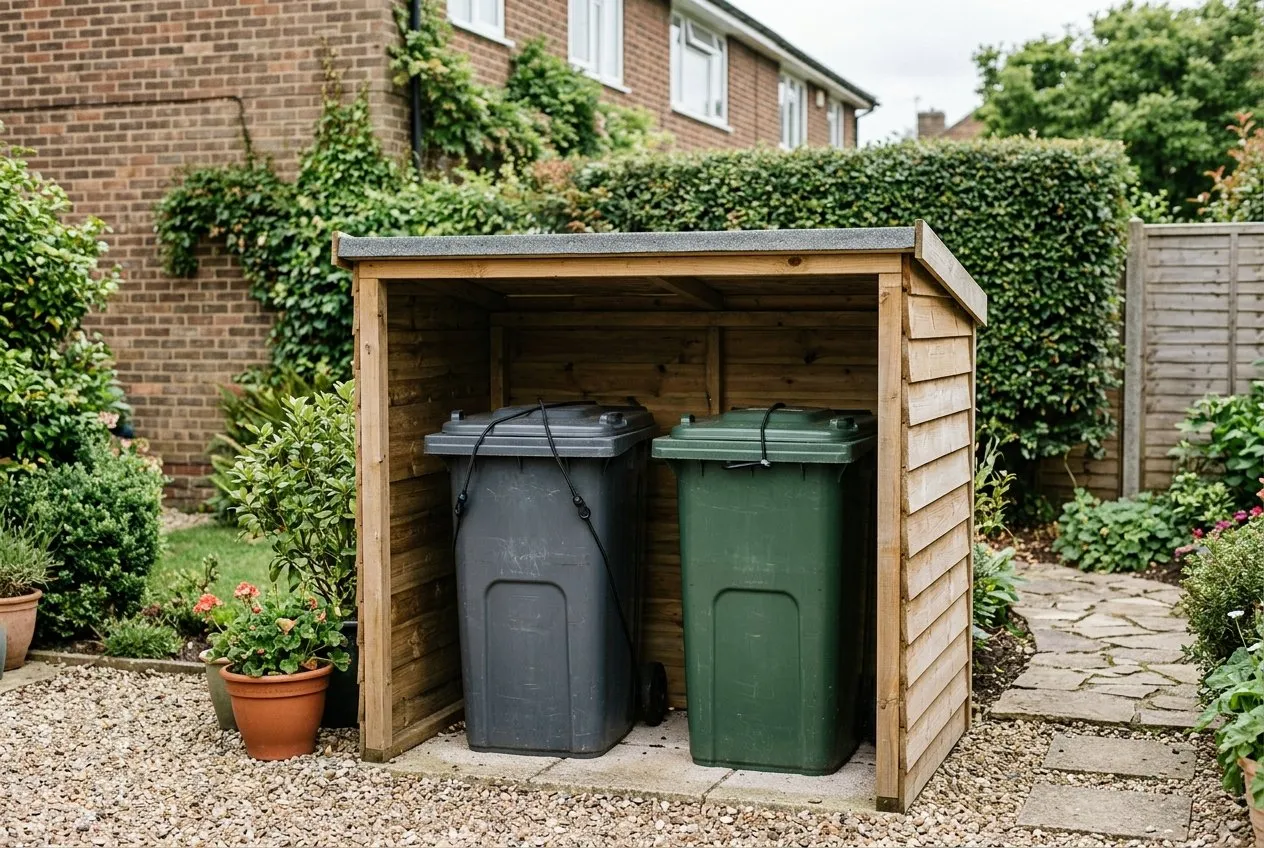 Bins behind a closed store on a suburban Staffordshire street, lids strapped. With pet bowls brought in at dusk too, the last easy meals are gone. Removing food is dull work but it beats every gadget on the market.
Now plan the rest of your garden defences
Our team produces practical UK gardening guidance from source research, contributor records and established horticultural practice. Editorial standards are overseen by Matt W.