Key takeaways
- Zigzag feeding trail eaten inward from the elm leaf edge
- Non-native sawfly, first UK record 2017, now spreading
- Parthenogenetic: breeds without males, 4-6 generations a year
- Heavy attacks defoliate young or stressed elms quickly
- Healthy mature elms usually recover; largely cosmetic
- Report sightings to Forest Research via TreeAlert
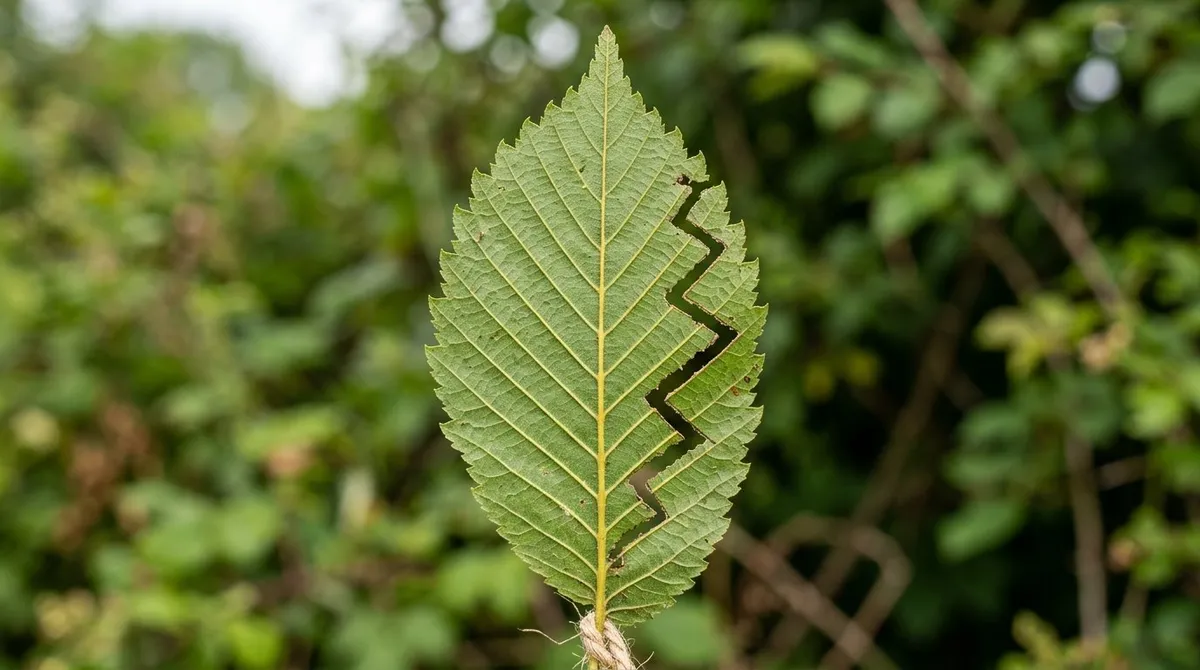
Elm zigzag sawfly (Aproceros leucopoda) is one of the newest pests to settle in British gardens and hedgerows. It was first recorded here in 2017 and is now spreading across England. The give-away is the feeding trail: larvae eat a tight zigzag line in from the elm leaf edge, like a tiny set of teeth working across the leaf.
After three summers watching it on Staffordshire elms, the pattern is clear. The zigzag trail is the identification, not the insect. It breeds without males and stacks up generations fast. Healthy mature elms cope; young and stressed ones suffer.
What the zigzag trail looks like
The feeding pattern is unlike anything else on a UK elm leaf.
Diagnostic features:
- A zigzag line eaten in from the leaf margin towards the midrib
- The cut edge is clean and geometric, almost machine-like
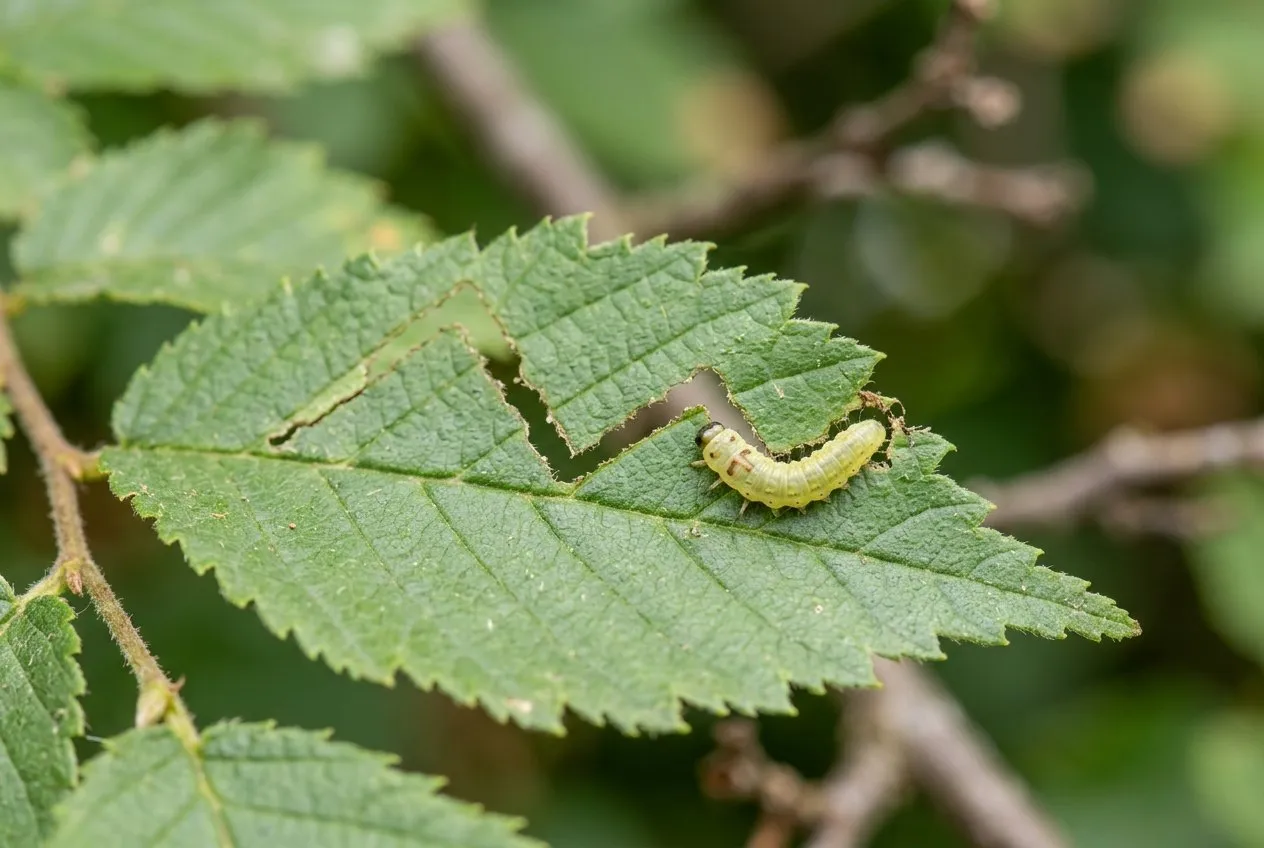
- Pale green larvae, 10-15mm long, often tucked on the leaf underside
- The larva has a distinctive T-shaped mark and tiny spines
- Damage builds from light nibbling to heavy holes as larvae grow
- Found only on elm: English, wych, field and ornamental elms
Early damage is subtle. A single fresh zigzag on one leaf is easy to walk past. By late summer a heavily hit tree can look ragged, with leaves reduced to the veins.
 The give-away zigzag on a wych elm leaf in a Staffordshire hedgerow, late July. The larva works inward from the edge, leaving a sharp toothed line. One fresh trail is easy to miss; look for it from July.
The larva itself is the second clue. It is small, pale green, and flattens against the leaf. Many gardeners hunt for a fat caterpillar and never find one. Look for the trail first, then check the underside near the chewed edge.
How to tell it apart from other leaf damage
The zigzag rules out most other culprits straight away.
| Damage type | What it looks like | Telltale difference |
|---|---|---|
| Elm zigzag sawfly | Geometric zigzag from leaf edge in | Sharp zigzag trail, elm only |
| Caterpillar feeding | Ragged random holes anywhere | No regular pattern, visible caterpillar |
| Leaf miner | Pale winding tunnel inside the leaf | Damage is inside, not eaten through |
| Weevil notching | Small scalloped bites at the edge | Rounded notches, no zigzag |
| Elm leaf beetle | Skeletonised patches, brown windows | Lacy holes, no zigzag line |
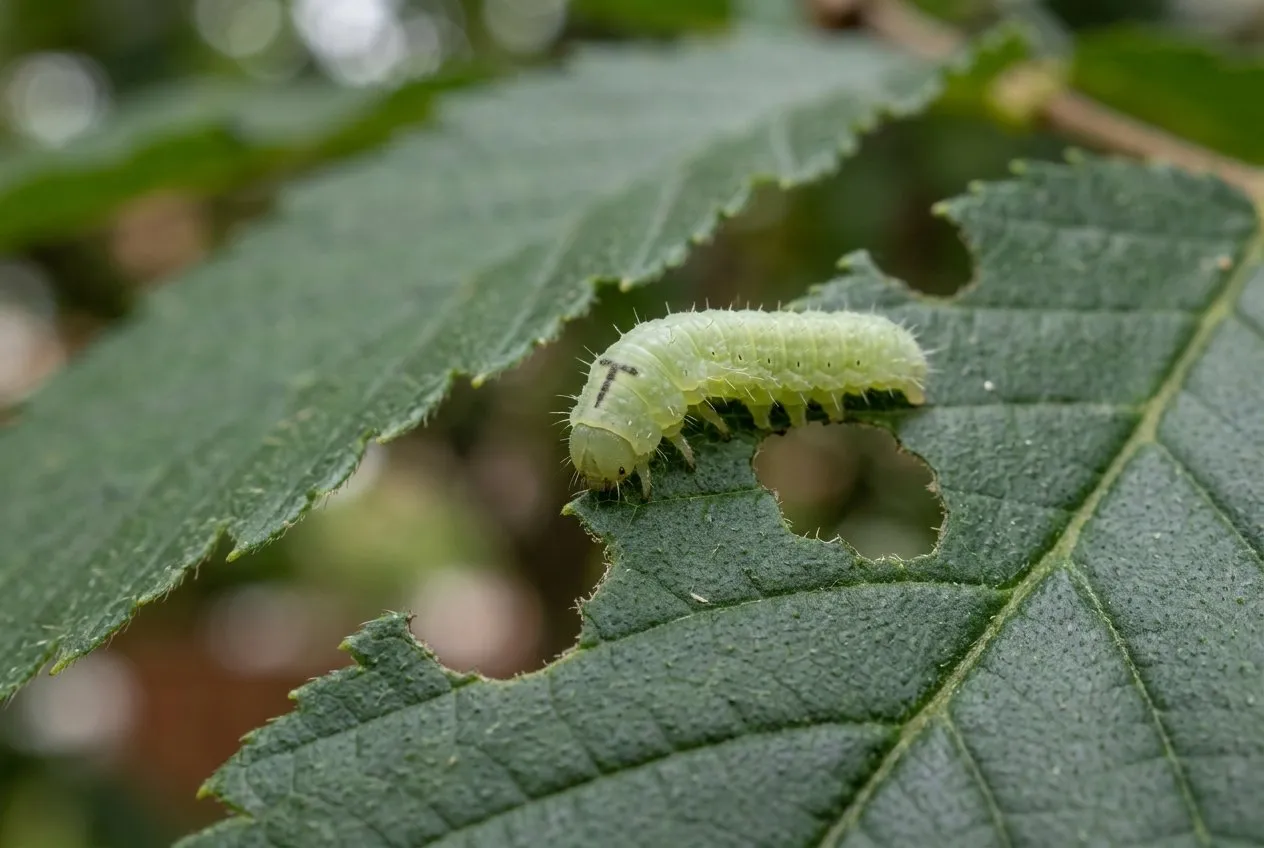 The larva itself on a field elm leaf in a Wolverhampton back garden. Pale green, slightly flattened, with a faint T-shaped mark. It sits right at the working edge of the zigzag, which is where to look.
The lifecycle that drives its spread
This sawfly breeds in a way that lets numbers explode through summer.
Parthenogenetic: Females lay fertile eggs without mating. No males have been found in Europe. Every adult is a breeding female, so a few arrivals become many fast.
Multiple generations: There are four to six overlapping generations a year, from May through to October. A full cycle from egg to adult can take under four weeks in warm weather.
Egg to larva: Eggs are laid on leaf teeth at the margin. The hatched larva starts the zigzag feed straight away, working inward.
Cocoon: Larvae spin a delicate net-like cocoon to pupate, on the leaf or in leaf litter. A tougher cocoon overwinters in the soil and litter below the tree.
Adults: The adult is a small black sawfly, about 6-7mm, with pale legs. It is a weak flyer, but it hitchhikes on vehicles and plant material, which is how it jumps long distances.
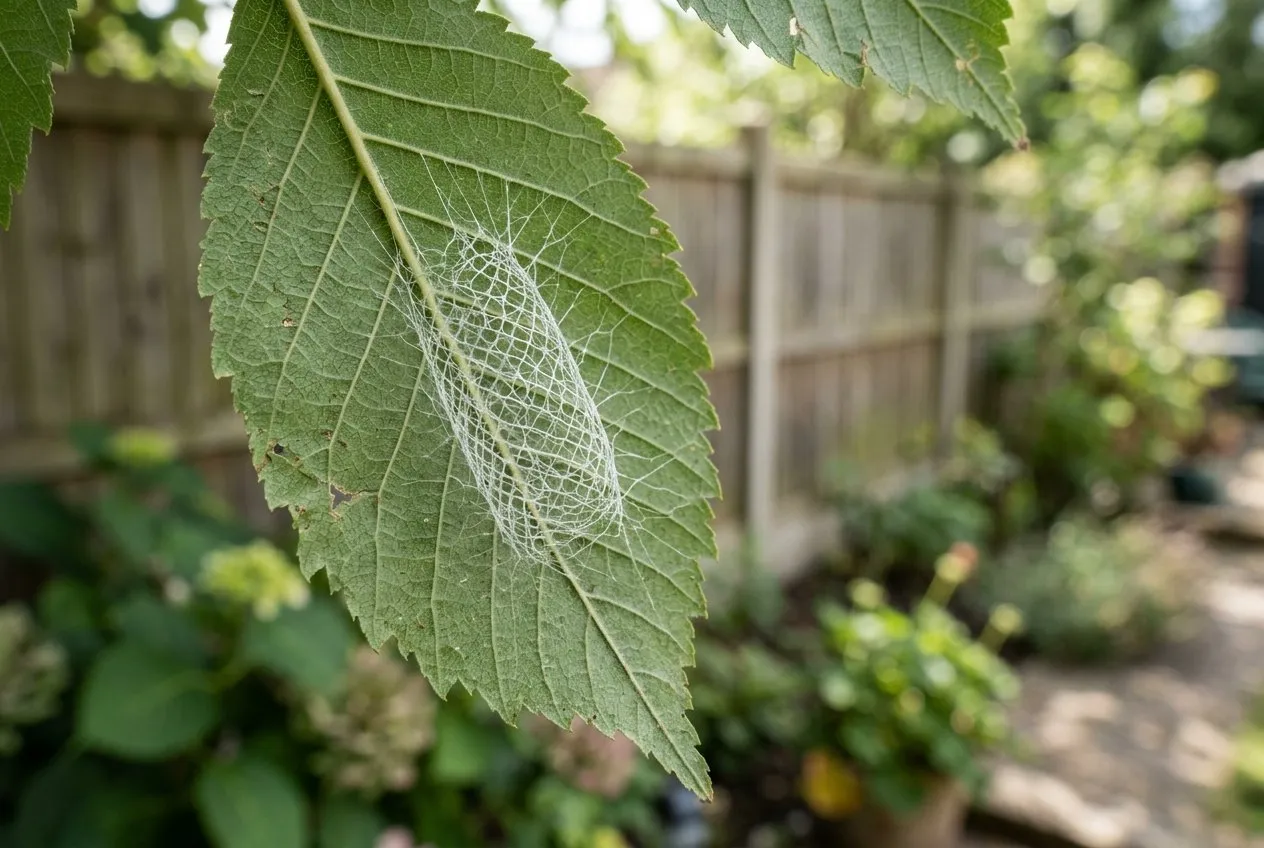 The lacy summer cocoon on an elm leaf underside in a suburban Birmingham garden. Summer cocoons are flimsy and net-like; the overwintering cocoon in the soil is far tougher.
That breeding speed is why it has moved so quickly since 2017. Each generation can leave a fresh wave of damage, and a tree may show light, medium and heavy feeding all at once.
Lifecycle by month in the UK
How much harm it really does
For most established elms, the honest answer is: less than the damage suggests.
What heavy attacks can do:
- Strip a young or nursery elm of most leaves in a season
- Weaken trees already stressed by drought or root damage
- Knock back hedge-laid and recently coppiced elm regrowth
- Spread visibly across a whole hedge line
What it does not usually do:
- Kill a healthy mature elm outright
- Stop a vigorous tree re-flushing leaves after defoliation
- Spread to non-elm trees and shrubs
- Carry Dutch elm disease (it is a separate, leaf-feeding problem)
The real concern is cumulative. Repeated full defoliation, year after year, drains a tree’s reserves. That matters most for the young elms and hedgerow regrowth that elm conservation depends on. A big roadside wych elm shrugging off a summer of zigzags is a different case from a knee-high nursery whip losing every leaf. Where you are choosing trees for a hedge or boundary, our notes on the best native trees for UK gardens cover elm’s place alongside hardier options.
What gardeners should actually do
There is no spray worth using in a garden, and that is the right answer.
Sensible steps:
- Learn the zigzag so you can spot it early from July
- Photograph the trail and the larva clearly when you find it
- Record the location, tree type and date
- Report it to Forest Research through TreeAlert
- Rake and bin or burn heavily infested fallen leaves in autumn
- Keep young and newly planted elms well watered to aid recovery
Reporting matters more than control. This is a tracked, notifiable spread, and gardener records help map where it has reached. You can log a sighting through Forest Research’s pest and disease resources, and the Woodland Trust’s tree pest reporting pages explain what to send and why it helps.
Avoid insecticides. They knock out the parasitoid wasps and predators that already attack the sawfly, and they do nothing for the tree’s long-term health. This is the same logic that applies to most leaf-feeding garden pests, from gooseberry sawfly on soft fruit to the box tree moth caterpillar in topiary: tolerate, support the tree, and let natural enemies do the work.
 Recording a sighting in a city allotment near the canal. A clear phone photo of the zigzag trail, plus the date and location, is exactly what TreeAlert needs. Reporting is the most useful action a gardener can take.
Why elm matters here
Elm has had a rough century in Britain, and that history shapes how seriously to take this pest.
Dutch elm disease wiped out most large elms from the 1970s. What survives is mostly hedgerow elm, sucker regrowth, and a scatter of disease-resistant plantings. The white-letter hairstreak butterfly depends on elm entirely. So a pest that hammers young elm and hedge regrowth lands on a tree that is already fragile, not abundant.
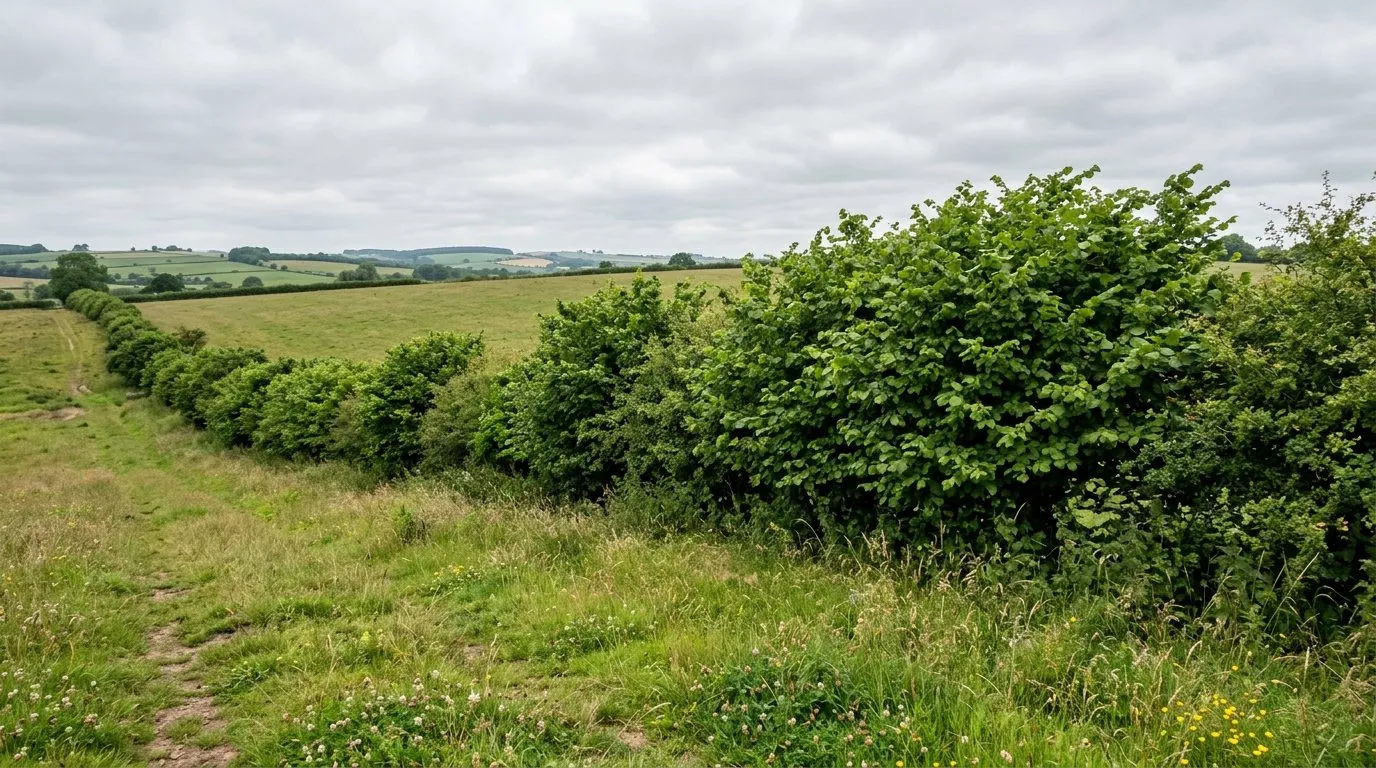 An elm-rich field boundary in rural Staffordshire under a grey July sky. Hedgerow elm is what survived Dutch elm disease. Protecting this regrowth is why early reporting of the sawfly matters.
This is not a reason to panic. It is a reason to watch, record and support the trees, rather than reach for chemicals. The same measured approach suits other recent tree threats, including ash dieback identification across the UK.
 Early versus late damage on field elm in late summer. Light fresh zigzag (left) against heavy repeat feeding reduced to the veins (right). The same tree can show both at once because generations overlap.
Frequently asked questions
What is eating my elm leaves in a zigzag pattern?
Elm zigzag sawfly larvae, a non-native pest first found in Britain in 2017. The larvae feed from the leaf edge inwards in a tight zigzag line. This zigzag trail is the give-away identification feature. Only elm species are affected.
Will elm zigzag sawfly kill my tree?
Rarely on a healthy mature elm. Severe repeated attacks can fully defoliate young or already-stressed trees, which weakens them. Most established elms regrow leaves and recover. The pest is mostly cosmetic where trees are otherwise healthy.
How many generations of elm zigzag sawfly are there a year?
Four to six generations between May and October. The sawfly is parthenogenetic, so females reproduce without males. This rapid breeding lets numbers build fast through summer and explains how the pest spreads so quickly.
Should I spray elm zigzag sawfly?
No, spraying is not recommended in gardens. Pesticides harm the parasitoid wasps and predators that help control the sawfly. Healthy elms tolerate the damage. The useful action is to report your sighting so its spread can be tracked.
Who do I report elm zigzag sawfly to in the UK?
Report sightings to Forest Research through the TreeAlert online portal. Include clear photos of the zigzag trail and your location. Records help map the pest’s spread across Britain and inform the official response.
Now watch your elms and the wider garden
Elm zigzag sawfly is one new arrival among several worth knowing. For another soft-fruit leaf feeder with a similar tolerate-and-support approach, see our gooseberry sawfly identification and control guide. For the most damaging recent invader of garden topiary, read up on box tree moth treatment. To put elm in context with hardier choices, browse the best native trees for UK gardens. And for a fast, wildlife-friendly screening tree that escapes this pest entirely, our notes on how to grow silver birch in the UK cover a reliable alternative.
Our team produces practical UK gardening guidance from source research, contributor records and established horticultural practice. Editorial standards are overseen by Matt W.