Key takeaways
- The cause is a tiny moth, Cameraria ohridella, first found in the UK at Wimbledon in 2002
- The tree looks dying but almost always recovers and leafs out normally next spring
- It runs two or three generations a year and the pupae overwinter in fallen leaves
- Raking and binning fallen leaves over autumn and winter is the single useful control
- Do not confuse it with leaf blotch fungus or drought scorch, which need different responses
Horse chestnut leaf miner is the reason conker tree leaves turn brown and crisp from midsummer, long before normal autumn. The pest is a tiny moth called Cameraria ohridella, whose larvae tunnel inside the leaves. By July and August the blotches spread until the whole canopy looks scorched. Many people see a big mature tree going brown in the heat and assume it is dying or diseased.
It is neither dying nor seriously diseased. This guide explains what the moth does, why the browning starts in June, and how it spreads. It shows you how to tell mining damage from leaf blotch fungus and from drought scorch, which look similar but need different responses. It also covers the one control that helps a garden owner, and why the tree almost always recovers.
What Horse Chestnut Leaf Miner Damage Looks Like
As the larvae feed, the patches join up and turn crisp, dry and brown. A single leaflet can carry dozens of mines. By late summer the dead tissue can cover up to 75% of the total leaf area, and the foliage rustles like autumn leaves in July.
Hold an affected leaflet up to the light. Inside the pale mines you can often see the tiny larva, a pale cream grub only a few millimetres long, or the dark specks of its droppings. That hidden larva is the clinching sign. No fungus or drought leaves a grub inside the leaf.
The adult moth is easy to miss. It measures just 4 to 5mm long, a rich brown colour marked with bright white chevrons edged in black. You rarely see the moth itself, only the brown ruin it leaves across the canopy.
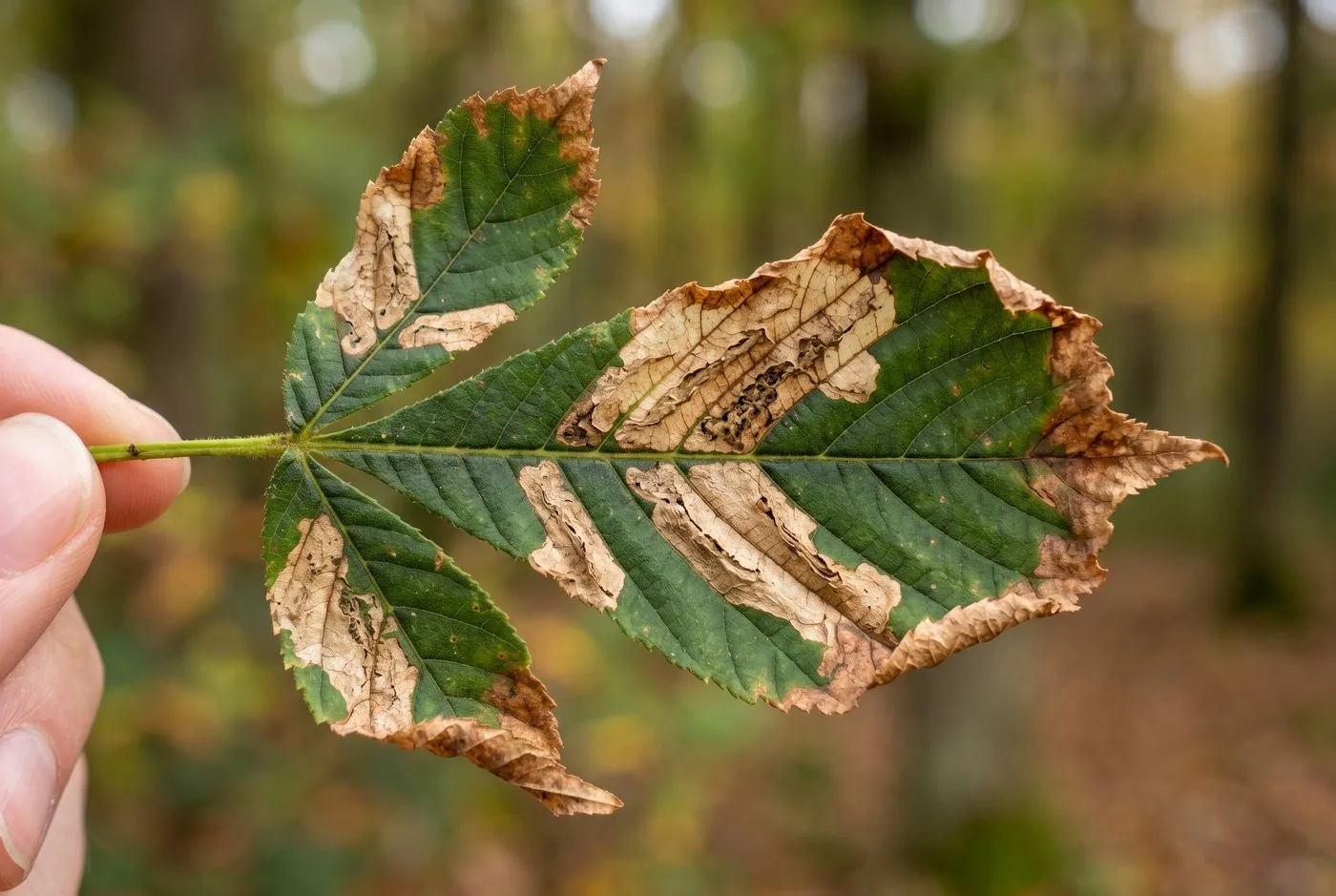 Leaf miner mines follow the veins as narrow pale brown tracks. Held to the light, many show the tiny larva still inside the dead tissue.
Leaf Miner Versus Leaf Blotch and Drought Scorch
Three problems brown a horse chestnut, and they are often confused. Getting the diagnosis right matters, because the response differs for each. The table below sets out the tells side by side.
| Feature | Leaf miner | Leaf blotch fungus | Drought scorch |
|---|---|---|---|
| Cause | Moth larvae, Cameraria ohridella | Fungus, Guignardia aesculi | Lack of water, hot wind |
| Shape of damage | Narrow tracks following the veins | Rounder, irregular blotches | Browning from the leaf edge inward |
| Colour | Pale then crisp brown | Reddish-brown with a yellow border | Dull brown, often whole leaflets |
| Larva inside? | Yes, visible against the light | No | No |
| Timing | From June, worst August to September | Wet summers, late season | Dry spells, often July |
Leaf miner makes the narrow vein-following mines described above, with a larva inside. Leaf blotch, caused by the fungus Guignardia aesculi, makes rounder reddish-brown patches, often with a distinctive yellow border around the edge of the blotch. The two can sit on the same tree at once, which adds to the confusion.
Drought scorch is different again. It browns the leaf margins first and spreads inward, with no mines and no yellow-bordered patches. It hits hardest in long dry spells on young or newly planted trees. Our guide to acer leaf scorch explains the same wind and water mechanism on a different tree.
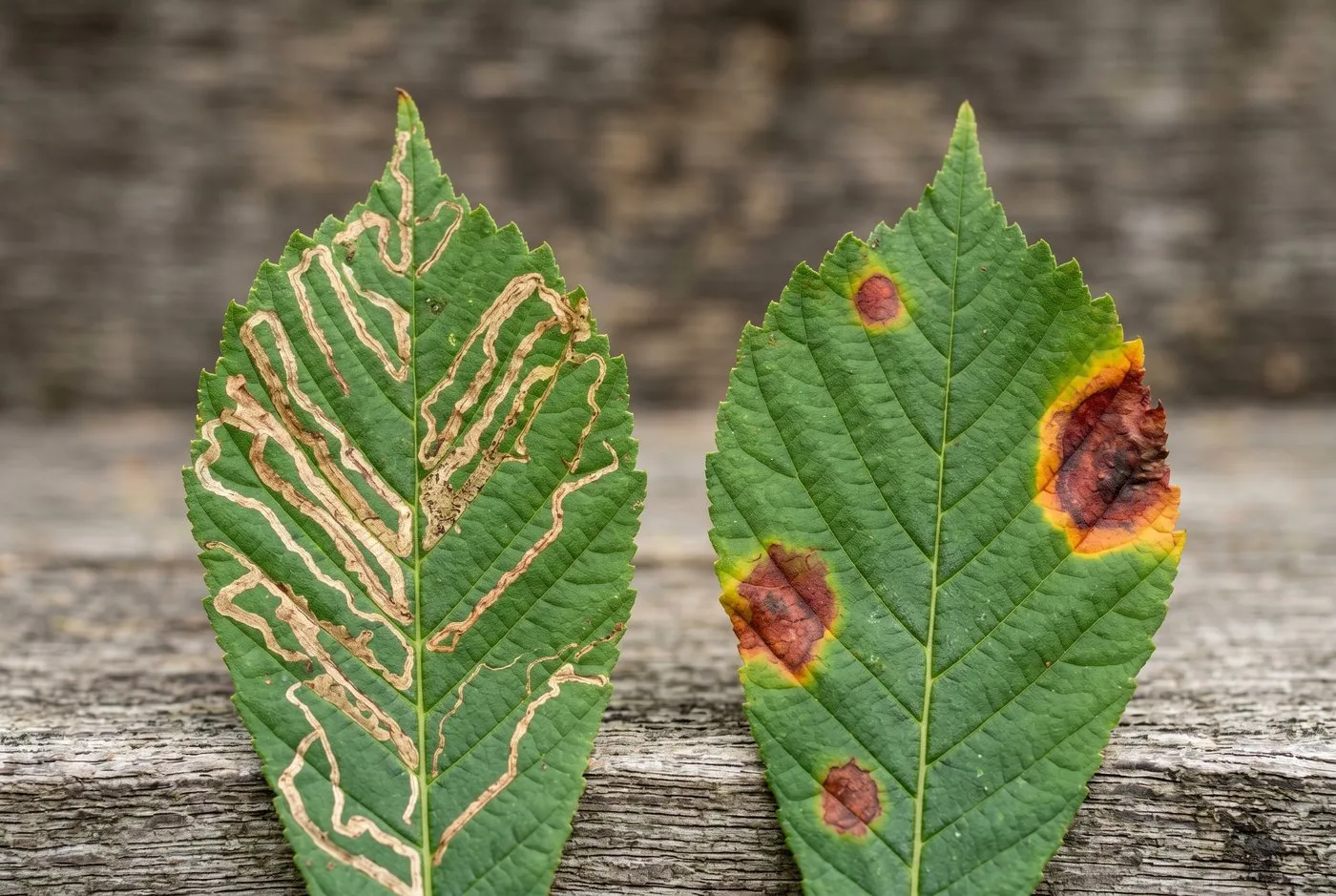 Leaf miner mines on the left follow the veins as pale tracks. The leaf blotch fungus on the right shows a rounder reddish-brown patch with a yellow margin.
Why The Canopy Browns From June Onward
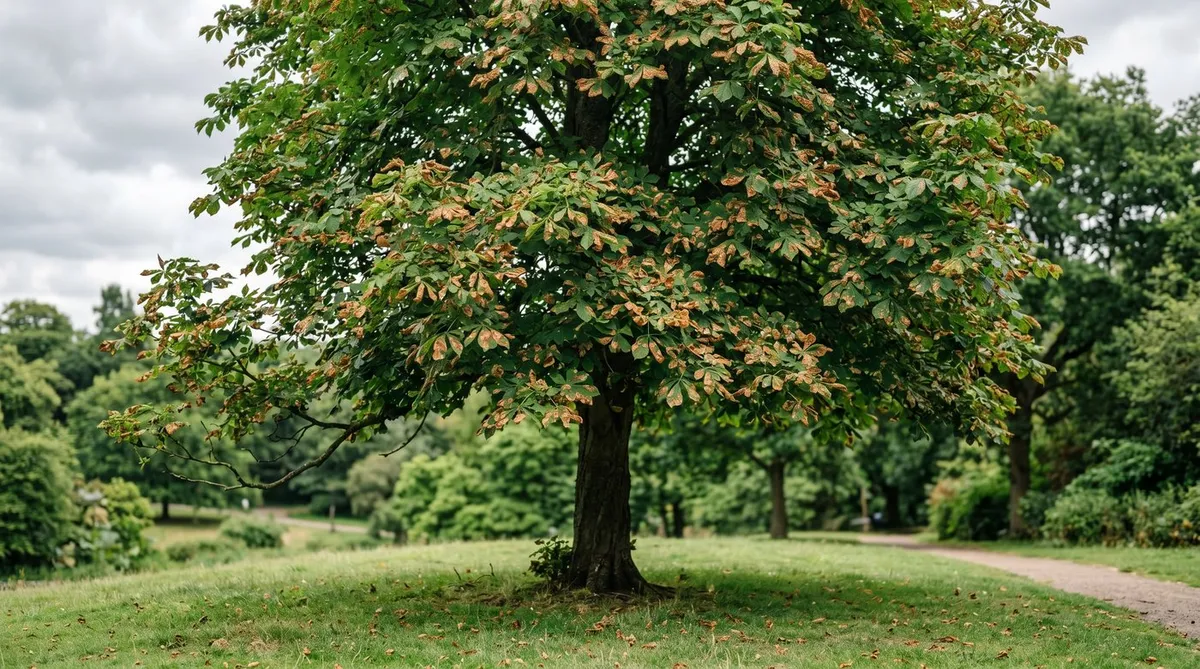
The damage runs from the lower branches upward. By August or September a heavily infested tree can look fully brown, and many drop their leaves two months early. A horse chestnut that should hold green leaves into October stands bare by mid-September. To a passer-by it looks like a tree in terminal decline.
This early leaf loss is the heart of the alarm, and the heart of the reassurance. The tree has lost its leaves early, but it has already done most of its growing for the year. It is not being killed. It is being made to shut down a little sooner than usual.
The browning gets worse year on year in a given area, because the moth population builds once it arrives. A tree that showed light mining one summer can be fully brown three or four seasons later. That steady worsening often prompts the worry that the tree is finally giving up.
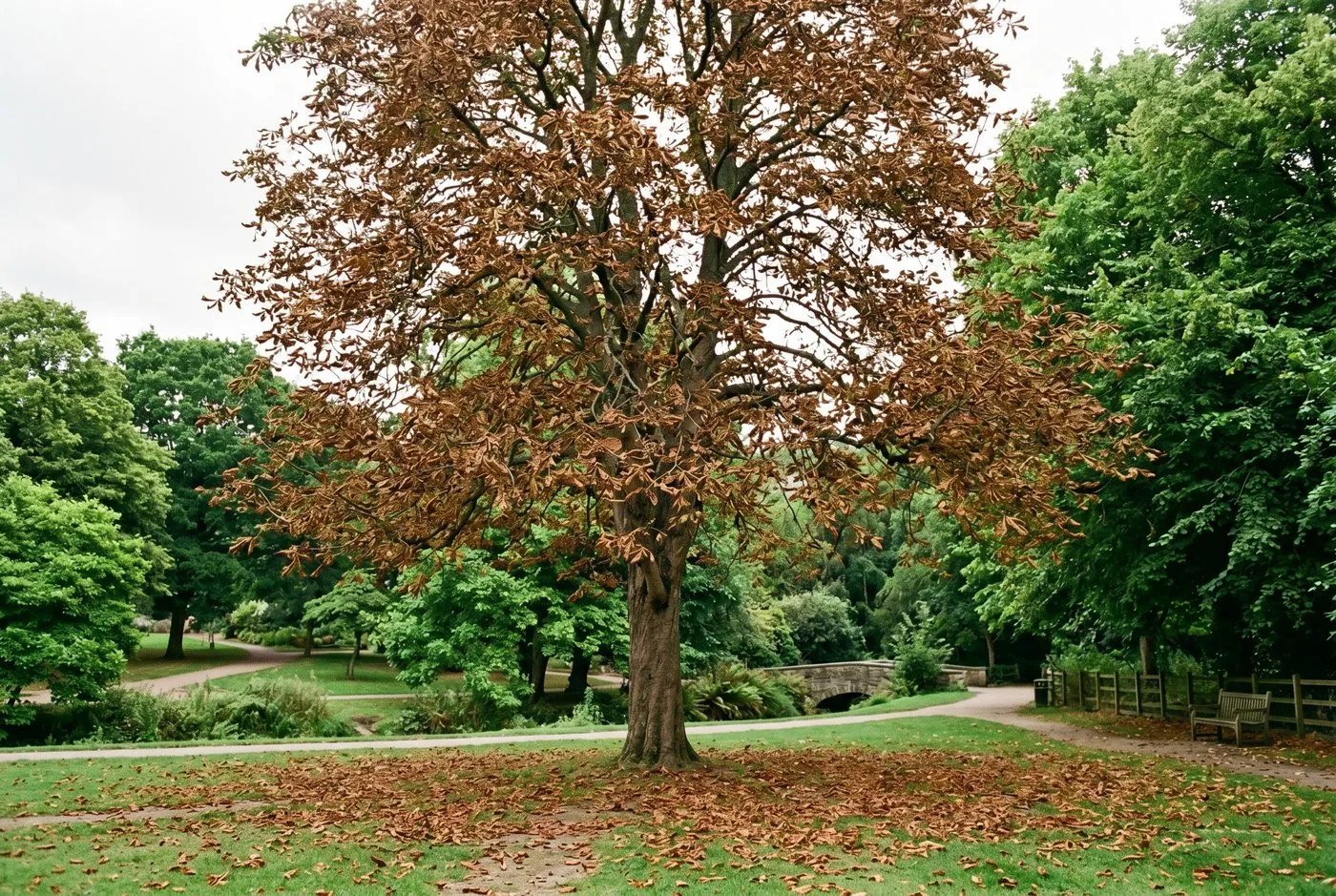 A heavily mined horse chestnut in late August, brown across the whole canopy while the trees behind it stay green. The damage looks fatal but is not.
The Moth Lifecycle and Why It Spreads So Fast
Understanding the lifecycle explains why the problem builds through summer and why leaf clearance is the one control that helps. The moth runs several generations a year, each one mining the fresh leaves.
In the UK’s mild, wet summers, two or three generations per year is normal. Adults emerge in spring and lay eggs on the newly opened leaves. Each female lays between 20 and 40 eggs on the upper leaf surface, and warmer years can push egg counts far higher.
The critical mistake is to assume the pupae die with the fallen leaves. They do not. The last generation overwinters as pupae in the fallen leaf litter on the ground. They are tough, surviving winter temperatures as low as -23C. The following spring the moths emerge from that litter and fly straight back up into the fresh new leaves. This is why the leaves on the ground, not the tree, are where control happens.
| Stage | Timing in the UK | What happens |
|---|---|---|
| Adults emerge | April to May | Moths fly, mate, lay eggs on new leaves |
| Eggs | Spring and summer | 20 to 40 per female on the upper leaf |
| Larvae mining | May to September | Tunnels widen, leaves brown in waves |
| Pupae | Through summer and winter | Pupate in mines, last brood overwinters in fallen leaves |
How To Control Horse Chestnut Leaf Miner
There is no practical spray for a large garden or street tree. The canopy is too high and the moth too well protected inside the leaf. Control for a tree owner comes down to one job done well, plus a few that help at the margins. The table ranks them by how much they actually achieve.
The gold standard is autumn and winter leaf clearance. Rake up the fallen leaves repeatedly through autumn and winter, then bin them, burn them where allowed, or seal them in bags until the following July so the moths cannot escape. This breaks the part of the cycle that happens on your own ground.
Be realistic about the limit. Even perfect leaf clearance under your tree will not stop moths flying in from a chestnut down the road. The spread reaches 40 to 70 kilometres a year across new ground. What clearance does is cut the first brood that emerges from your own litter, which buys cleaner leaves for a few extra weeks. The same principle drives our guide to allium leaf miner control, where removing infested debris breaks the cycle on a smaller scale.
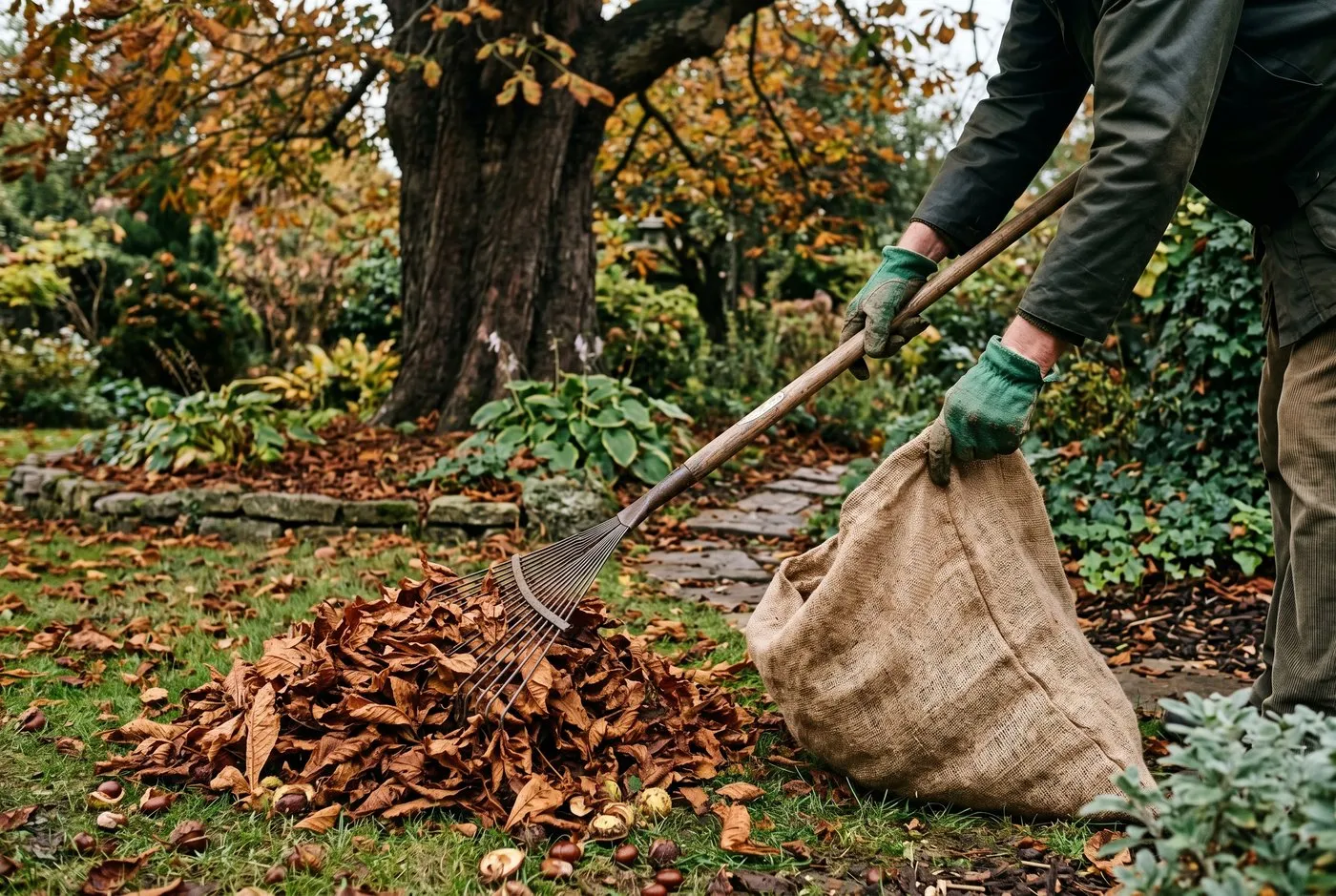 Raking and bagging the fallen leaves over autumn and winter removes the overwintering pupae. It is the one control that genuinely helps a garden tree.
The Tree Survives: What Really Happens Next
The reassurance is firm and well evidenced. Horse chestnut leaf miner does not kill the tree. Research finds no link between the moth and tree death. The canopy browns, the leaves drop early, and the tree looks dreadful by September. Then the next spring it flushes fresh green leaves as if nothing happened.
Reassurance: A horse chestnut going brown and bare in August from leaf miner is not a dying tree. It re-leafs normally every spring. Do not let a tree surgeon talk you into felling a healthy chestnut over cosmetic browning. The damage is on the leaves, not the wood.
There is one real cost, and it is small. Heavy infestation reduces the tree’s reproductive output. Conkers can be slightly smaller and fewer, and seedlings from affected trees germinate with less vigour. The shade, the structure and the flowers of the tree carry on as before. The branches and trunk are unaffected.
Repeated heavy years can add a little stress, especially alongside other problems like bleeding canker. A tree already weakened by something else copes less well. For the wider picture on when a tree really is in trouble, see our guide to sudden tree death in the UK, which covers the warning signs that genuinely matter.
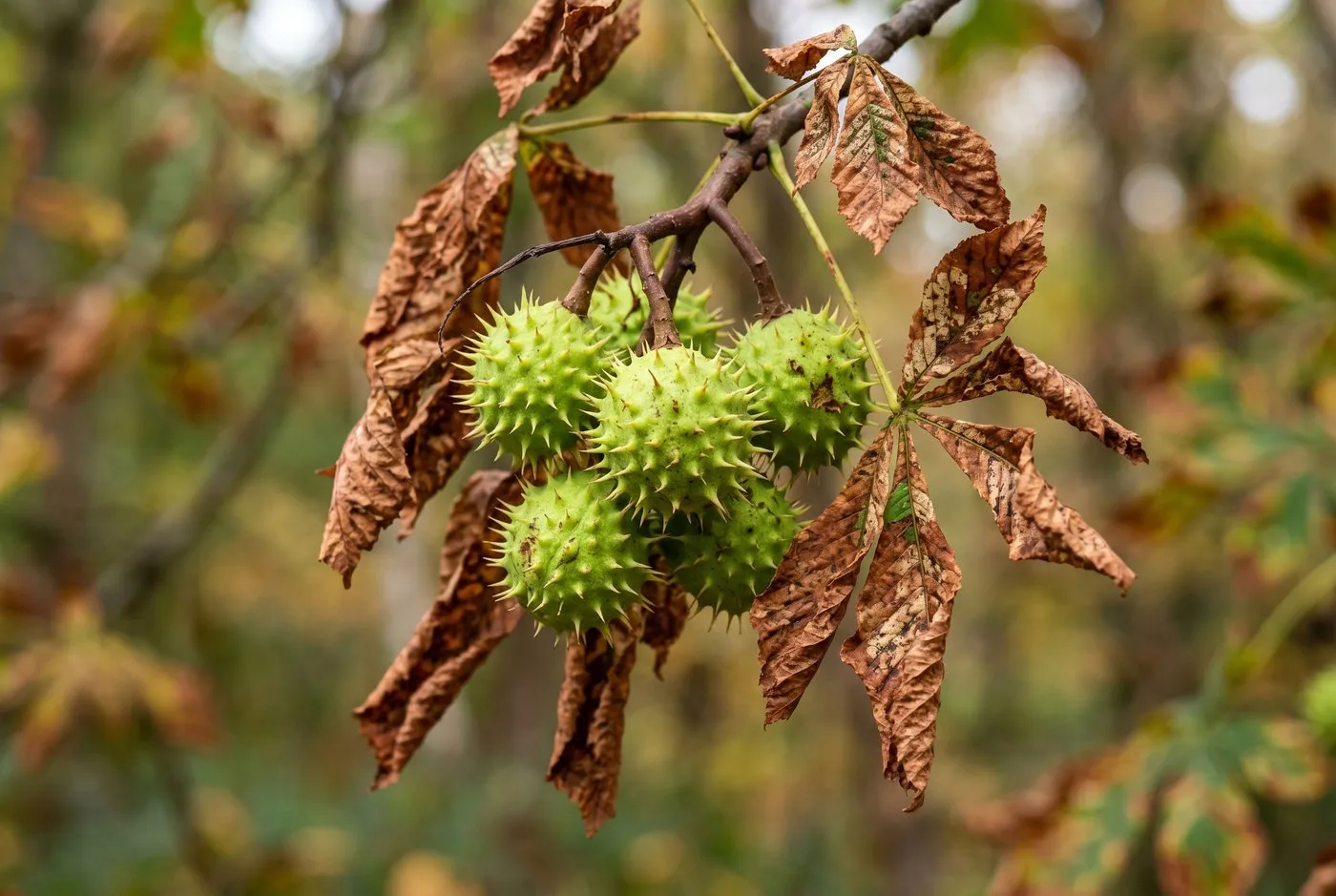 Conkers still form on a heavily mined tree, though they run slightly smaller. The browning hits the leaves, not the developing seed.
How Leaf Miner Reached and Spread Across The UK
The pest is a recent arrival. Cameraria ohridella was first described in the 1980s near Lake Ohrid in the Balkans, which gives the moth its species name. It spread across Europe over the following two decades, reaching Britain at the start of the century.
The spread runs at 40 to 70 kilometres a year through new ground, helped by moths carried on vehicles and by people. Any further UK spread is now likely to be slow, because the moth has reached most of the country’s chestnuts already. If your tree showed clean leaves a few years ago and browns now, this northward and outward march is the reason.
A Month by Month Guide For UK Tree Owners
The job that matters is leaf clearance, and its timing is fixed by the moth’s lifecycle. Work to this calendar and you target the overwintering pupae when it counts.
| Month | What to do |
|---|---|
| April to May | First moths emerge, watch for early mines on new leaves |
| June | First brown patches appear low in the canopy |
| July to August | Mining spreads upward, canopy browns, keep the tree watered in drought |
| September | Heavily mined trees drop leaves early, two months ahead |
| October to December | Rake fallen leaves repeatedly, bin or bag them sealed |
| January to March | Finish clearing any remaining litter before spring emergence |
| When planting new | Choose a less susceptible Aesculus species over white horse chestnut |
Clear the leaves before the following July, when the next generation of moths would otherwise escape from the litter. If you compost the leaves, seal them in bags rather than adding them to an open heap, because a loose heap stays too cool to kill the pupae. Our guide to making leaf mould explains how to turn the cleared leaves into a useful soil improver once they are safely composted.
Common Mistakes With Horse Chestnut Leaf Miner
A few habits make the problem worse or waste your effort. Fix these and your response actually helps the tree.
Panicking and felling the tree. The single biggest mistake. A browned chestnut looks dying, so people pay to remove a healthy mature tree. It would have re-leafed fine the next spring. Browning alone is never a reason to fell.
Leaving the fallen leaves in place. The pupae overwinter in that litter. Leave it under the tree and you hand next spring’s moths a head start. Raking and removing the leaves is the whole point of control.
Adding mined leaves to an open compost heap. A cool, loose heap does not kill the pupae, so the moths emerge from your compost instead. Seal them in bags or burn them where allowed.
Spraying a tall tree. Insecticide cannot reach the larvae inside the leaves high in a mature canopy. You spend money and hit beneficial insects for no benefit. Spraying only makes sense on a small young tree.
Confusing it with a fatal disease. Bleeding canker and honey fungus do kill chestnuts. Leaf miner does not. Diagnose the brown correctly before you act, because the right response is completely different.
Frequently asked questions
Why is my horse chestnut tree going brown in July?
Almost certainly horse chestnut leaf miner, a tiny moth. Its larvae tunnel inside the leaves, turning them pale then crisp brown from June onward. The damage looks dramatic but rarely harms the tree long term. Heavy years brown the whole canopy by late summer.
Will my horse chestnut tree die from leaf miner?
No, the tree almost always survives. Research finds no evidence the moth kills trees. The canopy browns and leaves drop early, yet the tree flushes normal green leaves the following spring. Conkers may be slightly smaller, but the tree itself recovers.
How do I treat horse chestnut leaf miner?
Rake up and bin the fallen leaves over autumn and winter. The pupae overwinter in the leaf litter, so clearing it breaks part of the cycle. No spray is practical for a large tree. Leaf clearance is the only realistic control for a garden owner.
What is the difference between leaf miner and leaf blotch on horse chestnut?
Leaf miner makes narrow pale tracks that follow the veins. Leaf blotch fungus, Guignardia aesculi, makes rounder reddish-brown patches with a yellow border. Hold a mined leaf to the light and you may see the tiny larva inside. Blotch shows no larva.
Do horse chestnut conkers still grow if the tree has leaf miner?
Yes, the tree still produces conkers. Heavy infestation reduces seed weight, so conkers can be slightly smaller and fewer. Seedlings from affected trees germinate less vigorously. The tree keeps fruiting, just with a small drop in conker size.
Should I cut down a horse chestnut with leaf miner?
No, felling is almost never justified for leaf miner alone. The tree survives and re-leafs each spring. Removing a mature horse chestnut over cosmetic browning loses decades of growth and shade. Rake the leaves and leave the tree standing.
Keep your trees healthy through the season
Diagnosis is the first step, and the good news is that a browned conker tree rarely needs anything beyond patience and a rake. Clear the fallen leaves through autumn and winter, rule out the fungal blotch and drought scorch, and let the tree re-leaf in spring. For another brown-leaf puzzle that needs a different fix, read our guide to acer leaf scorch, and browse the full set of plant problem guides to stay ahead of the next outbreak.
External references: the Woodland Trust horse chestnut leaf miner page and the Forest Research profile of Cameraria ohridella set out the lifecycle, spread and leaf-clearance advice.
Our team produces practical UK gardening guidance from source research, contributor records and established horticultural practice. Editorial standards are overseen by Matt W.