Key takeaways
- Most sudden tree death starts in the roots months earlier
- Honey fungus: white sheet under bark, black bootlaces in soil
- Phytophthora: dark bleeding patches at the base, wet ground
- A drought year then a wet year kills weakened trees
- Building work that cut roots shows 1-3 years later
- Ash dieback hits ash; vine weevil hits young pot trees
A healthy-looking tree that browns and collapses in a single season feels like a mystery. It rarely is. The roots almost always died months earlier, and the crown only showed it once the stored water ran out. This guide is a diagnostic flow for UK gardeners. Read the bark, the roots and the pattern of dieback, then match the clues to one of six common causes before you reach for the saw.
After 30 years of this in Staffordshire, the pattern holds. Sudden death starts underground. The clues are on the bark and in the soil. Diagnose before you fell.
Why a Tree Dies Long Before It Looks Dead
A tree is a water pump. The roots draw water up, the leaves let it go. When the roots fail, the leaves keep going on stored water and sugar for weeks, sometimes months. Then the reserve runs dry and the whole crown browns at once. That is why death looks sudden when it is not.
This matters for diagnosis. The trigger you are looking for happened in the previous autumn, winter or even two years back. A dry summer, a flooded winter, a digger near the trunk. Trace the timeline backwards and the cause usually appears.
Start at the Base: Read the Bark First
The fastest first test costs nothing. Take a sharp knife and peel a small strip of bark at the base of the trunk, right at soil level. Healthy living tissue underneath is pale green and moist. Dead tissue is brown, dry or slimy.
If you find a creamy white sheet of fungus between the bark and the wood, and it smells of mushroom, that is honey fungus. It is the most destructive root disease in UK gardens. Look also for dark, sunken, bleeding patches on the lower trunk. A black or rust-coloured ooze that stains the bark points to Phytophthora root rot.
Check one more thing. Walk round the trunk and look for damage at the base from strimmers, mowers or rabbits. A ring of damaged bark all the way round, called girdling, cuts the tree off from its roots and kills it from the top down.
The Symptom-to-Cause Diagnostic Table
Match what you see to the likely cause and the first action. Work top to bottom; the first row that fits is usually your answer.
| What you see | Likely cause | First action |
|---|---|---|
| White sheet under bark, black bootlaces in soil, honey toadstools in autumn | Honey fungus | Remove stump and roots; do not replant susceptible species |
| Dark bleeding patch at base, ground often waterlogged | Phytophthora root rot | Improve drainage; remove tree; avoid replanting in wet spot |
| Whole crown browned after a dry then wet year | Drought-and-flood swing | Improve soil and drainage before replanting |
| One side dies back 1-3 years after nearby digging | Root severance or compaction | No cure; protect roots in future works |
| Black diamond stem lesions, wilting tips, on ash only | Ash dieback | Monitor for safety; fell if near a path or house |
| Young pot-grown tree wilts, roots eaten, C-shaped grubs | Vine weevil | Treat compost with nematodes; repot in fresh soil |
If two rows seem to fit, trust the bark and root evidence over the weather story. Honey fungus and Phytophthora both thrive in the wet, so a sodden winter can mask the real disease.
Honey Fungus: The Most Destructive UK Cause
Honey fungus (Armillaria) spreads through soil by black, bootlace-like strands called rhizomorphs. It attacks the roots and the base of the trunk, killing the cambium that carries water. Trees can stand for a year looking fine, then collapse in a single dry spell.
The three confirming signs are the white fan of fungus under the bark, the black bootlaces in the soil, and honey-coloured toadstools in clumps near the base in autumn. You need at least two to be sure. The full honey fungus identification and control guide covers removal and the resistant species list in detail.
There is no chemical cure. The only real control is to dig out the dead tree and as many roots as you can, then avoid replanting susceptible species like privet, apple, willow and birch in that ground. The RHS honey fungus advice lists more resistant choices such as yew, box and beech.
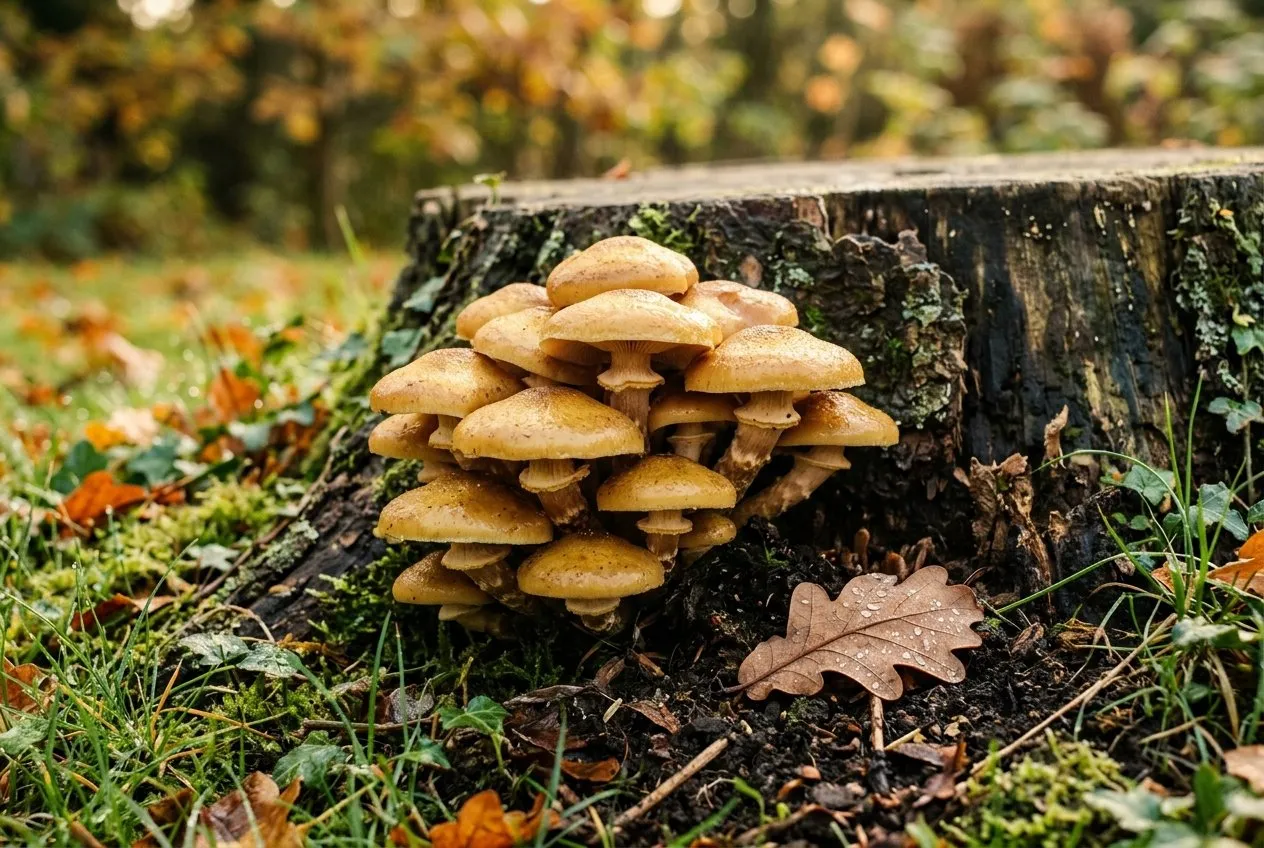 Honey fungus toadstools at the base of a felled lime in a Wolverhampton garden last October. Clumps of honey-coloured caps in autumn are the third confirming sign after the white sheet and black bootlaces.
Water Problems: Phytophthora, Drought and Flood
Wet ground kills more garden trees than people think. Waterlogged soil has no oxygen, so roots suffocate and rot. It also gives Phytophthora root rot the damp it needs to spread. The sign is a dark, often bleeding patch at the base, a thinning crown and a tree planted in a low, soggy spot.
There is no spray for Phytophthora in a garden. The answer is drainage, raised planting and resistant species. Never replant a tree in the same wet hollow without lifting the level and breaking up the pan below.
Root Damage and the Pattern of Dieback
The shape of the dieback tells a story. A tree that dies evenly all over points to a root or stem problem affecting the whole base. A tree that dies on one side, or thins from the top down over a few years, usually had its roots cut or crushed.
Think back. Was there a new patio, extension, drive or trench within the last three years? Roots reach out far wider than the canopy. Cutting the big structural roots on one side, or driving a digger over them and compacting the soil, can kill a mature tree slowly. The crown thins from the top, one limb dies, then the rest follows. There is no cure once the major roots are gone.
For ash trees, ash dieback is now the prime suspect. It causes black, diamond-shaped lesions on stems, wilting shoot tips and a crown that thins out over a few seasons. The ash dieback identification guide for UK gardens shows the exact symptoms. On oak, sudden crown thinning with dark weeping patches on the trunk points instead to acute oak decline. A look-alike on other trees is verticillium wilt, which streaks the wood and wilts one branch at a time. On fruit trees, sunken dead patches of bark point instead to canker, which slowly girdles branches. The Woodland Trust pests and diseases pages help with reporting notifiable problems.
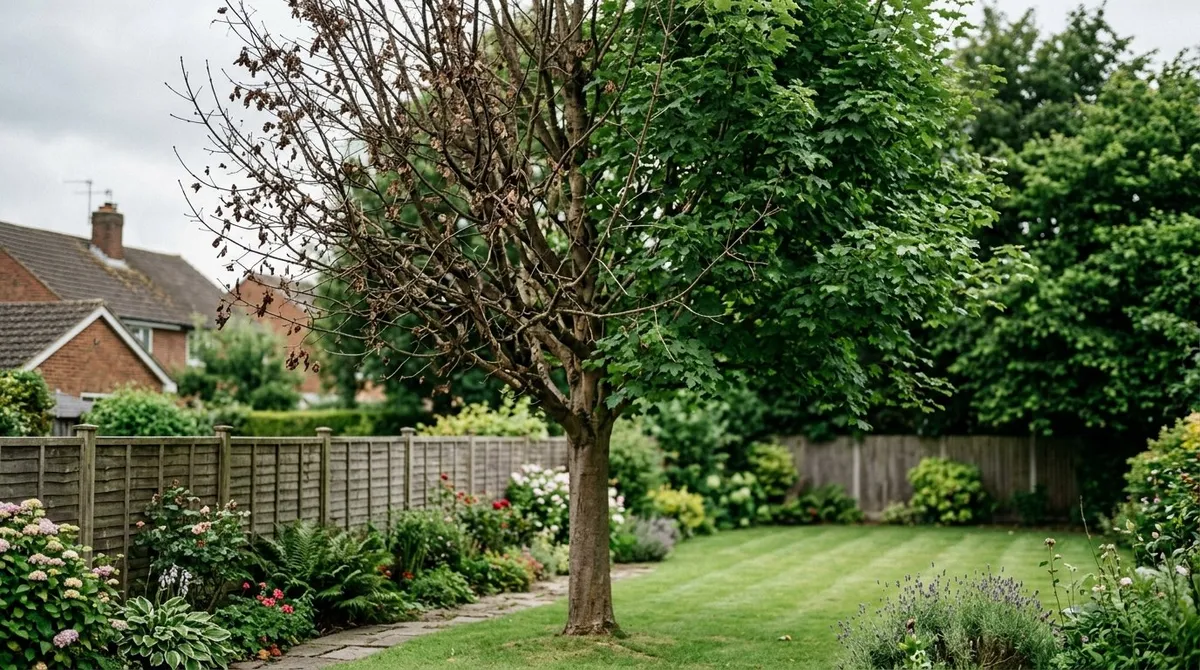
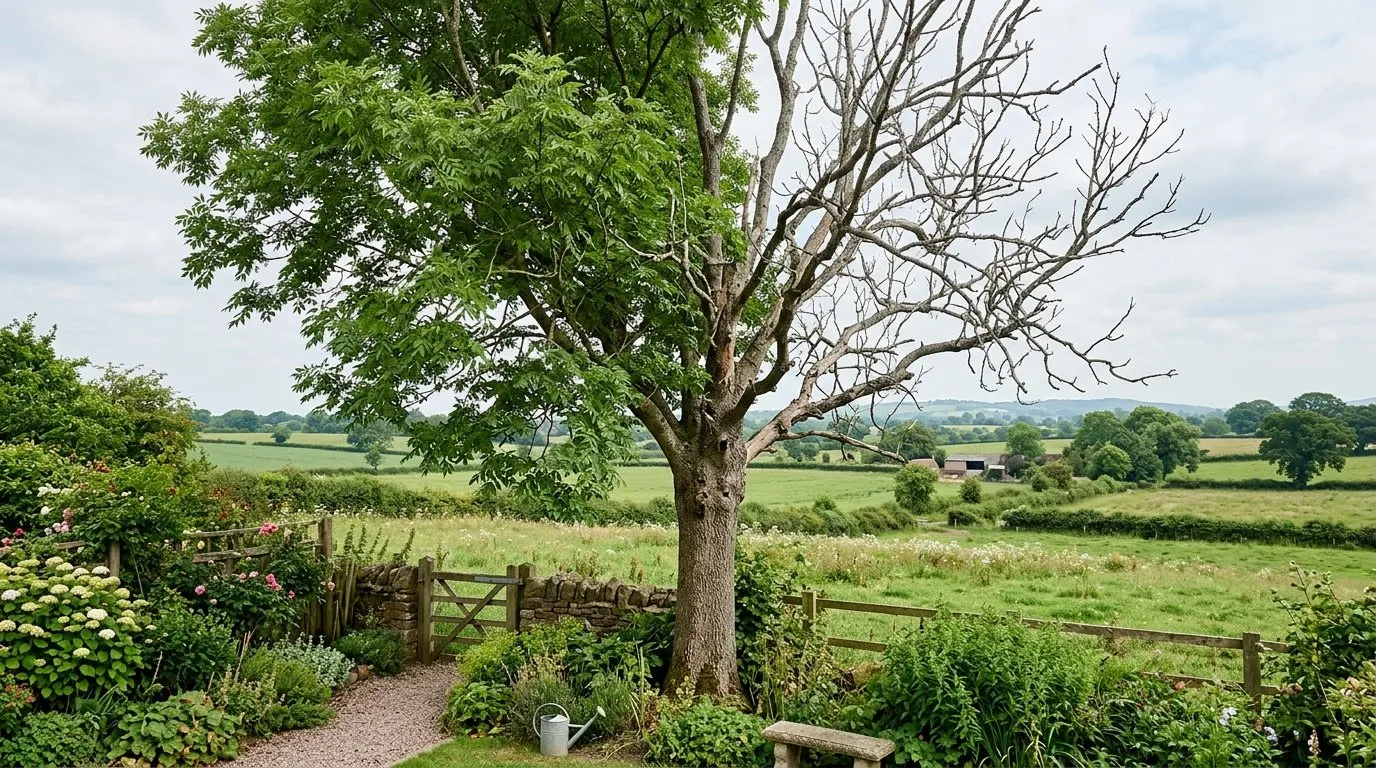 One-sided crown dieback on a Staffordshire ash. The bare half sat over a trench dug two summers earlier. Read the pattern: even death is a base problem, one-sided death points to cut roots.
Young Trees and the Vine Weevil Clue
A young, pot-grown or recently planted tree that wilts and dies has a shorter suspect list. Root disturbance at planting, drying out in the first summer, or vine weevil grubs eating the roots are the usual three.
Tip a dying pot tree out and look at the compost. Fat, creamy-white, C-shaped grubs with brown heads are vine weevil larvae. They strip the fine roots and a small tree has no reserve to cope. Drench the compost with a biological nematode treatment in late summer and repot survivors in fresh soil.
Planting faults kill more young trees than any pest, though. Plant at the right depth, water through the first two summers, and you avoid most losses. The guide to planting a bare-root tree correctly covers the depth, staking and watering that get a young tree established.
Frequently asked questions
Why did my tree die so suddenly?
The roots usually died months before the crown collapsed. A tree can hold leaves on stored water and sugar for weeks after the roots fail. Honey fungus, Phytophthora, drought-then-flood and cut roots from building work are the common UK causes. Read the bark and roots to find which.
How do I know if it is honey fungus?
Peel bark at the base for a creamy white fungal sheet that smells of mushroom. Look in the soil for black bootlace strands, the rhizomorphs. Honey-coloured toadstools may appear in autumn. All three together confirm honey fungus, the most destructive UK root disease.
Can a tree die from too much rain?
Yes. Waterlogged soil starves roots of oxygen and they drown and rot. It also lets Phytophthora and honey fungus spread fast. A drought year that weakens a tree, followed by a sodden winter, is a common UK killer. Drainage is the long-term fix.
Will building work near a tree kill it?
Often, but slowly. Cutting major roots or compacting soil under the canopy can kill a tree 1-3 years later. The crown thins from the top and one side dies back. There is no cure once big roots are severed. Protect roots before any digging starts.
Should I replant in the same spot?
Not until you know the cause. Honey fungus and Phytophthora stay in the soil and will kill the replacement. If it was drought or a one-off root cut, replanting is fine with better aftercare. Choose a resistant species and improve drainage first.
Now work through your own tree
Our team produces practical UK gardening guidance from source research, contributor records and established horticultural practice. Editorial standards are overseen by Matt W.