Key takeaways
- No fungicide is approved for UK amateurs, so leaf spot control is raking, airflow and dry foliage
- Frost and cold wind scorch only the soft red new growth, never the older green leaves
- Soggy clay and Phytophthora root rot turn whole branches brown from the base up
- New and transplanted plants brown most often, because the roots cannot yet feed the top
- Match the pattern of browning to its cause before you reach for anything, or you treat the wrong problem
This guide works like a diagnosis chart. You match the pattern of browning to its cause, then apply the fix for that cause. Spotted leaves, crispy red tips and dead branches from the base up are three different problems with three different cures. Get the cause right first. Treating leaf spot when the real trouble is soggy roots wastes a season and loses more of the plant.
Match Your Symptom To The Cause
Before you do anything, read the plant. The pattern of browning tells you which of the six causes you are dealing with. Where the brown appears matters as much as the brown itself.
Browning that starts as red or purple spots on the leaves, then spreads into brown blotches, is Entomosporium leaf spot. Browning only on the soft red new shoots, gone crispy after a cold snap, is frost or wind scorch. Whole branches dying from the base up, with the rootball sitting in wet ground, points to root rot. Even, all-over dull browning on a new plant is usually drought or transplant shock.
Use the table below as your first check. Then read the matching section for the full fix.
| Symptom you can see | Most likely cause | First action |
|---|---|---|
| Red-purple spots merging into brown blotches, leaves drop | Entomosporium leaf spot | Rake and bin fallen leaves, improve airflow |
| Crispy brown only on red new tips, after frost | Frost or cold-wind scorch | Wait, then trim dead tips in May |
| Wilting then browning, dry soil, new or hedge plant | Drought or dry-root stress | Deep weekly watering, mulch the base |
| Branches brown from the base up, soil stays wet | Waterlogging or Phytophthora root rot | Improve drainage, lift if possible |
| Even dull browning weeks after planting | Transplant or replant shock | Water deeply, do not feed hard yet |
| Browning after a recent hard cut | Badly timed pruning | Stop, let it recover, prune in May next time |
Entomosporium Leaf Spot, The Number One Cause
It starts as tiny red or purple-brown spots, often with a paler grey centre and a reddish margin. The spots appear on both leaf surfaces. As they spread, they merge into larger maroon and brown blotches. Badly marked leaves yellow and drop, so the shrub thins out, often worst in the centre and lower down.
The spread is the part people miss. Each spot is packed with spores. Rain splash and wet weather throw them onto fresh leaves. The real engine is the fallen, infected leaves lying under the plant. A single decaying leaf can reinfect the whole hedge the following spring. Clear them and you break the cycle.
There is no chemical fix. No fungicide is approved for UK home gardeners against Photinia leaf spot. Control is cultural: rake and bin (never compost) fallen leaves, thin the plant for airflow, water the soil not the leaves, and feed once in spring to push strong new growth.
Frost And Cold Wind Scorch The Red New Growth
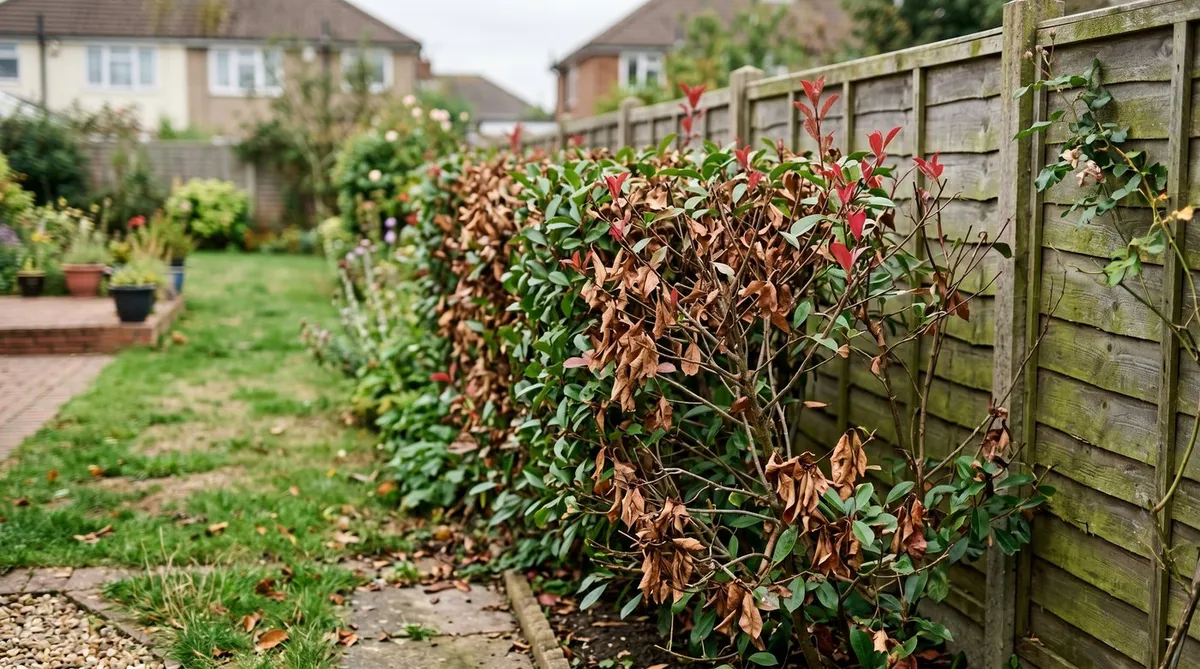
Frost browning looks alarming but is the easiest cause to fix. It hits only the soft red new shoots. The bright young growth that makes Photinia worth planting is also the most tender part of the plant. A late frost or a cold drying wind freezes it, and within days the red tips go crispy and brown.
The older, darker green leaves lower down stay untouched. That contrast is your diagnosis. If only the new red growth has browned and the mature foliage is fine, this is scorch, not disease. Cold winds do the same damage as frost, drying the soft tissue faster than the roots can replace the water.
The cause is usually timing. New growth flushes in spring and again after a summer prune. Tender shoots that harden off slowly are fine. Shoots pushed out late by a badly timed cut get caught by the first autumn frost. This is why pruning after August is a mistake on Photinia.
The fix is patience. Do not cut the brown tips off in winter. The dead growth shelters the buds below from further cold. Wait until May, then trim back to healthy wood. New red shoots break from below the cut within weeks. In an exposed garden, a temporary windbreak of mesh on the windward side stops the worst scorch.
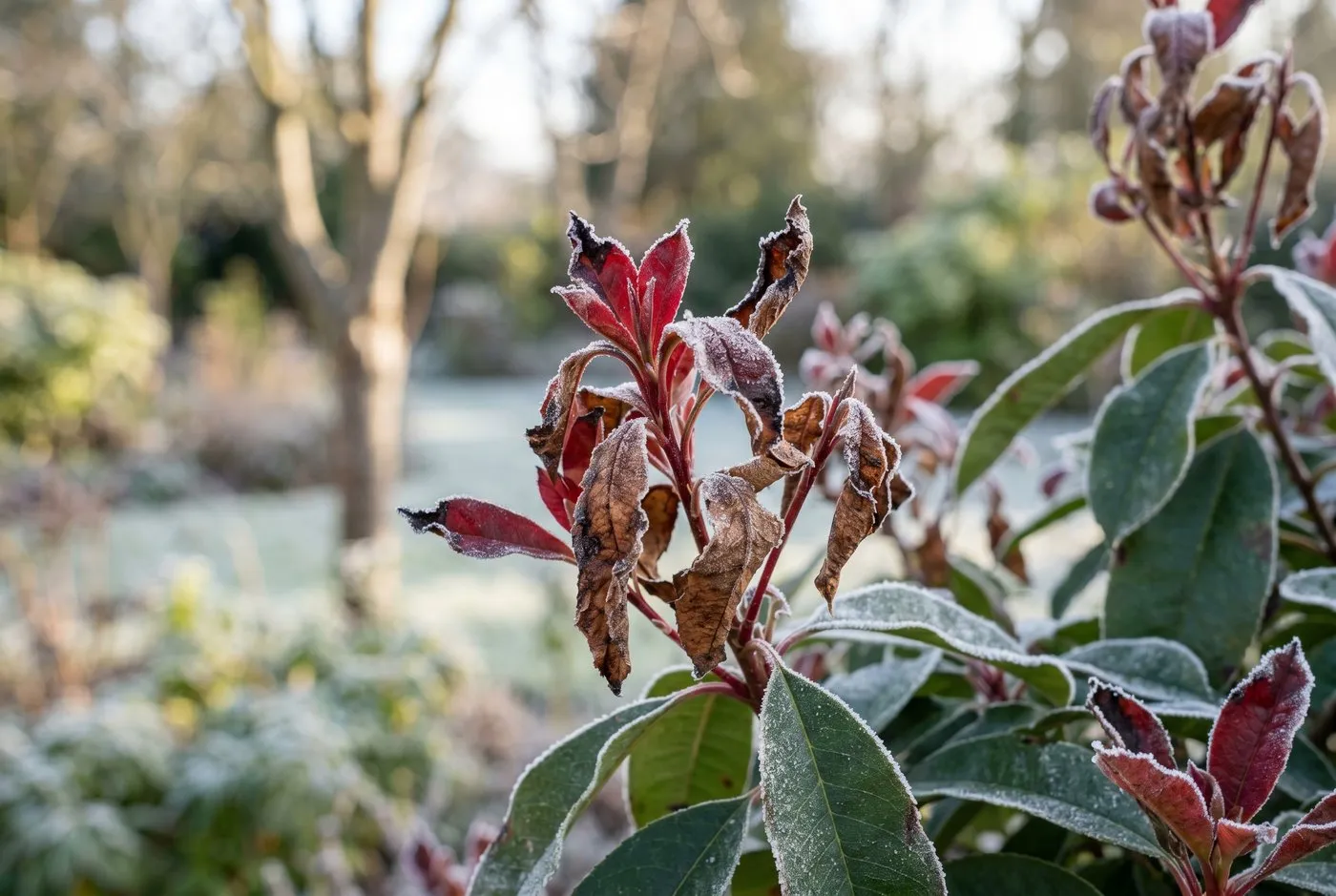 Cold-wind and frost scorch on the soft red new growth. Only the young tips have browned and shrivelled, while the mature green leaves below stay sound. Leave the dead tips on until May, then trim back.
Drought And Dry Roots On New And Hedge Plants
Thirsty Photinias brown from the edges in. Drought stress shows as dull, even browning with leaves curling and crisping at the margins, often with some wilting first. It hits new plants and hedging hardest, because their roots have not yet spread into the surrounding soil.
A Photinia planted last autumn or this spring has a small rootball. In a dry spell that rootball dries out fast, even when the soil a foot away still holds moisture. The plant cannot reach the water. Hedge plants set close together compete for the same patch and dry out sooner still.
The science is simple. Leaves lose water through their pores faster than dry roots can replace it. The plant sacrifices outer leaves to save itself, so the browning spreads from the tips and edges inward. Established Photinias with deep roots rarely suffer unless the drought is severe.
The fix is deep, infrequent watering. Give a new plant 10 litres once a week in dry spells, poured slowly at the base so it soaks down to the roots. A daily splash is worse than useless, because it keeps roots shallow. Mulch the base with 5cm to 7cm of bark or compost to lock moisture in. Keep the mulch off the stem.
Waterlogging And Phytophthora Root Rot
Root rot is the cause most people overlook, and the most serious. It browns the plant from the base up. Whole branches die, the leaves go dull brown and hang on rather than dropping cleanly, and the trouble starts low and spreads. The giveaway is the soil. It stays wet and airless long after rain.
Photinia hates wet feet. On heavy clay or in a low spot, water sits around the roots and drives out the oxygen they need. The roots suffocate and then rot. Soggy conditions also invite Phytophthora, a water-borne root rot that kills roots and lower stems. Dig down and you find dark, soft, smelly roots instead of firm white ones.
If a plant is already failing in wet ground, lift it if you can and replant higher with added grit. Cut out the dead wood. Scratch each stem with a thumbnail first. Green under the bark means living wood worth keeping. Brown and brittle means dead, and that stem comes out.
Transplant Shock And Replant Browning
A freshly moved or planted Photinia often browns within a few weeks. This is transplant shock, and it is normal up to a point. Moving a plant cuts a large share of its fine feeding roots. The reduced root system cannot supply the full canopy, so the plant drops or browns some leaves to rebalance.
Large specimens suffer most. The RHS notes that big plants take longer to establish than young ones, so a tall Photinia bought for instant screening is the most likely to brown after planting. A small whip settles faster because its root-to-shoot ratio is better.
The right response is restraint. Do not feed hard and do not panic-prune. Water deeply and consistently, keep the base mulched, and give the plant a full season. Most push fresh growth once the roots catch up. If you are moving an established shrub yourself, our guide on how to move a shrub safely covers root-ball size and timing to keep shock to a minimum.
Replant browning has a second trigger. Photinia is in the rose family, so following an old rose, hawthorn or another Photinia in the same hole can bring replant disease, where soil-borne problems stunt the newcomer. Swap out the soil in the planting hole if you are replacing a like-for-like shrub.
Browning After A Hard Or Badly Timed Prune
Pruning can brown a Photinia two ways. The first is the timing problem covered above: a late cut pushes soft shoots that frost then kills. The second is stress from cutting too hard, too fast, or with dirty tools that spread leaf spot between cuts.
Photinia takes hard pruning well when the timing is right. The correct window is May to June, after the spring flush and well clear of autumn frosts. Cut then and the plant has the whole summer to harden the new red growth before cold weather. Cut in late summer or autumn and you invite scorch.
Tool hygiene matters more than people think. Leaf spot spores ride on blades from an infected plant to a clean one. Wipe secateurs between plants with a disinfectant wipe, and keep blades sharp so cuts are clean and heal fast. A ragged crush wound is a way in for disease.
If you have already browned a plant with a bad cut, leave it. Do not cut again to tidy it. Let it recover over a season, water well, and prune properly next May. For the wider rules on cutting evergreens, see our guide on how to prune shrubs for the right tools and technique.
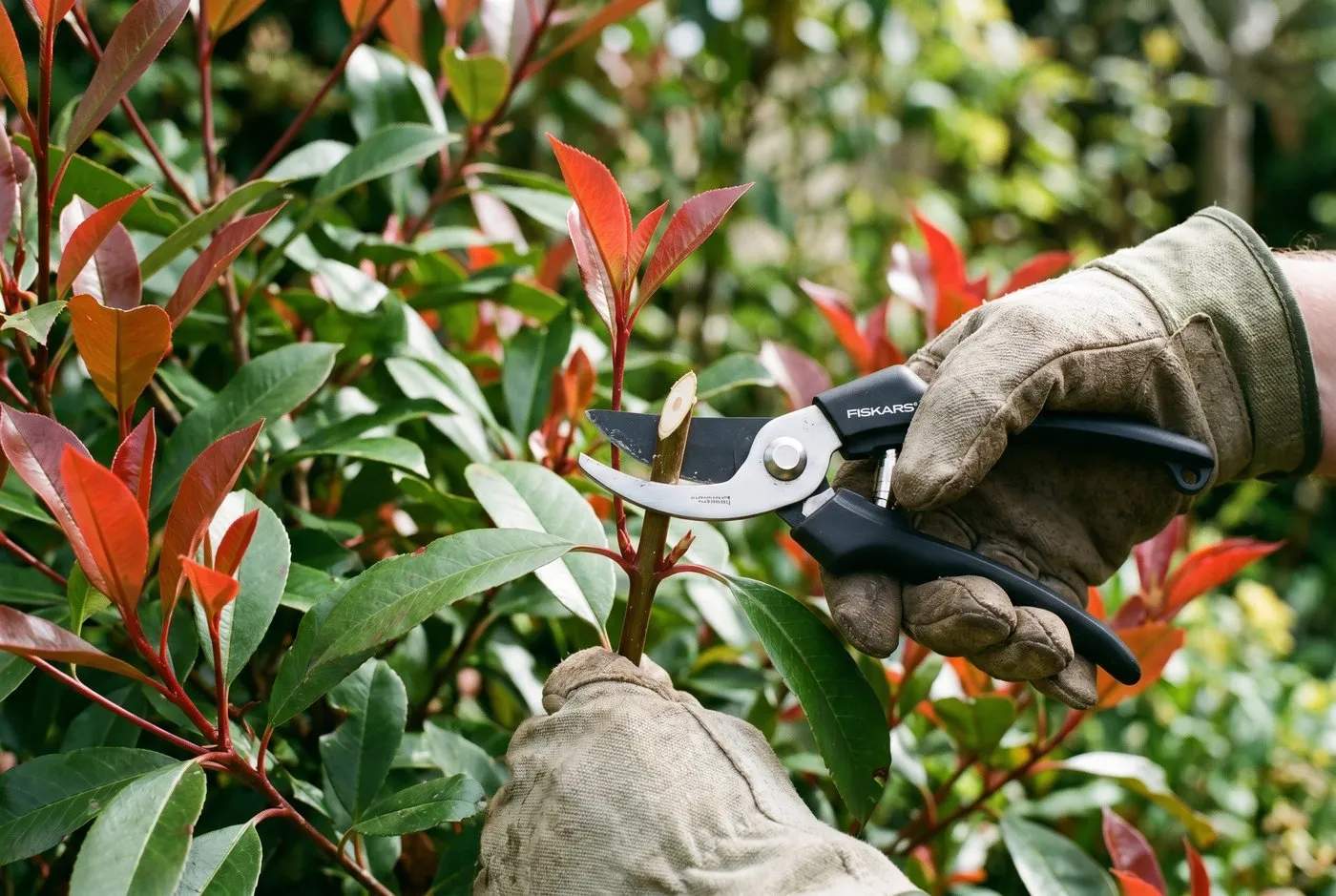 A clean cut just above a node, made in May with sharp, wiped secateurs. Right timing and clean blades stop pruning becoming a fresh cause of browning.
How The Six Fixes Rank By Impact
The gold standard is fixing the drainage first. Root rot is the only common cause that regularly kills, so it earns top priority. After that, leaf-spot hygiene and correct pruning timing prevent the two most visible kinds of browning. Watering and airflow are maintenance jobs that keep a healthy plant healthy.
What Healthy Red Robin Growth Should Look Like
It helps to know the target. A thriving Photinia Red Robin pushes flushes of bright, glossy red new leaves at the branch tips through spring and again after a summer trim. The red matures to a deep, even green as the leaves harden. The whole plant should look dense and well clothed from top to bottom.
Healthy red growth is firm, not crispy, and free of spots. If your new growth comes through red and stays red without browning, the plant is happy. Browning that appears only on tired, older inner leaves in small amounts is normal leaf turnover, not a problem. Evergreens still shed old leaves.
Compare your plant against a healthy one before you treat it. A little spotting on a few lower leaves needs only better airflow and leaf clearance. Wholesale browning needs the diagnosis chart at the top of this guide. If yellow rather than brown leaves are the worry, our guide on yellowing leaves and chlorosis covers the nutrient and pH causes behind pale foliage.
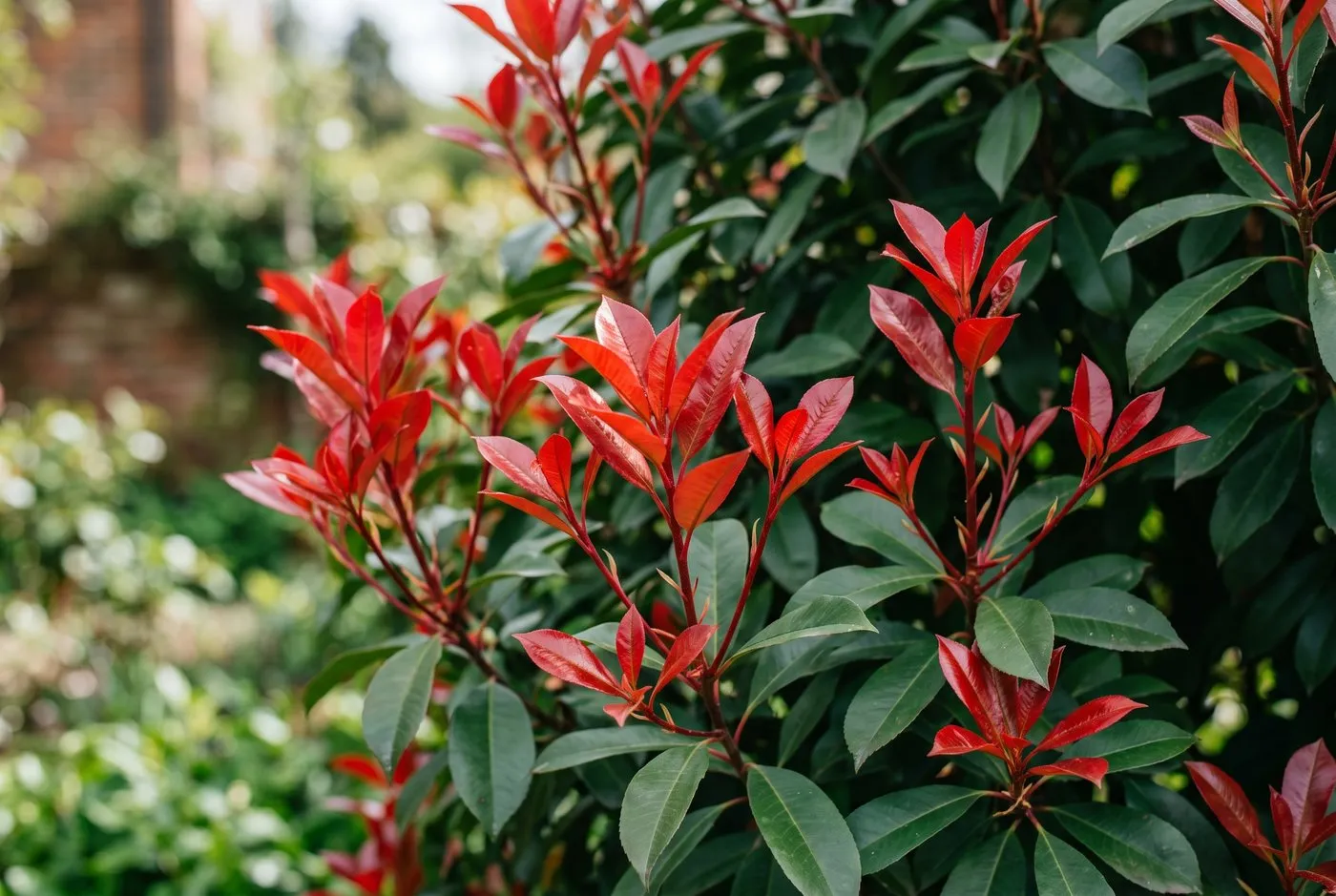 Healthy Red Robin growth: firm, glossy red tips ageing to deep green, with no spots or browning. This is the condition the fixes in this guide are aiming to restore.
Photinia Red Robin Care Through The UK Year
Browning is easiest to beat if you work with the calendar. The key windows are the spring prune, summer watering, and autumn leaf clearance. Stay ahead of each and the plant rarely browns badly.
| Month | What to do |
|---|---|
| January to February | Leave frost-scorched tips on, clear any fallen leaves from the base |
| March | Mulch the base with 5cm to 7cm of bark, check drainage after rain |
| April | Feed once with a balanced shrub fertiliser to push strong new growth |
| May to June | Prune out brown and dead wood, shape the plant, improve airflow |
| July | Water new and hedge plants deeply once a week in dry spells |
| August | Last chance to trim, never cut later or the new shoots will scorch |
| September to October | Rake and bin every fallen, spotted leaf, do not compost them |
| November to December | Stop feeding, protect exposed new plants from cold wind with mesh |
A new plant needs its first full year of attention before it stands on its own. Keep the base mulched, the soil draining and the foliage dry, and most browning never starts.
Common Photinia Browning Mistakes To Avoid
Most browning that drags on for years comes back to a handful of habits. Fix these and you remove the conditions the plant struggles in.
Treating the wrong cause. Spraying or fussing over leaf spot when the real problem is waterlogged roots loses the plant. Diagnose first, using the pattern of browning, then act.
Leaving fallen leaves under the plant. Infected litter reinfects the whole hedge next spring. Rake it up and bin or burn it, never add it to the compost heap.
Pruning after August. A late cut pushes soft red shoots that the first frost scorches brown. Keep all hard pruning to the May to June window.
Planting in a wet hollow on clay. Soggy soil suffocates the roots and invites Phytophthora. Plant on a raised mound and dig in grit before you blame disease.
Daily light watering of a new plant. Frequent splashes keep roots shallow and thirsty. Water deeply once a week instead so roots chase the moisture down.
Warning: If a Photinia browns and dies back hard with white fungal threads under the bark at the base, suspect honey fungus, not ordinary root rot. Honey fungus has no cure. Lift and destroy the plant, and avoid replanting susceptible shrubs in the same spot.
Frequently asked questions
Why is my Photinia Red Robin going brown?
Usually leaf spot, frost scorch, drought or root rot. Leaf spot is the most common cause in UK gardens. Match the pattern of browning to the cause: spotted leaves point to fungus, crispy red tips to frost, and basal browning to soggy roots.
Will my brown Photinia Red Robin recover?
Yes, most browning Photinias recover within one or two seasons. Remove dead growth, fix the cause, and feed in spring. The plant pushes fresh red shoots once the stress is gone. Only severe root rot or honey fungus is usually fatal.
Should I cut back a brown Photinia Red Robin?
Yes, prune out brown and dead stems in May or June. Cutting back hard into bare wood encourages new red growth and improves airflow. Avoid pruning after August, because the soft new shoots will scorch in the first frost.
Is there a spray for Photinia leaf spot?
No fungicide is approved for UK home gardeners. Control is cultural only: rake and bin fallen leaves, improve airflow, feed in spring, and keep the foliage dry. Repeated yearly leaf spot usually means the plant is in the wrong spot.
Why is my new Photinia Red Robin going brown?
New plants brown because the roots cannot yet feed the top. Transplant shock, dry roots and waterlogging all hit recently planted Photinias hardest. Water deeply once a week in the first year and check the soil drains freely.
Does brown Photinia mean it is dying?
Not usually, browning is rarely fatal on its own. Scratch a stem with your thumbnail: green underneath means living wood that will reshoot. Brown and brittle wood is dead and should be cut back to a live bud.
Now get the growing routine right
Diagnosis is half the battle. The lasting fix is matching each kind of browning to its cause, then getting the soil, the watering and the pruning timing right so it does not return. Sort the drainage first, keep the base clear of fallen leaves, and prune only in May or June. For the full routine from planting onward, read our guide on how to grow Photinia Red Robin, and browse the full set of plant problem guides to stay ahead of the next issue.
External references: the RHS photinia growing guide and the RHS Photinia Red Robin plant profile back up the leaf-spot, frost and pruning advice.
Our team produces practical UK gardening guidance from source research, contributor records and established horticultural practice. Editorial standards are overseen by Matt W.