Key takeaways
- Silver leaf gives plum and cherry leaves a metallic sheen, usually on one branch first
- The only sure test is a brown-purple stain in the wood when you cut the branch
- Silvery leaves with no wood stain are false silver leaf from stress, not the disease
- There is no chemical cure for amateurs, so removal and timing do all the work
- Prune Prunus only in summer, June to August, when spores are scarce and wounds heal fast
- Cut infected branches 10 to 15cm below where the wood stain stops, and burn the prunings
Silver leaf disease is the fungal infection that turns plum and cherry leaves a dull metallic grey. It is the most serious disease of plums in UK gardens, and most other Prunus catch it too. The fungus, Chondrostereum purpureum, enters through fresh wounds, then works inside the branch before the leaves ever silver. By the time you see the sheen, the wood below is already stained.
This guide shows you the one test that proves it: cutting a branch and reading the wood. A silvery leaf alone can fool you, because stress makes leaves silver without any infection at all. We cover the hosts, the symptoms in order, how the fungus gets in, the true versus false silver leaf trap, and the only control that works for home growers. There is no spray. Timing and the saw do the job.
How To Identify Silver Leaf On Plums And Cherries
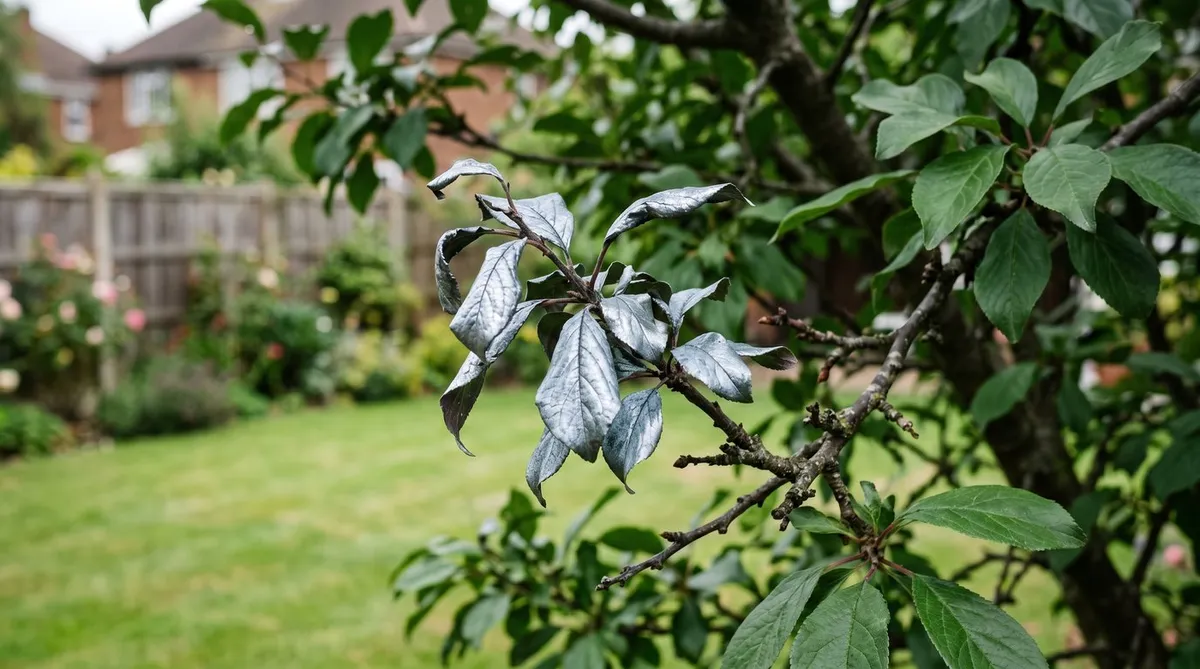
Silver leaf shows first in the leaves, but the name is misleading. The leaf is not coated in silver. The fungus releases a toxin that lifts the top layer of leaf surface away from the tissue below, leaving tiny air pockets. Light bounces off those pockets and the leaf reads as a dull metallic grey. Plums silver the most clearly. Cherries and other Prunus silver more faintly.
The sheen usually starts on one branch, not the whole tree. That single silvered limb against healthy green foliage is the classic early sign. Over a season the silvering spreads to more branches, then leaves split, brown along the margins and the affected limb dies back.
Do not stop at the leaves. Silvering alone never confirms silver leaf. Drought, waterlogging, frost or nutrient stress all silver leaves the same way, and that is false silver leaf, which we cover below. The proof is always in the wood, so the next step is to cut a branch and look inside.
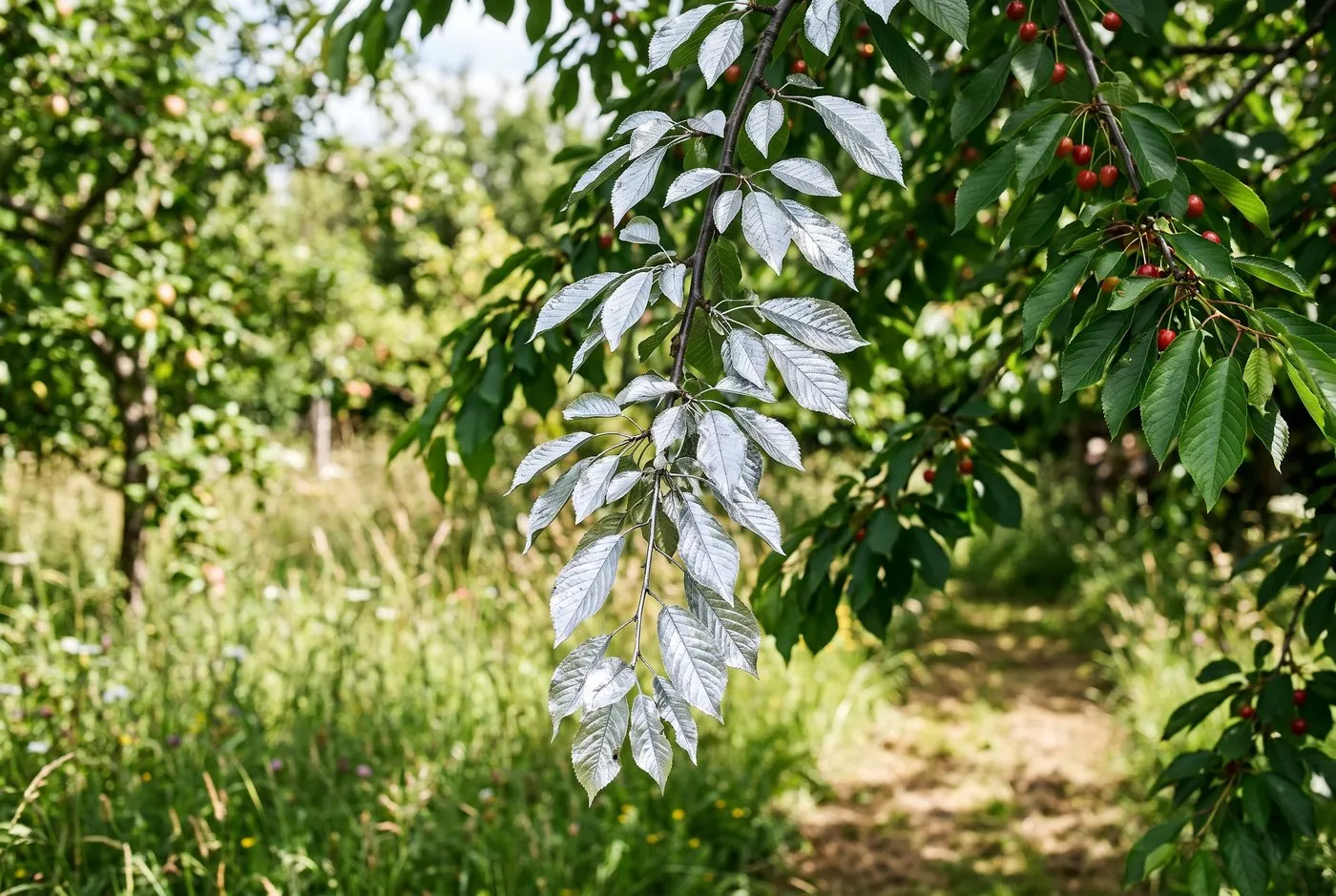 Silvering confined to one branch on a cherry, with the rest of the tree still green. This one-limb pattern is the classic early warning, but the leaves alone never confirm the disease.
The Wood Stain Test That Confirms It
This is the one diagnostic that separates real silver leaf from every look-alike. Cut through an affected branch with secateurs or a saw and look at the cut face. True silver leaf leaves an irregular dark brown or purple stain in the centre of the wood, where the fungus has colonised the xylem vessels. Clean, pale, even wood means the tree does not have it.
The stain is your most reliable signal, far better than the leaves. It also tells you how far the infection has travelled inside the limb, which decides where you make your removal cut. The stain usually runs further along the branch than the silvering on the leaves suggests, so it is the wood, not the foliage, that maps the disease.
Take the cut from a branch showing the silvery sheen, ideally where it meets a thicker limb. If you see the brown core, you have confirmed silver leaf and should plan to cut out the whole infected section. If the wood is clean despite silvered leaves, look for a stress cause instead.
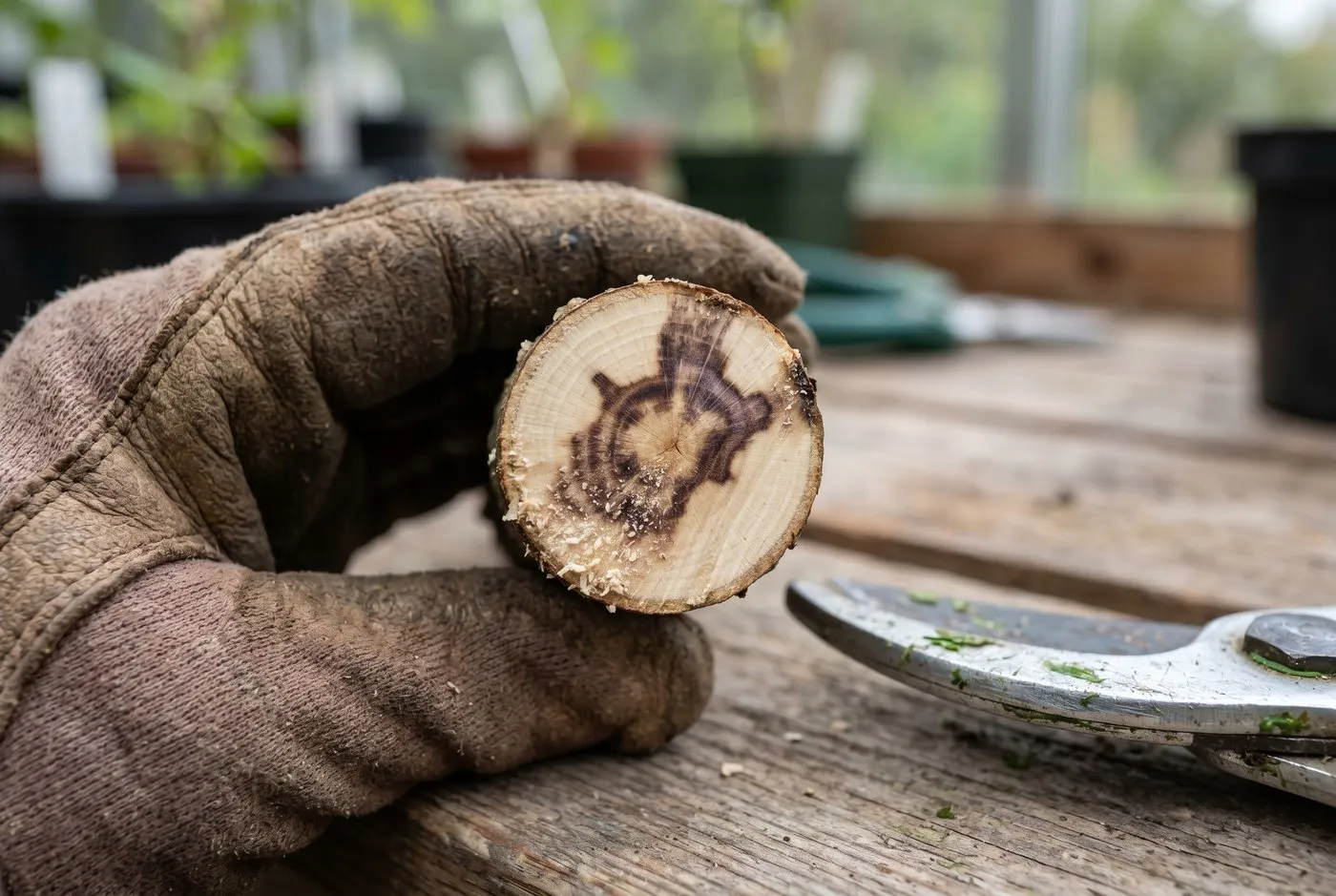 The money shot. An irregular brown-purple stain in the centre of a cut plum branch confirms silver leaf. No stain, no disease, however silver the leaves look.
True Versus False Silver Leaf
Plenty of silvered trees never had the fungus at all. False silver leaf is silvering caused by stress, not infection, and telling the two apart saves you from sawing out healthy wood. The single difference is the wood stain. False silver leaf shows no staining inside the branch.
False silver leaf comes from drought, waterlogging, root damage, cold injury or short feeding. The whole tree often silvers at once, evenly, rather than starting on one branch. It tends to ease once the underlying stress lifts, for example after a dry spell breaks or a starved tree gets fed. No fungus is present, so it does not spread and you cannot catch it from one tree to the next.
| Feature | True silver leaf | False silver leaf |
|---|---|---|
| Cause | Chondrostereum purpureum fungus | Drought, waterlogging, frost, poor feeding |
| Wood stain when cut | Brown-purple stain in the centre | No stain, clean pale wood |
| Pattern | Starts on one branch, then spreads | Often whole tree at once, even |
| Dieback | Yes, branches die back | Rare, leaves recover when stress lifts |
| Spreads to other trees | Yes, by airborne spores | No, not infectious |
| Brackets on dead wood | Eventually, purple-brown shelves | Never |
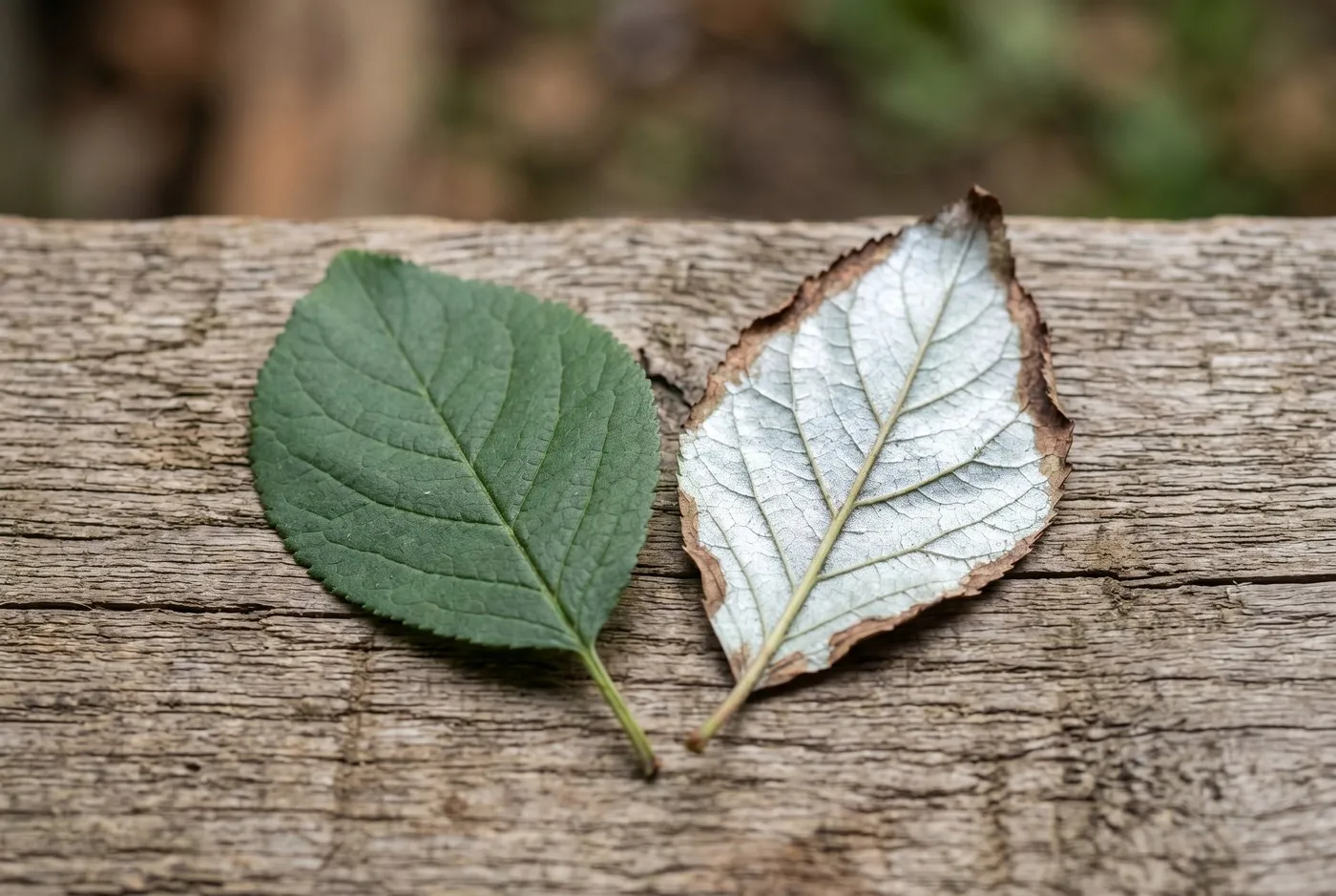 A healthy leaf beside a silvered one. Both silvering and false silvering look identical on the leaf, which is exactly why the wood stain test matters so much.
How The Fungus Infects And Spreads
Silver leaf gets in through fresh wounds. The fungus cannot push through healthy bark. It needs exposed sapwood: a pruning cut, a snapped branch, frost cracks, mechanical damage from a mower or strimmer, even rough harvesting scars. A pruning cut is most vulnerable in the first week after it is made, before the tree seals it over.
The spores come from bracket fungi on dead wood. Months after a branch dies, small tiered brackets form on it, with a woolly white upper surface and a purple-brown underside. That purple layer releases clouds of airborne spores. They blow onto wounds on healthy trees and start new infections. One dead, bracketed branch can seed every plum and cherry in the garden.
Timing is everything. Spores are active and abundant from September through to May, released mainly in autumn and winter under damp conditions. Through June, July and August there are far fewer spores about. This single fact drives the whole control strategy, because it tells you exactly when it is safe to make a wound.
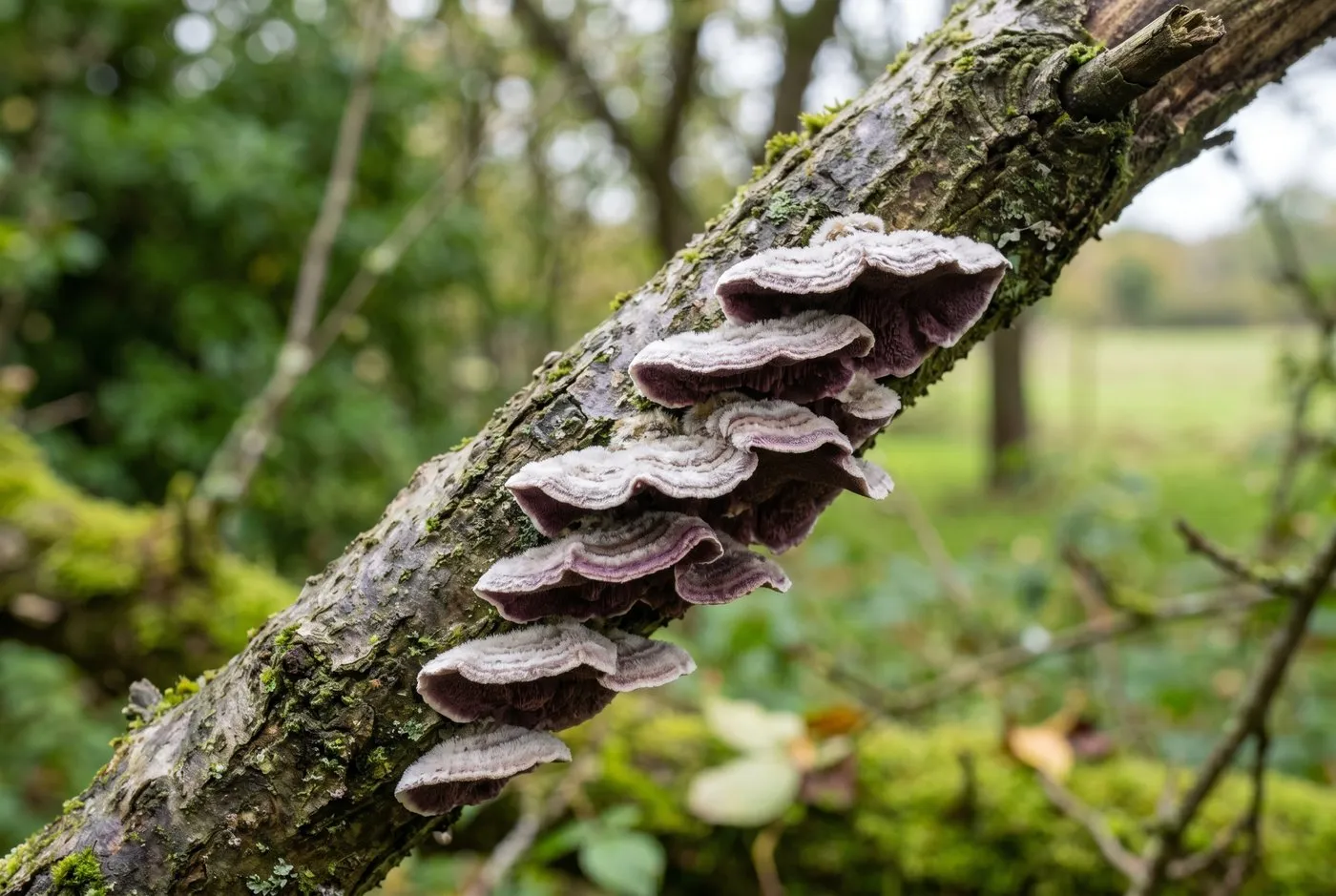 The spore source. Purple-brown brackets on a dead branch release the airborne spores that infect fresh wounds. Any branch carrying these must come off and be burned.
Controlling Silver Leaf: Methods Ranked By What Works
There is no chemical cure for home growers. No fungicide is approved in the UK for amateurs against silver leaf, and wound paints only protect a cut, they do not cure an infected tree. Control is all about removing infected wood, cutting off the spore supply and keeping trees strong. Below the methods are ranked by how much they actually help.
| Method | Role | How well it works | What it cannot do |
|---|---|---|---|
| Cut out infected wood below the stain | Primary treatment | Removes the fungus, gives clean regrowth | Useless if you cut above the stain |
| Summer pruning only, June to August | Primary prevention | Avoids the high-spore season | Will not save an already infected limb |
| Remove and burn dead wood with brackets | Primary prevention | Cuts off the spore supply | Cannot reach spores blown from neighbours |
| Keep trees vigorous, mulch and water | Maintenance | Speeds wound healing and recovery | Will not clear established infection |
| Protect bark from mower and frost damage | Maintenance | Closes off entry wounds | Does nothing once the fungus is inside |
| Wound paint on large cuts | Supplementary | Seals fresh cuts from spores | No cure, debatable value on small cuts |
The gold standard is summer pruning combined with cutting out infected wood 10 to 15cm below the stain. Those two together do almost all the work. Layer on burning bracketed wood, good feeding and bark protection, and most gardens hold the disease at bay. Our guide to pruning fruit trees covers clean cutting technique that helps wounds seal fast.
When you cut out a diseased limb, follow the stain. Saw 10 to 15cm beyond the point where the brown wood stain stops, never just past the silvered leaves. The fungus runs ahead of what you can see. Cut into clean pale wood, then burn or bin every piece. Never compost it and never leave it lying in the orchard, because it will grow brackets and reinfect.
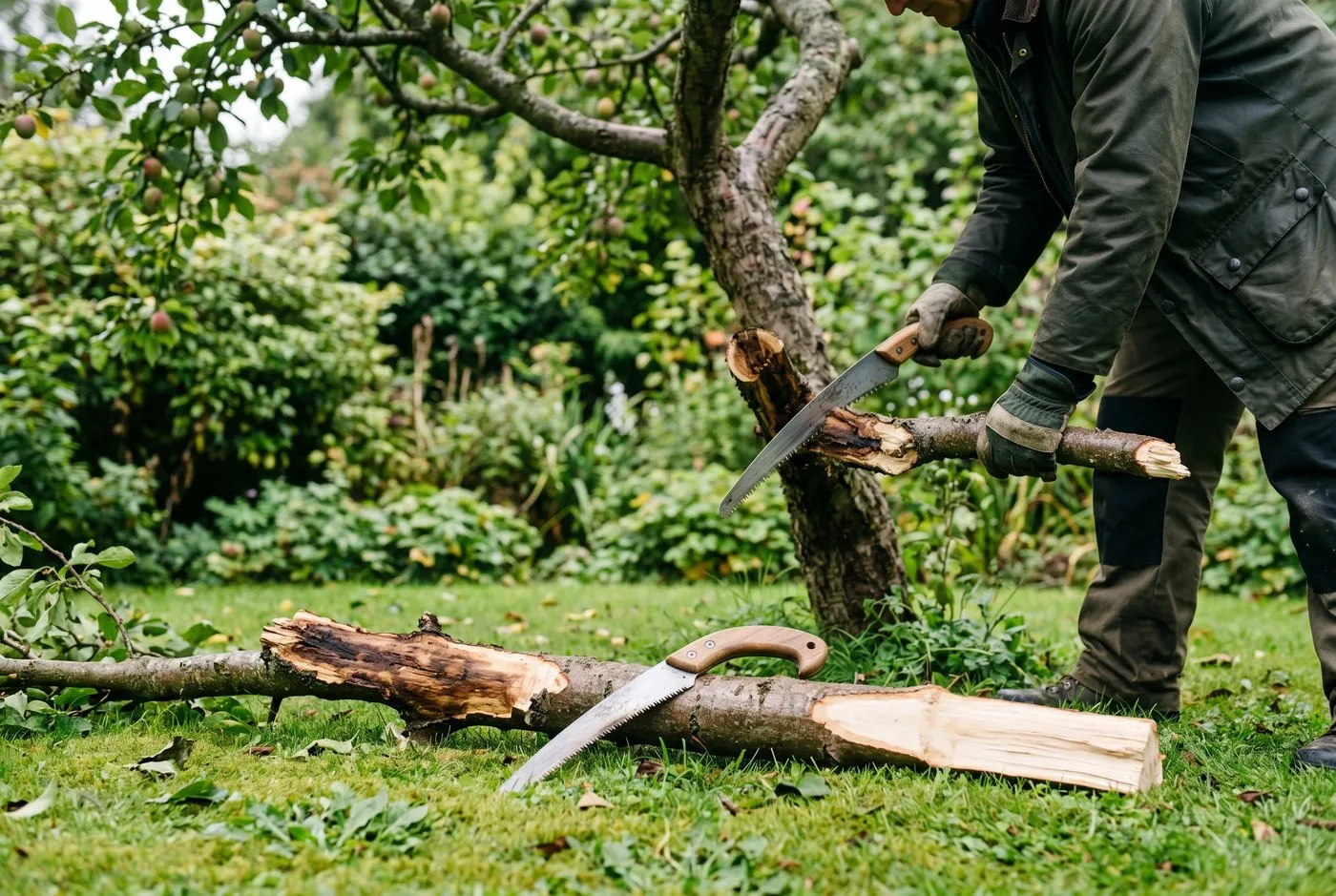 Cutting out a diseased limb. The first cut showed brown stained wood, so a second cut was made a full 15cm further back into clean pale wood. Burn both pieces.
Why Summer Pruning Beats Silver Leaf
The summer pruning rule is the single biggest prevention you can apply. Prune all Prunus only between June and August, when the tree is in active growth. Two things work in your favour then. Spores are scarce in summer, so a fresh wound is far less likely to meet an infection. And a wound in the growing season seals over in days, not the weeks a dormant winter cut takes.
Winter pruning of plums and cherries is the classic way gardens catch silver leaf. A cut made in November or February sits open and unhealed through the exact months when spores are thickest. The contrast is stark. A June cut is low risk, sealed within a week. A January cut on the same tree is high risk, open for months.
This rule applies to every stone fruit and ornamental Prunus: plums, gages, damsons, cherries, almonds, apricots and flowering cherries. Our guides to growing plum trees and growing cherry trees both set their pruning windows to summer for this reason. Apples and pears are far less prone, so winter pruning of those is fine.
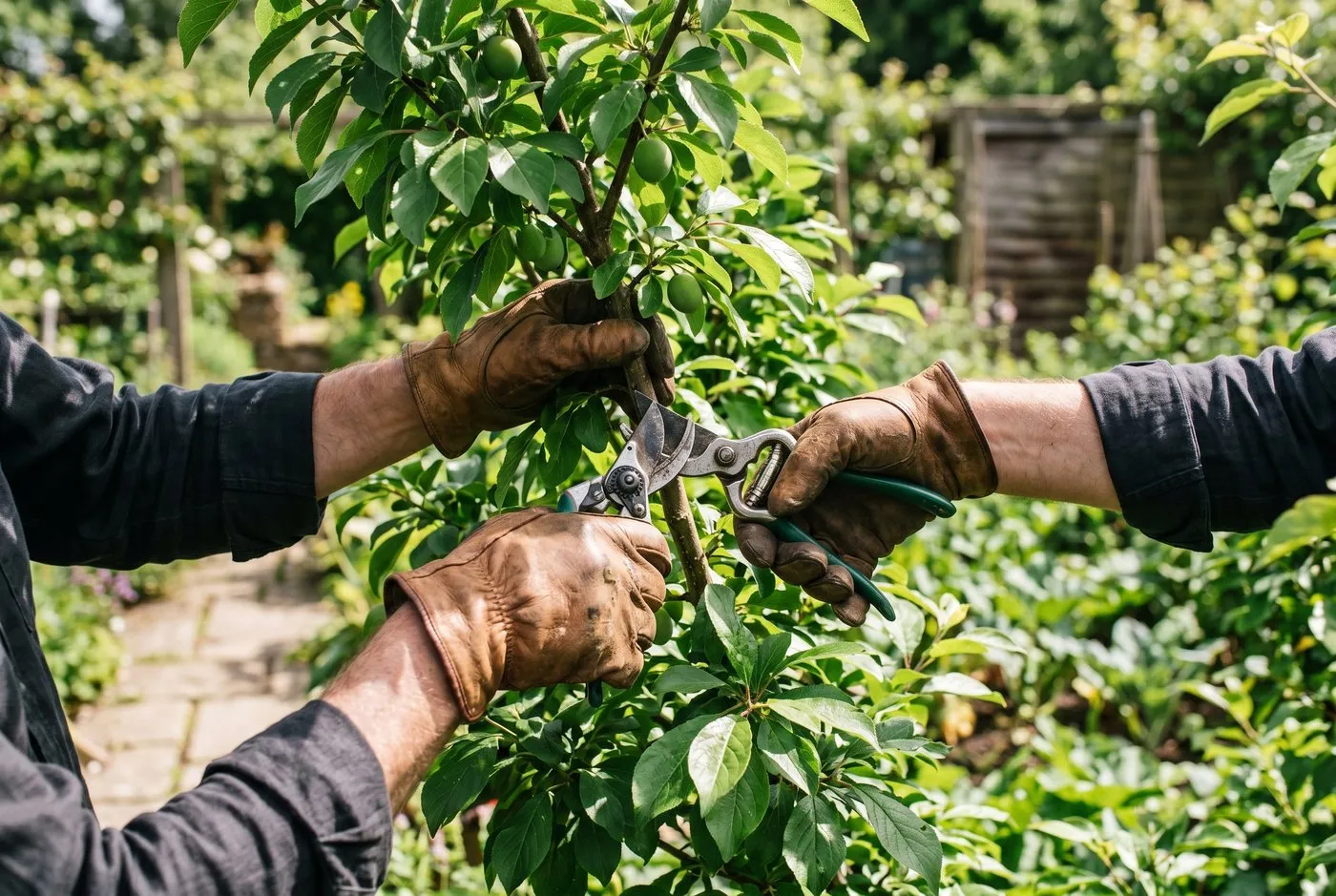 A clean June pruning cut on a plum in full leaf. Summer wounds seal in days and meet far fewer spores, which is why every Prunus should be pruned in the growing season.
Hosts Most At Risk From Silver Leaf
Silver leaf attacks members of the rose family, and not all hosts suffer equally. Plums are the worst affected and the most likely to die, with Victoria plums especially prone in UK gardens. Cherries come next, then other stone fruit. Knowing your tree’s risk tells you how hard to police the summer pruning rule.
Pome fruit catch it too, though far less severely. Apples and pears can show silvering but rarely die from it, and they tolerate winter pruning. Beyond the orchard, the fungus reaches ornamentals. Rhododendron, hawthorn, Laburnum, poplar and roses can all be hit. On rhododendron the sign differs: long strips of dead bark spread from the infection point rather than silvered leaves.
| Host | Susceptibility | Typical sign | Pruning season |
|---|---|---|---|
| Plum, gage, damson | Very high, often fatal | Strong silvering, dieback | Summer only |
| Cherry, including flowering | High | Faint silvering, dieback | Summer only |
| Apricot, almond | High | Silvering, branch death | Summer only |
| Apple, pear | Low | Mild silvering, rarely dies | Winter is fine |
| Rhododendron | Moderate | Strips of dead bark | Avoid wounding |
| Hawthorn, Laburnum, roses | Moderate | Dieback, occasional silvering | Late summer |
If you also grow stone fruit, two related problems share these hosts. Our guides to brown rot on stone fruit and canker on fruit trees cover the rots and lesions that often appear on the same trees.
Silver Leaf Through The UK Year
Silver leaf follows the calendar, and so should your response to it. The high-spore season runs from autumn into spring, so wounding work belongs firmly in summer. The key windows are the June to August pruning slot and the autumn clear-up of dead wood before brackets ripen.
| Month | What to do |
|---|---|
| January to February | Do not prune Prunus. Plan only. Inspect for silvering and brackets |
| March to May | Watch for silvered leaves as growth starts. Cut nothing yet |
| June to August | Prune all Prunus now. Cut out infected wood 10 to 15cm below any stain |
| September | Remove and burn dead wood before brackets release autumn spores |
| October to November | Clear fallen and dead branches. Mulch to keep trees vigorous |
| December | Protect bark from frost cracks and mower damage. No pruning cuts |
| Year-round | Burn all infected prunings. Never compost or leave them in the orchard |
Common Silver Leaf Mistakes To Avoid
Most reinfections trace back to a handful of habits. Fix these and you remove the openings the fungus needs.
Pruning plums and cherries in winter. This is the biggest mistake by far. A dormant-season cut sits open through the high-spore months. Prune Prunus only between June and August, never in autumn or winter.
Cutting back to just past the silvered leaves. The wood stain runs further than the silvering. Cut 10 to 15cm below where the brown stain stops, into clean pale wood, or the limb reinfects within a year.
Leaving dead, bracketed wood in the garden. Each bracket releases millions of spores. A single dead branch can seed every plum and cherry nearby. Remove and burn dead wood before brackets form in autumn.
Trusting silvered leaves alone. Stress silvers leaves without any fungus. Always cut a branch and check for the wood stain before you treat or fell a tree, or you may destroy a healthy one.
Composting infected prunings. Home heaps rarely get hot enough to kill the fungus, and the wood can still grow brackets. Burn or bin every infected piece. Never compost it.
Frequently asked questions
Can a tree recover from silver leaf disease?
Yes, many trees recover if you cut out infected wood early. Saw each affected branch 10 to 15cm below where the brown wood stain stops. Burn the prunings. Keep the tree vigorous with mulch and water. Badly infected trees with brackets on the main trunk rarely recover and should come out.
What is the difference between silver leaf and false silver leaf?
True silver leaf stains the wood brown inside; false silver leaf does not. Cut a silvered branch and look at the cut face. A dark brown or purple stain in the centre means the fungus. Clean pale wood means stress from drought, waterlogging or poor feeding, which is false silver leaf and not infectious.
When should you prune plum and cherry trees to avoid silver leaf?
Prune Prunus only in summer, between June and August. Spores are scarce then and wounds heal in days. Never prune plums or cherries in autumn or winter. Spores are active from September to May, and a fresh winter cut is an open door for infection.
Is there a cure or spray for silver leaf disease?
No, there is no chemical cure for amateur gardeners. Wound paints like Medo or Prune and Seal only protect a cut, they do not cure an infected tree. Control means cutting out stained wood, removing dead brackets and keeping trees healthy. The fungus has no home-garden fungicide in the UK.
What does the silver leaf bracket fungus look like?
Small tiered brackets with a woolly white top and a purple-brown underside. They grow in overlapping shelves on dead wood, usually months after a branch dies. The purple lower surface is where spores form. Remove and burn any branch carrying brackets, because each one seeds the whole garden.
Does silver leaf disease spread to other trees?
Yes, airborne spores spread it to any Prunus and to apples and more. Plums and cherries suffer worst, but apples, apricots, almonds, hawthorn, roses and rhododendron can all catch it. Spores blow from dead wood carrying brackets, so clearing infected prunings protects every susceptible plant nearby.
Now protect the rest of your fruit
External references: the RHS silver leaf guide sets the 10 to 15cm cut depth and the summer pruning rule, and backs the wound paint and spore timing advice with its own diagnostic notes.
Our team produces practical UK gardening guidance from source research, contributor records and established horticultural practice. Editorial standards are overseen by Matt W.