Key takeaways
- Slugs rarely harm established lawn grass; the silvery trails they leave are cosmetic, not damage
- The real issue is slugs sheltering in damp lawn thatch, then feeding on borders and seedlings
- New grass seed and overseeded patches are the exception: slugs will graze them heavily
- Reduce thatch, improve drainage and cut long damp edges to remove slug shelter
- Encourage hedgehogs, frogs and birds, and use Phasmarhabditis nematodes for serious cases
- Metaldehyde slug pellets are banned in the UK; only ferric phosphate pellets remain legal
A lawn laced with silver trails at dawn looks like a pest has run riot overnight. In nearly every case it has not. Slugs leave their mark on grass, but they very rarely damage it. Knowing the difference saves you a lot of wasted effort and money.
Slugs and grass are not natural partners. Grass blades are tough and low in the soft sugars slugs prefer, so an established lawn is shelter, not a menu. The trails you see are slime, not damage. The genuine problems are different and more specific: slugs hiding in damp lawn thatch by day and raiding your borders by night, and slugs grazing tender new grass seed to nothing. This guide shows how to tell real damage from harmless trails, and how to control slugs without reaching for banned chemicals.
Do slugs actually damage lawns?
For an established lawn, the honest answer is almost never. The signs people blame on slugs usually have another cause.
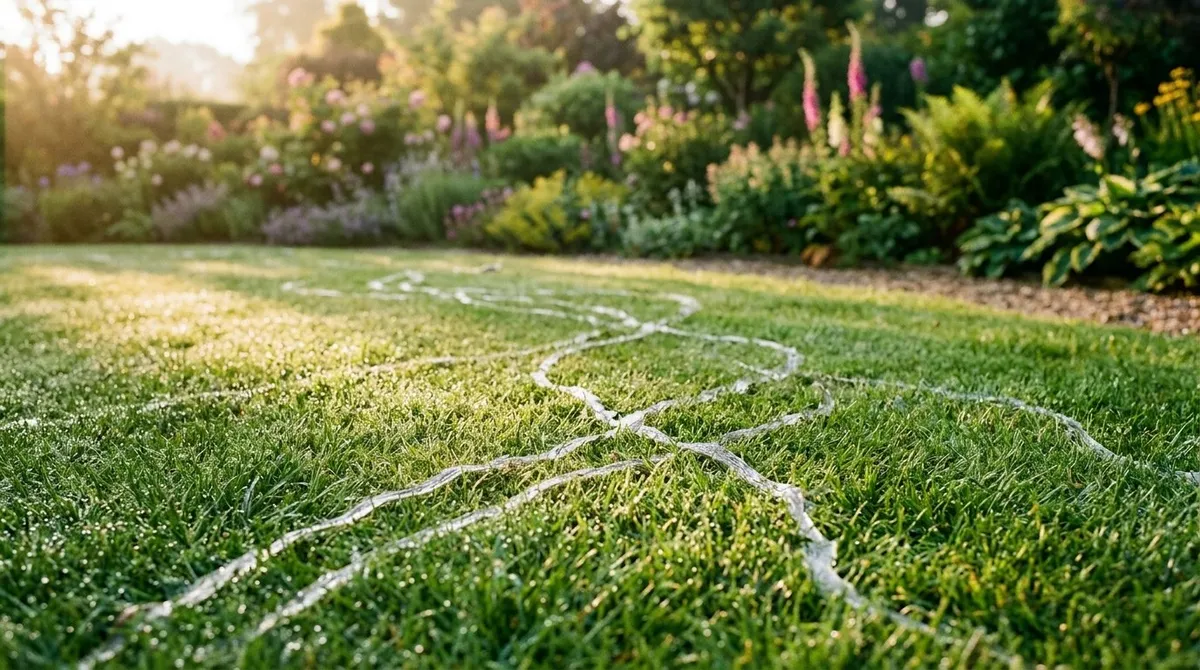
- Silvery trails across the grass are dried slime, left as slugs cross the lawn at night. They are cosmetic and fade by mid-morning.
- Brown patches are almost never slugs. They point to leatherjackets, chafer grubs, drought or disease. Slugs do not create dead patches in turf.
- Small holes overnight are more often birds or mammals digging for grubs, as our guide to small holes in the lawn explains.
So before you treat for slugs, check you have the right culprit. Treating slugs for damage they did not cause wastes time and leaves the real problem untouched.
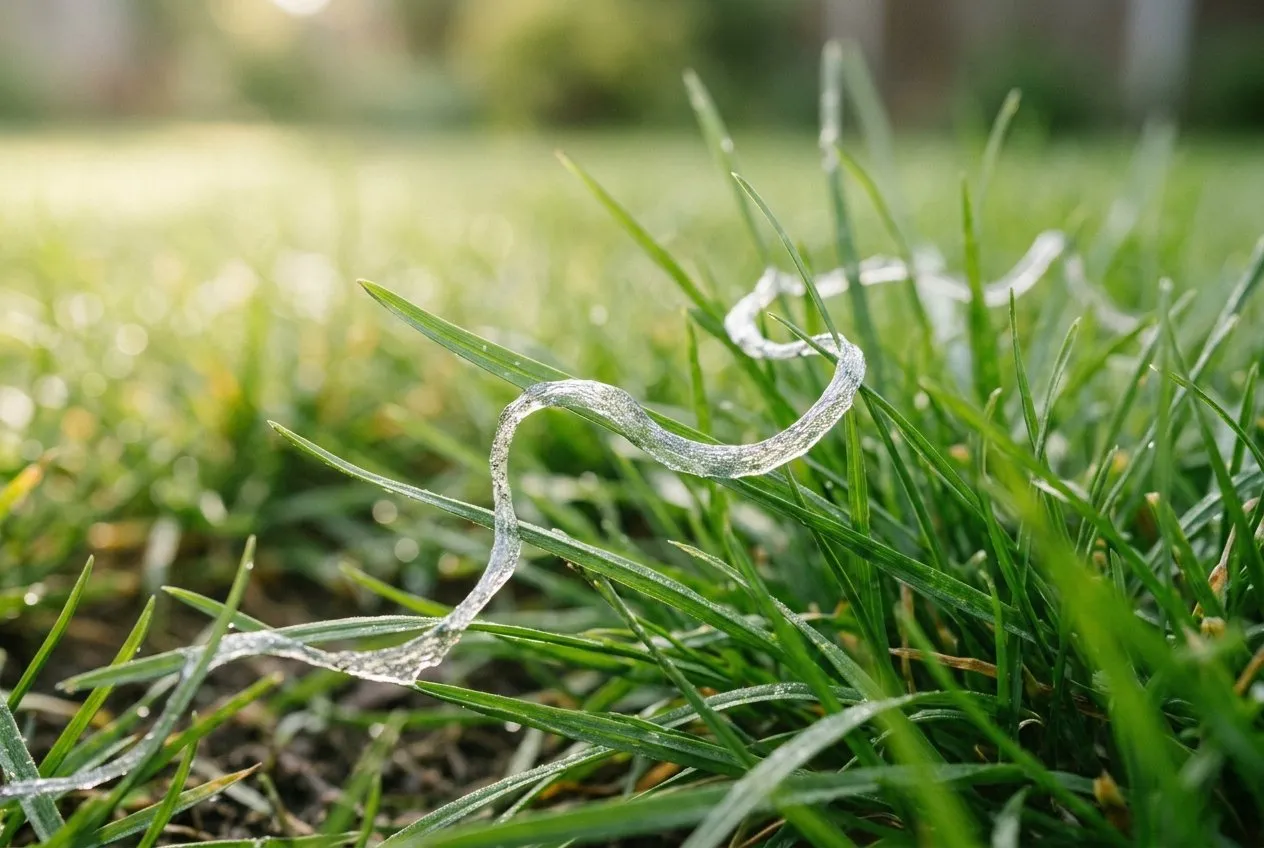 Silvery trails are dried slime, not damage. They glint at dawn, then fade as the grass dries. Established turf shrugs them off.
When slugs are a real problem
There are two situations where slugs genuinely matter on and around a lawn.
New grass seed. Freshly sown or overseeded grass is soft, slow and exactly the kind of tender growth slugs love. A bare, reseeded patch can be grazed back faster than it grows. This is the one case where lawn slugs cause real, measurable harm.
Shelter for border raids. A lawn with long, damp edges and a thick thatch layer is a slug hotel. Slugs spend the day in the cool turf, then commute into your borders at night to eat hostas, dahlias and seedlings. The lawn is not the victim; it is the base camp. Our guide on how to stop slugs eating dahlias covers the border side of the same problem.
Recognise which of these you have, because the fixes are different. Protecting seed is about the new lawn; cutting shelter is about the borders next to it.
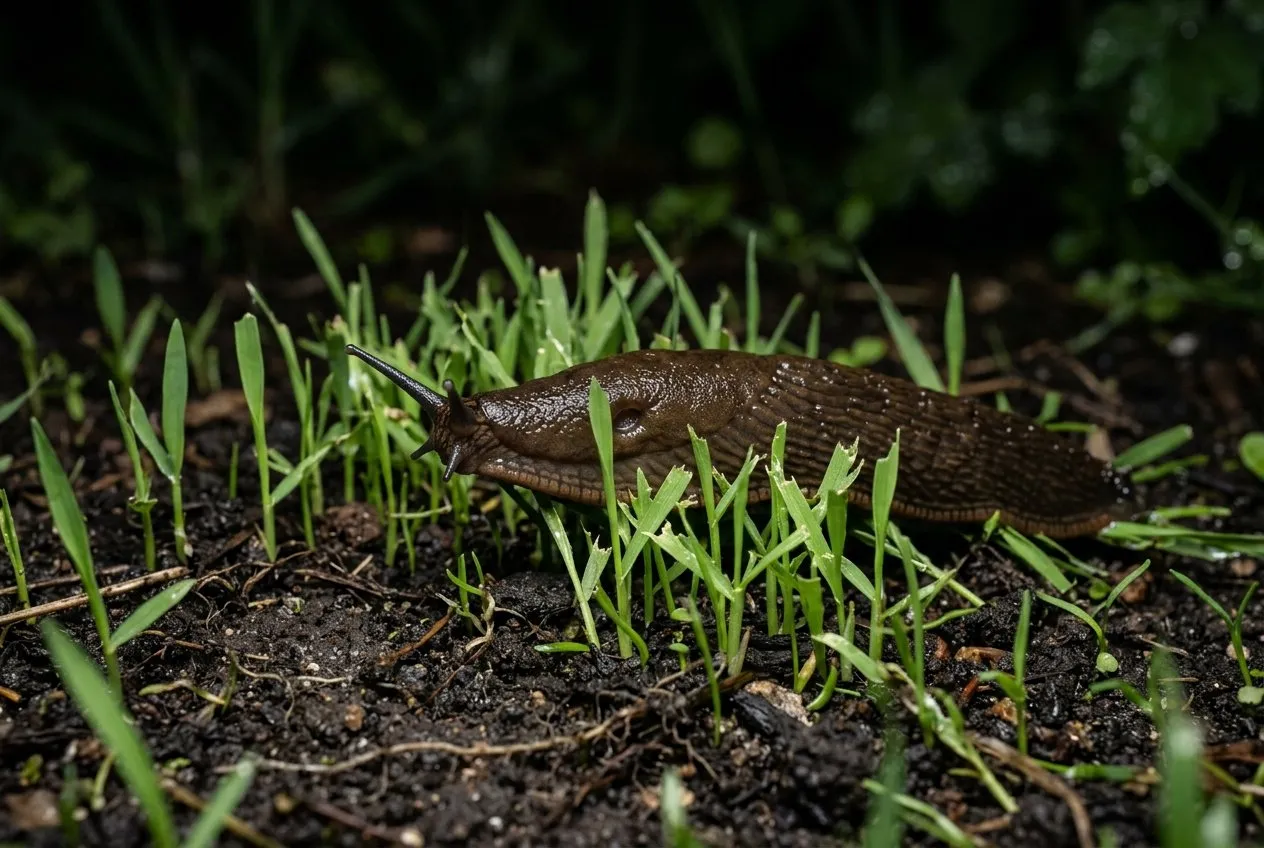 The real damage: a slug grazing soft new grass seedlings. Established turf is safe, but a fresh overseed is a target.
How to identify slug damage versus other lawn problems
Use this quick comparison before you decide what to treat.
| Sign | Likely cause | Slug or not |
|---|---|---|
| Silvery trails, no dead grass | Slug slime | Slugs, but harmless |
| Soft new seedlings grazed ragged | Slugs on new seed | Slugs, real damage |
| Yellow-brown patches lifting like carpet | Leatherjackets or chafer grubs | Not slugs |
| Dry straw-coloured patches in summer | Drought | Not slugs |
| Rings or patches of discoloured grass | Lawn disease | Not slugs |
| Holes and divots overnight | Birds, badgers, foxes digging for grubs | Not slugs |
For anything in the “not slugs” rows, the fix lies elsewhere. Our guides to lawn diseases and the lawn care calendar cover those causes.
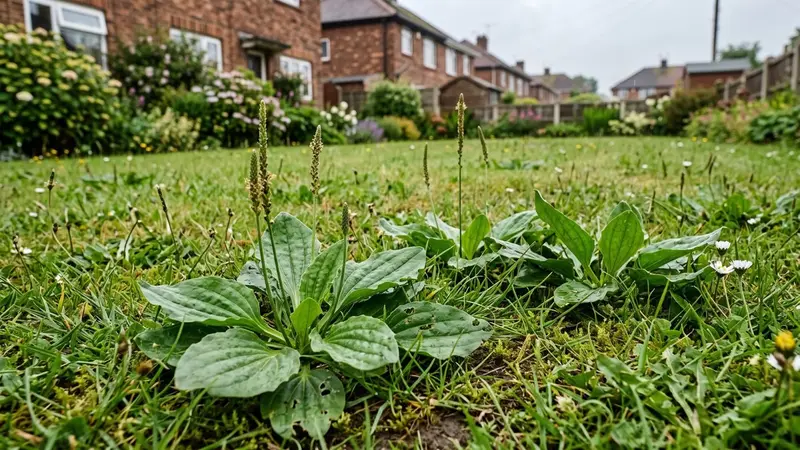
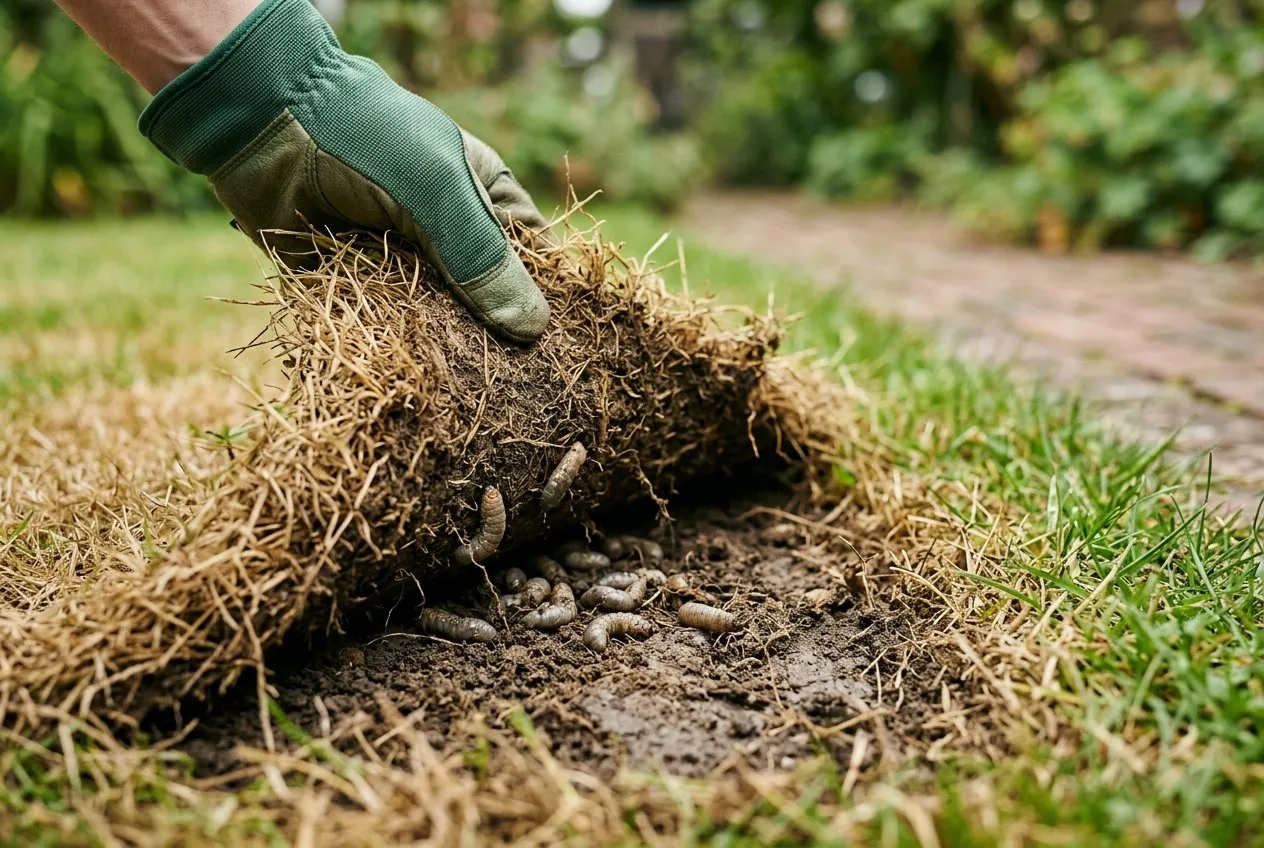 Bare brown patches that lift like carpet are leatherjackets or chafer grubs, never slugs. Identify the right pest before you treat.
How to stop slugs without metaldehyde
Metaldehyde pellets were banned for outdoor use in the UK in 2022. They are gone, and good riddance, given the harm they did to hedgehogs and birds. The control that works is habitat-based, not chemical.
- Cut the shelter. Scarify out thatch and keep the lawn edges short. A short, mown strip around borders is the single most effective move.
- Improve drainage. Slugs need damp. Scarifying and aerating a soggy lawn makes it far less inviting.
- Encourage predators. Hedgehogs, frogs, toads, ground beetles and birds all eat slugs. A pesticide-free garden lets them do the work for free.
- Protect new seed. Use nematodes, wool pellets, or nightly checks, and consider netting that also helps protect grass seed from birds.
- Use ferric phosphate only as a last resort. It is the one legal pellet, and even then only worth it around vulnerable new sowings, never broadcast over established turf.
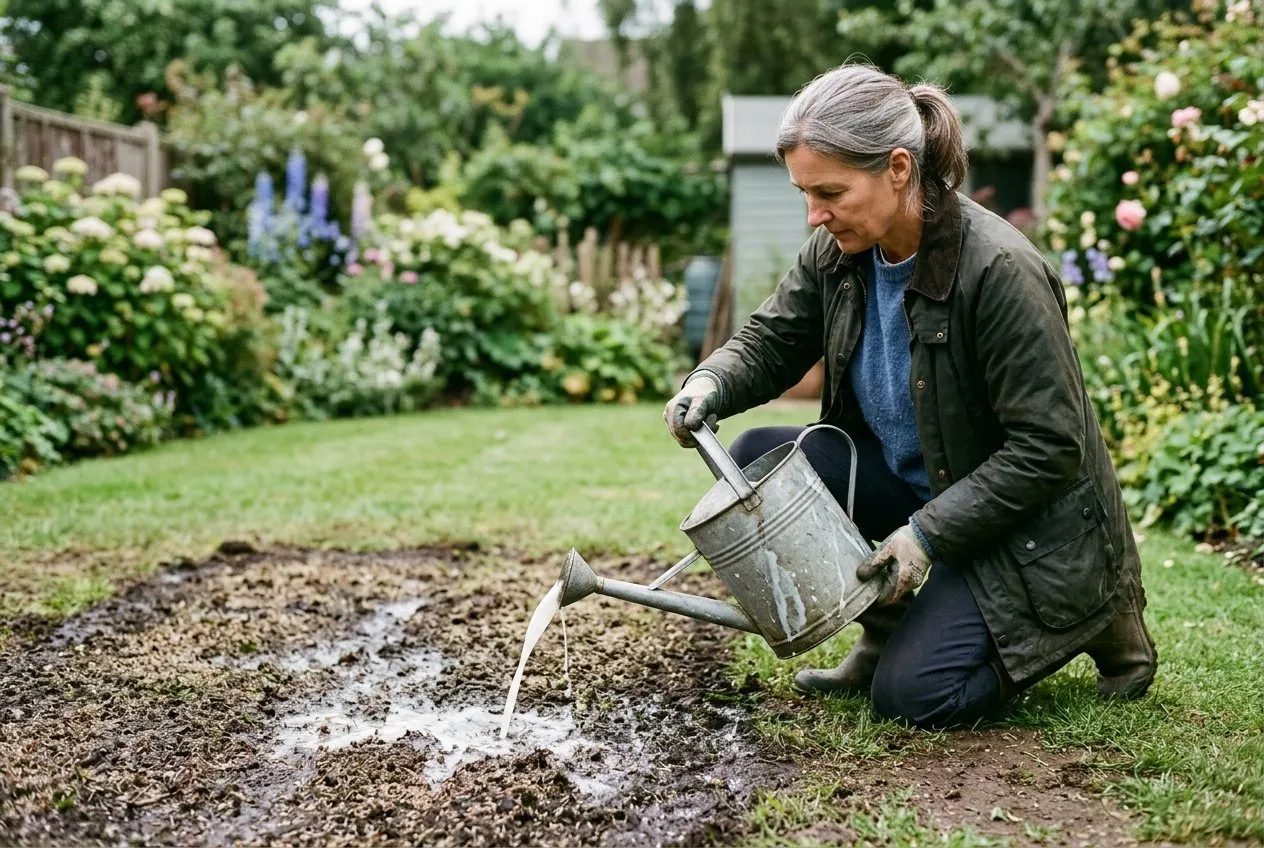 Nematodes watered onto warm, moist soil protect new grass and seedlings for about six weeks, with no harm to wildlife.
Slug control method hierarchy
| Method | What it does | Effectiveness | Role |
|---|---|---|---|
| Cut thatch and mow edges short | Removes daytime shelter | High, addresses cause | Primary |
| Encourage hedgehogs and birds | Natural predation | Moderate, ongoing | Maintenance |
| Phasmarhabditis nematodes | Kills slugs in soil for ~6 weeks | High for new seed | Targeted, seasonal |
| Protect seed with wool pellets or mesh | Shields tender seedlings | High for new lawns | Targeted |
| Improve drainage and aeration | Reduces the damp slugs need | Moderate, slow | Supplementary |
| Ferric phosphate pellets | Kills slugs near vulnerable plants | Moderate, local | Last resort |
| Metaldehyde pellets | Banned | None, illegal | Never |
Encouraging the predators that do the work
A garden that welcomes wildlife controls its own slugs. A single hedgehog eats dozens of slugs a night. Frogs and toads patrol damp ground. Song thrushes, blackbirds and starlings hunt the lawn by day.
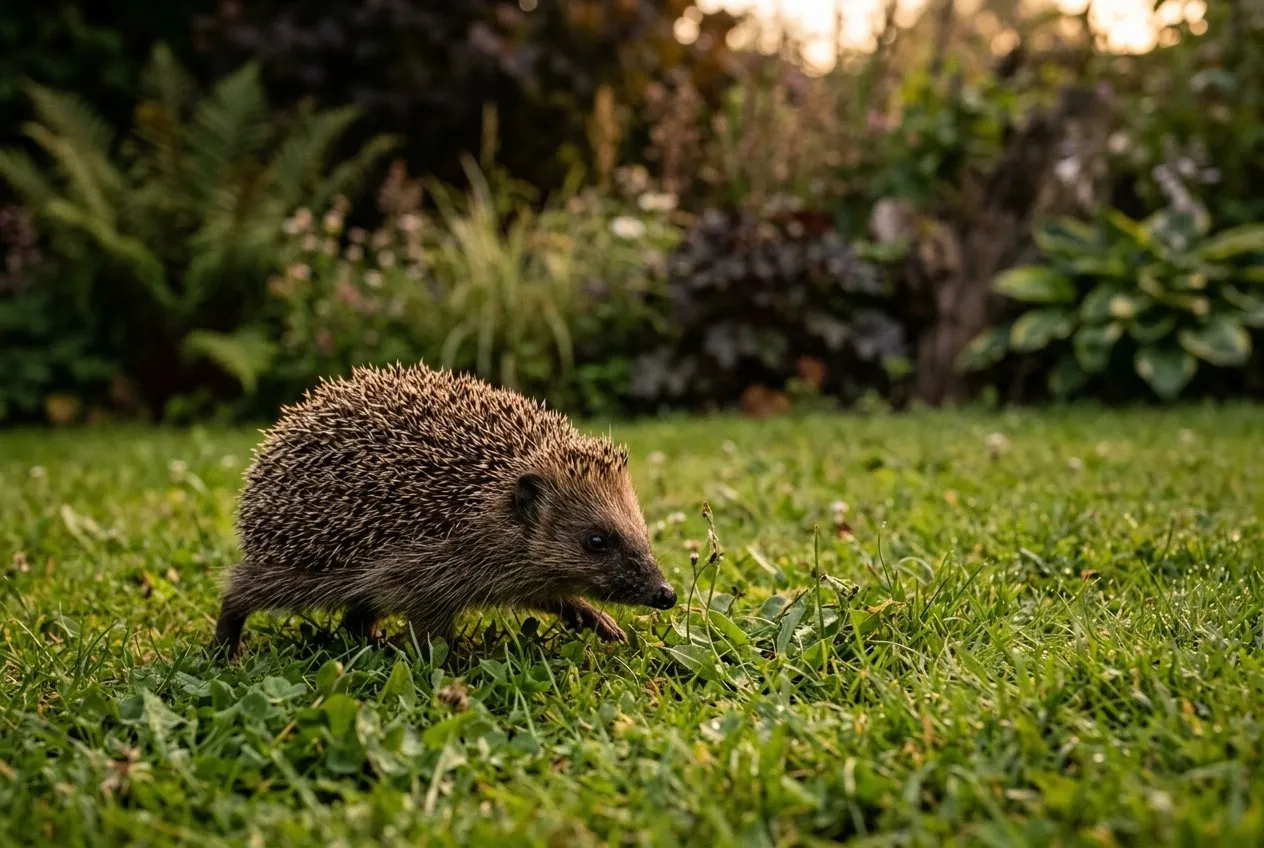 A single hedgehog eats dozens of slugs a night. Welcoming predators is the cheapest, longest-lasting slug control there is.
Common slug-on-lawn mistakes
- Treating trails as damage. Silvery trails are harmless slime. Established grass is not being eaten.
- Blaming slugs for brown patches. Those are leatherjackets, grubs, drought or disease, not slugs.
- Broadcasting pellets over the lawn. Pointless on turf slugs do not eat, and harmful to wildlife.
- Reseeding without protection. New grass is the one thing slugs do graze. Protect it or expect losses.
- Keeping long, damp edges. This is the slug shelter that feeds your border raids. Cut it back.
Read the signs correctly and slugs on the lawn turn out to be far less of a problem than they look.
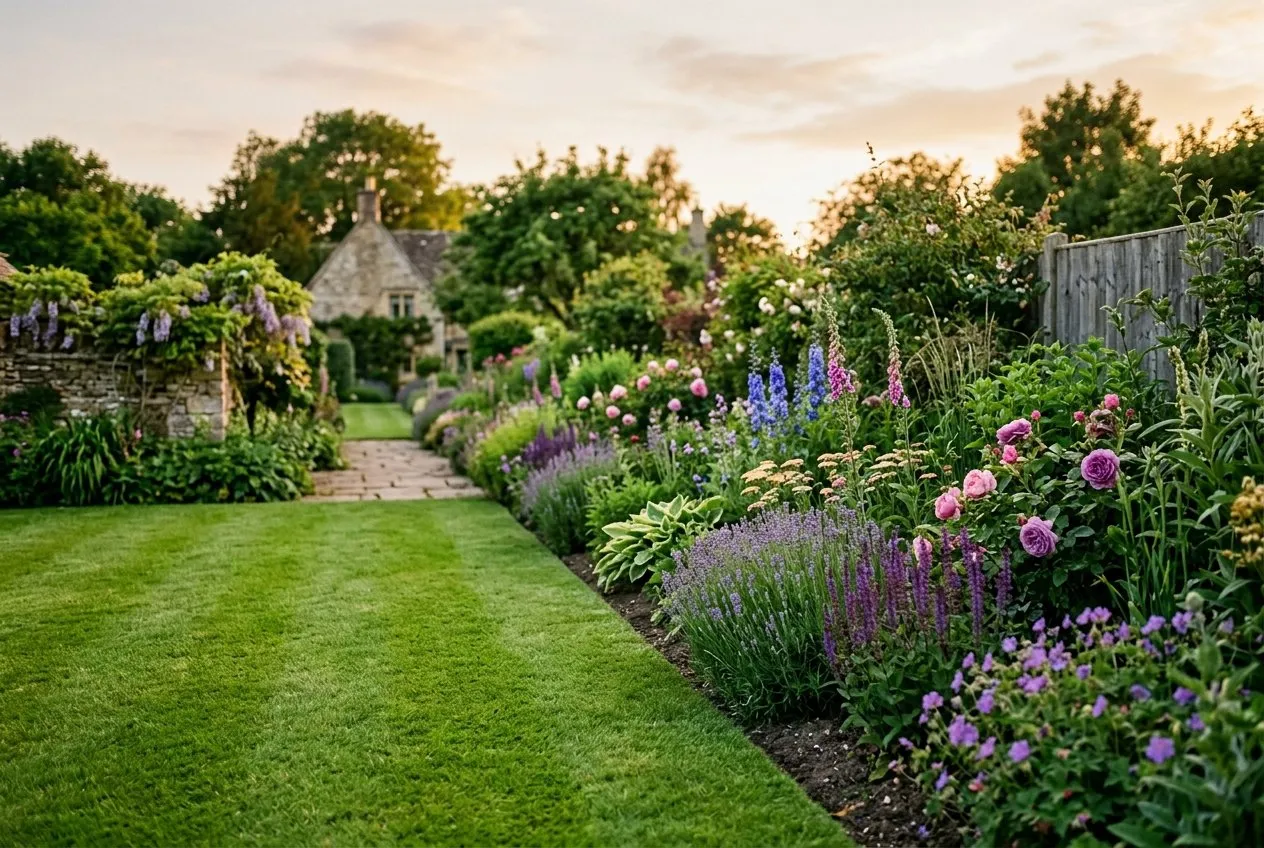 A short, dry, mown edge between lawn and border is the cheapest slug barrier there is, and it keeps the whole garden tidier.
Now you can tell trails from real damage, learn the full range of methods in our guide to getting rid of slugs naturally, and keep the rest of your grass in shape with the lawn care calendar.
Our team produces practical UK gardening guidance from source research, contributor records and established horticultural practice. Editorial standards are overseen by Matt W.