Key takeaways
- Iron sulphate blackens both moss and grass within 24 to 48 hours at high concentration
- The safe granular rate for moss control is roughly 35g per square metre, never double it
- Most over-dosed lawns recover in 2 to 4 weeks because the burn is to the blades, not the crowns
- Flush the lawn with 10 to 15mm of water over several days to dilute and move the iron through
- Water iron sulphate in within 48 hours and keep it off paving, which it stains rust-brown
Why iron sulphate is used on lawns in the first place
Iron sulphate, also sold as sulphate of iron or ferrous sulphate, does three jobs on a lawn. It kills moss by turning it black within a day or two. It greens up pale, hungry grass because iron drives the production of chlorophyll. It also hardens the turf surface, which makes the grass more resistant to fungal diseases like red thread and fusarium.
Most UK gardeners buy it as a moss killer. Moss thrives on UK lawns in damp shade, on compacted clay, and where the grass is thin. Iron sulphate scorches the moss faster and cheaper than any other product. A 1kg bag treats around 25 to 30 square metres and costs four to seven pounds. That low cost is exactly why people reach for it, and exactly why they tend to over-apply it.
The active ingredient is the same in granular feeds, soluble powders, and lawn sand, but the concentration differs hugely. That difference catches people out. A rate that is fine for lawn sand will scorch the grass badly if you apply pure sulphate of iron at the same weight.
What too much iron sulphate does to grass and paving
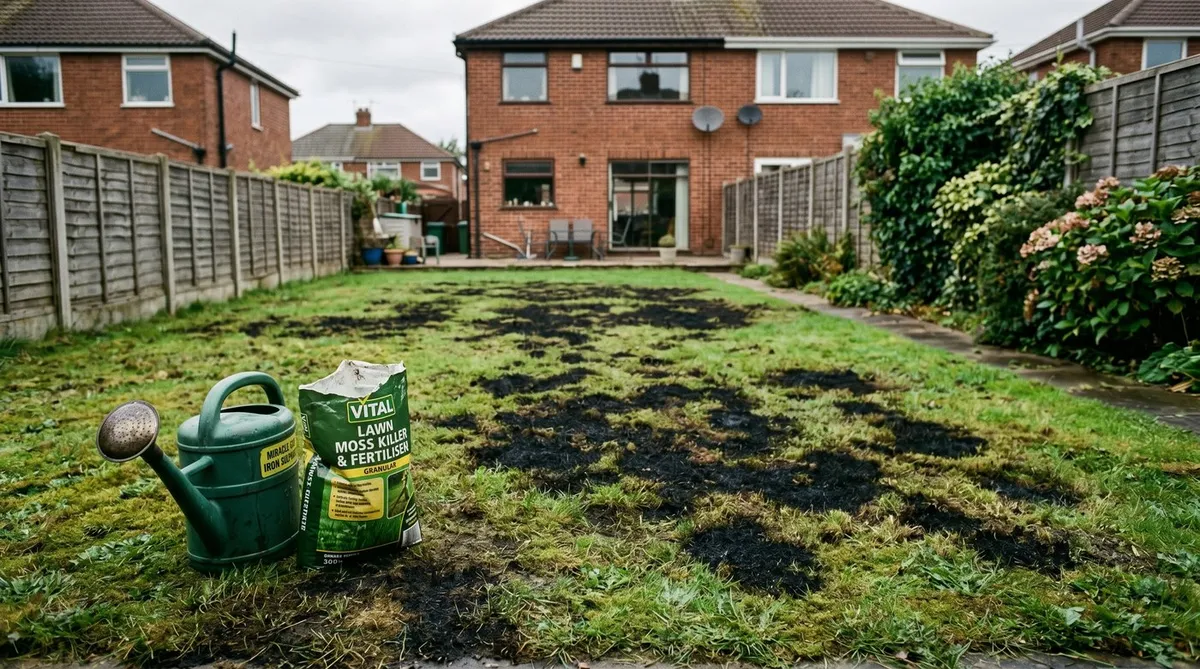
At low concentration iron sulphate feeds the grass. At high concentration it becomes a problem for the grass too. Ferrous sulphate is acidic and acts as a strong desiccant, meaning it pulls moisture out of plant cells. That is precisely how it kills moss, which has no protective cuticle. Grass has a tougher waxy blade, so it tolerates a moderate dose, but push the concentration up and the blades scorch and blacken just like the moss.
Three factors make scorch worse. Applying to wet foliage lets the iron cling to the blades and stay in contact longer. Hot, sunny weather speeds the desiccation and burns the leaf. Skipping the water-in leaves a high concentration sitting on the surface instead of washing down to the soil. Combine all three and even a correct rate can scorch.
Iron sulphate also stains. The iron oxidises into rust on contact with anything porous. It stains concrete and natural stone paving a brown to orange colour, marks clothing permanently, and leaves rust spots on a mower deck if you do not rinse it. The stains are the most common complaint after the black grass.
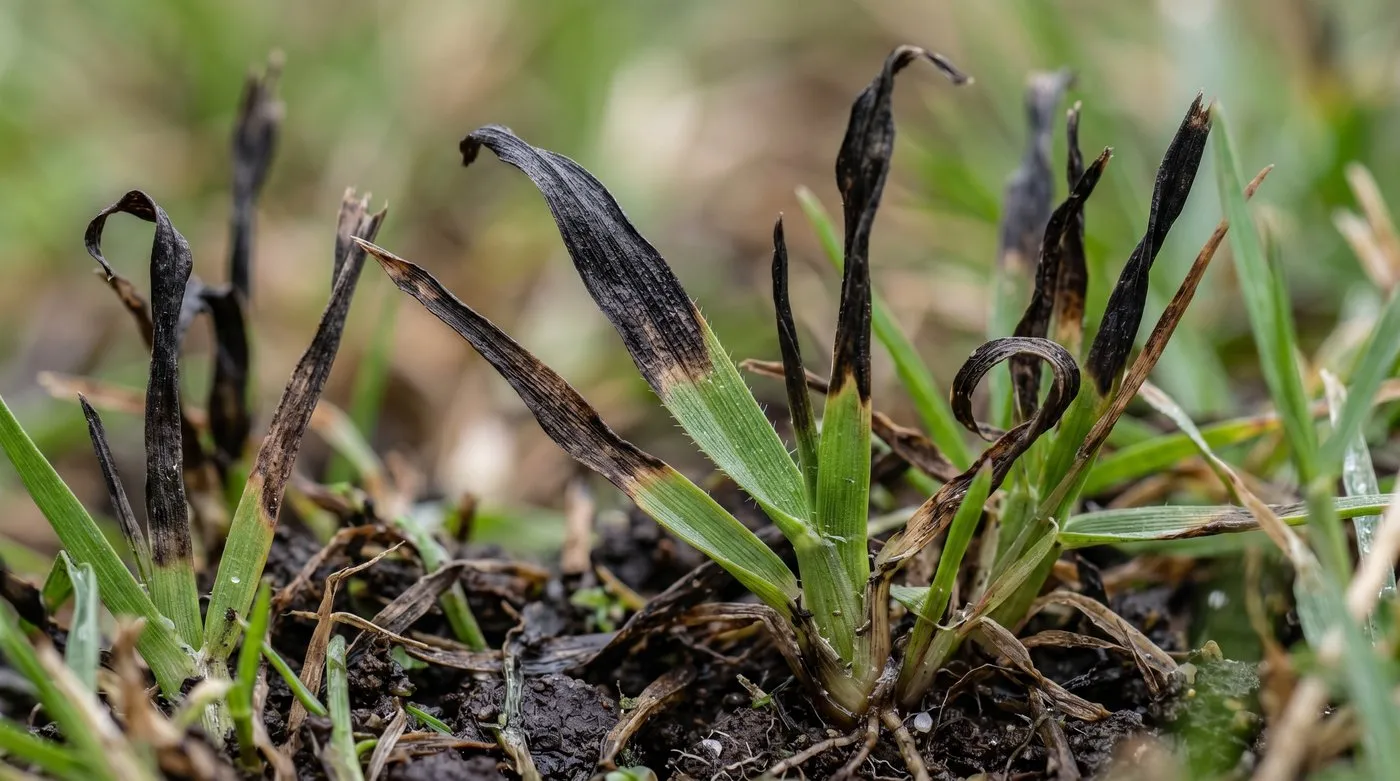 Close-up of scorched blades. The black runs down from the tip but the base of the blade and the crown below are still green and alive.
The correct iron sulphate rate for a UK lawn
Getting the rate right prevents almost every problem. The exact figure depends on the product, so read your label, but these are the typical UK rates.
- Granular sulphate of iron: roughly 35g per square metre maximum for moss control. Most product directions sit at 35g per square metre. This is the rate to respect.
- Lawn sand: applied heavier by total weight, often 100 to 140g per square metre, but it is mostly sand with a small percentage of iron sulphate and a little ammonium sulphate. Do not confuse its rate with pure iron sulphate.
- Soluble iron sulphate: dissolved and sprayed, typically 20g in 5 litres of water per 30 square metres, which works out far lower per square metre.
- Spring greener and feed products: contain a small iron fraction, often under 5g of iron sulphate per square metre, designed to colour rather than kill.
The danger is eyeballing the dose. A handful tossed by feel can easily be double the safe rate. Uneven watering-can passes are worse still, because where passes overlap the grass gets a double dose and blackens in stripes. Weigh the product on kitchen scales, mark out a square metre with canes, and apply the measured amount evenly.
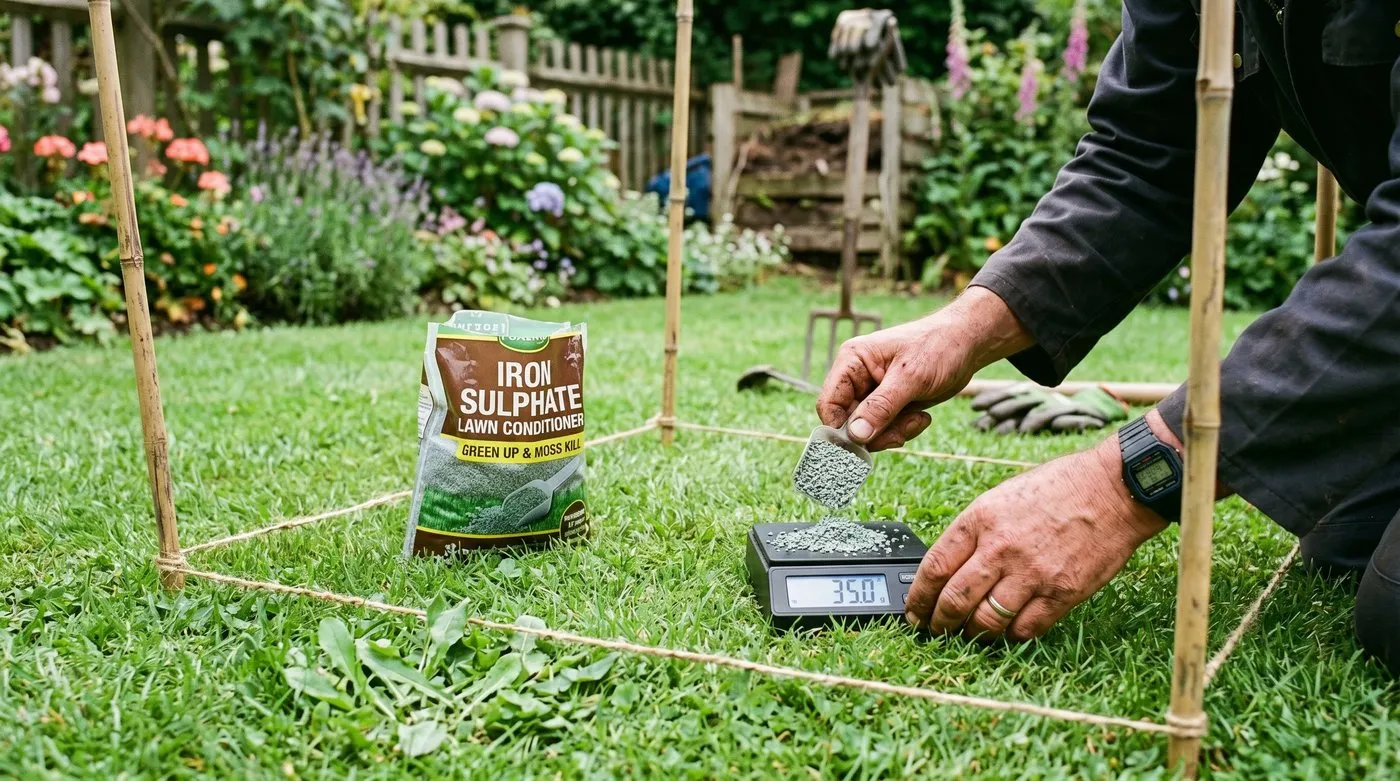 Weighing 35g of granular sulphate of iron for a measured square metre. Eyeballing the dose is the single biggest cause of scorch.
Will the lawn recover, and how to tell dead from scorched
Most over-dosed lawns recover fully. The reason is simple. Iron sulphate burns the grass blades but rarely reaches the crown, the growing point at the base of each plant, or the roots below it. Black blades look alarming but the plant is usually alive underneath. Grass regrows from the crown, so as long as the crown survived, new green blades push up within two to four weeks.
Telling dead from scorched takes two checks. First, the tug test: pinch a tuft of blackened grass and pull gently. Scorched grass holds firm because the roots are alive. Dead grass lifts out cleanly with no resistance, often bringing a pale, rotten crown with it. Second, look at the crown: part the grass at soil level and inspect the base of the plant. A green or pale-cream crown is alive. A brown, mushy, or hollow crown is dead.
Dead versus scorched diagnostic
| Sign | Scorched (will recover) | Dead (needs reseeding) |
|---|---|---|
| Tug test | Holds firm, roots resist | Lifts out cleanly, no resistance |
| Crown colour | Green or pale cream | Brown, mushy, or hollow |
| Blade colour | Black tips, green base | Black or grey throughout |
| New growth | Green shoots within 2-3 weeks | None after 3-4 weeks |
| Soil below | Roots visibly white and firm | Roots brown and disintegrating |
How to fix a lawn after too much iron sulphate
Once the grass has blackened, the recovery routine is methodical. Rushing it wastes seed and effort. Follow these steps in order.
- Stop and do not reapply. The instinct to add more or to add a feed is wrong. The lawn needs dilution, not more chemistry.
- Flush the area heavily. Water with 10 to 15mm of water, repeated over three or four days. This dilutes the iron and carries it down through the soil away from the grass crowns. A sprinkler left running 20 to 30 minutes per session does the job.
- Wait two to three weeks, then mow high. Set the mower to 40 to 50mm and take only the dead tips off. Mowing low now stresses the recovering crowns. Higher cutting lets the surviving grass build energy.
- Rake or scarify out the dead material. Use a spring-tine rake or a scarifier to lift the dead blackened moss and dead grass. This clears the surface so light and seed reach the soil. Dead moss left in place mats down and smothers recovery.
- Overseed the bare patches. Reseed only the genuinely dead areas, not the whole lawn. Spring (April to May) and early autumn (September) give the best germination. Rake the soil to a fine tilth, sow at 25 to 35g per square metre, and keep it moist. Our guide to fixing a patchy lawn covers seed choice and aftercare in detail.
- Feed lightly once recovered. Three to four weeks after the new grass establishes, apply a balanced spring or autumn feed. Hold off on any further iron until the lawn is fully back. Our guide on how to feed a lawn covers timing and rates.
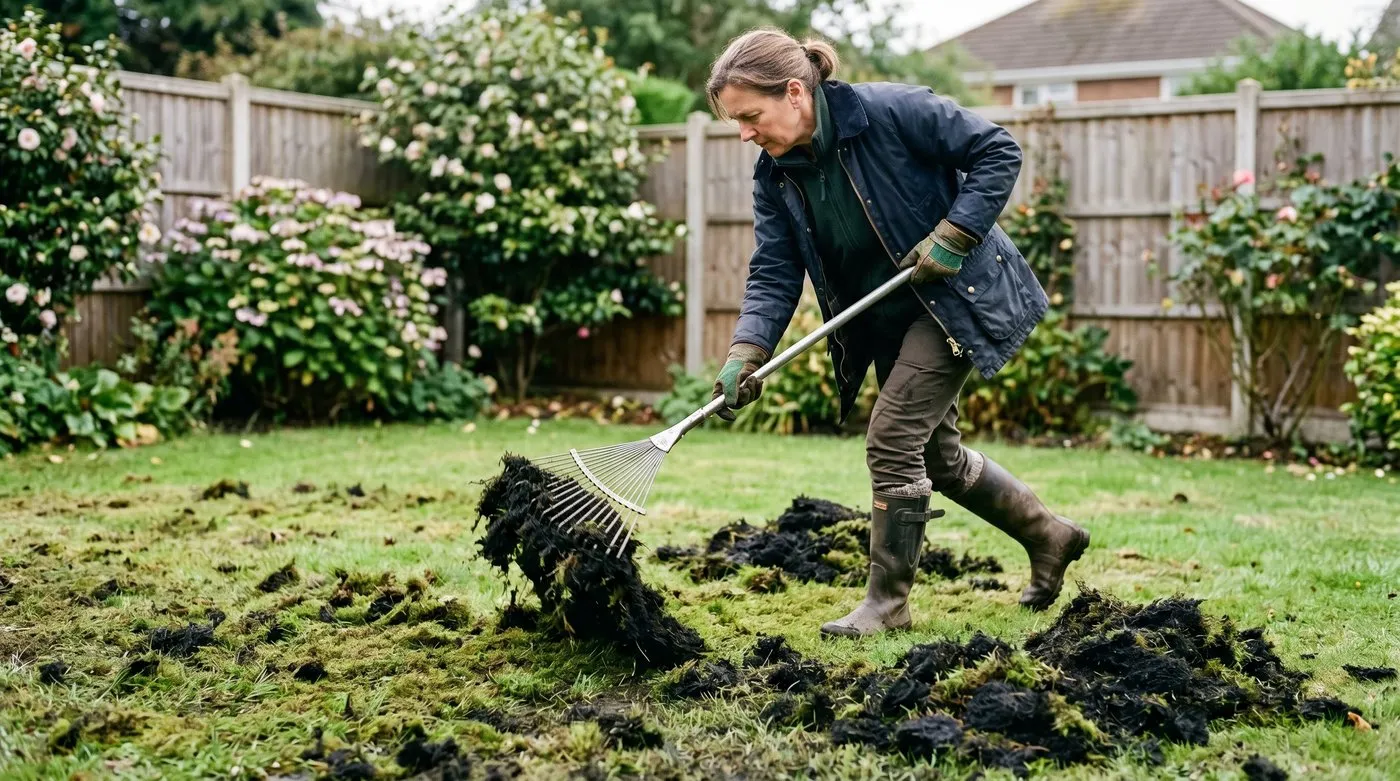 Raking out the dead black moss two weeks after treatment. Clearing the matted debris is what lets the surviving grass and new seed breathe.
Removing iron stains from paving, slabs, and clothes
Iron sulphate leaves rust-brown stains on porous surfaces. The earlier you act, the easier the fix.
For fresh spills, rinse immediately with plenty of water before the iron oxidises and sets. A hose and a stiff brush on textured slabs lifts most of it within minutes of the spill.
For set stains, water alone will not work. Use a proprietary rust or iron stain remover sold for patios and driveways, following the label. The active ingredient in many is oxalic acid, which dissolves iron oxide. You can buy oxalic acid separately and mix a solution, but wear gloves and eye protection, work in a ventilated spot, and rinse thoroughly afterwards. It is corrosive and harmful if swallowed.
Warning: Never wire-brush coloured, smooth, or polished slabs to remove iron stains. The abrasion dulls the finish permanently and leaves a worse mark than the stain. Always test any acid or chemical remover on a hidden corner first, because some stones, especially limestone, react badly to acid.
For clothing, iron stains are usually permanent once set. Rinse fresh marks in cold water at once, then treat with a rust-stain laundry product. Hot water sets the stain, so never tumble dry until the mark has gone.
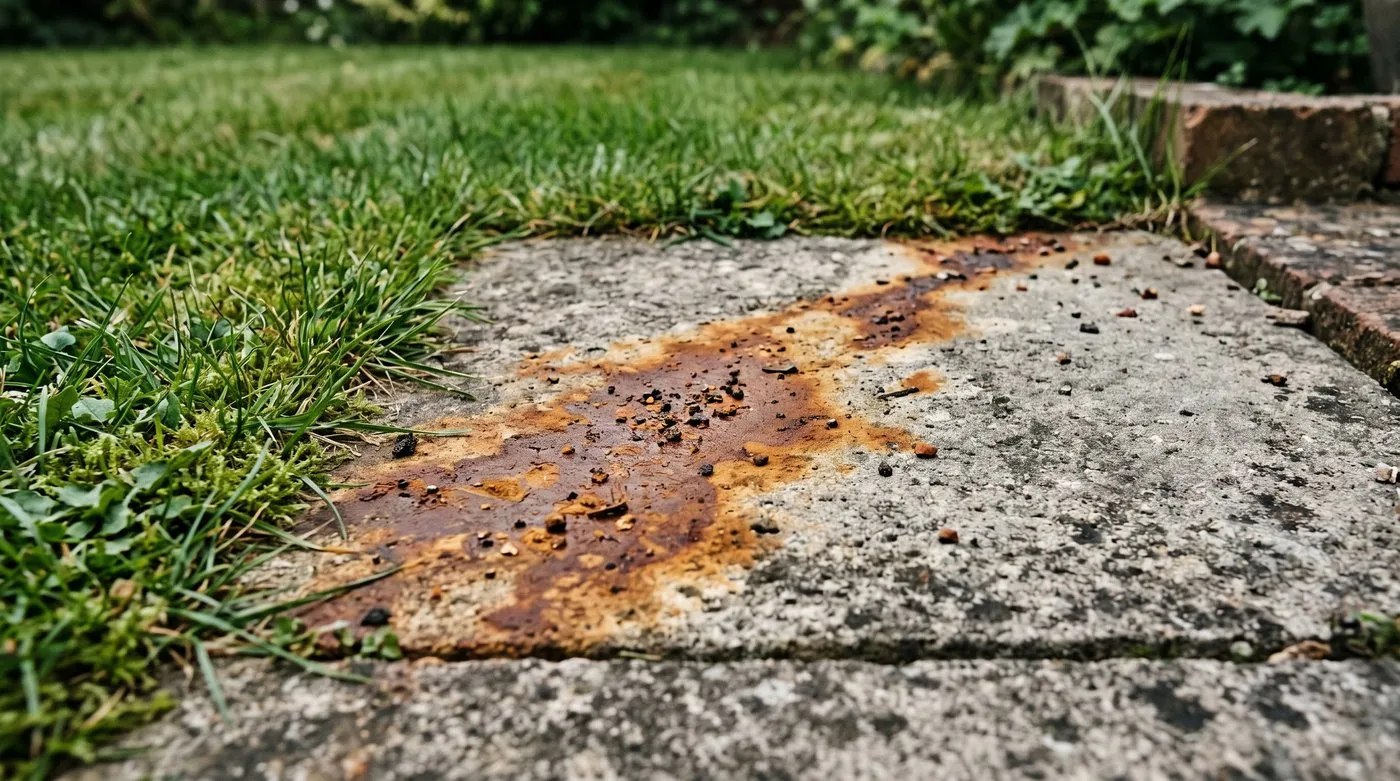 An iron sulphate stain on a concrete slab from granules walked off the lawn. Caught fresh it rinses off; left to set it needs an acid remover.
How application conditions change the outcome
The clear winner is the correct rate applied to dry grass on a dull, cool day and watered in within 48 hours. Every shortcut from that ideal adds scorch and recovery time. The most damaging single mistake is doubling the rate, which turns a moss treatment into a grass killer.
Stopping it happening again
The root cause of iron sulphate scorch is almost always applying more than the lawn can absorb safely, applied in the wrong conditions. Prevention is cheap and simple.
Measure and weigh every dose. Kitchen scales and a marked square metre cost nothing and remove all guesswork. Calibrate the spreader or watering can by running it over a known area with a measured amount, so you know your true output rate. Apply to dry grass on a cool, dull day, never in bright sun or before frost. Water it in within 48 hours unless rain is forecast, which carries the iron to the roots and off the blades. Keep it off paths and paving, sweeping any stray granules back onto the grass before they get walked indoors or stain the slabs. Avoid applying during drought or a heatwave, when stressed grass scorches at lower rates.
Treating moss is part of a wider lawn-care routine. Our moss in lawns guide covers the underlying causes, like compaction and shade, that let moss return after every treatment. Fixing those means you need iron sulphate less often. For the full seasonal picture, see our lawn care calendar, and the RHS lawn care calendar covers month-by-month timings too.
Common iron sulphate mistakes to avoid
Double-dosing for a faster moss kill. The most common error by far. Doubling the rate does not kill moss faster, it just blackens the grass with it. The moss dies at the correct rate within 48 hours regardless.
Overlapping spray or watering-can passes. This creates stripes of double-dosed grass that blacken while the gaps stay green. A calibrated drop spreader or a marked-out grid for the watering can prevents the overlap.
Applying in drought or heat. Grass under heat stress scorches at lower iron concentrations. Wait for a cool, dull spell, ideally with rain forecast in the next day or two.
Walking granules onto paving. Granules on shoe soles get carried onto slabs, doorsteps, and indoors, where they stain. Sweep stray granules back onto the lawn and rinse paving edges after applying.
Not removing the dead moss afterwards. Iron sulphate kills moss but does not remove it. The dead black mat smothers the grass underneath. Scarify or rake it out two to three weeks later, or the lawn stays thin and the moss returns.
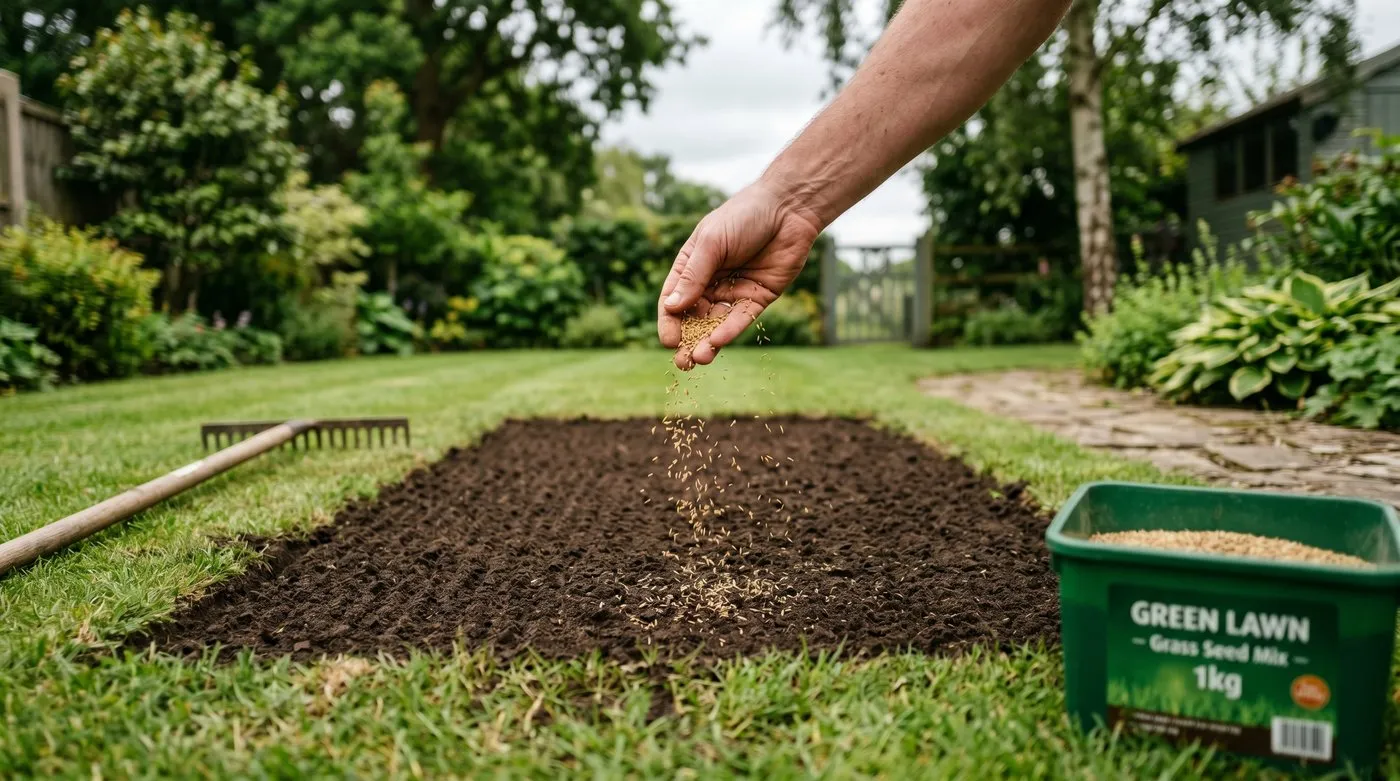 Overseeding a dead patch three weeks after the burn. Only the genuinely dead areas need reseeding, not the whole lawn.
A note on timing iron sulphate with the rest of lawn care
Iron sulphate sits within the wider lawn-care year. The best time to treat moss is autumn or early spring, when the grass is growing slowly and moss is active. Applying it in summer onto stressed, dry grass invites scorch. After the first treatment of the year, the recovery and overseeding work fits naturally alongside scarifying and aerating.
If your lawn needed iron sulphate because it was thin and mossy, the underlying issue is usually compaction, poor drainage, or shade. A scorch recovery is the moment to address those, because the lawn is already disturbed. Aerate compacted clay, top-dress hollows, and improve light where you can. Our guide to scarifying and aerating a lawn and the piece on the first lawn cut after winter both feed into a healthier turf that resists moss in the first place. If the surface is uneven after recovery, our guide to levelling a bumpy lawn covers top-dressing the dips.
Watch for disease too. A weakened, recovering lawn is more open to fungal problems while it rebuilds. Our lawn diseases guide helps you spot red thread and fusarium early. Browse the full lawn and garden problems hub for related troubleshooting guides.
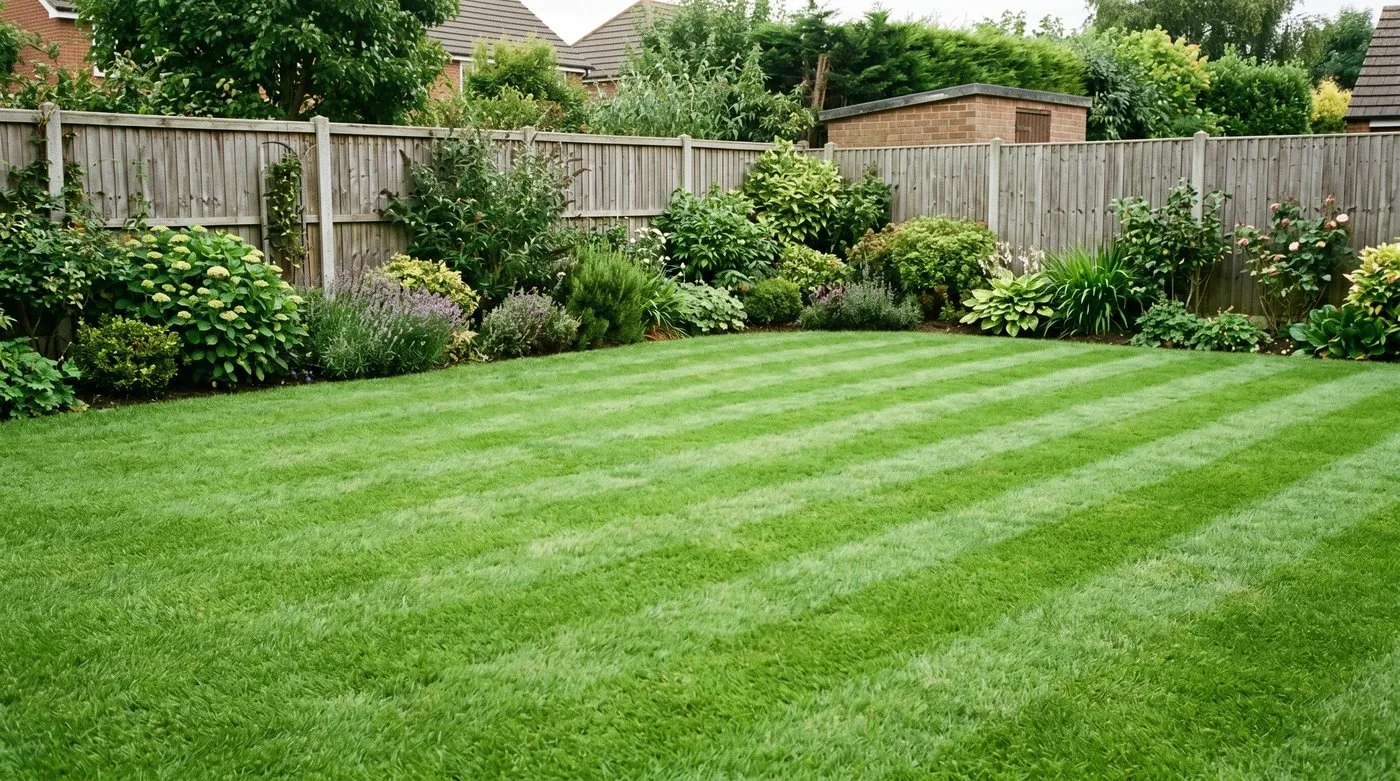 The same trial lawn three weeks on. The correct-rate areas greened fully, proving that scorched grass recovers when the crowns survive.
Frequently asked questions
Will my lawn recover after too much iron sulphate?
Yes, most lawns recover in 2 to 4 weeks. Iron sulphate burns the grass blades but rarely kills the crowns and roots below. Flush the area with water, wait three weeks, then mow high. Only genuinely dead patches, where the crown tugs out cleanly, need reseeding. The rest greens back on its own.
How long does iron sulphate take to blacken grass?
How do I get iron sulphate stains off my patio?
Rinse fresh spills with water immediately before they set. For dried rust-brown stains, use a proprietary iron or rust remover, or oxalic acid following the safety directions. Never wire-brush coloured or smooth slabs, as it dulls the surface. Test any chemical on a hidden corner first.
What is the correct rate for iron sulphate on a lawn?
Granular sulphate of iron is applied at roughly 35g per square metre for moss control. Always check your product label, as concentrations differ. Lawn sand contains iron sulphate plus sand and nitrogen, so its rate is higher by weight. Soluble feeds and spring greener feeds use far less iron, often under 5g per square metre.
Why has iron sulphate left stripes on my lawn?
Stripes come from uneven application, usually overlapping watering-can passes or a miscalibrated spreader. Where passes overlap, the grass gets a double dose and blackens. The gaps between passes stay green. A calibrated drop spreader or a measured, marked-out watering-can grid prevents this. Stripes recover at the same rate as general scorch.
Can I reseed straight after iron sulphate scorch?
No, wait two to three weeks first. Reseeding immediately wastes seed, because residual iron and acidity in the surface can check germination. Flush the area, let the surviving grass recover, then overseed only the bare patches. Rake the dead blackened material out first so seed reaches the soil. Spring or early autumn gives the best results.
Now you have the recovery routine in hand, the next step is to stop the moss returning at the root. Read our guide on getting rid of moss in a lawn to fix the compaction, shade, and drainage that let moss take hold in the first place.
Our team produces practical UK gardening guidance from source research, contributor records and established horticultural practice. Editorial standards are overseen by Matt W.