Key takeaways
- U-shaped notches around leaf edges are the unmistakable sign of adult pea and bean weevil
- On healthy established plants the damage is cosmetic, so no treatment is needed
- Young seedlings in cold spring weather are the real risk; protect those
- Horticultural fleece over seedlings is the single most effective control
- Push fast growth with warmth and good soil so plants outgrow the weevil
- Larvae feed on root nodules underground but rarely cause serious harm in gardens
You sow a neat row of broad beans or peas, the seedlings come up, and within days the leaf edges look like someone has been at them with a tiny hole punch. Smooth, U-shaped bites scallop every margin. This is pea and bean weevil, and it alarms more first-time veg growers than almost any other pest.
Here is the good news up front: most of the time, it does not matter. This guide shows you how to recognise the damage, understand when it is genuinely a threat and when it is purely cosmetic, and protect the only plants that actually need it, all without reaching for a spray.
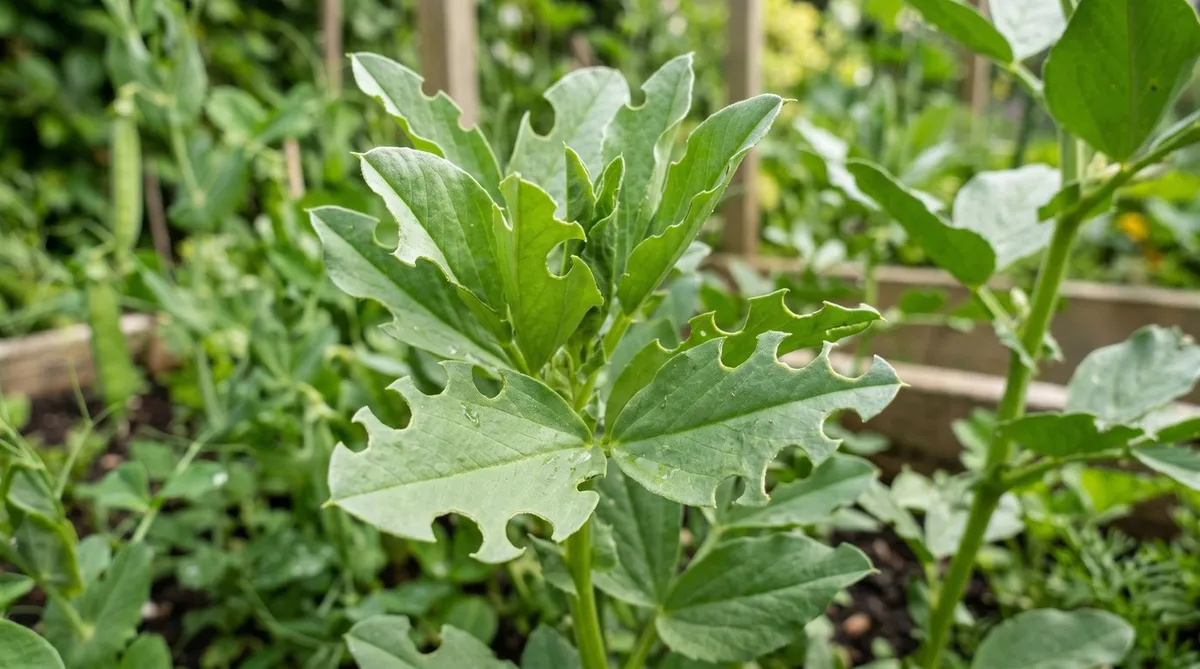
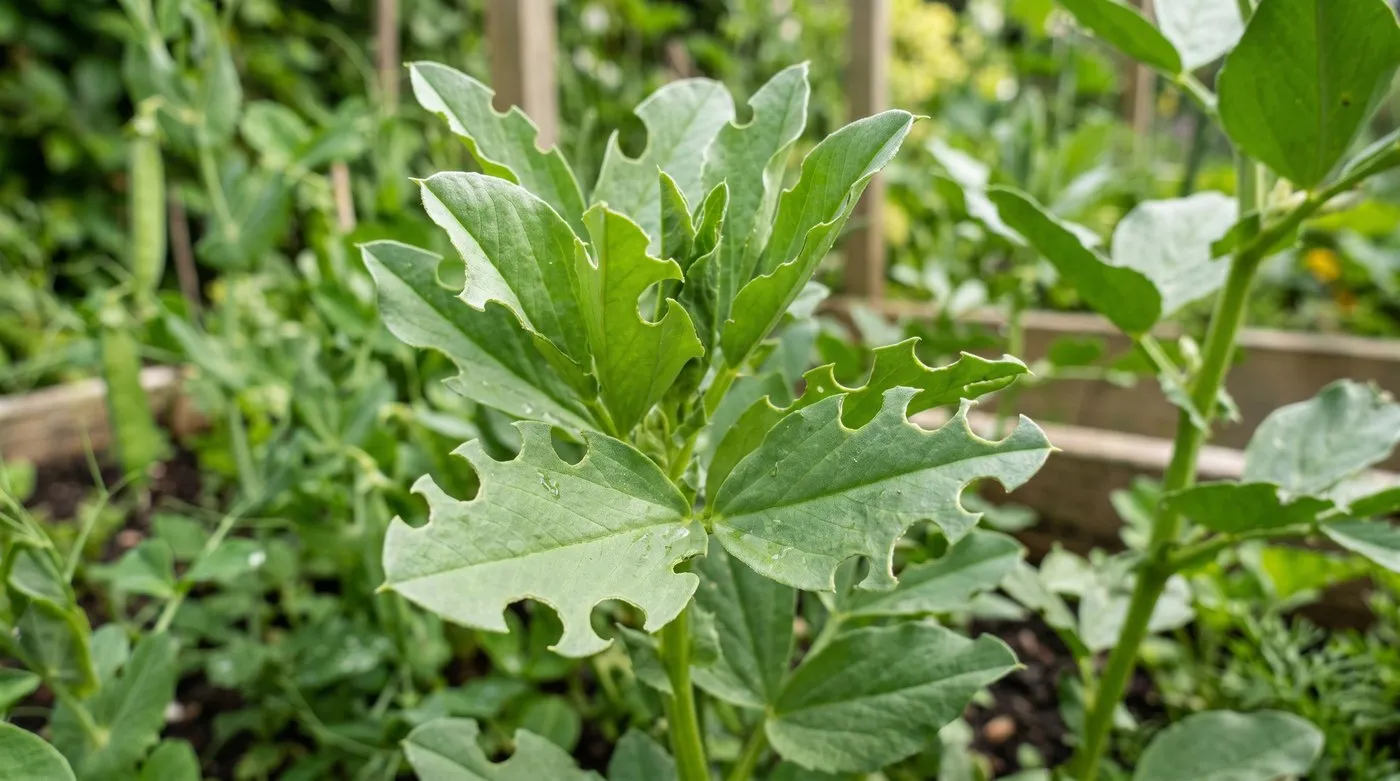 The classic sign: smooth U-shaped notches bitten inward from the leaf margins of broad beans and peas in spring.
How to identify pea and bean weevil damage
The damage is far more recognisable than the weevil itself, and it is unmistakable once you know it.
The U-shaped leaf notches
Adult pea and bean weevil (Sitona lineatus) feeds on the edges of the leaves, chewing neat, semicircular, U-shaped notches inward from the margin. A heavily fed leaf looks scalloped all the way round, like the edge of a doily. It only ever affects the leaf margin, never the centre, which separates it from slug or caterpillar damage that makes holes in the middle of the leaf.
It targets peas, broad beans, and other legumes above all. French and runner beans get hit as seedlings too. The damage appears in spring, just as the seedlings are establishing.
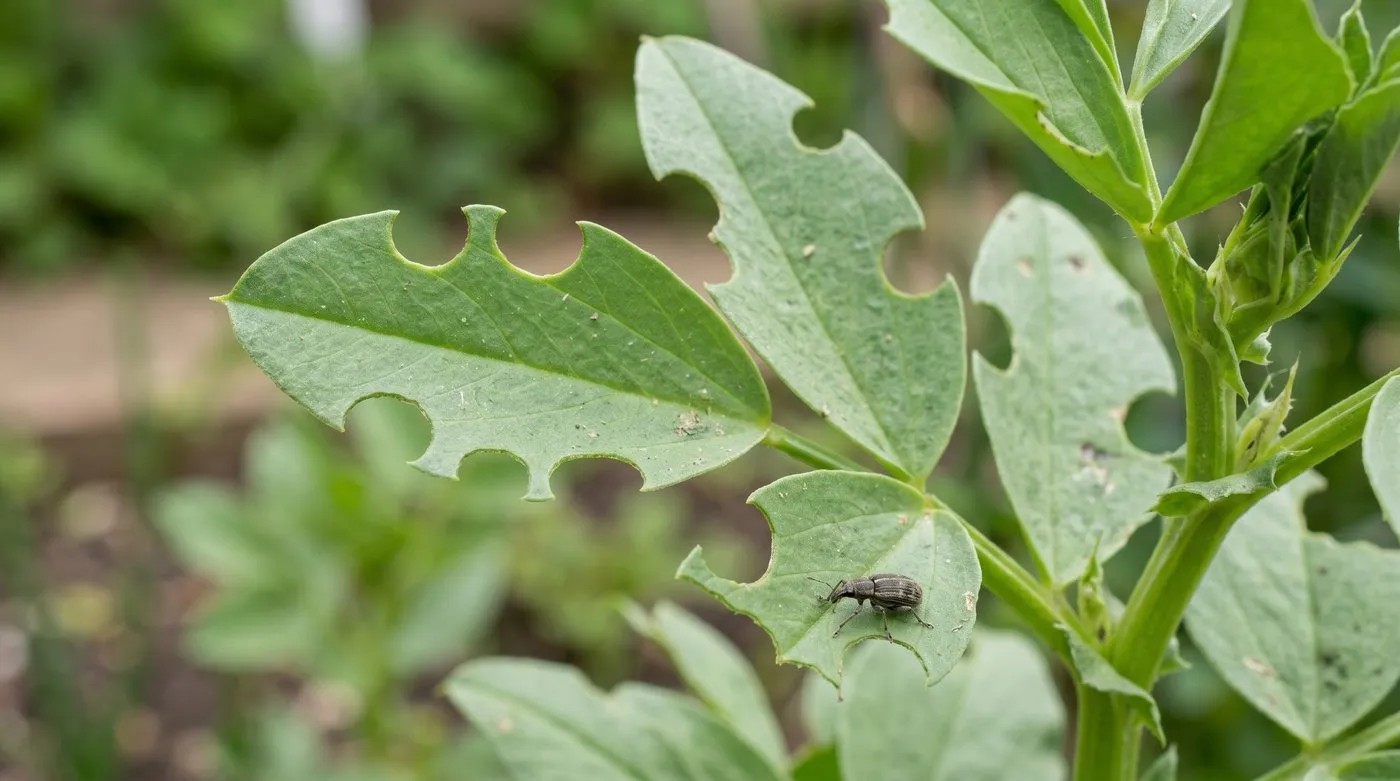 The unmistakable sign: smooth, U-shaped notches chewed inward from the leaf margin. The feeding only ever affects the edges, never the centre of the leaf.
The weevil itself
You will rarely catch the culprit in the act. The adult is a small, greyish-brown weevil about 4-5mm long, with faint pale stripes running down its back and the short downturned snout typical of weevils. It feeds mainly at night and, when disturbed, drops straight to the ground and plays dead, so it is easily missed. The notched leaves are your real diagnostic, not a sighting of the insect.
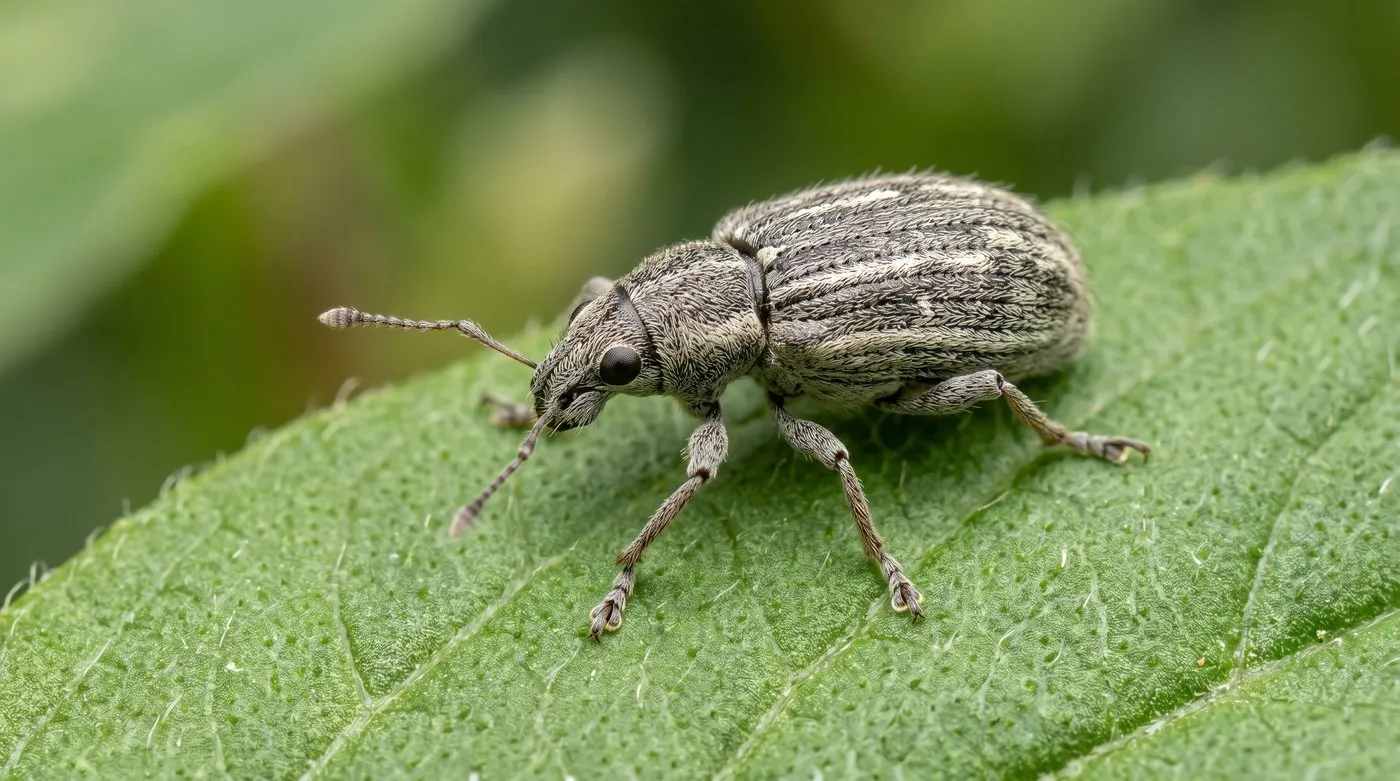 The adult weevil is only 4-5mm, greyish-brown with faint stripes, and drops to the soil playing dead when disturbed. The notched leaves give it away long before you see it.
Why the damage usually does not matter
The plant simply grows past it. New leaves emerge faster than the weevils can notch them, the plant powers on, and by flowering time the early damage is irrelevant to the yield. If your plants are up, green, and growing, the weevil is a curiosity, not a crisis.
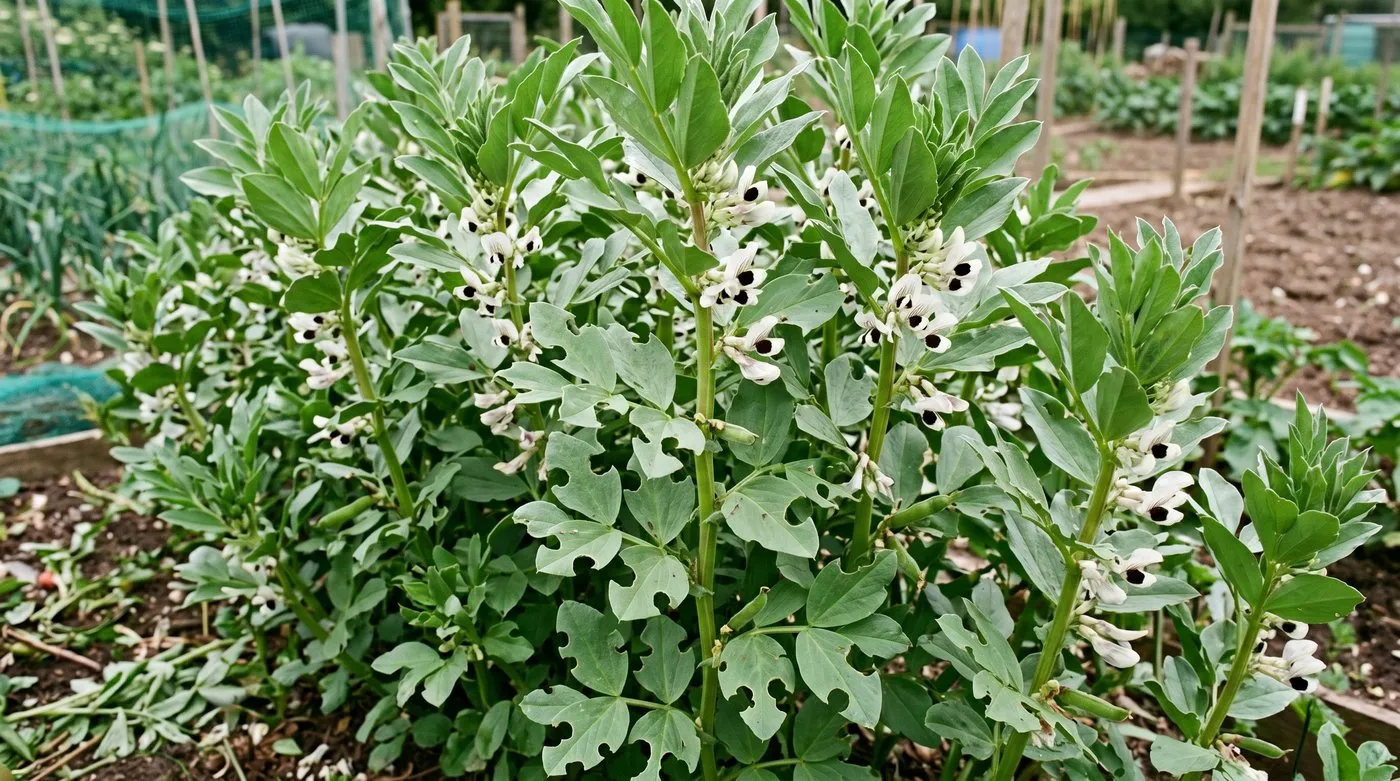 Proof it rarely matters: these broad beans flowered and cropped heavily with every lower leaf scalloped. A strong plant outgrows the feeding.
The underground story is similar. The larvae hatch and feed on the nitrogen-fixing root nodules of the legumes, which sounds serious but, in garden conditions, rarely sets a healthy plant back in any measurable way. For the diseases that genuinely do threaten a bean crop, see our guide to common bean diseases.
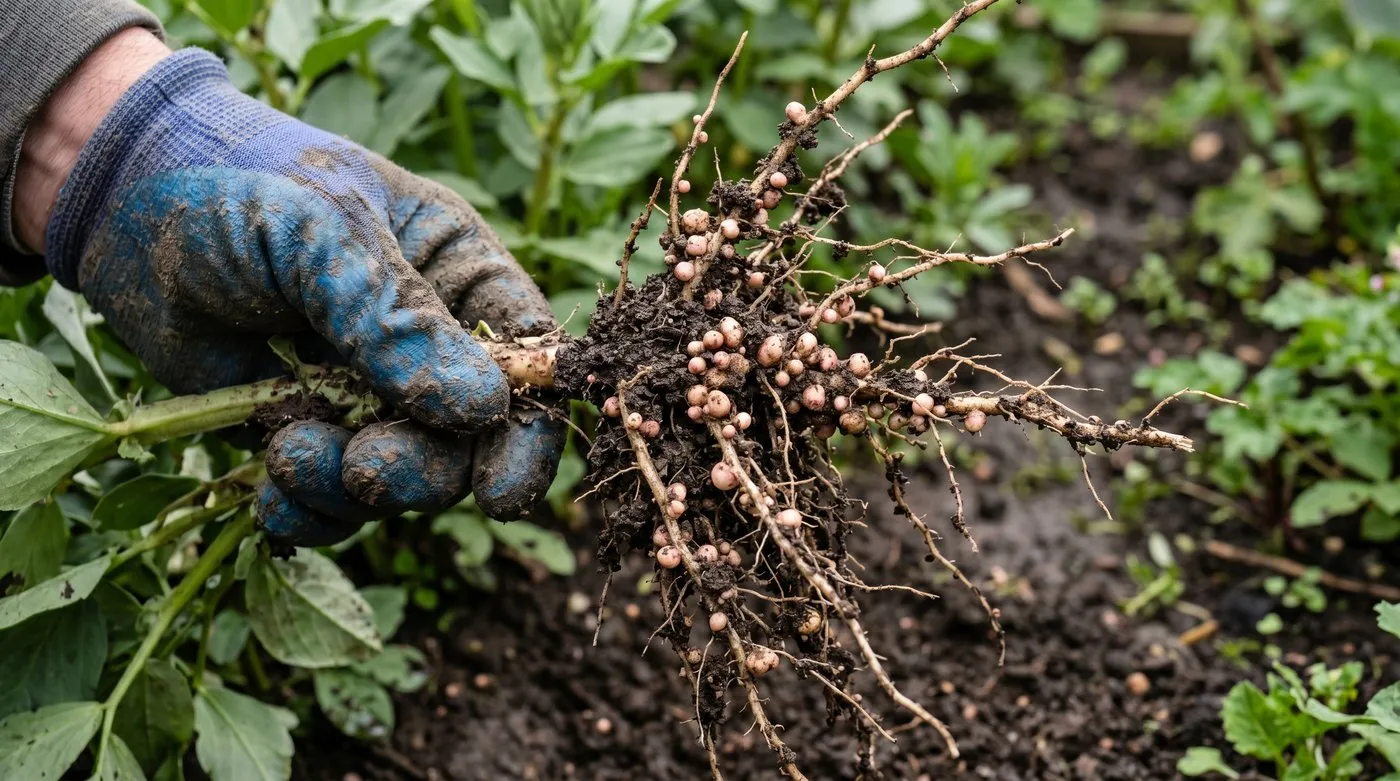 The larvae feed on the pinkish root nodules that fix nitrogen. It looks alarming on a dug-up root, but established plants shrug it off.
When pea and bean weevil is a real threat
There is one situation where the weevil genuinely matters: small seedlings in cold weather.
A pea or broad bean seedling that is only an inch or two tall, sitting in cold spring soil and growing slowly, has very little leaf to spare. Heavy weevil feeding on such a plant can strip enough leaf area to check its growth badly, and in a severe attack on a tiny seedling, kill it outright. The plant cannot outgrow the damage because the cold is stopping it growing at all.
So the entire problem comes down to a race: can the seedling grow faster than the weevil can eat it? In warm conditions with a strong plant, the seedling wins easily. In cold conditions with a weak plant, the weevil can win. Everything about controlling this pest is really about tipping that race in the plant’s favour.
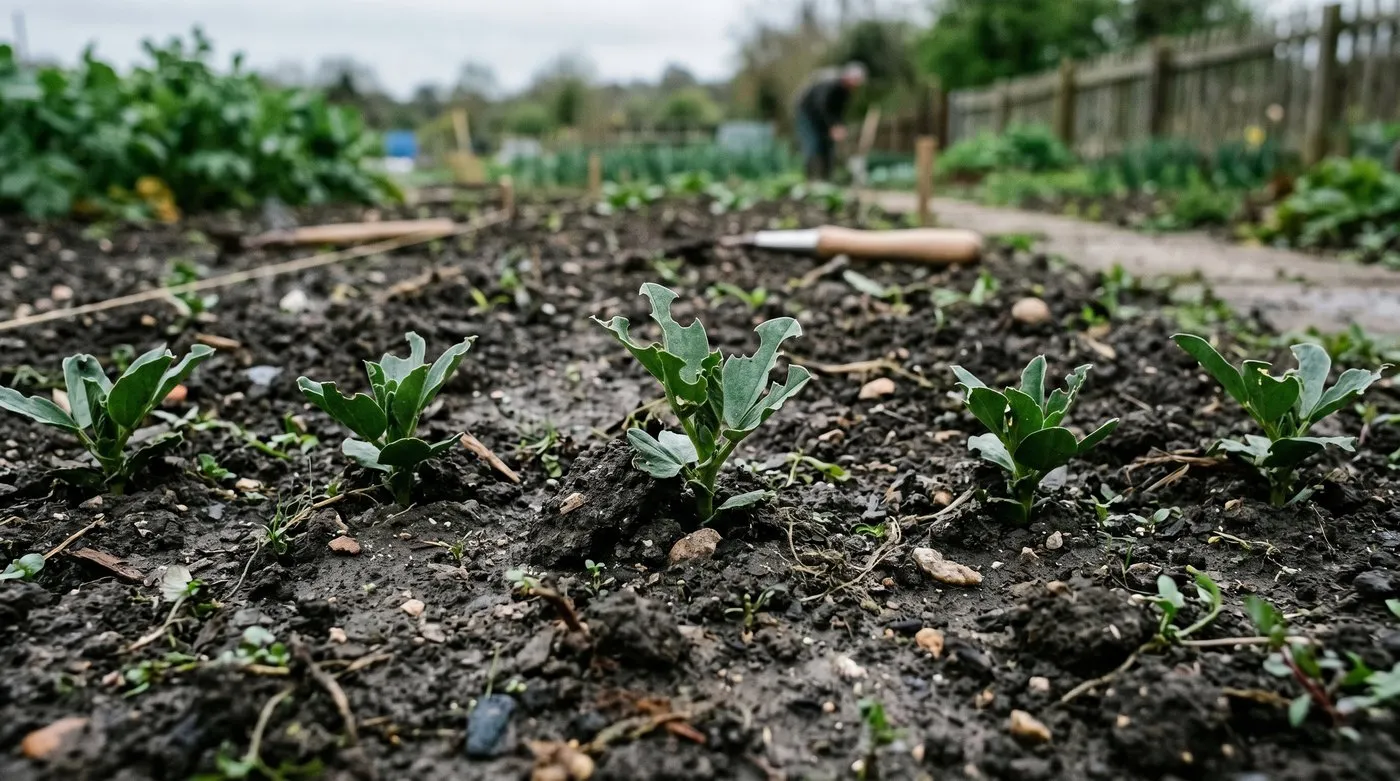 The one real risk: small seedlings in cold soil, growing too slowly to outpace the feeding. A seedling this size in warm conditions would shrug the weevil off.
How to protect your seedlings
Since the threat is limited to vulnerable seedlings, the control is simple and entirely non-chemical. Win the race and you have won.
Fleece is the single best tool
Push fast, strong growth
Everything that helps a seedling grow quickly helps it beat the weevil:
- Warm the soil before sowing, or start plants in modules under cover and plant out strong.
- Sow into good ground with plenty of organic matter so growth never stalls.
- Do not sow too early into cold soil; a slightly later sowing into warm soil often overtakes an early one that sat checked.
Encourage natural predators
Ground beetles and other natural predators eat the weevil and its larvae. A garden with beetle-friendly habitat, log piles, undisturbed edges, ground-cover, keeps the population in check for free. Our organic pest control guide covers building those predator populations, and biological controls like nematodes can target the soil-dwelling larvae where pressure is high.
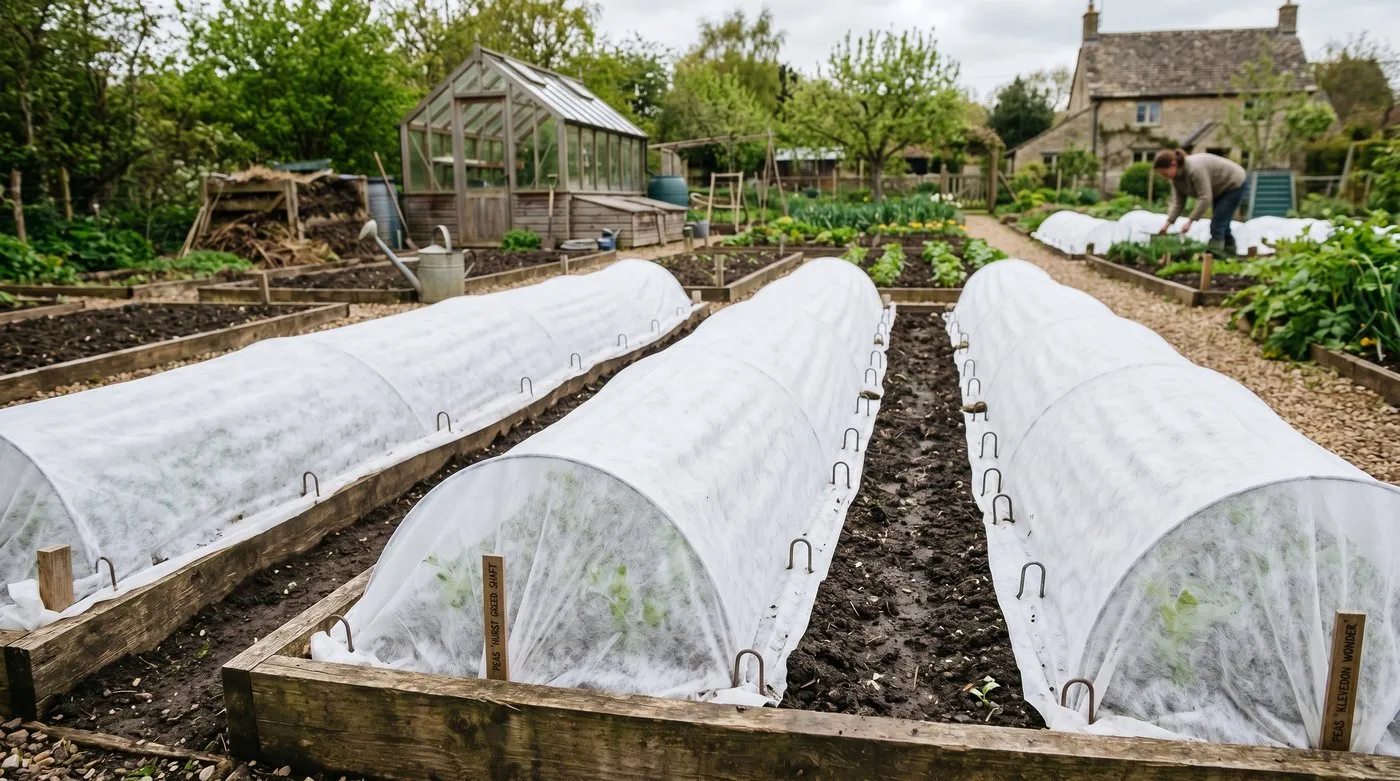 Horticultural fleece does two jobs: a barrier the weevils cannot cross, and trapped warmth that speeds the seedlings through their vulnerable phase. This is the whole control in one step.
Pea and bean weevil controls ranked
Not every response to this pest is worth your time. Ranked by how reliably each one protects a crop, here is what works and what does not.
| Control | What it does | Effectiveness | Role |
|---|---|---|---|
| Horticultural fleece on seedlings | Physical barrier plus trapped warmth that speeds growth | High, around 90% in cold springs | Primary |
| Warm soil and module-raised transplants | Plants establish fast and outgrow the feeding | High | Primary cultural |
| Rich, well-fed soil | Keeps growth racing so damage never bites | Moderate to high | Foundation |
| Ground beetles and natural predators | Eat adults and larvae through the season | Moderate, slow to build | Supplementary |
| Nematodes watered into the soil | Target the root-nodule larvae under high pressure | Moderate, situational | Supplementary |
| Doing nothing on established plants | The correct response; the damage is cosmetic | No action needed | Monitoring |
| Spraying insecticide | No effective approved home product, and reinvasion follows | Negligible | Not recommended |
The pattern is clear. Fleece plus fast growth is the gold standard, because it removes the seedling’s vulnerability instead of chasing a mobile, endlessly replaced adult. Everything below fleece is either slow background help or, in the case of spraying, wasted effort.
The root cause most people miss
Most gardeners react to the leaf notches and assume they must kill the weevil. But the notches are a symptom, not the problem. The real issue is only ever a seedling growing too slowly to outpace the feeding, and that is a growing-conditions problem, not a pest problem.
This is why spraying makes little sense even where it were possible. Kill the visible adults and more arrive from surrounding gardens and field margins; the weevil is widespread and mobile. But warm a seedling and feed the soil so it grows fast, and the weevil becomes irrelevant whether you kill it or not. Treat the growth rate, not the insect.
There is no effective insecticide approved for home growers against this pest now, and that turns out not to matter. The cultural approach, fleece plus fast growth, is more reliable than spraying ever was, because it removes the vulnerability rather than chasing the pest.
Warning: Do not confuse pea and bean weevil notching with damage from slugs or caterpillars, which make holes in the middle of leaves, or with black bean aphid, which clusters on stems and shoot tips. Treating the wrong pest wastes effort. The U-shaped marginal notch is specific to the weevil.
Common mistakes with pea and bean weevil
These are the errors that turn a non-problem into wasted effort or a lost crop.
Panicking over cosmetic damage
The most common mistake. Notched leaves on an established, growing plant need no action at all. Save your effort for seedlings.
Leaving seedlings unprotected in cold springs
The one mistake that actually costs crops. Fleece spring seedlings until they are growing strongly; an unprotected seedling in cold soil is the only plant truly at risk.
Sowing too early into cold soil
Early sowings sit cold, slow, and vulnerable for weeks. Sow into warm soil, or start under cover and plant out strong, so the race is never close.
Chasing the adult weevil
Hand-picking or trying to kill the highly mobile adults is a losing game. Protect and grow the plant instead; new weevils always arrive.
Ignoring soil and feeding
A hungry seedling in poor soil grows slowly and stays vulnerable. Improve the soil so growth is fast from the start. The same vigour that beats the weevil also resists the aphids that follow.
Frequently asked questions
What is eating the edges of my broad bean leaves?
Pea and bean weevil. The adult weevil chews distinctive U-shaped notches around the margins of pea and broad bean leaves in spring. It is the most common cause of scalloped leaf edges on these crops. The damage looks alarming but is usually cosmetic on healthy, established plants and needs no treatment.
Does pea and bean weevil damage need treating?
Rarely. On strong, established plants the leaf-edge notching is cosmetic and the crop is unaffected. Treatment only matters for young seedlings in cold spring weather, when heavy feeding can check or kill them. For those, protect with fleece and encourage fast growth rather than spraying, as no effective home insecticide is now available.
How do I protect pea and bean seedlings from weevil?
Cover seedlings with horticultural fleece from sowing or planting out until they have several true leaves and are growing strongly, usually about three weeks. The fleece is a physical barrier the weevils cannot cross, and it warms the soil so plants grow faster. Remove it once plants are large enough to outgrow the damage.
What does pea and bean weevil look like?
The adult is a small greyish-brown weevil about 4-5mm long, with faint pale stripes down its back and a short snout. It is hard to spot because it drops to the soil and plays dead when disturbed. You usually see the U-shaped leaf notches long before you see the weevil itself, which feeds mostly at night.
Do the larvae harm pea and bean plants?
The larvae feed underground on the nitrogen-fixing root nodules of legumes, which sounds serious but rarely causes meaningful harm in gardens. Established plants tolerate it easily. The above-ground adult notching and the root-nodule feeding together only matter when plants are already small, cold, and struggling to grow.
When is pea and bean weevil active in the UK?
Adults become active in spring as temperatures rise, typically March to May, which is exactly when pea and bean seedlings are most vulnerable. A second generation can appear in late summer. The spring overlap between active weevils and tender seedlings is why protection in those few weeks is the whole job.
Get your beans through those vulnerable first weeks and the rest of the season is easy. For growing the crops themselves, see our guides to growing broad beans and growing dwarf French beans. For the wider picture on identifying garden pests, the Royal Horticultural Society’s advice on pea and bean weevil is a useful reference.
Our team produces practical UK gardening guidance from source research, contributor records and established horticultural practice. Editorial standards are overseen by Matt W.