Key takeaways
- Worm casts are muddy soil heaps left by earthworms, and they signal healthy, well-aerated soil
- They peak in cool, damp weather in autumn and early spring, when worms feed near the surface
- There is no legal worm-killing chemical in the UK, and killing worms would harm the soil
- Let casts dry, then brush them flat with a stiff broom on a dry day; brushed in, they feed the lawn
- Never mow over wet casts; it smears them into mud where weed seeds take hold
- Collecting autumn leaves and clippings removes worm food and reduces surface casting over time
A scatter of muddy squiggles across the lawn on an autumn morning looks like a problem. It is the opposite. Worm casts are the calling card of a healthy, living soil, and the fix costs nothing but a stiff broom and a dry day.
Worm casts are the small heaps of soil that earthworms leave on the surface as they feed. They appear most in autumn and spring, when cool, damp weather brings worms up near the surface. They are untidy, they smear if you mow over them wet, and the bare smears they leave are perfect seedbeds for lawn weeds. There is no chemical answer, and you would not want one. This guide explains why casts appear and how to manage them without harming the worms that make your soil work.
What are worm casts and why do they appear?
Worm casts are ejected soil. As an earthworm tunnels and feeds on dead plant matter, it swallows soil, digests the organic content and passes the rest out as a muddy cast. Mainly two groups make surface casts in UK lawns: Aporrectodea species and the deeper-burrowing Lumbricus terrestris.
Casting peaks in cool, moist conditions. Worms are most active when soil temperatures sit between about 5 and 15°C and the surface is damp, which is exactly the weather of a British autumn and early spring. In high summer drought and hard winter frost, worms go deep and casting stops.
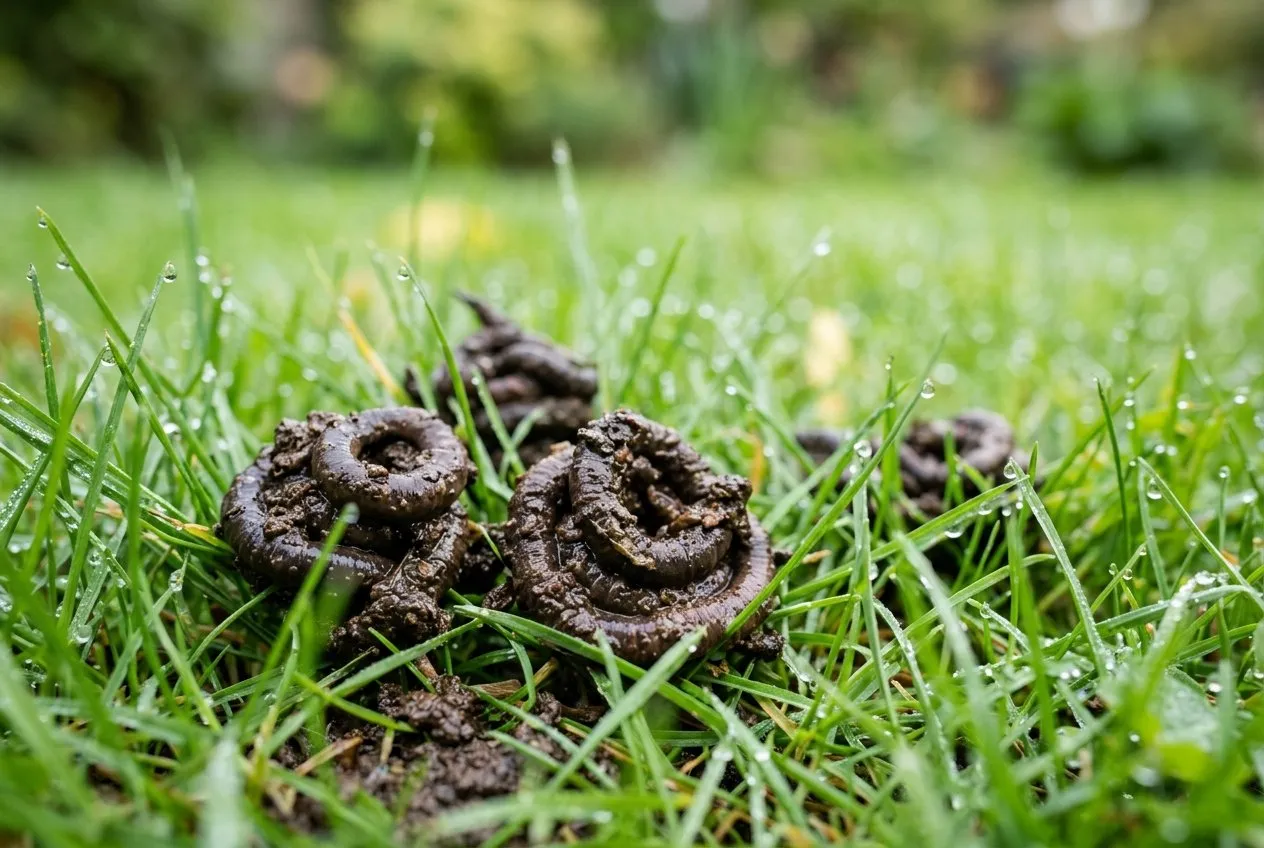 Worm casts are digested soil pushed up to the surface. They peak in the cool, damp weather of autumn and early spring.
Are worm casts actually a problem?
For most lawns, casts are a minor, seasonal nuisance worth tolerating. The trouble starts only when you mow or walk over them while wet.
- Smearing. A wet cast crushed under a mower roller or a boot smears into a flat patch of mud. The grass beneath is smothered.
- Weed seedbeds. Those bare mud smears are ideal germination sites for common lawn weeds and moss, which then colonise the gap.
- Mower mess. Wet casts clog the underside of a mower and dull the blade.
On a fine ornamental lawn the casts look out of place. On a family lawn they barely matter. Either way, the answer is management, not eradication. Compare them with the holes and damage of real pests in our guide to small holes in the lawn; worm casts are far more benign.
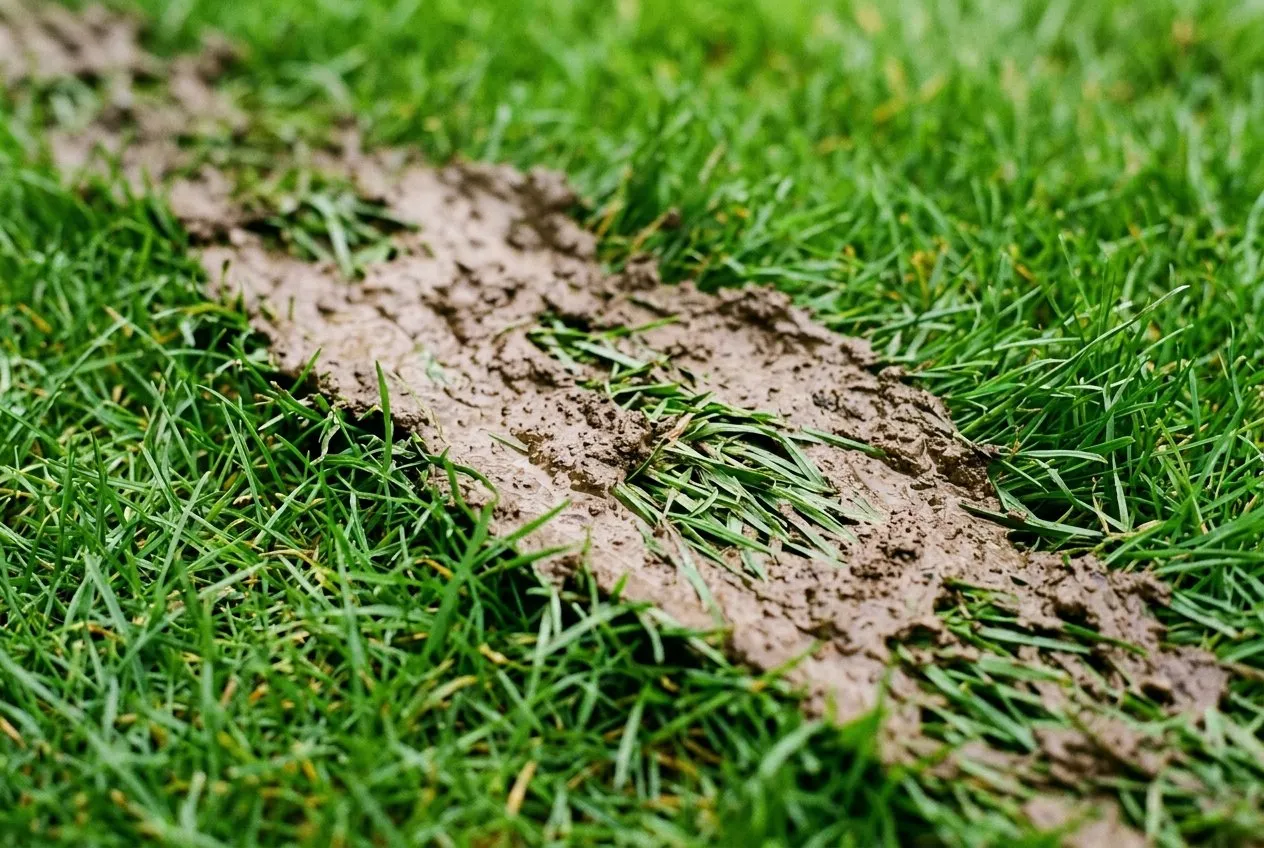 The real damage is self-inflicted: a wet cast crushed by the mower smears into mud and smothers the grass, leaving a weed seedbed.
How to remove worm casts the right way
The gold standard is simple: let casts dry, brush them flat, and only ever mow a dry lawn.
- Wait for a dry day. A cast that has dried to a crumbly heap brushes away to nothing. A wet one only smears. In autumn and spring you may wait several days for the right morning.
- Brush or switch them flat. Drag a stiff besom broom, a springbok rake turned over, or a length of old doormat across the lawn. This scatters the dried soil back into the sward.
- Then mow. With the casts dispersed, mow as normal. Never mow first; see our guide on whether you can mow a wet lawn for why damp mowing makes everything worse.
- Brush before heavy use of an ornamental lawn, so foot traffic does not press damp casts into the turf.
Brushed into the grass, the cast soil is a free, nutrient-rich top dressing. You are not throwing it away; you are feeding the lawn with it.
 The gold-standard fix: switch dried casts flat with a besom on a dry day, then mow. The dispersed soil feeds the lawn.
Worm cast methods compared
Not every method is worth the effort. This is how they rank.
| Method | What it does | Effectiveness | Role |
|---|---|---|---|
| Brush or switch when dry | Disperses dried casts into the sward | High, immediate | Primary fix |
| Mow only when the lawn is dry | Stops casts smearing into mud | High, prevention | Primary fix |
| Collect leaves and clippings | Removes worm food, reduces casting | Moderate, slow | Maintenance |
| Improve drainage and aerate | Reduces the damp surface worms favour | Moderate, addresses cause | Supplementary |
| Lightly acidify with lawn sand | Makes the surface less attractive to casting worms | Low to moderate, slow | Supplementary |
| Chemical worm killers | Nothing: banned and harmful | None, illegal | Avoid entirely |
Brushing and dry mowing do 90% of the work. The rest reduce how many casts appear over a season, but none should ever mean trying to kill the worms.
Why chemicals are not the answer
There is no longer any approved chemical to kill earthworms in UK lawns. The old products were withdrawn, and rightly so.
Killing the worms would be self-defeating. Earthworms are the engine of soil health. They aerate the ground, which is why a wormy lawn drains better and resists compaction. They pull organic matter down and turn it into plant food. Lose them and the soil grows dense, airless and lifeless, and you create far bigger problems than a few casts. The RHS advice on worm casts in lawns is blunt on this point: tolerate the casts and keep the worms.
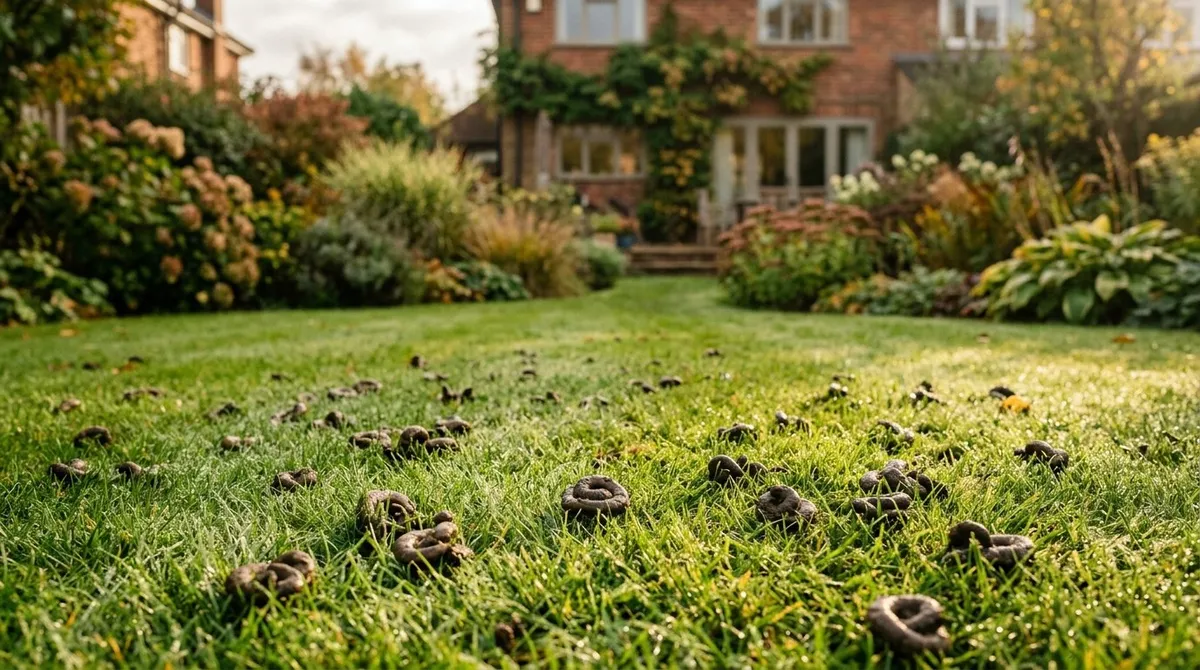
 The worm behind the cast. Earthworms aerate, drain and feed the soil, which is why a lawn that casts is a lawn worth having.
Reducing casts at the source
If your lawn casts heavily every year, you can ease it by making the surface less inviting to casting worms. None of this harms them; it just nudges them deeper.
- Clear fallen leaves promptly. Leaves are worm food. A lawn left under leaf litter feeds a bigger surface-casting population.
- Collect clippings in cast season. Leaving clippings adds surface organic matter; our guide on whether to leave grass clippings on the lawn explains the trade-off.
- Improve drainage. Worms surface most in wet ground. Scarifying and aerating opens a waterlogged lawn and reduces the damp surface they cast in.
- Keep the surface slightly acid. Casting worms prefer near-neutral to alkaline soil. An autumn dressing of lawn sand gently lowers surface pH and discourages them.
 Clearing autumn leaves promptly removes worm food and noticeably reduces surface casting within a couple of weeks.
A seasonal worm cast calendar
| Month | What is happening and what to do |
|---|---|
| Sept to Oct | Casting begins as soil cools and dampens; start clearing leaves |
| Nov to Dec | Peak casting; brush on dry days, mow only when dry, raise mower height |
| Jan to Feb | Casting slows in hard frost; leave the lawn alone when frozen |
| Mar to Apr | Second casting peak; resume dry brushing and leaf clearance |
| May to Aug | Casting stops in warm, dry soil; aerate and improve drainage now |
Common worm cast mistakes
Three seasons of trial halves keep showing the same errors.
- Mowing over wet casts. This is the single worst thing you can do. It smears mud across the lawn and smothers grass.
- Trying to kill the worms. There is no legal product, and you would wreck the soil. Manage the casts instead.
- Brushing when wet. A damp cast only spreads into a stain. Wait for it to dry and crumble.
- Ignoring leaf litter. Leaving leaves down all autumn feeds the casting population and makes next year worse.
Get the timing right and worm casts become a five-minute job with a broom, not a battle.
 The result: a clean, even lawn and a living soil beneath it. Worm casts, managed well, leave the lawn better fed than before.
Now you can handle the casts, set the rest of your lawn jobs in order with our lawn care calendar, and read up on when to mow your lawn so you never roll over a wet cast again.
Our team produces practical UK gardening guidance from source research, contributor records and established horticultural practice. Editorial standards are overseen by Matt W.