Key takeaways
- Match the method to the depth: top-dress under 2-3cm, peel turf for 3-8cm, re-level the base beyond 8cm
- Apply top-dressing at 1-1.5cm per pass maximum or you smother and kill the grass
- Best windows are April-May and September when grass knits back within 2-3 weeks
- A sandy loam mix of roughly 3 parts sand to 2 loam to 1 compost flows into hollows and drains well
- Rolling does not level a lawn, it compacts the soil and makes drainage worse
- A washboard area can take 2-3 seasons of top-dressing to flatten fully, not one
A bumpy lawn is rarely one problem. It is a mix of old settling, worm casts, foot-worn dips, and the odd mole, each needing a different fix. The mistake most people make is reaching for a roller, which compacts the ground without lifting a single hollow. The real answer is matching the method to the depth of the unevenness. This guide sets out exactly that: top-dressing for shallow dips, turf surgery for medium hollows, and a full re-level for the worst lawns. It also covers the UK timing, the right mix, and the owned data behind how slowly it has to be done.
The principle is straightforward. Grass grows up through thin soil, so you raise a hollow by adding soil in layers the grass can push through. Add too much at once and you bury and kill it. Patience, not power, levels a lawn.
Why your lawn is bumpy in the first place
A lawn turns lumpy for reasons that fall into two groups: settling and disturbance. Settling is the slow sinking of ground that was never firmed properly when the lawn was laid. Backfilled trenches, old planting holes, and soft topsoil all sink over years, leaving long shallow dips. This is the single most common cause of a washboard surface on UK lawns laid since the 1990s building boom.
Disturbance covers the rest. Worm casts build small muddy bumps that smear when mown. Moles push up ridges and soft mounds overnight. Drought cracking on clay opens fissures that slump unevenly when rain returns. Frost heave lifts saturated clay in winter and drops it unevenly in spring. Add tree roots near the surface, heavy foot traffic wearing in desire-line dips, dog digging, and the slumped scar left where an old path or shed was removed, and most lawns carry three or four of these at once.
Gardener’s tip: Before you level anything, walk the lawn after heavy rain and mark where water pools. Those dips are your priority. Fixing them first improves drainage as well as the look, and stops the moss that always follows standing water.
How top-dressing levels a lawn and why it works slowly
Top-dressing is the gold standard for minor unevenness, and it works on a simple biological limit. You spread a thin layer of free-draining soil over the lawn, work it into the hollows, and the grass grows up through it. The high spots get a dusting; the dips take the bulk. Over repeated applications the surface evens out from the bottom up, without ever killing the sward.
The hard limit is how much grass can grow through at once. Bury a grass plant under more than about 15mm of soil and you cut off the light to the crown and lower leaves. The plant yellows, then dies in patches. This is the critical mistake almost everyone makes: trying to fill a 40mm dip in one go and ending up with a bare, dead scar that is worse than the bump.
The process runs in stages:
- Apply 10-15mm maximum of dry, crumbly top-dressing over the area, heaviest in the dips.
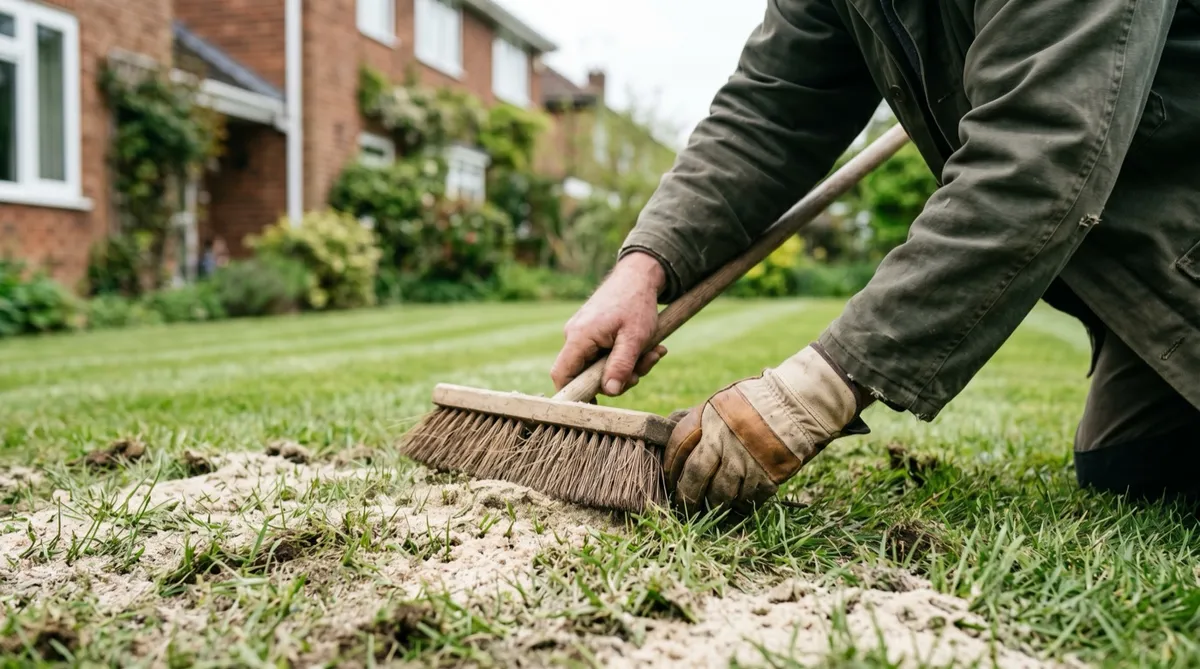
- Brush it in with a stiff broom or the back of a rake until grass tips show through everywhere.
- Water lightly if no rain is due, settling the mix around the crowns.
- Wait 2-3 weeks in the growing season for the grass to knit through.
- Repeat until the dip sits flush, often two to three passes for a 30mm hollow.
 Brush the dressing in until the grass tips poke through everywhere. If you can still see a solid sheet of soil, you have applied too much.
What top-dressing mix to use and how to make it
The wrong mix undoes the whole job. Pure topsoil sets into a hard cap that smothers grass and sheds water. Pure sand drains so fast it dries the crowns out and grows nothing. The answer is a balanced sandy loam top-dressing.
A reliable home mix is roughly 3 parts sharp sand, 2 parts sieved loam or topsoil, and 1 part fine compost. The sharp sand, not soft builder’s sand, keeps it open and free-flowing. The loam holds the structure and the compost feeds the grass. Sieve everything through a 6mm mesh so no stones or clumps sit proud of the surface.
If mixing your own is too much work, buy ready-mixed lawn top-dressing. UK suppliers such as Rolawn sell it in 25kg bags and bulk bags, screened and ready to spread. Budget around £8-£12 per 25kg bag, which covers roughly 10 square metres at a 10mm layer. A bulk bag works out far cheaper per square metre for a whole lawn. For the science of which sand and lime balance suits a tired sward, our guide on what lawn sand is and when to use it explains the difference between top-dressing and a feed.
Warning: Never use the cheap “lawn soil” sold as pure screened topsoil for levelling. It caps within a week of rain, seals the surface, and the grass beneath rots. The extra cost of a proper sandy top-dressing mix is the cheapest insurance on the job.
Levelling methods compared by hollow depth
No single method fixes every lawn. The right choice depends entirely on how deep the unevenness runs. Here is how the main approaches rank, ordered by how often they are the correct first move.
| Method | Hollow depth it fixes | Effort | Seasons to result | Role |
|---|---|---|---|---|
| Top-dressing | Up to 2-3cm | Low | 1-3 seasons | Primary method for minor undulation and the gold standard for shallow dips |
| Peel-back turf surgery | 3-8cm | Moderate | Same day, knits in 2-3 weeks | Primary for localised medium hollows or bumps |
| Strip and re-level base | Over 8cm or whole lawn | High | One season to re-establish | Last resort for severe or widespread unevenness |
| Kill off and re-seed or returf | Whole lawn, any depth | High | Full season | Last resort when the sward is also worn out |
| Rolling | None | Low | Never | Not recommended, compacts soil without levelling |
Top-dressing is the gold standard for anything under 2-3cm because it never kills the grass and improves the surface every pass. What it cannot do is fill a deep hollow quickly: at 1-1.5cm a pass, a 6cm dip would take four or more seasons, so deeper faults are far faster to fix with the turf-lifting method below. Rolling sits at the bottom because it levels nothing and only adds compaction.
How to level deeper hollows by lifting the turf
For hollows between 3 and 8cm deep, top-dressing is too slow and turf surgery is the answer. You lift the turf, adjust the soil underneath, and lay it straight back. The grass barely notices.
The technique works on both dips and high spots:
- Cut an H or a cross through the turf across the hollow with a half-moon edger or sharp spade, slicing about 4-5cm deep.
- Peel back the flaps like opening a book, keeping the turf hinged and intact.
- Add or remove soil. For a dip, add firmed sandy loam to raise the base level. For a bump, scrape soil out until the base drops to match.
- Firm the new soil with your heel or a rake head so it will not sink again.
- Fold the turf back and press it down. The seams should meet flush with the surrounding lawn.
- Top-dress the seams with a thin 5mm layer and water well to knit the joints.
In the growing season the seams vanish within two to three weeks. This method gives same-day levelling that top-dressing cannot match on a deep dip. For a lawn pocked with many small bare patches as well as hollows, combine this with the techniques in our guide on fixing a patchy lawn.
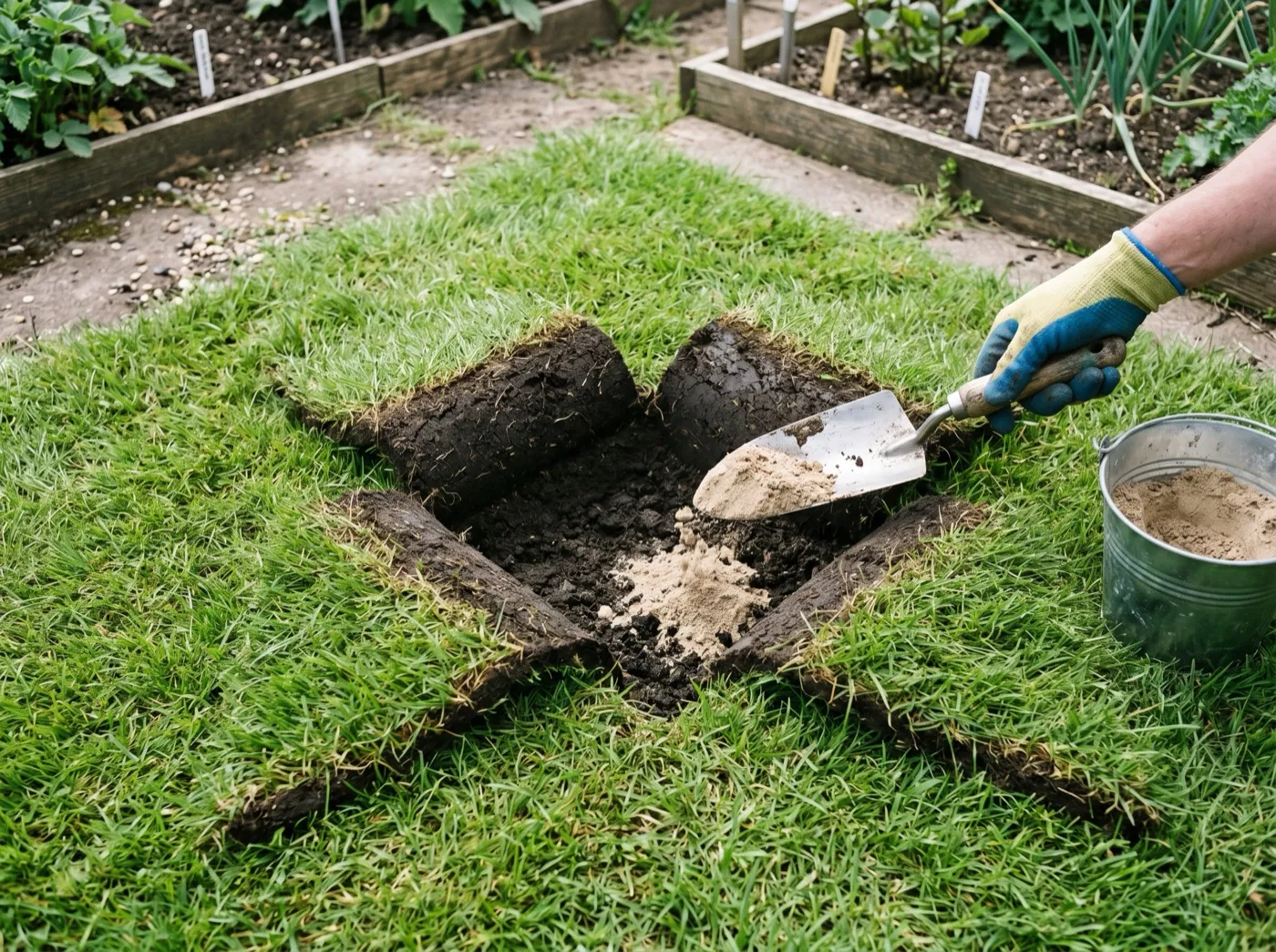 Cut a cross, peel the turf back like book pages, then add firmed soil underneath before folding it flat. The seams knit in three weeks.
When to level a lawn in the UK month by month
Timing decides whether levelling works or fails. Grass must be growing actively to recover from top-dressing or turf lifting, which means working in the UK’s two growth peaks: April to May in spring and September in early autumn. Outside those windows the grass either bakes or sits dormant, and fresh dressing just smothers it.
| Month | Lawn levelling task |
|---|---|
| March | Assess and mark hollows, order top-dressing, hold off until growth starts |
| April | First top-dressing pass, scarify and aerate first if thatch is heavy |
| May | Second top-dressing pass, overseed any thin or bare patches |
| June | Light spot-dressing only if growth is strong and rain is due |
| July | Avoid levelling, keep the lawn watered and rested in heat |
| August | Avoid heavy work, plan autumn applications |
| September | Main autumn top-dressing pass, ideal turf-surgery month, overseed |
| October | Final light dressing, aerate compacted areas before winter wet |
| November | Stop levelling, clear leaves, let the surface settle |
| December to February | No work, grass dormant, soil too wet to spread evenly |
Always scarify and aerate before the first dressing if the lawn has thatch or compaction, because dressing over a sealed surface achieves little. Our guide on how to scarify and aerate a lawn covers the order to do it in, and the wider seasonal jobs sit in our UK lawn care calendar.
The root cause: why lawns keep going bumpy
Levelling the surface is treating the symptom. The underlying cause is usually soft, poorly firmed ground or a drainage fault, and unless you address it the bumps return.
Settling keeps happening because the soil below was never consolidated. When you lift turf to level a dip, firm the soil hard with your heel before relaying, and the same dip will not reopen. For lawns that pool and heave on clay, the real fix is drainage, not dressing: water sitting in hollows softens the ground and worsens every bump. Improving the soil structure underneath, as our guide on improving drainage in a clay-soil lawn sets out, stops the cycle. Sandy top-dressing applied year on year also slowly opens a heavy clay surface, which is why repeated dressing both levels and drains at once.
Moles and worm casts are recurring causes that levelling alone never solves. If moles are active, deal with them before levelling or the new ridges arrive within weeks. Worm casts are best brushed off dry rather than mown in, since flattening them smears mud that kills grass beneath. The Royal Horticultural Society’s advice on lawn care backs the same focus on drainage and soil structure as the long-term fix.
Common lawn levelling mistakes to avoid
Most levelling failures come from impatience or the wrong tool. These are the errors that leave a lawn worse than before.
- Burying the grass in one pass. Spreading more than 15mm of dressing at once smothers the crowns and kills the grass in patches. Always stay at 1-1.5cm and repeat across seasons.
- Reaching for a roller. A roller compacts the ground, harms drainage, and levels nothing. It is the most common waste of money in lawn care.
- Using pure topsoil. Plain topsoil caps hard and seals the surface. Use a free-draining sandy loam mix every time.
- Levelling dormant or drought-stressed grass. Dressing in July heat or December wet smothers grass that cannot grow through it. Work only in the April-May and September windows.
- Ignoring the cause. Filling a hollow over a soft trench or an active mole run just delays the next bump. Fix the firming, drainage, or pest first.
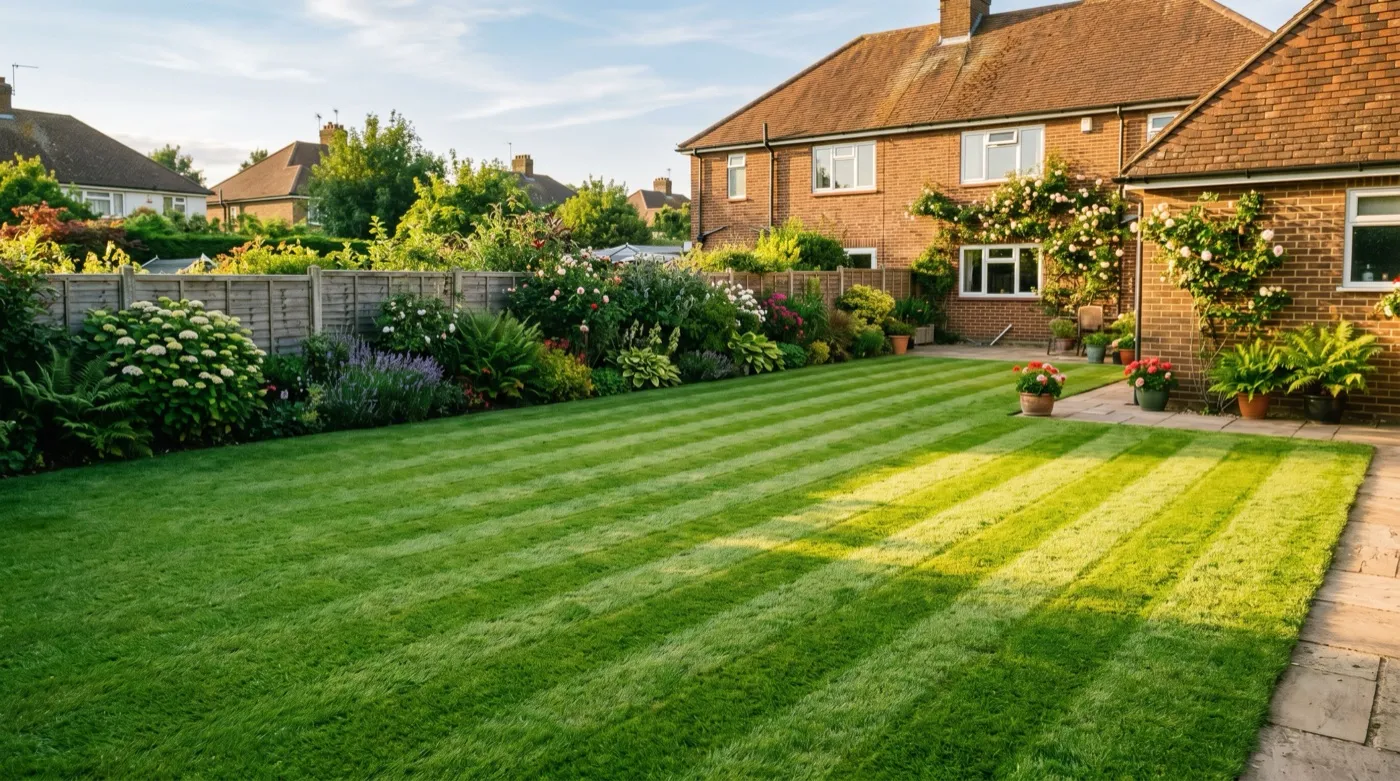 The payoff after a full season of patient dressing: a flat, even surface that mows cleanly and sheds water properly.
A levelling lute also doubles for spreading sand on a seed bed, so it earns its place beyond this one job. Pair it with a stiff broom for working the final dressing down between the grass blades.
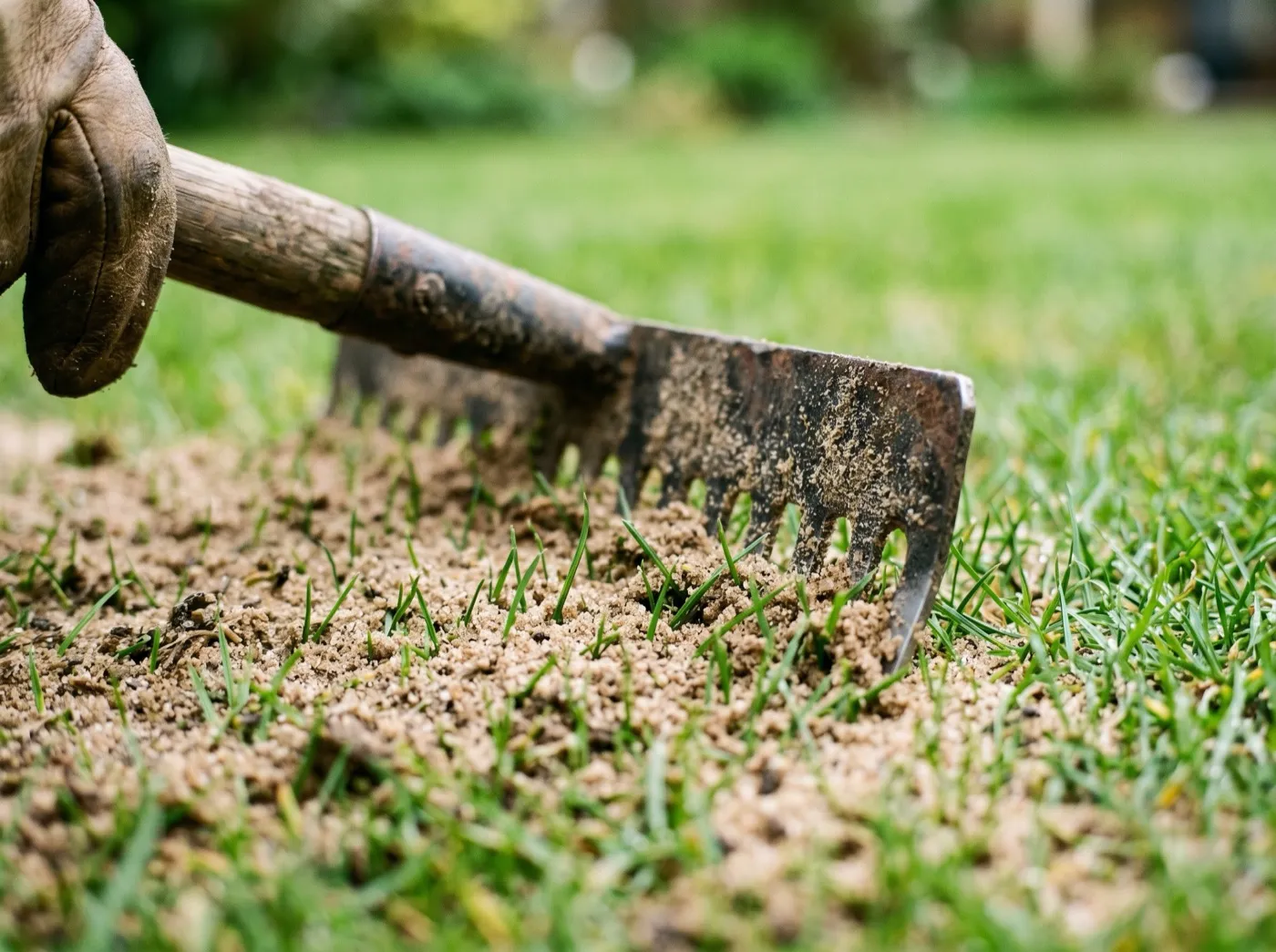
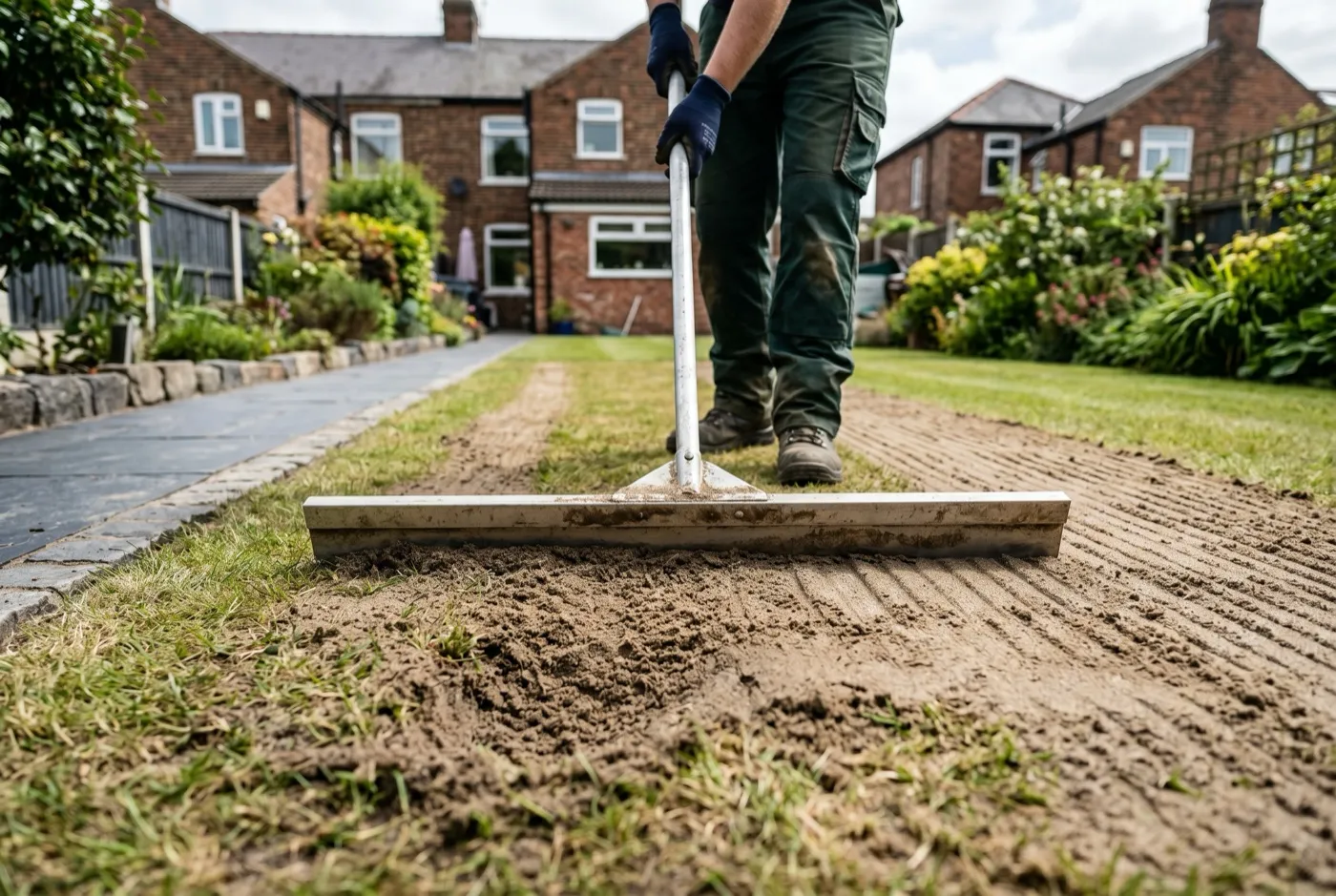 A levelling lute drags dressing off the high spots into the dips in one pull, leaving a finish within 5mm of flush.
Frequently asked questions
How do I level a bumpy lawn without digging it up?
Top-dress with a sandy loam mix in thin layers. Spread 1-1.5cm at a time, brush it into the hollows, and let the grass grow up through it. Repeat each spring and autumn. This works for any unevenness under about 2-3cm without lifting a single piece of turf.
What is the best material to level a lawn with?
A free-draining sandy loam top-dressing of sand, loam, and compost. The sand stops the mix capping and lets it flow into dips. Pure topsoil sets hard and smothers grass. You can buy ready-mixed lawn top-dressing by the bag or bulk bag from UK suppliers.
Will rolling a lawn make it level?
No, rolling compacts the soil and does not level it. A roller presses high spots down briefly but cannot lift hollows, and the compaction it causes harms drainage and root growth. Top-dressing or lifting the turf are the only methods that genuinely level a surface.
When is the best time to level a lawn in the UK?
Spring, April to May, and early autumn in September. The grass is growing actively then, so it knits through fresh top-dressing within two to three weeks. Avoid high summer, when heat and drought stress the grass, and avoid winter, when growth stops and the surface stays wet.
How deep a hollow can top-dressing fix?
Roughly 2-3cm in total, built up over several seasons. Top-dressing adds only 1-1.5cm a pass, so a 3cm dip needs two or three applications across a year. Anything deeper than 3cm is faster to fix by cutting and peeling back the turf and filling underneath.
Why is my lawn so bumpy and uneven?
Usually settling after poor original preparation, plus worm casts, moles, or drought cracking. Heavy foot traffic, removed features like old paths, frost heave on clay, and tree roots all add to it. Identifying the cause matters, because moles or drainage faults will undo any levelling if left untreated.
Now you know how to match the method to the depth, read our detailed guide on how to top-dress a lawn for the spreading technique, or browse the full how-to library for the next job on your list.
Our team produces practical UK gardening guidance from source research, contributor records and established horticultural practice. Editorial standards are overseen by Matt W.