Prep
15 minutes plus overnight freezing
Cook
0 minutes
Total
At least 8 weeks
Serves
About 900ml, roughly 30 small glasses
Key points6 at a glance
- Sloes are the fruit of blackthorn and are ready from late September to November
- Freeze the sloes overnight instead of pricking each one with a pin
- Use 450g sloes, 225g sugar and a 70cl bottle of everyday gin
- Leave it at least 8 weeks, so a batch made by late October is ready for Christmas
- Taste before you strain and add more sugar if it's too sharp
- Only pick fruit you can identify for certain, and pick from sloe bushes with thorns
From the Garden
Grow these for the recipe: Sloes from a blackthorn hedge.
Ingredients
Sloe gin
- • 450g ripe sloes, washed and stalks removed
- • 225g caster sugar, plus a little extra to taste later
- • 70cl bottle of everyday gin
- • Optional: 2 or 3 drops of almond extract, or a small cinnamon stick
Equipment
- A large clean jar with a tight lid, at least 1.5 litres, or two 1 litre jars
- Freezer bag
- Sieve and a piece of muslin or a clean thin tea towel
- Funnel
- Clean glass bottles with lids or corks
- Labels
Method
- 1
Sort the sloes. Throw out any that are squashy, split or mouldy, and pick off stalks and leaves. Rinse them in cold water and drain well.
- 2
Pop the sloes in a freezer bag and freeze them overnight. Freezing splits the skins, so you don't have to prick each sloe with a pin.
- 3
Wash the jar in hot soapy water and rinse it well. Let it dry completely.
- 4
Tip the frozen sloes straight into the jar. Add the sugar, then pour in the gin.
- 5
Close the lid tightly and give the jar a good shake. Label it with the date.
- 6
Keep the jar in a cool, dark cupboard. Shake it every couple of days for the first week, until the sugar has dissolved. After that, give it a shake once a week.
- 7
After 8 weeks, taste a little. If it's too sharp, stir in a spoonful of sugar and leave it another week. Many people leave it 3 months or more for a smoother, deeper flavour.
- 8
Strain the gin through a sieve lined with muslin into a clean jug. Don't press the sloes, as squeezing makes the gin cloudy.
- 9
Pour it into clean bottles using a funnel. Seal, label and store in a cool, dark place.
Storage
Keep bottled sloe gin in a cool, dark cupboard. It keeps for years, and many people think it gets smoother with age. Bottles in bright light can fade from ruby to brown, so tuck them away. Use the leftover gin-soaked sloes within a few days, or freeze them.
Sloe gin is one of the easiest and most rewarding autumn makes. You only need three ingredients: sloes, sugar and gin. Pick the sloes from a blackthorn hedge, freeze them overnight, then leave them in gin for a couple of months. By Christmas you’ll have a deep ruby, sweet and fruity drink.
Here’s how to find and pick sloes and how to make the gin step by step. You’ll also find ideas for the leftover fruit.
What are sloes?
Sloes are the small, round, blue-black fruit of the blackthorn, Prunus spinosa. They look like tiny plums with a dusty bloom, about 1 to 1.5cm across. Each one has a single stone inside. They’re far too sour and dry to eat raw, but they’re perfect for steeping in gin.
Blackthorn grows wild in hedgerows, woodland edges and scrubby field margins all over the UK. It’s covered in white blossom in March, before its leaves appear. The branches carry long, sharp thorns, so wear gloves when you pick. If you’d like your own supply, our guide to blackthorn hedges explains where one fits.
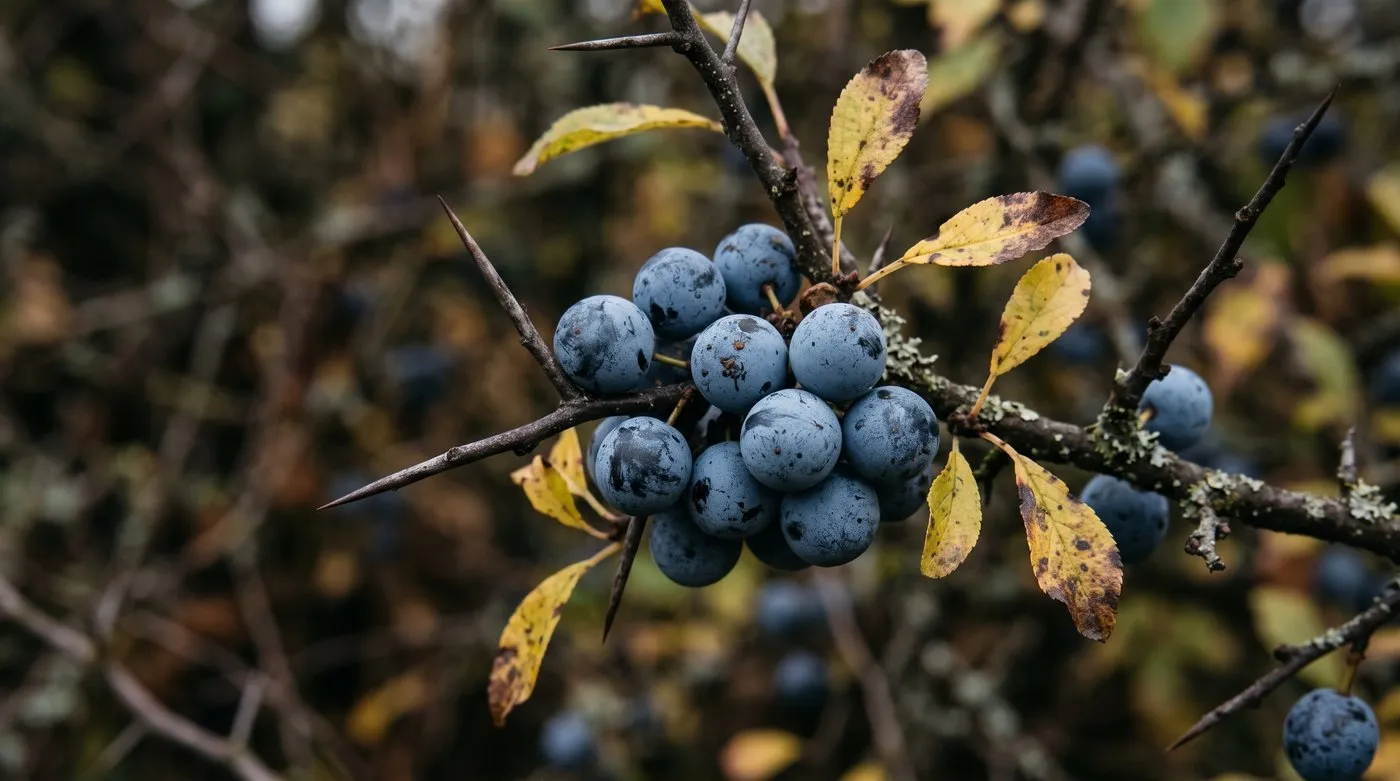
Ripe sloes are blue-black with a pale, dusty bloom. Look for the long thorns on the branches.
When to pick sloes
Sloes are ready from late September to November. The old rule is to wait until after the first frost, which softens the skins and mellows the flavour.
Frosts often arrive late now, so don’t wait too long or the birds will beat you to them. Pick when the sloes are deep blue-black and give a little when you squeeze them. Then freeze them overnight. It does the same job as a frost.
Gardener’s tip: Take a tub with a handle and wear gardening gloves. Blackthorn spines are long and sharp, and scratches from them can get sore.
How to tell sloes from lookalikes
Only pick fruit you’re sure about. These are the things to check:
- Thorns. Blackthorn branches have long, sharp spines. No thorns means it probably isn’t a sloe.
- One stone. Cut a sloe open and there’s a single plum-like stone inside.
- Dusty bloom. The skin has a pale, wipeable bloom over the blue-black colour.
- How they grow. Sloes sit singly or in small clusters close to the branch, not in big hanging bunches.
Damsons and bullaces are bigger relatives that look similar. They grow on taller trees with few or no thorns and taste sweeter. They make a lovely gin too, so don’t worry if you pick some by mistake. Our guide to growing damsons shows the difference.
Warning: Deadly nightshade berries are glossy black and grow singly on a soft, leafy plant with no thorns. They have no stone. If you’re not 100% sure what you’ve picked, don’t use it.
Where to pick sloes
Hedgerows along footpaths and bridleways are the classic spot. Pick only a few from each bush and leave plenty for birds and other wildlife. Our guide to native hedgerow plants explains why blackthorn matters so much to wildlife.
Pick for your own use only, and ask the landowner first if you’re on private land. Avoid bushes right next to busy roads or sprayed fields. For more on picking wild food safely, see our guide to foraging for edible plants.
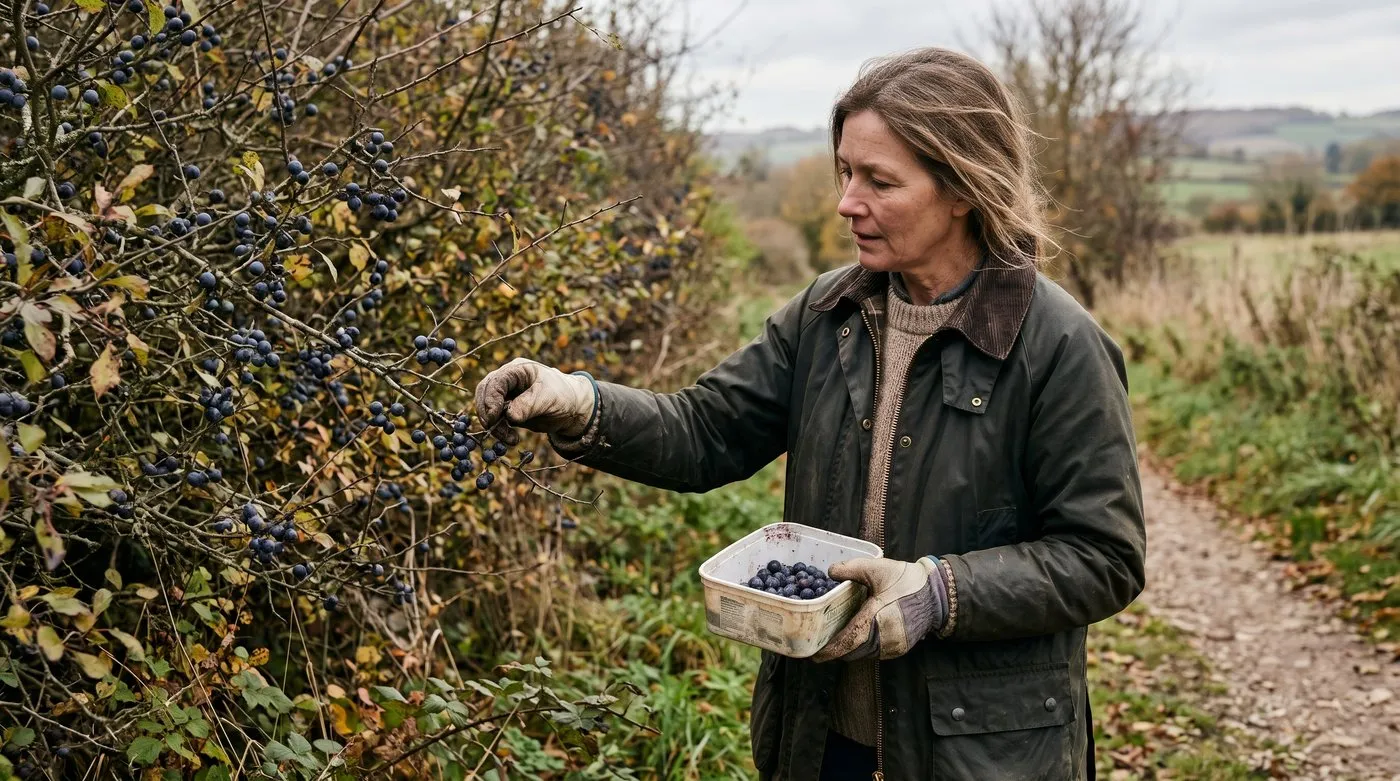
Pick a few from each bush along a footpath, and leave plenty for the birds.
Sloe gin at a glance
| Sloes | Sugar | Gin | Makes |
|---|---|---|---|
| 225g | 110g | 35cl | About 450ml |
| 450g | 225g | 70cl | About 900ml |
| 675g | 340g | 1 litre | About 1.3 litres |
This is a medium-sweet recipe. Some people like it sweeter, so taste it before you strain and add a little more sugar if needed. It’s easier to add sugar later than to take it out.

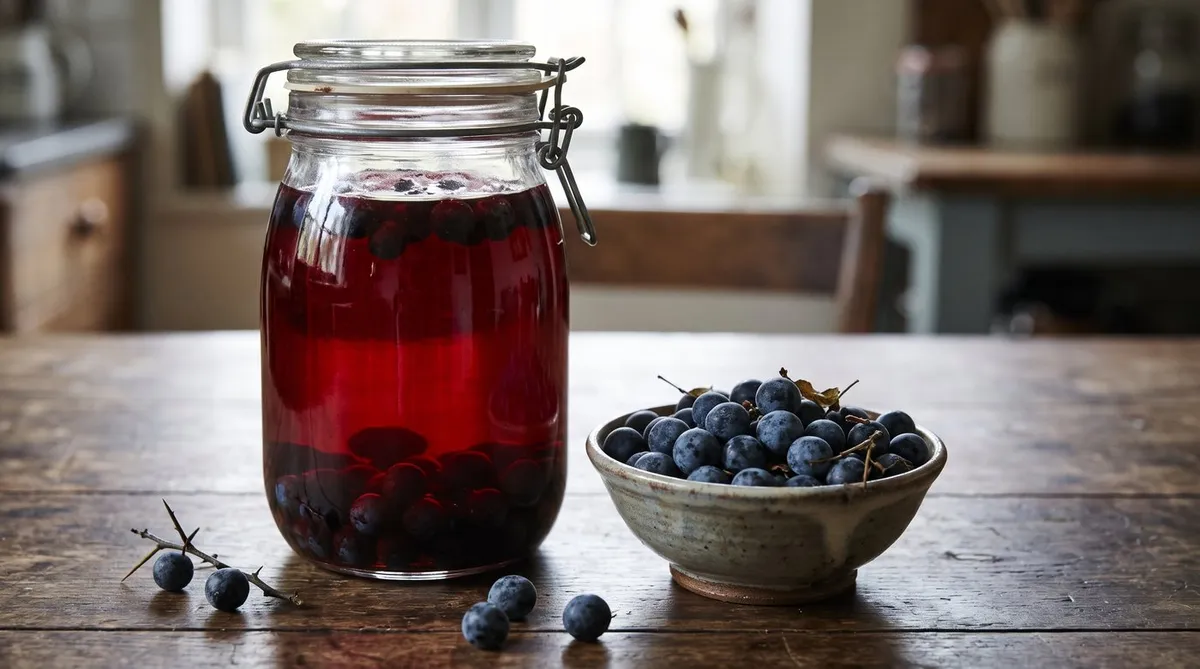
Tip the frozen sloes straight into the jar, add the sugar, then pour in the gin.
Sloe gin timetable
| When | What to do |
|---|---|
| Late September to November | Pick ripe sloes and freeze them overnight |
| Day 1 | Put sloes, sugar and gin in a jar and shake well |
| First week | Shake every couple of days until the sugar dissolves |
| Weeks 2 to 8 | Shake once a week. Keep it in a cool, dark cupboard |
| Week 8 or later | Taste, sweeten if needed, then strain and bottle |
| Christmas onwards | Drink it, give it away or keep it to mature |
Start by late October and it’ll be ready for Christmas. A November batch can still be strained in late December, though it’ll taste better in the new year.
Common mistakes with sloe gin
Picking sloes too early is the most common slip. Hard, green-tinged fruit gives a thin, bitter gin. Wait until they’re dark and slightly soft.
Spending hours pricking each sloe with a pin isn’t needed. An overnight freeze splits the skins just as well.
Squeezing the sloes when you strain may feel thrifty, but it makes the gin cloudy. Let it drip through on its own.
Leaving the jar on a sunny windowsill fades the colour. Keep it somewhere cool and dark.
Straining too soon gives a raw, fiery drink. Give it at least 8 weeks, and longer if you can wait.
How to serve sloe gin
Sip it neat in a small glass, or pour it over ice. For something longer, top it up with tonic or ginger ale. A splash in a glass of fizz makes a lovely Christmas drink.
Sloe gin also makes a great homemade present. Pour it into small bottles, add a handwritten label and tie on a sprig of greenery. It pairs nicely with a homemade Christmas wreath for a festive gift.

Small bottles with brown paper tags make a lovely Christmas present. Write a message on each tag.
What to do with leftover sloes
Don’t throw the strained sloes away. They’re full of flavour.
- Sloe chocolates. Take out the stones, then dip the sloes in melted dark chocolate and leave to set.
- Slider. Put the leftover sloes in a jar of dry cider for a week, then strain. It’s a fruity drink with a kick.
- Crumble topping. Stone and chop a few and stir them into an apple crumble.
Like the gin, these are for grown-ups only. If you enjoyed this, try our rhubarb gin recipe in spring, or plant your own wildlife-friendly edible hedge. Then grab your gloves and head for the hedgerows while the sloes are at their best.
Frequently asked questions
When should you pick sloes?
Sloes are ready from late September to November. The traditional rule is to pick them after the first frost, which softens the skins. Ripe sloes are deep blue-black with a dusty bloom and give slightly when squeezed. If there's no frost yet, pick them anyway and freeze them overnight.
Do you have to prick sloes for sloe gin?
No. Freezing the sloes overnight splits their skins and does the same job. It's much quicker than pricking each sloe with a pin or fork, and the gin takes on colour just as well.
How long should sloe gin steep?
At least 8 weeks, and up to 3 months or more for a richer, smoother flavour. A batch started by late October will be ready to drink at Christmas. Strain it once it tastes good to you.
What gin should you use for sloe gin?
An everyday supermarket gin works well. The sloes and sugar bring lots of flavour, so there's no need to buy an expensive bottle. Avoid flavoured gins, as they can clash with the fruit.
Can you use frozen shop-bought sloes?
Yes. Frozen sloes are sold online and at some farm shops in autumn. Tip them into the jar straight from frozen and use the same amounts of sugar and gin.
What can you do with the leftover sloes?
The gin-soaked sloes are lovely dipped in melted dark chocolate. You can also steep them in dry cider for a week to make a drink known as slider. Take the stones out before you add them to anything else.
Can you make sloe vodka instead?
Yes. Use the same recipe with vodka instead of gin. It tastes a little cleaner and fruitier, because vodka has no botanicals of its own.
Our team produces practical UK gardening guidance from source research, contributor records and established horticultural practice. Editorial standards are overseen by Matt W.