Key takeaways
- Cuckoo spit is froth made by the nymph of the common froghopper, Philaenus spumarius
- The froth protects the sap-sucking nymph from predators and from drying out
- It is harmless to garden plants and needs no control at all
- It appears from May to June on lavender, rosemary, roses and many other plants
- The adult is a 6mm brown or green bug that jumps like a tiny frog, hence the name
- Froghoppers are surveyed in the UK only as a precaution against the plant disease Xylella
If you have spotted blobs of white froth on your lavender, rosemary or roses in early summer and wondered what makes it, the answer is one of the garden’s most harmless curiosities. That froth is cuckoo spit, and it is made by the nymph of the common froghopper, Philaenus spumarius. The young insect hides inside the foam, sucking sap and blowing the excess into a protective bubble bath around itself. It does no meaningful harm to your plants, needs no control whatsoever, and vanishes by midsummer. The name has nothing to do with birds, beyond arriving when the first cuckoos call.
This guide covers what cuckoo spit actually is, the insect that makes it, why it is nothing to worry about, and the one genuinely useful thing you can do about it, which is to record where you see it for plant-health monitoring.
What cuckoo spit is and why it forms
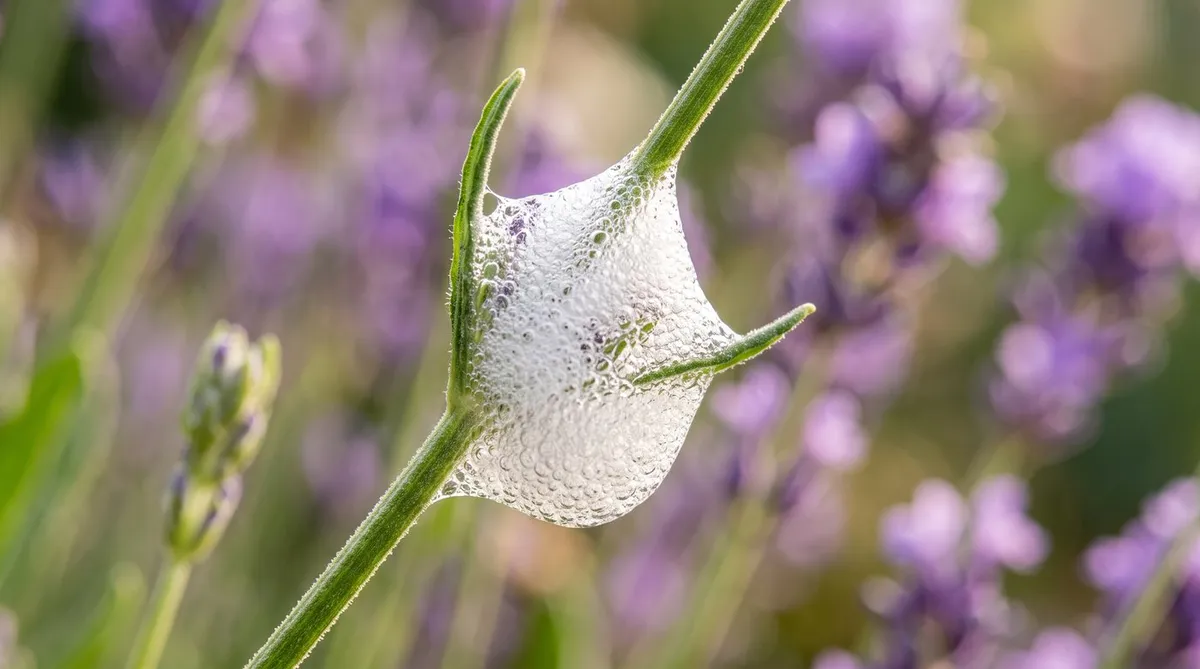
Cuckoo spit is a mass of white, frothy bubbles, usually found at a leaf joint or on a stem, from late spring. Part the froth gently with a twig and you find a small, soft, pale green or yellowish insect inside: the nymph of a froghopper. That nymph is the whole point of the froth.
The nymph feeds by pushing a slender mouthpart into the plant and sucking sap. Sap is watery and low in nutrients, so the insect has to process a great deal of it to grow, and it excretes the surplus. Rather than let that liquid drip away, it mixes it with a substance from special glands and pumps air through it to whip up the froth. The foam does two jobs: it keeps the soft-bodied nymph from drying out in the sun, and it hides it from predators like birds and wasps, who are put off by the wet, bubbly mass.
So the froth is not spit, and not a disease, and not an egg mass. It is a hiding place and a raincoat for a single small insect, made from the plant’s own sap. Once you know that, the mild mystery of it becomes one of the more charming things to show a curious child in June.
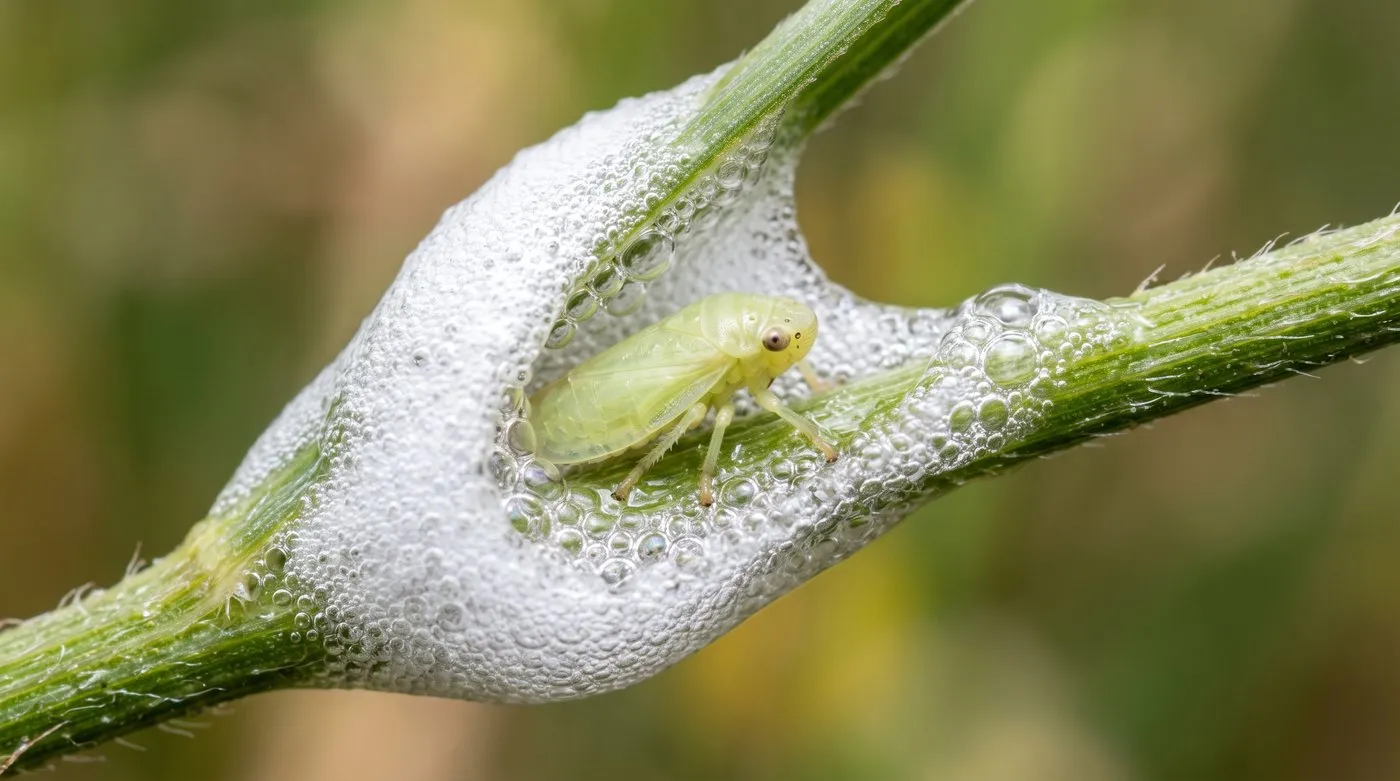 Part the froth with a twig and the maker appears: a soft pale froghopper nymph, sucking sap and hidden inside its own protective foam.
 Harmless and easy to find, cuckoo spit is a perfect introduction to garden wildlife for children. Part the froth to show them the insect inside.
The froghopper: the insect behind the froth
The nymph in the froth grows into a froghopper, and the adult is worth knowing because it is a small marvel of engineering.
The common froghopper adult is about 6mm long, a squat, wedge-shaped bug in mottled brown, sometimes green or nearly black, with the colour varying a lot between individuals. It is easy to overlook until it moves, because froghoppers are among the best jumpers in the animal world. Relative to size, a froghopper’s leap outperforms a flea: it can accelerate at forces that would black out a human pilot, launching itself many times its own length in an instant. That explosive jump, frog-like from a standstill, is what gives the family its name.
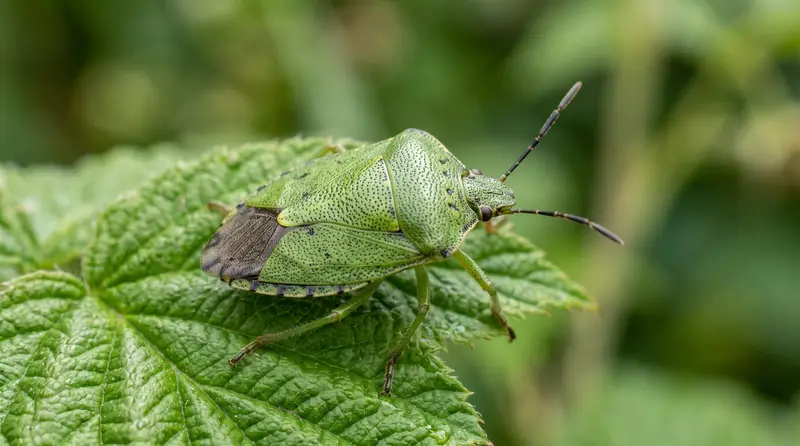
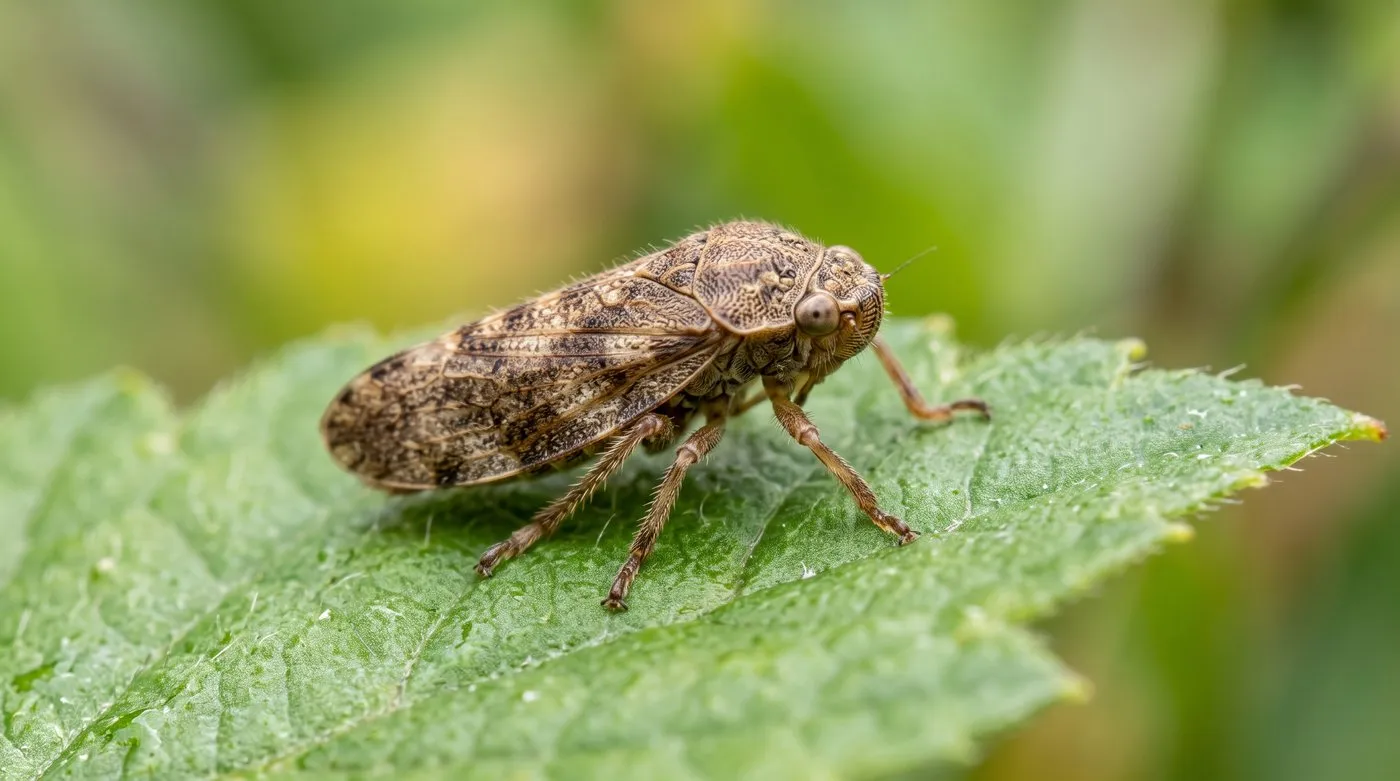 The adult froghopper, about 6mm, is a powerful jumper. The mottled brown form is the most common, though green and darker individuals occur.
The lifecycle, month by month
The froghopper runs a simple, single-generation cycle, and knowing it explains when the froth comes and goes.
- Autumn to spring, eggs overwinter. The adult lays eggs in plant stems and debris in late summer and autumn. They sit out the winter.
- April to May, nymphs hatch. The eggs hatch in spring and the tiny nymphs settle on a plant to feed.
- May to June, cuckoo spit appears. As the nymphs feed and grow, they produce the protective froth. This is the peak cuckoo-spit period, and it can carry into early July.
- June to July, adults emerge. The nymphs complete their development inside the froth, then mature into the jumping adults and leave the foam behind.
- Summer to autumn, adults feed and lay. The adults feed on sap through summer and lay the next generation of overwintering eggs.
The practical takeaway is that cuckoo spit is a brief late-spring phenomenon. By high summer the froth is gone and only the odd jumping adult remains. It is not a persistent infestation building through the year. It is a few weeks of a harmless natural event.
Friend or foe: why cuckoo spit is nothing to worry about
The honest verdict is clear: for your plants, cuckoo spit is a non-issue.
Gardener’s tip: If the froth genuinely bothers you on a show plant near the front door, a jet of water from the hose washes it straight off and does no harm to anything. That is the only intervention cuckoo spit ever justifies. Put the insecticide away.
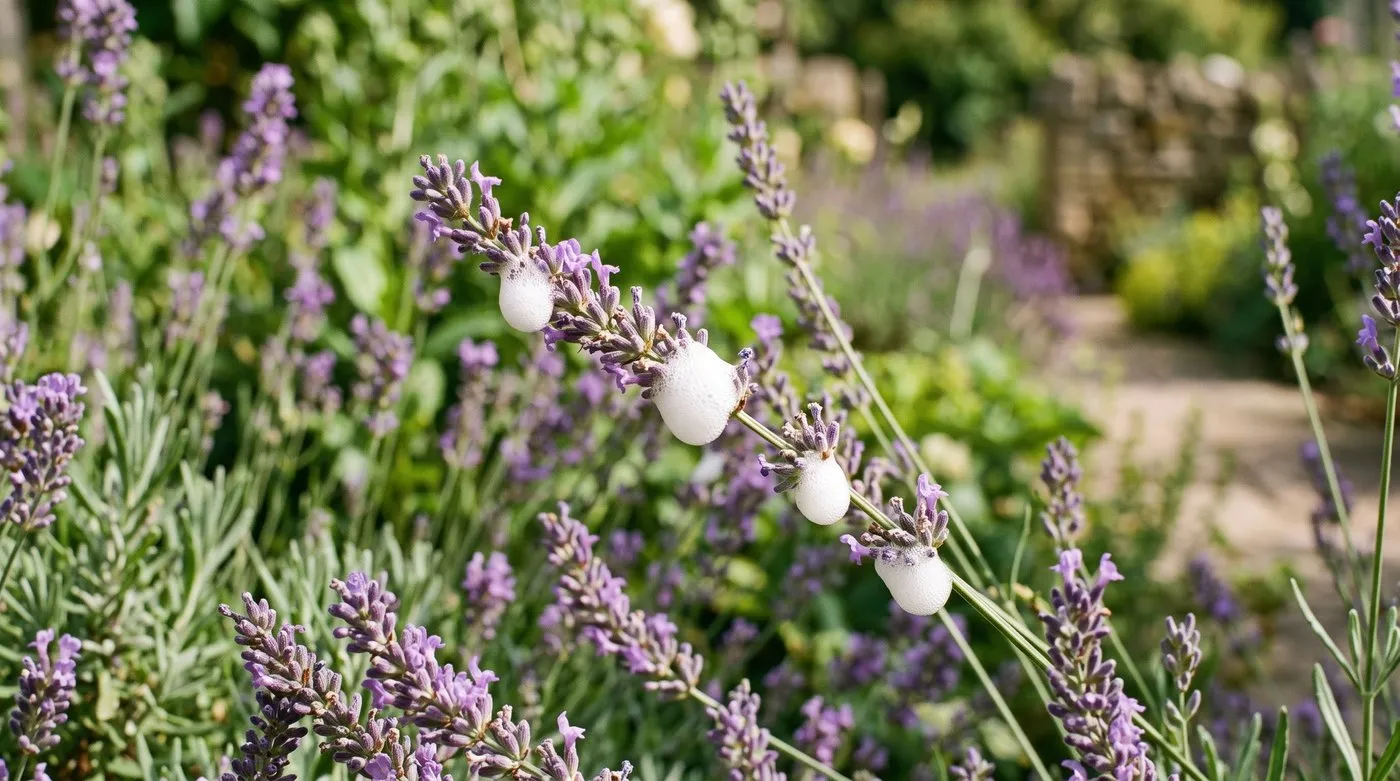 Cuckoo spit is common on lavender in June and does the plant no harm at all. Lavender is one of the froghopper’s favourite hosts.
What to do about cuckoo spit
For once, the honest answer to a garden query is: enjoy it and do nothing. Cuckoo spit needs no control. It harms no plant worth worrying about, it disappears within weeks, and the insect that makes it is a native part of the garden’s life.
If the froth is unsightly on a prominent plant, the only sensible response is a spray of plain water to wash it off. Do not use insecticides. They are pointless against a harmless insect, and they kill the ladybirds, lacewings and other beneficials you want to keep. There is no organic remedy to buy, no biological control to order, and no barrier to install, because there is no problem to solve.
Washing the froth off will not stop more appearing while the nymphs are active in late spring, so if you clean a plant and the froth returns in a few days, that is normal and not a sign of failure. The froth simply stops for the year once the nymphs mature into adults in early summer.
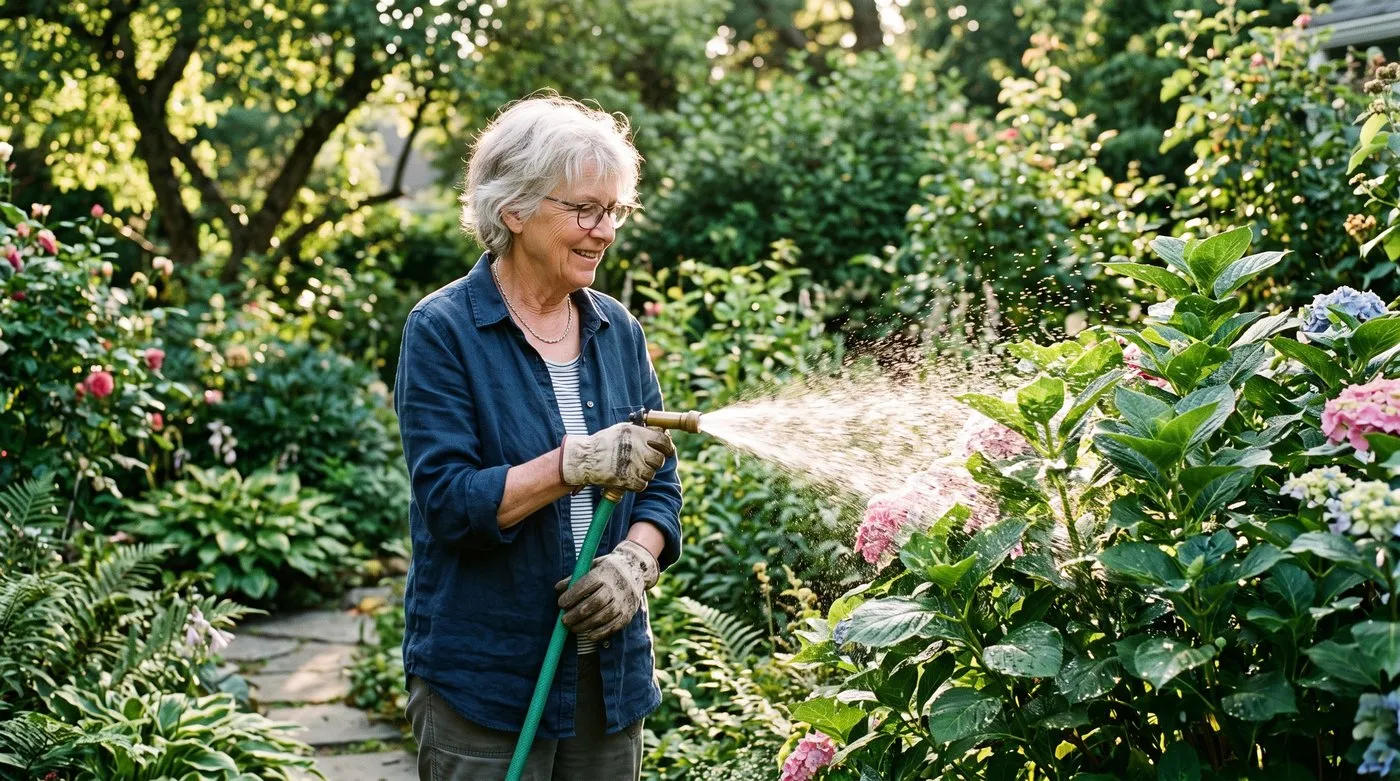 The only intervention cuckoo spit ever needs: a jet of plain water. No insecticide, because the insect is harmless and sprays kill beneficials.
The one thing worth doing: record what you see
There is a single genuinely useful action, and it is not control but recording. Froghoppers matter to plant scientists for one reason: they are the kind of sap-sucking insect that could carry the plant disease Xylella.
Xylella fastidiosa is a serious bacterial disease that infects a very wide range of plants, from olives to lavender to broadleaved trees, and it has caused major damage in parts of southern Europe. It is spread from plant to plant by sap-feeding insects, and froghoppers are among the potential carriers. The reassuring fact is that Xylella is not present in the UK. The froghoppers in your garden are not carrying it, because it is not here.
Because froghoppers would be the likely vectors if it ever arrived, the RHS runs a spittlebug and froghopper survey asking gardeners to record where they see cuckoo spit and adult froghoppers. Those records map the insect’s distribution, which would be vital for a rapid response if Xylella were ever detected here. So the best thing you can do with your cuckoo spit is note the plant, the place and the date, and submit it. It turns a harmless curiosity into a small act of national plant biosecurity.
Warning: Do not import plants like olive, lavender or rosemary from parts of Europe affected by Xylella, and buy from reputable UK suppliers. Keeping the disease out of Britain matters far more than anything the harmless froghopper does in your border, and plant movement, not the insect, is the real risk.
Cuckoo spit at a glance
| Question | Answer |
|---|---|
| What is the froth? | Protective foam made by a froghopper nymph from plant sap |
| What insect? | Common froghopper, Philaenus spumarius |
| When? | May to June, sometimes into July |
| Which plants? | Lavender, rosemary, roses and many others |
| Does it harm plants? | No, harmless; at most a slightly distorted shoot tip |
| Control needed? | None; wash off with water if unsightly |
| Anything useful to do? | Record sightings for the RHS froghopper survey |
| Any real concern? | Only Xylella, a disease not present in the UK |
Common misunderstandings about cuckoo spit
- Thinking it is a disease or fungus. It is not. It is foam made by an insect from the plant’s own sap, not an infection.
- Believing it seriously damages plants. It does not. A plant covered in froth is unharmed. No control is needed.
- Reaching for insecticide. Pointless against a harmless insect and damaging to beneficials. Water is the only tool it ever justifies.
- Assuming the cuckoo made it. The name only marks the season of the cuckoo’s arrival. A froghopper nymph makes the froth.
- Panicking about Xylella. The disease is not in the UK. The froghoppers here carry nothing. Recording sightings is helpful, but there is no cause for alarm.
The short version on cuckoo spit
Cuckoo spit is one of the garden’s gentlest mysteries. The white froth on your lavender in June is a froghopper nymph’s home, whipped up from sap to keep the little insect cool and hidden. It harms nothing, it fades by midsummer, and it asks nothing of you but a moment’s curiosity. Part it with a twig and meet the maker, then leave it be.
The only meaningful thing to do is record where you find it, because froghoppers are watched as potential carriers of the plant disease Xylella, which is not present in Britain and which we would all like to keep out. So enjoy the froth, note it for the survey, and never waste a spray on it. For more of the garden’s harmless residents, browse the wildlife section, and the RHS guidance on froghoppers and cuckoo spit is a sound second reference and the place to submit sightings.
Frequently asked questions
What is cuckoo spit?
Cuckoo spit is a white froth made by the nymph of the common froghopper. The young insect sucks sap from the plant and blows the excess into a protective foam around itself. It appears on stems and leaf joints in late spring and early summer. The name comes from its arrival coinciding with the first cuckoo calls, not from any bird.
Is cuckoo spit harmful to plants?
No, cuckoo spit is harmless to garden plants. The froghopper nymph inside feeds lightly on sap without causing meaningful damage. You may see a slight distortion of a shoot tip in heavy cases, but the plant is not harmed and no control is needed. It is a cosmetic curiosity rather than a pest problem.
What insect makes cuckoo spit?
The nymph of the common froghopper, Philaenus spumarius. This sap-sucking bug hides inside the froth as it develops. The adult it becomes is a 6mm brown or green insect that jumps powerfully, which is why it is called a froghopper. There are several froghopper species in the UK, but this is the one behind most cuckoo spit.
Should I remove cuckoo spit?
No, there is no need to remove cuckoo spit. It causes no harm, so leaving it is fine and it disappears by midsummer. If the froth bothers you on a prominent plant, a quick spray of water washes it off. Never use insecticide, which is pointless against a harmless insect and kills beneficial ones.
When does cuckoo spit appear?
From May to June, occasionally into July. The froth appears as the froghopper nymphs develop in late spring, then fades as they mature into adults by midsummer. It coincides with the traditional arrival of the cuckoo, which gives it the name. By July the froth is usually gone and only the jumping adults remain.
Is cuckoo spit dangerous to humans or pets?
No, cuckoo spit is completely harmless to people and pets. It is simply plant sap whipped into a foam by a tiny insect. It is not toxic, does not sting, and can be touched or washed off safely. There is no health risk from the froth or from the froghopper nymph inside it.
Why should I record froghopper sightings?
Because froghoppers could carry the plant disease Xylella if it ever reached Britain. Xylella fastidiosa is a serious bacterial disease of many plants, spread by sap-sucking insects like froghoppers. It is not present in the UK. Recording froghopper distribution through the RHS spittlebug survey helps plan for that risk. The insects themselves remain harmless here.
Our team produces practical UK gardening guidance from source research, contributor records and established horticultural practice. Editorial standards are overseen by Matt W.