Quick answer
To make fat balls for birds, melt one part lard or suet and mix in two parts dry food, such as birdseed, oats, grated cheese, dried fruit and crushed unsalted peanuts. Shape into balls or press into pots and pine cones, then chill until hard. Use only hard fat, never cooking fat from a roasting tin or soft spreads. Hang them in a cage feeder, not a mesh net.
Key points6 at a glance
- Mix one part melted lard or suet with two parts seed, oats, cheese and dried fruit
- Use hard fat only, never fat from a roasting tin, oil or soft spread
- Leave out salt, cooked porridge, desiccated coconut and anything mouldy
- Shape into balls, or set the mix in yoghurt pots, pine cones or coconut shells
- Hang fat balls in a metal cage feeder, never a mesh net
- Make and feed homemade fat balls in the colder months, from about November to March
In this article11 sections
To make fat balls for birds, melt one part lard or suet. Stir in two parts dry food, such as birdseed, oats, grated cheese and dried fruit. Shape the mix into balls, chill them until hard and hang them in a metal cage feeder. It takes about 20 minutes, costs very little and is a brilliant winter project for children.
The two golden rules are simple. Use only hard fat, and never hang fat balls in mesh nets. Here’s the recipe, what’s safe to add and how to keep birds coming back.
Why make your own fat balls?
Fat is a high-energy food that helps small birds get through long, cold nights. Blue tits and other small birds can lose a lot of body weight overnight in a hard frost. A fat ball in the morning helps them refuel fast.
Homemade fat balls are cheap and fun to make. You also know exactly what’s in them, with no cheap fillers or mesh nets. For more on what to feed and when, see our guide to feeding birds through the seasons.
What you need
This makes about 8 to 10 fat balls.
| Ingredient | Amount | Notes |
|---|---|---|
| Lard or beef suet | 250g | Hard fat only. Vegetarian suet works too |
| Wild birdseed mix | 200g | Or sunflower hearts |
| Raw porridge oats | 150g | Never cooked porridge |
| Mild grated cheese | 50g | A favourite with robins |
| Sultanas or raisins | 50g | Soak them first in dry weather |
| Crushed unsalted peanuts | 50g | Optional. Plain, never salted or roasted |
You’ll also need a saucepan, a mixing bowl, a wooden spoon, a lined baking tray and some garden string.
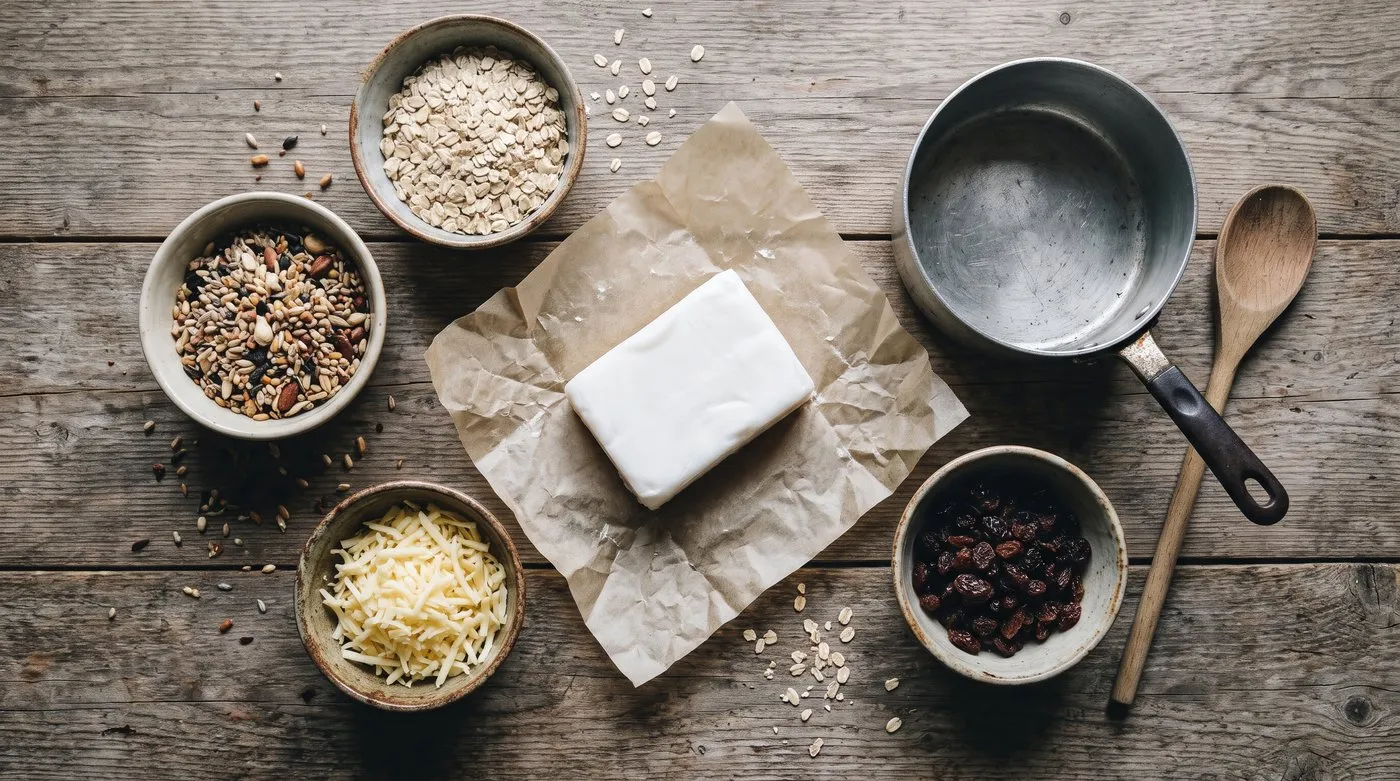
Lard or suet, plus seed, oats, cheese and dried fruit. That’s all you need for a batch of fat balls.
How to make fat balls, step by step
- Soften the fat. Cut the lard or suet into cubes. Warm it gently in a pan until it’s soft or just melted. Don’t let it smoke.
- Mix it up. Take the pan off the heat. Tip in the dry mix and stir until everything is well coated.
- Let it cool. Leave it for 10 to 15 minutes, until it’s thick enough to hold its shape.
- Shape the balls. Squash handfuls into balls about the size of a satsuma. Push a loop of string into the middle of any you want to hang on their own.
- Chill. Put them on a lined tray in the fridge for at least an hour, until hard.
- Hang them out. Put them in a metal cage feeder, or hang them from a branch.
Gardener’s tip: If your mix is too crumbly, add a little more melted fat. If it’s too greasy and won’t hold, stir in another handful of oats.

Squash the mix firmly into balls about the size of a satsuma. Children love this messy bit.
Melting fat gets very hot. An adult should do the melting and pouring. Children can mix the dry ingredients and shape the cooled mix. Our gardening projects for kids have more ideas for winter half-terms.
Fun shapes and holders
Fat balls don’t have to be balls. You can press the same mix into:
- Yoghurt pots. Make a hole in the base, thread string through and knot it. Fill with the mix, chill, then hang upside down.
- Pine cones. Tie string to the top, then press the mix into the gaps.
- Half coconut shells. Drill a hole, add a string loop and fill.
- Cookie cutters. Lay them on a tray, fill with the mix, push in a loop of string and chill. Pop them out once hard.
- Old teacups. Fill with the mix and wedge on its side in a hedge or tie to a branch.
These make lovely Christmas presents for bird-loving friends and family. For more thrifty ideas, see our guide to upcycled garden projects.
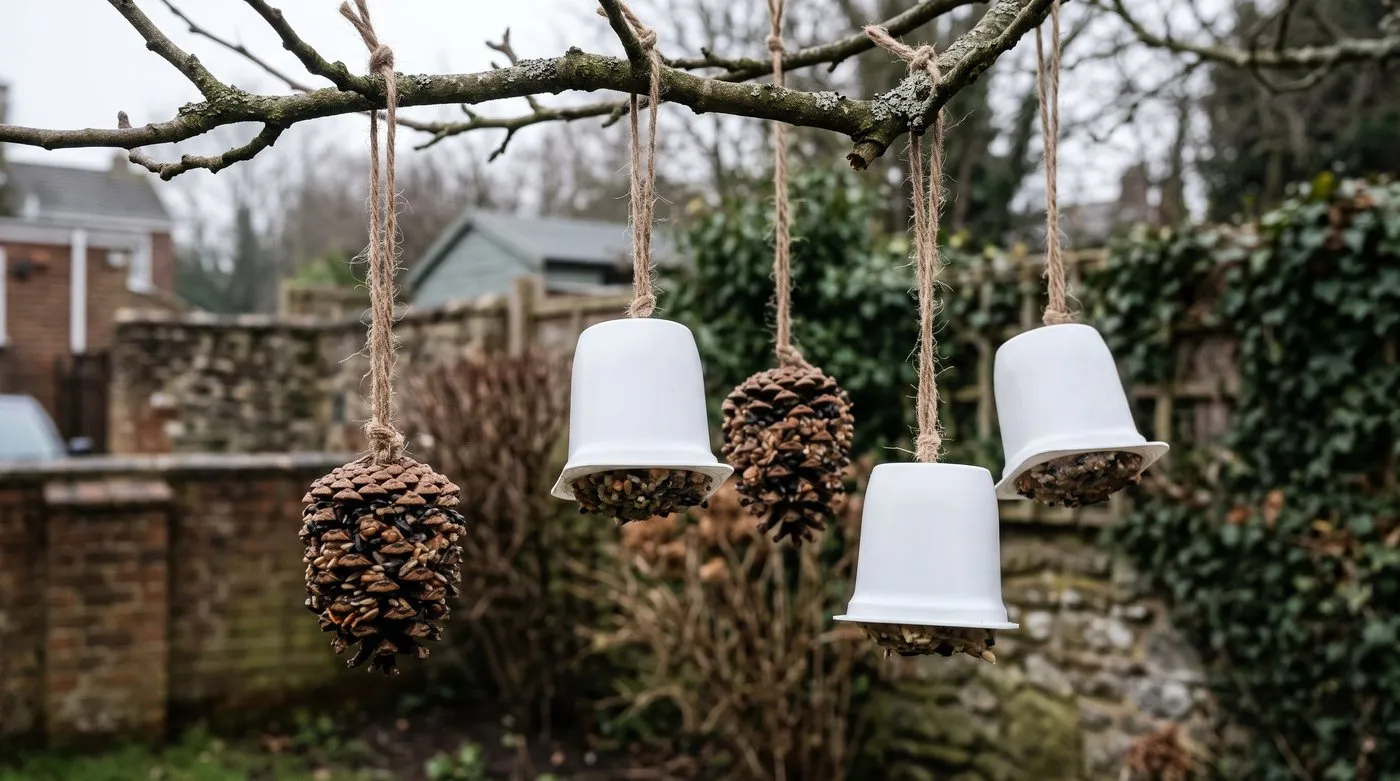
Pine cones and yoghurt pots make easy holders. Hang them from a branch away from fences cats can climb.
What to put in fat balls, and what to avoid
Most kitchen-cupboard dry foods are fine. But a few things can hurt birds.
| Safe to add | Leave out |
|---|---|
| Lard or beef suet | Fat from a roasting tin or frying pan |
| Wild birdseed and sunflower hearts | Salted or roasted nuts |
| Raw porridge oats | Cooked porridge |
| Mild grated cheese | Desiccated coconut |
| Sultanas, raisins and currants | Anything mouldy or stale |
| Plain crushed peanuts | Butter, margarine and cooking oil |
| Dried mealworms | Bread as the main ingredient |
Fat from cooking meat mixes with juices and stays soft. It can smear on feathers and stop them keeping birds warm and dry. Oils and soft spreads do the same. Desiccated coconut can swell up inside birds, so leave it out.
Warning: Raisins and sultanas are poisonous to dogs. If your dog can reach fallen fat balls, leave the dried fruit out. Our guide to plants and foods toxic to dogs has more on keeping pets safe.
How to hang fat balls safely
Never use mesh nets. Shop-bought fat balls often come in thin green nets. Birds can trap their feet, tongues or beaks in them and get badly hurt. Always take fat balls out of their nets.
Use a metal cage feeder instead. It holds the fat balls safely and lets birds cling on to feed.
Hang feeders:
- About 2m from a hedge or shrub, so birds can dart to cover
- Away from fences or walls that cats can jump from
- Where you can see them from a window
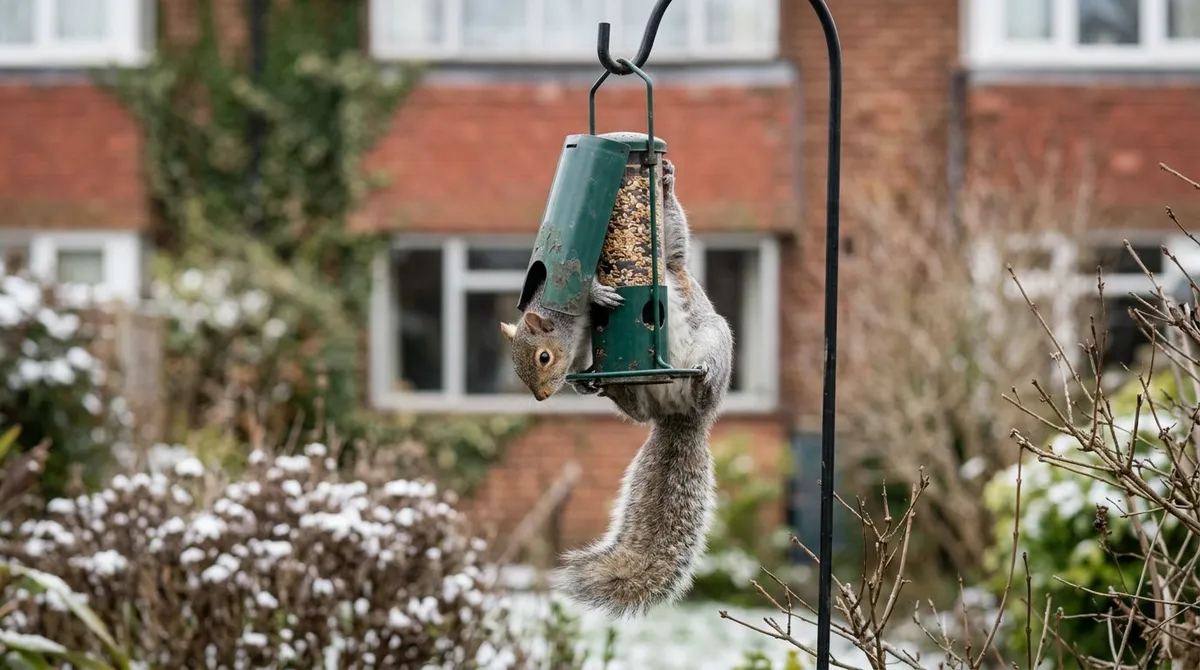
If squirrels steal your fat balls, try our guide to squirrel-proof bird feeders.
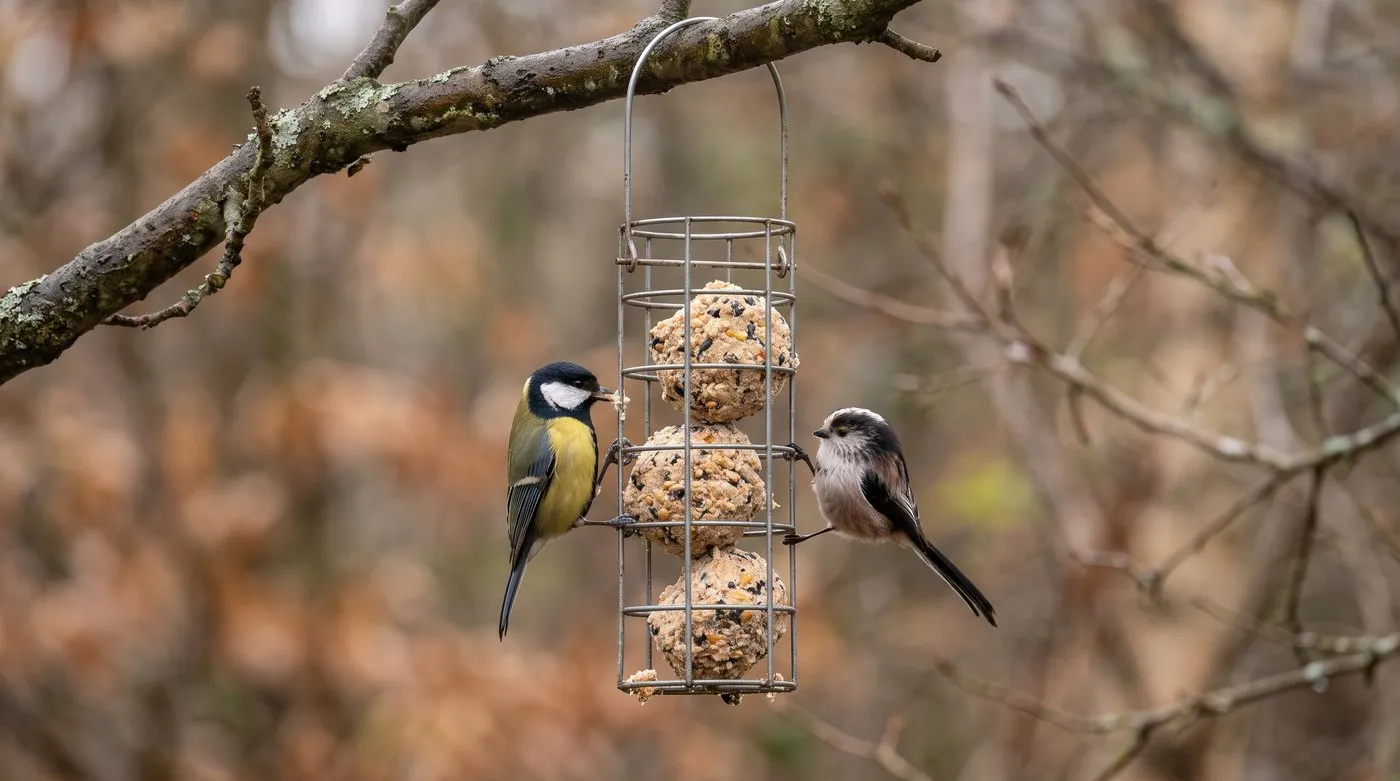
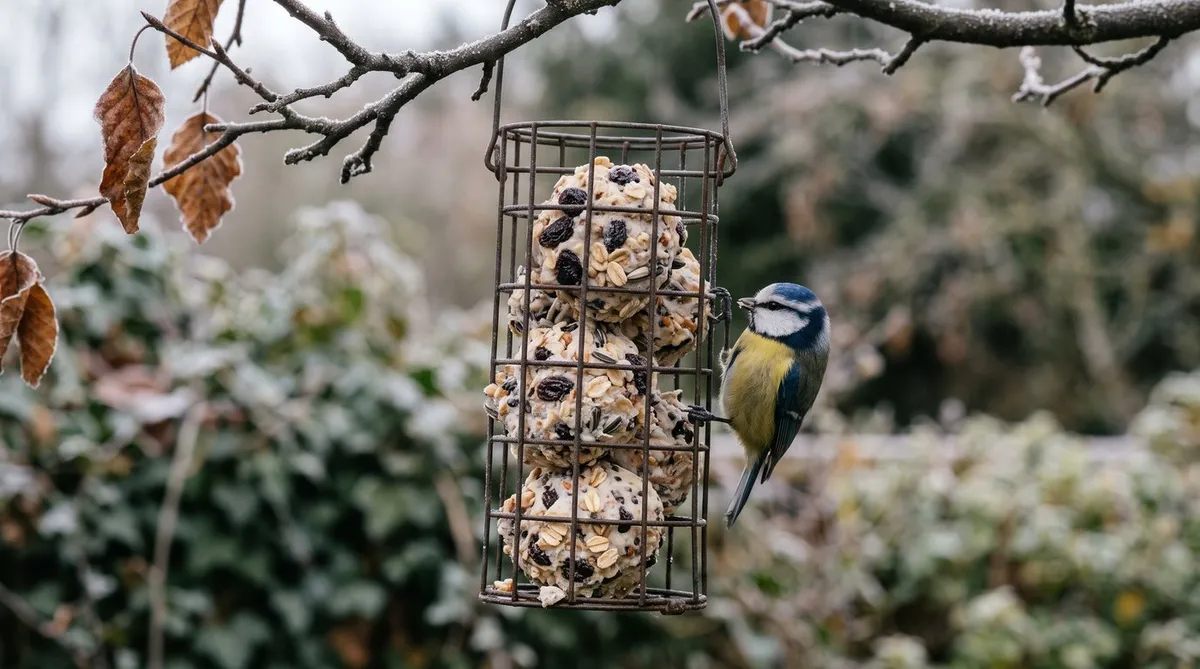
A metal cage feeder is safe and easy to fill. Tits will hang upside down to get every last crumb.
Keeping fat balls and feeders clean
Put out only what birds will finish in a few days. Bin any fat balls that go soft, smelly or mouldy. Clean your cage feeder every week or two with hot soapy water and let it dry before refilling.
Our guide to cleaning bird feeders explains how to keep diseases from spreading between birds.
Store spare fat balls in a tub in the fridge for up to two weeks. You can also freeze them for a few months.
Which birds eat fat balls?
Fat balls are especially popular with:
- Blue tits, great tits and coal tits
- Long-tailed tits, often in busy little flocks
- Robins, especially if you add grated cheese
- House sparrows and starlings
- Nuthatches and great spotted woodpeckers
Not sure who’s visiting? Our guide to identifying common garden birds will help.
Fat ball calendar
| Month | What to do |
|---|---|
| October | Stock up on lard or suet and seed. Clean your cage feeders |
| November to February | Feed fat balls daily. Top up in cold snaps |
| March | Carry on feeding as birds start nesting |
| April to October | Stop homemade fat balls. Offer small amounts of heat-resistant shop suet instead |
Common mistakes with fat balls
Using fat from the Sunday roast is the most common mistake. It stays soft and can coat feathers. Stick to lard or suet.
Leaving fat balls in their mesh nets can trap and injure birds. Take them out and use a cage feeder.
Putting homemade fat balls out in summer means they go soft and rancid fast. Save them for the colder months.
Adding salt, salted nuts or cooked porridge can harm birds. Keep the mix simple.
Forgetting to clean feeders lets disease spread. Wash them every week or two.
Frequently asked questions
What fat do you use for homemade fat balls?
Use lard or beef suet. Both set hard and stay firm in cold weather. Don’t use fat from a roasting tin, oil, butter or soft spreads, as they stay soft and can smear on feathers.
What’s the best ratio for fat balls?
One part fat to two parts dry mix by weight works well. For example, 250g of lard with 500g of seed, oats and other dry food.
Can I use porridge oats in fat balls?
Yes, raw porridge oats are great. Never use cooked porridge, which turns gluey and can stick to birds’ beaks.
Why shouldn’t fat balls go in mesh nets?
Birds can catch their feet, tongues or beaks in the thin mesh and get badly hurt. Always take fat balls out of their nets and use a metal cage feeder instead.
Can I put fat balls out in summer?
Homemade fat balls go soft and spoil quickly in warm weather. Feed them from about November to March. In summer, offer small amounts of heat-resistant suet from a shop instead.
Which birds eat fat balls?
Blue tits, great tits, coal tits and long-tailed tits love them. Robins, house sparrows, starlings, nuthatches and great spotted woodpeckers will visit too.
How long do homemade fat balls keep?
In the fridge, about two weeks. In the freezer, for a few months. Outside, put out only what birds eat in a few days and bin any that go soft, smelly or mouldy.
For more ways to help birds and other wildlife this winter, read our winter wildlife guide. Then grab a block of lard and make a batch this weekend.
Our team produces practical UK gardening guidance from source research, contributor records and established horticultural practice. Editorial standards are overseen by Matt W.