Key takeaways
- Most rare woodland butterflies need specific habitats and will not breed in a typical garden
- Gardens help most as nectar refuges and corridors between fragmented woods
- Foodplants matter: dog violets feed fritillaries, honeysuckle feeds the White Admiral, sallow feeds the Purple Emperor
- Bramble, knapweed, marjoram, thistles and buddleia are the nectar plants these species seek
- Gardens beside or near woodland make the biggest difference of all
- Butterfly Conservation's surveys show steep declines, so every patch of habitat counts
Rare UK woodland butterflies are some of our most beautiful insects, and some of our most threatened. Species like the Purple Emperor, White Admiral and Silver-washed Fritillary belong to a world of sunlit clearings and old broadleaf woods, a habitat that has quietly shrunk and darkened over the last century. Many have declined sharply, and a garden cannot replace a working wood. But it can do more than you might think, and this guide explains exactly what.
Why woodland butterflies have declined
The decline of rare woodland butterflies traces back to the end of active woodland management, especially coppicing, which once kept woods sunny, warm and varied. For centuries, people cut woods on rotation for timber, fuel and poles. That work flooded the floor with light, and the violets, grasses and warm bare edges that woodland butterflies depend on thrived in the clearings.
As coppicing and ride-clearing stopped through the twentieth century, many woods grew tall, dark and uniform. The warm open glades closed over, the foodplants faded, and the butterflies that needed them went with them. Butterfly Conservation’s long-running surveys show steep declines across this group, and several remain among the highest conservation priorities in Britain. Habitat fragmentation and a shifting climate pile on more pressure.
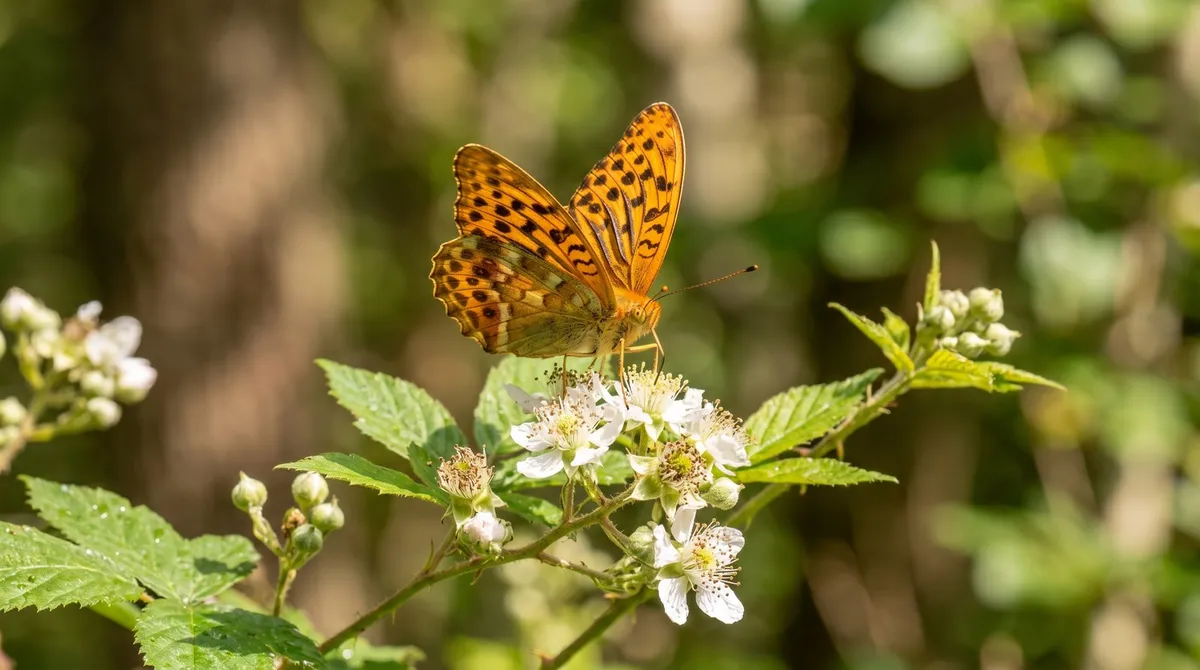
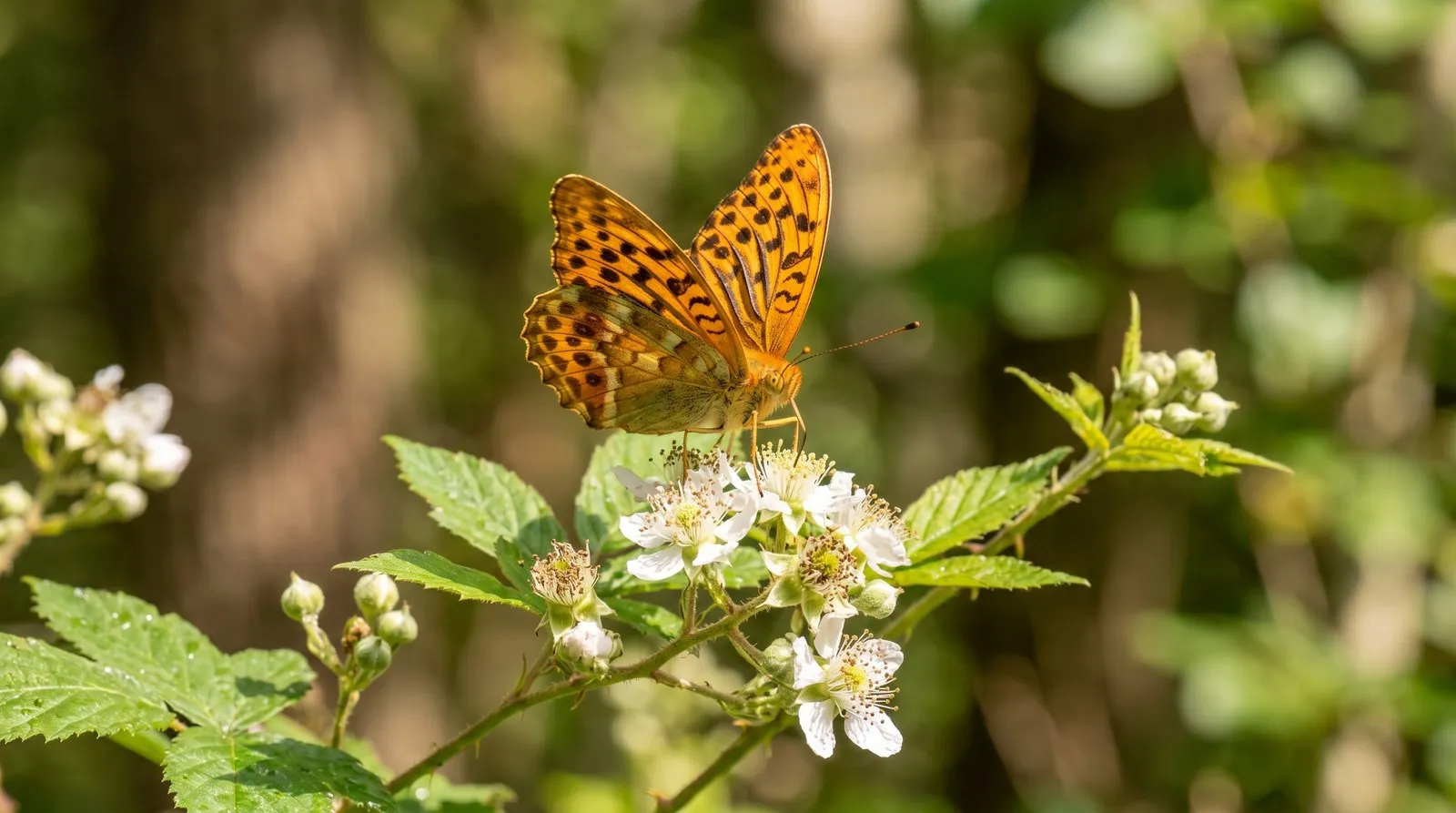 A Silver-washed Fritillary nectaring on bramble at a woodland edge. Bramble blossom is one of the most valuable summer nectar sources for woodland butterflies.
Seven rare woodland butterflies to know
Knowing the species, their foodplants and their flight times tells you which ones a garden could realistically help, and how. Some, like the Silver-washed Fritillary, are spreading again and may visit gardens to nectar. Others, like the Duke of Burgundy, are so specialised that the best help is supporting the wider habitat around them.
This table summarises seven of the rarest and most evocative, with the single foodplant or habitat detail that defines each one.
| Butterfly | Status | Caterpillar foodplant | Flies | Where you might see it |
|---|---|---|---|---|
| Purple Emperor | Scarce, spreading slowly | Goat willow / sallow | Jul–Aug | High in oak canopy, woodland rides |
| White Admiral | Declined sharply in 20 years | Honeysuckle (native) | Jun–Aug | Shady rides, gliding flight |
| Silver-washed Fritillary | Recovering, spreading | Dog violet | Jul–Sep | Sunny clearings, on bramble |
| Pearl-bordered Fritillary | Severely declined | Violets | Apr–Jun | Warm coppice clearings, bracken edges |
| Duke of Burgundy | Rare, high priority | Cowslip / primrose | May–Jun | Scrubby grassland by woods |
| Wood White | Rare, fragmented | Bird’s-foot trefoil, vetches | May–Aug | Sheltered ride edges, weak flutter |
| White-letter Hairstreak | Hit by elm disease | Elm | Jul–Aug | Around mature elms, tree-top |
The pattern is clear. Each one is tied to a particular foodplant and a particular kind of warm, sheltered, structured woodland. The species you have any chance of seeing in a garden are the wider-ranging nectar-feeders, above all the Silver-washed Fritillary, and the White Admiral if you are near the right wood.
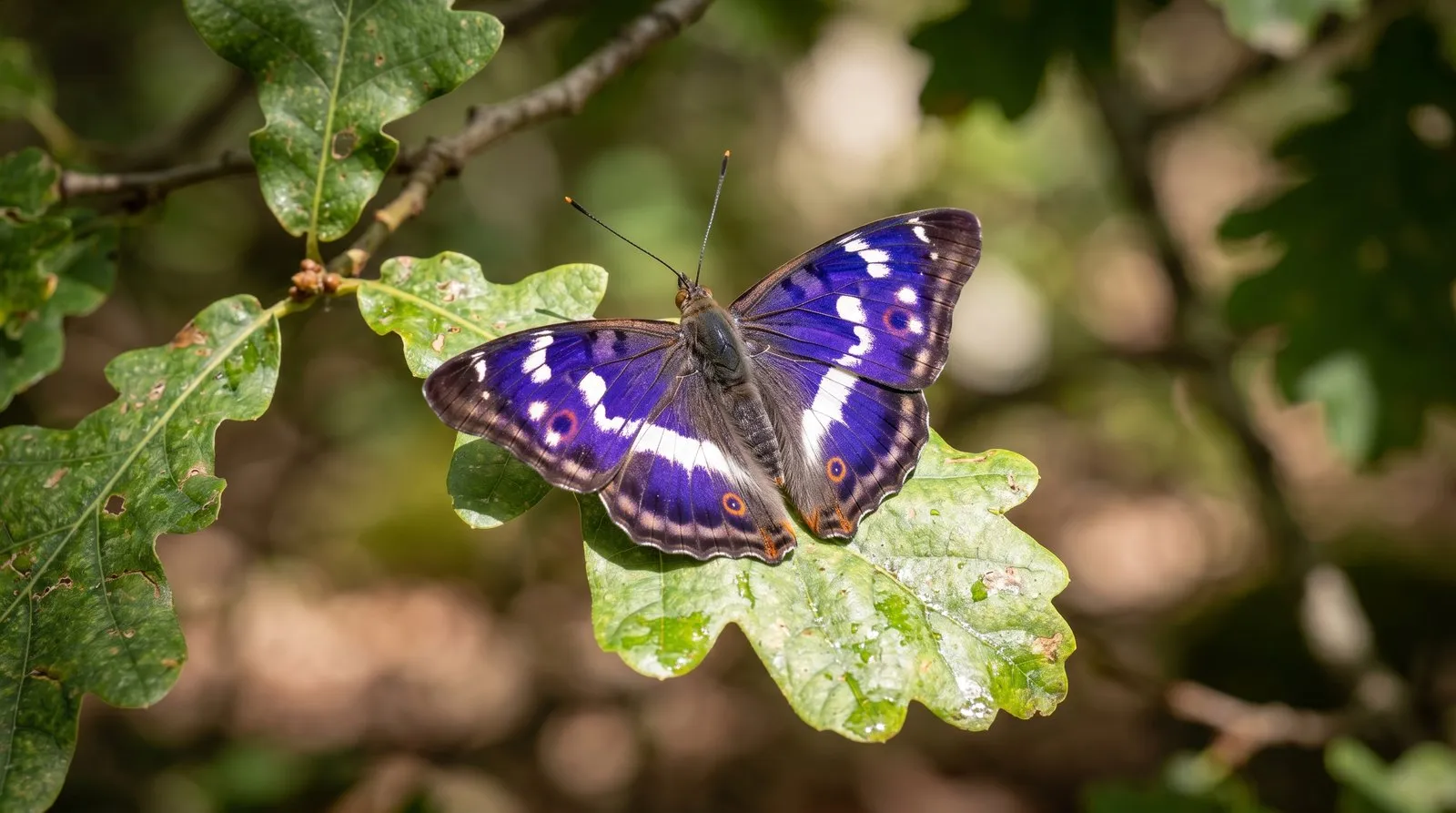 The Purple Emperor spends much of its life in the oak canopy, but its caterpillars feed only on sallow. Both trees matter to it.
The foodplants that actually breed butterflies
If you want to do more than feed adults, the single most useful step is growing the native foodplants these butterflies lay their eggs on. Nectar fuels a butterfly, but foodplants make the next generation. Three are realistic in many gardens with a wild corner or a hedge.
Dog violets (Viola riviniana) are the caterpillar foodplant of the Silver-washed and Pearl-bordered Fritillaries. They are small, tough native plants that thrive in light shade under shrubs or at a border edge, and they self-seed once happy. A patch of native violets in dappled shade is the foundation of any fritillary-friendly garden, and they earn their place in our list of UK native plants for gardens.
Native honeysuckle (Lonicera periclymenum) is the sole foodplant of the White Admiral, which seeks it out in shady positions. The shop-bought ornamental honeysuckles are not the same; you want the wild woodbine, scrambling through a hedge or up a shady fence. It is a wildlife plant many times over, feeding moths and bees too, and our guide to growing honeysuckle covers it in full.
Sallow and goat willow (Salix caprea and S. cinerea) feed the Purple Emperor. These are trees rather than border plants, so they suit a larger garden or a wild boundary, where their early catkins also feed bumblebees in spring. For cowslip and primrose, the Duke of Burgundy’s foodplants, a sunny bank or a wildflower meadow patch is the place. Choosing the right native trees for UK gardens lets you build this structure deliberately.
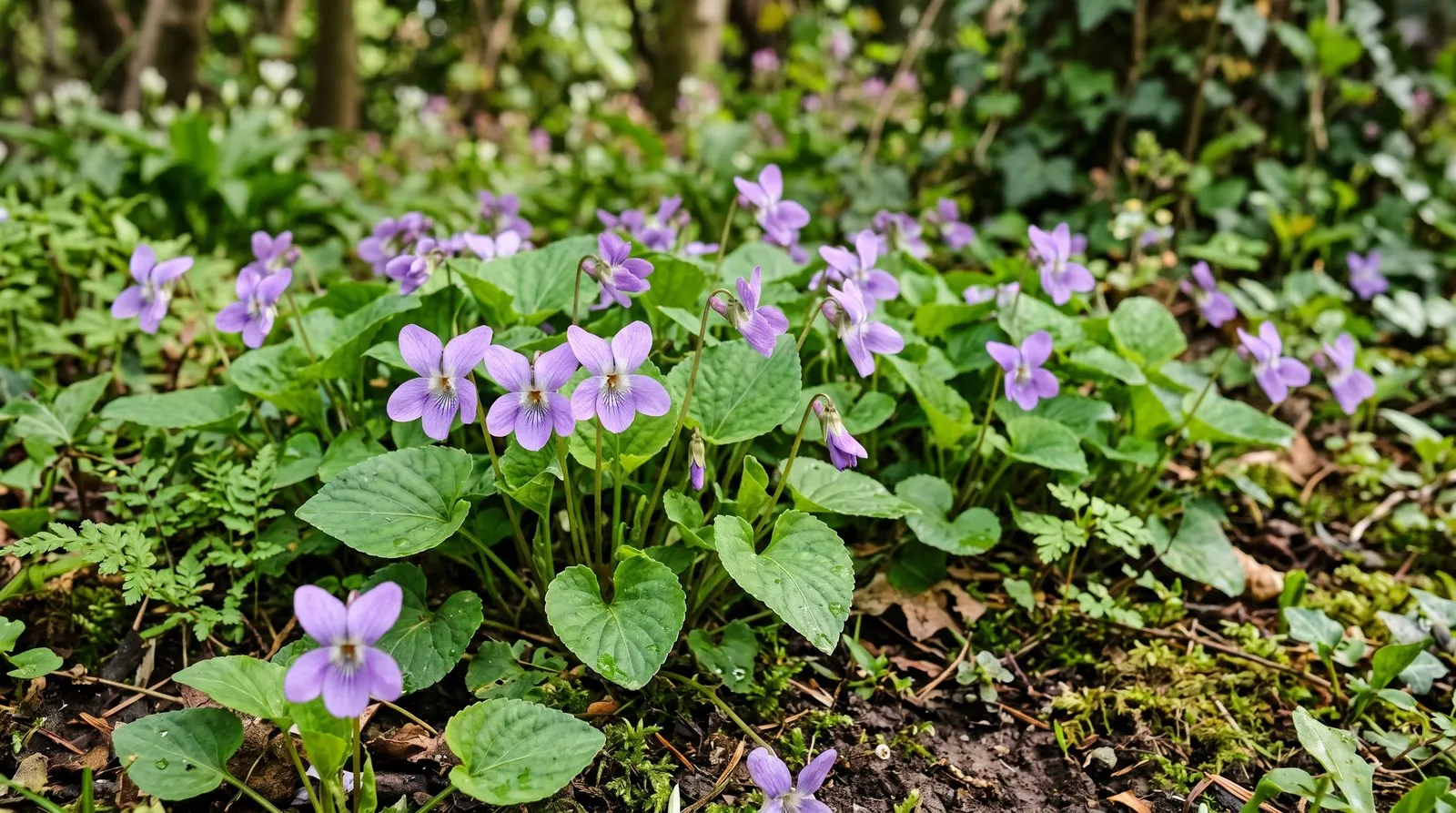 Dog violets are the caterpillar foodplant of several fritillaries. A patch in light shade is the foundation of a fritillary-friendly garden.
The nectar that draws them in
For visiting adults, a sunny patch of bramble, knapweed, marjoram, thistles and buddleia is exactly what woodland butterflies look for. This is where most gardens can genuinely help, because nectar is something a garden does well, and the right plants pull in butterflies that breed elsewhere.
Bramble blossom comes first. It looks weedy, but its flowers are a premier nectar source for the Silver-washed Fritillary, White Admiral and Purple Emperor alike, all of which feed on it readily. Letting a patch of bramble flower along a back fence or wild edge is one of the simplest, most effective things you can do. Add knapweed, field scabious, marjoram and thistles for the wider butterfly community, and a buddleia in a sunny spot as a magnet through high summer. Nectar-rich milkweed earns a spot in the same sunny border, feeding butterflies and bees from June to September.
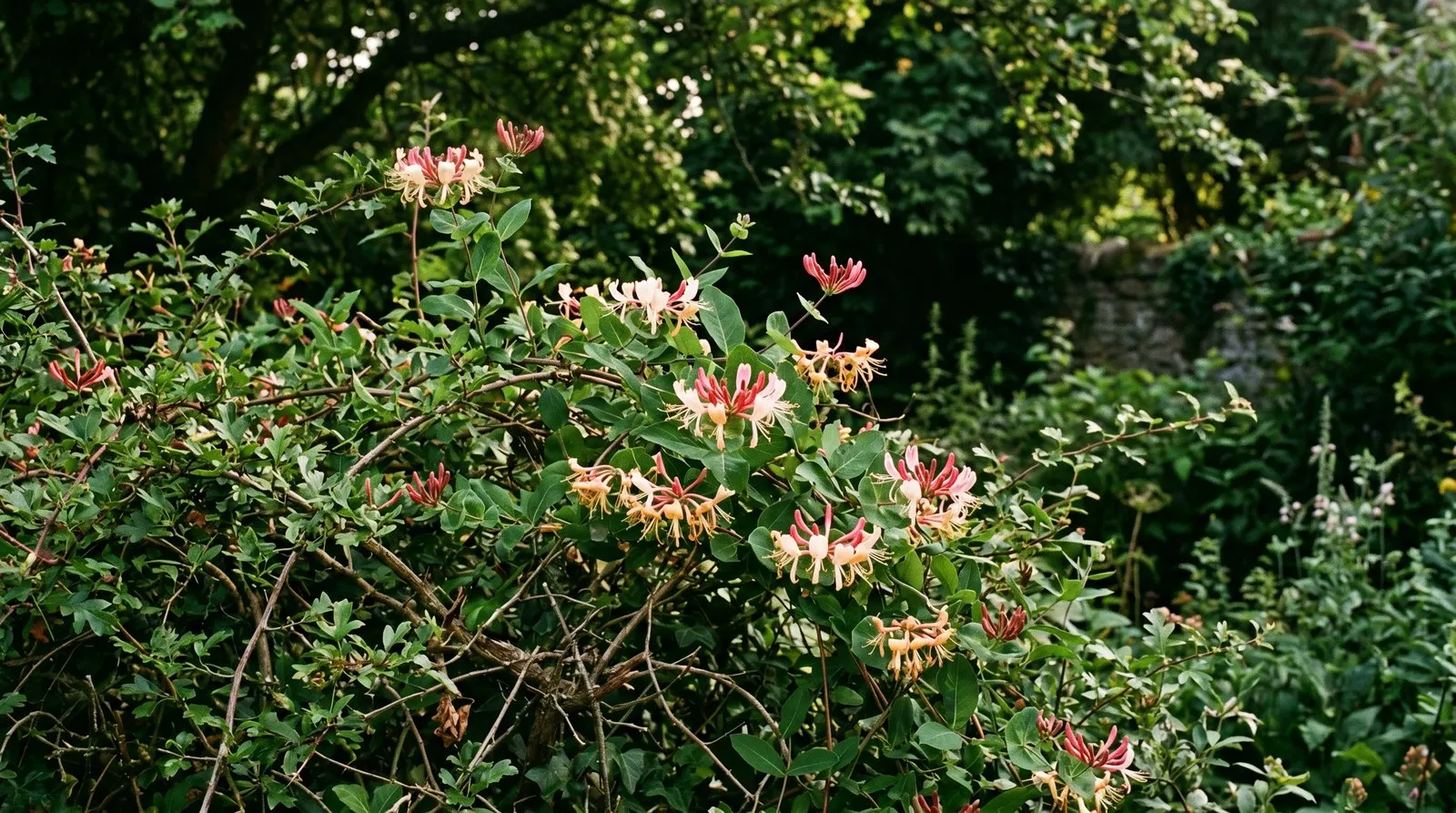 Native honeysuckle in a shady hedge is the White Admiral’s only caterpillar foodplant, and a nectar plant for many other species.
What a garden realistically can and cannot do
A garden cannot recreate a managed wood, but it can be a nectar refuge, a foodplant source and a corridor, and near woodland that combination genuinely supports rare species. Holding both halves of that truth is what makes the difference between useful action and wishful thinking.
The honest limits come first. You will not establish a breeding colony of Purple Emperors or Pearl-bordered Fritillaries by planting a border. Those species need the scale, structure and warm clearings of real woodland under active management. No amount of garden planting substitutes for that.
What you can do is real all the same. Leave a wild, unmown corner of native grasses, violets and trefoils. Let a patch of bramble and honeysuckle scramble along a boundary. Plant nectar in sun, grow native trees and a native hedge, and never use pesticides, which kill caterpillars and the plants they need. If you garden near a wood, you directly feed and shelter the butterflies that breed in it. If you garden further away, you become a stepping stone across the wider countryside. Either way you are part of the network that keeps these butterflies moving and alive.
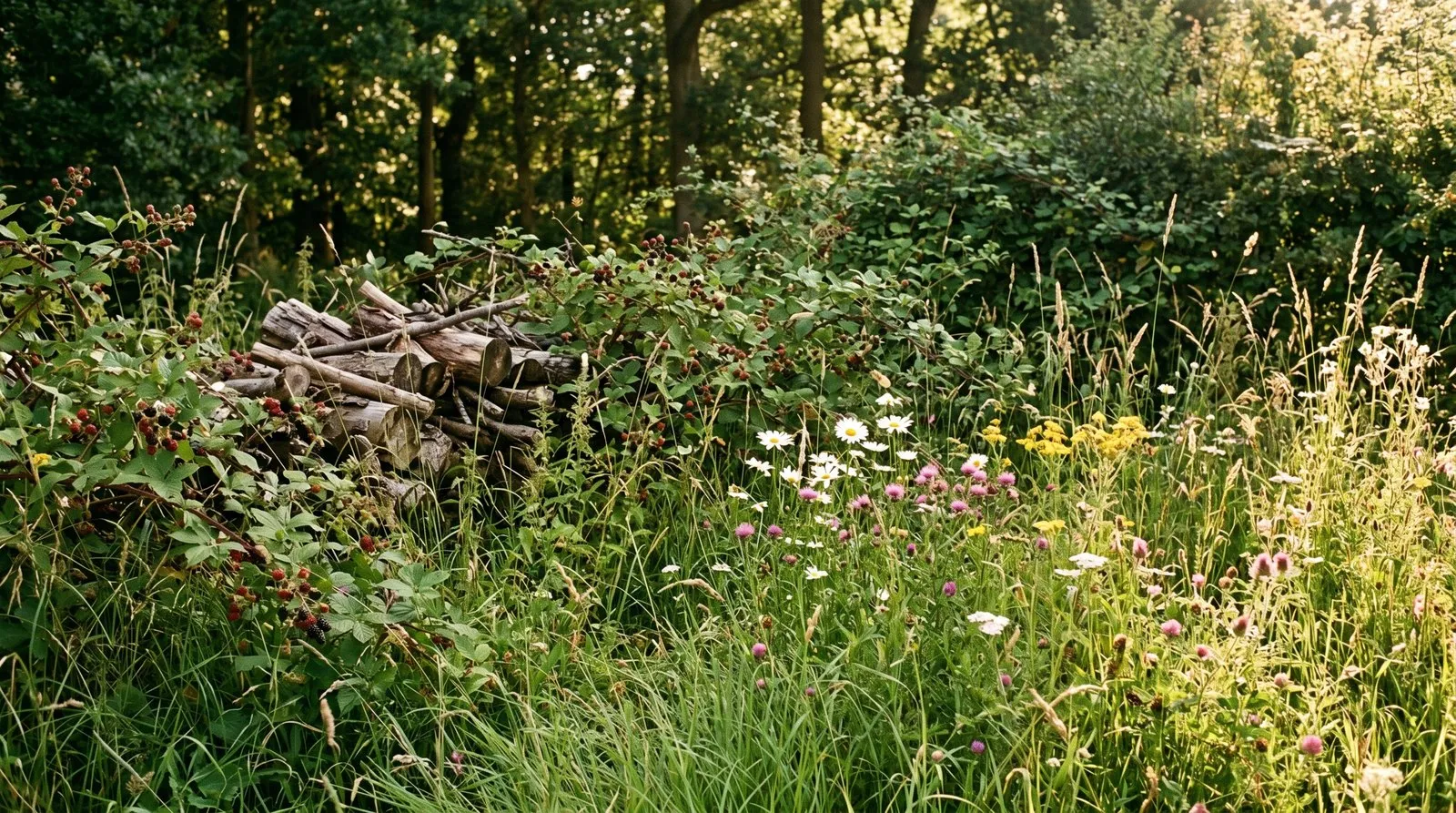 A wild, unmown corner with native grasses, violets and a log pile turns a garden edge into usable habitat and shelter.
A note on the White-letter Hairstreak and elm
Why the White-letter Hairstreak is a special case: Of all these butterflies, the White-letter Hairstreak shows most clearly how a single change can undo a species. It breeds only on elm, and when Dutch elm disease swept the country it lost most of its foodplant almost overnight. It survives on the mature elms and elm regrowth that remain, often unseen high in the canopy, betrayed only by its tiny white “W” mark. If you have a mature elm, or room to plant a disease-resistant elm cultivar, you are doing something very few gardeners can: directly supporting a butterfly with nowhere else to go. It is a reminder that woodland butterflies are only ever as secure as the specific plants they depend on, and that planting the right tree is sometimes the most powerful thing a garden can do.
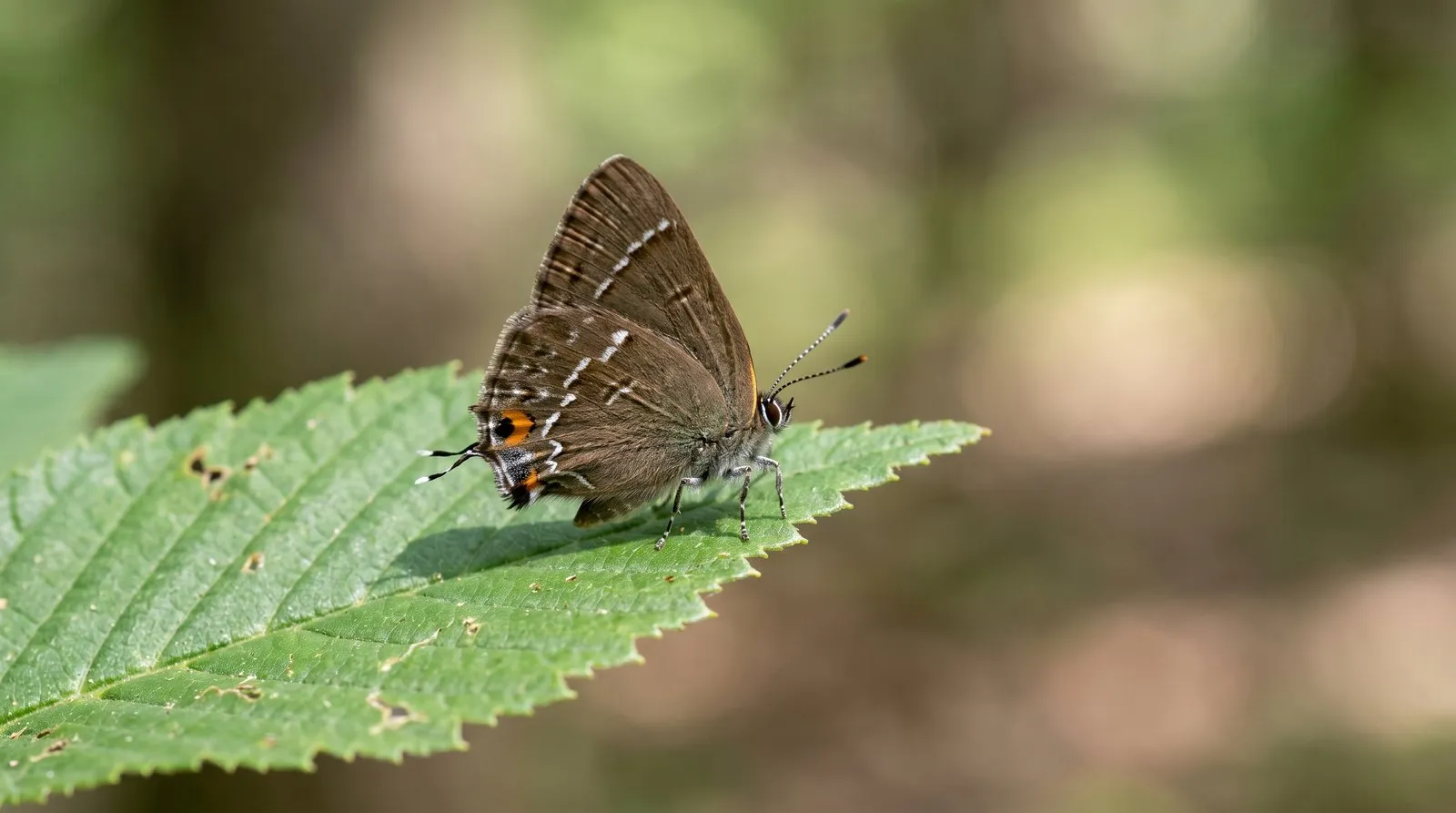 The White-letter Hairstreak breeds only on elm. The fine white “W” on its underwing gives it its name, and its scarcity follows the loss of elms.
The wider lesson runs through every species here. Each is bound to a particular plant and a particular place, and each has suffered as those places have changed. For the authoritative status and identification of each one, Butterfly Conservation’s White Admiral page and Silver-washed Fritillary page are the best starting points.
Frequently asked questions
Which woodland butterflies are rarest in the UK?
Among the rarest and most declined are the Pearl-bordered Fritillary, Duke of Burgundy, Wood White and High Brown Fritillary. The Purple Emperor, White Admiral and Silver-washed Fritillary are scarce woodland specialists too, though some are spreading again. Butterfly Conservation tracks all of them, and several remain on its highest-priority lists after steep, long-term declines linked to changes in how woods are managed.
Can I attract rare woodland butterflies to my garden?
You can attract some to feed, but rarely to breed. Gardens near woodland may draw nectaring Silver-washed Fritillaries or a passing White Admiral, especially with bramble, knapweed, marjoram and buddleia in a sunny spot. Breeding needs their exact foodplants and habitat, which most gardens cannot offer. Treat your garden as a nectar refuge and a corridor rather than a nursery, and you will still help.
What plants help woodland butterflies?
For nectar, grow bramble, knapweed, marjoram, thistles, scabious and buddleia in sun. For breeding foodplants where you have room, grow dog violets for fritillaries, native honeysuckle for the White Admiral, sallow or goat willow for the Purple Emperor, and cowslip or primrose for the Duke of Burgundy. Native trees and a wild, unmown edge add the structure these butterflies need.
Why have woodland butterflies declined?
The main cause is the loss of active woodland management. Coppicing and ride-clearing once kept woods sunny and varied, with the warm clearings these butterflies need. As that work stopped, many woods grew dark and uniform, and the violets, grasses and warm edges vanished. Habitat fragmentation and a changing climate add further pressure, which is why connecting habitats matters so much now.
Do I need to live near a wood to help?
It helps a great deal, but it is not the only way to contribute. Gardens near woodland can directly feed and shelter woodland species. Gardens further away still support the wider butterfly population and act as stepping stones across the countryside. Planting nectar, growing native foodplants and avoiding pesticides all add up, wherever you garden, because butterflies move between habitats far more than we realise.
Our team produces practical UK gardening guidance from source research, contributor records and established horticultural practice. Editorial standards are overseen by Matt W.