Key takeaways
- The rules are RSPB guidance, not a legal ban; you can still feed birds
- Pause seeds and peanuts from 1 May to 31 October, when disease risk peaks
- Stop using bird tables, window feeders and any feeder with a flat tray
- Clean feeders and move them to a fresh spot at least once a week
- Only put water out if you can change it daily with fresh tap water
- See a sick bird? Take all feeders down, clean them, and wait 2 to 4 weeks
The new RSPB bird feeding rules have changed how millions of UK gardeners should run their feeders. Despite the headlines, these RSPB bird feeding rules are guidance, not a legal ban. The core of the change is simple: feed seasonally and feed safely. The RSPB now advises pausing seeds and peanuts from 1 May to 31 October, dropping bird tables and any flat feeder, and cleaning plus moving your feeders every single week.
What the New RSPB Rules Actually Say
The new RSPB position is “Feed Safely, Feed Seasonally”, not a ban on feeding. It is published advice, and no law compels you to follow it. You can still legally put food out all year. The change asks you to adjust how and when you feed so that feeders spread less disease.
Four practical shifts sit at the heart of it. First, pause seeds and peanuts from 1 May to 31 October, the window when disease risk peaks. Second, stop using flat feeders, including bird tables and window trays. Third, clean and reposition feeders weekly rather than leaving them static. Fourth, only offer water you can change daily with fresh tap water.
Some news coverage has framed this as a “summer ban” or “new law”. That overstates it. The RSPB itself describes guidance shaped by research from the British Trust for Ornithology and the Garden Wildlife Health project. You keep control of your own garden. The aim is fewer dead finches, not empty gardens.
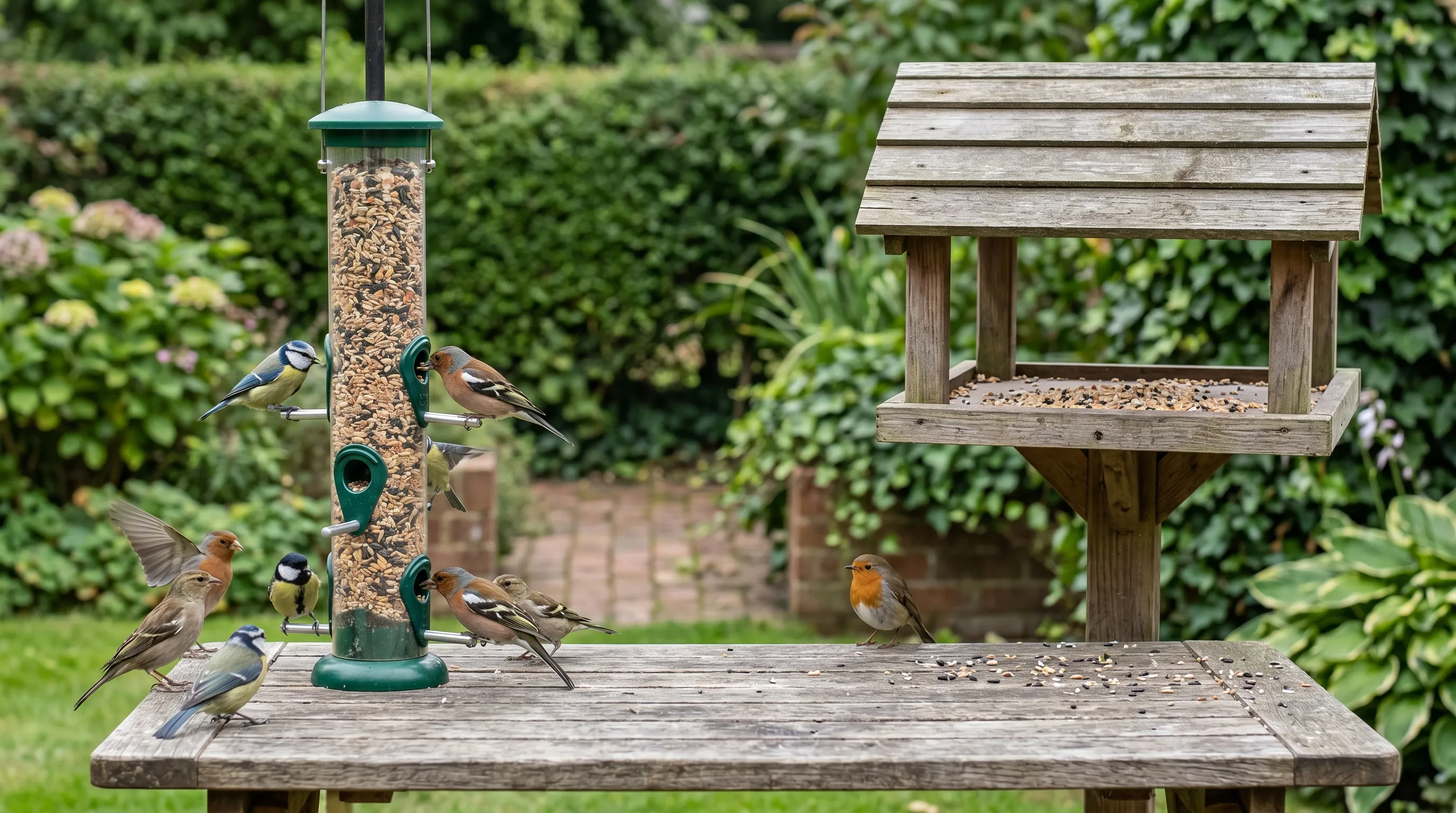 The headline change in plain terms: tube and mesh feeders stay, flat bird tables and trays go. Flat surfaces let contaminated food sit for the next bird to eat.
Why the RSPB Changed Its Advice
The advice changed because disease at feeders is driving steep, measurable finch declines. This is the heart of the new guidance, and the numbers are stark. UK greenfinch numbers have fallen around 67 per cent since the Big Garden Birdwatch began in 1979. The RSPB now puts the drop at over 65 per cent in the last three decades alone.
The main culprit is trichomonosis, a disease caused by the parasite Trichomonas gallinae. It first emerged in British finches in 2005 and spread fast. Research tracked by the BTO recorded population declines of around 62 per cent for greenfinch and 37 per cent for chaffinch between 2011 and 2021. By 2007, breeding populations in the worst-hit regions had already dropped 35 per cent for greenfinch and 21 per cent for chaffinch. That meant the deaths of more than half a million birds in a short span. The greenfinch now sits on the UK Red List of birds of conservation concern. Bullfinch may now be declining too.
A second pressure is avian influenza, which has hit wild bird populations hard since 2021. It spreads where birds gather and where droppings build up. Both diseases share the same root: crowding at feeders and flat surfaces, especially in warm, damp conditions. The new rules attack that shared cause.
How trichomonosis spreads at a feeder
The parasite lives in a bird’s saliva and is passed through contaminated food and water. A sick bird struggles to swallow. It drops or regurgitates food back onto a feeder tray, a bird table, or the ground below. The next bird eats that food and picks up the parasite.
Trichomonas gallinae cannot survive long once it dries out. That single fact drives the whole hygiene strategy. Keep food dry, clear away spilt seed, and never let damp waste sit under a feeder. Flat surfaces are the danger because they hold a pool of soft, moist, contaminated food in the open. Tube and mesh feeders give the parasite far less to cling to.
The RSPB Action List for Gardeners
The new rules boil down to a short, repeatable routine. Follow these eight actions and you cut feeder disease risk sharply. None of them costs much. The discipline of doing them weekly is what counts. If grey squirrels raid the feeders while you are at it, our squirrel-proof bird feeders guide covers baffles and cages that keep the seed for the birds.
- Pause seeds and peanuts from 1 May to 31 October. This is the single biggest change. Disease risk peaks across summer and autumn, so the riskiest feeds come off the menu.
- Switch to small amounts of suet, fat balls and mealworms in summer. These remain acceptable year round if offered in modest portions.
- Bin the bird table and any tray feeder. Move to tube and mesh feeders that hold food off flat surfaces.
- Clean every feeder at least once a week. Use hot soapy water and a non-toxic disinfectant, then rinse and dry fully.
- Move each feeder to a fresh spot every week. Rotating the position stops droppings and waste building up in one place.
- Reduce the number of feeders. Fewer feeding points means less crowding. Two or three well-spaced feeders beat six clustered together.
- Sweep up spilt food daily. Clear the ground below feeders so nothing damp accumulates for ground-feeding birds.
- Provide water only if you can change it daily. Use fresh tap water and scrub the dish each week.
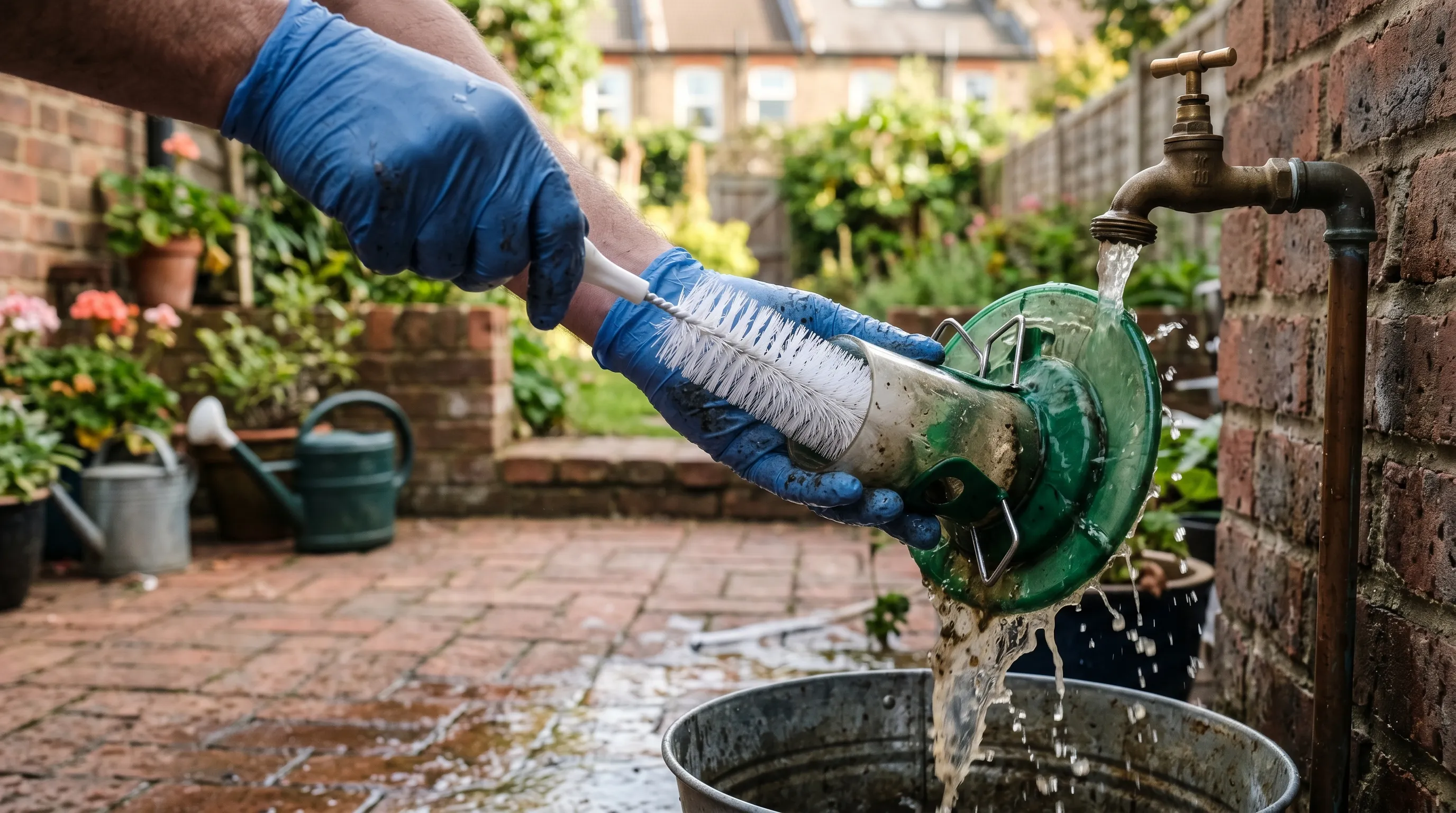 Weekly cleaning, done outdoors with dedicated gloves and a brush kept away from the kitchen. Hot soapy water plus a non-toxic disinfectant is the standard the RSPB now sets.
Which Feeders to Keep and Which to Bin
Feeder type decides how easily disease spreads, so the design matters more than the brand. The RSPB now draws a clear line: anything with a flat, open surface where food can pool is out. That includes traditional bird tables, window box feeders, and any tube feeder with a wide tray at the base.
The reason is direct. A flat surface collects regurgitated food, droppings and rain. It becomes a shared plate where one sick bird infects the rest. A tube or mesh feeder dispenses small amounts through ports, holds food off any open tray, and drains rather than pools. It gives the parasite far less to survive on.
| Feeder type | Disease risk | Clean how often | Verdict |
|---|---|---|---|
| Bird table (flat top) | Very high | Was weekly, now retire it | Bin it under the new rules |
| Window tray feeder | Very high | Weekly | Retire, flat surface pools food |
| Open tray on tube base | High | Twice weekly | Remove the tray, keep the tube |
| Tube seed feeder (no tray) | Moderate | Weekly | Keep, the recommended type |
| Mesh peanut or nyjer feeder | Lower | Weekly | Keep, drains and dries well |
| Ground feeding (scattered) | Very high | n/a | Discouraged, food sits and spoils |
The practical move for most gardeners is cheap. Pull the tray off any feeder that has one, retire the bird table to plant-pot duty, and run two or three tube or mesh feeders instead. You lose nothing in the range of birds you attract, and you cut the disease load straight away.
How to Clean a Feeder Safely
Clean every feeder outdoors with hot soapy water and a non-toxic disinfectant, then rinse and dry it fully. The RSPB names Ark-Klens or a 5 per cent bleach solution as suitable disinfectants. A 1 in 50 dilution of household bleach, around 20ml per litre of water, also works. Scrub all surfaces, ports and perches with a brush, because dried droppings shield the parasite from disinfectant.
Wear gloves and keep a dedicated set of brushes for the job. This is about your health as much as the birds’. Trichomonosis is a bird disease, but feeder waste can carry other organisms, so basic hygiene matters.
Warning: Never clean bird feeders in the kitchen sink or with kitchen utensils. Bird droppings can carry salmonella and other organisms that affect people. Keep a separate bucket, brush and pair of gloves for feeder cleaning. Store them outdoors, wash your hands afterwards, and never let the cleaning kit near food preparation surfaces.
Let feeders dry completely before refilling. Damp seed is exactly what the parasite needs to survive between birds. If you are short of time, run two sets of feeders so one can dry fully while the other is in use. For the full disinfectant ratios, drying times and water-bath routine, our bird feeder cleaning guide covers each step in detail.
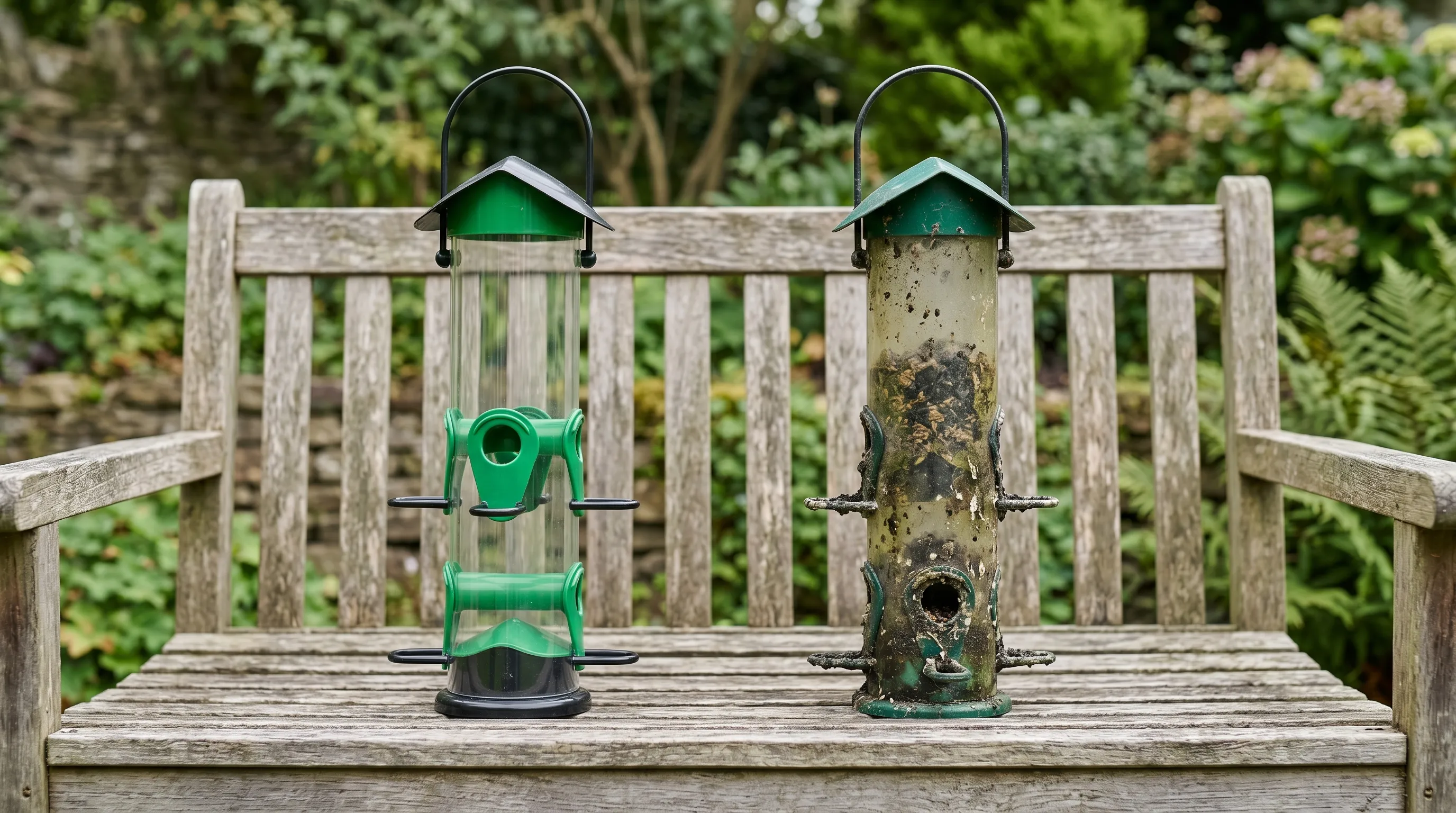 The difference a weekly clean makes. The grimy feeder on the right, with mouldy seed caked around the ports, is exactly the transmission point the new rules target.
When to Pause Feeding Completely
Stop feeding the moment you see a sick or dead bird at your feeders. This is the rule most gardeners miss, and it is the most important one. A sick bird at a feeder means the feeder itself is now a transmission point. Carrying on feeding spreads the disease to every healthy bird that visits.
A bird with trichomonosis looks unmistakable once you know the signs. It sits fluffed up and lethargic, often with wet or matted feathers around the beak. It may drool, struggle to swallow, or regurgitate food. The neck can swell. These birds are slow to fly off and often linger at the feeder.
When you see one, act fast:
- Take every feeder down at once, not just the one in use.
- Clean and disinfect them all, then store them away from the garden.
- Wait 2 to 4 weeks before feeding again, so birds disperse and stop crowding.
- Provide only fresh water during the pause, changed daily.
- Report the bird to Garden Wildlife Health, the project run by ZSL, the BTO, Froglife and the RSPB.
The pause feels harsh, but it is what breaks the cycle. Spread-out, hungry birds are healthier than a crowd around an infected feeder. For broader seasonal timing, our bird feeding guide by season sets out what to offer month by month.
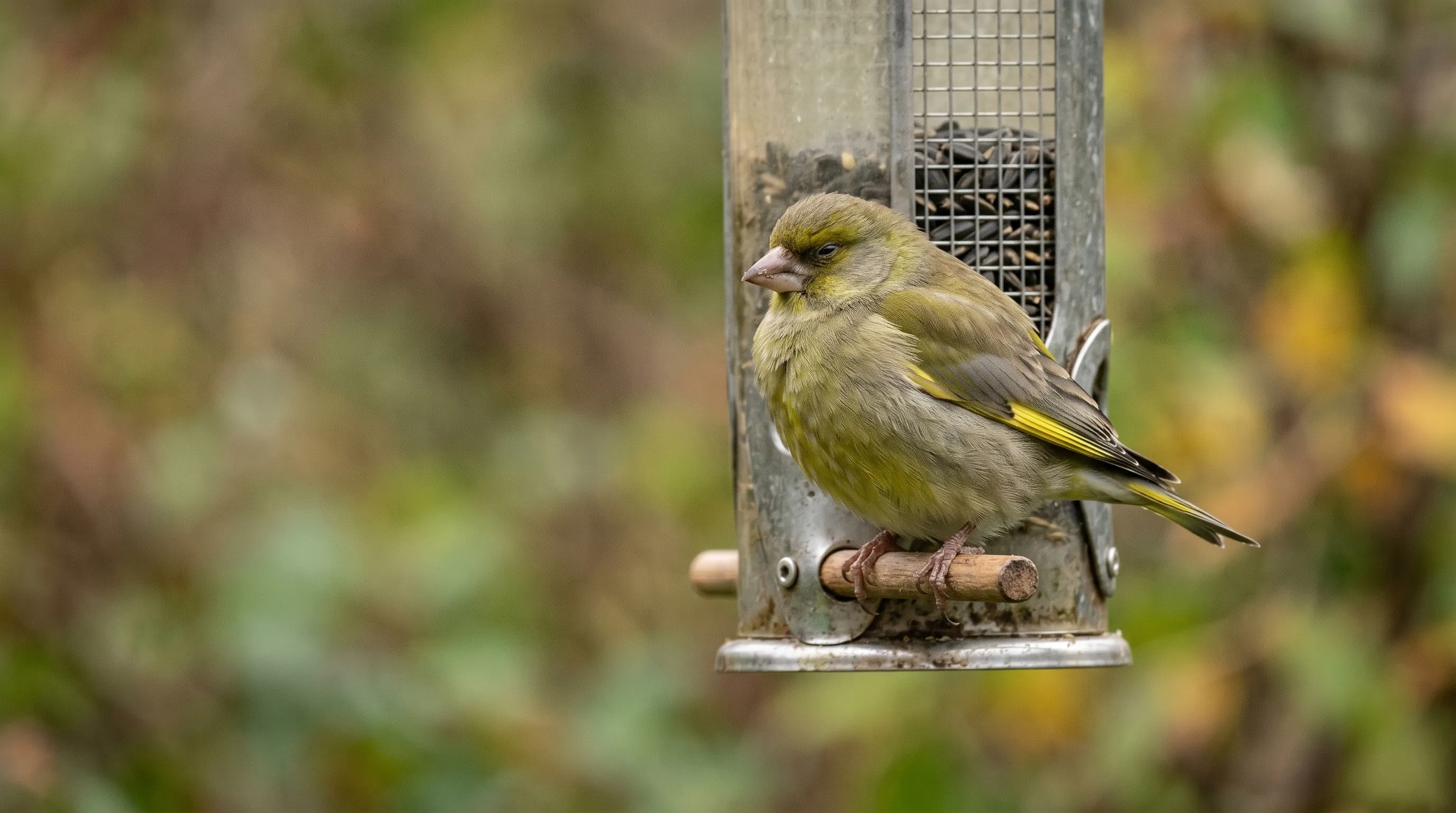 A finch sitting fluffed up and slow to move is the warning sign. One sick bird at a feeder means it is time to take everything down and pause for 2 to 4 weeks.
The Right Foods and the Ones to Avoid
Food choice changes with the season under the new rules, and quality matters as much as type. From 1 November to 30 April you can offer the full range, seeds and peanuts included. From 1 May to 31 October, drop seeds and peanuts and stick to small amounts of suet, fat balls and mealworms.
Across the whole year, the rule is freshness. Mouldy, stale or damp food breeds disease and should never go out. Buy in small quantities so stock does not sit and spoil. Offer only what birds clear within a day or two.
| Food | When | Why |
|---|---|---|
| Sunflower hearts | Nov to Apr only | High energy, but pause in summer disease window |
| Peanuts (in mesh) | Nov to Apr only | Choking risk to chicks, so off the menu in breeding season |
| Nyjer seed | Nov to Apr only | Loved by goldfinches, pause through summer |
| Suet and fat balls | Year round, small amounts | Stay acceptable in summer if portions are small |
| Mealworms | Year round, small amounts | Protein for chicks, offer fresh and sparingly |
| Mouldy or stale food | Never | Breeds disease, the opposite of the new rules |
| Whole peanuts loose | Never in summer | Chicks can choke; use mesh in winter only |
| Cooked porridge, milk, salty scraps | Never | Milk upsets bird digestion; salt is toxic |
Water Hygiene Under the New Rules
Only put water out if you can change it daily, and use fresh tap water. Standing water spreads trichomonosis just as readily as a dirty feeder, because the parasite passes through saliva-contaminated water. A neglected bird bath becomes a disease point.
The RSPB advice is specific. Change the water every day, top up with clean tap water, and scrub the dish each week with the same disinfectant routine as your feeders. If a local pond is available to the birds, the RSPB notes it carries lower trichomonosis risk than a small static bird bath, because the volume dilutes the parasite.
Common Mistakes Gardeners Make
Most disease at feeders traces back to a handful of avoidable habits. Spotting them in your own garden is the quickest win.
Refilling without cleaning. Topping up a feeder on dirty old seed mixes fresh food with droppings and feather debris. Within five to seven days that becomes a transmission point. Empty and rinse before every refill, and do a full clean weekly.
Leaving feeders static. A feeder that never moves builds a layer of contaminated waste in the soil below. The parasite waits there. Move each feeder 2 to 3 metres every week so the ground can dry and clear.
Carrying on after a sick bird appears. This is the costliest mistake. One ill finch at a busy feeder can infect dozens. Take everything down and pause for 2 to 4 weeks the moment you see one.
Putting out too much food. A pile of seed that sits for days goes damp and mouldy. Offer only what birds clear in a day or two, especially in summer.
Seasonal Feeding Calendar Under the New Rules
The new rules split the year into a high-risk summer window and a lower-risk winter one. This calendar shows what to offer and what to watch each month, built around the 1 May to 31 October pause.
| Month | What to feed | Key task |
|---|---|---|
| January | Full range, seeds and peanuts | Clean weekly, top up in cold snaps |
| February | Full range | Watch for the first sick birds as numbers rise |
| March | Full range, taper seeds late month | Deep-clean all feeders before the pause |
| April | Wind down seeds and peanuts | Plan the 1 May switch |
| May | Suet, fat balls, mealworms only | Pause seeds and peanuts from 1 May |
| June | Small amounts of suet and mealworms | Clean and move feeders weekly |
| July | Same, small portions | Highest disease month, stay vigilant |
| August | Same, small portions | Sweep ground daily, watch for sick birds |
| September | Same, small portions | Keep portions small as flocks build |
| October | Suet and mealworms to 31 Oct | Resume seeds and peanuts from 1 Nov |
| November | Full range returns | Increase feeding for winter |
| December | Full range | Feed steadily through cold, clean weekly |
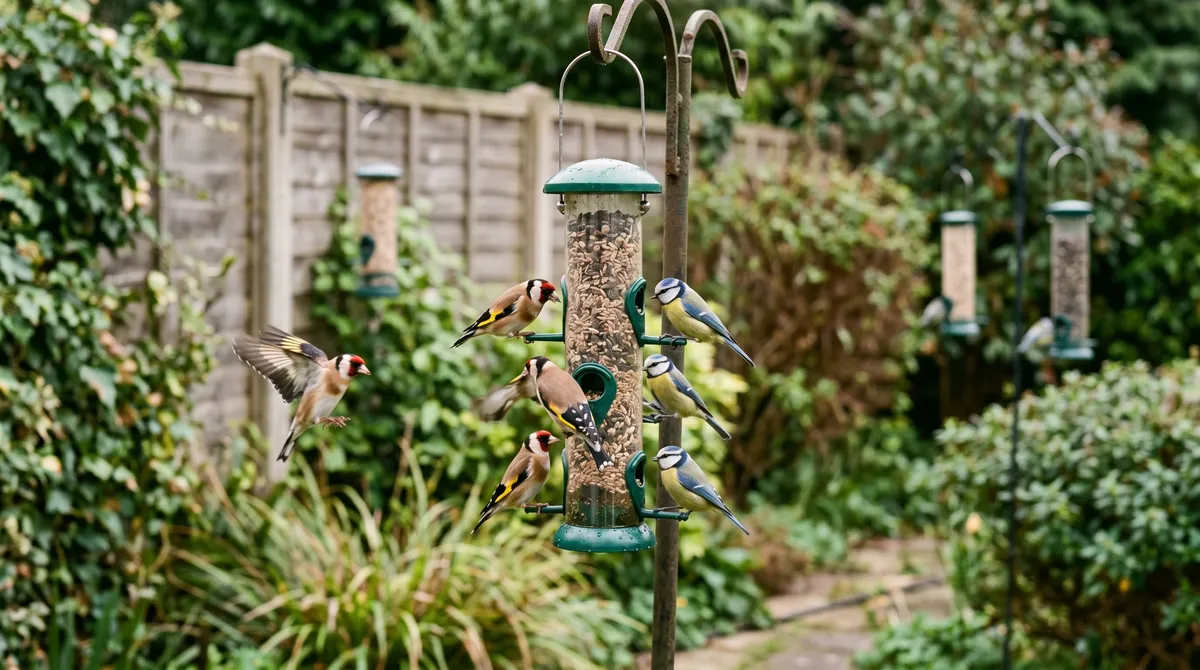
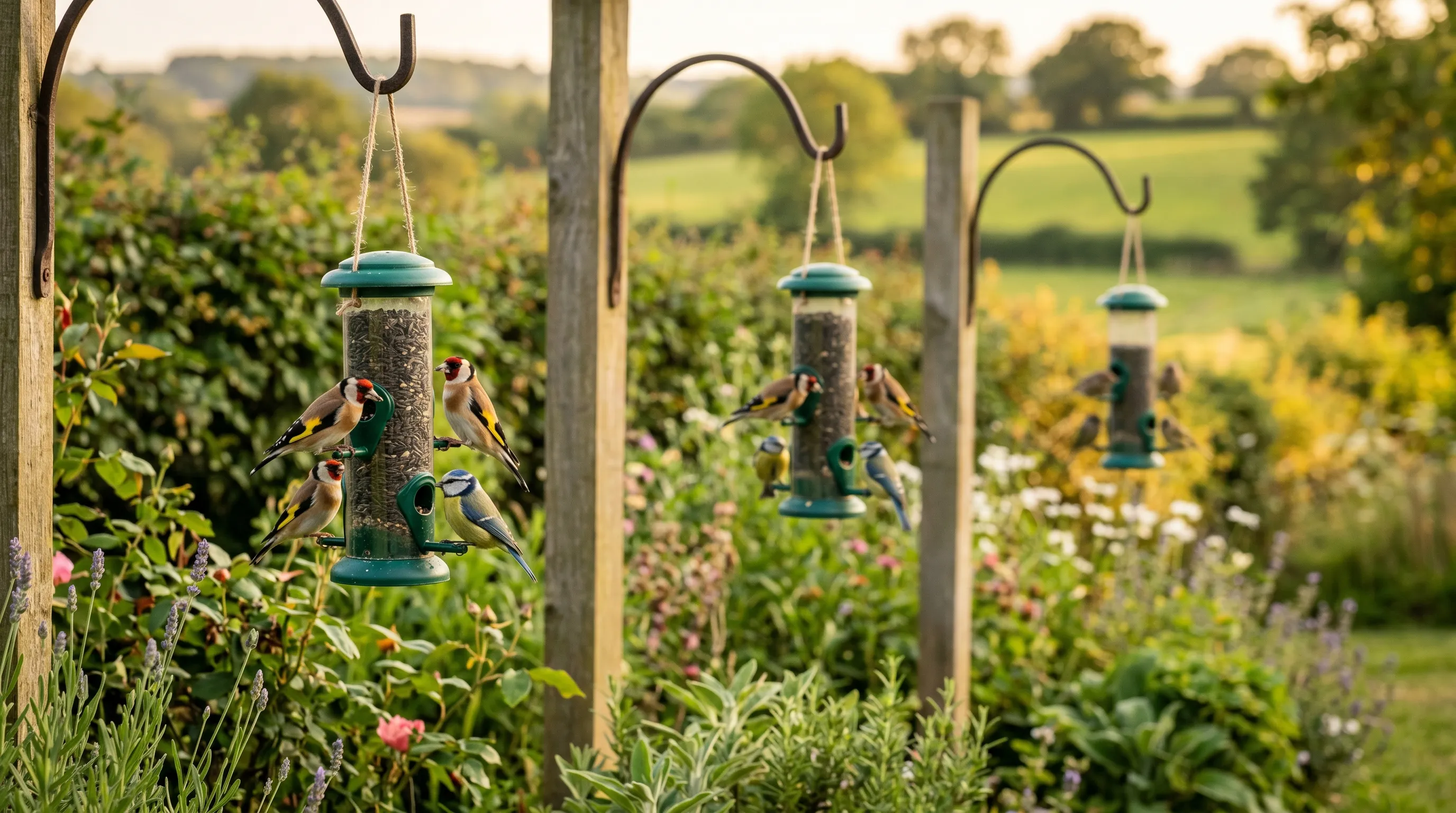 Two or three well-spaced tube feeders, moved weekly, are the model the new rules point towards. Fewer feeding points means less crowding and less disease.
Frequently Asked Questions
Are the new RSPB bird feeding rules a legal ban?
No, they are guidance, not law. You can still legally feed garden birds in the UK. The RSPB now advises pausing seeds and peanuts from 1 May to 31 October, dropping flat feeders, and cleaning weekly. The aim is to slow disease, not to stop feeding. Small amounts of mealworms and suet stay fine all year.
Why has the RSPB changed its bird feeding advice?
Because disease at feeders is driving steep finch declines. UK greenfinch numbers have fallen about 67 per cent since 1979, largely from trichomonosis. The parasite spreads where birds crowd at feeders and on flat surfaces. The new advice cuts that crowding in the high-risk summer and autumn months. It rests on years of BTO and Garden Wildlife Health research.
Can I still feed birds in summer under the new rules?
Yes, but pause seeds and peanuts from 1 May to 31 October. You can still offer small amounts of mealworms, suet and fat balls. Keep portions small so food is eaten within a day or two. Clean and move feeders weekly. The goal is steady, hygienic feeding, not a full summer stop.
What bird feeders does the RSPB now advise against?
Any feeder with a flat surface, including bird tables and window feeders. Flat surfaces let contaminated food and droppings collect for other birds. The RSPB now favours tube and mesh feeders that hold food off open trays. Ground feeding is discouraged for the same reason. Remove the tray from any feeder that has one.
What should I do if I see a sick bird at my feeder?
Take all feeders down at once and stop feeding. Clean and disinfect every feeder, then store them away. Wait 2 to 4 weeks before starting again, so birds disperse and the disease cycle breaks. Report the sick or dead bird to Garden Wildlife Health. Provide only fresh water during the pause.
Putting the New Rules Into Practice
The new RSPB bird feeding rules are not a reason to stop feeding birds. They are a clearer, evidence-led way to feed without spreading disease. Pause seeds and peanuts through summer, bin the bird table, clean and move your feeders weekly, and act the instant you see a sick bird. Each step is cheap and quick, and together they ease the pressure on greenfinch, chaffinch and the rest.
Our team produces practical UK gardening guidance from source research, contributor records and established horticultural practice. Editorial standards are overseen by Matt W.