Key takeaways
- The country look is abundance held together by structure: loose planting, firm bones
- Plant in layers and drifts, never single specimens dotted about
- Self-seeders like foxgloves and forget-me-nots do the informal work for free
- Clipped box, yew or hornbeam stops the abundance tipping into mess
- Keep the colour palette soft and repeat two or three colours through the borders
- Climbing roses and arches add the vertical romance the style is known for
The English country garden is the most copied and most misunderstood style in UK gardening. People recreate the billowing roses and the foxgloves, then wonder why theirs looks unkempt by July when the famous gardens look romantic all season. The answer is not the planting. It is what holds the planting together.
This guide breaks the style down into the parts that actually matter: the structure that frames the abundance, the layered planting that fills it, the colour palette that calms it, and the self-seeders that do half the work for free. Get these right and the look works in any UK plot, from a town courtyard to an acre.
The secret: abundance held by structure
Stand in any great English garden, Sissinghurst, Hidcote, Great Dixter, and the first impression is romantic chaos: borders spilling over, roses tumbling, colour everywhere. Look again and you see the discipline underneath. Clipped yew hedges, box balls, and firm paths frame every bit of that froth.
Start with the bones. Even in a small garden, three clipped box mounds, a low hedge, or a single yew column gives the eye somewhere to rest and stops the planting reading as mess.
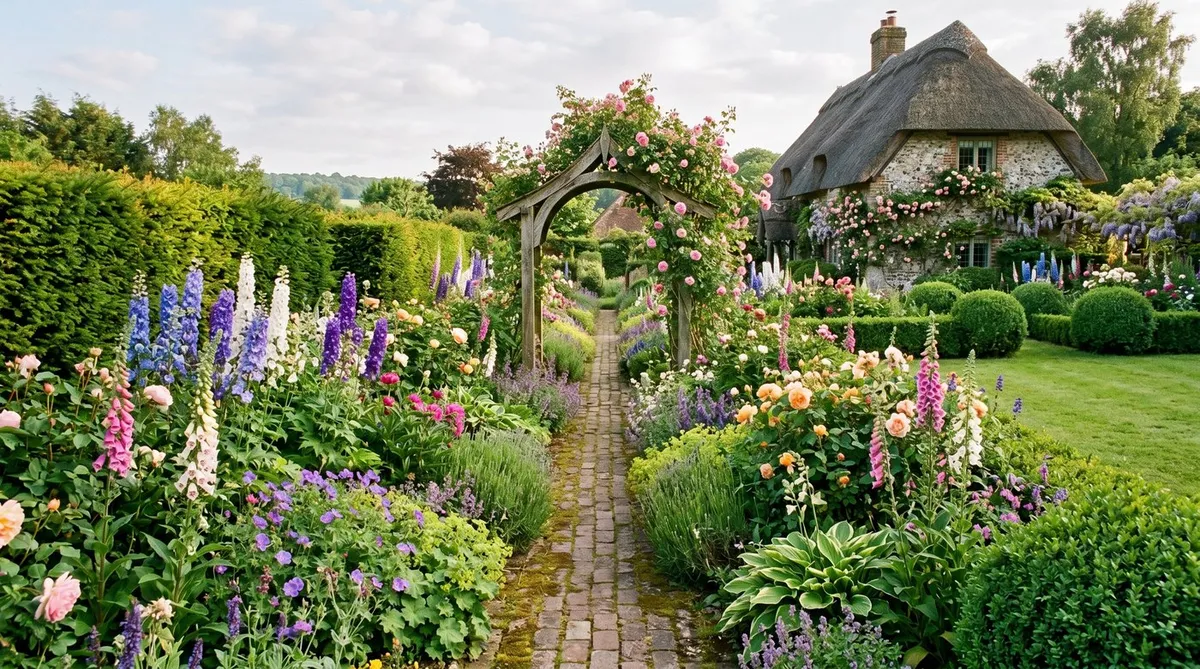
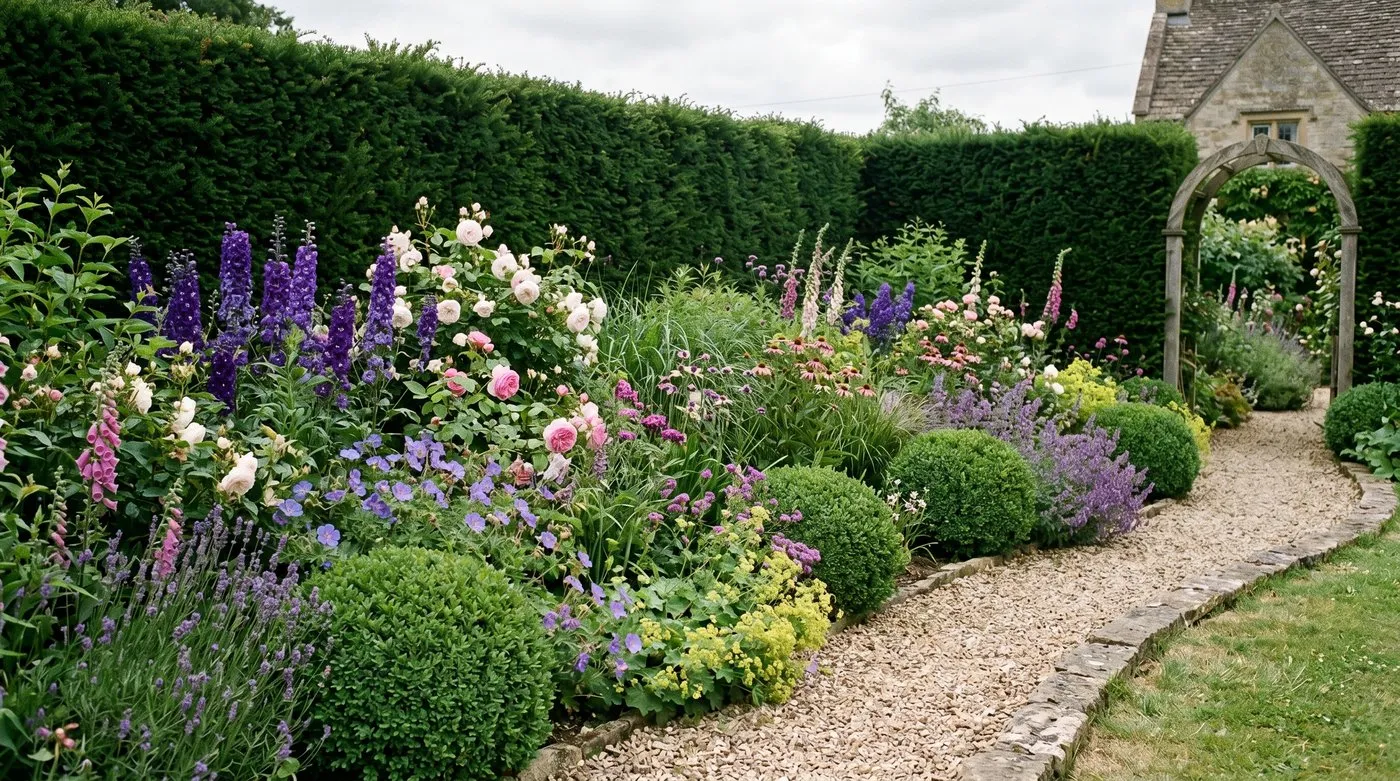 The secret in one frame: loose, abundant planting framed by clipped box and a yew hedge. The evergreen structure is what makes the abundance read as designed rather than overgrown.
Plant in layers and drifts
The country look never uses single plants dotted about. It plants in layers and drifts, so the border reads as one full, flowing whole rather than a collection of specimens.
Think of a border in three layers:
- Back layer: tall structural flowers, delphiniums, hollyhocks, foxgloves, that give height and drama. Our guides to growing delphiniums and growing hollyhocks cover the cottage classics.
- Middle layer: the mass of the border, hardy geraniums, salvias, peonies, lupins, planted in drifts of three, five, or seven of the same plant.
- Front layer: low, spilling edge plants, catmint, lady’s mantle, hardy geraniums, that soften the line between border and path.
Plant in odd-numbered drifts of the same plant, not singles. A drift of five geraniums reads as intentional; one geranium next to one salvia next to one lupin reads as a sample tray.
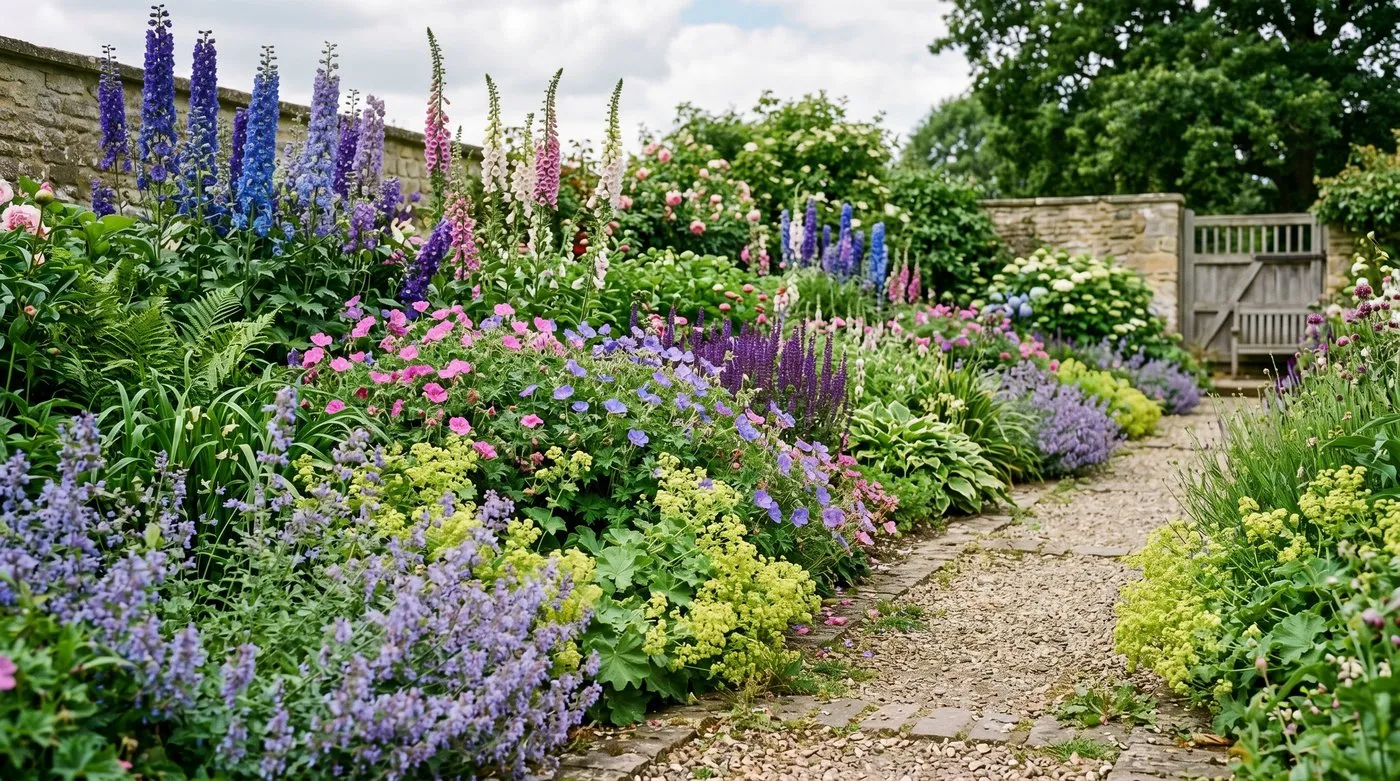 Layered planting: tall spires at the back, a mass of perennials in the middle, low plants spilling onto the path. Drifts of the same plant, never singles, give the border its flow.
Let self-seeders do the work
The relaxed, just-happened quality of a country garden comes largely from self-seeding plants that move themselves around. They fill gaps, soften edges, and create the happy accidents that make the style feel alive, all for free.
The best-behaved self-seeders for UK gardens include foxgloves, forget-me-nots, aquilegia, honesty, verbena bonariensis, and Welsh poppies. Let them set seed, learn which seedlings to keep and which to pull, and within a couple of seasons they weave the border together better than any planting plan. Our guide to growing foxgloves covers the most useful self-seeder of all.
The skill is editing, not sowing. Each spring, thin the seedlings: keep the ones in good spots, remove the rest. This light hand is what separates a romantic self-seeded border from a chaotic one.
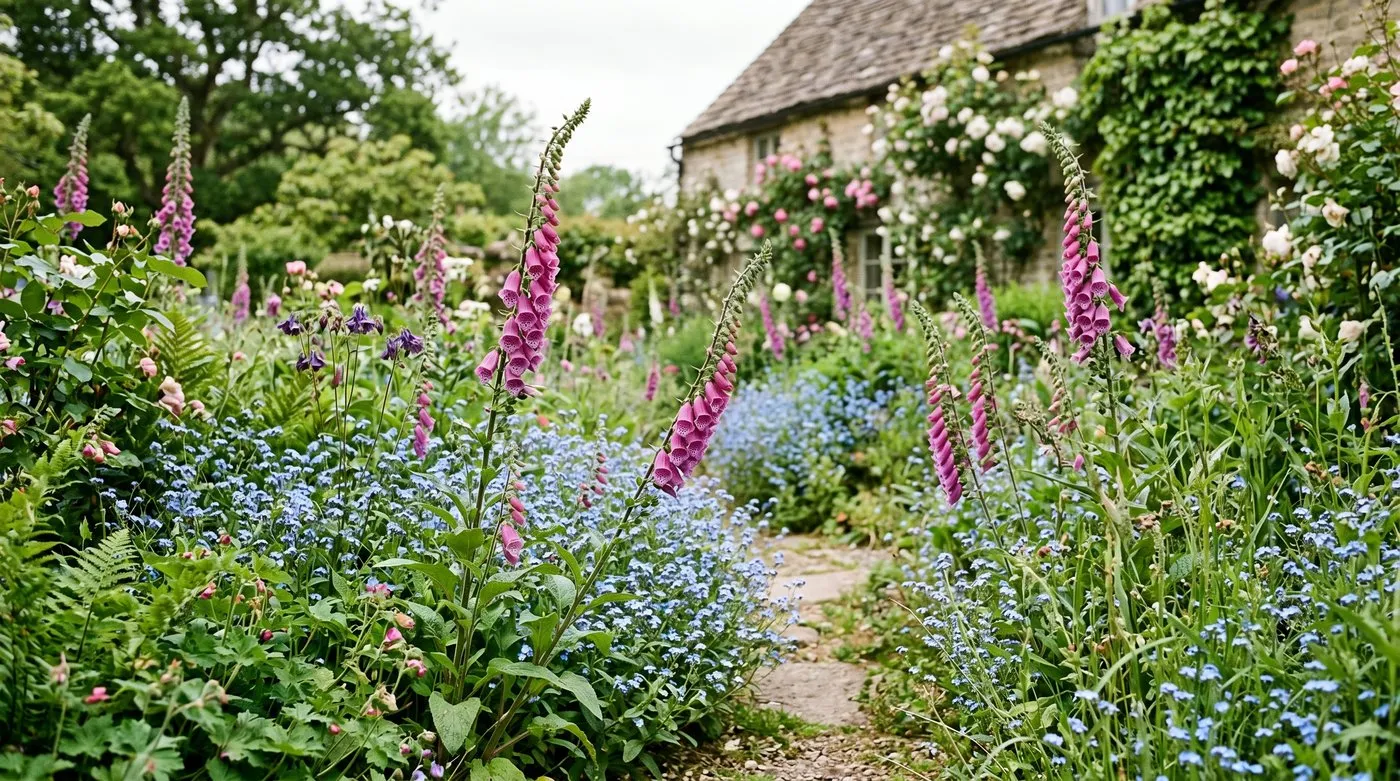 Self-seeders like foxgloves and forget-me-nots move themselves around and create the happy accidents that make the style feel alive. The skill is editing the seedlings, not sowing them.
Get the colour palette right
The thing that tips a country border from beautiful to busy is colour. The great gardens limit the palette and repeat it, even while packing the borders full.
Three reliable country palettes:
| Palette | Colours | Mood |
|---|---|---|
| Soft romantic | Pink, mauve, silver, white | Calm, classic, the Sissinghurst look |
| Warm cottage | Apricot, soft yellow, dusky red, bronze | Rich, late-summer, generous |
| Cool elegant | Blue, white, deep purple, green | Fresh, restful, formal-leaning |
Pick one, then repeat two or three key colours through the whole border. Repetition is what calms abundance. A border can be stuffed with twenty kinds of plant and still feel serene if they share a tight colour range. The same border in clashing colours feels frantic however well it is planted.
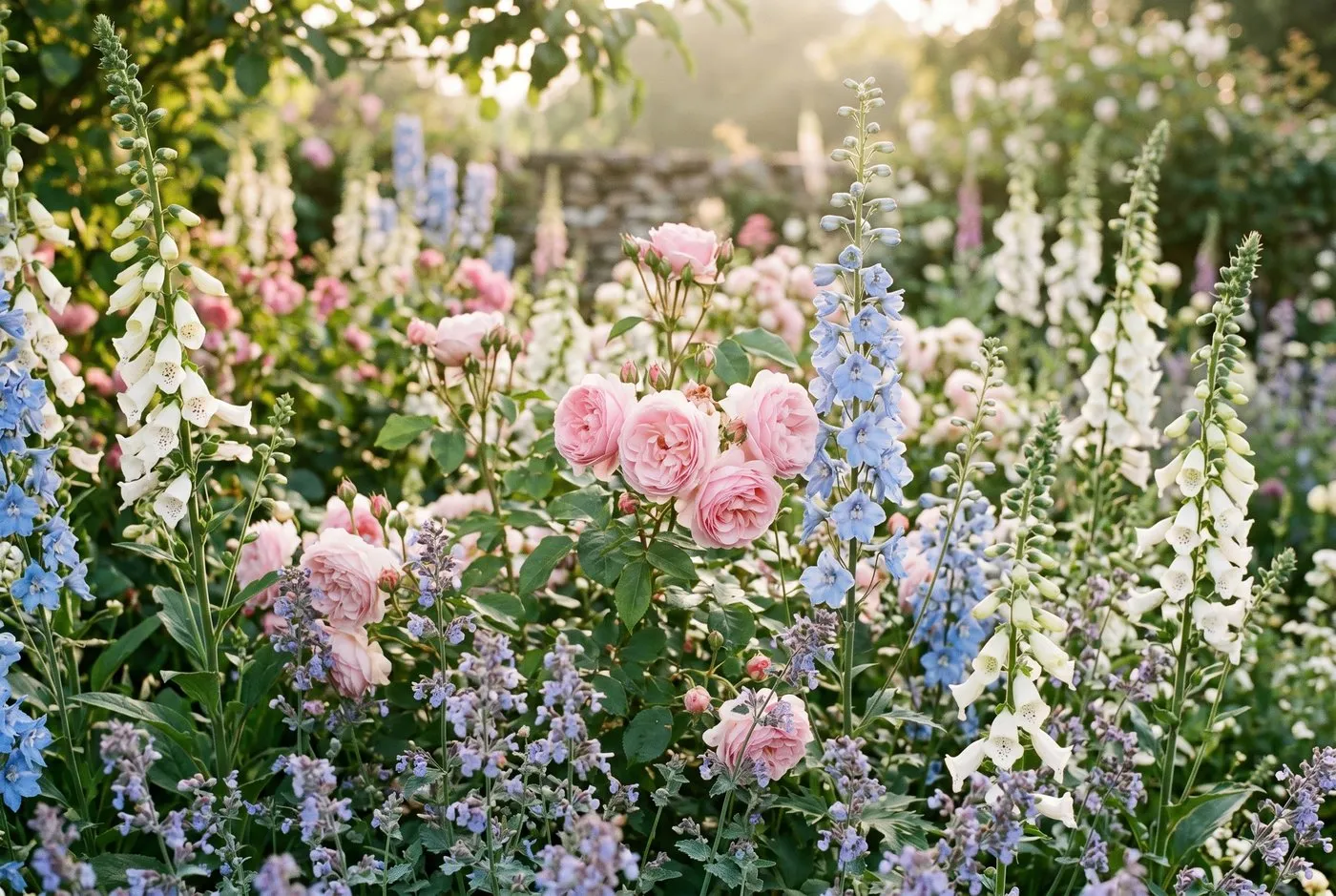 A restrained palette of pinks, blues and white reads as calm and cohesive, the heart of the country look.
Add the vertical romance: roses and arches
No English country garden is complete without height from climbers. Climbing roses, clematis, and honeysuckle scrambling over arches, obelisks, and walls add the vertical romance the style is famous for, and draw the eye up out of the borders.
A climbing rose over an arch at a path junction, or framing a view, is the single most evocative gesture in the style. Our guides to the best climbing roses for UK gardens and making a rose arch cover the plants and the structure. Underplant the base of climbers with hardy geraniums or catmint to hide the bare lower stems.
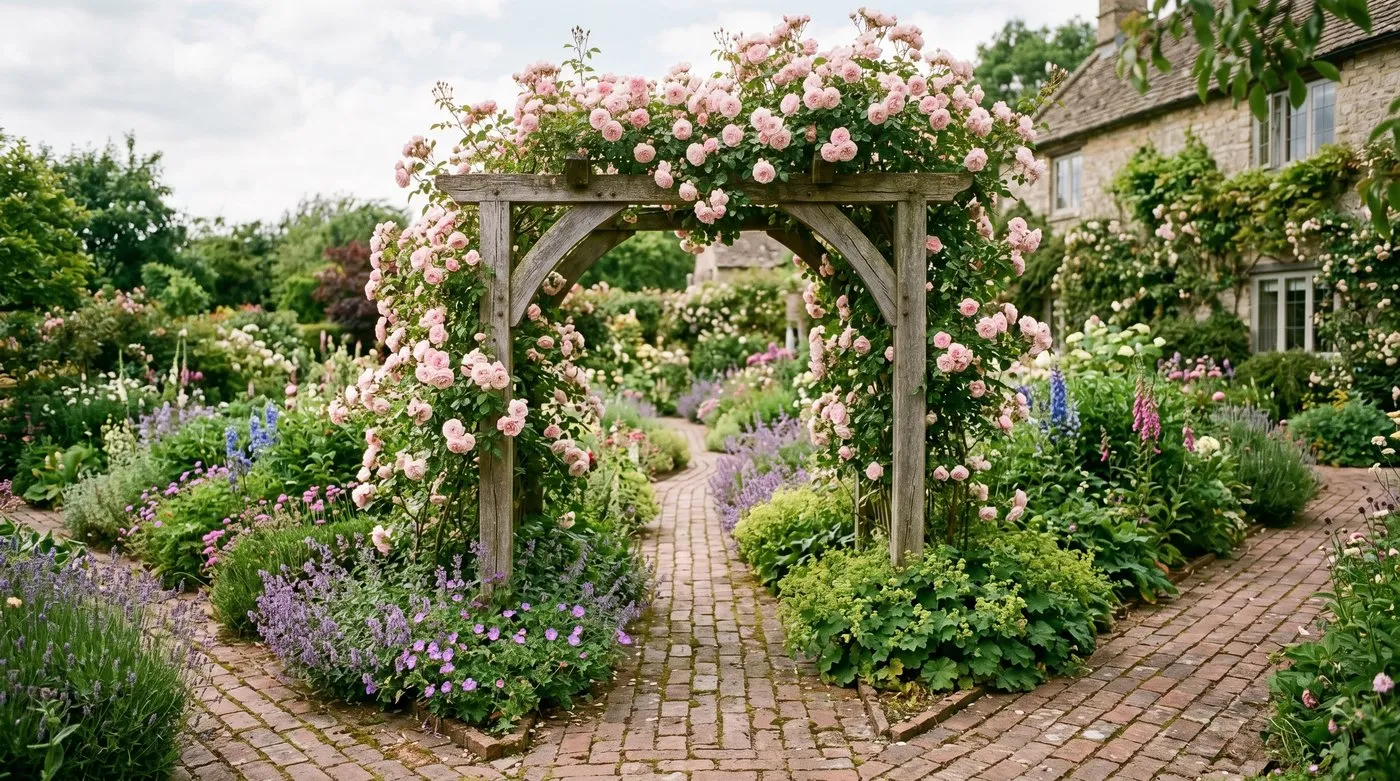 A climbing rose over an arch is the most evocative gesture in the style. It adds vertical romance and draws the eye up out of the borders.
Informal paths and hard surfaces
The hard surfaces in a country garden are informal and natural: brick, gravel, stone setts, or simple grass, never crisp modern paving. The planting is allowed to spill over the edges, blurring the line between path and border.
Narrow, slightly meandering paths suit the style, inviting you to wander rather than march. Let edging plants flop over the sides; the softened edge is part of the look. Brick laid in a worn pattern or self-binding gravel both age beautifully and cost far less than dressed stone.
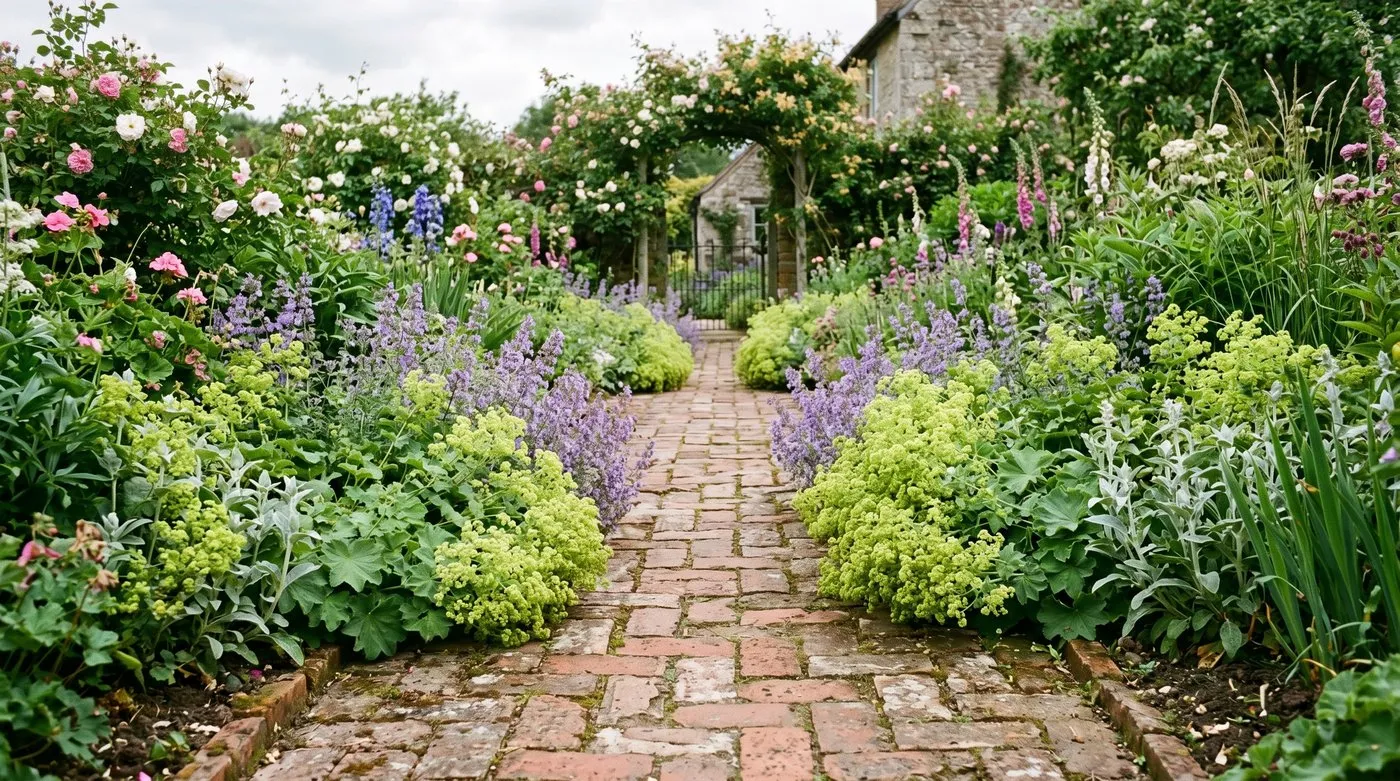 Informal brick paths with planting allowed to spill over the edges. The blurred line between path and border is exactly what the style wants.
A planting checklist for the country look
Pull it together with these workhorses. Mix and match within your chosen colour palette, planted in drifts and layered by height.
- Tall (back): delphinium, hollyhock, foxglove, verbascum
- Middle: hardy geranium, peony, salvia, lupin, phlox, Japanese anemone
- Front: catmint, lady’s mantle, hardy geranium, lamb’s ears
- Climbers: climbing rose, clematis, honeysuckle
- Self-seeders: foxglove, forget-me-not, aquilegia, verbena bonariensis
- Structure: clipped box, yew, hornbeam, lavender hedge
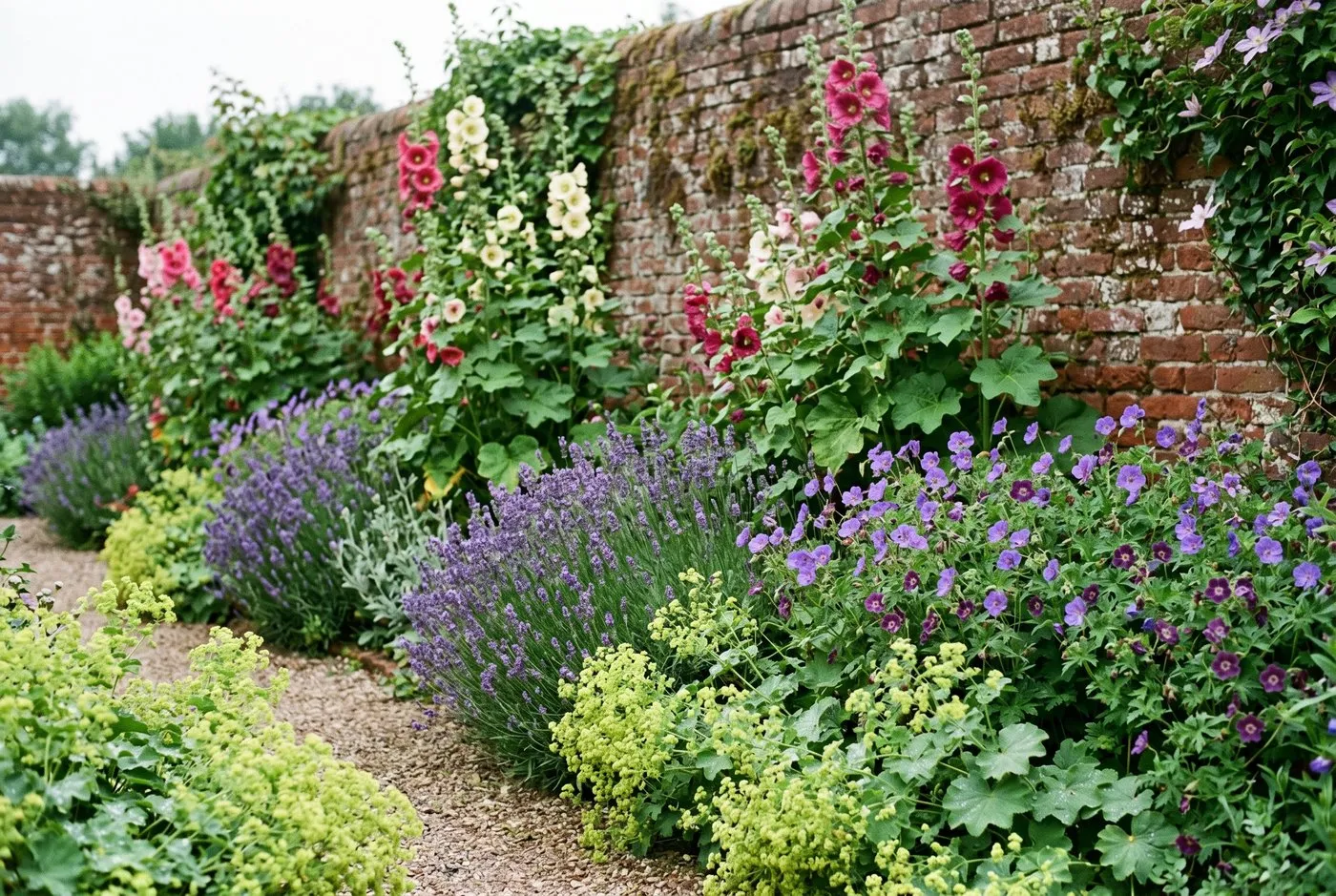 Hollyhocks, hardy geraniums and lady’s mantle against warm brick give the cottage-garden combination in one glance.
Common mistakes with the country garden style
These are the errors that turn the romantic look into an unruly one.
Skipping the structure
The big one. Loose planting with no evergreen bones collapses into mess by midsummer. Put in clipped structure first, then plant around it.
Planting singles, not drifts
One of everything reads as a sample collection. Plant in odd-numbered drifts of the same plant for the flowing, abundant effect.
Letting the palette run wild
Every colour at once feels frantic. Limit and repeat two or three colours through the borders, however many plants you use.
Never editing the self-seeders
Self-seeders left unchecked smother the border. Thin the seedlings each spring, keeping the well-placed ones and pulling the rest.
Crisp modern paving
Sharp, dressed stone fights the relaxed planting. Choose informal brick, gravel, or stone and let the planting spill over the edges.
Frequently asked questions
What defines an English country garden?
Abundance held together by structure. Deep, layered borders of perennials, roses, and self-seeding flowers spill over informal paths, but they are framed by clipped evergreens, hedges, and a clear plan. The look is romantic and relaxed, yet the framework underneath is deliberate. Without that structure, the planting reads as overgrown rather than designed.
How do I create an English country garden in a small space?
Scale the same principles down. Use one or two clipped box balls for structure, plant a single climbing rose on a wall or arch, and choose compact perennials layered in drifts rather than single plants. Self-seeders keep it feeling full. A small plot suits the style well, because abundance reads as charming in a tight space.
What flowers go in an English country garden?
Roses, delphiniums, foxgloves, hollyhocks, hardy geraniums, lupins, salvias, catmint, and peonies are the backbone, threaded with self-seeders like forget-me-nots and aquilegia. Choose a soft, repeating colour palette and plant in layers, with tall plants at the back and low edging plants spilling onto the path. Repetition of two or three plants ties it together.
Is a cottage garden the same as a country garden?
They overlap closely. The cottage garden is the smaller, more informal, productive cousin, mixing flowers with herbs and vegetables. The English country garden is usually larger and more ornamental, with clipped structure and grander borders. Both share the same love of abundance, self-seeding, and soft colour, so the planting palette is largely interchangeable.
How do I keep a country garden from looking messy?
Add clipped evergreen structure and repeat your planting. Box balls, low hedges, or a yew column give the eye somewhere to rest among the froth. Repeating two or three key plants through a border creates rhythm. Staking tall perennials early and deadheading through summer keeps the abundance looking intentional rather than collapsed.
What structure does an English country garden need?
Clipped evergreens are the key: box balls, yew, or hornbeam hedges that hold the loose planting together year-round. Add hard structure too, informal brick or gravel paths, an arch or obelisk for climbers, and a focal point such as a bench or urn. This framework is what separates a designed country garden from an overgrown border.
Our team produces practical UK gardening guidance from source research, contributor records and established horticultural practice. Editorial standards are overseen by Matt W.