Key takeaways
- Start with your fixed constraints: sun, soil, size and exposure decide more than taste does
- Score how you actually use the garden before choosing a look, not after
- Match the style to your real maintenance time: a prairie or gravel garden needs far less than a formal one
- Ten core UK styles cover almost every garden, from cottage to modern minimalist
- Gravel and Mediterranean styles suit dry, sunny, low-maintenance plots best
- Phase the build over one to three years to spread cost and avoid rushed mistakes
A garden full of good plants can still feel like it lacks direction. The missing piece is usually a style: a clear identity that ties the planting, materials and layout together. Finding your garden style is less about taste than it sounds. The right style is the one that fits your plot, your life and the time you can give it.
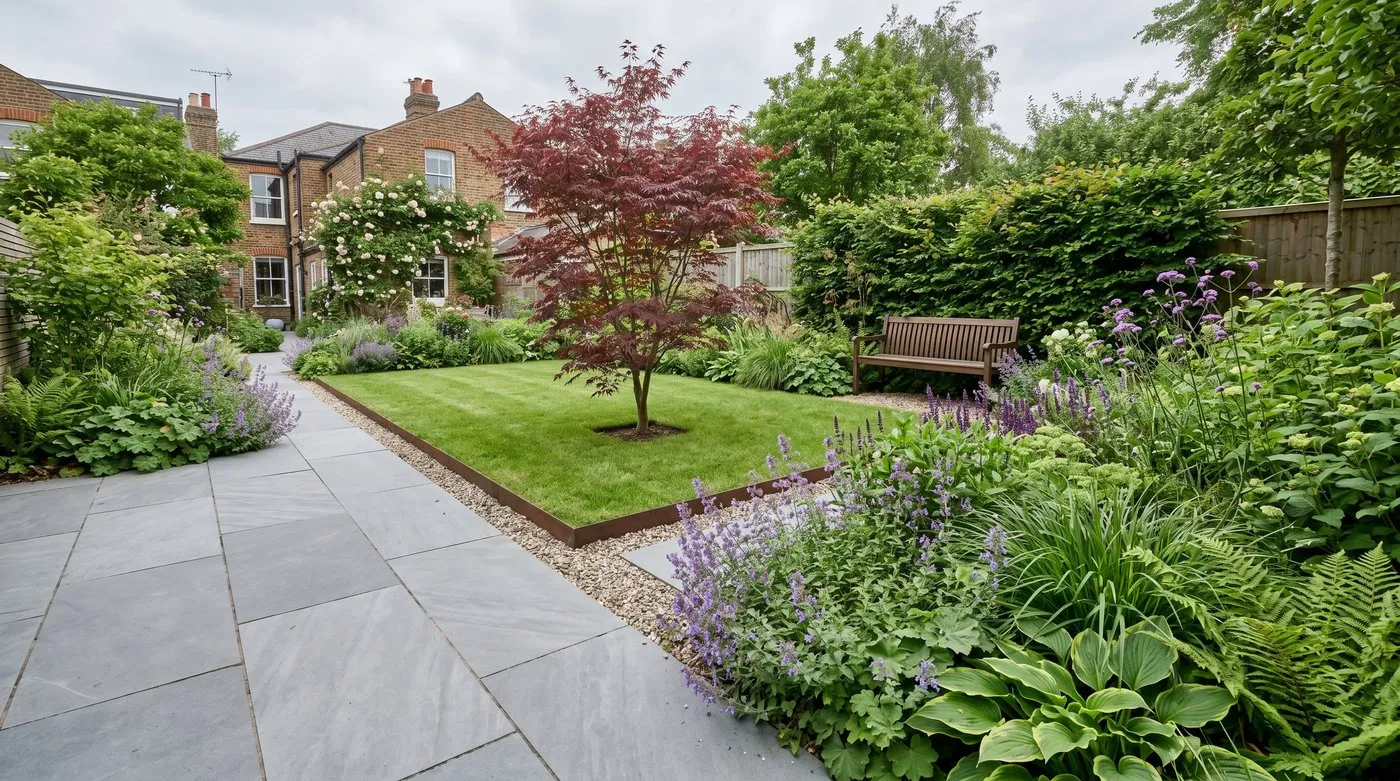
This is a decision framework, not a quiz. Work through four steps, then match yourself to one of the ten core UK garden styles below. It draws on fifteen years of matching styles to real gardens, where the schemes that lasted were always the ones that suited the site rather than fought it.
Start with what you cannot change
Your fixed constraints decide more than your taste does, so read them first. Four things are largely beyond your control, and they rule out some styles before you start.
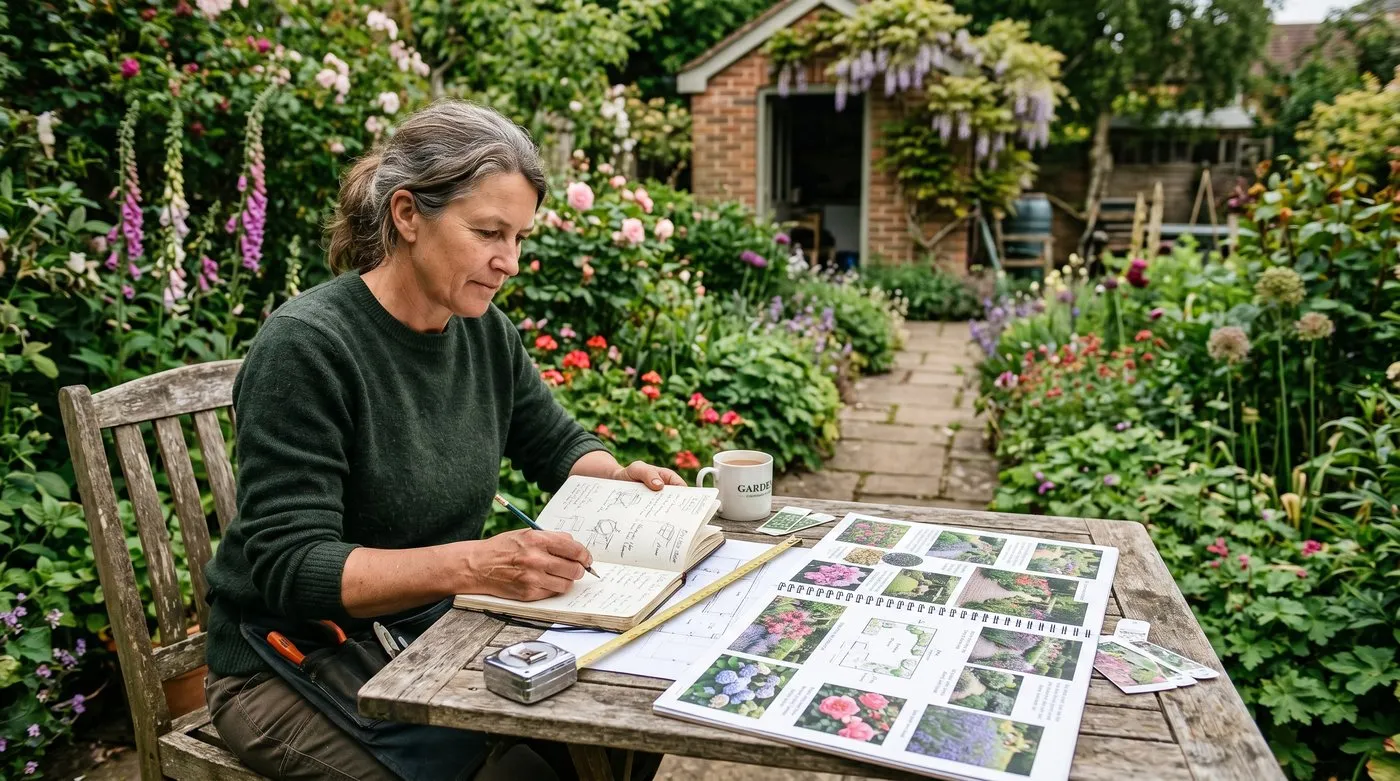 Start with the plot and a notebook, not just pretty pictures. The conditions you record here decide which styles will actually thrive.
Score how you actually use the garden
Be honest about how the garden earns its keep, because use shapes layout as much as looks. List what you really do outside, not what you imagine.
Do you eat and entertain out there, needing hard standing and seating? Do children or pets need lawn and durability? Do you grow food, wanting beds and a greenhouse? Do you want a low-effort retreat to look at rather than work? Rank these by importance. A family garden that doubles as a five-a-side pitch cannot also be a delicate formal parterre. The honest answer here quietly rules several styles in or out, and points to how much of the space goes to planting, paving, lawn or growing.
Be honest about maintenance time and budget
The fastest way to a disappointing garden is choosing a style you have no time to keep up. Styles vary enormously in the hours they demand.
A formal garden of clipped hedges and a cottage garden of staked, deadheaded perennials are the hungriest for time. A gravel or Mediterranean garden, or a prairie of grasses and perennials, can look its best on a single annual tidy. Match the style to the realistic hours you will give it, not your best intentions in spring. Budget matters too: planting is cheap, but paving, walls and structures are where the money goes. Set a figure, then phase the work.
The major UK garden styles compared
This table is the heart of the decision: scan it for the style that matches your constraints, use and time. Maintenance and cost are rough guides for a typical small-to-medium UK garden.
| Style | Best conditions | Maintenance | Wildlife value | Year-round interest |
|---|---|---|---|---|
| Cottage | Sun or light shade, decent soil | High | High | Medium |
| Formal | Most, needs shelter for hedges | High | Low | High |
| Modern minimalist | Most, suits small urban plots | Low to medium | Low | High |
| Wildlife / naturalistic | Any, including rough ground | Low | Very high | Medium |
| Mediterranean / gravel | Dry, sunny, free-draining | Low | Medium | Medium |
| Japanese | Shade or part shade, sheltered | Medium | Low | High |
| Prairie / new perennial | Open, sunny, any reasonable soil | Low | High | High |
| Coastal | Exposed, windy, sandy | Low | Medium | Medium |
| Courtyard / small urban | Small, enclosed, often shaded | Low to medium | Low | Medium |
| Family | Open, durable, sunny lawn | Medium | Medium | Medium |
Match yourself to a style
Read the profiles and find the one that fits the constraints and use you scored above. Each names its signature plants and materials.
Cottage
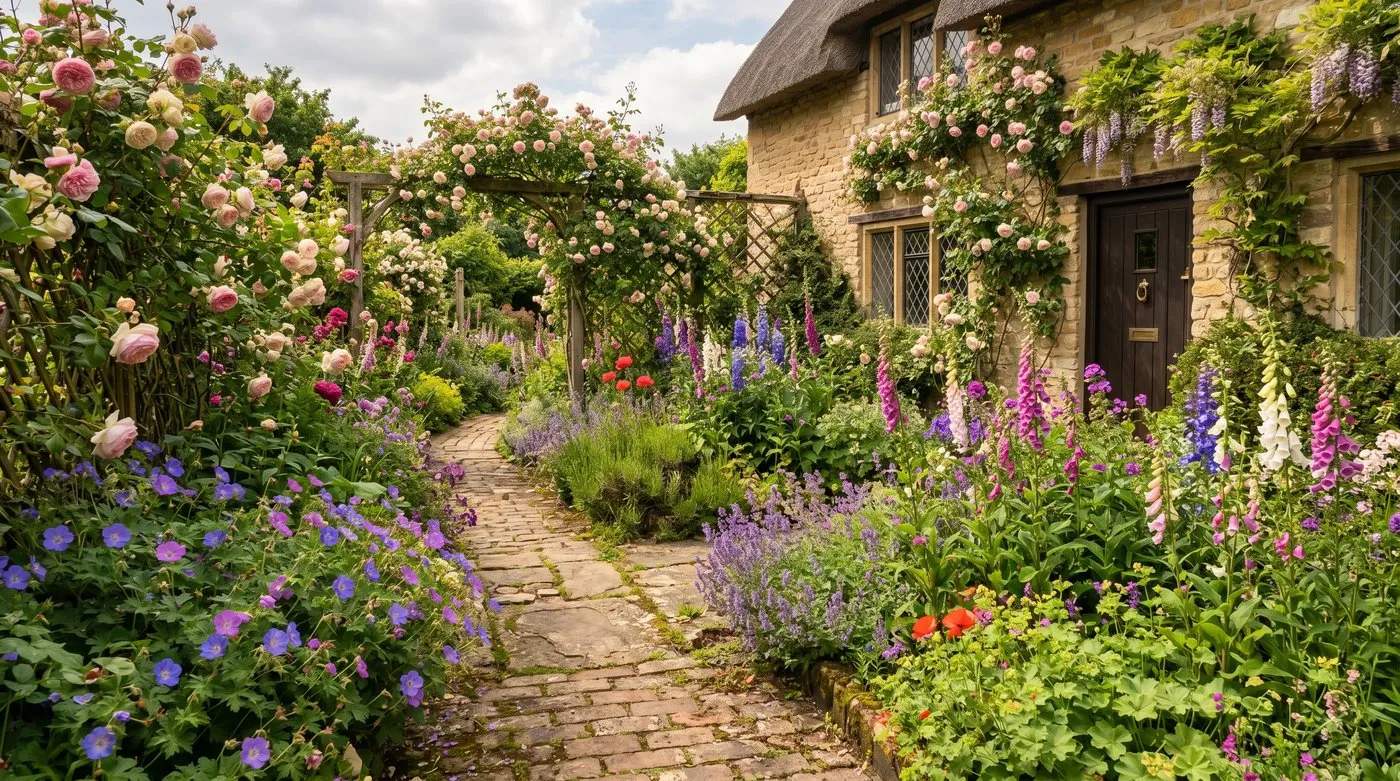 Cottage style: informal, abundant and romantic, but among the most demanding to keep, with constant staking and deadheading through summer.
Formal
Symmetry, clipped evergreens, straight lines and a strong central axis. Box, yew and topiary set the structure, with restrained planting inside. It reads as calm and architectural year round but needs regular, precise clipping. Best where you want order and have time to maintain it.
Modern minimalist
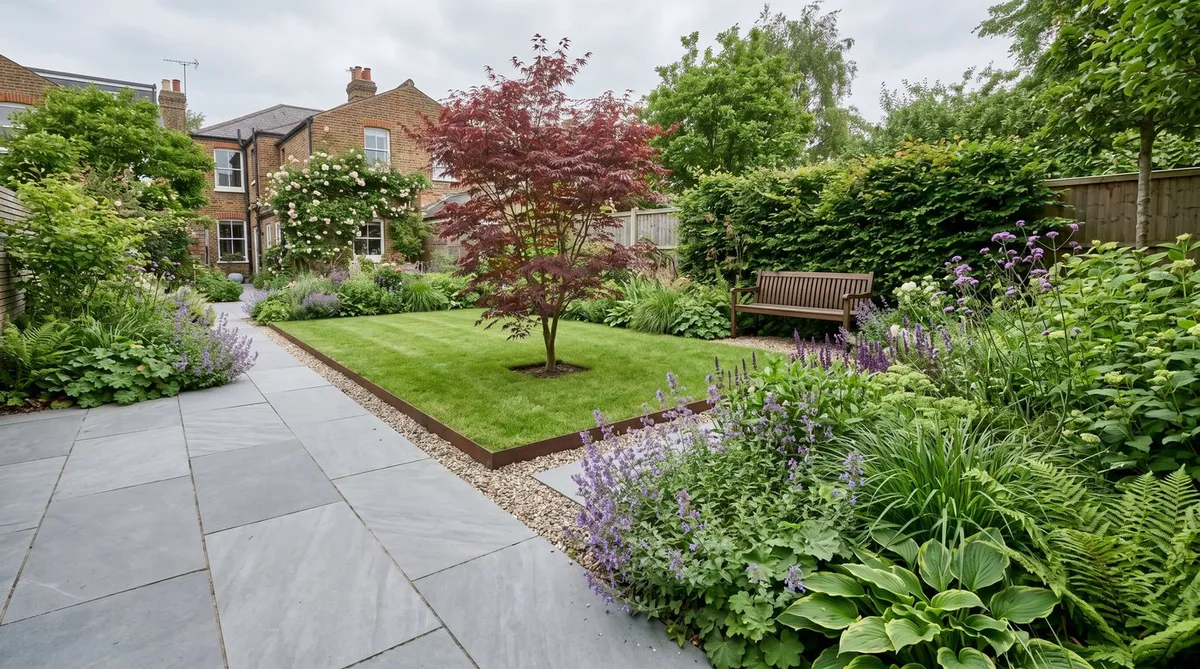
Clean lines, bold simple planting, quality materials and restraint. A few architectural plants, grasses and a limited palette suit contemporary houses and small urban plots. The modern mixed border shows how to keep it from feeling bare. Maintenance is low to medium.
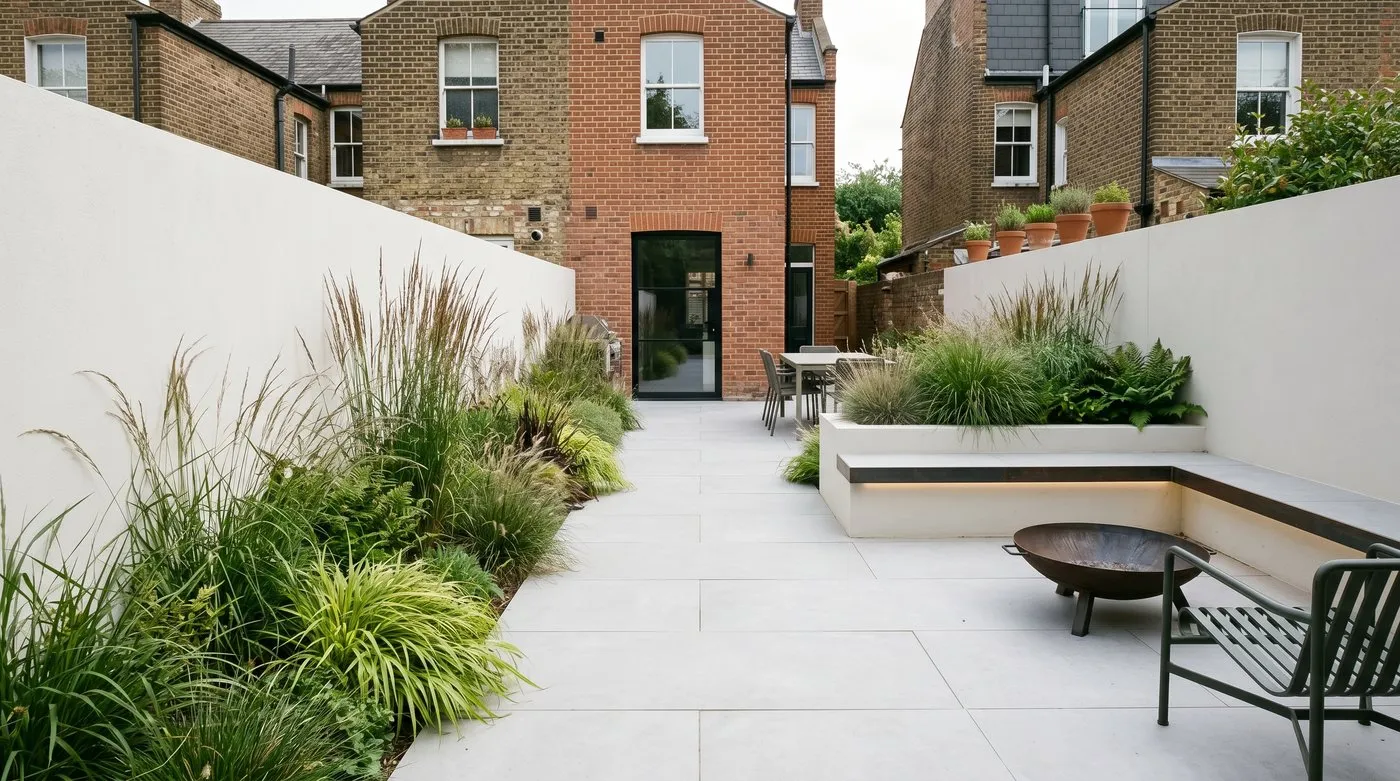 Modern minimalist: clean lines, quality materials and restrained, bold planting. It suits small urban plots and contemporary houses, with low to medium upkeep.
Wildlife and naturalistic
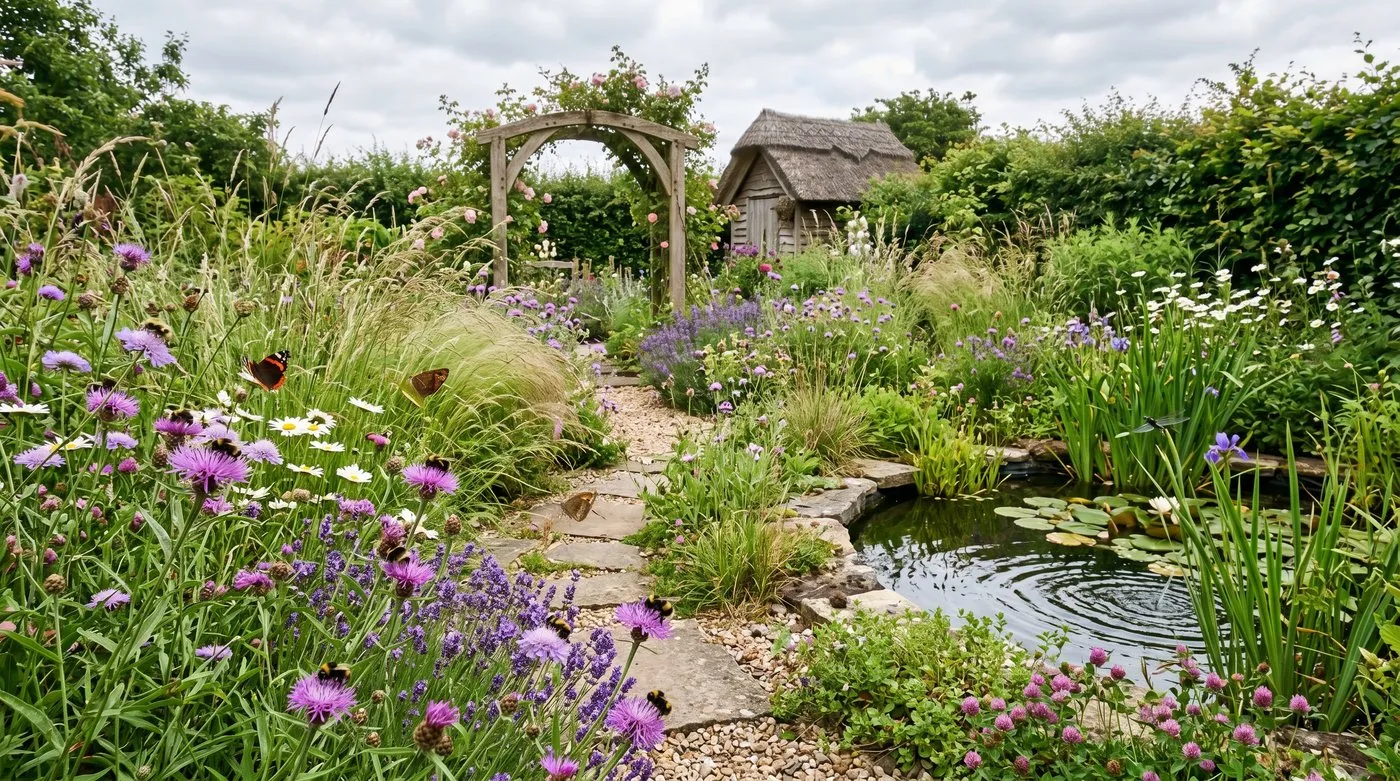 Wildlife and naturalistic style does the most for nature and asks the least of you, since a relaxed clear-up suits both the look and the creatures.
Mediterranean and gravel
Drought-tolerant planting through gravel: lavender, cistus, euphorbia and herbs, with terracotta and sun-baked stone. It is built for dry, sunny, free-draining plots and needs little watering once established. The lowest-upkeep style for the right conditions.
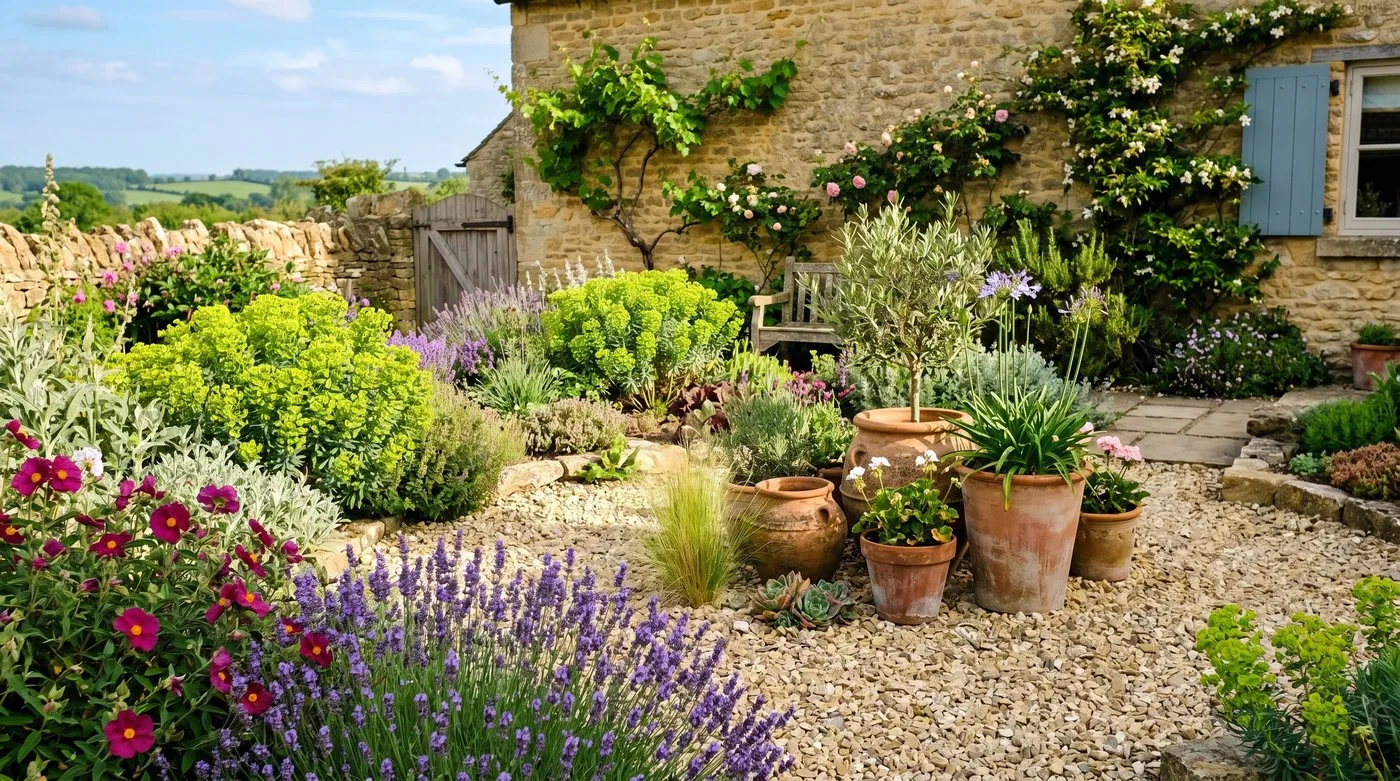 Mediterranean gravel planting on a dry, sunny plot: lavender, euphorbia and herbs that need almost no watering. The lowest-maintenance style where conditions suit.
Japanese
Prairie and new perennial
Sweeps of grasses and tough perennials in naturalistic drifts, at their best in late summer and autumn. Open, sunny sites suit it, and it needs only one annual cut-back. High wildlife value and a long season.
Coastal
Tough, salt and wind-tolerant planting: grasses, eryngium, hebe and sea thrift, with shingle and driftwood. Built for exposed, windy, sandy gardens where softer styles fail.
Courtyard and small urban
Enclosed, often shaded spaces worked vertically with climbers, pots and a few bold plants. Mirrors, lighting and good paving do the heavy lifting. Suits tiny city plots and basements.
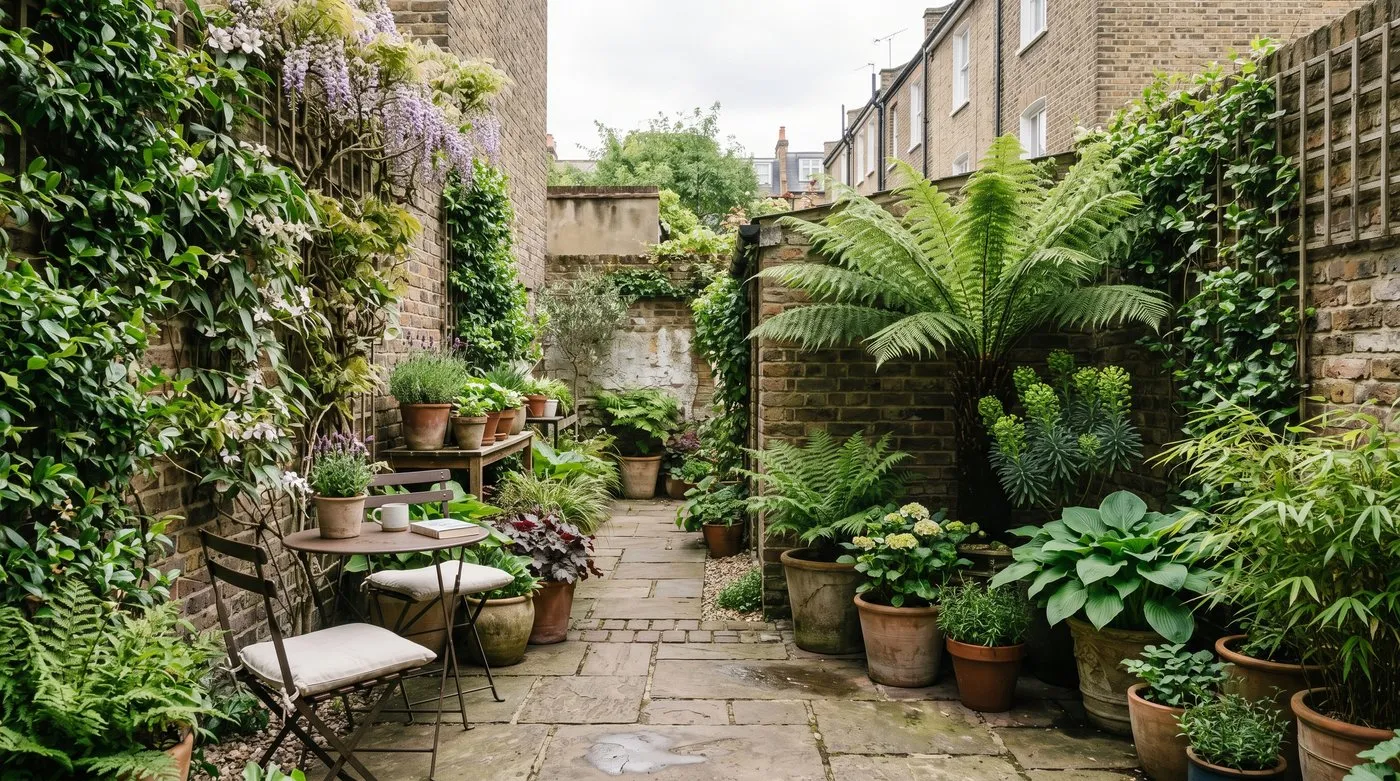 Courtyard style makes a small, often shaded city plot work by going vertical: climbers, pots, good paving and a few bold plants.
Family
Durable and flexible: a tough lawn, tough planting at the edges, space to play, and seating. It evolves as children grow. Practicality leads, with style added at the margins.
A quick decision matrix
If you are still unsure, read across from your strongest constraint to a suggested style. This is a starting point, not a rule.
| If your plot is | And you want | Consider |
|---|---|---|
| Dry, sunny, sandy | Low watering and upkeep | Mediterranean or gravel |
| Shady and damp | Calm, structural | Japanese or woodland cottage |
| Small and enclosed | Year-round looks | Modern or courtyard |
| Open and sunny | Wildlife and long season | Prairie or naturalistic |
| Exposed or coastal | Tough, resilient | Coastal |
| Used by children | Durable and flexible | Family |
Ranking styles for the most common UK garden
Most UK gardens are small, partly shaded and short on maintenance time, so some styles fit that reality better than others. Ranked for that typical plot.
| Style | Fit for a small, low-time plot | Why |
|---|---|---|
| Modern minimalist | Excellent | Looks good small, low upkeep, year-round structure |
| Courtyard | Excellent | Designed for small enclosed space |
| Mediterranean / gravel | Very good | Low water and upkeep if sunny enough |
| Naturalistic / wildlife | Very good | Low effort, high reward, forgiving |
| Prairie | Good | Needs more space to read well |
| Cottage | Fair | Lovely but high maintenance |
| Formal | Fair | High upkeep, needs room for symmetry |
For the typical small plot, modern, courtyard and gravel styles give the most for the least work. Cottage and formal reward those with more time.
Phase the build across a year and budget
You rarely need to build a whole garden at once: phasing spreads cost and lets the design settle. A simple order of work keeps momentum without overspending.
| Phase | Timing | Work |
|---|---|---|
| 1 | Year 1, winter | Clear, set out the layout, fix boundaries and main paths |
| 2 | Year 1, spring | Build the largest hard area: patio or main path |
| 3 | Year 1, autumn | Plant the structural shrubs, trees and hedges |
| 4 | Year 2 | Fill the borders with perennials and bulbs |
| 5 | Year 2-3 | Add features: water, lighting, seating, pots |
Common mistakes when choosing a style
Choosing a style that fights the site
The costliest error. A style that suits the conditions thrives; one that fights them drains money. Lush cottage planting on dry sand, or Mediterranean herbs on wet clay, fails every time. Let the site lead.
Copying a show garden wholesale
Show gardens are built for a week, not a decade. Take ideas, not the whole package, and adapt them to your size, climate and upkeep. What looks effortless on screen often hides huge maintenance.
Splitting 50:50 between two styles
A garden with no dominant style reads as confused. Pick one lead style and borrow only lightly from a second. Clarity is what makes a small garden feel considered.
Ignoring maintenance time
A high-upkeep style you cannot maintain looks worse than a simple one you can. Match the style to your real hours, and the garden stays looking intentional rather than neglected.
Frequently asked questions
How do I decide what style of garden to have?
Start with your plot, not a picture. Note the sun, soil, size and exposure, then how you use the space and how much time you can give it. Match that profile to a style. A dry sunny plot suits Mediterranean planting; a shady damp one suits woodland or cottage. Choosing a style that fits the site is what makes a garden thrive.
What is the lowest-maintenance garden style?
Gravel and Mediterranean styles need the least work. Drought-tolerant planting through gravel needs little watering, feeding or staking, and self-seeds to fill gaps. Prairie or new-perennial planting is also low-upkeep once established, cut back just once a year. Formal and cottage styles need the most, with clipping, staking and constant deadheading.
Can I mix garden styles?
Yes, but anchor it with one dominant style and borrow lightly from others. A mostly cottage garden can take a modern steel water feature; a modern garden can soften with grasses. Problems come from a 50:50 split with no clear lead. Pick a main style, let it set the bones, then add a few touches from a second for interest.
Does my house style affect my garden style?
It helps to echo it, especially at the front. A period cottage suits informal cottage planting; a contemporary house suits clean modern lines. The garden does not have to match the house, but a jarring contrast at the boundary looks uneasy. Take a cue from the architecture, materials and era, then adapt to your conditions and taste.
What garden style is best for wildlife?
A naturalistic or wildlife style does most for wildlife. Native and nectar-rich planting, a pond, longer grass and a relaxed clear-up support the widest range of creatures. Prairie and cottage styles also feed pollinators well. The key is a long flowering season, water, and resisting the urge to tidy everything away in autumn.
How much does it cost to design a garden in a style?
Doing it yourself, a full restyle of a small garden runs from a few hundred pounds to a few thousand. It depends on hard landscaping. Planting is the cheaper part; paving, walls and structures cost most. Phasing the work over one to three years spreads the cost. A professional design adds a fee but prevents expensive layout mistakes.
Our team produces practical UK gardening guidance from source research, contributor records and established horticultural practice. Editorial standards are overseen by Matt W.