Key takeaways
- Mosses want soil pH 5.0 to 6.0, lower than acers, and zero fertiliser
- Leucobryum glaucum forms 50 to 150mm cushions; Hypnum sheet moss covers flat ground fastest
- A north-facing or east-facing plot with under 3 hours direct summer sun is ideal
- The buttermilk slurry method fragments moss and spreads it 6 to 8 times further than transplanting whole
- Full knit from fragments takes 2 to 4 years; Soleirolia soleirolii fills in one season at 85 per cent of the effect
- Misting twice daily in dry spells keeps moss green; a 7 day dry gap turns it brown but rarely kills it
Why moss suits the UK better than most gardeners expect
UK growing conditions match the natural habitat of carpeting moss closely. Moss has no roots and no waxy cuticle. It takes water and nutrients straight through its surface, so it depends on ambient damp rather than soil moisture. Three local factors line up in its favour.
First, rainfall. The Met Office 1991 to 2020 baseline puts UK average rainfall at 1,154mm a year, spread across most months. That keeps moss hydrated without a hose.
Second, humidity. Shaded UK gardens hold air humidity above 70 per cent for much of the year. Moss greens up within minutes of a damp morning.
Third, acidic ground. Much of Wales, the Pennines, the Lake District, Scotland and parts of Surrey sit naturally at pH 5.0 to 6.0, the band moss prefers. Many plots need no amendment at all.
 A koke-niwa floor reads as a single green sheet from a distance. Up close it is two or three moss species knitted together at different heights.
The moss species that actually work in UK gardens
Not all moss is garden moss. The species below are the carpeting types used in Japanese gardens and proven in UK shade. Each has a job. Sheet mosses cover flat ground fast. Cushion mosses add the domed texture. Bank mosses hold slopes.
Hypnum cupressiforme (cypress-leaved plait moss) is the workhorse sheet moss. It grows flat, spreads sideways across level beds, and tolerates light foot traffic. It is the fastest to knit and the easiest to slurry. Start here.
Leucobryum glaucum (white cushion moss) forms the pale blue-green domes seen in Kyoto temple photographs. Cushions reach 50 to 150mm tall over years. It is slower and fussier, wanting consistent damp and deep shade, but nothing else gives that sculptural look.
Polytrichum commune (common haircap moss) is taller, 30 to 100mm, with a coarser texture. It suits banks, damp hollows and the edges of a bed. It copes with slightly more sun than the others.
Thuidium tamariscinum (common tamarisk moss) has a feathery, fern-like frond. It works as a textural contrast against the smooth sheet mosses on a shaded woodland edge.
Soleirolia soleirolii (mind-your-own-business) is not a moss. It is a flowering ground cover that reads as moss from a metre away. It is the realistic UK shortcut, filling a bed in one season where true moss takes years.
Comparison: which moss for which role
| Species | Light tolerance | Foot traffic | Time to knit | Look | Role |
|---|---|---|---|---|---|
| Hypnum cupressiforme | Shade to part shade | Light | 18-26 months | Flat green sheet | Primary carpet |
| Leucobryum glaucum | Deep shade only | None | 3-5 years | Pale domed cushions | Feature texture |
| Polytrichum commune | Shade to light sun | None | 2-3 years | Tall coarse turf | Banks and edges |
| Thuidium tamariscinum | Shade | None | 2-4 years | Feathery fronds | Textural accent |
| Soleirolia soleirolii | Shade to part shade | Light | One season | Tiny round leaves | Fast substitute |
Order the carpet by effectiveness, not by looks. Hypnum is the gold standard for a UK starter bed: fastest spread, best slurry response, most forgiving of a missed misting. Leucobryum delivers the signature cushions but cannot cover ground at any pace, so use it as a feature within a Hypnum field, never as the main carpet.
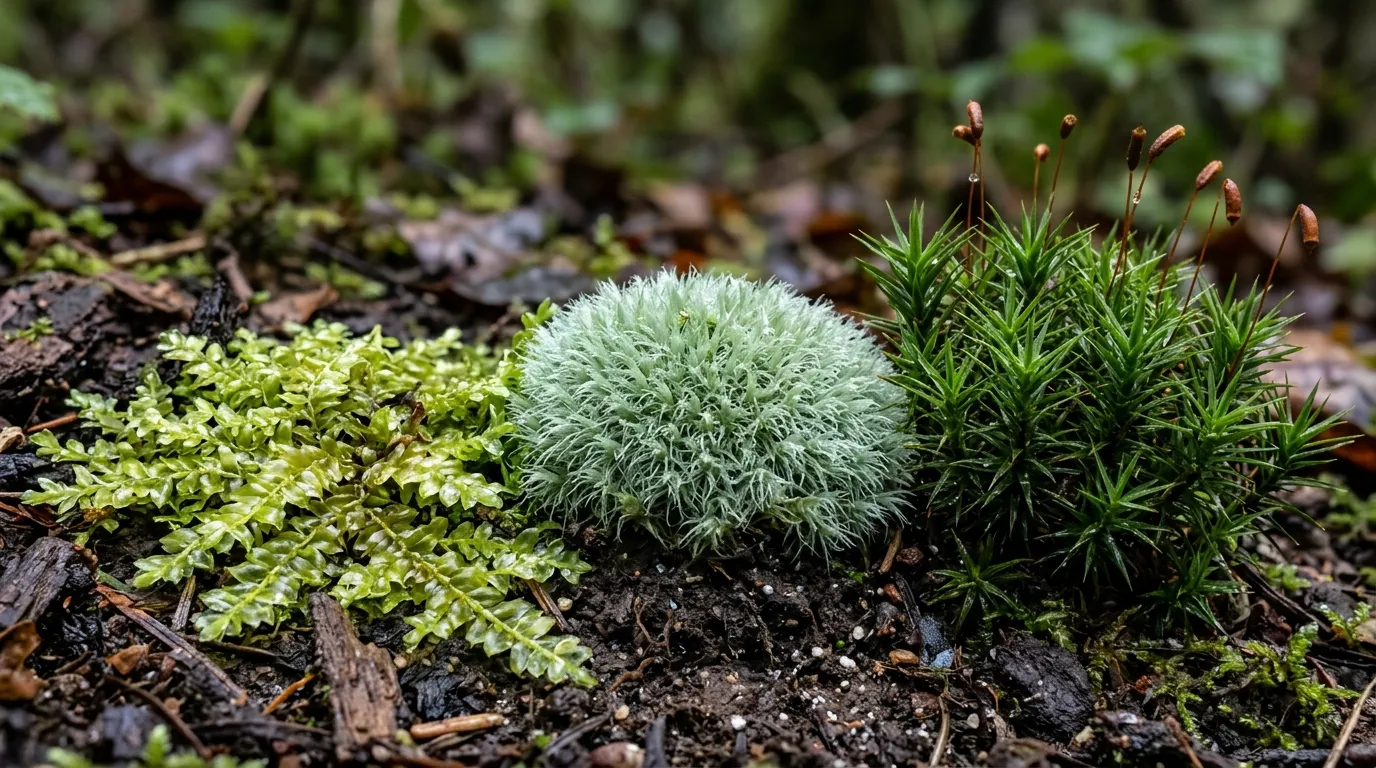 Left to right: flat Hypnum sheet moss, a pale Leucobryum cushion, and coarser Polytrichum haircap. Mixing heights stops the carpet looking flat and artificial.
Where to site a moss garden
Moss wants the opposite of a lawn. Pick the coolest, dampest, shadiest part of the plot. The target is under 3 hours of direct summer sun per day.
Avoid south-facing and west-facing sites in open sun. Moss there browns within a week of dry weather and never builds a stable carpet.
Tree cover helps in two ways. A high canopy of birch, oak or acer filters light and raises humidity. But heavy autumn leaf fall is a problem, since a layer of wet leaves left on moss kills the patch beneath it in around two weeks. Site moss under light-leaved trees, or commit to weekly leaf removal in autumn.
Drainage matters less than you might think. Moss tolerates ground that stays damp, even periodically saturated, far better than turf does. A shaded clay corner that sulks under grass often grows moss well. What moss cannot take is standing water sitting on its surface for days, so a gentle fall across the bed helps.
Getting the soil right: pH 5.0 to 6.0
If the reading sits at pH 6.5 or above, acidify gradually:
- Elemental sulphur: 50g per square metre drops pH by about 0.5 unit on a loamy soil. It acts slowly over months, which suits moss. Re-test after 12 weeks.
- Ericaceous top-dressing: a 20mm layer of ericaceous compost raked into the surface nudges pH down and gives moss fragments a soft acidic bed to grip.
- Rainwater only: tap water in hard-water areas is alkaline and raises pH over time. Collect rainwater in a butt and use it for all misting once the moss is down.
Above pH 7.5 on chalk, do not fight the ground. Grow moss on stone, log slices or a separate ericaceous-filled bed instead. Moss colonises porous sandstone and old terracotta readily.
Above all, never fertilise a moss garden. Moss has no use for nitrogen and feeding only encourages the weeds and algae that compete with it. Bare, lean, acidic ground is what you want.
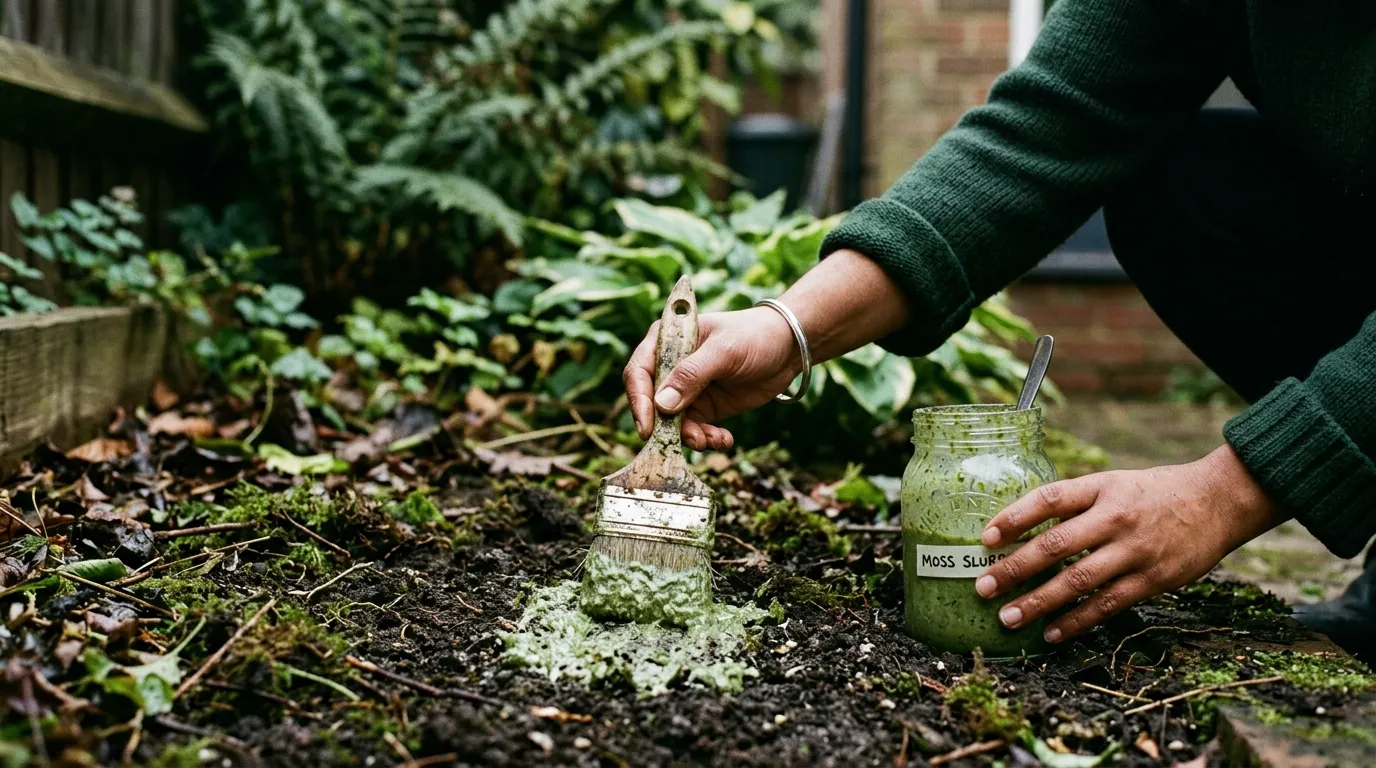 Painting blended moss slurry onto prepared ground. The buttermilk holds fragments in place and feeds the acidity moss germinates against.
The buttermilk slurry method for spreading moss fast
The fastest way to cover ground is to fragment moss and spread it as a slurry. Whole-clump transplanting works but wastes most of the moss and knits slowly. Fragmentation exploits how moss reproduces: almost any broken piece can grow into a new plant.
- Gather one to two handfuls of clean, weed-free moss. Hypnum slurries best. Pick over it to remove soil, grass and leaves.
- Add 250ml buttermilk and 250ml water per handful. The buttermilk lowers surface pH and helps fragments stick.
- Blend for five to ten seconds only. Aim for a thick paint, not a smoothie. Over-blending kills too many cells.
- Brush or pour the slurry onto damp, weed-free, acidic ground or porous stone. Spread it thin, around 2mm.
- Mist daily for the first three weeks. Keep it shaded and never let it dry out while it establishes.
A cheaper variant swaps buttermilk for natural yoghurt thinned with rainwater. Both work. The dairy is not magic, it is a mild acidic carrier that holds fragments against the soil while they root.
Watering and misting: the regime that keeps moss green
Moss drinks through its whole body, so light frequent misting beats heavy soaking. In a normal damp UK week, do nothing. Rain and dew keep the carpet green. The regime only kicks in during dry spells.
During a dry spell of more than five days:
- Mist at 6am and again at 8pm, two minutes each, with a fine spray.
- Use rainwater in hard-water areas to avoid raising pH and leaving limescale film.
- Mist the surface, not the soil. You are wetting the moss, not the root zone it does not have.
- Avoid midday watering. Water sitting on hot moss in sun can scald it.
An automatic misting line on a timer pays for itself on a larger bed. A basic kit of micro-misters, tube and a tap timer costs £40 to £70 and removes the twice-daily chore through summer.
Gardener’s tip: Mist moss with rainwater, never tap water, in hard-water areas. Limescale builds an alkaline film on the surface that turns moss grey and patchy over a season. A 200 litre water butt fed off a shed roof is enough to mist 30 square metres through a UK summer.
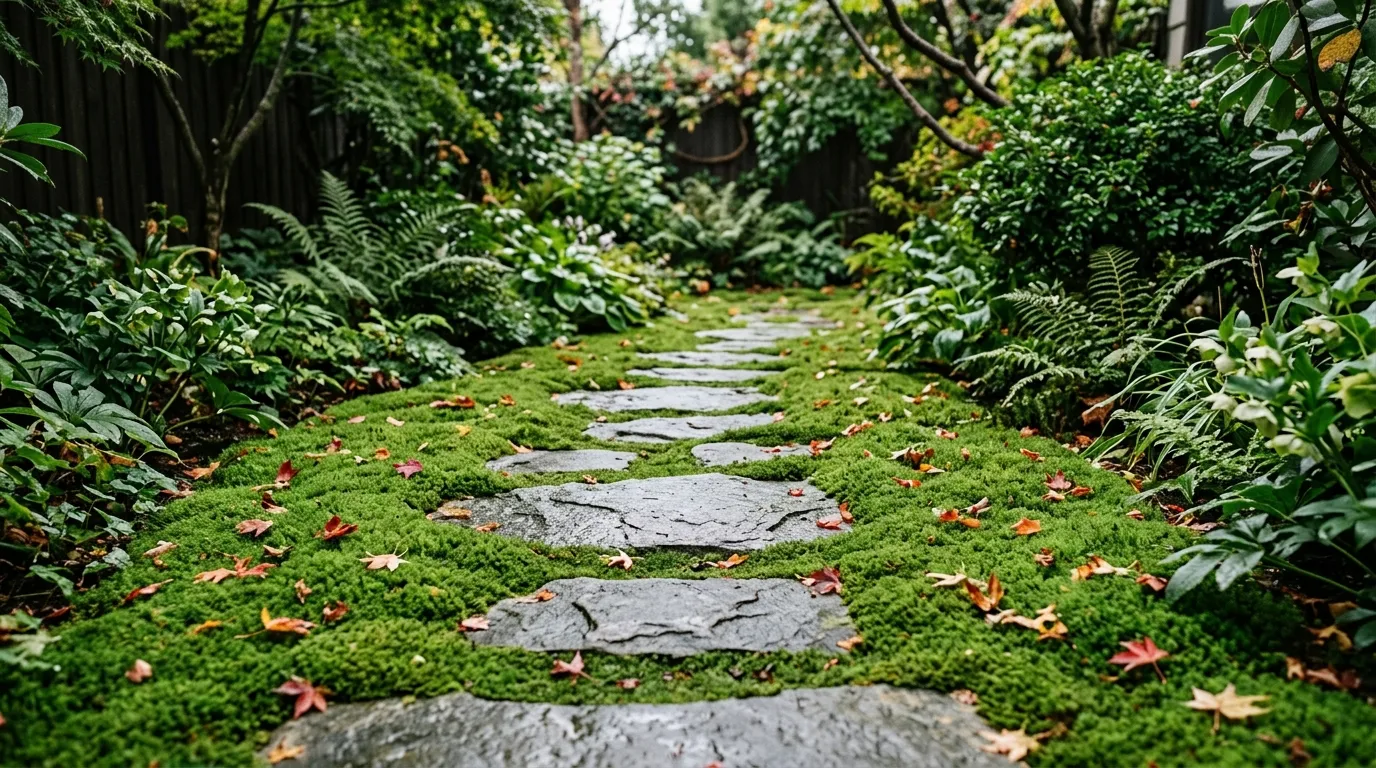 Stepping stones set flush with the moss surface let you cross the bed without compacting it. Hypnum knits right up to the stone edge within two seasons.
Stone, paths and structure in a moss garden
Moss reads best against hard, still elements. The contrast of soft green against grey stone is the whole aesthetic. Keep the hardscape simple and let the moss dominate.
Stepping stones set flush with the moss surface let you cross without compacting the carpet. Use irregular natural stones 350 to 500mm across, spaced 300 to 600mm apart centre to centre. Set them level with the moss, not proud of it, so the green appears to lap against the stone. Hypnum will knit right up to the edges within two seasons.
A gravel or raked sand transition can frame a moss bed, echoing the karesansui dry-garden tradition. Keep moss and gravel apart with a low buried edge, since gravel raked onto moss damages it.
Rocks placed as a group of three or five, in odd numbers and unequal heights, anchor a moss scene the way they anchor a stroll garden. Moss creeping up the shaded base of a boulder is the signature koke-niwa image. To speed it, paint slurry directly onto the rock’s north face.
 Hardy ferns and an acer above a knitted moss floor. The vertical layers stop a moss garden reading as a flat green mat.
Planting above the moss: ferns and woodlanders
Moss is the floor, not the whole garden. A koke-niwa needs a quiet canopy and mid-layer that share its love of shade and acidity. Keep the plant list short and repeated, not mixed.
Hardy ferns are the natural partner. Our hardy UK ferns and fernery guide covers the species that thrive in the same damp shade. Polystichum setiferum (soft shield fern) and Dryopteris erythrosora (autumn fern) both sit well above a moss floor without smothering it.
Acer palmatum cultivars give the overhead canopy and autumn colour, though they want the upper pH band at 5.5 to 6.5, so tune any shared bed to the moss’s lower preference of 5.0 to 6.0 and accept the acers run slightly acid of ideal. They tolerate it.
Hakonechloa macra (Japanese forest grass) adds a flowing grass note at bed edges. It wants the same moisture-retentive shade. Our Hakonechloa growing guide has the detail. Spare cushions of moss have a second use as the traditional surface dressing for bonsai pots; our bonsai care guide for beginners shows where it fits.
Leaf litter from any canopy is the catch. Acers and ferns drop relatively little, which is why they pair well with moss. Avoid siting moss under heavy-leaved trees like sycamore or horse chestnut, whose autumn drop buries and kills the carpet.
The month-by-month moss garden calendar
Moss care is seasonal but light. The two demanding jobs are summer misting and autumn leaf removal.
| Month | Main task |
|---|---|
| January | Brush off any fallen debris, check for waterlogging on the surface |
| February | Lift and remove winter leaf fall, top-dress thin patches with ericaceous compost |
| March | Best month to lay new slurry, soil warming and rain frequent |
| April | Continue slurry work, hand-weed seedlings as they appear |
| May | Begin misting if a dry spell sets in, weed weekly |
| June | Mist dawn and dusk in dry weather, remove any algae bloom on damp areas |
| July | Peak misting month, twice daily in dry spells, rainwater only |
| August | Continue misting, keep weeding, avoid foot traffic on dry brittle moss |
| September | Reduce misting as rain returns, lay autumn slurry batches |
| October | Begin weekly leaf removal, this is the critical month for leaf litter |
| November | Major leaf clearance, a wet leaf layer kills moss in two weeks |
| December | Final leaf sweep, inspect stone settings and edges |
Common mistakes that kill a moss garden
Leaving fallen leaves on the moss. This is the number one killer. A wet leaf layer blocks light and traps fungus, and the moss beneath dies within two weeks. Remove leaves weekly through autumn, by hand or with a gentle blower on low.
Fertilising or feeding the bed. Moss needs nothing. Nitrogen feeds the weeds, grass and algae that outcompete it. Keep the ground lean and bare. If you have just dug in compost or manure, that patch will fight you for years.
Watering with hard tap water. In limescale areas, tap water leaves an alkaline film that greys the moss and raises pH above its tolerance. Collect and use rainwater for all misting.
Choosing the wrong species for the spot. Leucobryum cushions will not cover ground, and trying to carpet a bed with them fails. Use flat Hypnum as the carpet and Leucobryum only as feature cushions within it.
Letting people walk on it. Moss takes very light foot traffic at best, and none when dry and brittle. Set flush stepping stones before the moss goes down, not after.
A note on moss as a friend, not a foe
Gardeners spend a lot of effort killing moss in lawns, so growing it deliberately feels odd. The difference is context. The same moss that signals compaction and shade in a struggling lawn is the whole point of a koke-niwa. If your lawn grows moss easily, that shaded acidic corner is telling you it wants to be a moss garden instead. For the reverse problem, our guide on how to get rid of moss in a lawn covers the lawn side. And the leaf litter you clear off the moss is not waste: turn it into leaf mould for the rest of the garden.
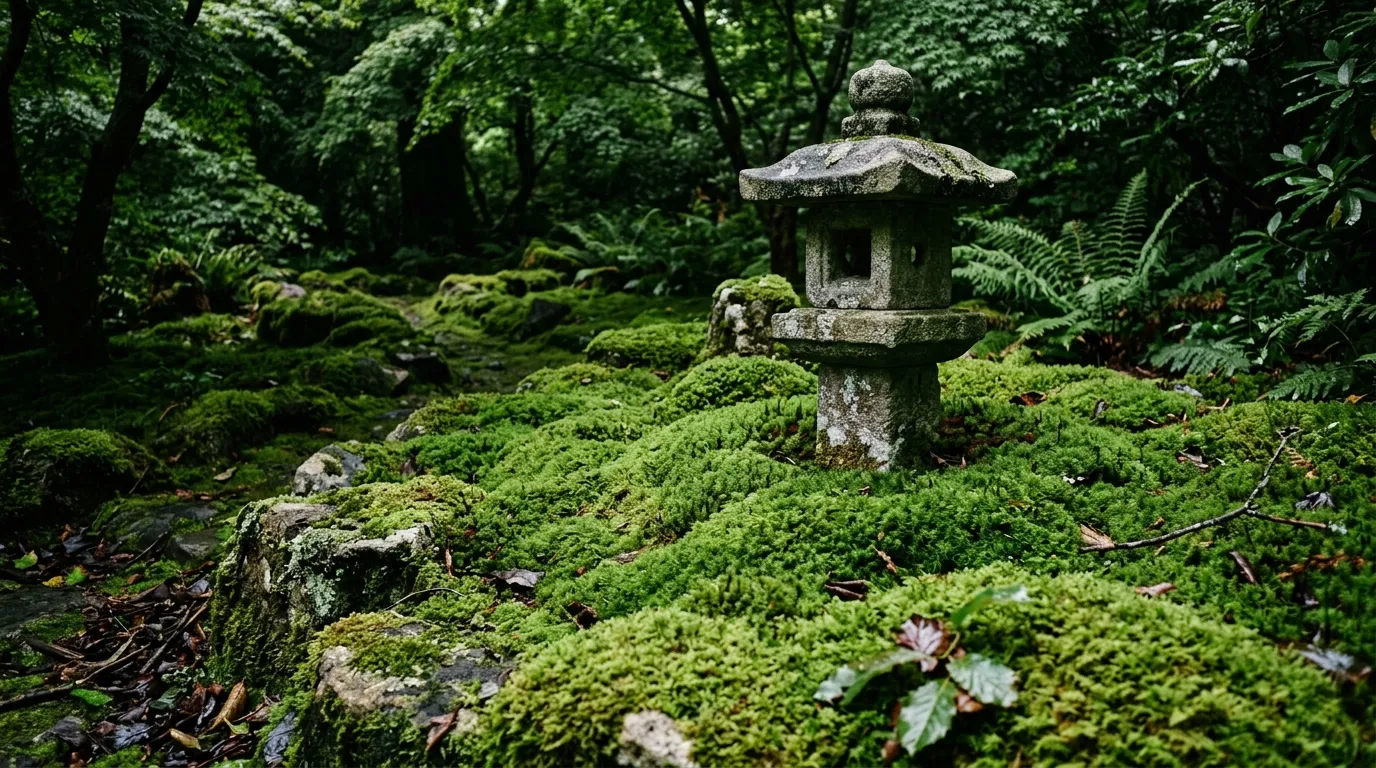 A mature koke-niwa after four seasons. The moss laps up the base of the lantern and over the lower stones, exactly the effect the style aims for.
Next step
Now you have the moss species, the slurry method and the watering regime, read the hardy UK ferns and fernery guide to choose the shade-loving planting layer that completes your moss garden.
Our team produces practical UK gardening guidance from source research, contributor records and established horticultural practice. Editorial standards are overseen by Matt W.