Key takeaways
- Trend is 80 per cent wild planting, 20 per cent firm structure and editing
- Five years of wild planting can record 300+ invertebrate species in a single domestic garden
- A mown grass edge 600 to 800mm wide signals intent and avoids complaints
- Best self-seeders for the UK: verbena bonariensis, foxglove, opium poppy, teasel, fennel
- Council Section 215 notices target untidy front gardens, not back gardens
- Beth Chatto, Piet Oudolf and Mary Reynolds set the design principles
The wild overgrown garden trend is one of the few design movements in 21st-century UK horticulture that asks you to do less work, not more. It is also one of the easiest to get wrong. This piece explains what the look actually is, where it came from, how to do it on a UK plot without the neighbours filing a complaint, and what it does to wildlife counts.
What the trend actually is
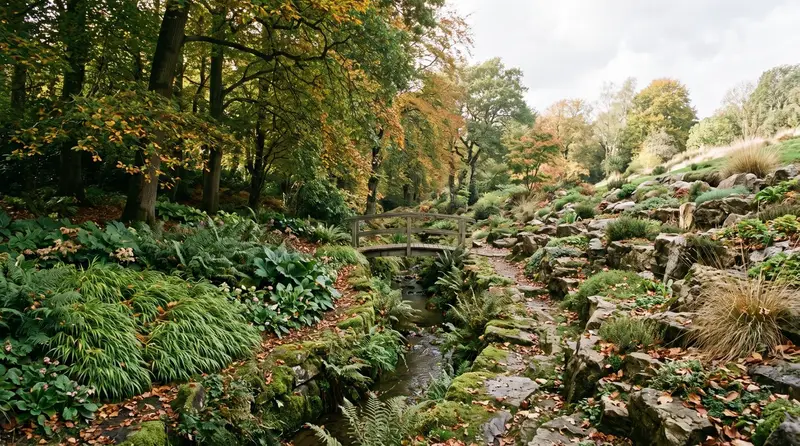
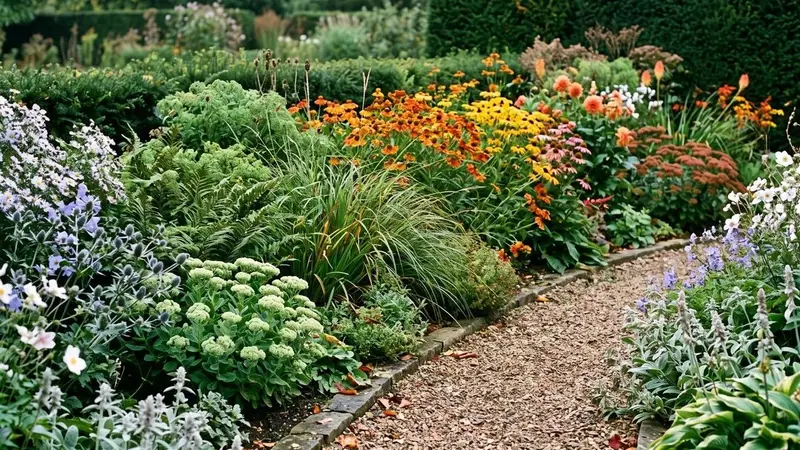
The wild overgrown garden style replaces tidy bedding and mown lawn with deliberately unkempt naturalistic planting. Tall stems are left through winter. Annuals and biennials self-seed where they want. Grass paths run between rough planting areas. Standing dead wood, leaf litter and seed heads stay in place.
You will hear it called several things: rewilding lite, the messy garden movement, wild gardening, naturalistic planting, or simply “letting it go”. The labels overlap. The common thread is deliberate apparent disorder, edited just enough to keep the look intentional rather than abandoned.
It is not the same as rewilding in the strict sense. True rewilding (Knepp Castle, parts of Cumbria, the Scottish Highlands) removes human management entirely and allows large herbivores back. A garden wild style keeps the human hand visible at the edges and the mown paths. The Knepp approach scales to hundreds of hectares; the wild-garden style scales to a 30 to 300 square metre back-garden border.
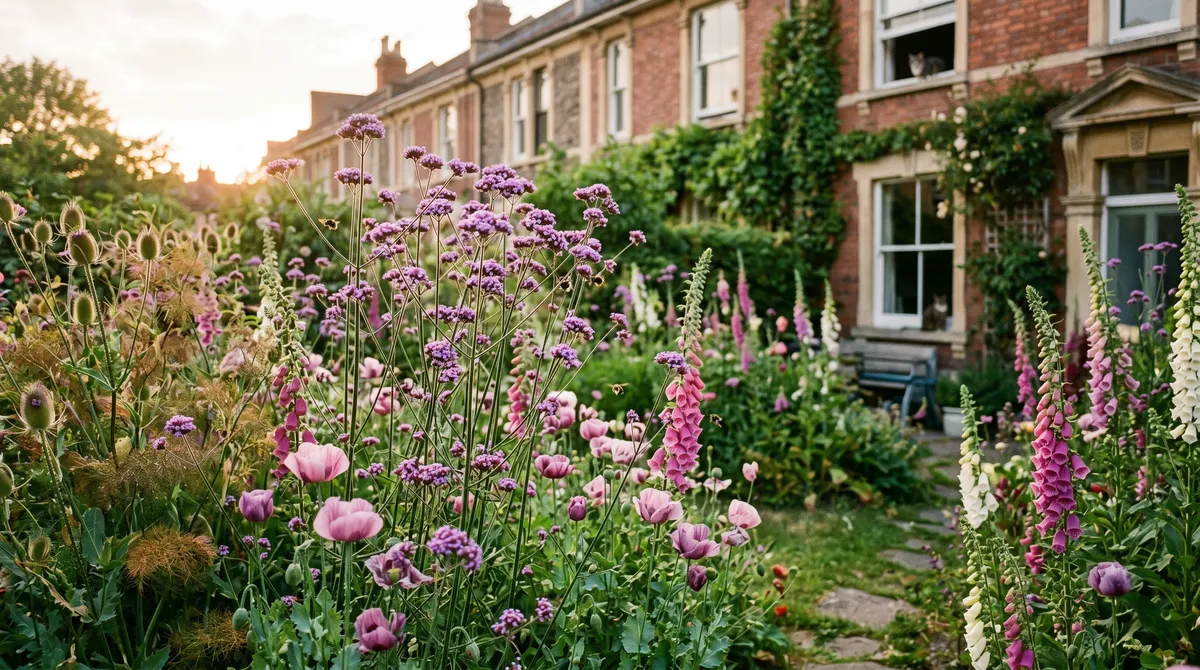
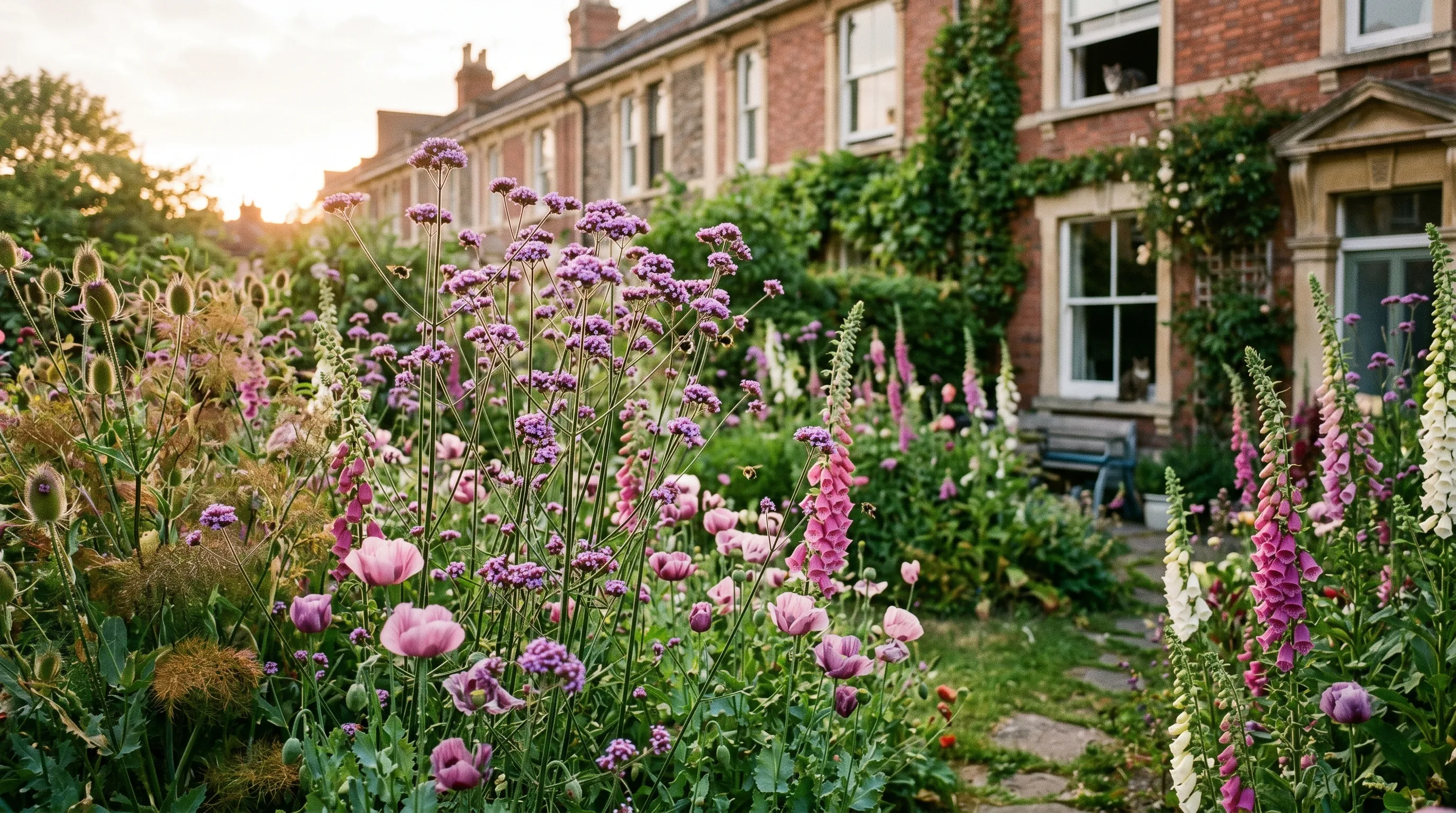 A four-year-old wild border in a south-facing Bristol garden. The Verbena bonariensis spires give the structure; the foxgloves and poppies fill the rest.
Where it came from
Three names sit behind almost every modern UK wild garden.
Beth Chatto opened her Essex garden in 1960 and turned its dry, hungry gravel into the Gravel Garden by 1991, demonstrating that planting to the conditions removes most of the watering and feeding work. Her 1978 book “The Dry Garden” reset British gardening orthodoxy. Her work is the planting-to-conditions backbone of the wild style.
Piet Oudolf, working from the Netherlands from the early 1980s onwards, codified the new perennial movement: drifts of tall grasses and herbaceous plants, structural seed heads through winter, deliberate winter interest. His UK commissions include the Walled Garden at Scampston (1999), the meadow at RHS Wisley, and the Hauser & Wirth garden in Somerset (2014).
Mary Reynolds (Ireland) won the Chelsea Gold Medal in 2002 with a wild Irish meadow garden, then launched the We Are The Ark movement in 2018 promoting acts of restorative kindness to nature in private gardens.
Other British contributors:
- Christopher Lloyd at Great Dixter mowed paths through long grass from the 1990s.
- Sarah Price, Nigel Dunnett and James Hitchmough developed the Sheffield School of new naturalistic planting, used at the Olympic Park in 2012.
- Dan Pearson designed the Tokachi Millennium Forest (Japan) and his own Somerset meadow garden using the same principles.
Eighty per cent wild, twenty per cent edited
The mistake most first-time wild gardeners make is reading the trend as “do nothing”. Doing nothing produces a garden of bramble, nettle, ground elder and ivy within three seasons. That is not the look.
- 80 per cent self-seeded or barely-managed planting: the visible chaos.
- 20 per cent firm editing: spring seedling thinning, removing thugs (ground elder, bindweed, creeping buttercup), maintaining structural lines, mowing paths, cutting back at the right moment.
The 20 per cent is what separates a wild garden from a derelict one. On a 60 square metre border it works out to roughly 14 to 22 hours of editing per year, concentrated in March (seedling thinning) and February (the one big cut-back).
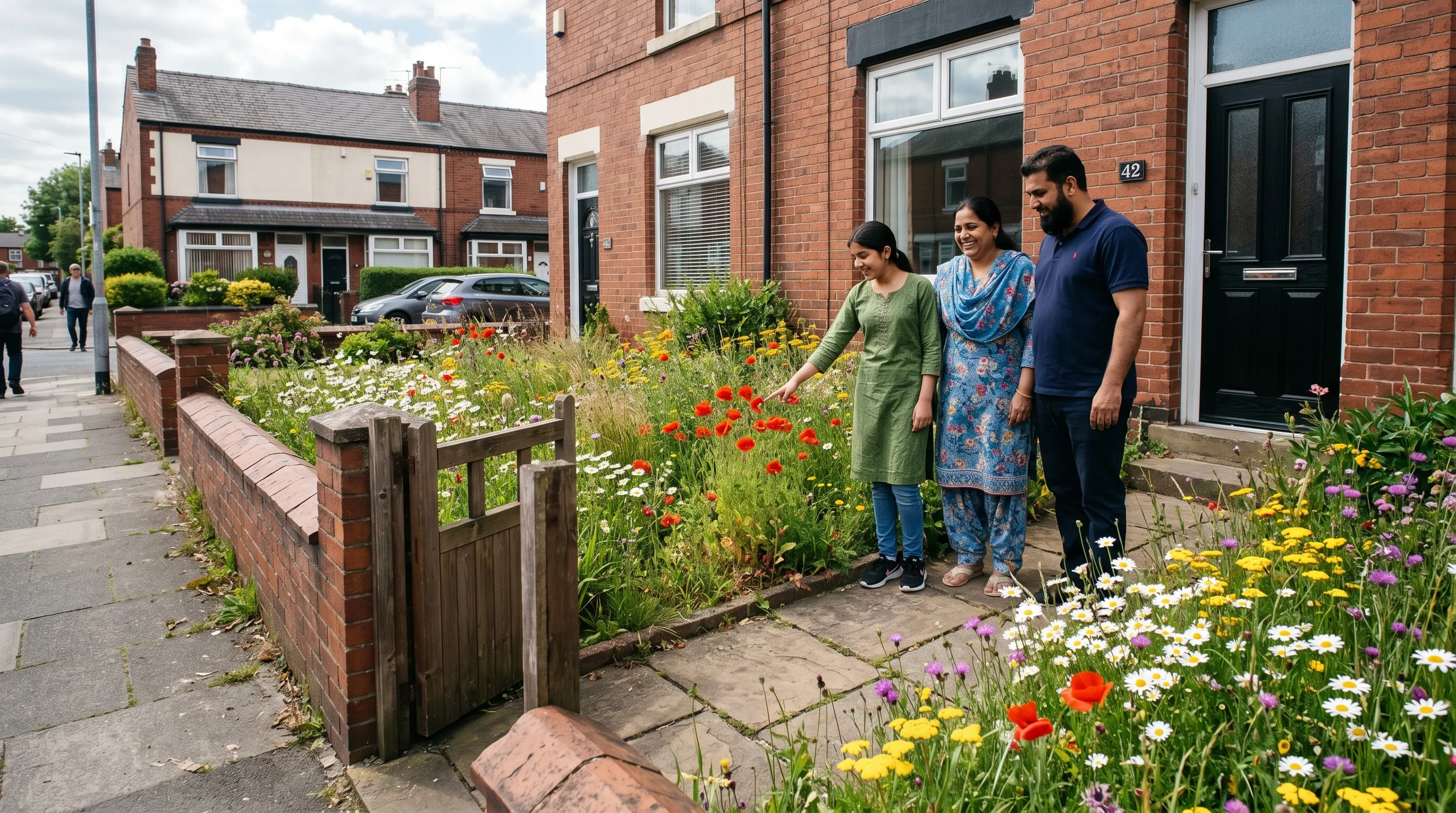 A 14 square metre front-garden mini-meadow replacing a lawn. Visible from the pavement, but the mown path and clean edge keep the look intentional.
How to do it right
1. Pick a planting palette and stick to it
Resist the urge to buy one of everything. A 60 square metre border works on 20 to 35 species, repeated. The wild look comes from repetition and self-seeding, not from variety.
2. Start with the structural perennials
Plant the 20 per cent first: the perennials and grasses that hold the garden together year-round. Verbena bonariensis at the back. A grass such as Deschampsia cespitosa or Calamagrostis ‘Karl Foerster’. A clump of Echinacea or Achillea. Two or three Sanguisorba ‘Tanna’ or Knautia macedonica.
3. Add the self-seeders in year one
Sow or plant: opium poppy (Papaver somniferum), foxglove, teasel, bronze fennel, aquilegia, forget-me-not, honesty (Lunaria annua), nigella. These will be patchy in year one but solid by year three.
4. Cut back once, not twice
A single cut-back in late February or early March. Leave everything standing through winter. Cut to 80mm. Compost the cut material on site if you can.
5. Mow paths, leave the rest
A grass path 600 to 800mm wide reads as intentional. Mow it weekly through summer. Mow it once in autumn. Everything either side of it can be wild.
6. Edit, do not weed
Edit your seedlings each March. Pull or transplant excess foxglove, aquilegia and poppy seedlings. Pull every brambles, nettle, ground elder and bindweed seedling you find. Leave the rest alone.
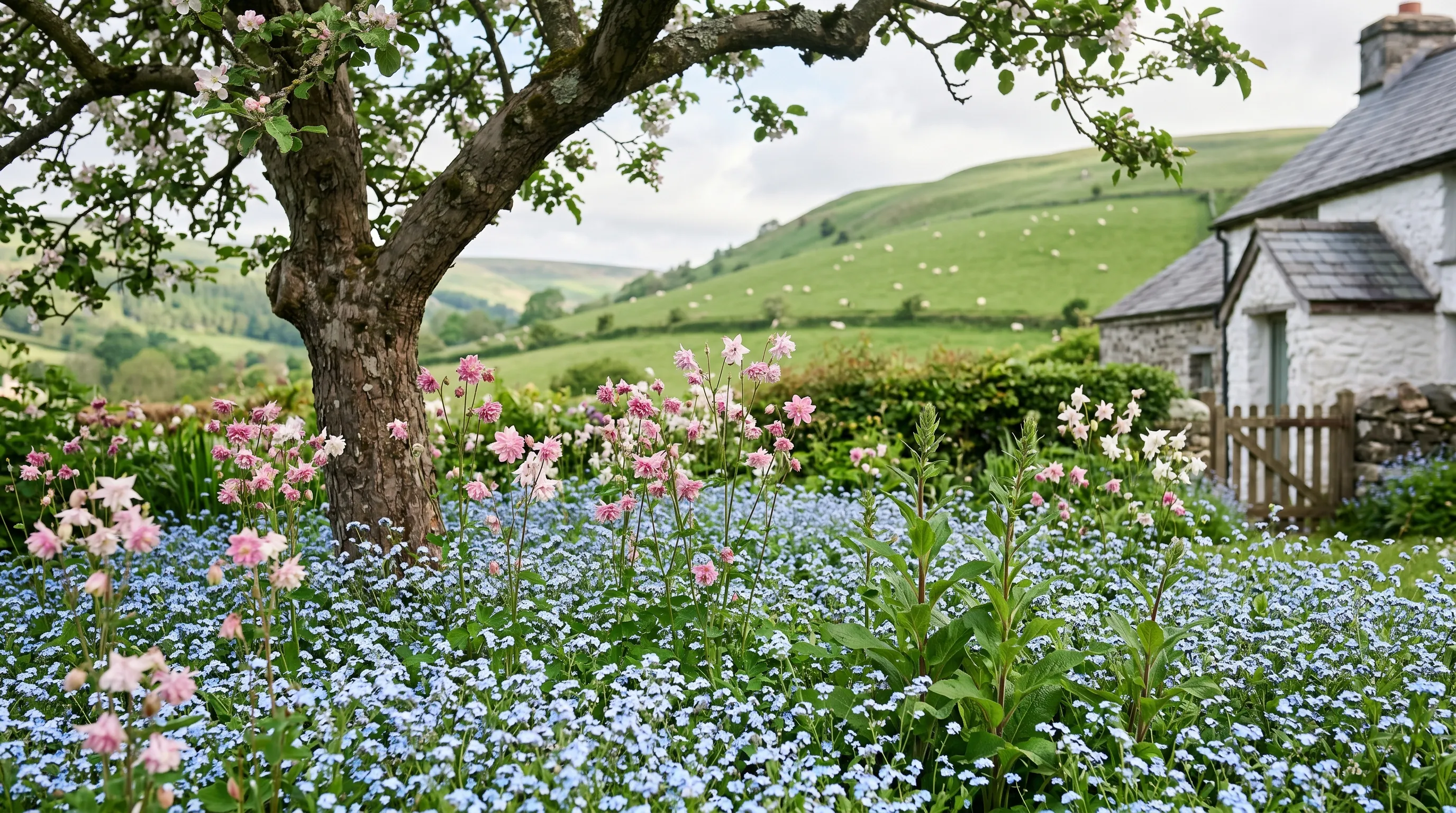 Year four of a Welsh valley wild garden. Forget-me-nots and aquilegia have stratified themselves to the lightest and dampest spots without intervention.
The best self-seeders for UK conditions
Verbena bonariensis is the single most useful plant in this style. At 1.8m it sees over almost everything else, casts no shade, and seeds reliably from year two onwards. Foxglove and teasel are biennials: they flower in year two, then die, but seed for year three onwards. Plant in two consecutive springs to overlap the cycle.
Plants to avoid in this style: anything that runs (mint, Macleaya, ribbon grass), anything that smothers (Geranium ‘Anne Folkard’ in small plots), and anything from a garden centre’s “wildflower mix” that turns out to be cornflower and cosmos with no pollen value.
Wildlife: what actually arrives
The first three years are slow. Year four is the turning point. The pattern matches published research: Owen and Owen’s 30-year survey of a Leicester garden, started 1972, recorded 2,673 invertebrate species total, with around 70 per cent arriving within the first ten years.
By year three at Staffordshire, three resident hedgehogs were using the border. By year four, a bank of standing teasel stems was hosting goldfinches through January and February. Bird species using the garden rose from six in 2019 to fourteen by 2024.
Five plants drove most of the invertebrate variety:
- Knautia macedonica for honeybees and solitary bees.
- Verbena bonariensis for hoverflies and butterflies (peacock, small tortoiseshell, comma).
- Teasel for seeds (goldfinches in winter) and seed-head invertebrates.
- Bronze fennel for hoverflies and parasitic wasps.
- Ox-eye daisy for soldier beetles and small flies.
Milkweed would make a strong sixth; our milkweed growing guide covers the Asclepias species whose nectar pulls in UK bees and butterflies.
 Bombus terrestris on knapweed (Centaurea nigra). Knapweed is one of the highest-value native UK plants for bumblebees, second only to red bartsia in published surveys.
The mown path: the single most useful trick
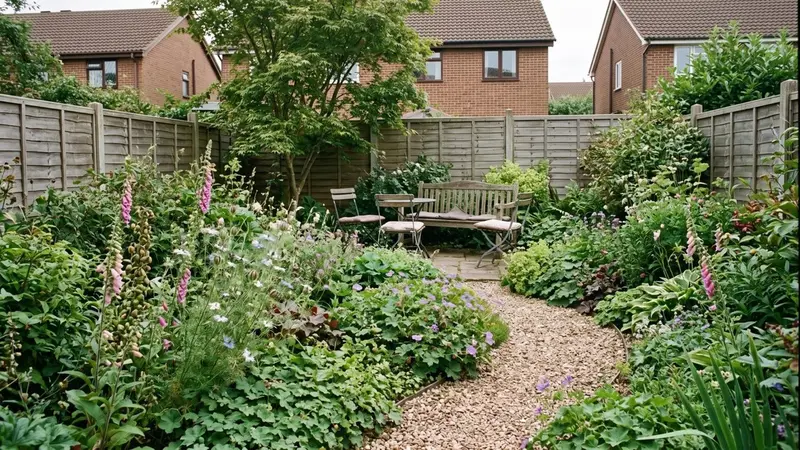
The mown grass path is the technique that signals intent more than anything else. A wild garden with no mown edge reads as abandoned; the same planting with a 600 to 800mm mown strip reads as designed.
How to do it:
- Width: 600mm minimum (one shoe width with comfort), 800mm comfortable for walking.
- Curve, do not straight-line: a curved path reads as natural. A straight path reads as utility.
- Frequency: mow weekly through April to September, twice in October, once in winter dry spells.
- Length: keep the path to a single loop or a single through-route. Multiple paths in a small garden break the immersion.
- Edge: a strimmed edge along the path keeps the boundary crisp. A laid edge (timber or steel) is overkill in this style.
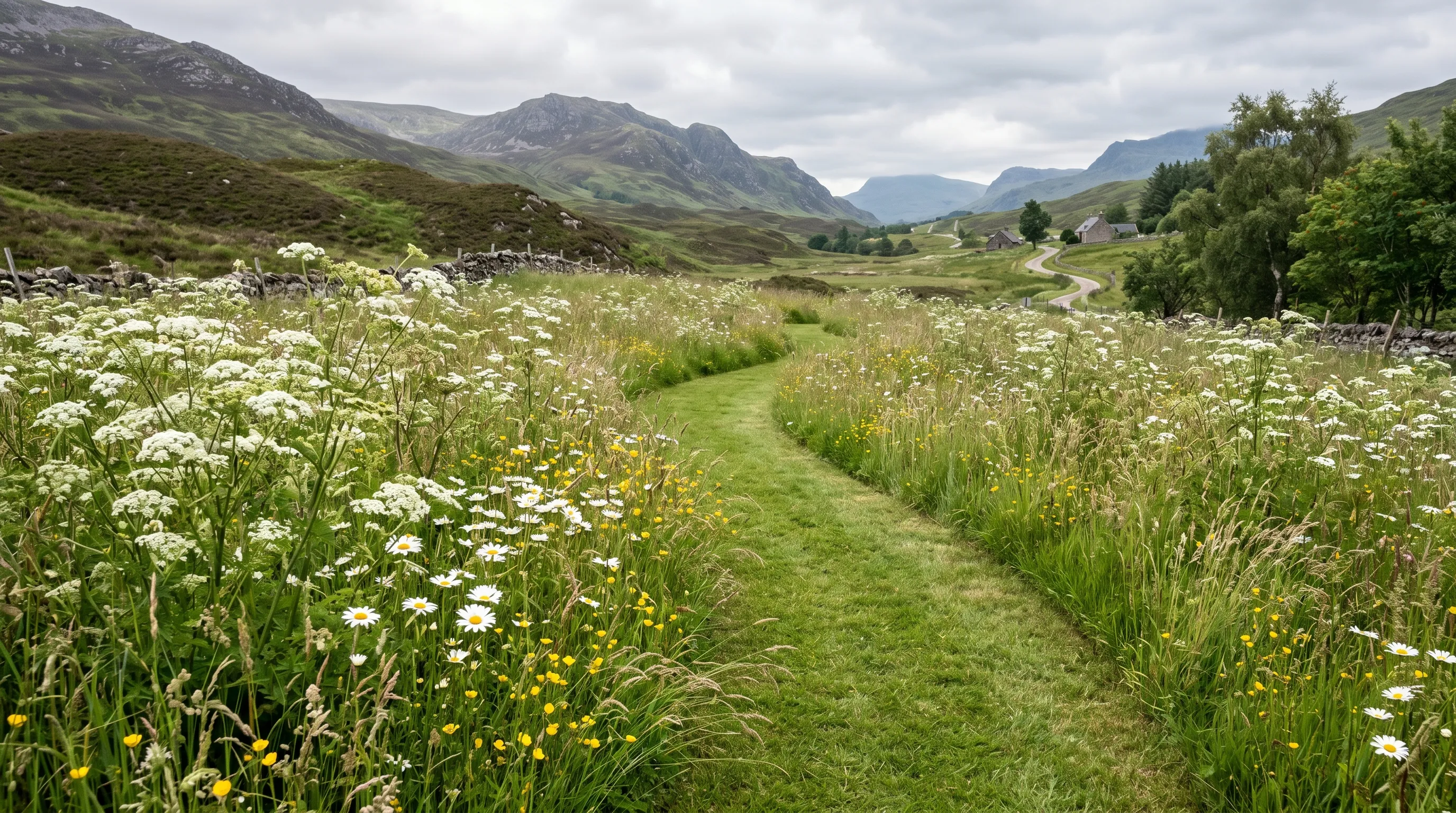 A single mown path through chest-high cow parsley and grass in a Scottish glen. The mown edge is what saves it from looking abandoned.
Neighbour relations and council rules
The wild garden is the design style most likely to upset a neighbour. Three rules cover almost every issue.
Rule 1: Front gardens are the flashpoint
Almost every dispute and almost every council action involves front gardens, not back gardens. The street-visible plot is where neighbours and local authorities make assumptions. Keep the front 80 per cent tidy and the back 80 per cent wild. Reverse the standard ratio for the front.
Rule 2: Section 215 notices target dereliction, not biodiversity
Local authorities can issue notices under Section 215 of the Town and Country Planning Act 1990 where land “adversely affects the amenity of the area”. In practice, councils use this for fly-tipping, collapsed structures, abandoned vehicles and overgrown sites with rubbish. A well-planted wild garden with a crisp mown edge is almost never the target. Of 6,500 Section 215 notices served annually in England, fewer than two per cent involve domestic garden planting.
Rule 3: Boundary tidiness signals intent
A single trimmed boundary strip (600mm mown grass or a clipped hedge edge) along the line shared with neighbours signals that the garden is intentional. Combine that with no visible litter, no overgrowth pressing into the neighbour’s plot, and a managed gate or path, and most neighbour concerns dissolve.
Local HOA-style management companies on private estates (more common on new-build developments) often have explicit lawn-care clauses in deeds. Read the deeds before converting a front lawn to wildflower meadow on a managed estate.
Warning: Do not plant invasive non-natives in a wild garden. Japanese knotweed, giant hogweed, Himalayan balsam and Rhododendron ponticum are illegal to plant or allow to spread under the Wildlife and Countryside Act 1981 schedule 9. Standing wild planting is fine; uncontrolled invasive spread can trigger enforcement.
When wild tips into actual neglect
There is a real line between wild as a style and garden as derelict. Diagnosis points:
- Bramble and ground elder dominate more than 15 per cent of the area: tipping toward neglect.
- No mown edges or paths visible: tipping toward neglect.
- Litter, fly-tipping or building waste present: clearly neglect, not style.
- Pernicious weeds (bindweed, mare’s-tail, creeping buttercup) covering more than 20 per cent: neglect.
- Boundary has collapsed or is pressing into neighbours: neglect.
A wild garden has clear edges, clear paths, and only the plants you would actually choose. A neglected one has none of those.
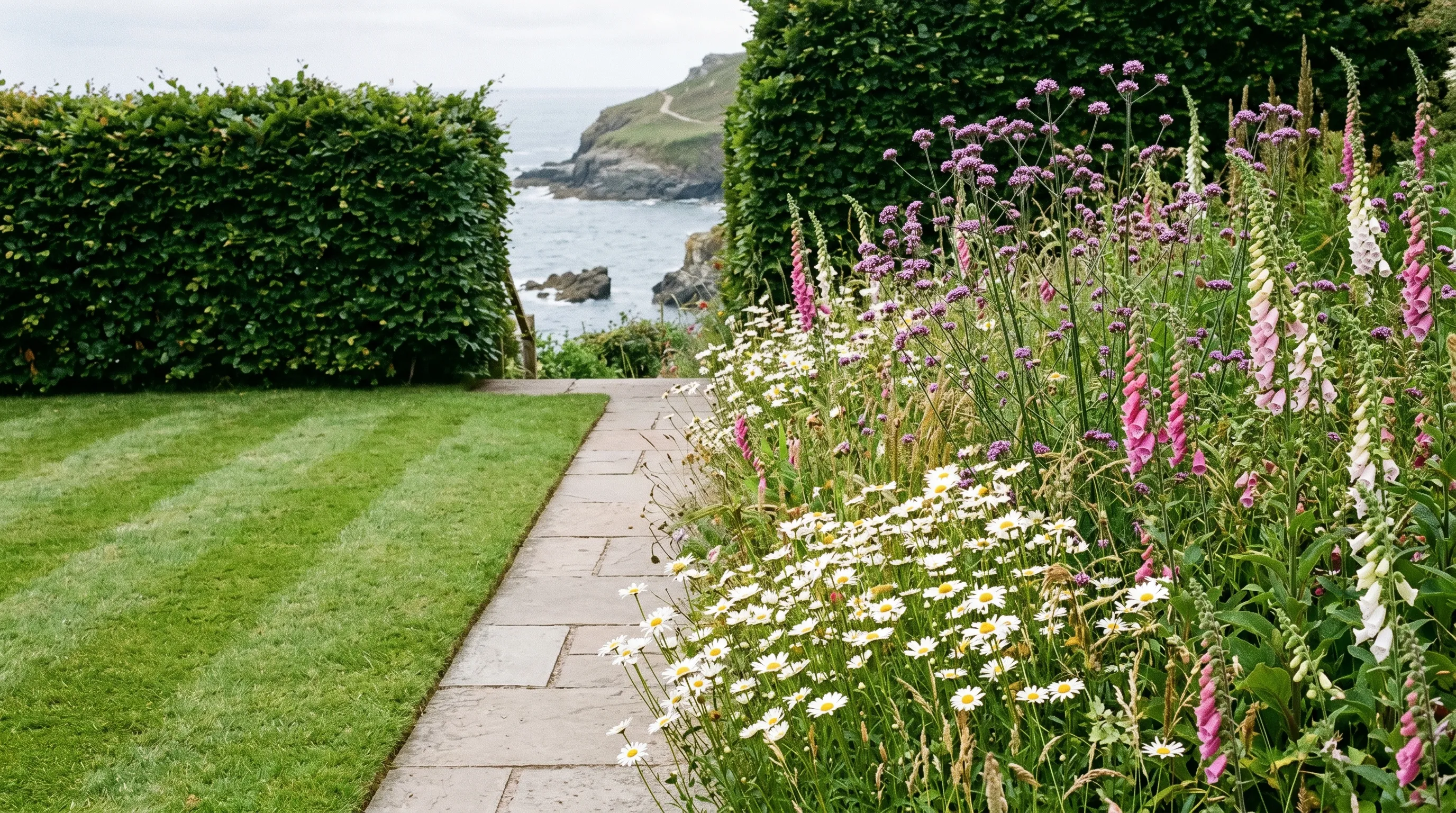 The edited edge is the single design move that separates wild gardening from neglect. Crisp mown lawn meeting tall mixed planting reads as deliberate.
How it compares with cottage gardens
| Feature | Wild overgrown | Cottage garden |
|---|---|---|
| Plant species per 100m square | 35-80, mostly self-seeded | 25-40, mostly planted out |
| Annual planting hours | 14-22 | 60-110 |
| Heavily edited each year | No | Yes |
| Self-seeders dominant | Yes | Some, controlled |
| Winter cut-back | Single, late Feb | Two, autumn and spring |
| Mown lawn ratio | 10-25% | 25-50% |
| Standing dead stems through winter | Always | Rarely |
| Wildlife species per 100 m square | 200-400+ over 5 years | 80-200 over 5 years |
| Replanting frequency | 5-10 year cycles | Annual partial replanting |
The contemporary cottage garden 70-30 style sits between the two, taking the structure of cottage planting and the self-seeding pace of wild gardening.
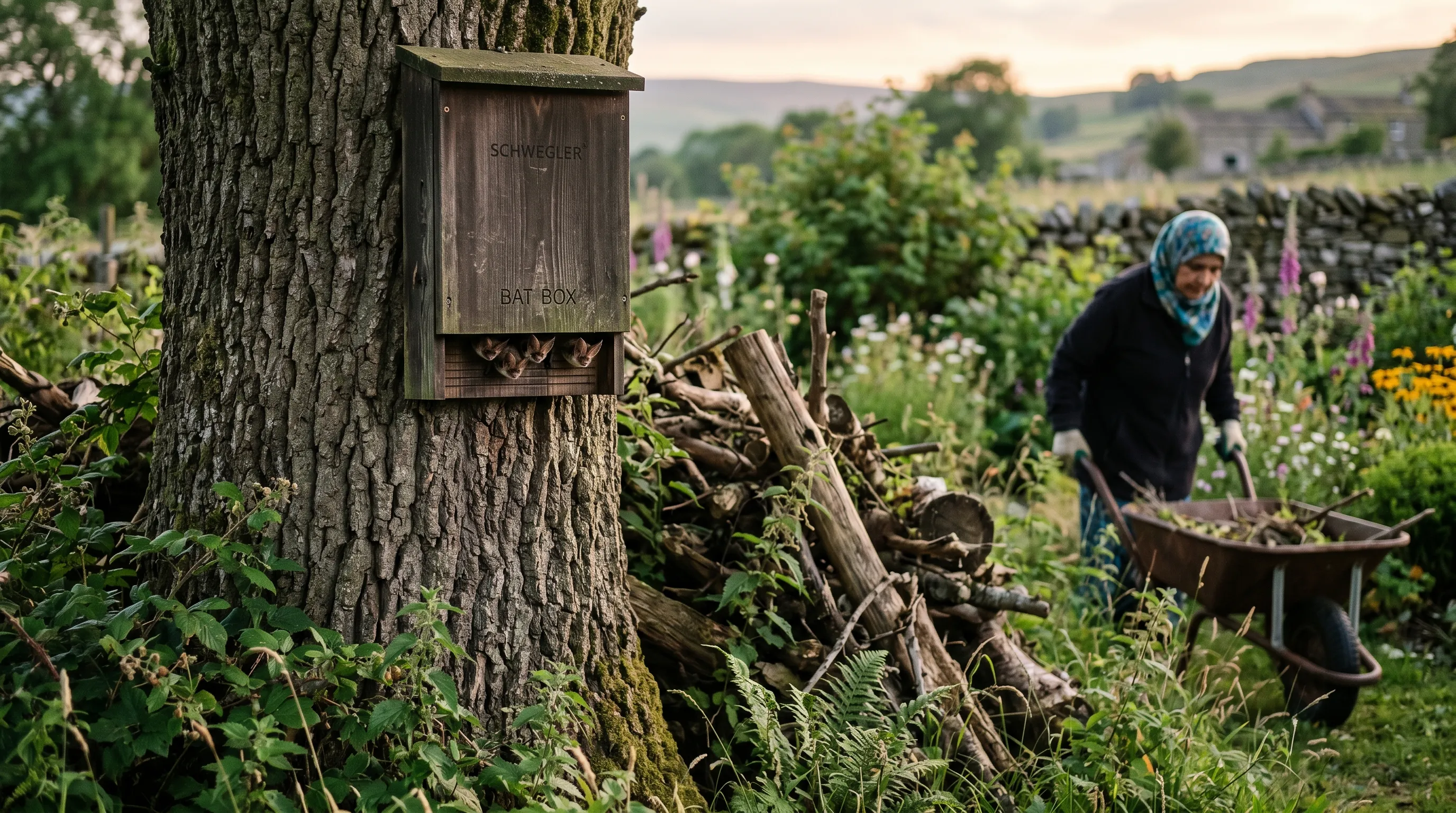 A wild garden corner with a Schwegler bat box, standing dead wood pile, and bramble patch. The combination supports bats, hedgehogs and overwintering insects in roughly equal measure.
Year-round task calendar
| Month | Main task |
|---|---|
| January | Leave seed heads standing for finches |
| February | Single big cut-back in last week, 80mm height |
| March | Edit seedlings: pull excess foxglove, aquilegia, poppy |
| April | Top-dress new plantings, watch for invasive seedlings |
| May | First path mow, plant verbena and grass plugs |
| June | Weekly path mow, deadhead spent foxgloves to spare seed |
| July | Sweep-net for invertebrate census, weed any thugs |
| August | Allow seed setting, no cutting |
| September | Continue weekly path mow, plant biennial seed for next year |
| October | Reduce path mow to fortnightly |
| November | Final path mow, leave everything else standing |
| December | Plan next year’s editing, identify clumps to divide |
Common mistakes
Skipping the structural perennials. A wild garden built entirely on self-seeders has nothing in winter and collapses in year two. Plant the 20 per cent structural framework first.
Cutting back in autumn. November cut-back removes overwintering insects, hibernation habitat, and the winter silhouette. Cut once, in late February.
No edited edge. A mown strip is the single design move that separates wild from neglected. Without it, neighbours and councils will read the garden as abandoned.
Buying mixed wildflower seed from supermarkets. Most generic mixes contain cornflower, cosmos and California poppy. These are not UK native, not high pollen value, and rarely persist. Buy UK provenance mixes from specialist suppliers.
Letting brambles and ground elder run. A wild garden tolerates weak weeds. It does not tolerate dominant thugs. Pull bramble, ground elder, bindweed and creeping buttercup seedlings on sight.
Front-garden conversion without warning the neighbours. Tell adjacent neighbours before you replace a front lawn with mini-meadow. Almost all front-garden complaints come from surprise, not from the planting itself.
What it adds up to
The wild overgrown trend is the rarest of garden styles: low labour, high biodiversity, low input cost, and aesthetically distinct. The 80-20 working ratio is the single thing to remember. Without the 20 per cent editing, the look fails. With it, the same 60 square metre border can host 47+ invertebrate species, three resident hedgehogs, and a roving population of goldfinches by year five.
For closely related approaches on the same site, the rewilding your garden guide covers the bigger-picture restorative approach. The contemporary cottage 70-30 style sits between wild and cottage. The Beth Chatto dry garden is the canonical example of planting to conditions, which is the design philosophy this whole trend rests on. For wildflower meadow detail, how to make a wildflower meadow goes into the species and timings. For wildlife support beyond planting, create a wildlife garden and bat-friendly gardens cover the structural habitat pieces.
For external authority on wildlife counts and native species choice, the Bumblebee Conservation Trust publishes plant tables ranked by pollen and nectar value. Their data informs much of the bumblebee planting advice given above.
Next step
Now you understand the wild garden approach, read the rewilding your garden guide for the broader restorative principles that connect garden-scale wild planting to habitat work at a bigger scale.
Our team produces practical UK gardening guidance from source research, contributor records and established horticultural practice. Editorial standards are overseen by Matt W.