Key takeaways
- Wide shallow plots are broad side to side, short front to back
- Split the width into 3-4 zones so the eye stops, not scans
- Run paths on a 45-degree diagonal for the longest sight line
- Layer planting in 3 tiers to fake depth against the fence
- Place an off-centre focal point at each side of the width
- Screen the whole back fence with trellis and climbers
A wide shallow garden is broad side to side but short front to back. You see them behind UK new-builds and terraced houses every day. The plot looks like a corridor you scan in a single second, and most planting plans make that worse rather than better.
Why a Wide Shallow Plot Feels So Flat
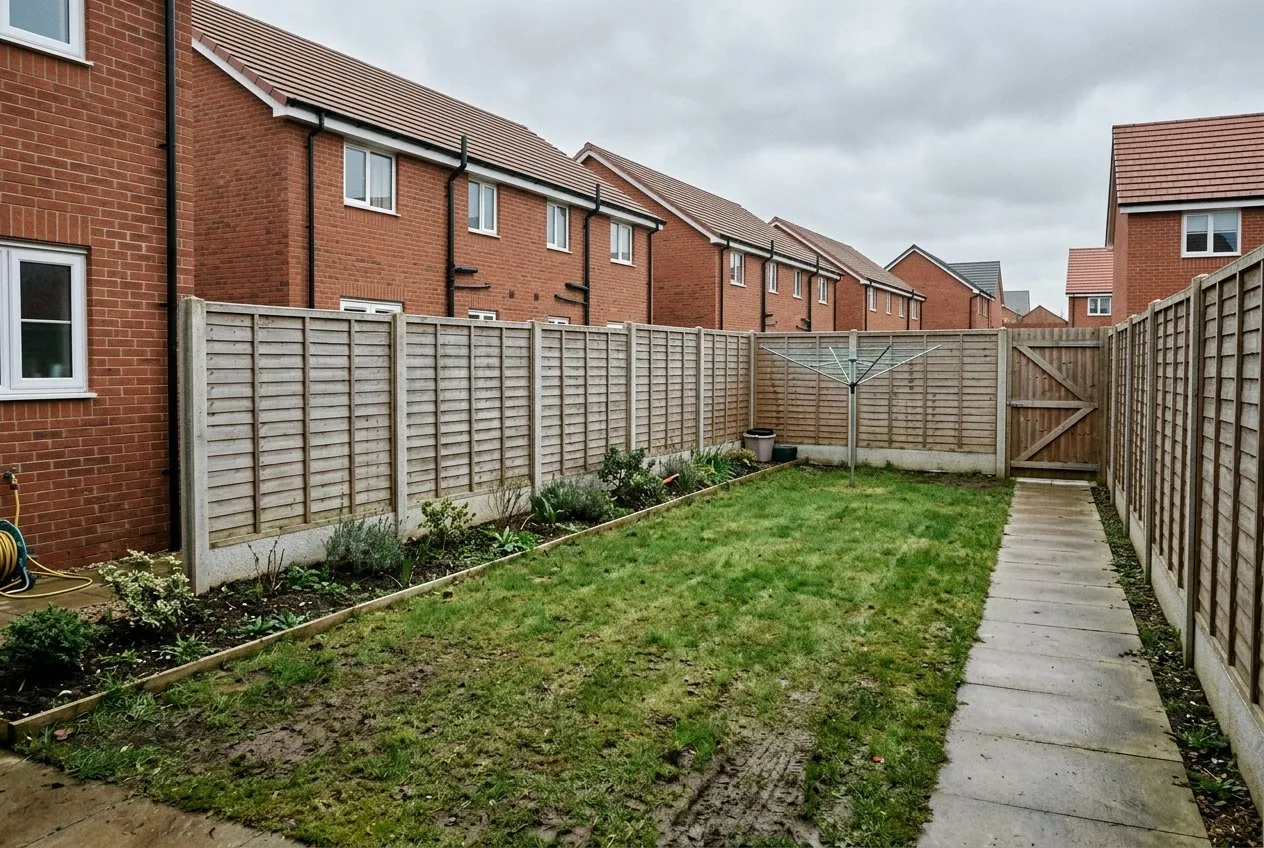
The problem is the sight line. On a plot 9 metres wide and 6 metres deep, your eye lands on the back fence almost instantly. There is no journey, no reveal, nothing to slow you down. The whole garden is read in one glance from the back door.
This is the opposite of a long thin plot. A long thin garden runs away from you like a runway and needs horizontal breaks to stop the eye racing to the end. A wide shallow plot does the reverse. It spreads sideways and the back boundary sits too close, so the garden feels like a stage set with a flat painted backdrop.
The full-width fence makes it worse. One unbroken run of 1.8 metre larch-lap panels acts like a wall. Your brain registers the boundary first and the garden second.
Break the Width Into Three or Four Zones
The single most effective move is to stop treating the garden as one space. Split the width into separate rooms.
Use low dividers, never full-height ones. A change of surface, a 40cm clipped box hedge, or a pair of pots can mark the edge of a zone. Anything taller would block the width you actually want to keep.
| Wide shallow problem | Design fix |
|---|---|
| Eye crosses the whole plot in one second | Split the width into 3-4 distinct zones |
| Garden reads as a flat corridor | Give each zone its own surface and purpose |
| Back fence dominates the view | Screen with trellis and climbers across full width |
| No sense of depth front to back | Run paths and beds on a 45-degree diagonal |
| Boundary feels like one solid wall | Plant in three tiers, low to tall |
| Nothing draws you across the garden | Off-centre focal point at each side |
The zones do not need to be equal. A wider sitting area and two smaller planted corners often works better than three matching thirds. The point is to give each room its own surface, its own purpose, and its own edge.
Use Diagonals to Stretch the Sight Line
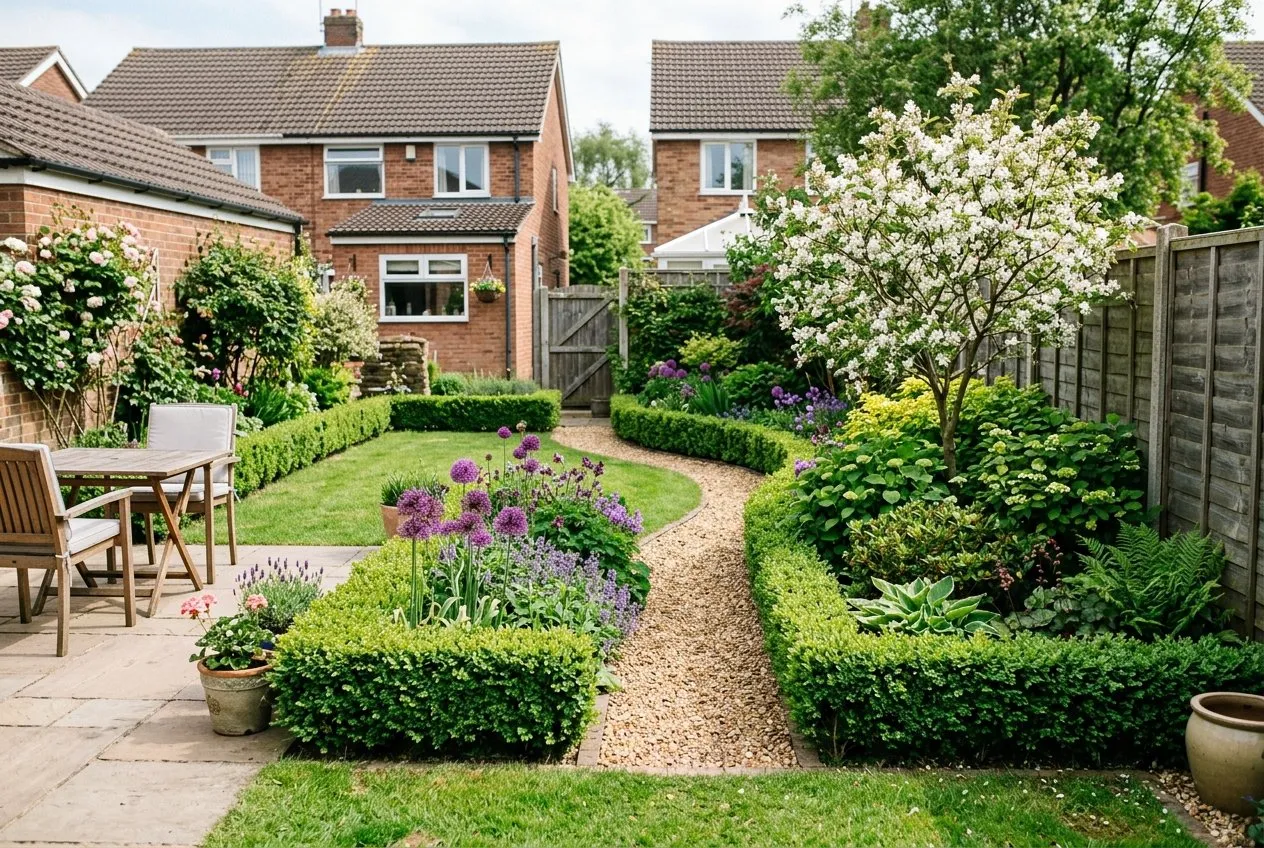
On a short plot the longest straight line is the diagonal. A path or bed run at 45 degrees across a 9m by 6m garden gives you nearly 11 metres of travel. That is the trick to fake depth.
Diagonal beds work the same way. Angle the front edge of a border rather than running it parallel to the house. The slanted line breaks the corridor feel and adds movement. Curves do a similar job, but a clean diagonal is sharper and reads as deliberate design.
Matt’s note worth borrowing: even a single diagonal slab path changes how a shallow plot reads. Lay it before you plant, so the beds follow the angle rather than fight it.
Layer Planting in Three Tiers to Fake Depth
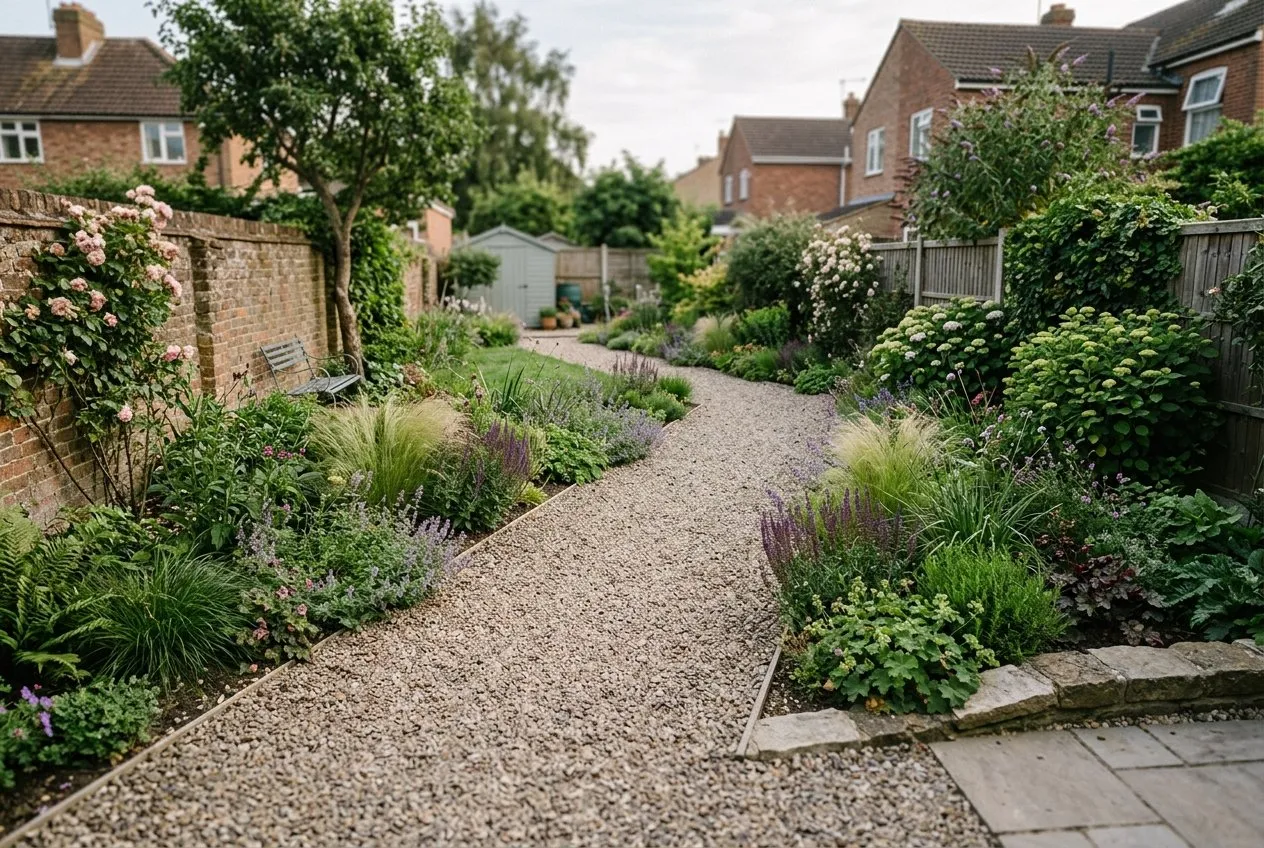
Flat planting kills a shallow garden. One row of shrubs against the fence gives you a green wall, not depth. Three tiers give the eye layers to travel through, and that reads as distance.
Build the back boundary in three heights. Low edging at the front, mid-height in the middle, tall structure against the fence. Your eye climbs through the layers and the border feels deeper than its 1 metre of actual soil.
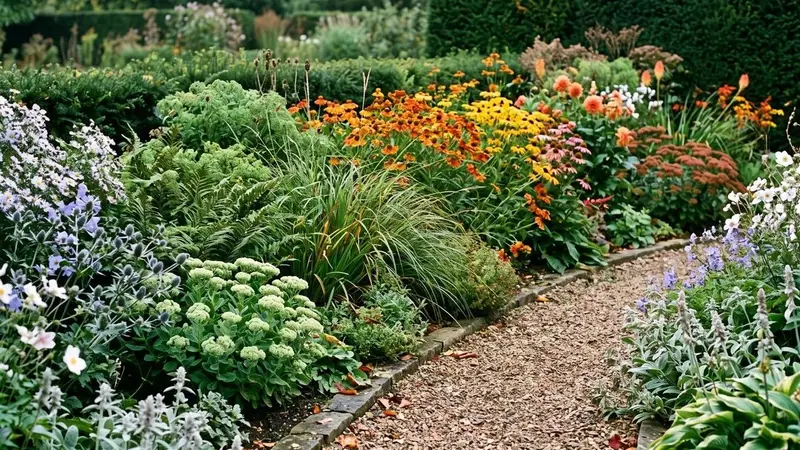
- Front tier (20-40cm): hardy geraniums, heuchera, low grasses like Festuca glauca
- Middle tier (50-90cm): Salvia ‘Caradonna’, Calamagrostis grasses, hardy fuchsia
- Back tier (1.5m plus): amelanchier multi-stem, climbing rose, or evergreen Pittosporum
Repeat two or three of these plants across the full width. The repetition links the zones and the eye reads the garden as one connected scene rather than three unrelated patches. The same layering logic drives any good mixed border planting plan, but here you are using height to buy depth you do not have.
Draw the Eye Sideways With Focal Points
A wide plot has width to spare. Use it. Place a focal point off-centre at each side so the eye moves left and right across the garden instead of straight to the fence.
A single specimen pot, a small water bowl, a clipped shrub, or a bench all work. Put one in each outer zone, never dead centre. A central focal point on a wide plot just emphasises how shallow the middle is. Off-centre points pull the gaze sideways and make the width an asset.
Two focal points at different distances also help. One set forward in a near zone, one further back in a far corner. The gap between them gives the eye a second journey and adds yet more apparent depth. This is the same trick that makes a small garden feel bigger. Give the eye somewhere to go and somewhere to rest.
Screen the Full-Width Boundary
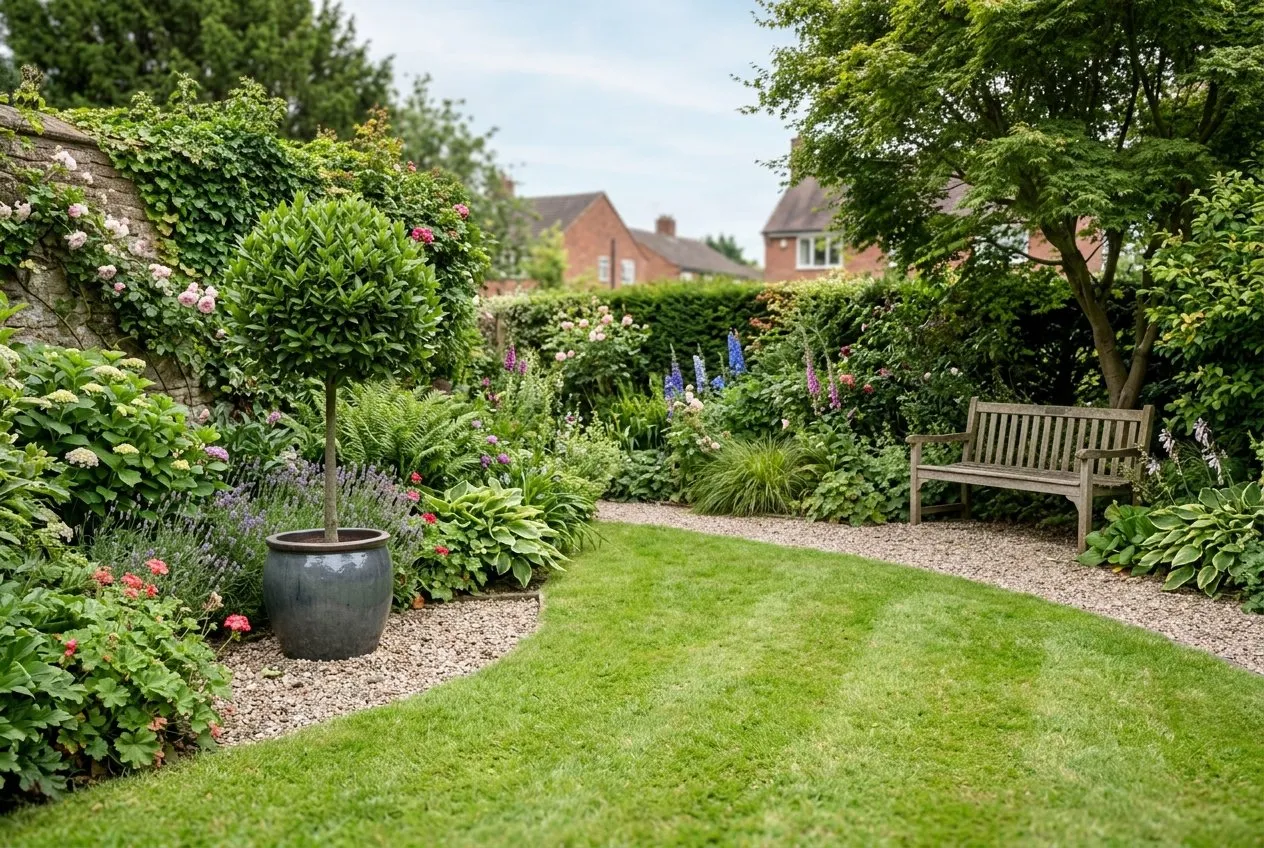
The back fence is the biggest visual problem on most wide shallow plots. A 9 metre run of bare panels reads as a wall. Break it up.
Fix trellis along the top of the fence and grow climbers across the whole width. Clematis, climbing roses, star jasmine and evergreen Trachelospermum all soften the panels into a green backdrop. Plant one or two taller shrubs or a small multi-stem tree forward of the fence so the boundary line is broken in places.
Vary the green. A run of identical climber along the whole fence still reads as a wall, just a leafy one. Mix textures and a couple of flowering points so the eye reads planting, not boundary. The same softening helps in a terraced or small garden where the fence sits close on every side.
Painting the fence a dark colour helps too. Deep green or near-black recedes and the planting in front stands forward. Pale orange fence stain does the opposite and shoves the boundary toward you.
A Zone-by-Zone Plan for a 9m by 6m Plot
| Zone | Position | What goes there |
|---|---|---|
| Sitting square | Left third, sunniest corner | Paving, table and chairs, a pot focal point |
| Diagonal path | Across the middle | Gravel run at 45 degrees linking the zones |
| Lawn and gravel | Centre | Small open patch, a bench off to one side |
| Shrub corner | Right third | Multi-stem tree, three-tier underplanting |
| Back boundary | Full width | Trellis, mixed climbers, dark fence stain |
Build it in order. Hard surfaces and the diagonal path first, then the boundary screening, then the layered planting, then the focal points last. Planting around a path you have not laid yet wastes plants and time.
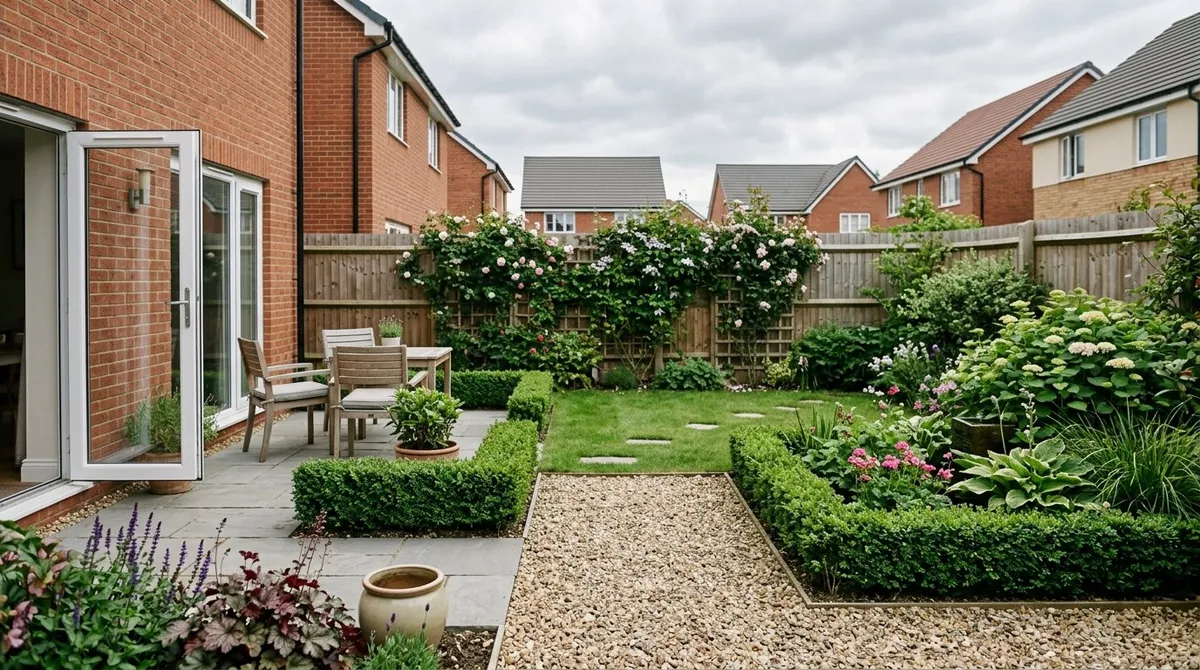
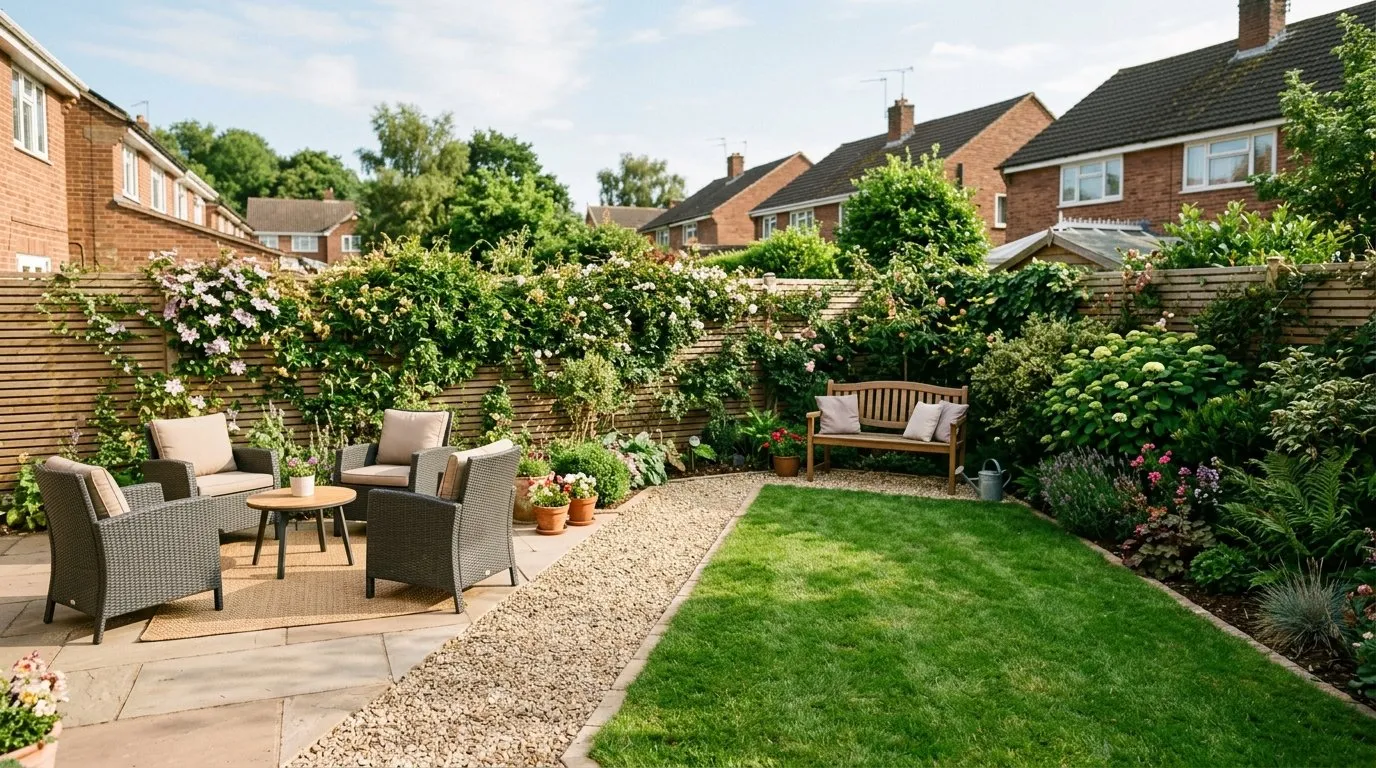 The finished Cannock layout across the full 9 metre width. Sitting square at one side, diagonal path through the middle, lawn and bench, shrub corner at the far side, all against a screened boundary. Several places for the eye to stop, and a plot that no longer feels shallow.
Frequently asked questions
How do you design a wide shallow garden?
Split the width into 3-4 zones so the eye stops at each one. Run paths and main beds on a 45-degree diagonal to stretch the longest sight line. Layer planting in three tiers against the back fence for false depth. Screen the full-width boundary so it stops feeling like one flat wall.
How do you make a shallow garden look deeper?
Use a diagonal path and three-tier planting against the back fence. A 45-degree line is the longest distance across a short plot, so it tricks the eye into reading more depth. Tiered planting, from low front to tall back, adds layers your eye has to travel through.
What is the difference between a long thin and a wide shallow garden?
A long thin garden is deep front to back but narrow side to side. A wide shallow garden is the opposite, broad side to side but short front to back. Long thin plots need horizontal breaks to stop a runway effect. Wide shallow plots need vertical zones to stop a corridor effect.
How do you screen a full-width garden fence?
Add trellis above the fence and grow climbers up it along the whole width. Break the run with one or two taller shrubs or a small multi-stem tree planted forward of the fence. A varied green wall reads as planting, not a flat boundary panel.
What plants suit a wide shallow garden border?
Use a three-tier mix: low edging like hardy geraniums, mid-height grasses and salvias, then tall structure like amelanchier or a climber. Repeat two or three key plants across the width so the eye links the zones. Evergreen structure holds the scene through winter.
Now plan the rest of your garden
Our team produces practical UK gardening guidance from source research, contributor records and established horticultural practice. Editorial standards are overseen by Matt W.