Key takeaways
- In England, a permeable front garden surface needs no planning permission; over 5 square metres of impermeable surface draining to the road does
- The rule has applied since 1 October 2008 to cut surface-water flooding from paved-over front gardens
- Permeability comes from a no-fines sub-base of clean 4-20mm stone, roughly 150mm deep, not compacted MOT Type 1
- Gravel costs about £40-70 per square metre fitted, permeable block paving £70-120, resin-bound gravel £40-90
- Resin-bound gravel is permeable; resin-bonded gravel is not, and the two are easy to confuse
- Cellular grids filled with grass or gravel give reinforced parking that still drains and stays green
Do you need planning permission to pave a front garden?
In England, you do not need planning permission to pave over a front garden if the new surface is permeable or porous, or if rainwater is directed to a permeable area such as a lawn, border or soakaway. This has been the rule since 1 October 2008. It exists to slow the surge in surface-water flooding caused by hard front gardens.
You do need planning permission if you cover more than 5 square metres with a traditional impermeable hard surface that drains onto the road. Below 5 square metres, an impermeable surface is still permitted development, but the 5 square metre trigger is easy to cross on even a small drive.
So the choice of surface decides the paperwork. Pick a permeable finish and the job stays inside permitted development at any size. Wales operates comparable guidance. Scotland and Northern Ireland have separate planning systems, so check with your local authority before you start. Listed buildings, conservation areas and Article 4 zones can also remove permitted development rights.
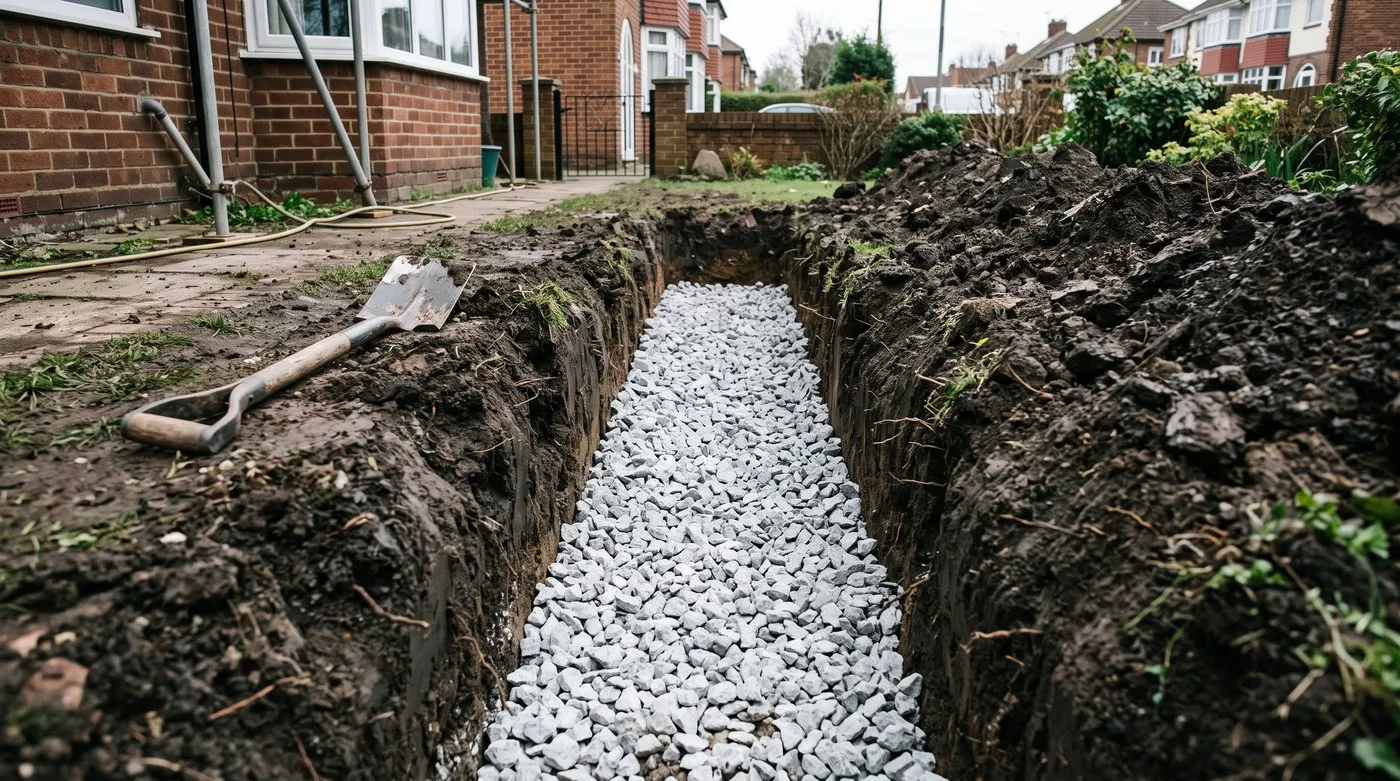 The build that matters: 150mm of clean, open-graded crushed stone with the fines screened out. This layer stores and releases the rain, whatever surface sits on top.
Why paving over front gardens causes flooding
Paving over front gardens, often called urban creep, has changed how rain behaves in UK streets. When a soft front garden becomes a sealed drive, every drop that once soaked in now runs to the kerb. Multiply that across a road and the local drains take a hit they were never sized for.
The numbers behind this are not small. Front gardens across the country have been steadily hard-surfaced over the past two decades, and roughly a quarter of front garden area in some cities is now paved. Each square metre of sealed surface sends around 50 litres of runoff to the drain in a heavy 50mm downpour. A permeable surface holds most of that back and lets it soak away.
The losses are wider than water. A sealed front garden loses its soil life, its planting and its cooling effect. Hard, dark surfaces store heat and push up local temperatures, adding to the urban heat-island effect. A porous, planted front garden does the opposite: it recharges groundwater, feeds soil organisms and stays cooler on a hot day. For the plants that make this work, see our guide to plants that help prevent flooding in a SuDS scheme.
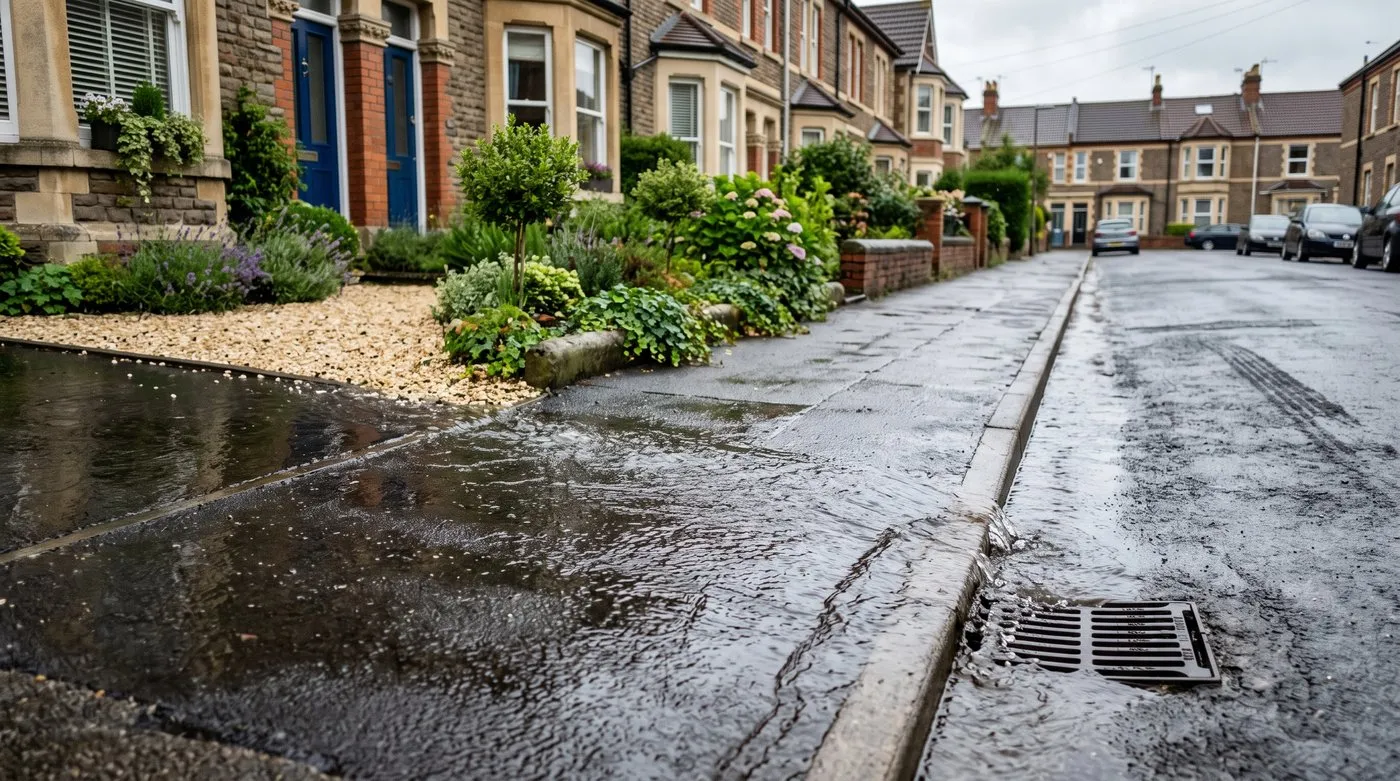 The problem in one shot: a sealed drive sends its rain straight to the kerb and the drain, while a permeable surface holds it back and lets it soak away.
What actually makes paving permeable: the sub-base
The surface gets the attention, but the sub-base is what makes paving permeable. Get this layer wrong and the smartest permeable blocks sit on a sealed floor that sheds water sideways. Get it right and almost any surface drains.
A permeable sub-base is open-graded and no-fines. That means crushed stone with the small dust particles screened out, so the gaps between the stones stay open. Water drains through those voids and the layer works like a reservoir, holding rain and releasing it slowly into the ground below. A typical spec is clean 4-20mm crushed stone, or a Type 3 open-graded aggregate, laid around 150mm deep and lightly consolidated, not hammered solid.
Gardener’s tip: Ask any contractor which sub-base they will use, and get the answer in writing before the quote is accepted. If they say MOT Type 1, the finished job will not be permeable, whatever surface goes on top. The words you want to hear are “no-fines” or “open-graded Type 3”, laid at least 150mm deep.
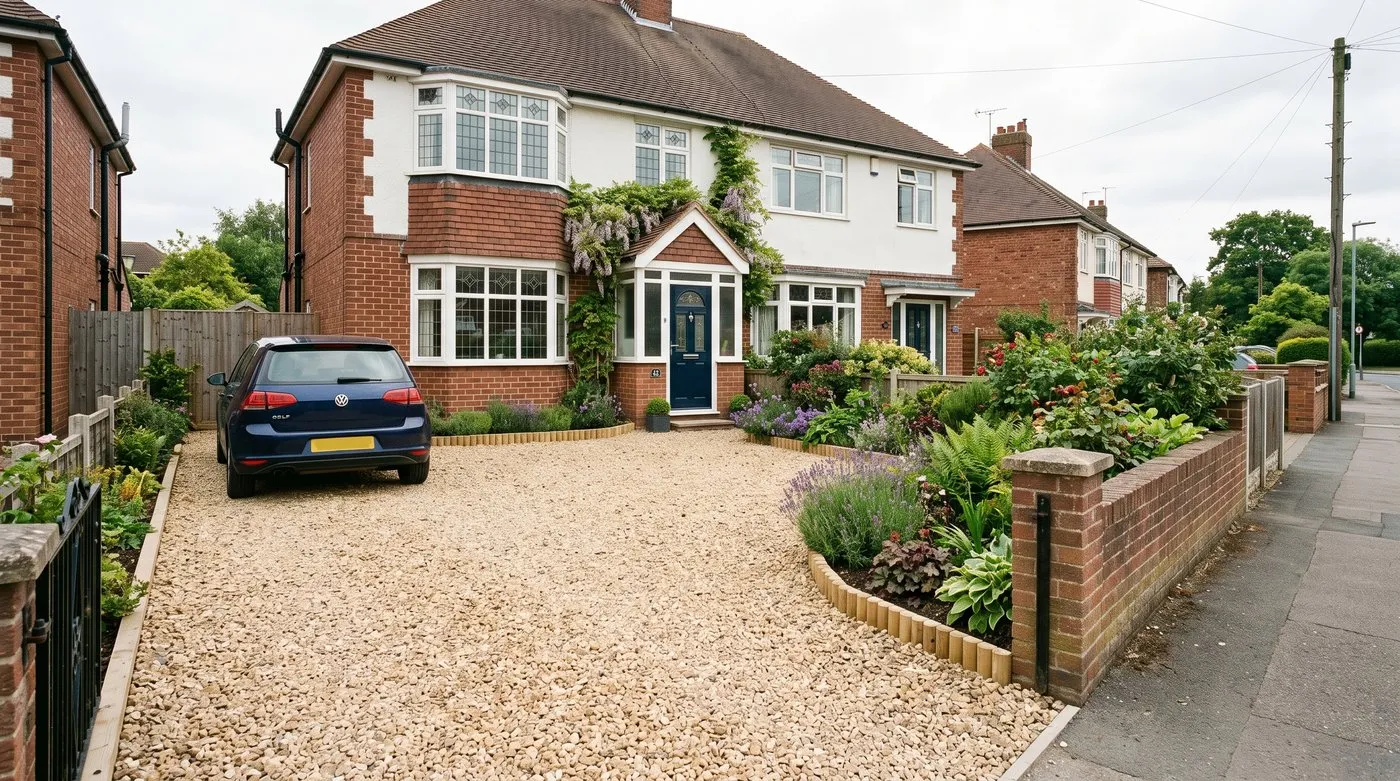 A gravel front garden over a no-fines base in a suburban Midlands street. It is the cheapest permeable finish and drains without any help.
Six permeable surfaces compared on cost and drainage
Not all permeable surfaces are equal. They differ on cost, looks, upkeep and how much traffic they take. The table ranks the main options for a UK front garden, from cheapest to dearest, with an honest note on where each one earns its place. Costs are fitted prices per square metre, including a suitable sub-base, and vary by region and access.
| Surface | Permeable? | Cost per sq m (fitted) | Look | Maintenance | Planning-friendly |
|---|---|---|---|---|---|
| Gravel | Yes, naturally | £40-70 | Informal, loose stone | Rake level, top up, edge restraint | Yes |
| Resin-bound gravel | Yes | £40-90 | Smooth, joint-free finish | Low, occasional wash | Yes |
| Permeable block paving | Yes, via joints | £70-120 | Neat, formal, crisp lines | Brush joints, keep grit topped up | Yes |
| Porous asphalt | Yes | £45-80 | Plain, matt black | Sweep to keep voids open | Yes |
| Cellular grass/gravel grid | Yes | £40-75 | Green or gravel, hidden grid | Mow grass or top up gravel | Yes |
| Reinforced grass | Yes | £35-60 | Lawn with parking strength | Mow, occasional reseed | Yes |
Resin-bound versus resin-bonded: the costly mix-up
These two names sound the same and behave in opposite ways. Getting them confused is an expensive planning mistake, so it is worth being clear.
Resin-bound gravel is permeable. The stone and resin are mixed together in a forced-action mixer, then trowelled onto the base as a wet mortar. As it cures it sets with tiny voids between the coated stones, so water drains straight through. A resin-bound front garden is permitted development at any size.
Resin-bonded gravel is not permeable. A layer of resin is spread onto a solid base, then dry stone is scattered over the top and sticks to the surface. The finish looks similar but the resin coat underneath is sealed, so water runs off exactly like tarmac. Cover more than 5 square metres of it draining to the road and you need planning permission.
The rule is simple: bound drains, bonded seals. If a quote says resin-bonded, ask for resin-bound instead, or confirm the runoff goes to a border or soakaway, not the pavement.
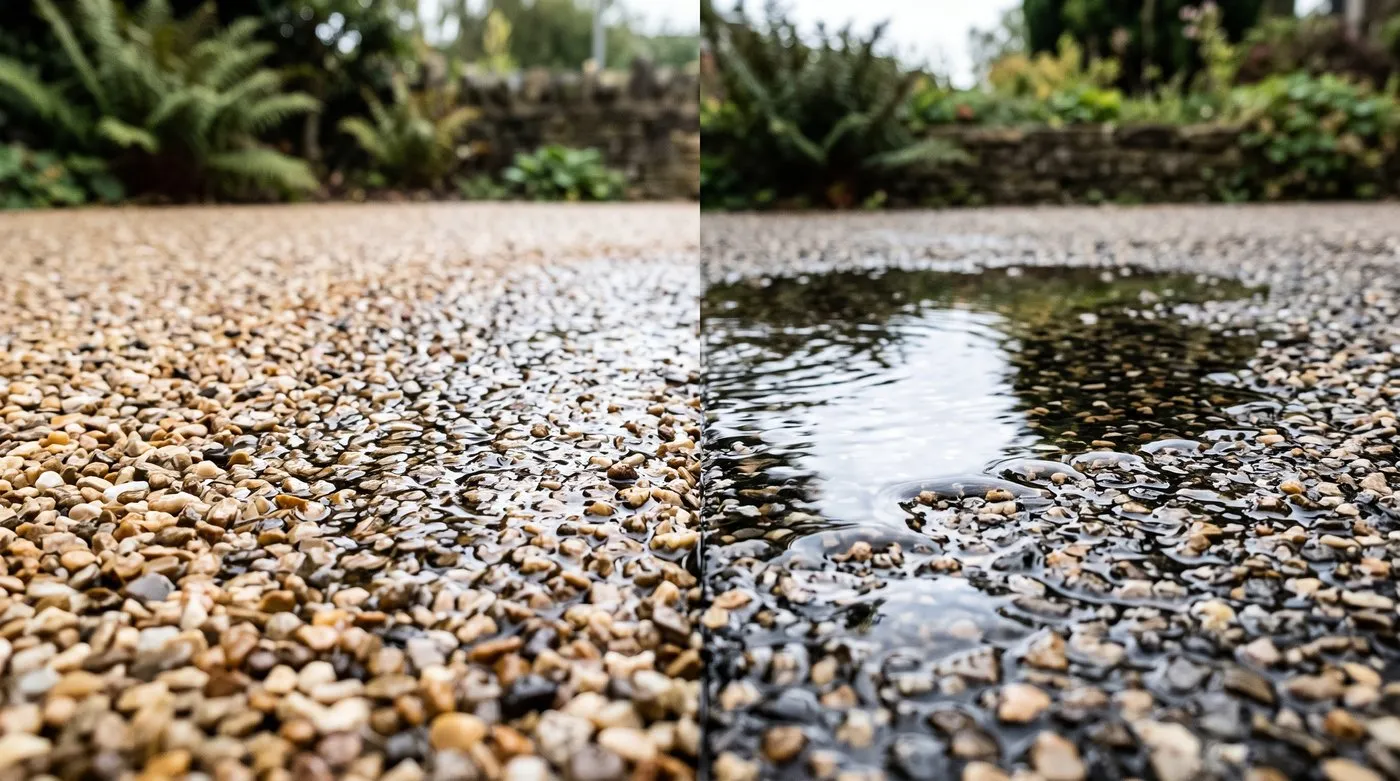 Bound versus bonded, side by side. Water sinks straight into the resin-bound half on the left and sits on the sealed resin-bonded half on the right.
Grass grids and reinforced lawns for parking
If you want to park a car but keep a green front garden, cellular grids are the answer. These are rigid plastic honeycombs, laid over the no-fines base and filled with either grass or gravel. The cells spread the weight of a car across the whole surface, so the fill does not rut or compact.
A grass-filled grid looks like a lawn until you drive on it. The plastic cell walls protect the grass crowns and the root zone from the tyres, so the grass survives daily use that would otherwise churn to mud. Fill the same grid with 10mm gravel and you get a firm, free-draining parking surface that will not scatter under turning wheels, unlike loose gravel.
Reinforced grass without a full grid, using a mesh or a lighter ground-protection product, suits an overflow parking spot used now and then rather than every day. All of these count as permeable. They keep the front garden cooler and greener while carrying a family car of around 1,500kg with ease.
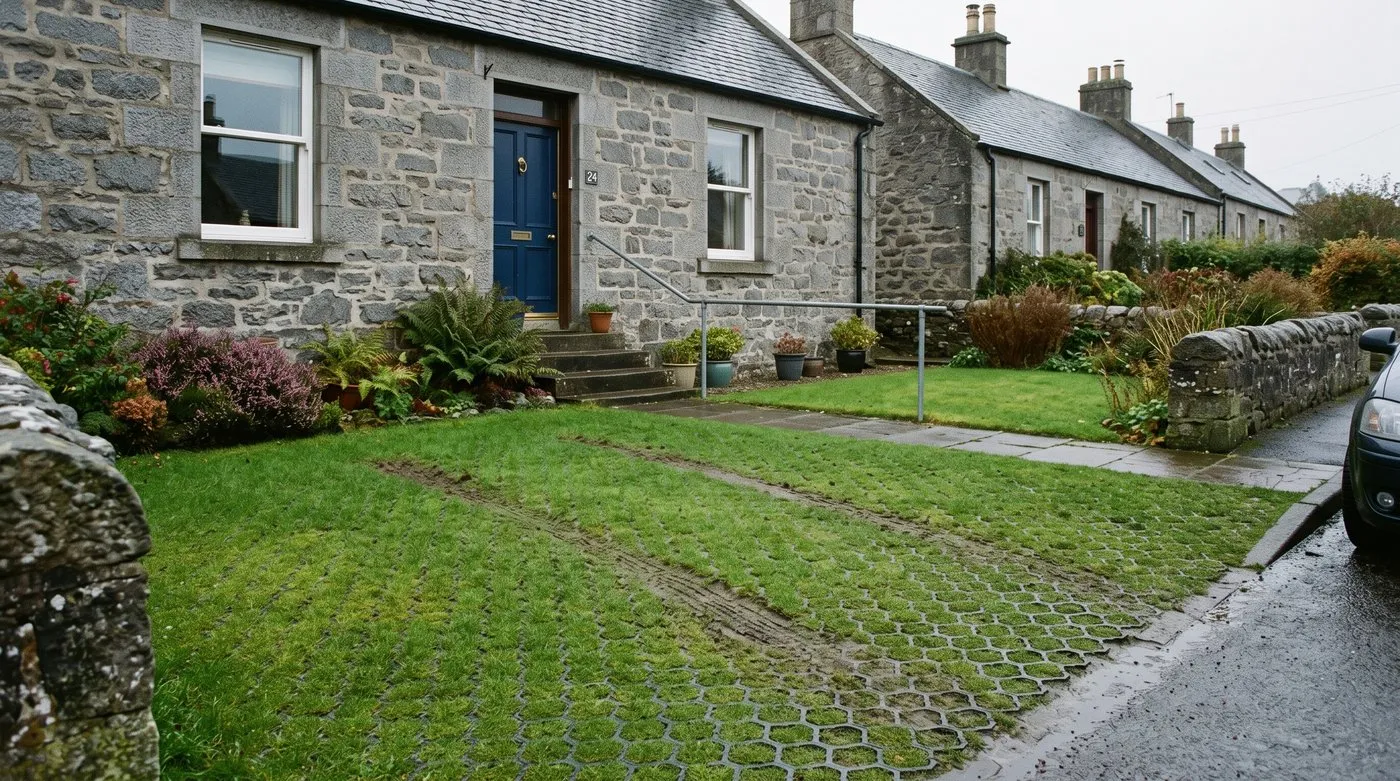 A grass-filled cellular grid parking bay outside a Scottish stone terrace. The honeycomb protects the grass crowns so the lawn survives daily parking.
What a permeable front garden costs to build
Budget honestly and you avoid the two classic traps: skimping on the sub-base, or forgetting the digging and disposal. For a typical 24 square metre front garden with a single parking bay, here is where the money goes.
The excavation and muck-away is the hidden cost. Digging out to 250mm and removing the spoil often runs to £25-40 per square metre before any surface is laid, more if access is tight or the ground is heavy clay like ours. The no-fines sub-base adds roughly £15-25 per square metre in stone and labour. Then the surface itself sits on top, from £15 per square metre for loose gravel to £70 or more for premium block paving.
A realistic all-in figure for a permeable front garden runs £80-160 per square metre fitted, so £1,900 to £3,800 for a 24 square metre plot. Gravel keeps you at the lower end. Resin-bound and block paving push towards the top. Edging, a soakaway crate if the ground drains slowly, and any drop-kerb work for a new driveway are extra.
Warning: A drop-kerb to create vehicle access across a public pavement always needs the council’s permission and an approved contractor, whatever surface you lay behind it. That is separate from the permeable paving rules. Never let a driveway installer cut a kerb without the local highways authority signing it off first.
The build sequence matters as much as the materials. Here is the order we followed, and the order any permeable front garden should follow.
| Stage | Task | Depth or detail |
|---|---|---|
| 1 | Dig out topsoil and any old surface | Down to about 250mm |
| 2 | Check the subgrade drains | Dig a test hole, fill with water, watch it fall |
| 3 | Lay geotextile membrane | Separates soil from stone, stops silting |
| 4 | Add no-fines sub-base | 150mm clean 4-20mm or Type 3, lightly consolidated |
| 5 | Add a laying course if needed | 2-6mm clean grit for blocks, none for gravel |
| 6 | Lay the surface | Gravel, resin-bound, blocks or grid |
| 7 | Fit edge restraints | Keeps gravel and blocks from spreading |
If your subgrade is heavy clay and the test hole barely drains, add a soakaway crate below the sub-base to hold water while it seeps away. Our notes on how to improve drainage in a clay soil explain why clay is slow and what actually shifts water through it.
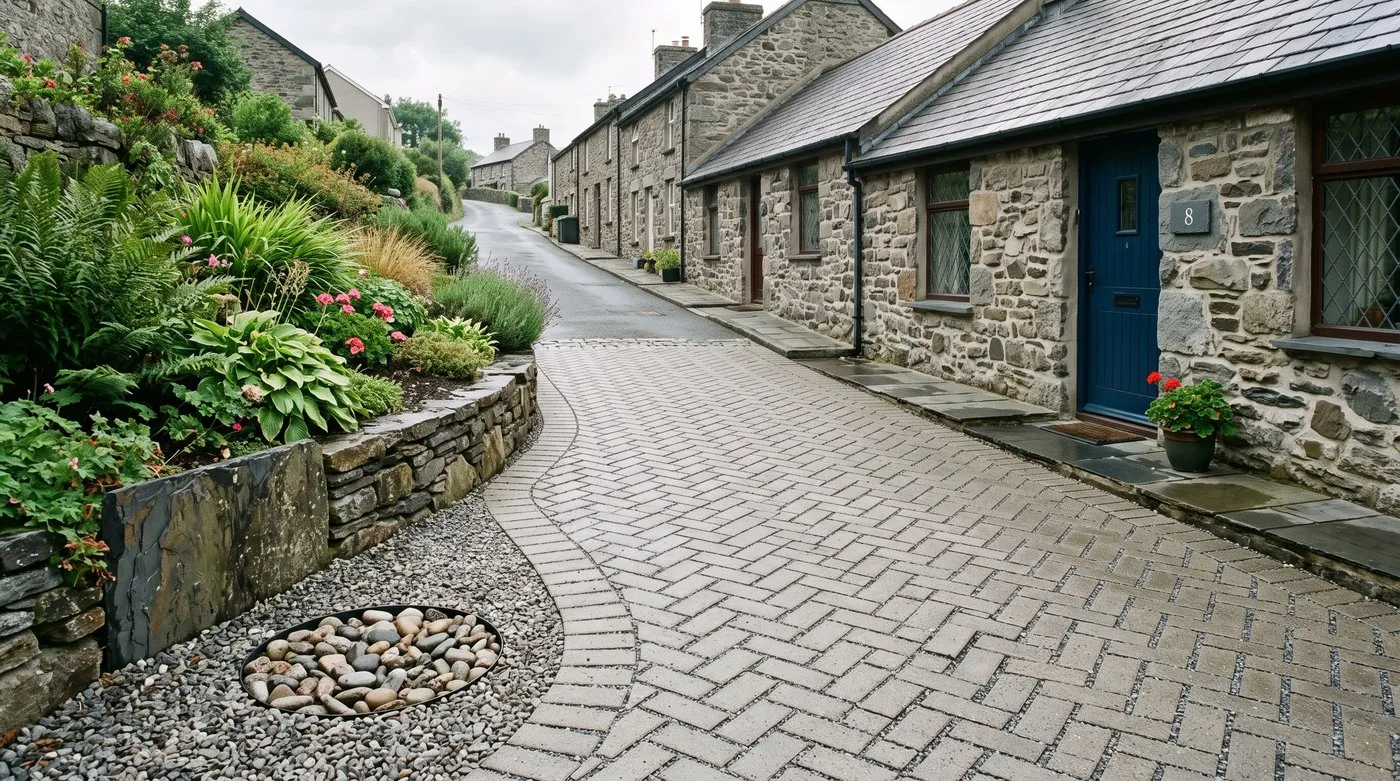 Permeable block paving over a no-fines base beside a Welsh terrace. The wider joints filled with grit are what let the rain drain between the blocks.
Common mistakes when laying permeable paving
- Using an impermeable surface over 5 square metres without permission. Laying tarmac or standard slabs draining to the road on anything bigger than 5 square metres is a planning breach. Choose a permeable finish or direct the runoff to a border or soakaway.
- Laying permeable blocks on a sealed Type 1 base. Compacted MOT Type 1 sheds water, so blocks on top drain sideways and pool at the low point. Use a no-fines, open-graded sub-base instead, at least 150mm deep.
- Confusing resin-bonded with resin-bound. Bonded seals the surface and needs planning permission over 5 square metres. Bound drains through and is permitted development. Always confirm which one the quote means.
- Skipping the sub-base reservoir. A thin scrape of stone cannot hold a downpour. Without a 150mm no-fines layer to store the rain, even a porous surface backs up and floods in heavy weather.
- Sealing the whole front garden. Covering every square metre in hard surface, even permeable hard surface, loses all the planting, soil life and cooling. Keep beds and borders and pave only what you need.
Keep the planting: design for water and habitat
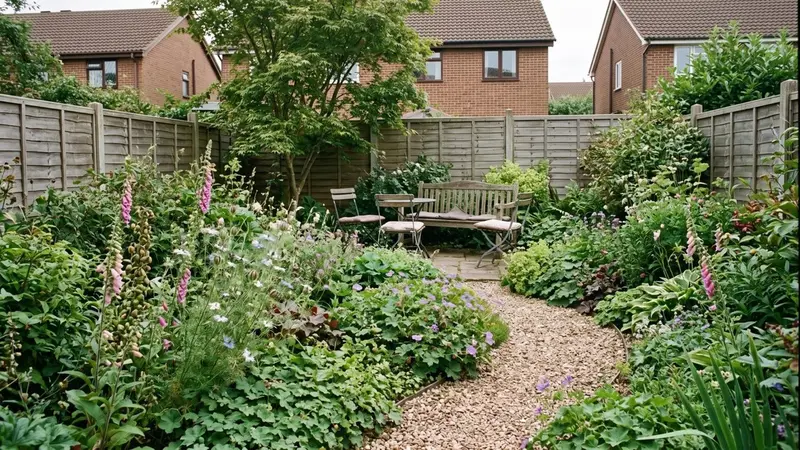
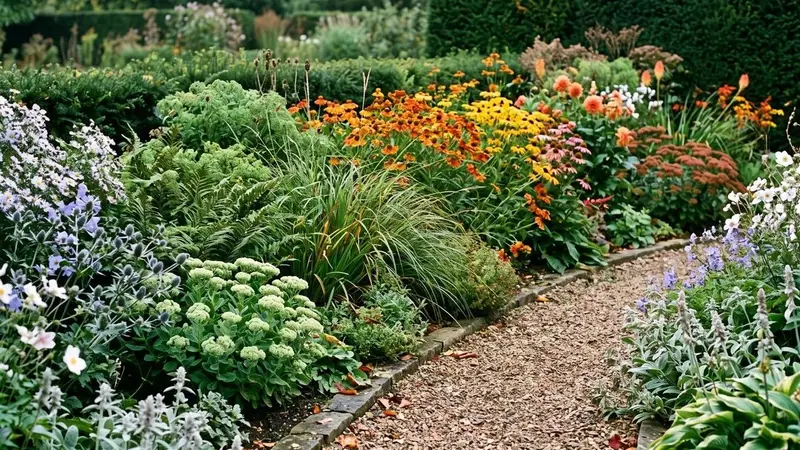
A permeable surface is only half the job. The best front gardens keep soft landscaping, so rain has somewhere to soak and wildlife has somewhere to live. Aim to leave at least a third of the plot as planted bed, gravel with plants, or a low hedge.
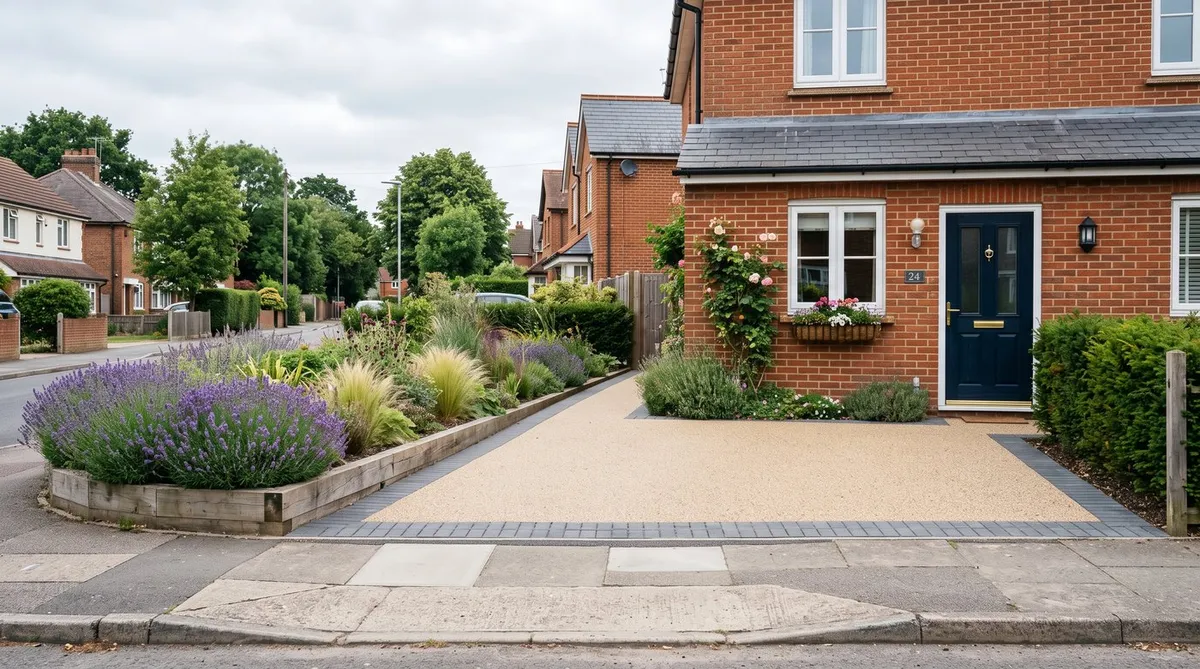
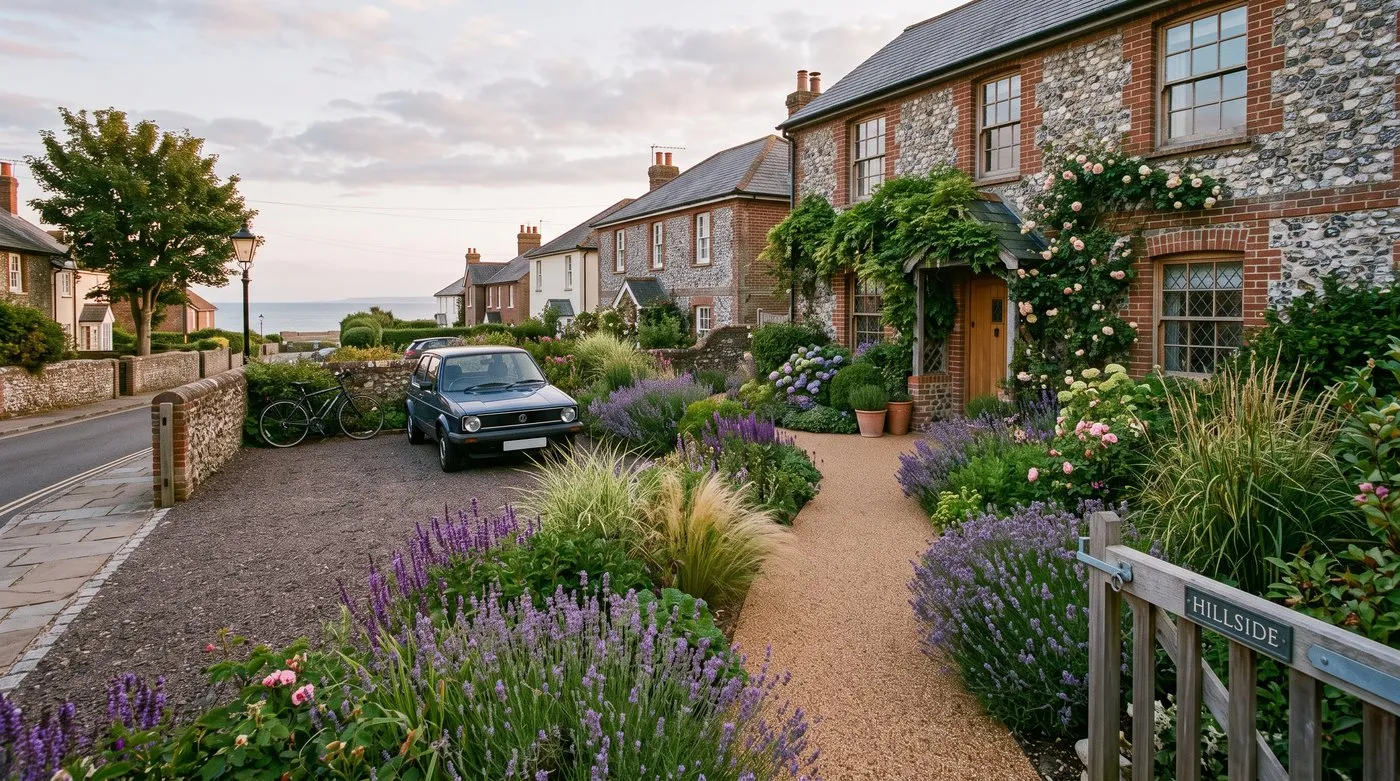 A permeable front garden in a seaside Sussex street that keeps its borders. Roughly a third stays planted, so rain soaks in and pollinators keep a home.
The planning position is set out in the government’s guidance on the permeable surfacing of front gardens, and the RHS advice on front gardens and paving covers the horticultural side. Read both before you commit to a design.
Frequently asked questions
Do I need planning permission to pave my front garden in the UK?
Not if the surface is permeable. In England, a porous surface, or one draining to a lawn or border, is permitted development. You only need permission to cover more than 5 square metres with an impermeable surface that drains to the road. Scotland and Northern Ireland have their own rules, so check with your council.
What makes paving permeable?
An open-graded, no-fines stone sub-base that stores and releases water. Standard MOT Type 1 contains fine dust that seals up when compacted. A permeable build uses clean 4-20mm or Type 3 stone with the fines screened out, so rain drains through the surface and soaks away below.
Is resin-bound gravel permeable?
Yes, resin-bound gravel is permeable and counts as permitted development. The stones are mixed with resin and trowelled on, leaving tiny voids that let water through. Resin-bonded gravel is different: stones are scattered onto a sealed resin coat, so it does not drain and does need planning permission over 5 square metres.
What is the cheapest permeable surface for a front garden?
Loose gravel, at around £40-70 per square metre fitted. It is naturally permeable, quick to lay over a suitable sub-base and easy to top up. The main downsides are stones migrating onto the pavement and the need to rake it level, which cellular gravel grids largely solve.
Can you park a car on permeable paving?
Yes, most permeable surfaces take car loads with the right sub-base depth. Resin-bound gravel, permeable block paving and cellular grids all carry a family car. Loose gravel works too but scatters under turning wheels, so a grid or a bound surface suits a used parking bay better.
Does permeable paving get blocked over time?
It can silt up if leaves and soil are left to break down in the surface. Permeable block paving and porous asphalt need an occasional brush or a stiff sweep to keep the joints and voids open. Resin-bound gravel and loose gravel are more forgiving. A yearly clean keeps any permeable surface draining.
What sub-base do you use for permeable paving?
A clean, open-graded crushed stone such as 4-20mm or Type 3, laid around 150mm deep. The fines are screened out so the layer holds water like a sponge and lets it drain. Never use standard MOT Type 1, which compacts to a near-solid, water-shedding layer.
Our team produces practical UK gardening guidance from source research, contributor records and established horticultural practice. Editorial standards are overseen by Matt W.