Key takeaways
- Zone a narrow plot into 2 to 3 rooms, never one long lawn strip
- Diagonal paving across a 4m width makes the garden read wider
- Block overlooking with 1.8m screening plus canopy at 2.5m to 3m
- Green boundary walls with climbers on wires to gain space
- Multi-stem trees give privacy and shade without filling the floor
- Keep the side return for bins, bikes and shade planting
A narrow walled garden behind a Victorian terrace is one of the trickiest plots to get right. Terraced house garden design has to solve overlooking, deep shade and a corridor shape all at once, usually in 4m to 5m of width. The temptation is a path down the middle with a strip of lawn. That choice makes the space feel narrower than it is.
Why Narrow Terraced Gardens Feel Like Corridors
A long thin plot reads as a corridor because the eye runs straight to the back wall and stops. The brain measures the space by its shortest dimension, the 4m width, and ignores the length. Two parallel boundary walls reinforce the tunnel. A straight central path makes it worse by drawing a hard line from the back door to the rear fence.
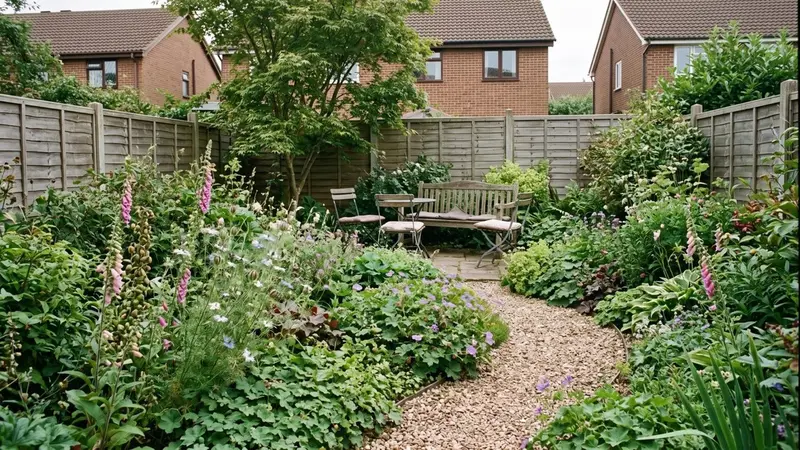
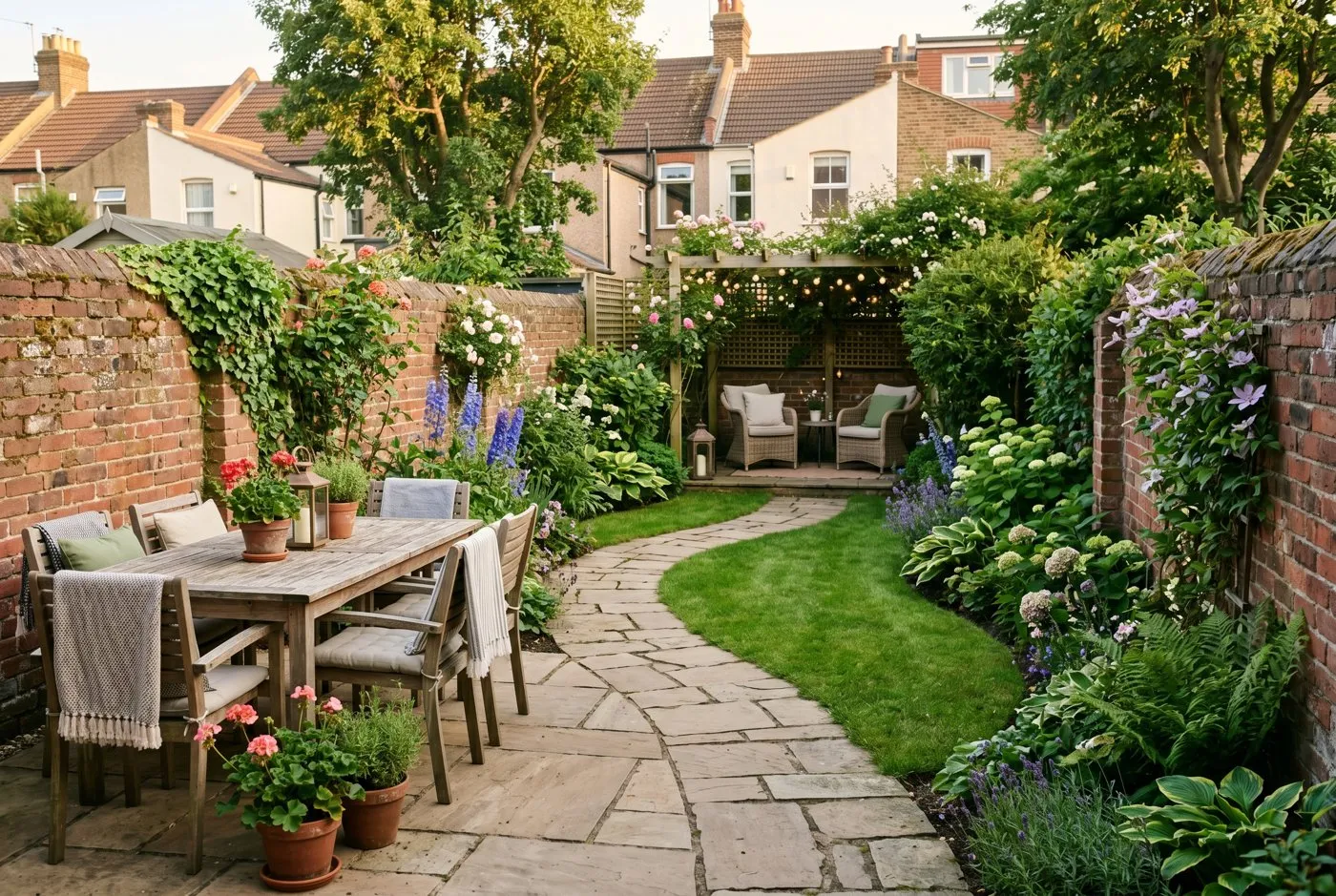 A long thin Stoke-on-Trent plot split into three rooms. The path weaves rather than running straight, so the eye stops and travels in stages instead of shooting to the back wall.
How Do I Make a Narrow Garden Look Wider?
Lay your paving on a 45-degree diagonal. This is the single highest-impact move in a narrow plot. When the slabs and joints run corner to corner instead of along the width, the longest line in the garden is the diagonal, and the eye follows it. A 4m-wide yard suddenly has a sightline of 5m or more across its widest reading.
Reinforce the trick with a few more moves. Place a focal point off-centre, a pot or small tree to one side, so the eye is pulled across rather than straight down. Plant the boundary walls densely so the hard edges blur and the room feels less boxed. Keep the far end slightly mysterious with a screen or planting, so the garden does not reveal itself all at once.
Colour helps too. Cool blues, silvers and pale greens recede, making a far wall feel further away. Hot reds and oranges jump forward, so keep those near the house. A pale-painted rear wall lifts a dark plot and pushes the boundary back visually.
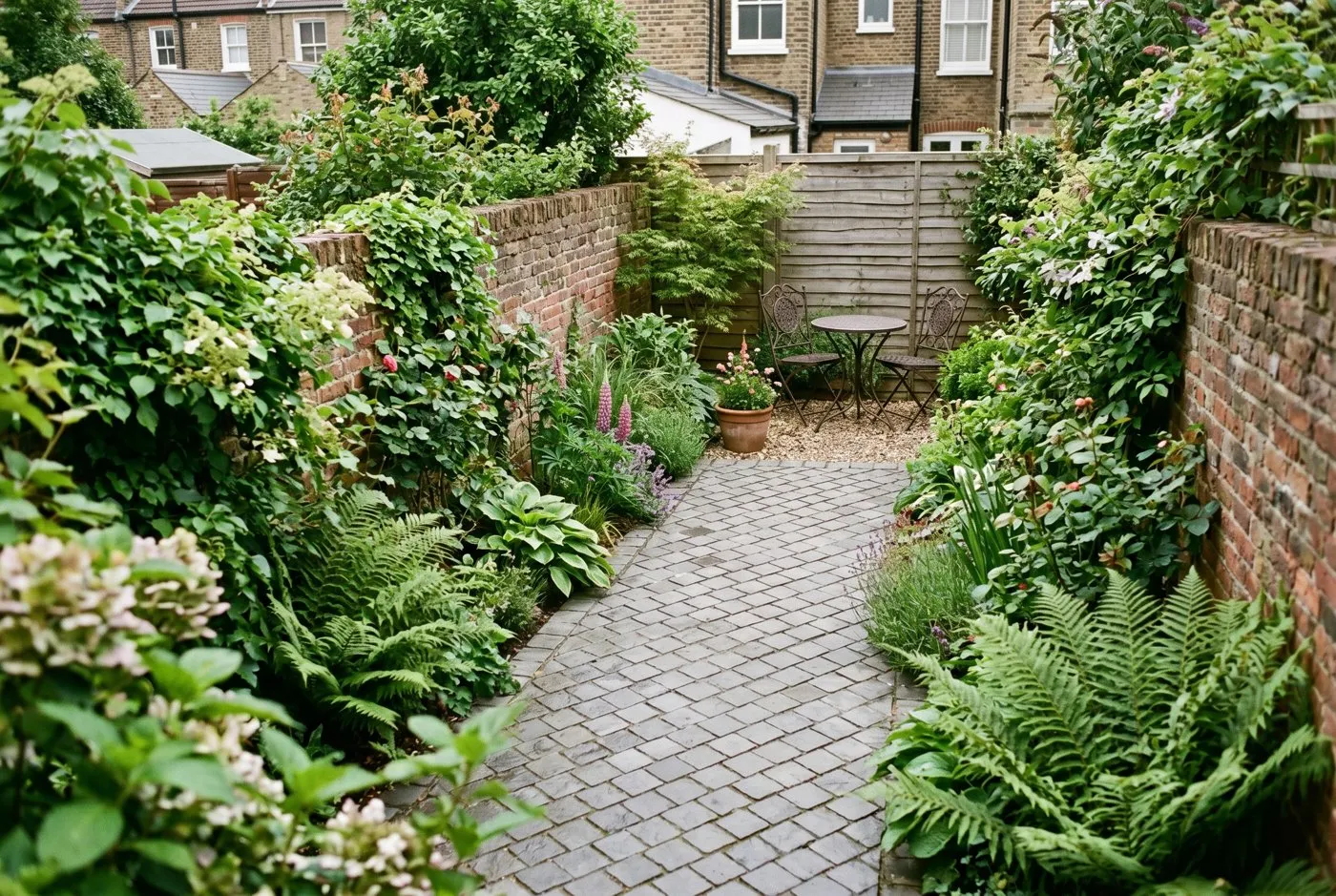 Setts laid on a 45-degree diagonal in a Midlands terrace yard. The longest line now crosses the plot corner to corner, so a 4m width reads wider than its tape measurement.
How Do I Get Privacy in a Terraced Garden?
The answer is a raised canopy. A pergola at 2.5m, a multi-stem tree spreading at 2.5m to 3m, or a sail above the seating breaks the downward sightline from upstairs. You are not building a wall in the sky; you are putting something leafy between the window and the chair. Even an open pergola with a climber over it cuts the view enough to feel private.
Use soft screening, not solid, wherever you can. A slatted screen or a band of tall grasses like Calamagrostis ‘Karl Foerster’ gives privacy while letting light and air through. Solid panels above 1.8m turn a narrow plot into a dark box. Check the rules too: boundary structures over 2m generally need planning permission in England.
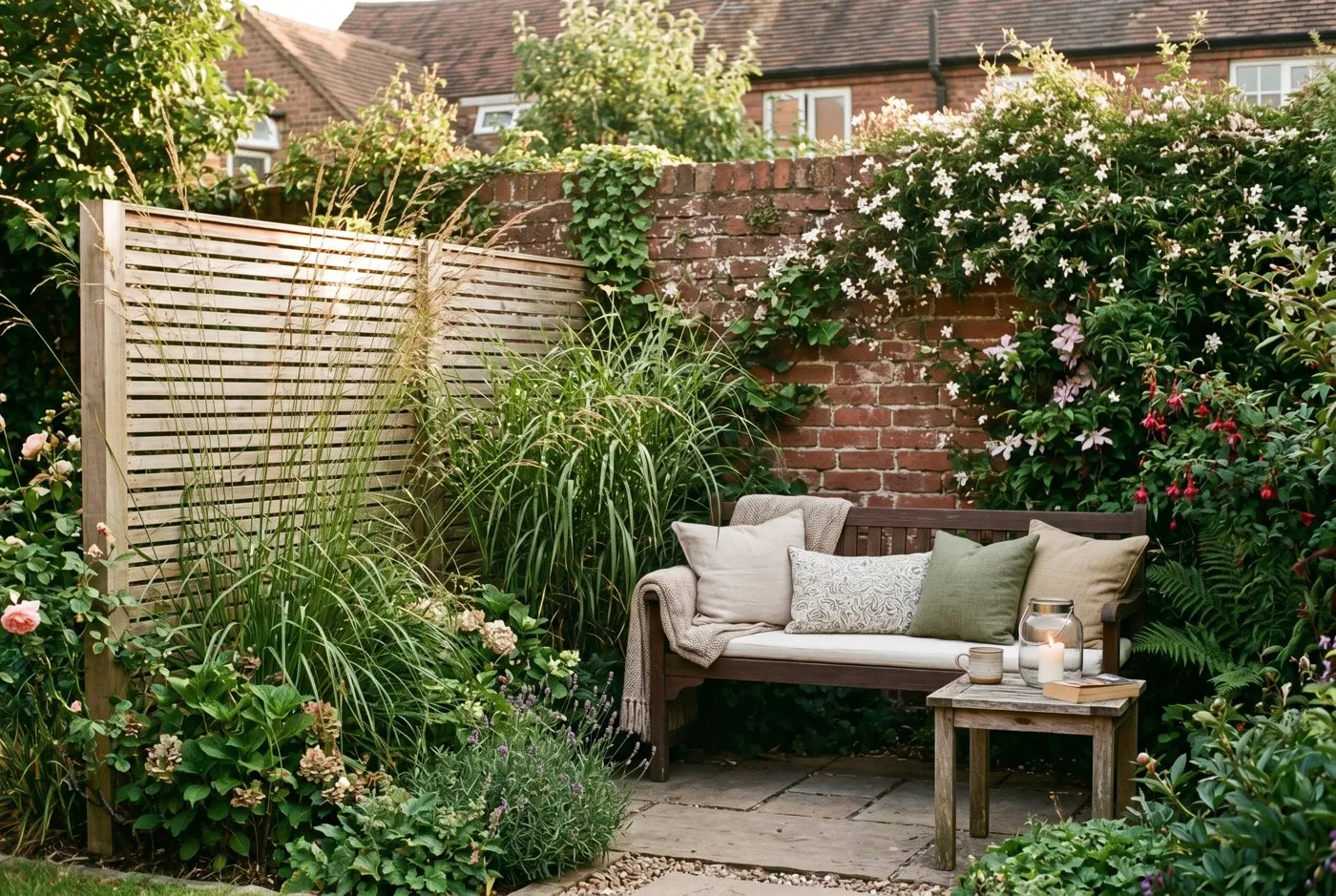 A screened nook in a Stoke terrace. A 1.8m slatted screen and tall grasses handle ground-level privacy; the canopy overhead blocks the first-floor window 7m away.
Zoning a Narrow Plot Into Outdoor Rooms
Zoning is what turns a corridor into a garden. Split the run into two or three rooms, each with its own job, and divide them with planting, a screen or a change of level or surface. A 9m plot takes three zones comfortably; a 6m plot takes two. Each room should feel like a destination, so you move through the garden rather than just looking down it.
A workable three-zone plan for a long thin yard:
- Zone one, by the house: dining and cooking. Hard paving, a table, the outdoor tap. Keep it close to the kitchen door for daily use.
- Zone two, the middle: planting and a small lawn or gravel. The green heart of the garden, with the boundary walls at their lushest.
- Zone three, the far end: a quiet seating nook. Screened, with the evening sun if the aspect allows, reached by a path that bends rather than runs straight.
Stagger the zones off the central axis so the path weaves. A path that zig-zags forces the eye to travel and makes the plot feel longer and wider. Frame the entrance to each zone with pots, an arch or a pair of grasses so each room has a threshold.
Greening the Boundary Walls Without Losing Floor Space
In a 4m-wide plot, floor space is gold, so plant upwards. Boundary walls are vertical hectares going to waste. Fixing galvanised wires horizontally every 30cm to 45cm up a wall gives climbers something to grab, and you gain a wall of greenery at the cost of a 20cm-deep bed at the base.
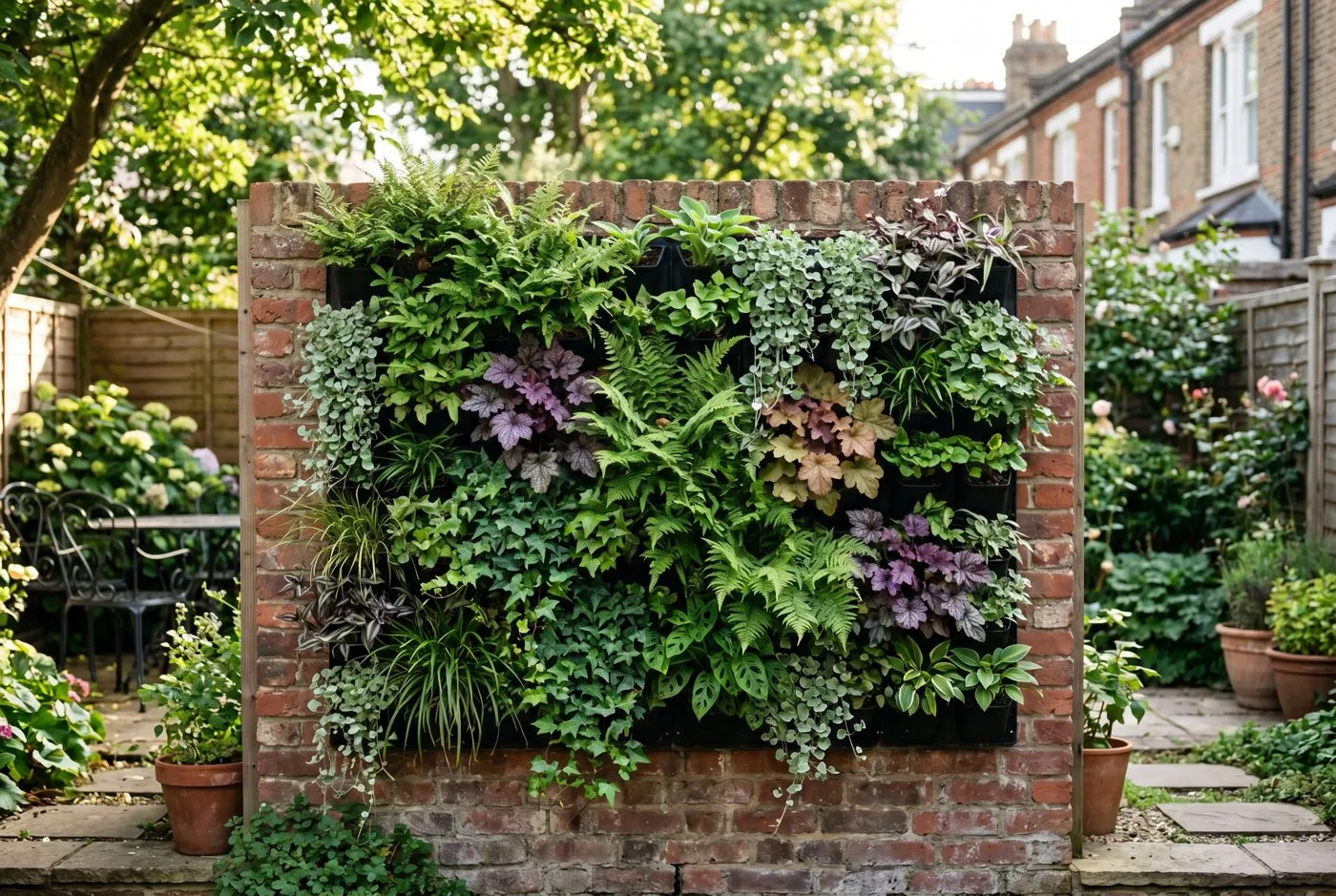 A modular living wall on old brick in a city yard. Ferns, heucheras and ivy turn two metres of dead boundary into planting without costing any floor space.
Coping With the Shade Thrown by Walls and Buildings
A walled terrace yard is a shade garden whether you like it or not. High walls and the two-storey house next door cast deep shadow for much of the day, especially a north-facing plot. Fighting it with sun-lovers fails. Plant for the conditions you have and the garden thrives.
The reliable shade crew for UK town gardens: ferns (Dryopteris, Polystichum, soft shield fern), hostas like ‘Halcyon’ (slug-resistant blue-grey), hardy geraniums, Brunnera ‘Jack Frost’ for silver leaves that light a dark corner, and Hydrangea macrophylla for summer flower. Our guide to the best plants for shade covers the full palette for a sunless plot.
Use light to fight the gloom. Paint a rear wall a pale colour to bounce what light there is. Pale paving reflects more than dark. A mirror on a side wall, angled to catch a green view rather than a person, throws light and doubles a planted corner. Keep a few pots of seasonal colour near the seating where you sit, since that is where brightness matters most.
Hard Landscaping for Low Maintenance
Budget honestly. Porcelain runs roughly £40 to £70 per square metre for the slab alone, plus a sub-base and laying. A 20-square-metre yard in good porcelain, laid, sits around £2,000 to £4,000. Resin-bound gravel comes in lower at £40 to £55 per square metre installed. The hidden cost on both is the sub-base; skip it and the surface heaves within a couple of winters.
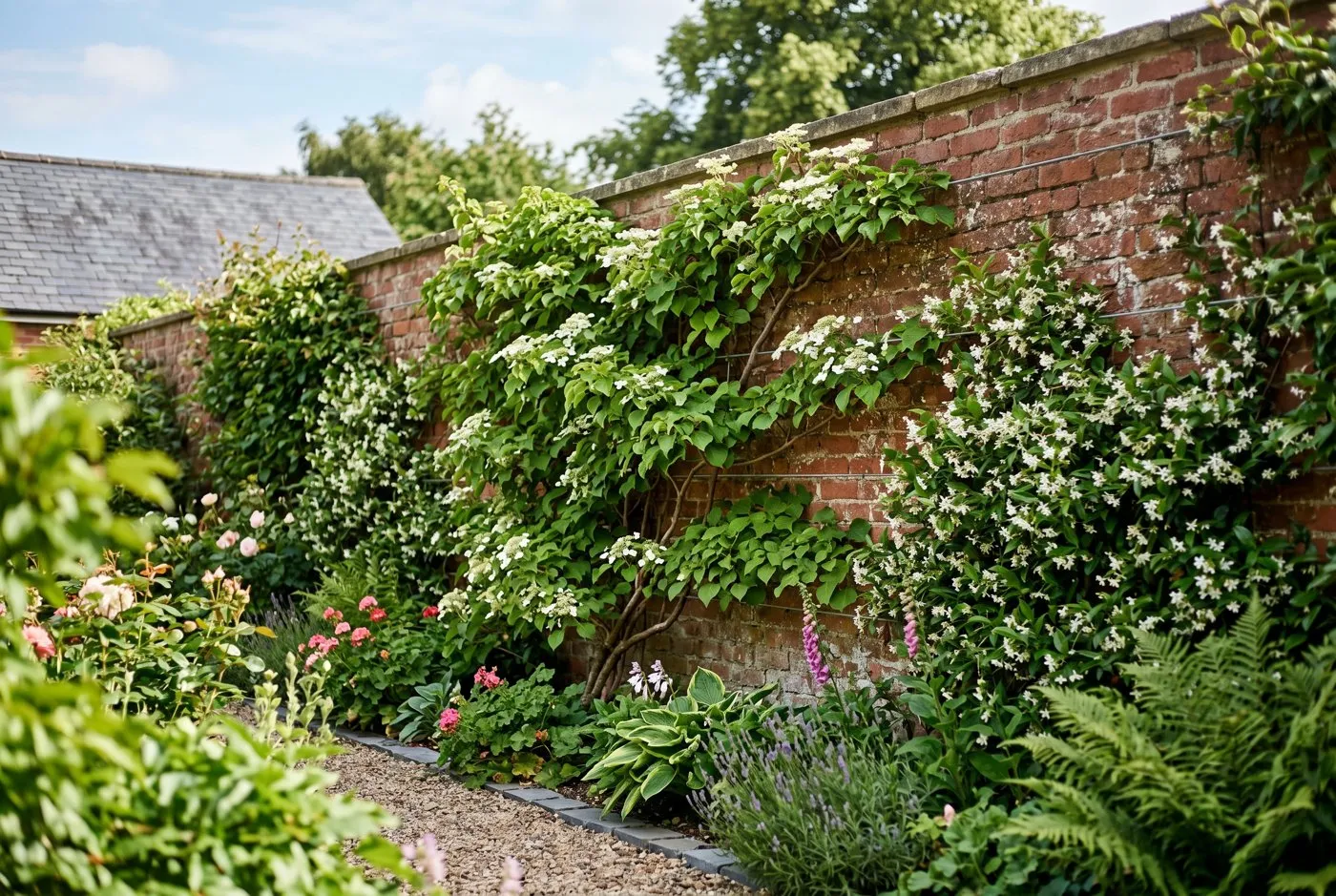 Climbing hydrangea and star jasmine trained on horizontal wires up a 3m brick wall. The boundary is greened to the top with a bed just 20cm deep at the base.
Bins, Bikes and the Side Return Passage
The side return is the narrow passage running beside a Victorian terrace, and it is where the unglamorous storage lives. Use it well and the garden proper stays clear of bins, bikes and recycling. A run of slimline bin stores or a lockable bike locker fits a passage as narrow as 80cm to 1m, leaving a walking gap.
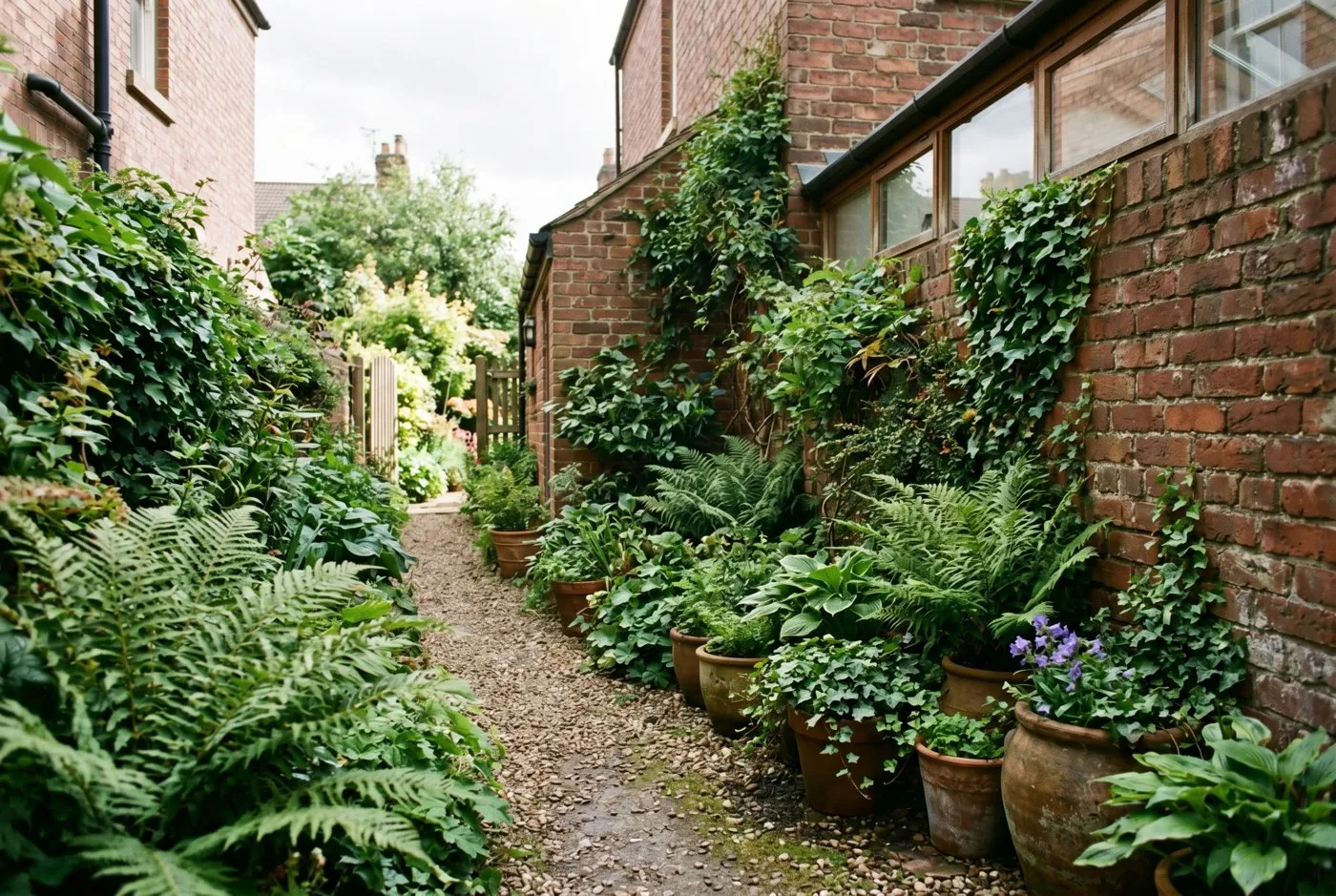 A side return turned from dead corridor into useful space. Slimline bin storage on one side, a run of fern pots and a climber on the other, with a clear walking gap.
Multi-Stem Trees and Focal Points for Small Yards
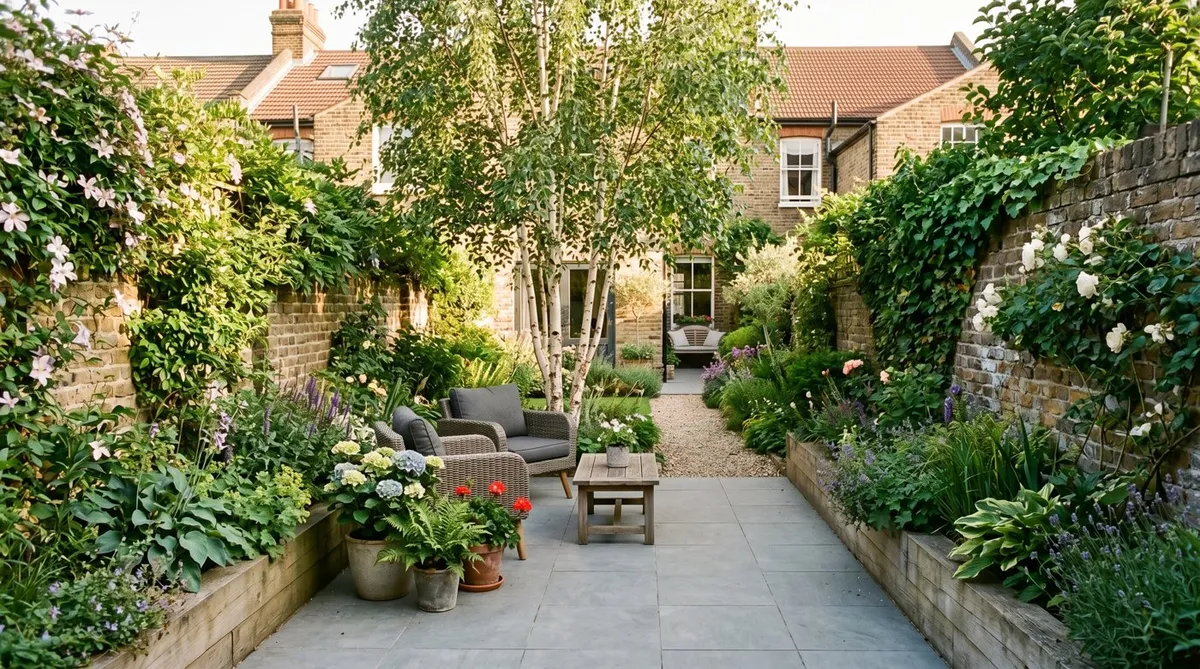
A small tree does more work than any other single feature in a tight plot. A multi-stem tree gives height, privacy and dappled shade without the bulk of a standard trunk, and its raised canopy blocks first-floor overlooking exactly where you need it. The slim form keeps the floor open beneath for planting or a bench.
The best small-garden trees for a UK terrace are Amelanchier lamarckii (spring blossom, autumn colour, tops out around 4m to 6m), Betula multi-stem birch for white bark and light shade, and Cornus kousa for a slow, well-behaved choice. All cast light dappled shade rather than dense shadow, so you can still grow beneath them. Group two or three at the far end and underplant them and you have a mini-woodland corner that screens the back wall and feeds wildlife. Plant at least 1.5m off a boundary wall to keep roots and canopy clear.
A Staged Plan for Reworking a Narrow Terrace Yard
- Survey and measure. Plot the width, length, the position of overlooking windows and where the sun falls morning and evening. Mark the side-return and bin route.
- Set the zones. Decide on two or three rooms and where the dividers go. Mark them with canes and string before committing.
- Fix the privacy. Build the 1.8m screening and the raised canopy or plant the multi-stem tree first, so you know the garden will feel private before you finish it.
- Lay the hard landscaping. Diagonal paving or resin-bound gravel on a proper sub-base. Get the levels and falls right; water must run away from the house.
- Wire the walls and plant the boundaries. Climbers on wires, the living wall if you want one, the shade beds at the base.
- Add the focal point and soft furnishings. The tree, the pots, the seating, the lighting. This is the layer that makes it feel finished.
Ranked Design Moves for a Narrow Walled Garden
Common Mistakes in Terraced Garden Design
Three errors wreck more narrow plots than any others. Avoid them and you are most of the way to a working garden.
A single long lawn strip down the middle. This is the classic terrace mistake. A central strip of grass draws the eye straight to the back wall, exaggerates the corridor and gives you a soggy lawn that will not mow in wall shade. Zone the plot and pave or gravel it instead.
Tall solid screening that darkens the plot. Boxing a 4m yard with 2m solid panels turns it into a gloomy well. You block the neighbours but also the light and air. Use soft, slatted or planted screening above 1.8m, and gain privacy overhead with a canopy rather than building the walls higher.
Ignoring the side return. The passage beside the house gets left as a dead, mossy dumping ground. That wastes usable space and leaves bins and bikes cluttering the garden proper. Give the side return a job: storage on one side, shade pots on the other.
Warning: Do not build a boundary fence or wall over 2m without checking planning rules. In England, structures above 2m on a boundary generally need planning permission, and front boundaries beside a road are capped at 1m. The gov.uk guidance on fences and boundaries sets out the limits before you build.
Frequently asked questions
How do I make a narrow terraced garden look wider?
Lay paving and lines on a 45-degree diagonal. The longest sightline runs corner to corner, not along the short width, so a 4m-wide plot reads wider. Zone it into rooms, plant the boundaries densely and place a focal point off to one side to pull the eye across rather than straight down.
How do I get privacy in an overlooked terraced garden?
Combine a 1.8m screen with a raised canopy. Solid screening alone darkens the plot, so use slatted screens or grasses at 1.8m for ground-level privacy, then a pergola or multi-stem tree canopy at 2.5m to 3m to block first-floor windows. Check your boundary height limit before building above 2m.
What plants suit a shady walled town garden?
Ferns, hostas, hardy geraniums and climbing hydrangea. Walls and neighbouring houses throw deep shade, so choose woodland plants that thrive in it. Dryopteris ferns, Hosta ‘Halcyon’, Geranium ‘Rozanne’ and Hydrangea anomala petiolaris all cope with north-facing brick and low light.
Can I build a high fence around my terraced garden?
Usually up to 2m without planning permission. Boundary fences and walls over 2m generally need planning permission in England. Front boundaries beside a road are capped at 1m. Check with your local council before building, and talk to neighbours about shared walls first.
What is the best low-maintenance surface for a small city garden?
Porcelain paving or resin-bound gravel. Both shed water, resist weeds and need almost no upkeep beyond an occasional wash. Porcelain costs more upfront but lasts decades. Avoid a fiddly lawn in a 4m plot; it is hard to mow and stays wet in wall shade.
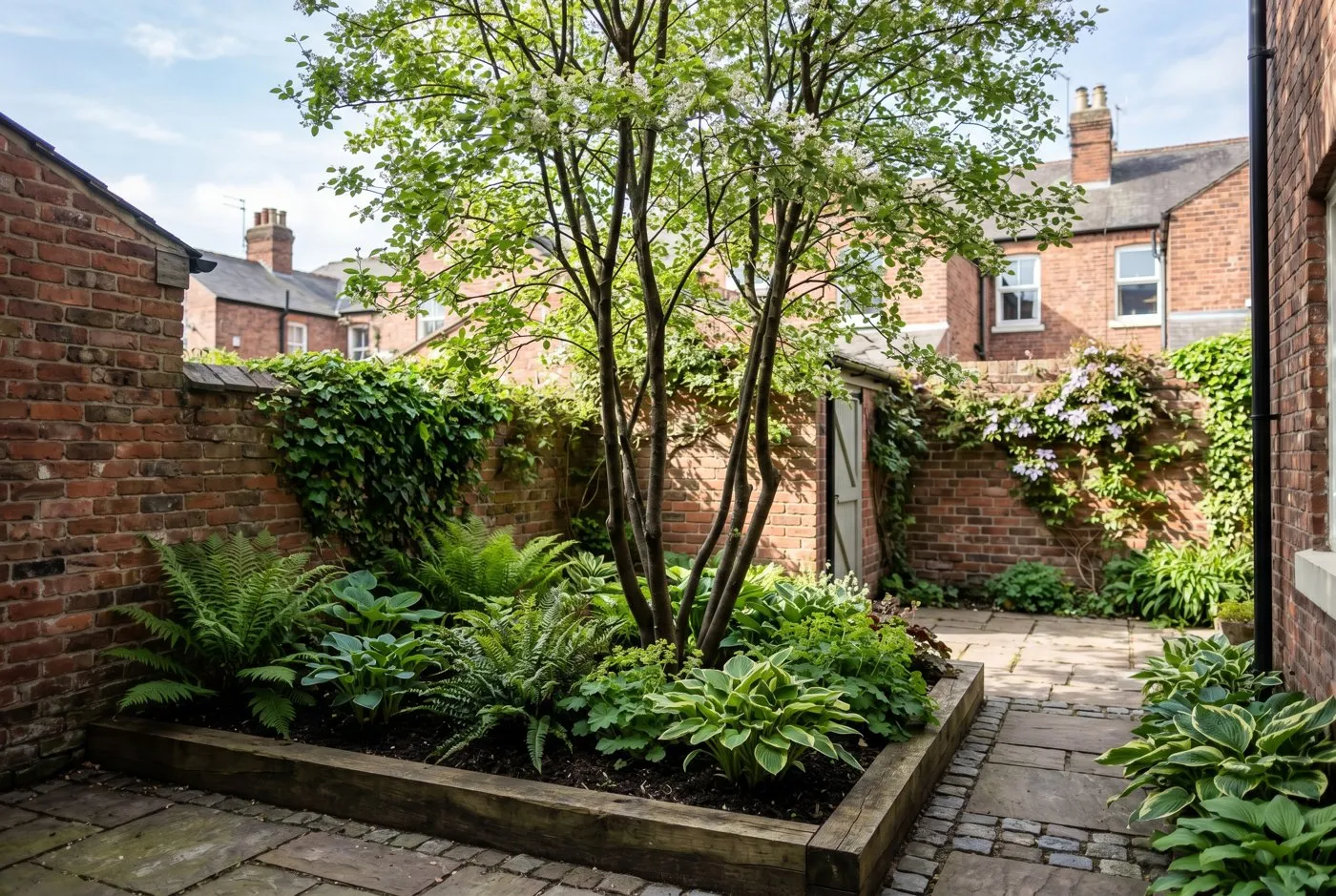 A multi-stem Amelanchier in a paved Stoke yard. The raised canopy blocks the upstairs window opposite while keeping the floor open for shade planting beneath.
Now plan the rest of your small-garden scheme
Our team produces practical UK gardening guidance from source research, contributor records and established horticultural practice. Editorial standards are overseen by Matt W.